Artwork
Interior view at Houffalize
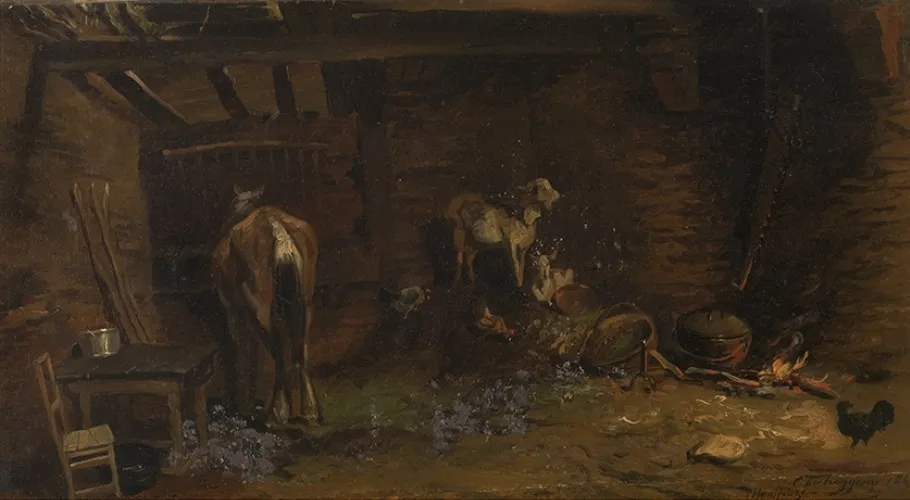
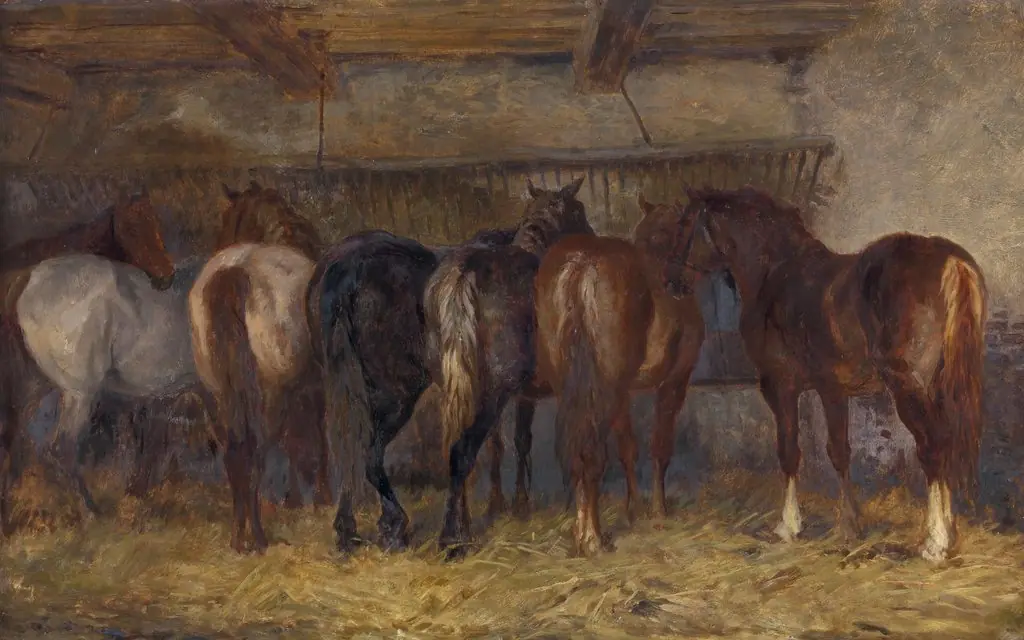
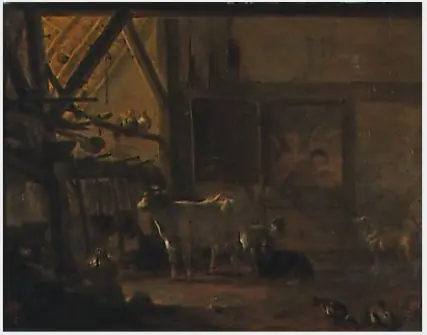
Interior view at Houffalize is an oil painting by the Biedermeier artist Charles Tschaggeny. It dates from 1840 and is held in the collection of the Groeningemuseum.
About this work
Overview
The painting is a characteristic example of Tschaggeny's genre scenes, which frequently depicted rural and animal subjects.
Interior view at Houffalize is an oil on canvas painting by the Belgian artist Charles-Philogène Tschaggeny, dated 1840. Measuring 24.5 by 44.7 centimetres, the work is held in the collection of the Groeningemuseum in Bruges, Belgium, under inventory number 0000.GRO0141.I. The painting is a characteristic example of Tschaggeny's genre scenes, which frequently depicted rural and animal subjects. It represents an important document of the artist's early career and contributes to understanding Belgian genre painting of the mid-nineteenth century, a period in which Tschaggeny emerged as a notable figure through his association with the prominent animal painter Eugène Joseph Verboeckhoven.
Subject & Meaning
The painting depicts the interior of a barn or cowshed at Houffalize, a town in the Belgian Ardennes. The composition centres on two cows, one viewed from behind near the left, the other facing right. A small fire burns on the earthen floor at lower right, beside a large pot, a tilted basket, and scattered debris, with a small dark bird standing nearby. A wooden table bearing a metal container and a simple chair occupy the lower left. The scene includes wooden beams and a slatted gate structure in the upper left background. The depiction of farm animals within a rustic interior follows established conventions of European genre painting, presenting rural labour and domesticity without romantic idealisation. The fire serves as the primary source of warmth and light, suggesting the functional reality of agricultural life. The scattered objects and earthy setting convey an unembellished authenticity typical of naturalistic approaches to rural subject matter in the nineteenth century.
Technique & Style
Tschaggeny executed the work in oil paint on canvas, employing a loose, painterly brushwork that remains visible throughout the composition. The palette is dominated by browns, ochres, and muted greens, with small touches of orange from the fire and pale blue highlights on the ground. Light enters from the left, casting deep shadows across the interior and creating a pronounced atmospheric effect. The overall finish is described as sketchlike rather than highly detailed, with visible strokes suggesting texture in the walls and earthen floor. This handling aligns with broader tendencies in mid-century Belgian painting, where atmospheric effects and tonal harmony often took precedence over precise finish. The horizontal format, at 24.5 by 44.7 centimetres, accommodates the broad spatial recession of the barn interior and the placement of animals and objects across the foreground and middle ground. The signature and date appear in the lower right corner, a conventional placement that confirms the work's autograph status.
History & Provenance
The painting is dated 1840, placing it early in Tschaggeny's career when he was approximately twenty-five years old. The work entered the collection of the Groeningemuseum in Bruges, where it is currently located and accessible to the public. Its inventory number is 0000.GRO0141.I. The painting is listed in museum records under its Dutch title equivalent, Binnengezicht te Houffalize. While specific details of its acquisition remain unrecorded in the available sources, the work's presence in a major Belgian municipal museum indicates its recognition as significant within the artist's oeuvre. The Frick Art Reference Library in New York maintains an artist file on Charles-Philogène Tschaggeny containing study photographs and reproductions of his works with accompanying documentation, compiled from 1920 onward, which may include material related to this painting. No exhibition history is documented in the provided sources.
Context
Charles-Philogène Tschaggeny was born in Brussels around 1815 and died circa 1894 in Sint-Joost-ten-Node. He was the pupil of Eugène Joseph Verboeckhoven, the leading Belgian animal painter of the generation, and was the brother of Edmund Tschaggeny, also an artist. Tschaggeny established his reputation primarily through genre works featuring horses, working within a tradition of Belgian animal painting that commanded significant international attention during the nineteenth century. The 1840 date of Interior view at Houffalize situates it within the formative period of his career, when he was consolidating the technical training received from Verboeckhoven into his own distinctive approach. The choice of a barn interior with cattle rather than the equine subjects for which he became best known suggests the range of his early subject matter and his engagement with the broader conventions of rural genre painting. Critical reception of Tschaggeny's work has been relatively modest in modern scholarship, though his paintings are represented in major collections including the National Gallery in London and the Royal Collection, attesting to the historical esteem in which his work was held.
Legacy
Interior view at Houffalize remains in the permanent collection of the Groeningemuseum, where it contributes to the museum's representation of nineteenth-century Belgian genre painting. The work's accessibility through digital platforms, including Wikidata and museum databases, has facilitated its study alongside Tschaggeny's broader oeuvre. The painting exemplifies the type of intimate rural interior that informed subsequent developments in Belgian and European genre painting, where the unidealised depiction of agricultural life gained increasing currency through the mid-nineteenth century. Tschaggeny's works are held in several significant public collections, including two recorded at the Art UK site, and his paintings appear periodically in the art market through auction houses such as Artnet. The Frick Art Reference Library's ongoing maintenance of an artist file indicates continued scholarly interest in documenting his production. While Tschaggeny has not achieved the canonical status of his teacher Verboeckhoven, Interior view at Houffalize preserves a significant example of the naturalistic tradition in Belgian painting and offers insight into the early career of an artist whose work circulated internationally during his lifetime.
Artist & collection