Artwork
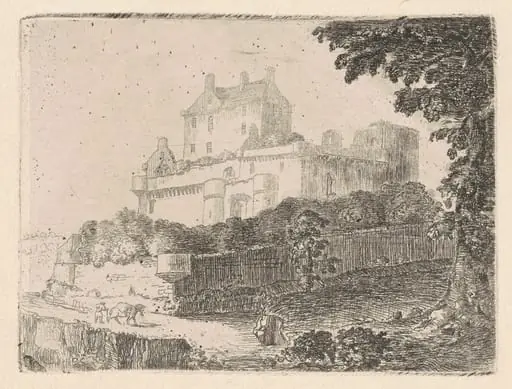
Roslin Castle III
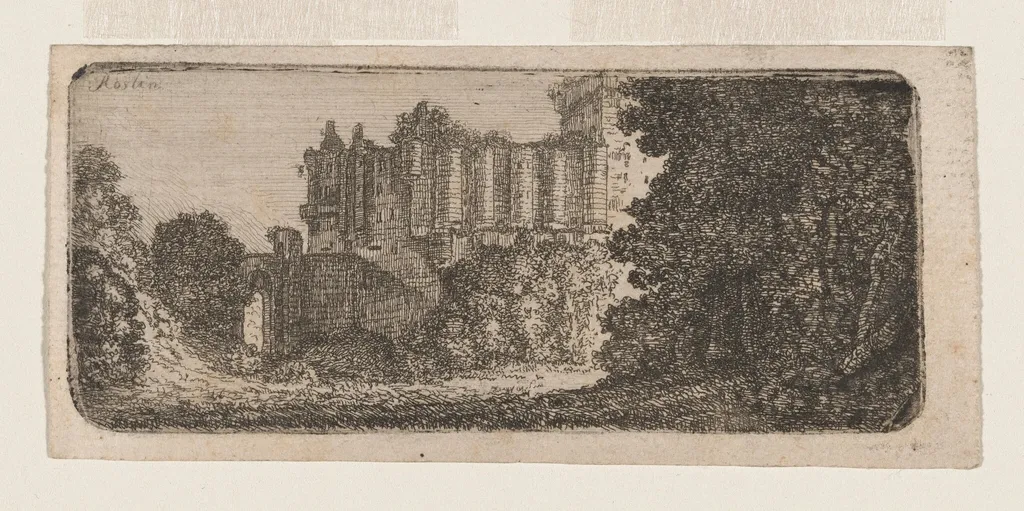
Roslin Castle III is an ink print by the Romanticist artist of Eldin, John Clerk. It dates from 1772 and is held in the collection of the National Gallery of Art.
- Inscription
- Inscribed:upper left in drypoint: Roslin; by later hand, lower center verso in graphite: L39 Roslin
About this work
Overview
Roslin Castle III is an etching with drypoint on laid paper, created by John Clerk of Eldin around 1772. The work captures the likeness of Roslin Castle in a state of ruin.
Subject & Meaning
The print portrays Roslin Castle nestled on a rocky cliff, partially obscured by trees and mist, conveying the castle's abandonment and the passage of time. Despite its ruinous state, the depiction imbues the structure with a sense of vitality.
Technique & Style
Clerk of Eldin employed etching combined with drypoint to achieve soft, nuanced shadows, evoking the misty atmosphere of early morning. This technique lends depth and texture to the print.
History & Provenance
Notably, Roslin Castle III is among the earliest prints to document the castle as a ruin, predating the era of tourism and postcard imagery. The castle itself had been abandoned for decades prior to the etching's creation.
Context
The emphasis on light, texture, and the emotional resonance of a ruin aligns with burgeoning Romanticist ideals, which often celebrated the interplay of nature and decay.
Artist & collection


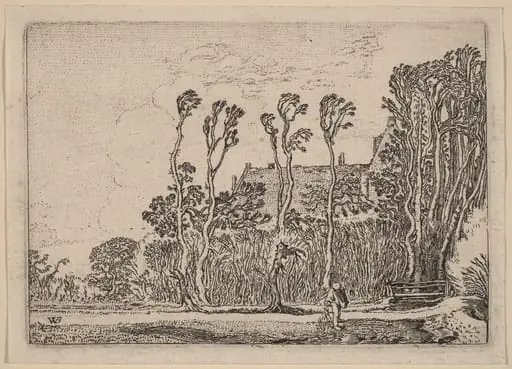 The Sower
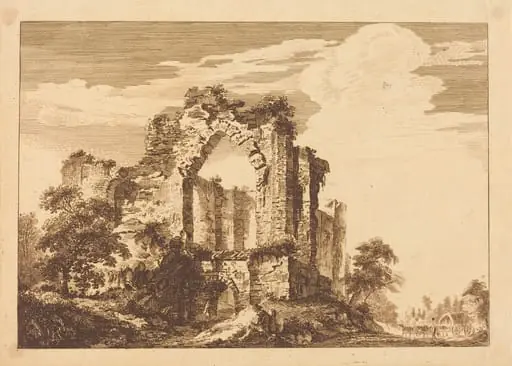 Ruins with a Seated Man, and a Covered Wagon in the Distance
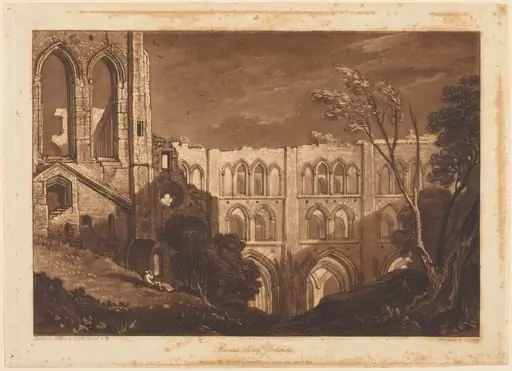 Rivaux Abbey
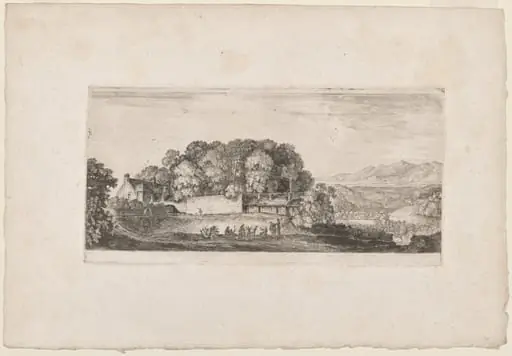 Hill-head, near Lasswade
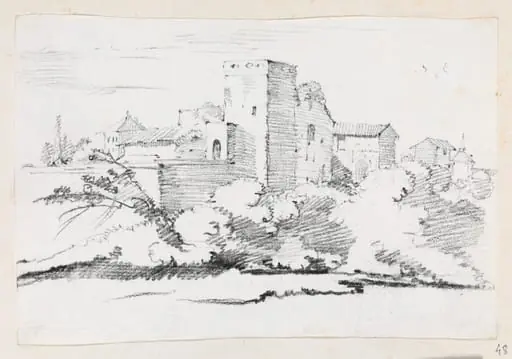 Buildings behind the Vatican
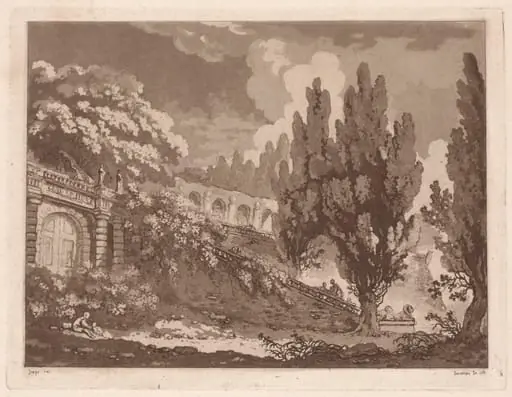 Stairs in an Italian Garden
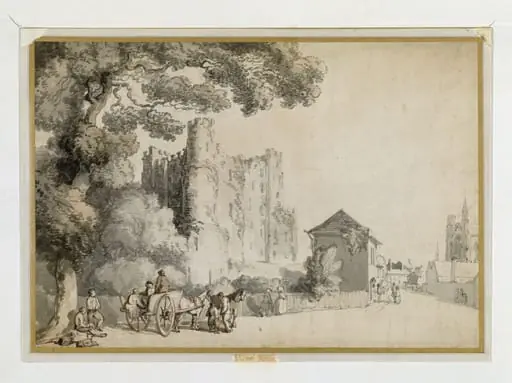 Boley Hill and Castle, Rochester, with the "Justice Tree"
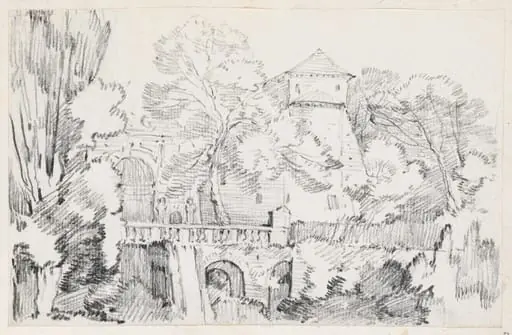 The Water Organ in the Gardens of the Villa d'Este, Tivoli
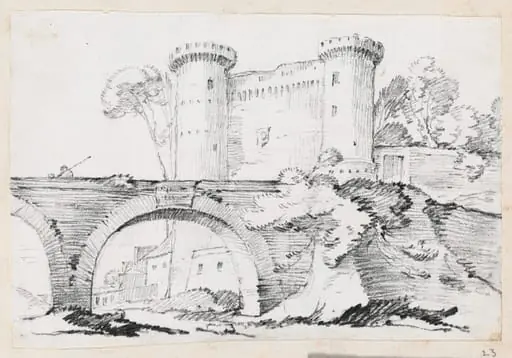 A Stone Bridge and the Fortified Entrance to a Town