Artwork
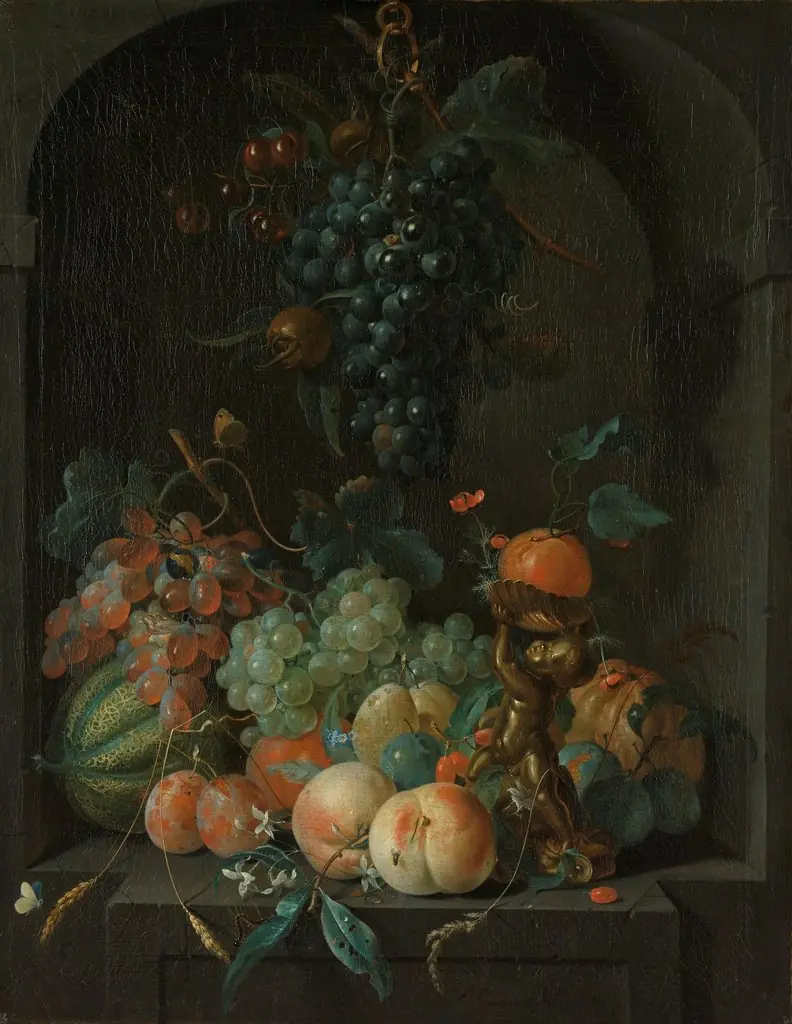
Still Life with Fruit
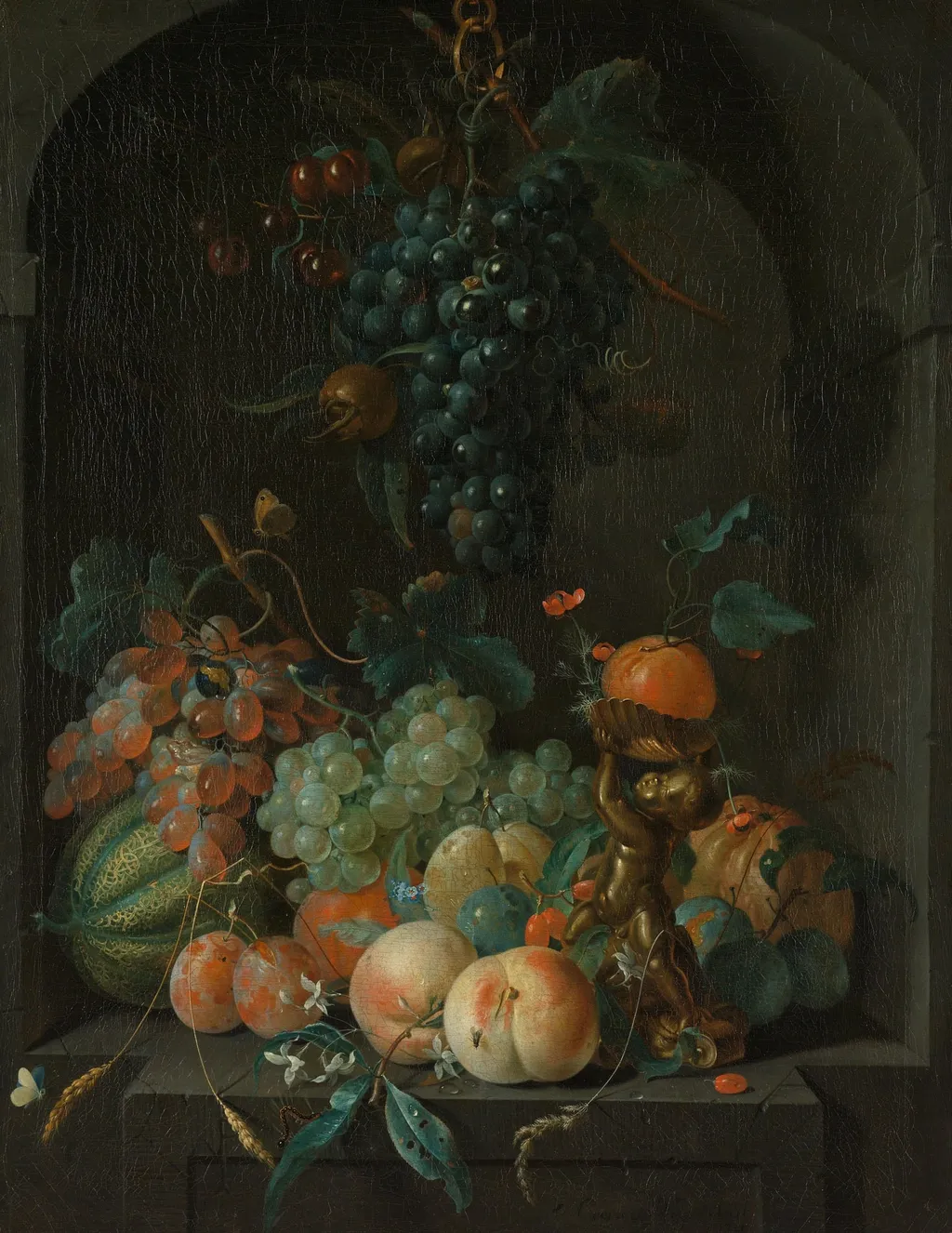
Still Life with Fruit is an unspecified painting by the Rococo painting artist Coenraet Roepel. It dates from 1721 and is held in the collection of the Rijksmuseum.
About this work
History & Provenance
No specific commission or early ownership chain for this particular work is recorded in the sources.
Coenraet Roepel painted Still Life with Fruit in 1721. During this period of his career, Roepel had returned to The Hague following the 1716 death of his patron Johann Wilhelm, Elector Palatine in Düsseldorf, and had established himself as a highly successful still life painter. By 1721, he was an active member of the Confrerie Pictura, having enrolled in the guild in 1718, and was commanding substantial prices for his work, reportedly receiving as much as 1,000 guilders per painting. No specific commission or early ownership chain for this particular work is recorded in the sources.
Legacy
Coenraet Roepel’s later influence stems from his role in advancing Dutch still-life painting, especially in floral and fruit subjects. His technical skill and success in The Hague helped elevate the genre before being overshadowed by Jan van Huysum. He was a member of the Confrerie Pictura from 1718 and trained pupils such as Pieter Terwesten.
His works are held in major collections including the Rijksmuseum in Amsterdam, the Alte Pinakothek in Munich, and the Nationalmuseum in Prague. Paintings by Roepel also appear in the Lazaro Galdiano Museum in Madrid. His career illustrates the transition from early 18th-century Dutch still-life traditions to more specialized floral painting in Northern Europe.
Overview
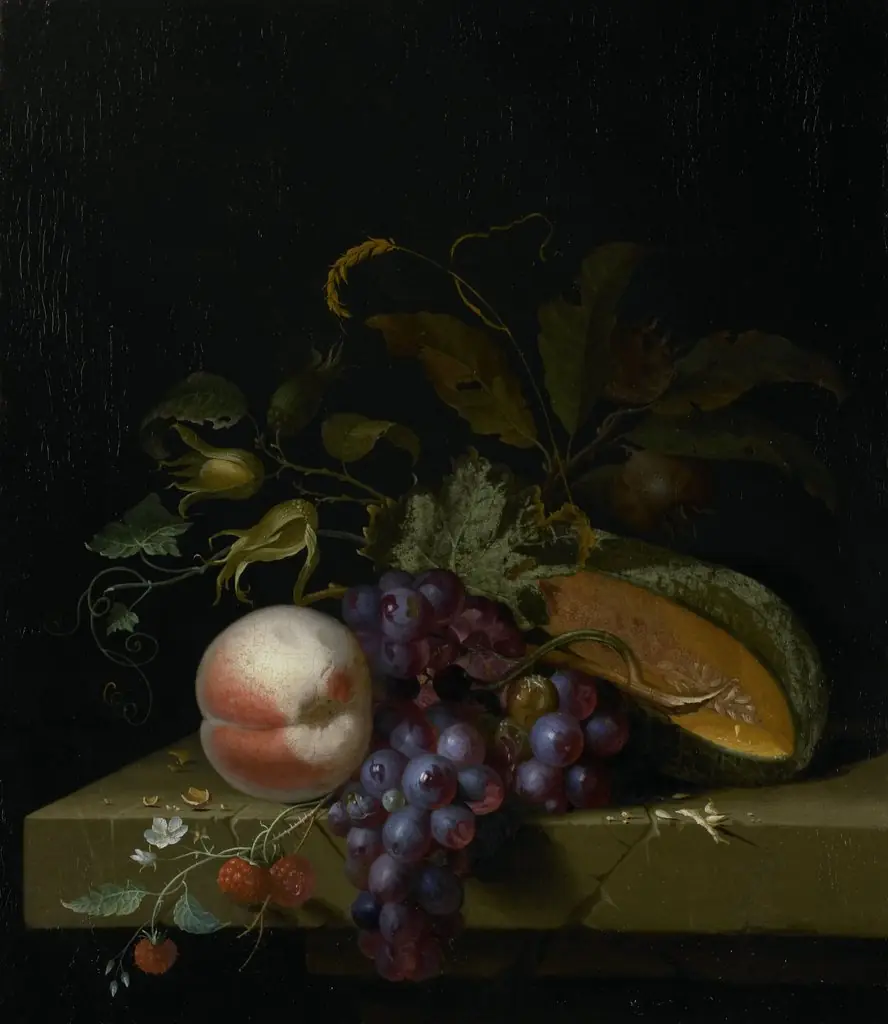
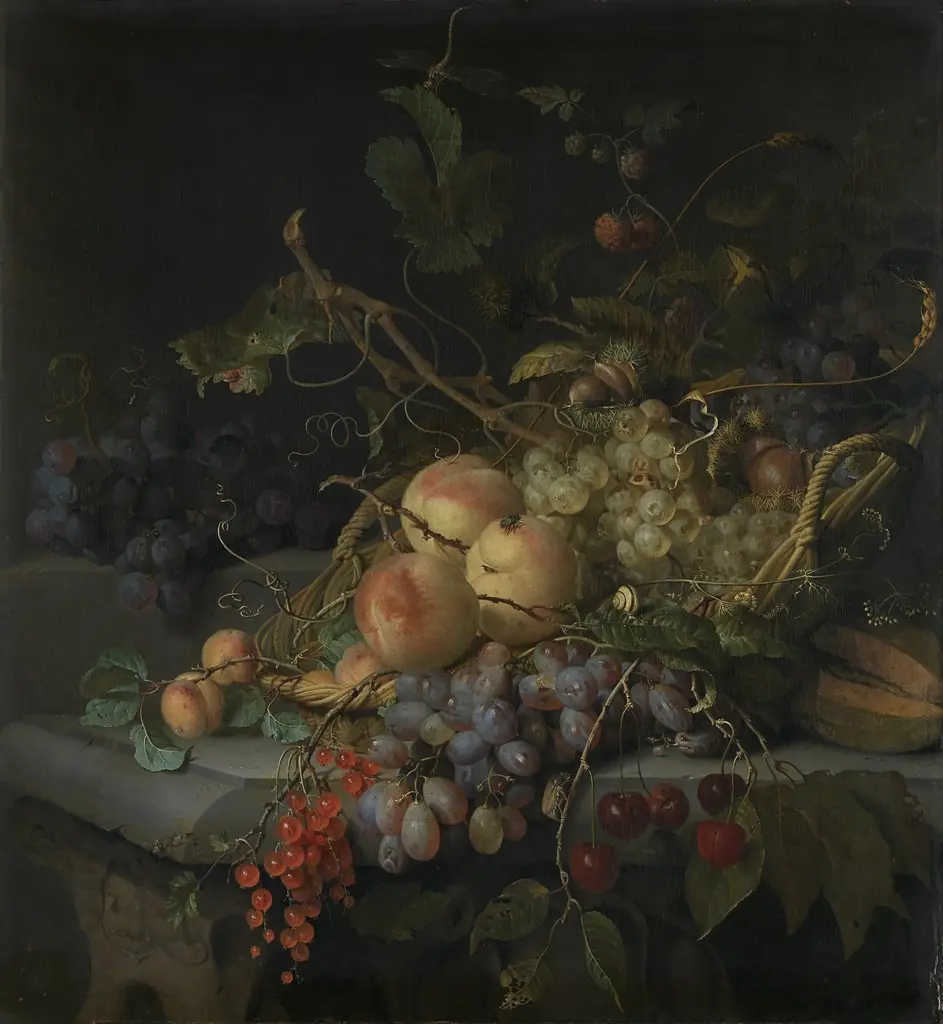
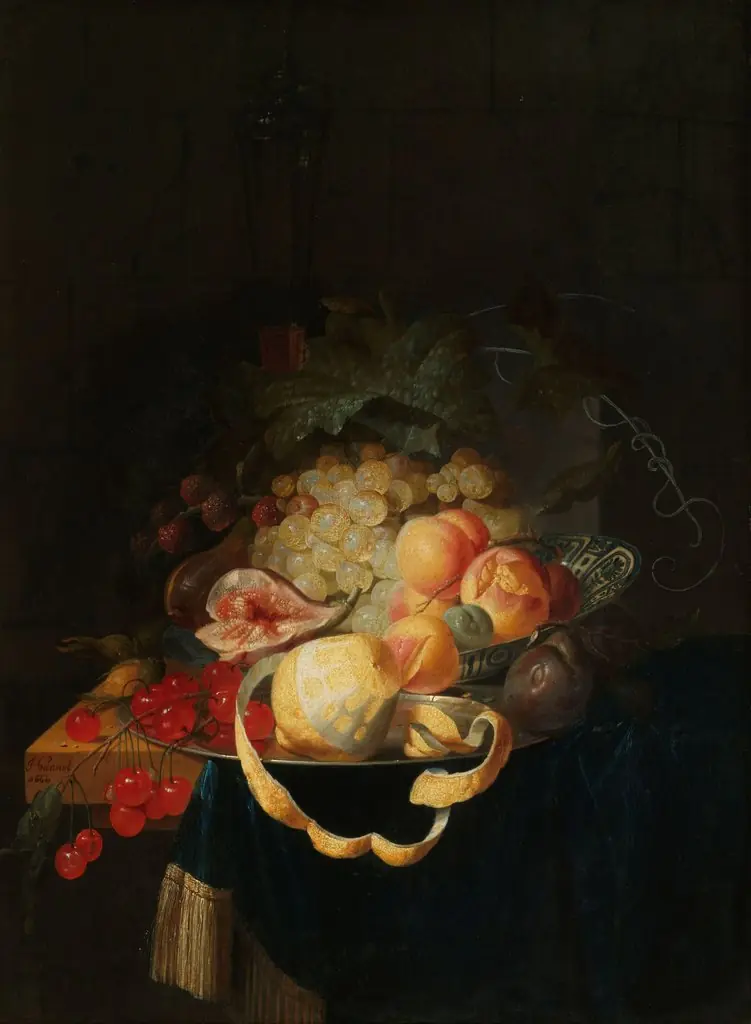
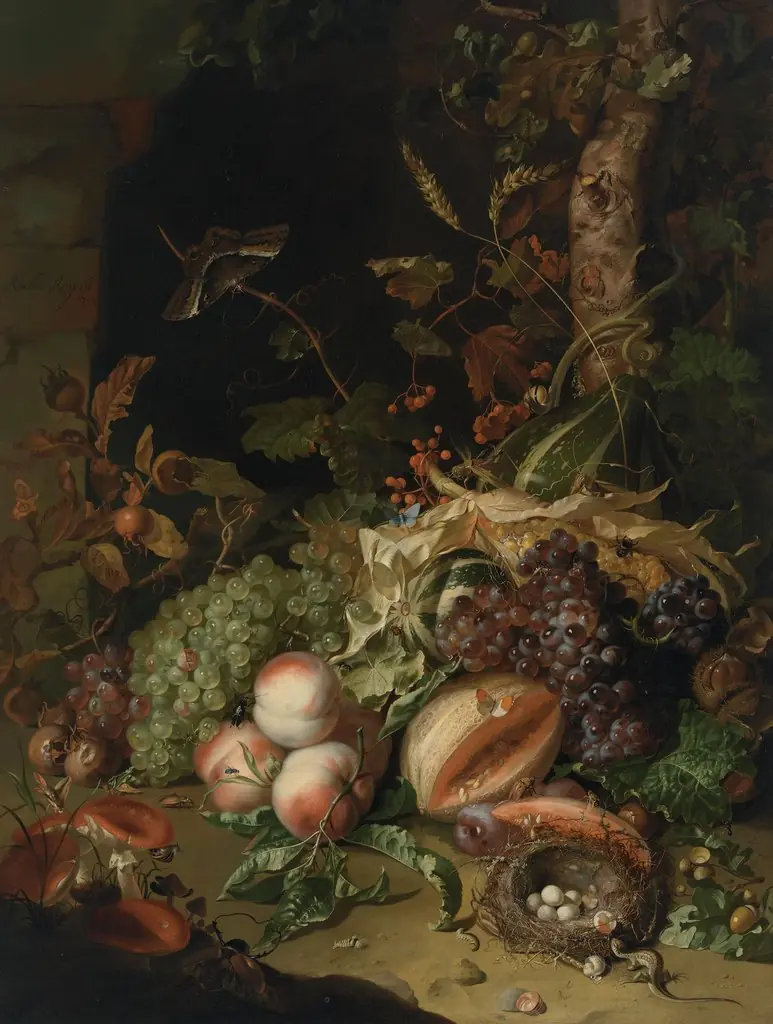
The work titled Still Life with Fruit is a painted composition that presents a stone niche filled with assorted fruit. Grapes, peaches, plums and a halved melon are arranged on the ledge, while a small copper figure of a putto bearing a bowl stands to the right. Above the niche, strings suspend additional grapes and cherries, completing the tableau.
Subject & Meaning
The painting concentrates on the abundance of summer harvest, juxtaposing the solidity of the stone shelf with the delicate, transient forms of the fruit. The inclusion of two butterflies, poised on the produce, introduces a fleeting, natural element that contrasts with the static arrangement, hinting at themes of ephemerality within still life traditions.
Technique & Style
Executed in oil on canvas, the artist renders the stone niche with a muted, tactile surface, allowing the glossy skins of the fruit to stand out. Light falls from above, creating subtle reflections on the copper putto and highlighting the translucency of the grapes. The overall palette is restrained, emphasizing natural colors over decorative excess.
Context
The composition follows the 17th‑century Dutch tradition of elaborate fruit still lifes, where detailed renderings of produce served both as displays of technical skill and as symbolic references to abundance and the passage of time. The presence of a small copper putto reflects a common decorative motif that blended allegorical figures with everyday objects.
Own this work as a print
Artist & collection