Artwork
Still Life with Fruit and a Beaker on a Cock's Foot
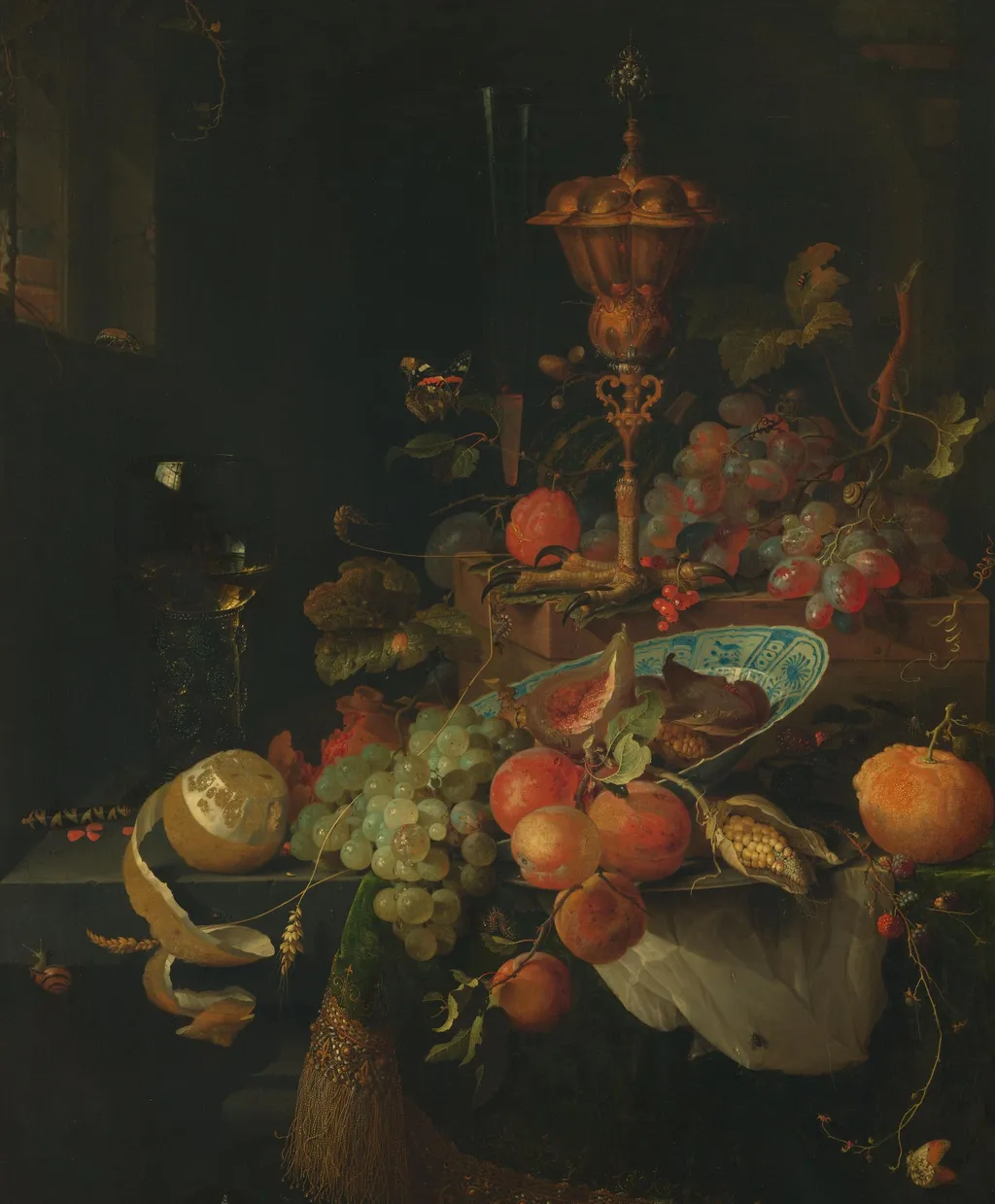
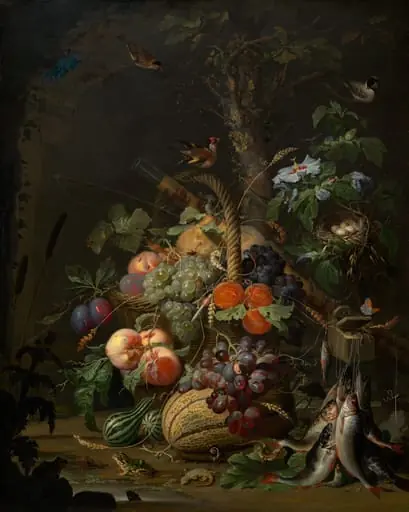
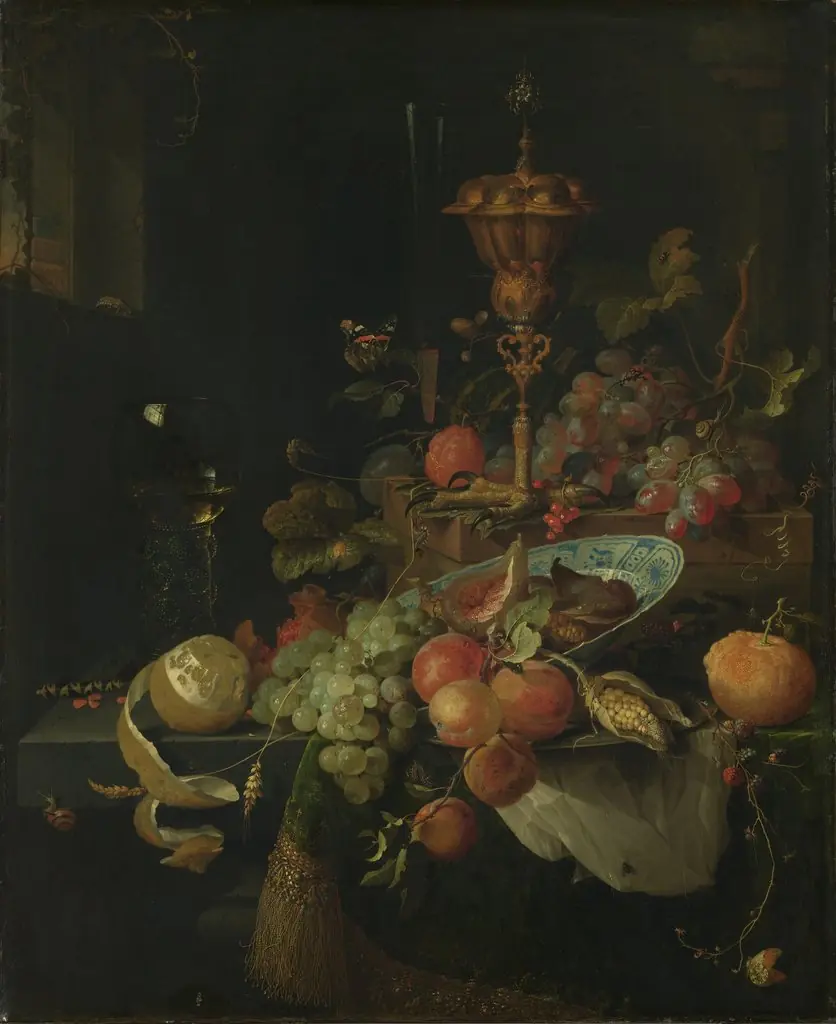
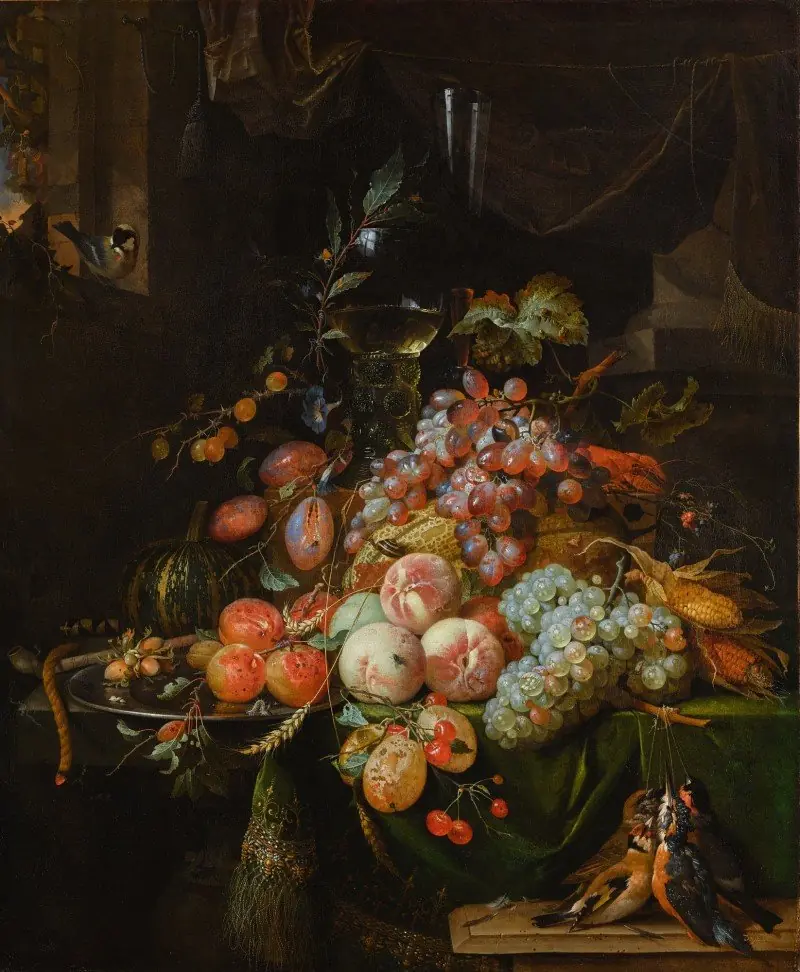
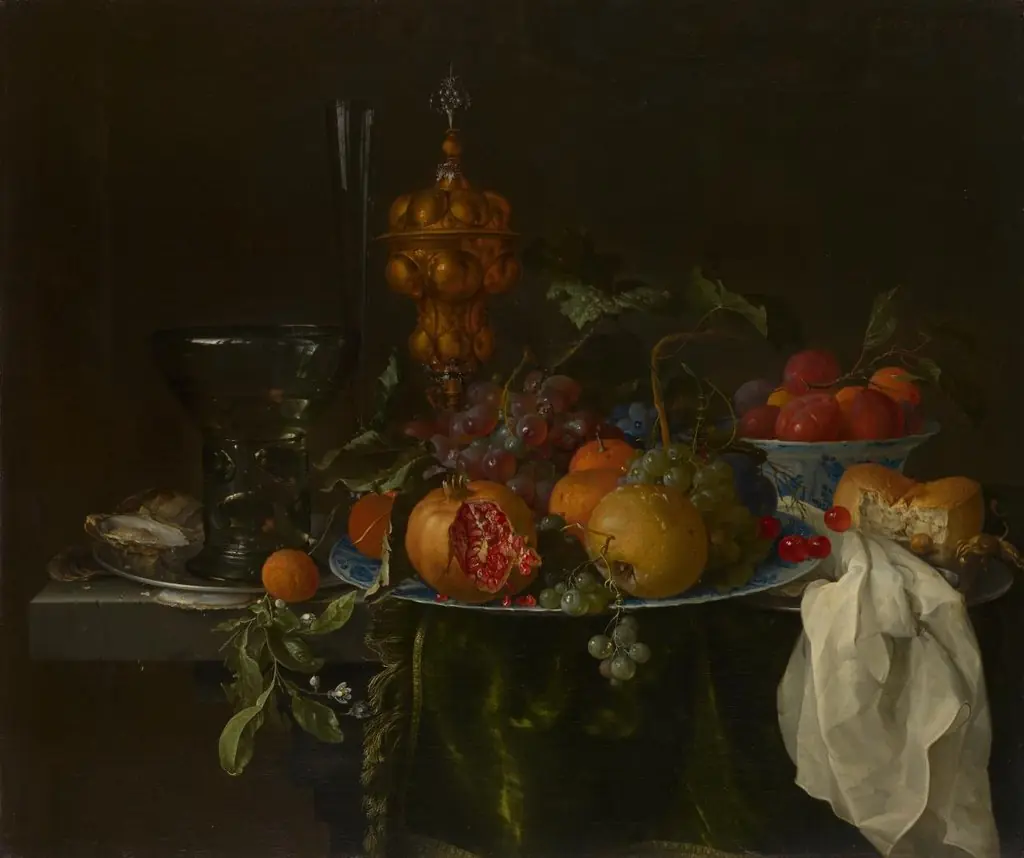
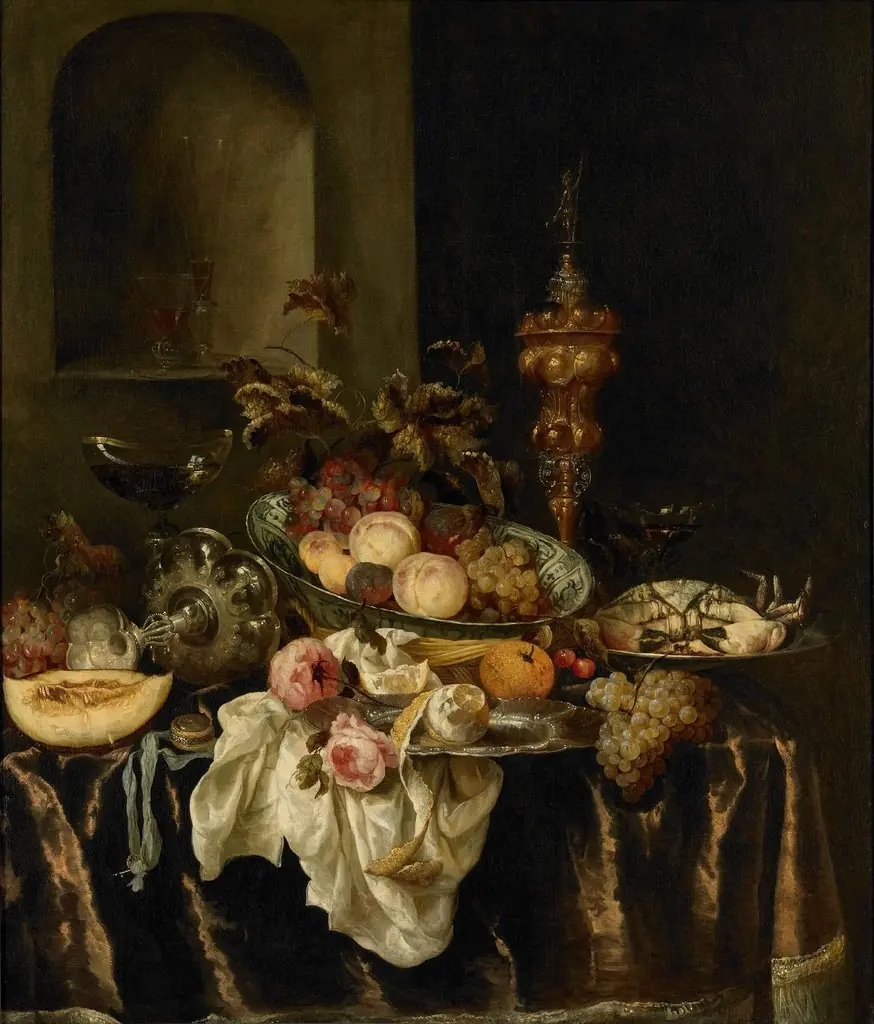
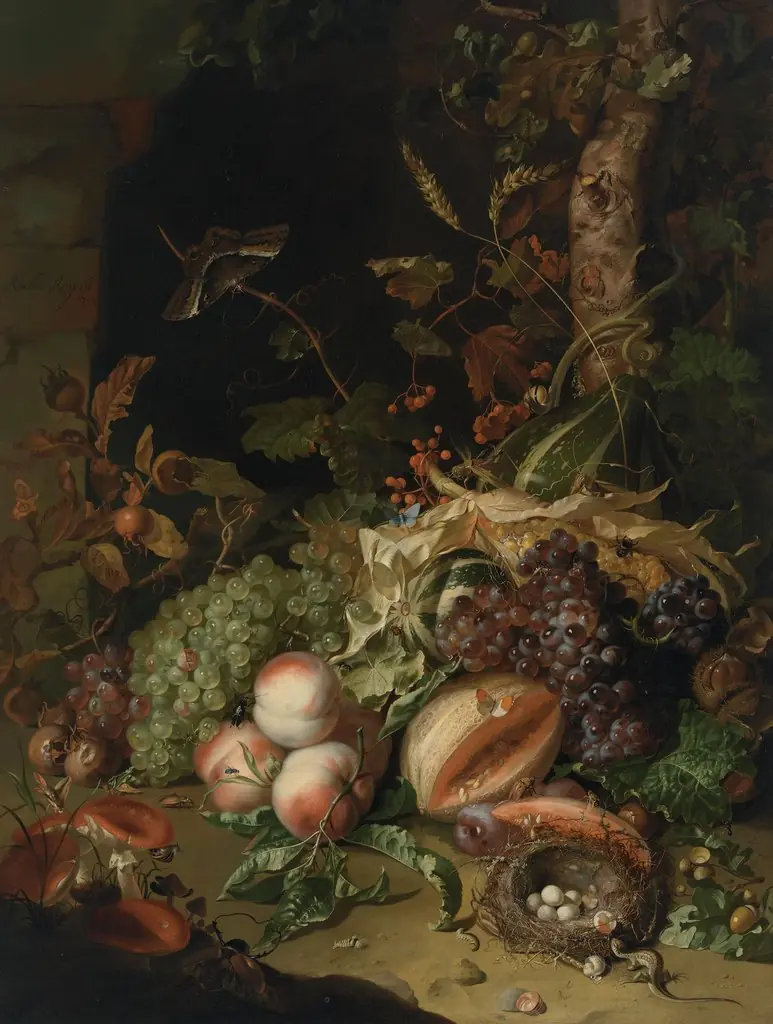
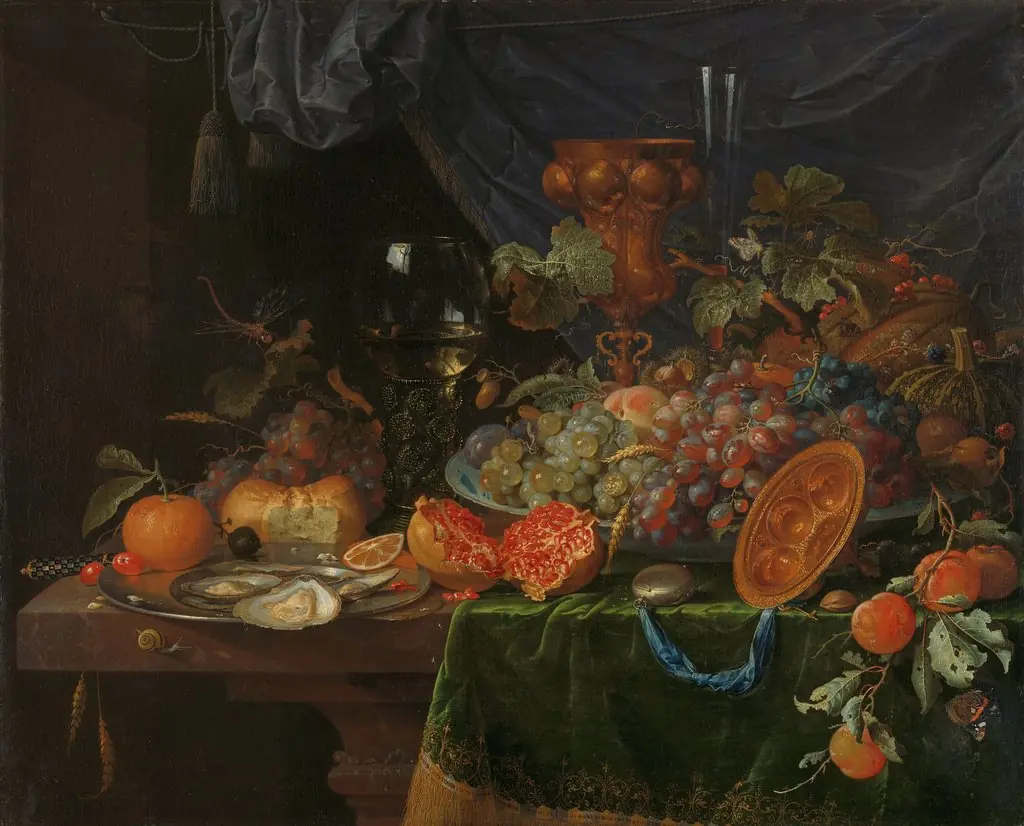
Still Life with Fruit and a Beaker on a Cock's Foot is an unspecified painting by the Dutch Golden Age artist Abraham Mignon. It dates from 1670 and is held in the collection of the Rijksmuseum. The composition presents a tabletop arrangement of assorted fruit, a wine goblet, and a collection of curious objects.
About this work
Technique & Style
The compositions typically feature elaborate arrangements of fruit, flowers, and small animals set against dark backgrounds to enhance color brilliance.
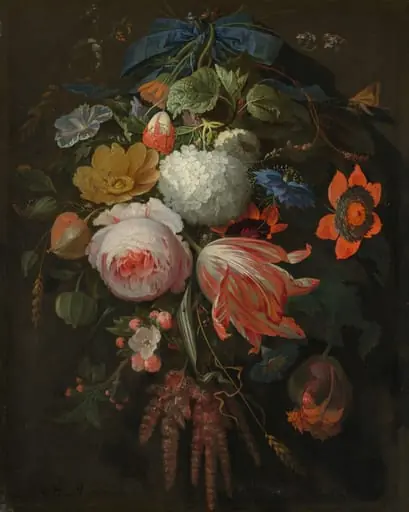
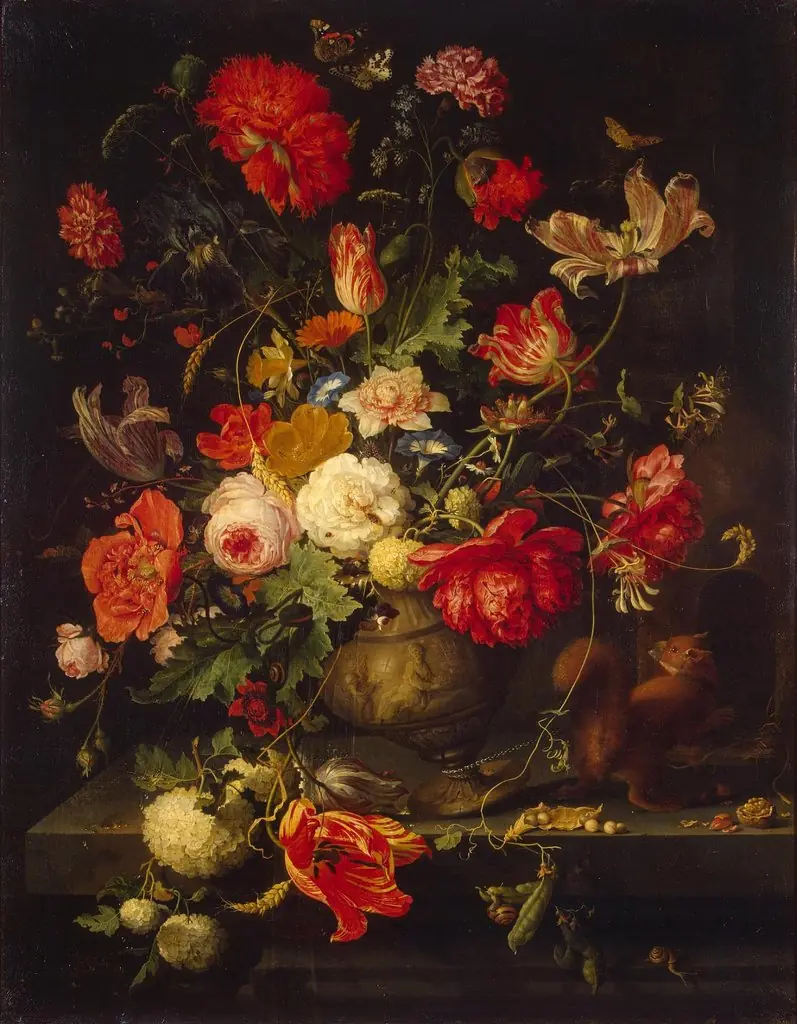
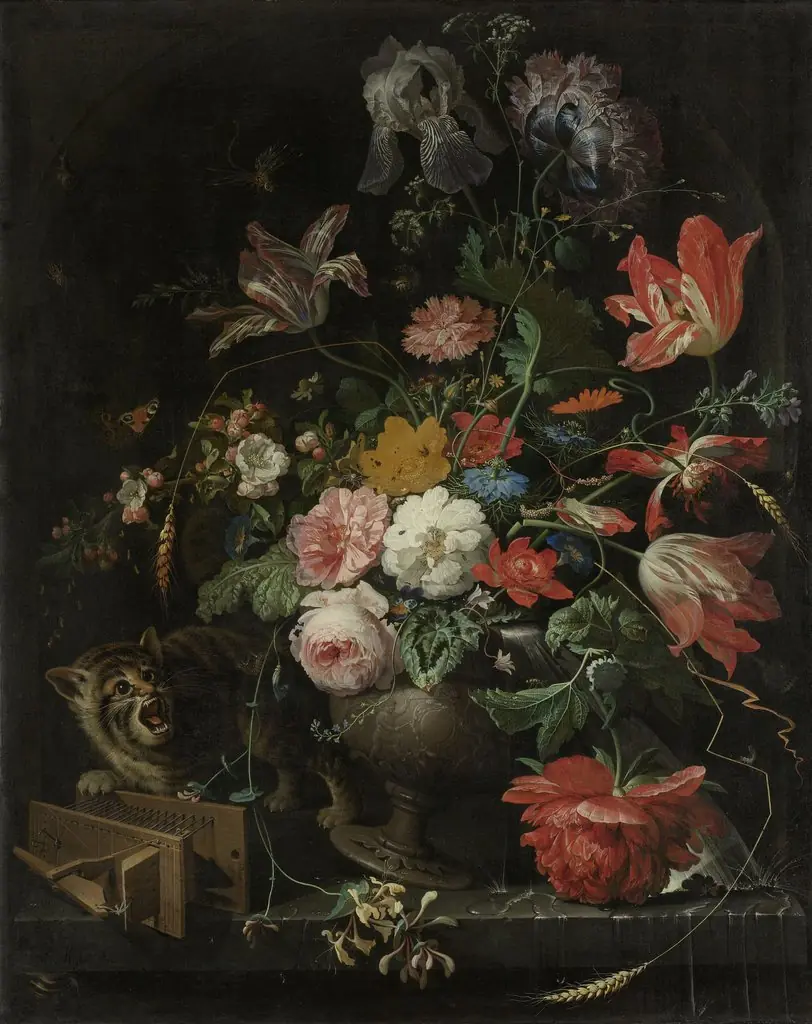
Abraham Mignon executed his still lifes, including Still Life with Fruit and a Beaker on a Cock's Foot, using oil paint on canvas. His technique is defined by an ultra-realistic, highly detailed manner that renders nature with a cooler, more distant precision than his mentor Jan Davidszoon de Heem. The compositions typically feature elaborate arrangements of fruit, flowers, and small animals set against dark backgrounds to enhance color brilliance.
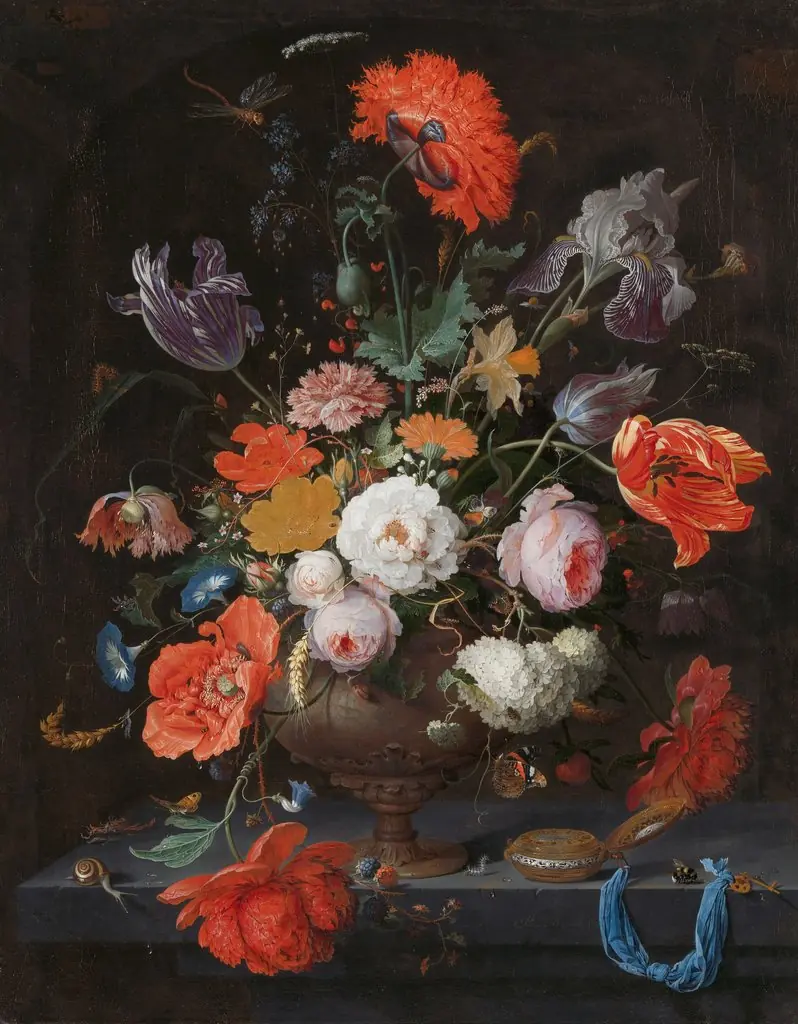
Mignon favored a palette dominated by reds, yellows, and blues, often placing red or white roses at the center of the image. His handling is characterized by sharp focus and delicate finish, creating a sterile yet vibrant atmosphere that emphasizes the textural variety of the depicted objects.
Context
Abraham Mignon’s Still Life with Fruit and a Beaker on a Cock's Foot belongs to a body of work highly prized by 17th and 18th-century European elites, including King Louis XIV of France and the Elector of Saxony. As a student of Jacob Marrel and Jan Davidszoon de Heem, Mignon synthesized his masters' opulent arrangements with a distinctively cooler, more precise, and sterile execution. His style is characterized by sharp focus, a dark background, and a preference for red, yellow, and blue palettes, often centering compositions on red or white roses.
While his works frequently incorporate vanitas symbolism reflecting his deep religious convictions, his technical mastery and detailed rendering of nature secured his reputation across major collections. The painting's inclusion in his oeuvre of approximately 400 attributed works underscores the artist's significant influence, which inspired contemporaries and followers such as Jan Mortel and Conraet Roepel.
Legacy
Abraham Mignon's still life genre established a durable model for later Dutch and German painters who specialized in floral and fruit compositions. His meticulous rendering of blossoms, his use of a dark background to heighten dramatic contrast, and his integration of vanitas motifs influenced 18th-century German still-life artists such as Ernst Stuven and later still-life painters documented in German regional biographies. Contemporary accounts record that his works were collected by European elites, including King Louis XIV of France and the Elector of Saxony, which helped spread his compositional formulas across courts and academies.
Modern museum inventories confirm that his paintings remain part of major European collections, including the Rijksmuseum and the Gemäldegalerie Alte Meister, underscoring his lasting reputation in the history of still-life painting.
Overview
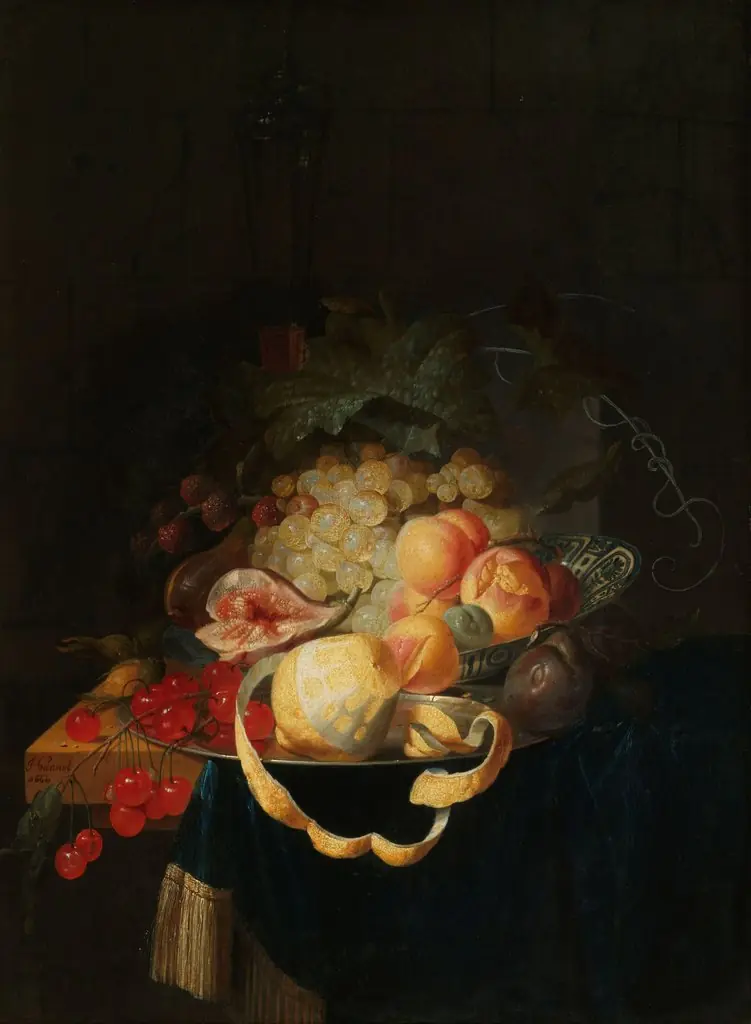
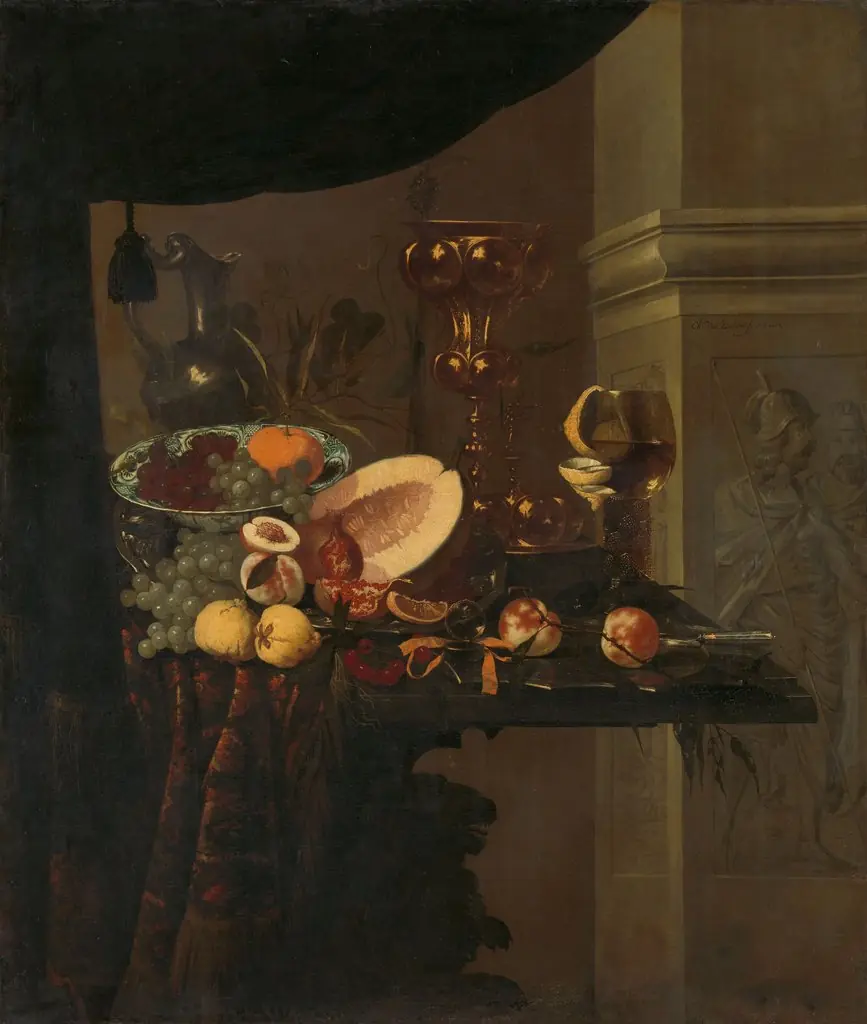
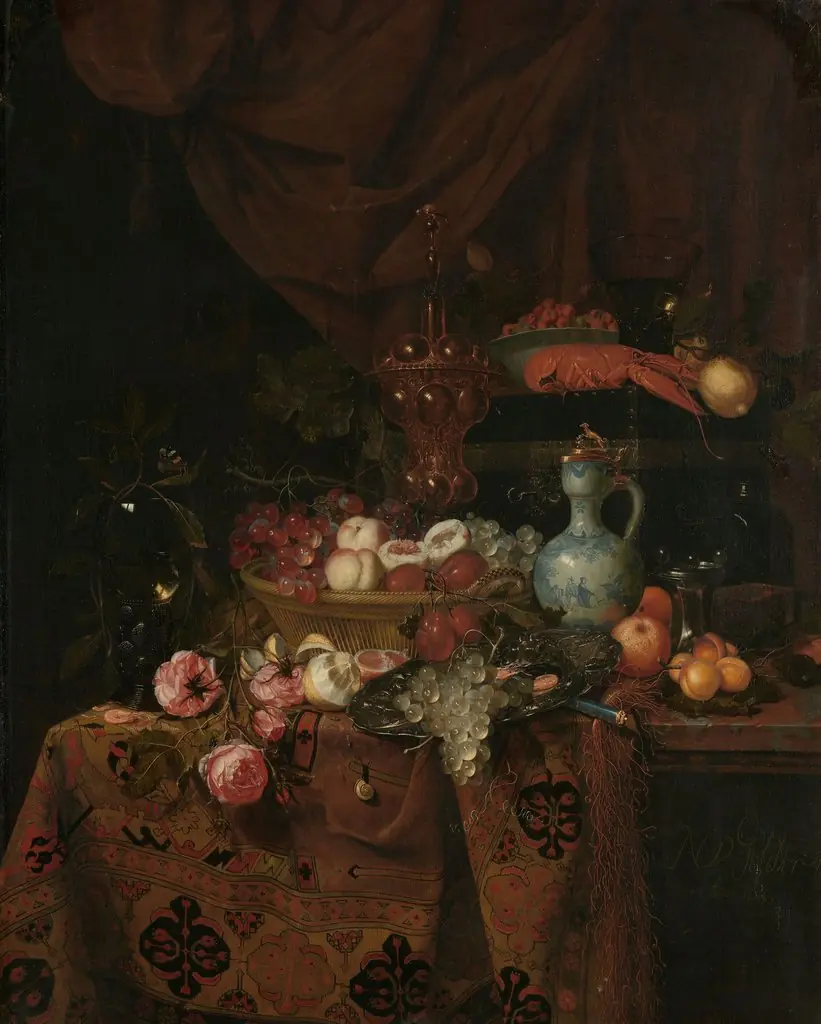
The composition presents a tabletop arrangement of assorted fruit, a wine goblet, and a collection of curious objects. Central to the scene are clusters of grapes, pomegranates, peaches and kernels of corn, all set upon a decorative Wan Li plate. A peeled lemon curls beside a glass of red wine, while a golden beaker rests on an intricately carved rooster foot in the background.
Subject & Meaning
Beyond the ordinary still‑life elements, the painting incorporates small creatures, a beetle near a window, snails and butterflies among the fruit, suggesting a fleeting glimpse of nature’s transience. The unusual rooster‑foot stand for the beaker may hint at a playful or symbolic gesture, inviting viewers to contemplate the juxtaposition of luxury and the mundane.
History & Provenance
The work belongs to a tradition of Dutch still‑life painting that flourished in the 17th century, where exotic objects such as the Wan Li plate and the golden beaker were displayed as signs of wealth and global trade. Its provenance traces through private collections before entering a public museum’s holdings, where it is now catalogued under its Dutch title.
Own this work as a print
Artist & collection
Artist
Abraham Mignon or Minjon (21 June 1640 – 27 March 1679) was a Dutch still life painter.