Artwork
Interior of Walsingham Priory, Norfolk
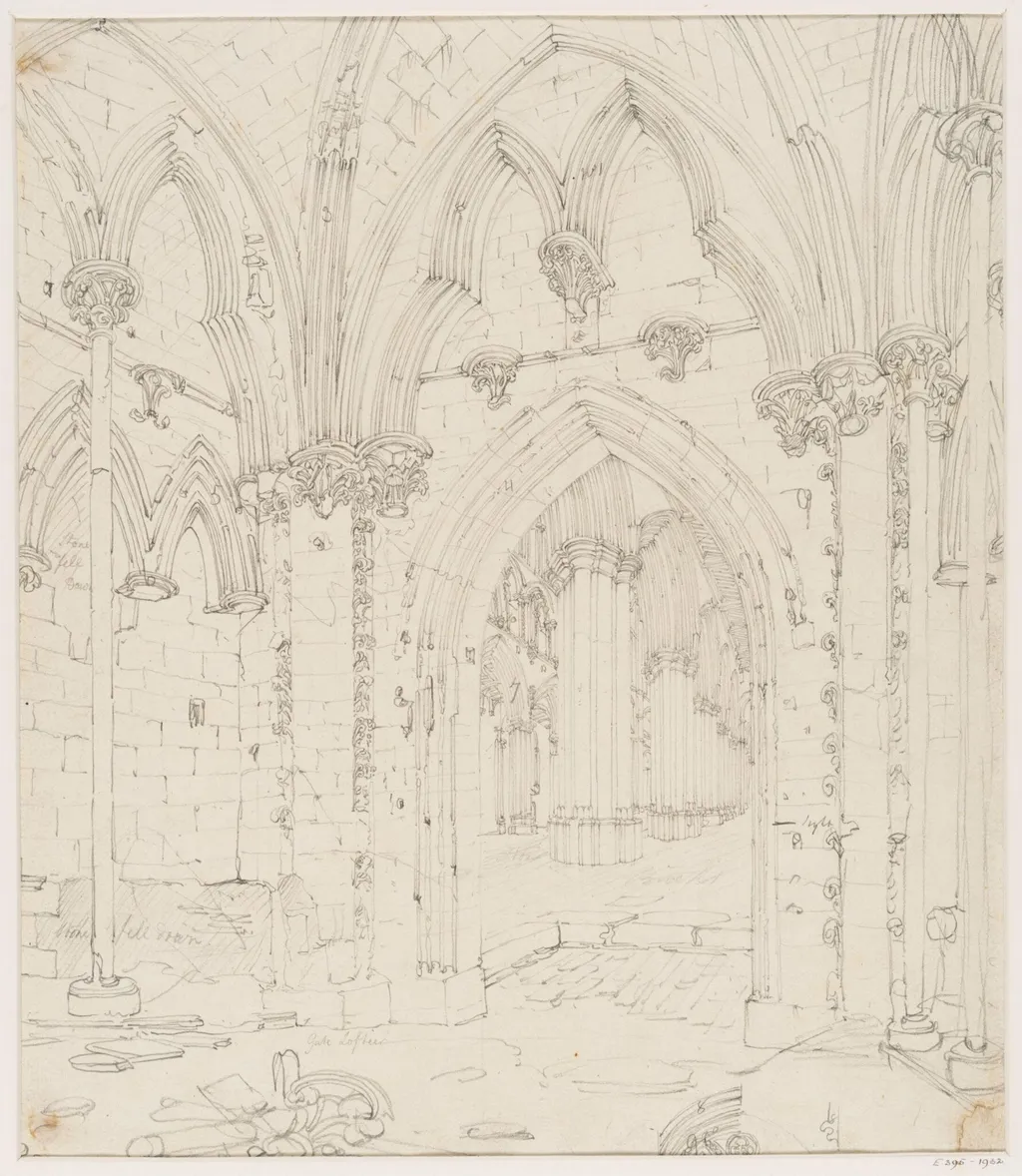
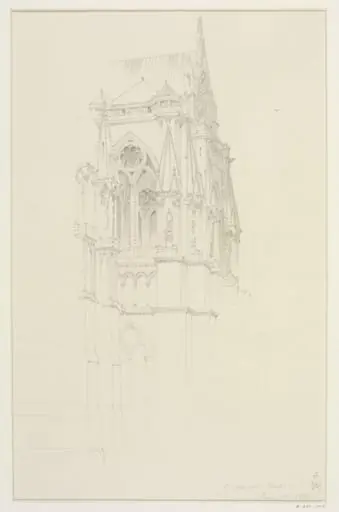
Interior of Walsingham Priory, Norfolk is a drawing by the Romanticist artist John Coney. It dates from 1818 and is held in the collection of the Victoria and Albert Museum. This drawing presents the ruinous interior of Walsingham Priory, a former Augustinian monastery in Norfolk.
About this work
Overview
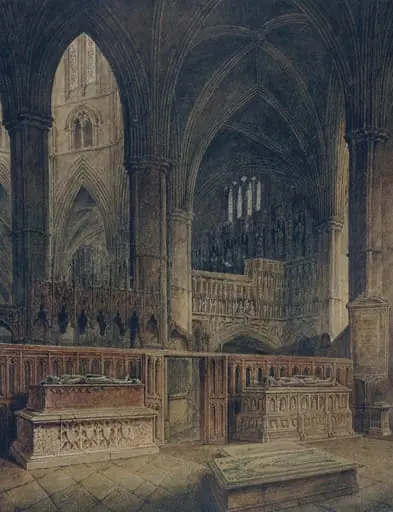
This drawing presents the ruinous interior of Walsingham Priory, a former Augustinian monastery in Norfolk. Executed in pencil, it captures the skeletal remains of the church’s nave, where weathered stone columns and fragmented arches dominate the scene. The composition emphasizes the verticality of the space, with light filtering through high, narrow windows to illuminate the rough masonry.
Subject & Meaning
The work depicts the remnants of a medieval religious structure, now devoid of its original function. Rather than conveying religious devotion, the drawing focuses on the passage of time and the endurance of architecture. The absence of human figures directs attention to the structural elements themselves, suggesting themes of decay, memory, and the persistence of material form.
Technique & Style
Rendered with rapid, gestural pencil strokes, the drawing prioritizes immediacy over precision. The artist employs varying line weight to distinguish textures, rough stone, eroded carvings, and the interplay of light and shadow. The sketch-like quality preserves a sense of spontaneity, avoiding the polished finish of a completed work while still conveying the spatial depth of the interior.
History & Provenance
Walsingham Priory, founded in the 12th century, was dissolved in 1538 under Henry VIII. This drawing likely dates to a period when such ruins attracted artists interested in medieval architecture and the picturesque. The work’s current ownership and early history remain unspecified, though it aligns with 18th- or 19th-century practices of documenting historical sites.
Context
By the time this drawing was created, Walsingham Priory had long been a ruin, reflecting broader cultural fascination with Gothic architecture. Artists and antiquarians frequently recorded such sites, preserving their forms before further deterioration. The sketch belongs to a tradition of topographical drawing, where accuracy and atmosphere served both artistic and documentary purposes.
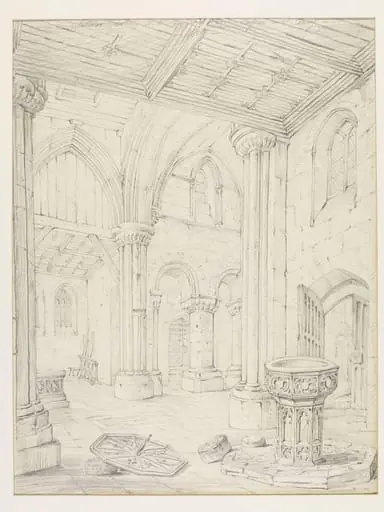
Own this work as a print
Artist & collection
Artist
This British silversmith shaped gleaming household objects in the early 1700s, hammering silver into teapots, dram cups, and trencher salts that gleam with gilded edges.

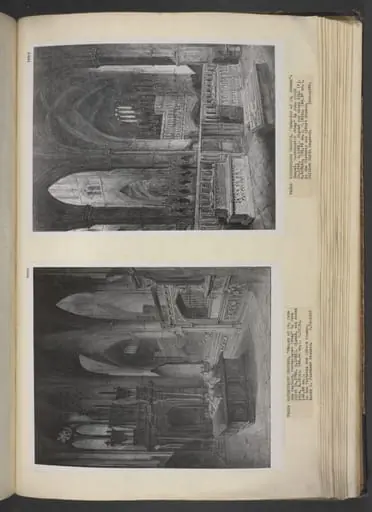
- Priory church at Boxgrove
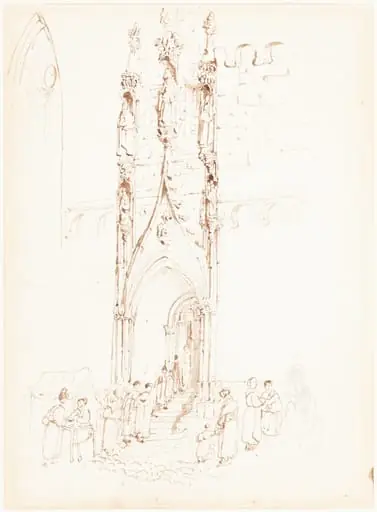 A Gothic Arch
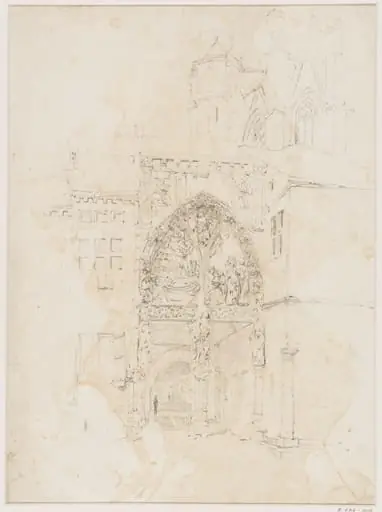 Church of St. Maternus at Huy
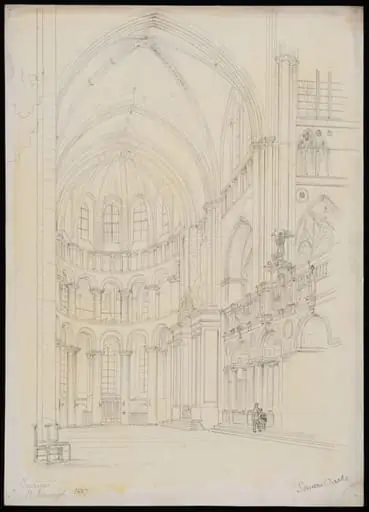 Interior of N. Transept, Tournai Cathedral
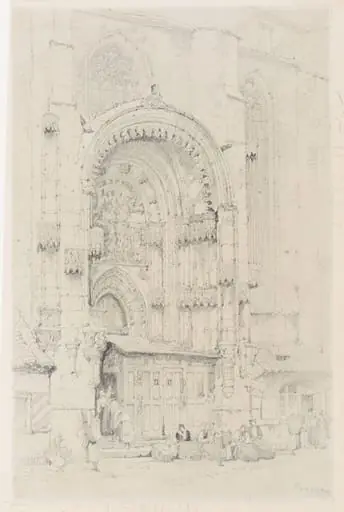 Prague Cathedral
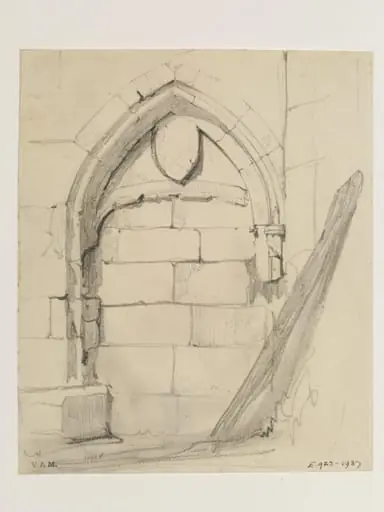 Drawings of architectural details in the abbey at Royaumont
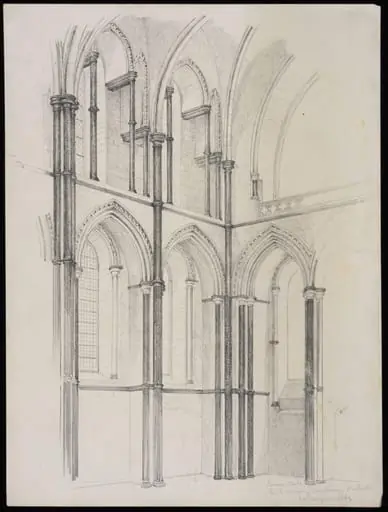 Interior of N.E. corner of the Sanctuary, Rochester Cathedral
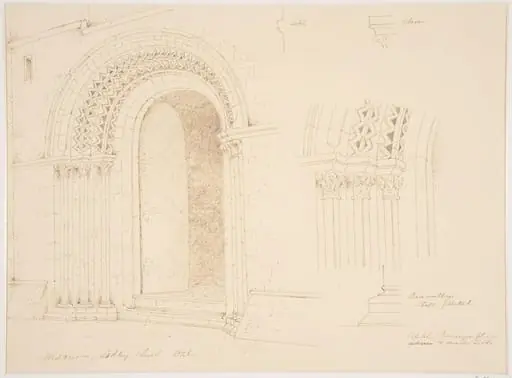 Untitled
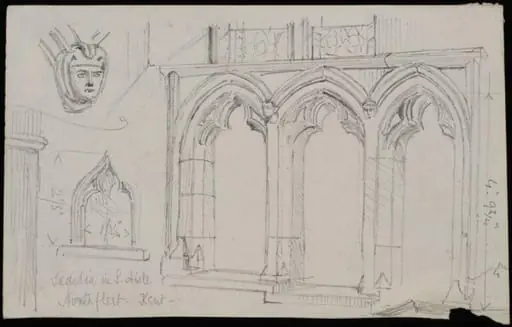 Sedilia, piscinas, screens and stallwork
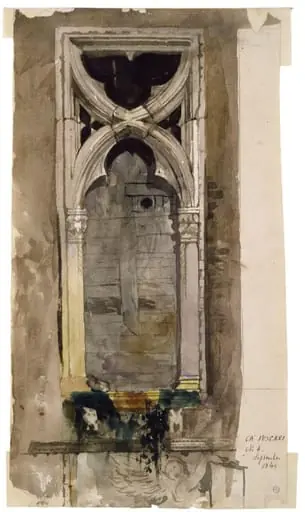 Window in the Foscari Palace, Venice
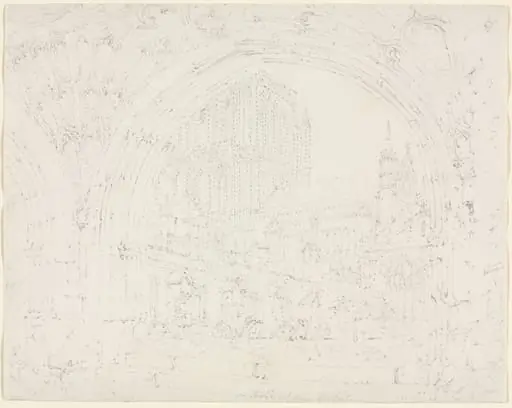 Hereford Cathedral
 Architectural drawing