Subject
Ruins
Ruins is a subject in art. The gallery holds 200 works in this subject in art, including works by Paolo Veronese, Thomas Cole and Jasper Francis Cropsey.
Ruins—from the Latin ruina, "a collapse"—are the surviving remains of a civilization's architecture, structures fallen into partial or total decay through neglect, deliberate destruction, or the slow violence of nature. As an artistic subject, the ruin is inseparable from Europe's recurring fascination with antiquity. Italian Renaissance painters revived the classical past not only through proportion and sculpture but by setting sacred scenes amid crumbling masonry: Andrea Mantegna (1431–1506), an early devotee of archaeological accuracy, staged nativities and the martyrdom of Saint Sebastian against shattered triumphal arches, where pagan grandeur lies broken beneath the new Christian order. The motif carried an implicit moral, akin to the skull in a vanitas still life—a memento of mortality and the transience of human ambition.
The ruin matured into an independent theme in the seventeenth century with Claude Lorrain (1604/05–1682), whose luminous pastoral landscapes used ruined temples to set the transient against the eternal, the fragment against unchanging light. In the eighteenth century the genre flourished in Rome. Giovanni Paolo Panini (1691–1765), foremost painter of Roman topography, produced both vedute (accurate views) and capricci—from the Italian for whimsical—imaginative compositions assembling real and invented monuments into fanciful arrangements. Giovanni Battista Piranesi (1720–1778) dramatized antiquity in his etchings by lowering the viewpoint and dwarfing tiny figures against colossal architecture. Their French pupil Hubert Robert (1733–1808) so specialized in this manner that he was nicknamed "Robert des Ruines," carrying the romantic ruin-painting back to France.
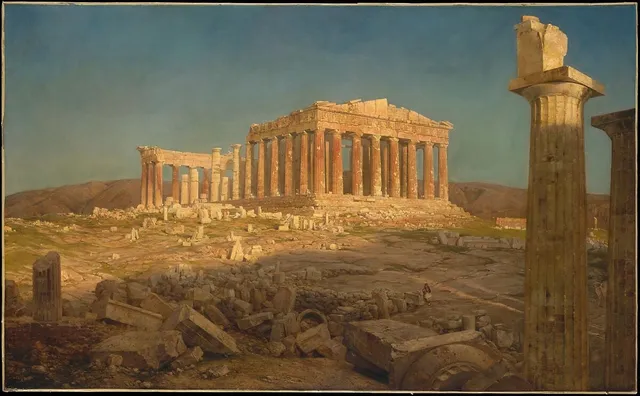
The century's "cult of ruins" was nourished by new aesthetics—Edmund Burke's sublime and the English Picturesque—which prized the moody, melancholy decay of medieval abbeys and castles. This sensibility fed directly into Romanticism and crossed the Atlantic to the Hudson River School. Thomas Cole (1801–1848) gave the ruin its grandest allegorical statement in The Course of Empire (1833–36), whose final canvas, Desolation, shows a once-mighty city reclaimed by wilderness—a warning, with obvious echoes of Rome's fall, about the fate of nations. Frederic Edwin Church (1826–1900) painted The Parthenon (1871) after studies made in Athens, its foreground strewn with fallen capitals and columns bathed in golden light.
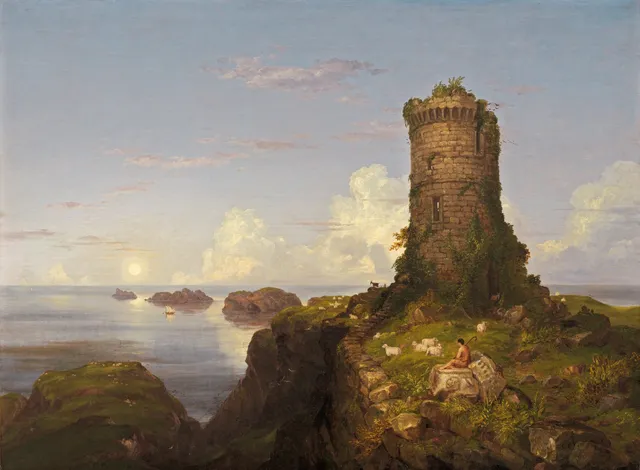
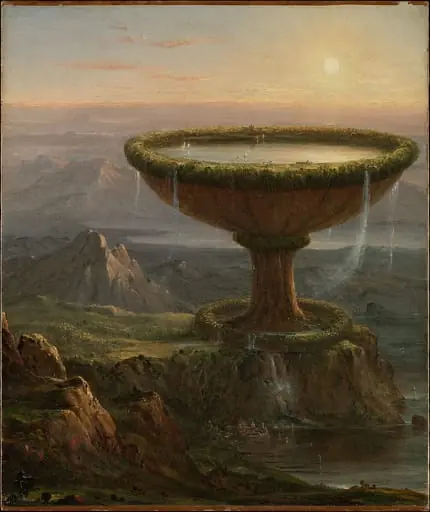
The theme persists in the catalogue's holdings, including Cole's Italian Coast Scene with Ruined Tower, A View near Tivoli (Morning), and the visionary Titan's Goblet. From Renaissance memento mori to Romantic meditation on empire, ruins remain art's enduring image of time's passage over the works of humankind.
Key artists

Overview
Ruins are the remains of human-made architecture that have fallen into partial or total disrepair through natural decay, deliberate destruction, or catastrophic events. The term derives from Latin ruina, meaning a collapse. In art, ruins constitute a persistent and versatile motif that appears across 324 works in the collection, ranging from mythological scenes such as Venus and Mars to capriccio landscapes like The Titan's Goblet and topographical views including The Parthenon and A View near Tivoli (Morning). The motif's recurrence stems from its capacity to evoke multiple layers of meaning: temporal passage, civilizational decline, the sublime confrontation between human ambition and natural forces, and the aesthetic pleasures of decay itself. Ruins function simultaneously as historical documents and as triggers for emotional and philosophical reflection, making them indispensable to Western visual culture from the Renaissance forward.
Iconography & meaning
The iconography of ruins carries distinct symbolic registers that shifted markedly over time. In the Middle Ages, Roman ruins were typically viewed as inconvenient obstacles or quarries for building material, and when depicted, they served as commentary on the triumph of Christianity and the decay of the pagan world in anticipation of the Second Coming. The Renaissance transformed ruins into models for architectural revival and objects of venerable decay, a shift catalyzed by the discovery of Nero's Domus Aurea around 1500 and early excavations at Herculaneum and Pompeii. By the Enlightenment and Romantic periods, ruins had become symbols of political equality, as in Constantin François Volney's writings, and emblems of nostalgic longing for an idealized past. Georg Simmel, in his 1907 essay Die Ruine, articulated the philosophical dimension: ruins create the present form of a past life not through its contents but through its pastness as such. For Simmel, the ruin represented culture's return to nature, producing the impression of a human work that appears simultaneously as a natural one. In painting, ruins often carried picturesque qualities, lending scenic character to landscapes, or served as memento mori reminding viewers of transience and mortality. The surrealist Benjamin Péret later proposed that ruins result from the opposition between memory and forgetting rather than from a simple process of destruction.
Across movements & periods
The treatment of ruins evolved substantially across artistic movements. Medieval artists regarded surviving Roman structures as material resources or evidence of superseded paganism. The Renaissance inaugurated aesthetic appreciation, with Raphael's Vatican Rooms demonstrating the impact of newly discovered ancient forms. Neoclassicism deepened this historicism, while the Enlightenment and Romanticism extended valuation to medieval ruins previously considered mere debris. German Romantic painter Caspar David Friedrich achieved enduring fame through depictions of vanishing ruins such as Kloster Eldena, capturing melancholic contemplation of transience. British contemporaries Constable and Turner similarly elevated landscape painting with ruin components, dissolving classical genre hierarchies. The nineteenth century saw deliberate construction of artificial ruins, or follies, in European estate gardens, exemplified by the Magdalenenklause at Nymphenburg and the Löwenburg in Kassel's Bergpark. The twentieth century introduced industrial ruins and war memorials, including the preserved ruins of Berlin's Kaiser-Wilhelm-Gedächtniskirche and Hiroshima's former chamber of commerce, while contemporary culture has embraced urban decay and lost places as objects of fascination. Post-industrial rust belt ruins remain, by one account, in the infancy of aesthetic contemplation.
Notable depictions
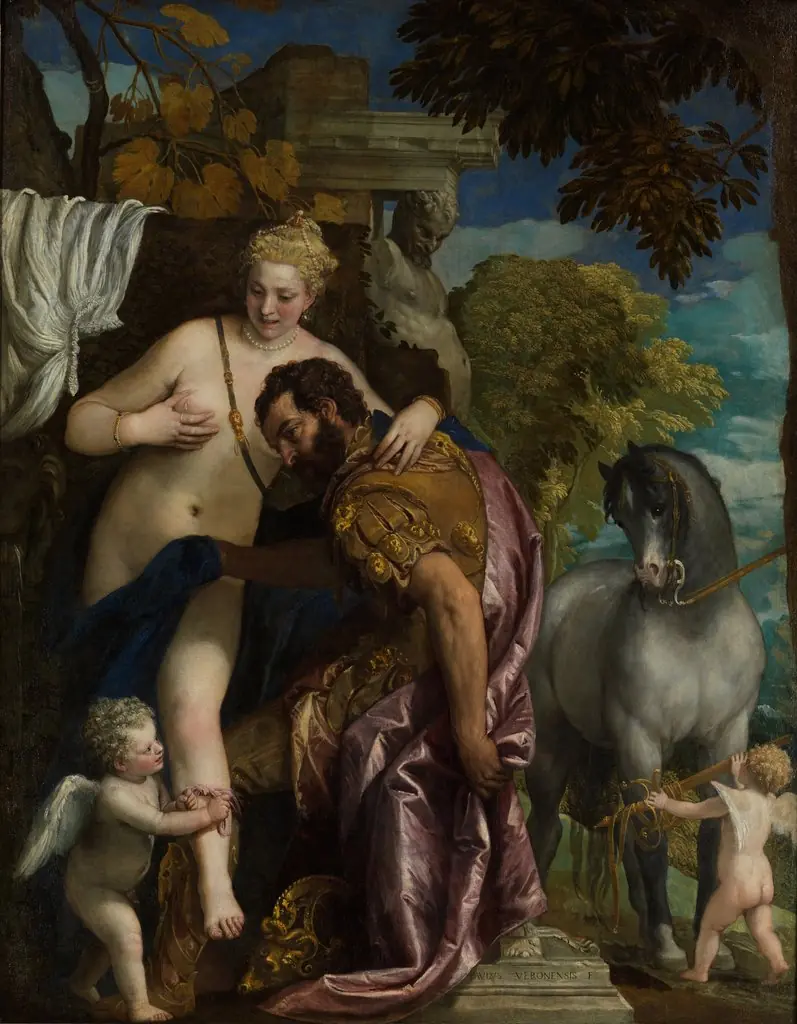
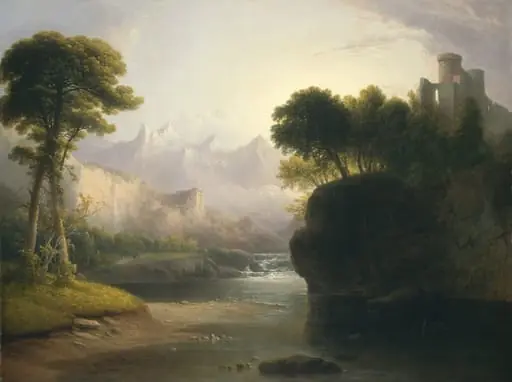
Canonical depictions of ruins span national schools and centuries. In Germany, Caspar David Friedrich's monastery ruins, particularly Kloster Eldena, established the Romantic ruin as a vehicle for spiritual meditation on time and nature. British artists John Constable and J.M.W. Turner integrated ruins into landscapes that asserted the primacy of natural atmosphere over human construction. The collection itself holds significant examples: The Titan's Goblet by Thomas Cole represents American Romanticism's allegorical deployment of monumental decay, while The Parthenon documents specific archaeological heritage. Italian views such as A View near Tivoli (Morning) and Italian Coast Scene with Ruined Tower continue the veduta and capriccio traditions that flourished from the seventeenth through nineteenth centuries. The presence of Venus and Mars among ruin-depicting works suggests the motif's adaptability to mythological narrative, where classical settings authenticate or romanticize antique subject matter. Fanciful Landscape and Fantastic Landscape indicate the persistence of imaginative, non-topographical approaches alongside documentary ones.
Legacy
The cultural afterlife of ruins extends into preservation debates, political symbolism, and contemporary aesthetics. The twentieth century witnessed intense discussion about whether to conserve ruins as memorials, reconstruct them, or allow natural decay. The Dresden Frauenkirche, preserved as an anti-war memorial, was reconstructed between 1996 and 2005, while other sites remain deliberately unrestored. The 1964 Venice Charter established anastylosis as the preferred conservation method. Ruins have served explicit political functions, from the German Democratic Republic's national anthem Auferstanden aus Ruinen to the destruction of pre-Islamic sites by Daesh in Syria as cultural cleansing. Tourism has transformed ruins into economic resources, with UNESCO World Heritage designation protecting sites from Machu Picchu to the Acropolis. The phenomenon of lost places and urban exploration represents the latest phase of ruin appreciation, while philosophical interest persists in the tension between reconstruction and authentic decay. For artists, ruins remain inexhaustible subjects precisely because they materialize the passage of time itself, offering what Simmel identified as the unique synthesis of human purpose and natural reclamation.
Works
 Venus and Mars
 Fanciful Landscape
 The Titan's Goblet
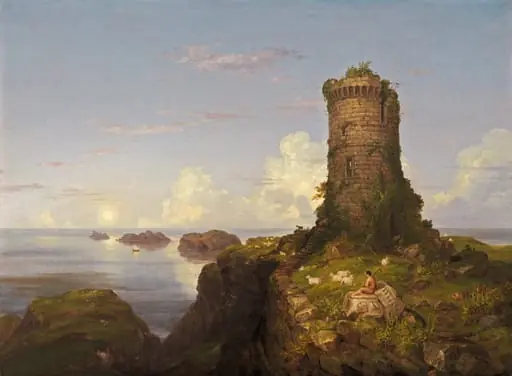 Italian Coast Scene with Ruined Tower
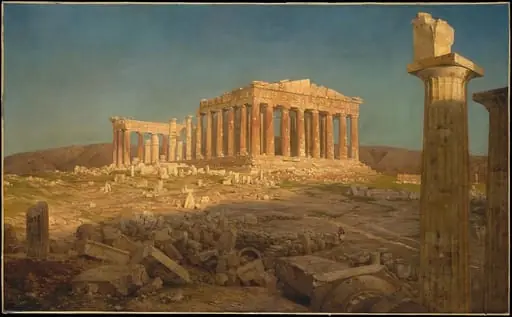 The Parthenon
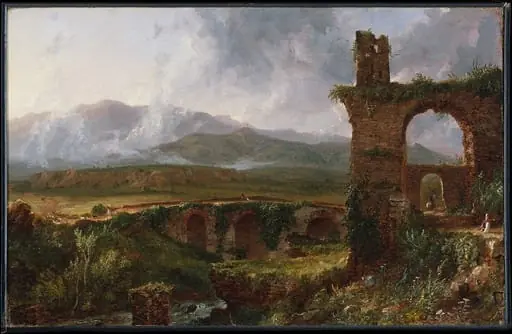 A View near Tivoli (Morning)
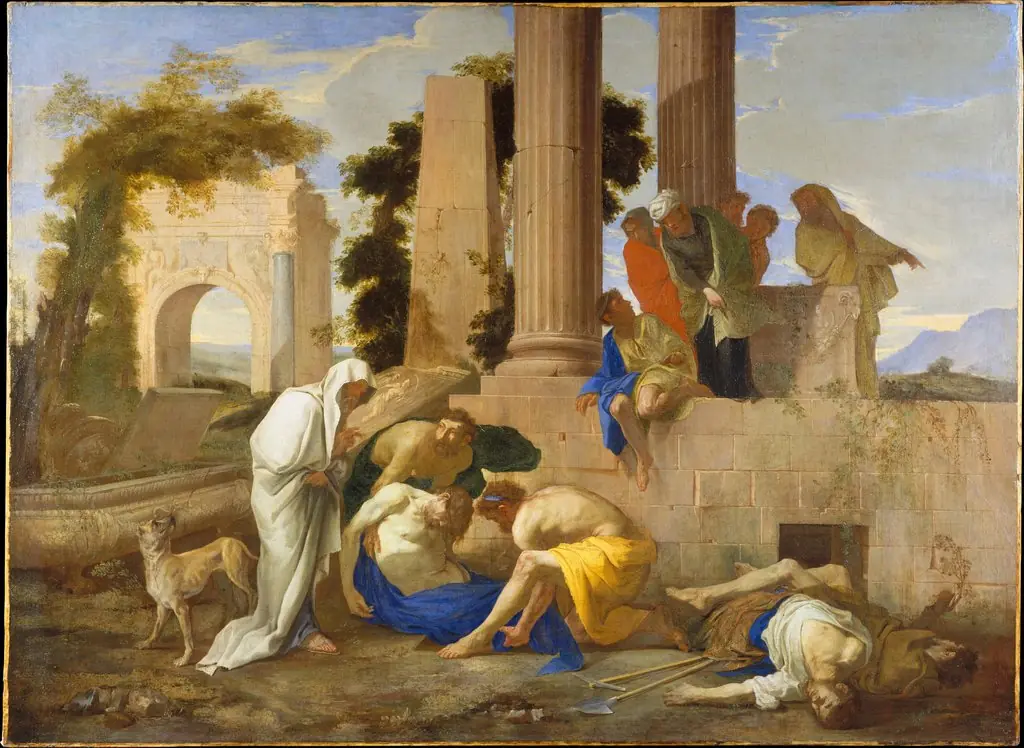 Tobit Burying the Dead
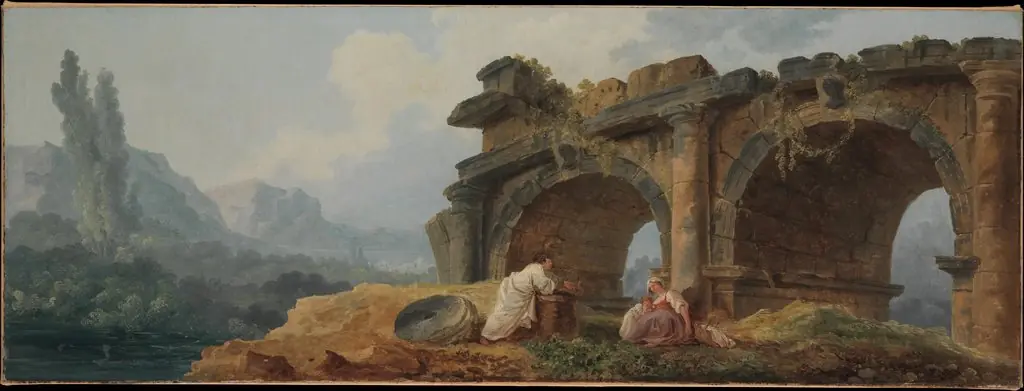 Arches in Ruins
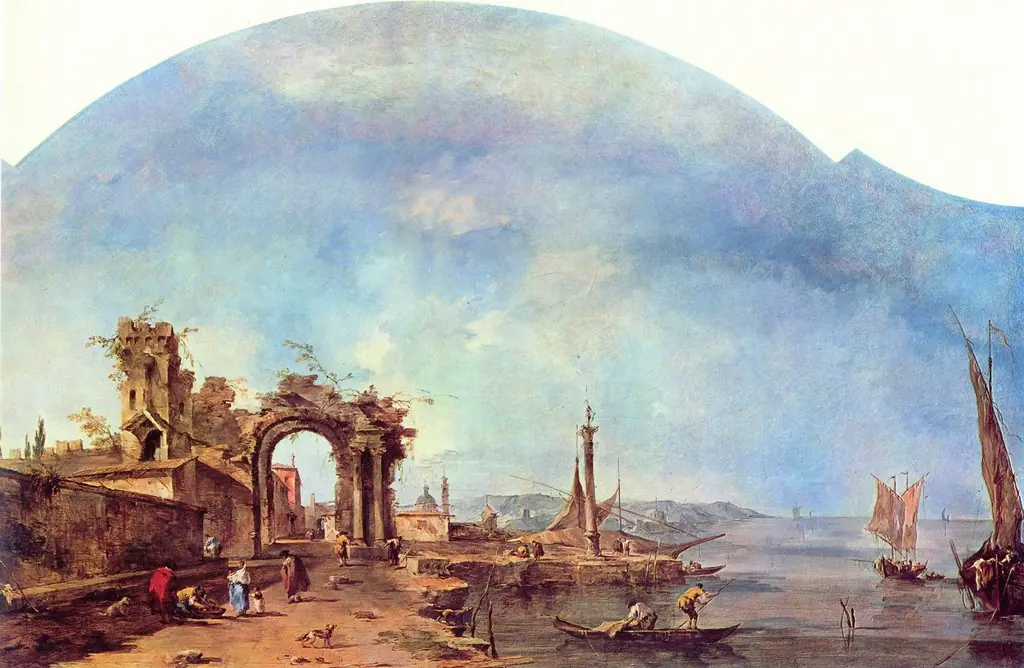 Fantastic Landscape
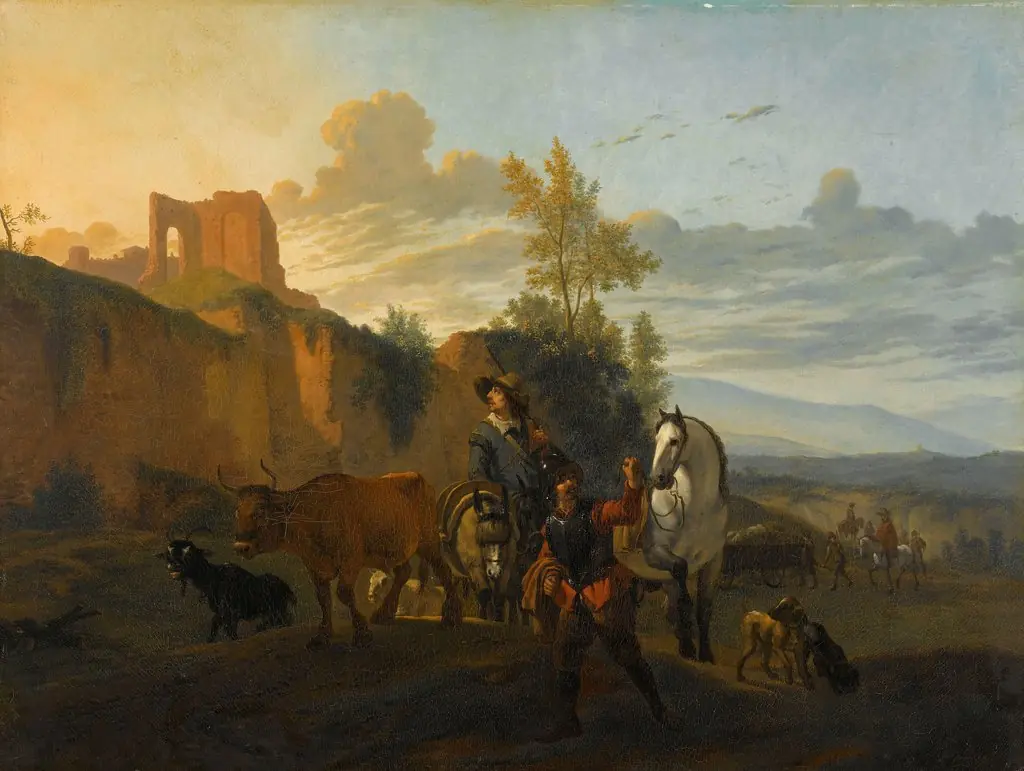 Italian landscape with soldiers
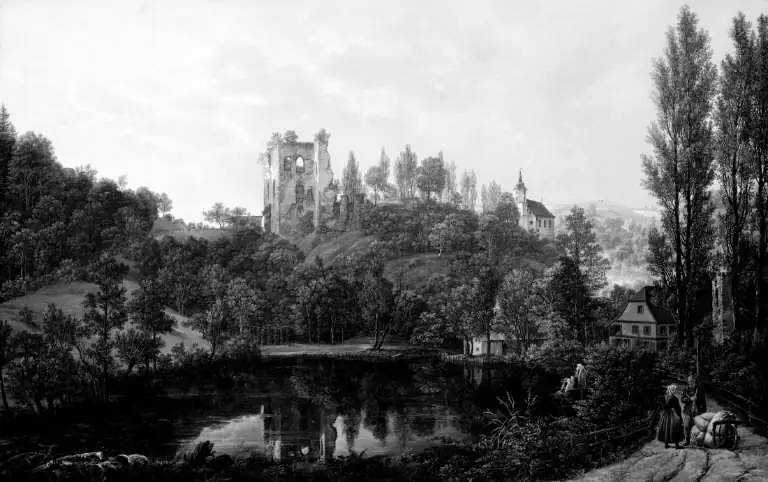 The Castle Ruin at Tharandt
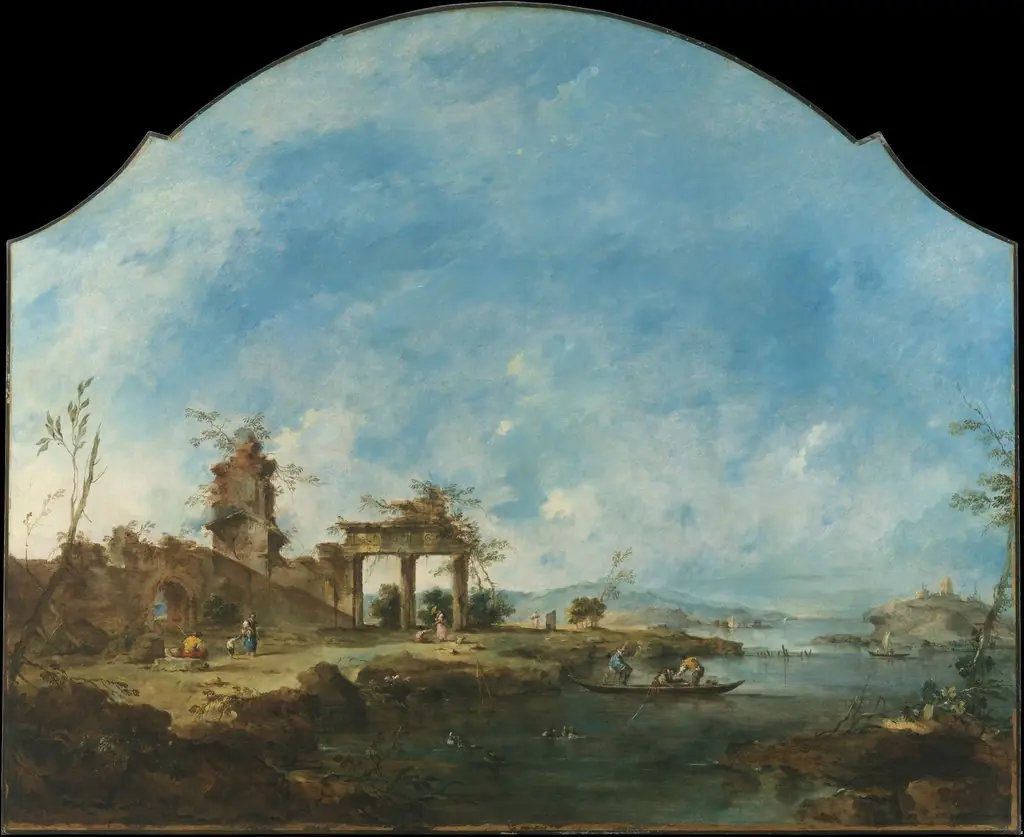 Fantastic Landscape
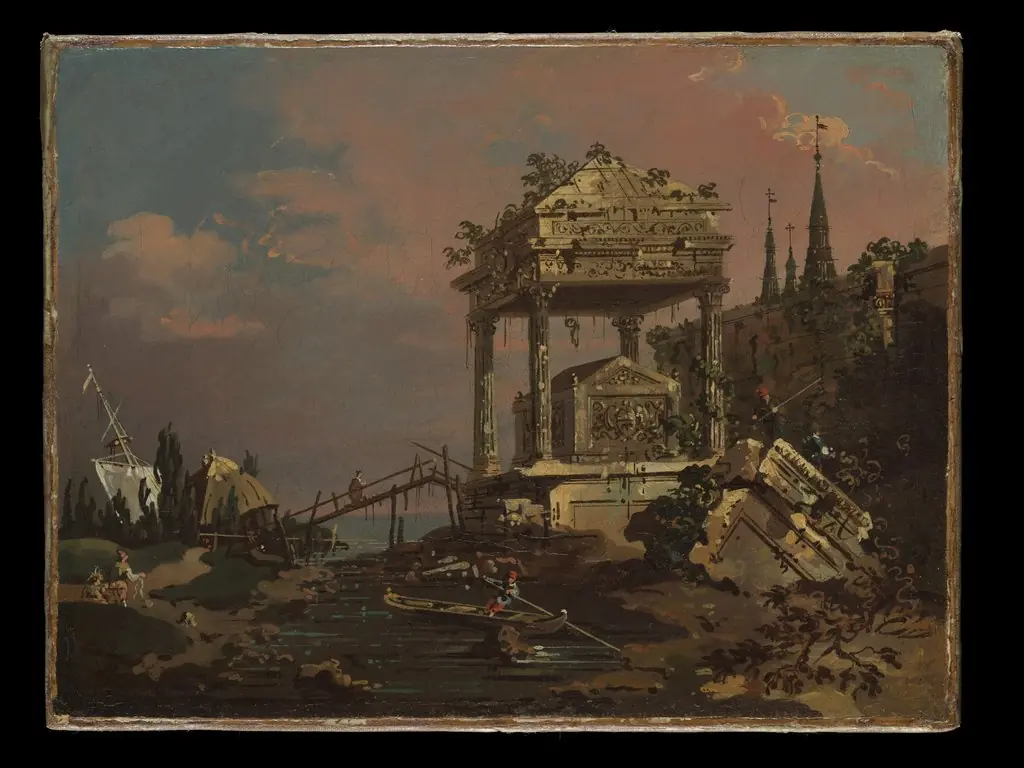 Imaginary View with a Tomb by the Lagoon
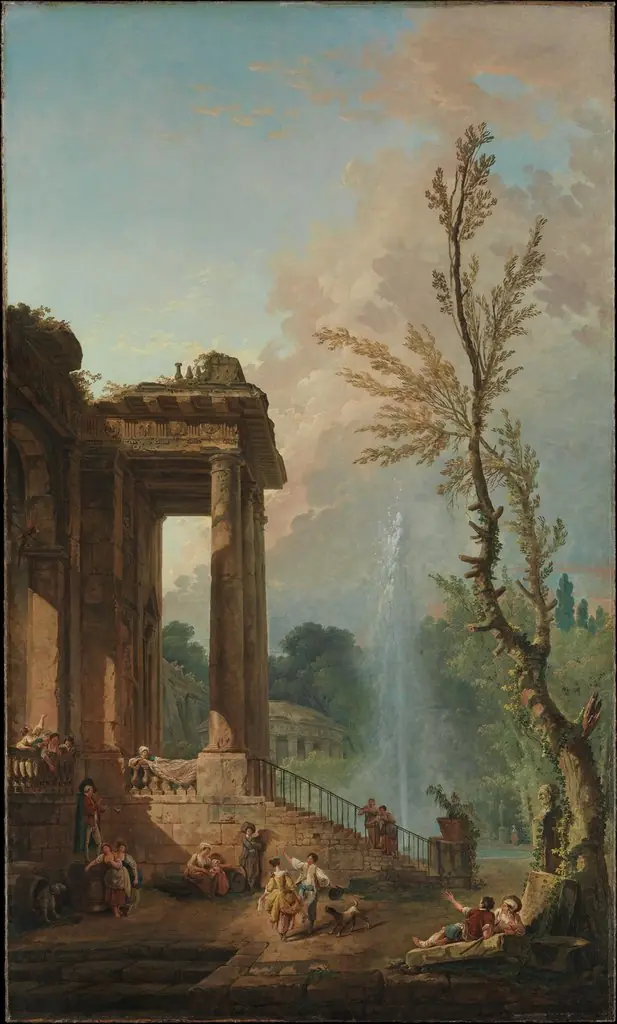 The Portico of a Country Mansion
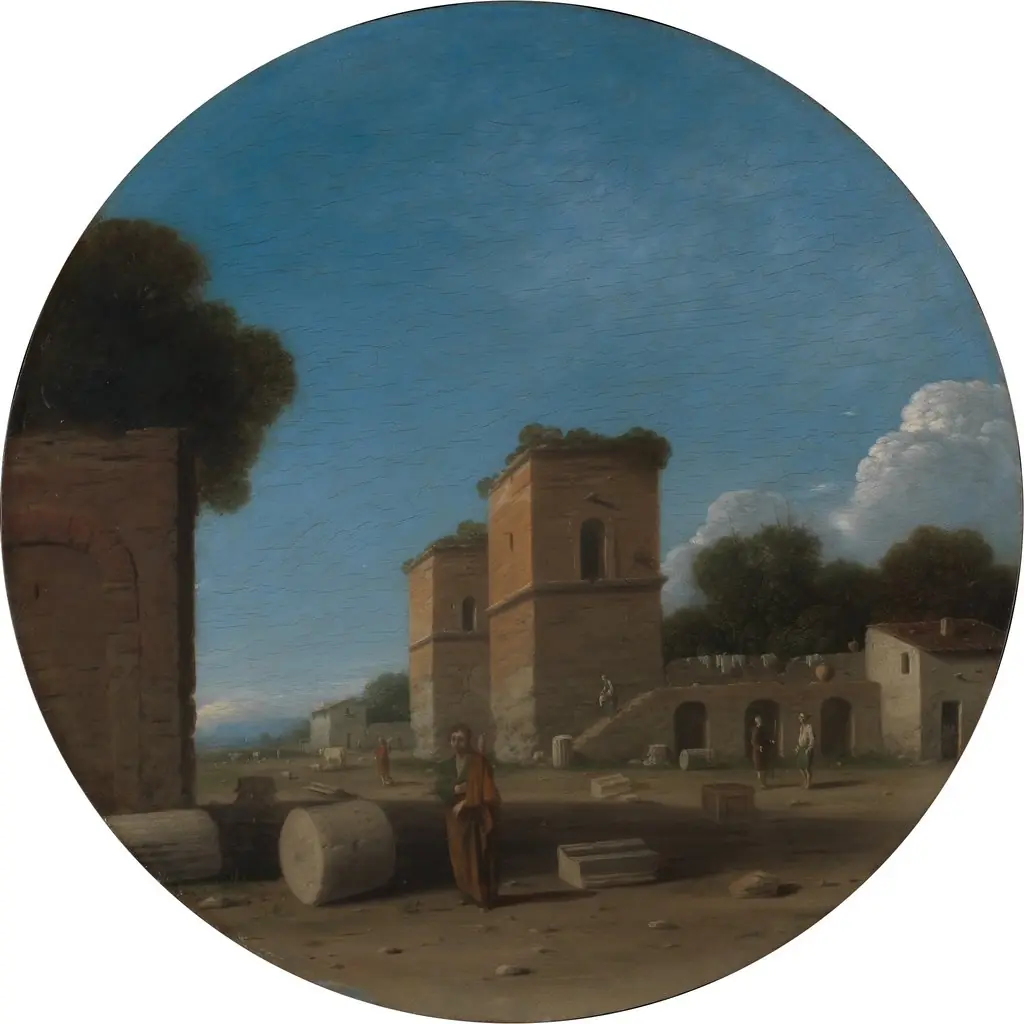 A Roman Landscape with Figures
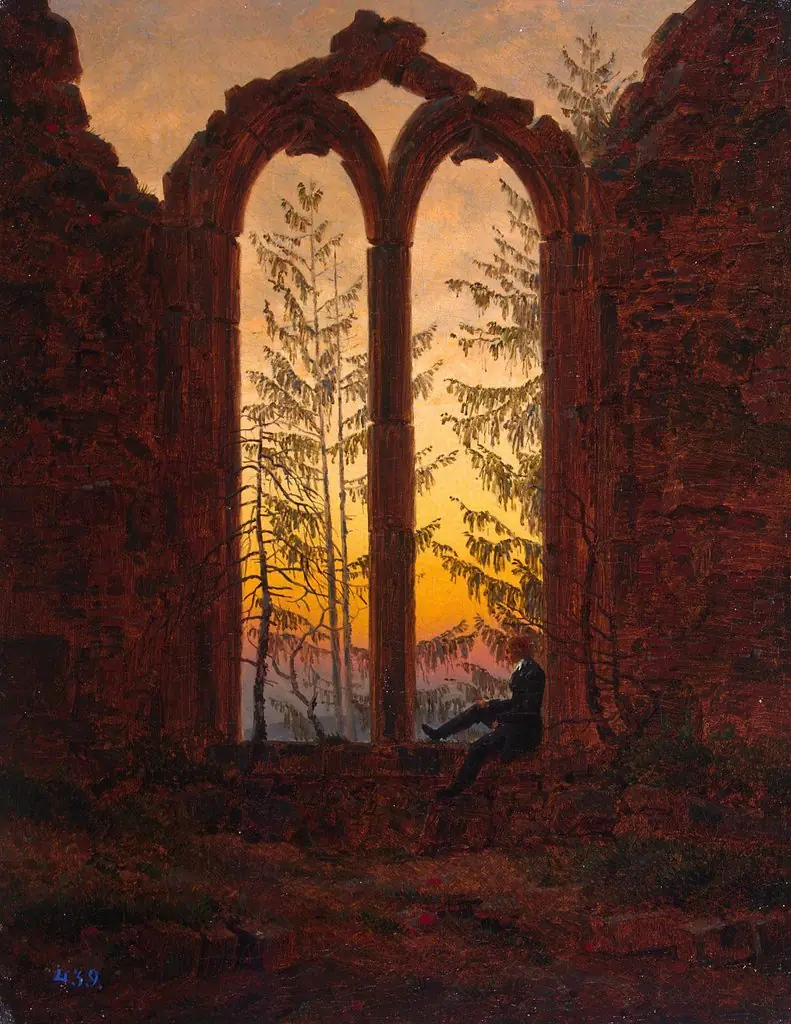 Ruins of the Oybin
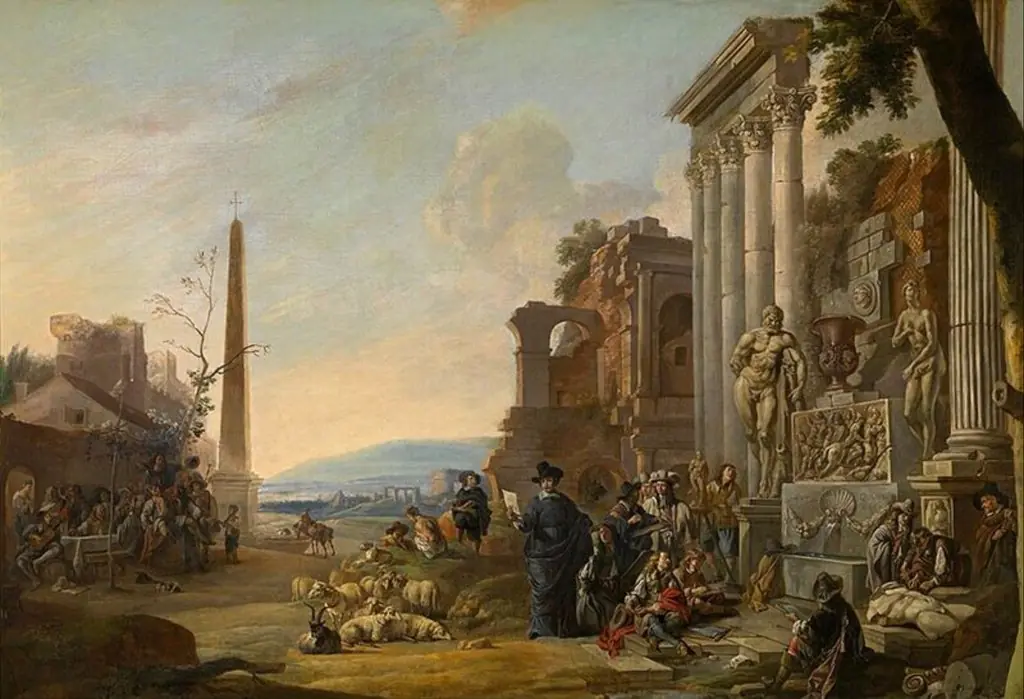 The Study of Art in Rome
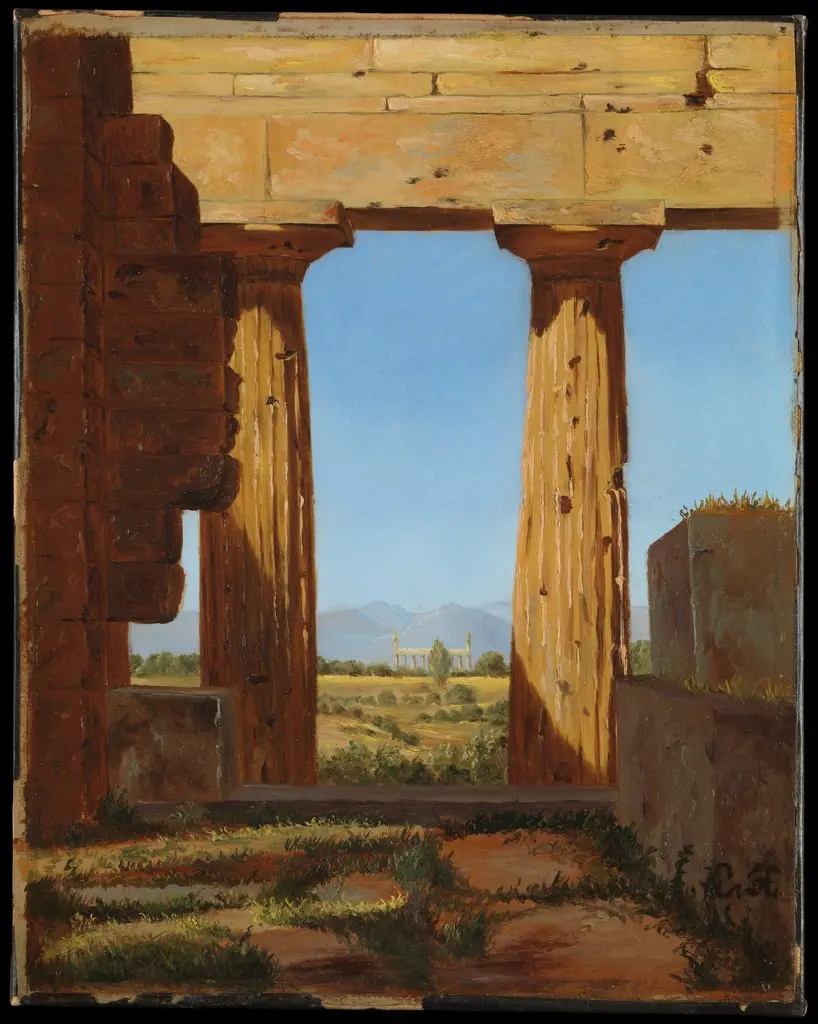 Columns of the Temple of Neptune at Paestum
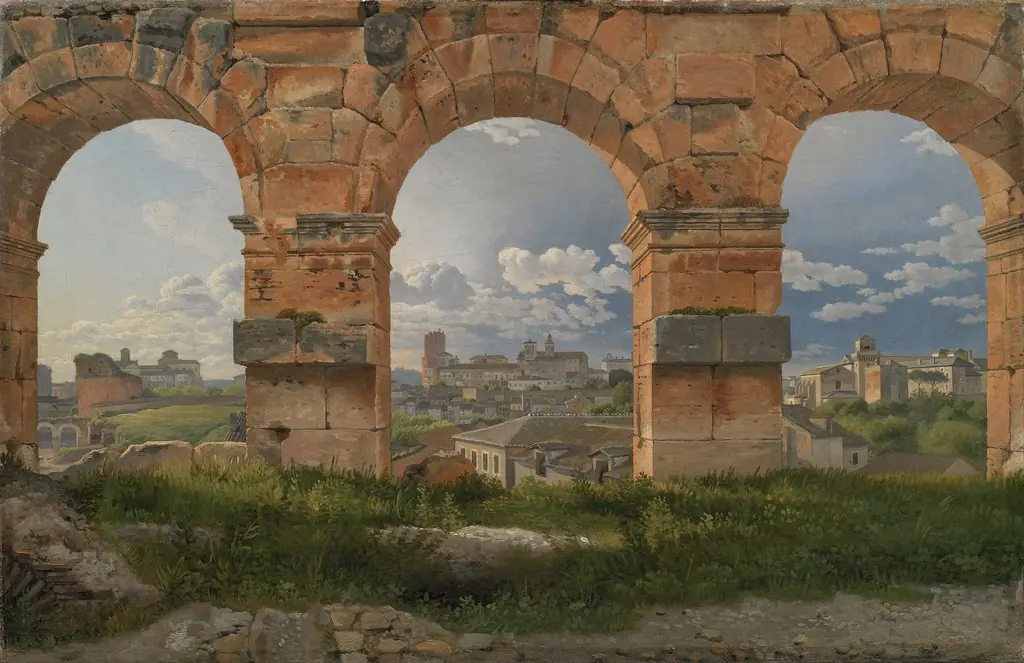 A View through Three of the North-Western Arches of the Third Storey of the Coliseum
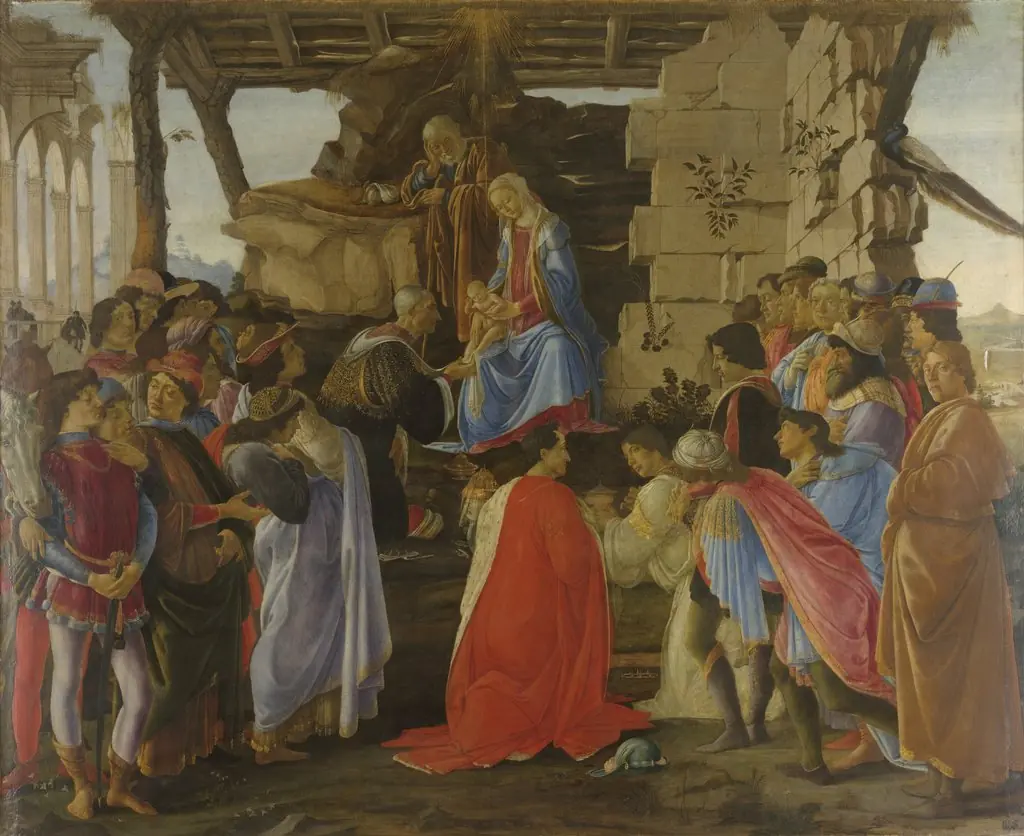 Adoration of the Magi
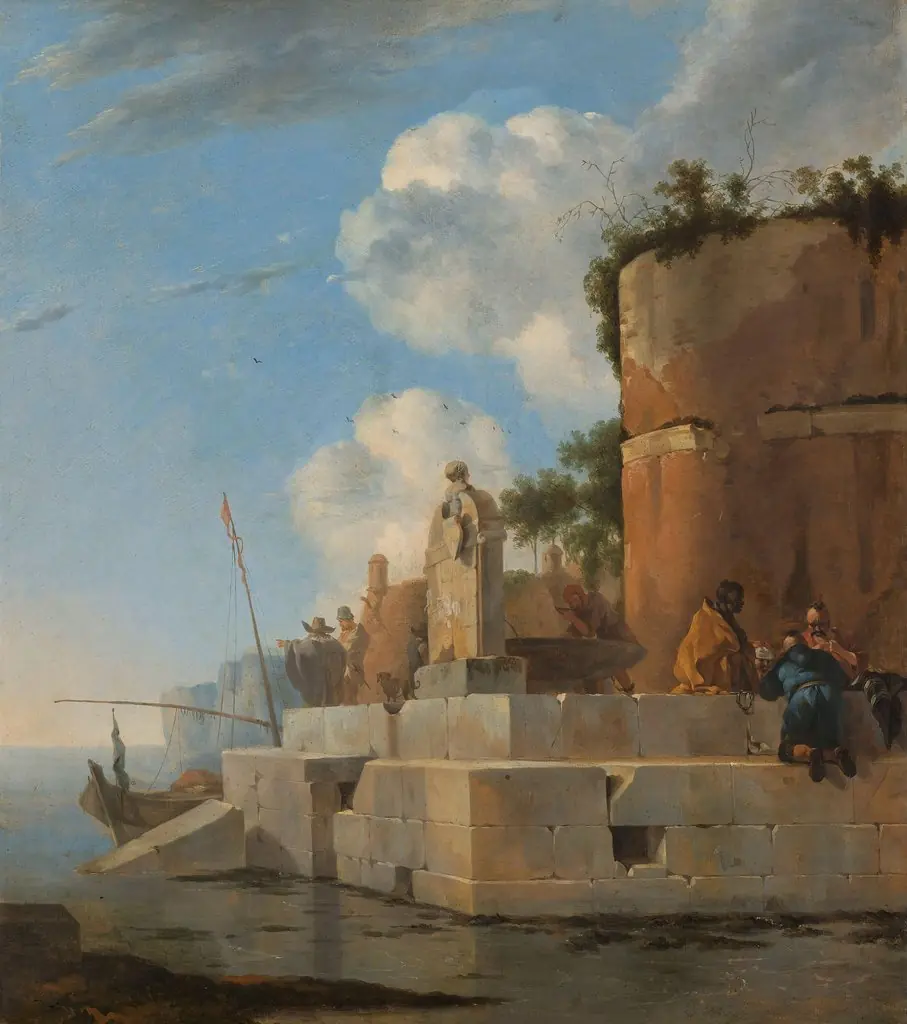 A Coastal Ruin in Italy
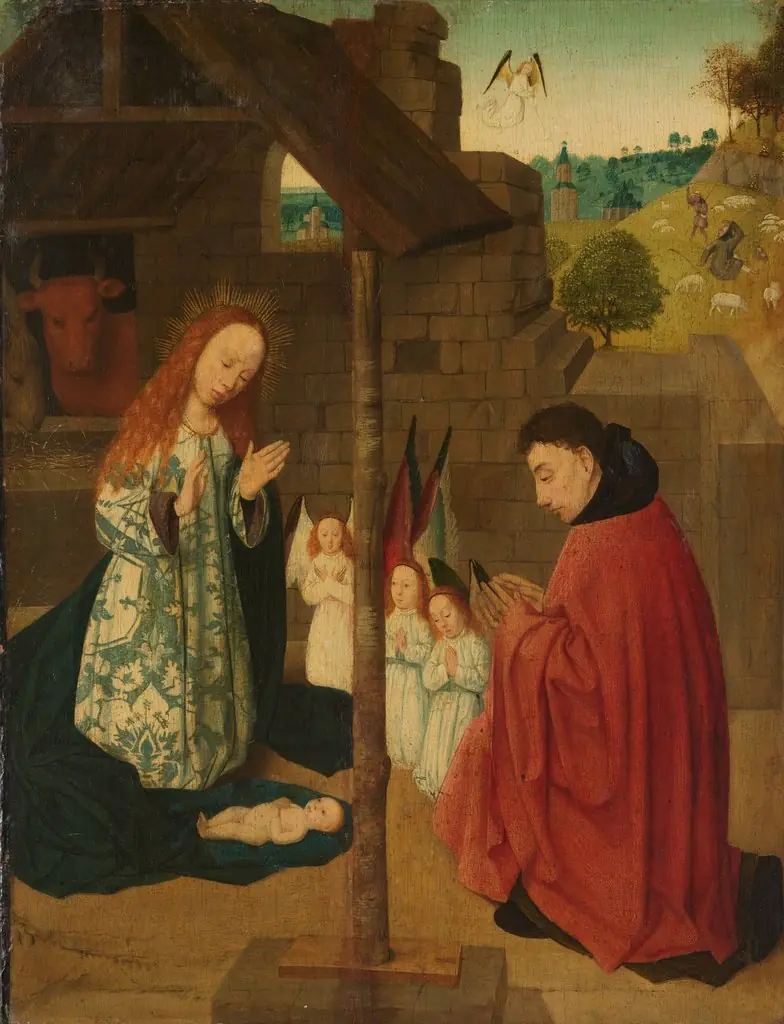 The nativity
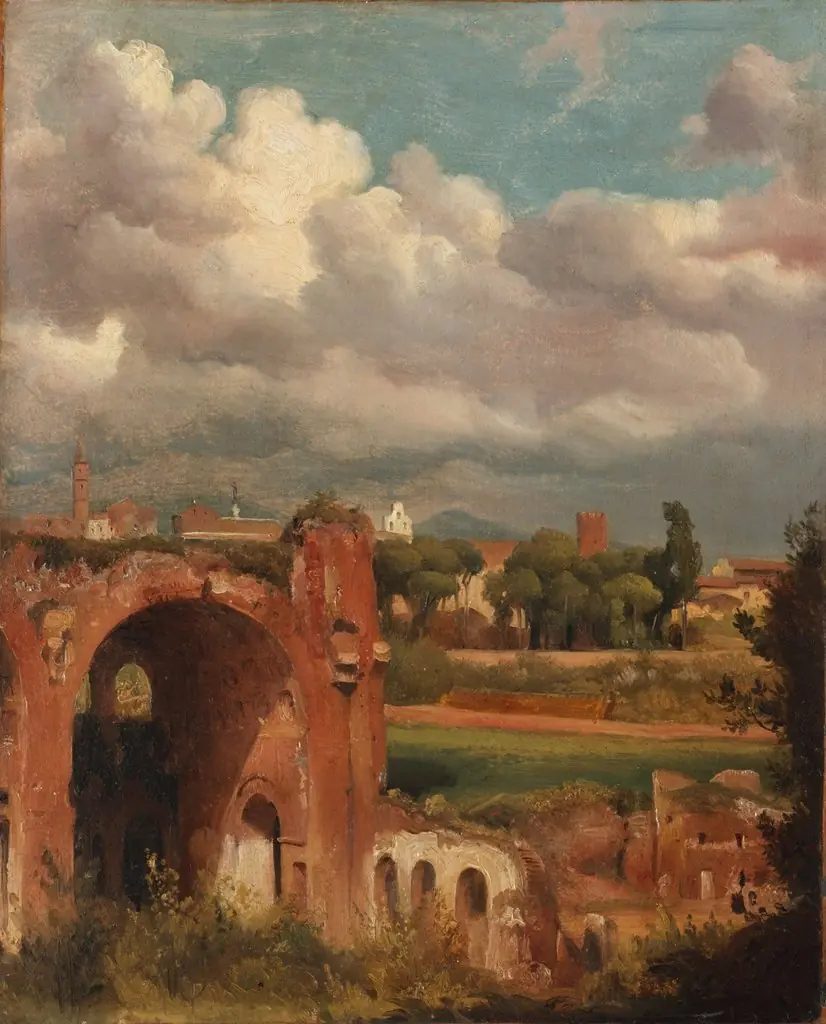 View of the Basilica of Constantine from the Palatine, Rome
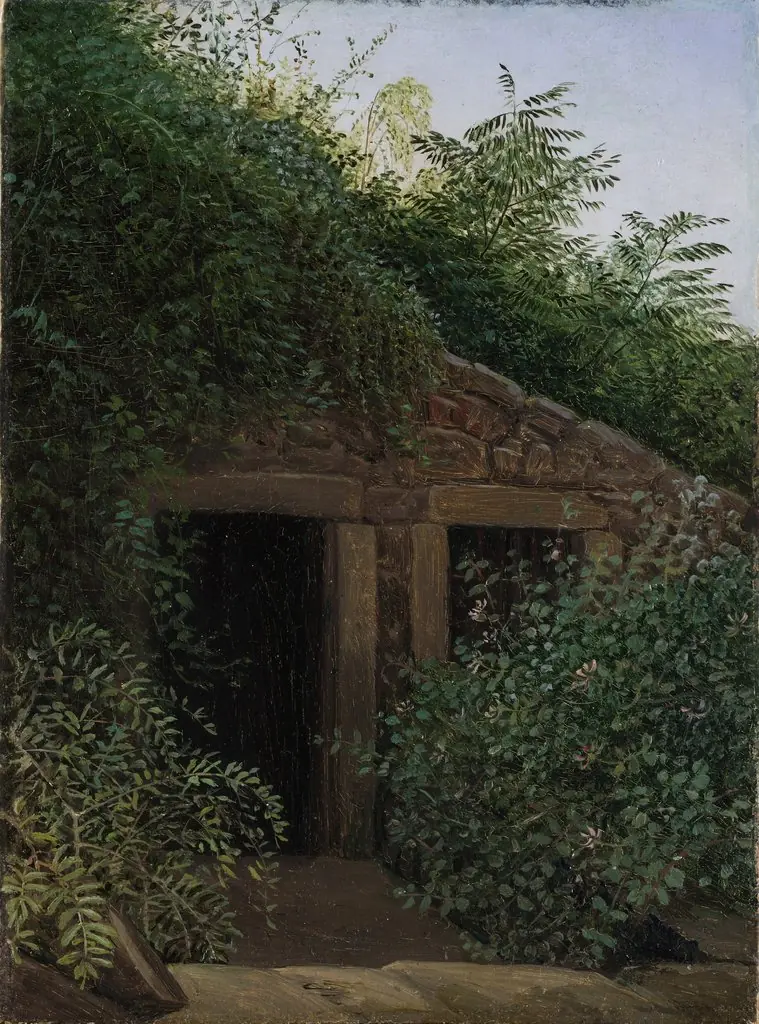 An Overgrown Mineshaft
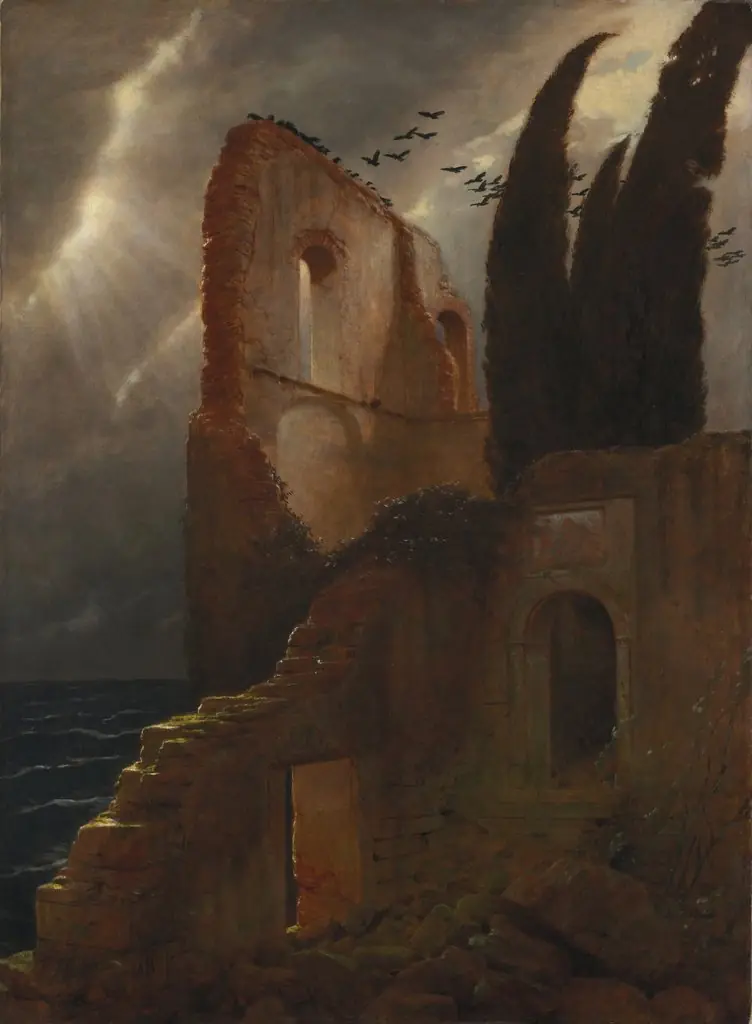 Ruin by the Sea
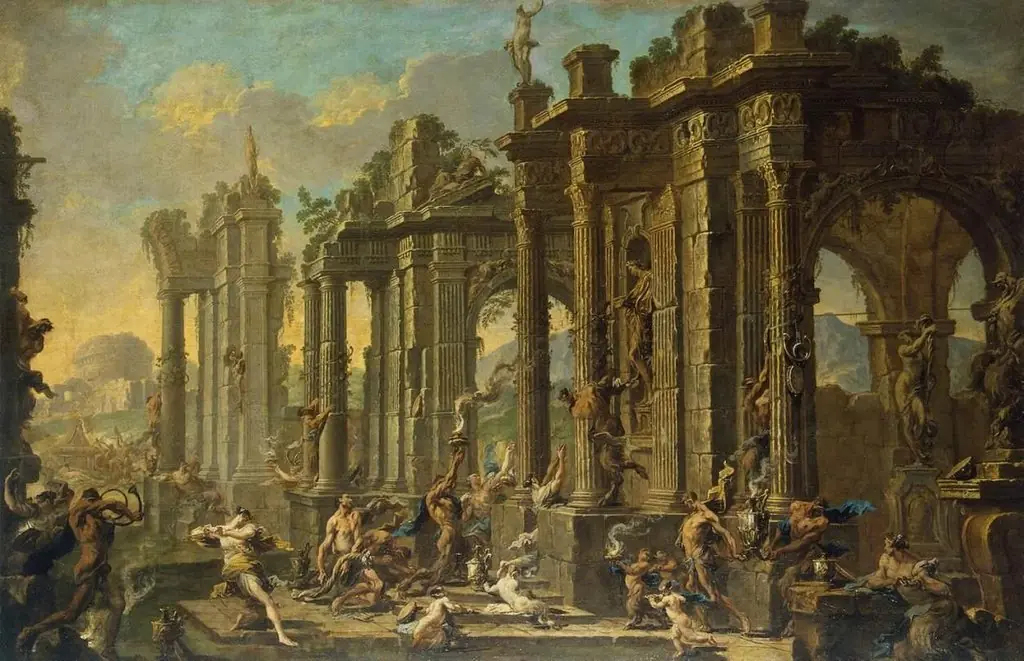 Bacchanalia
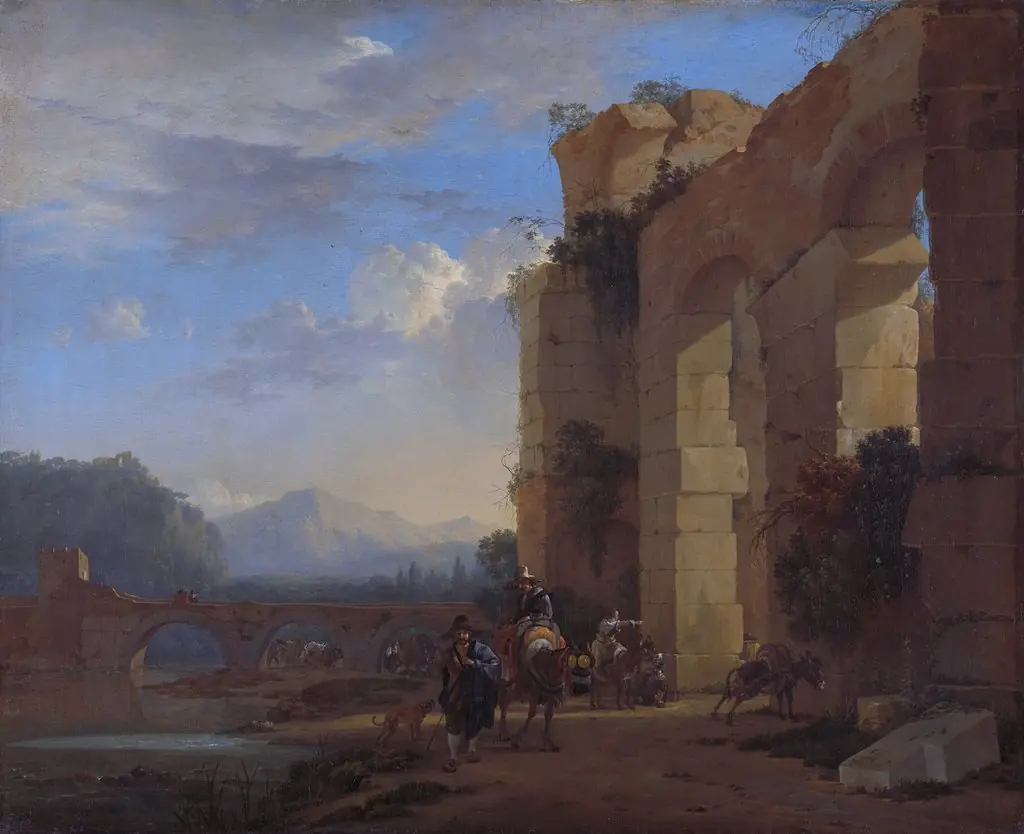 Muleteers beside an Italian Ruin
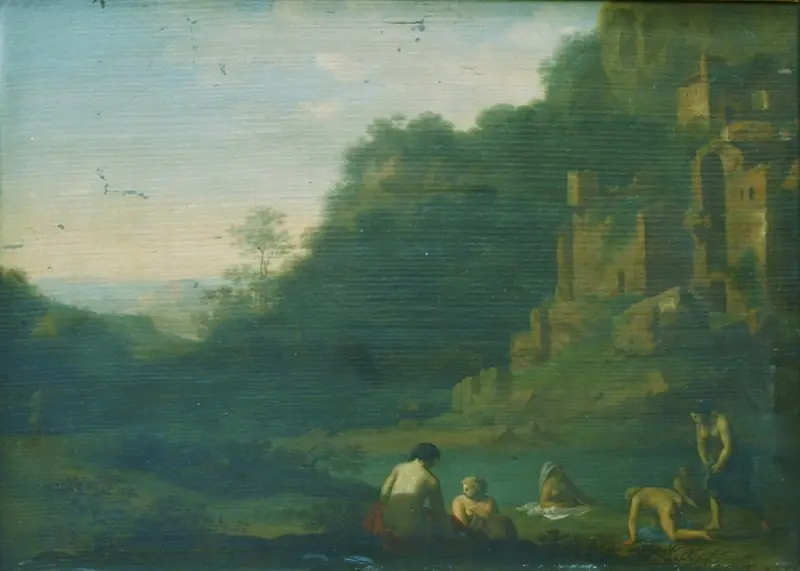 Bathing Nymphs
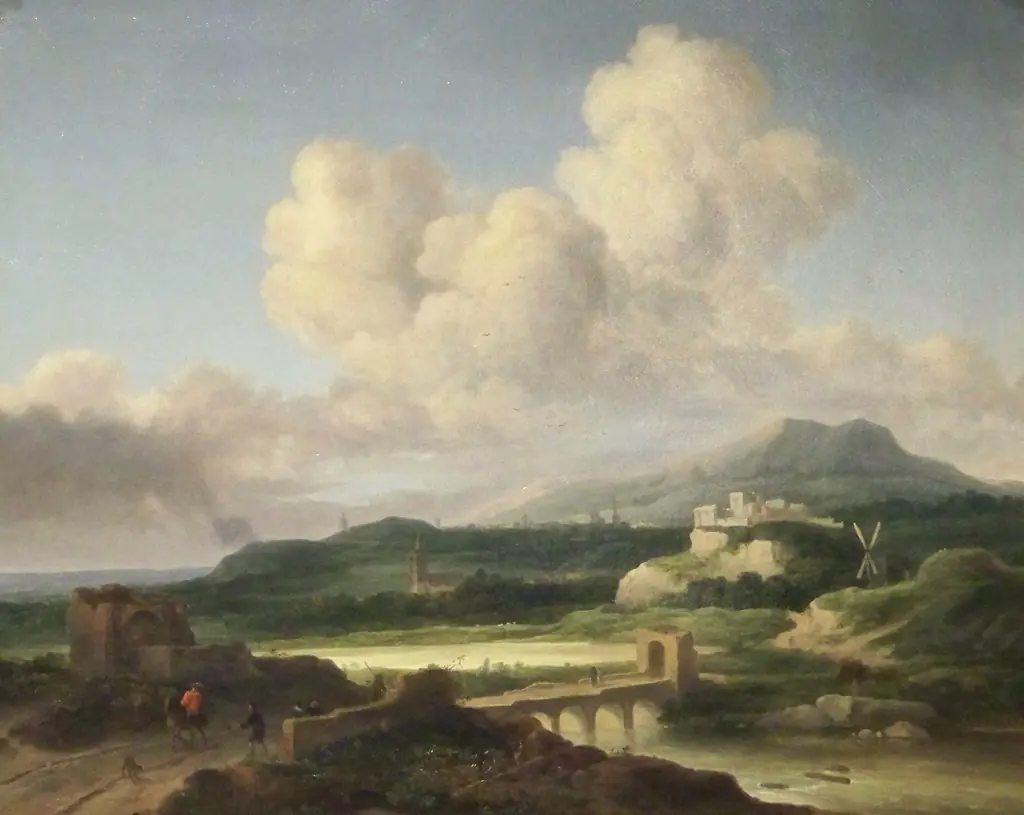 Landscape after Ruisdael
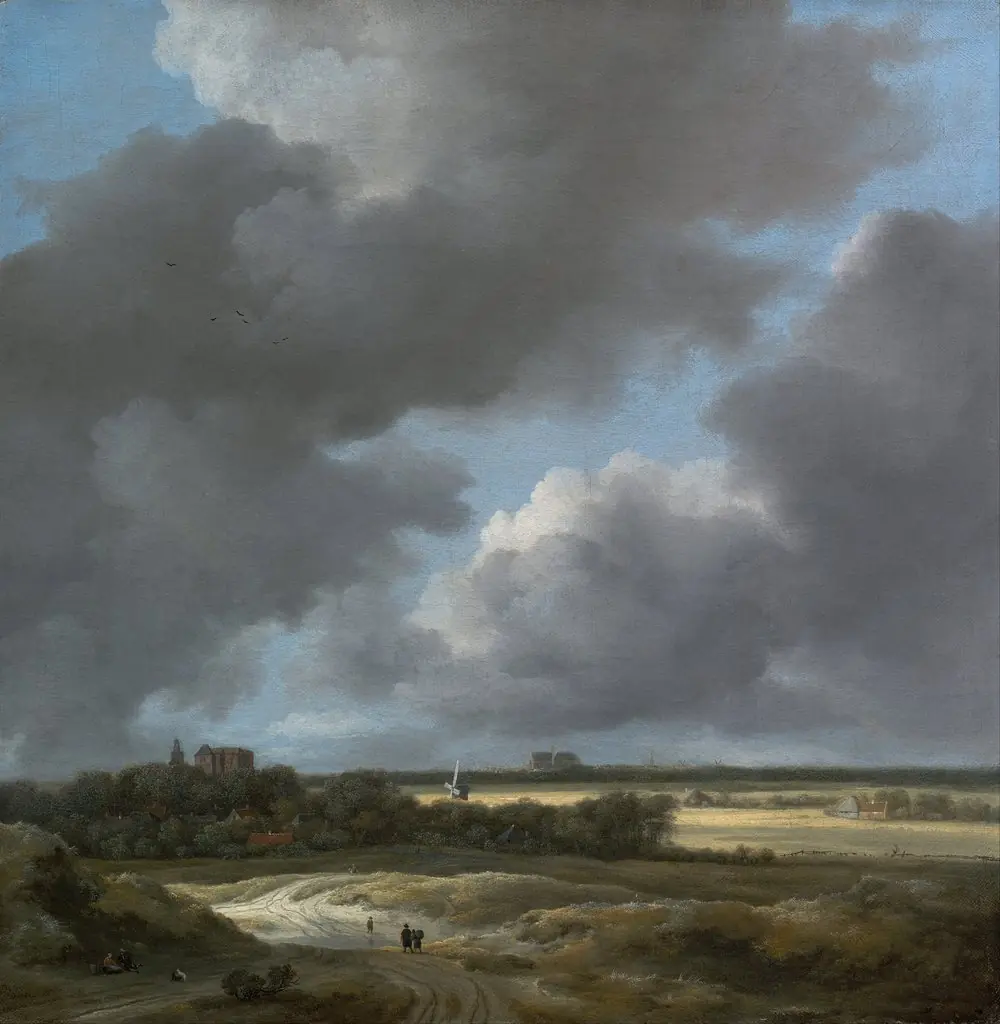 View of Alkmaar
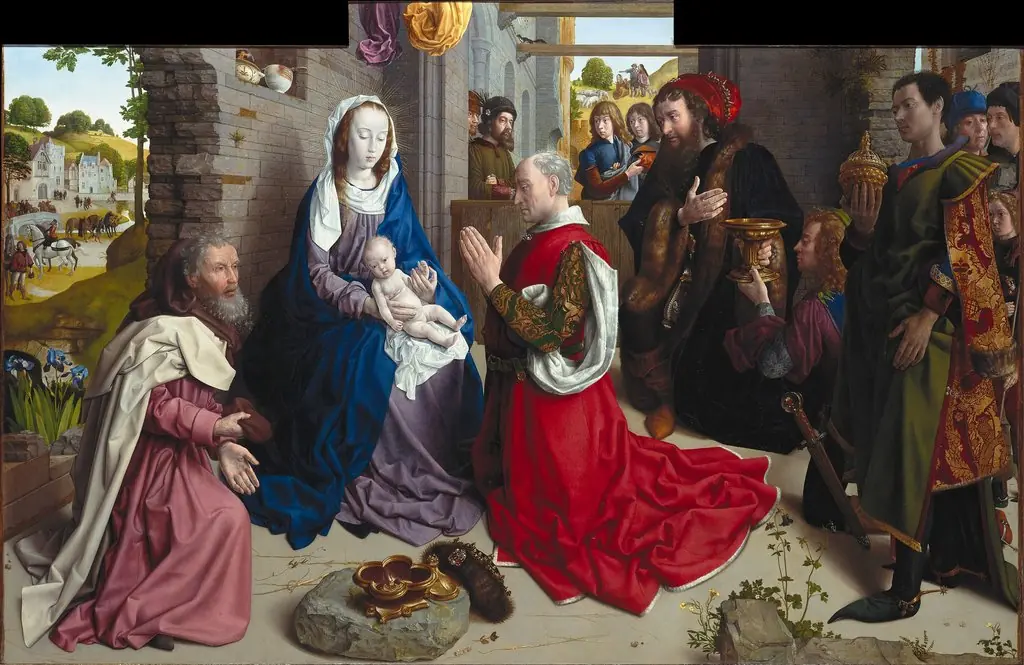 Monforte Altarpiece
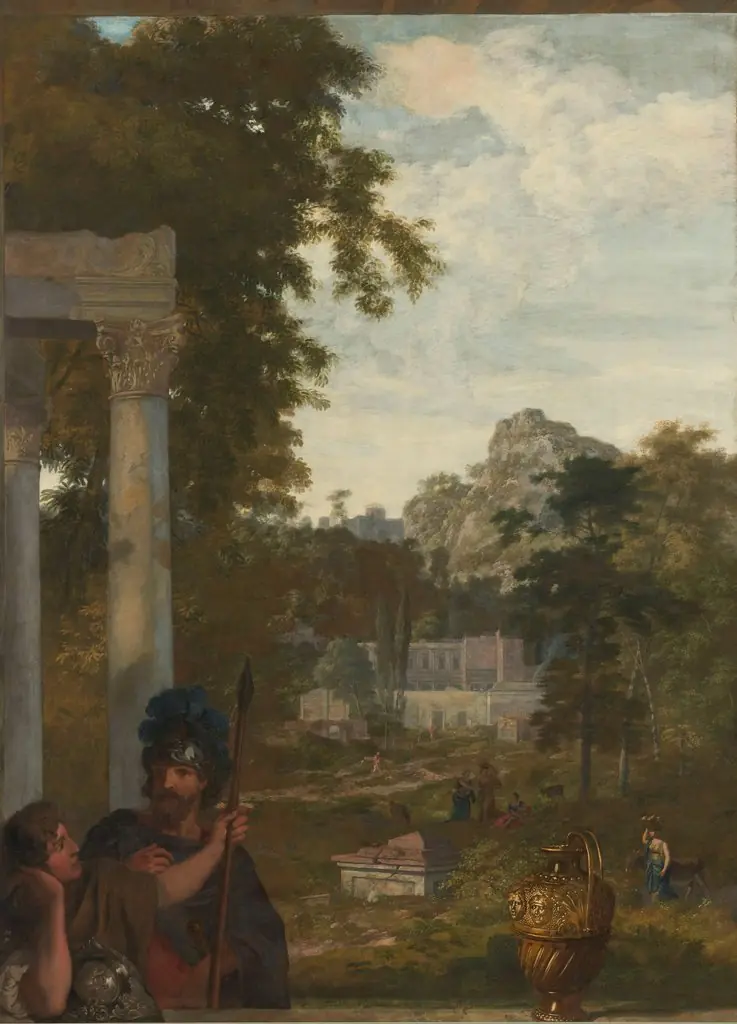 Italian landscape with two Roman soldiers
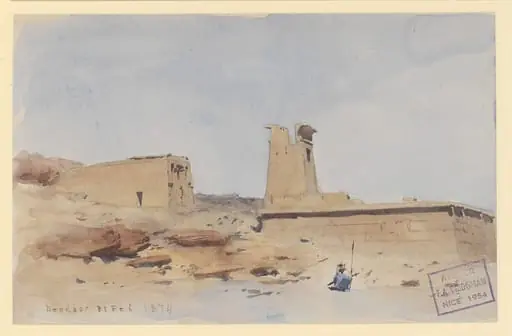 The Temple of Dendur, Showing the Pylon and Terrace
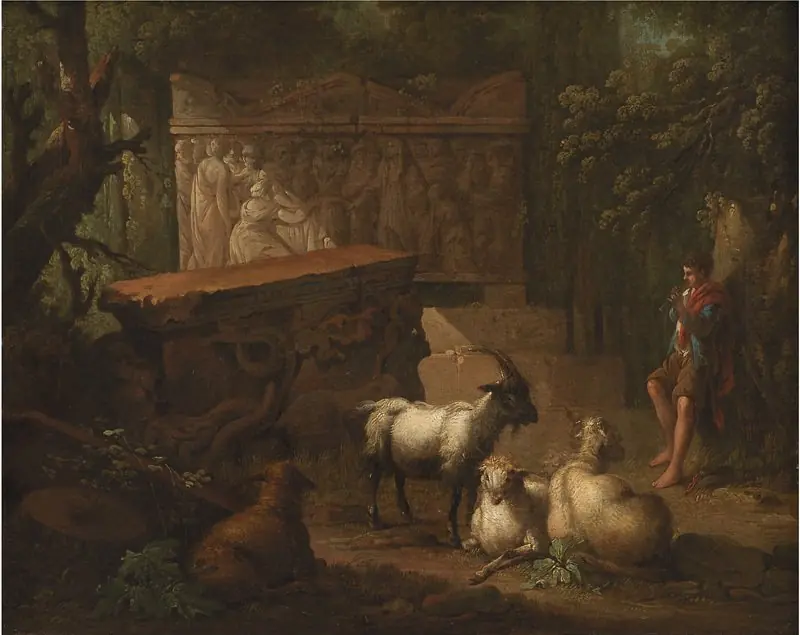 Antikke ruiner omgivet af træer, i forgrunden en hyrde og nogle geder
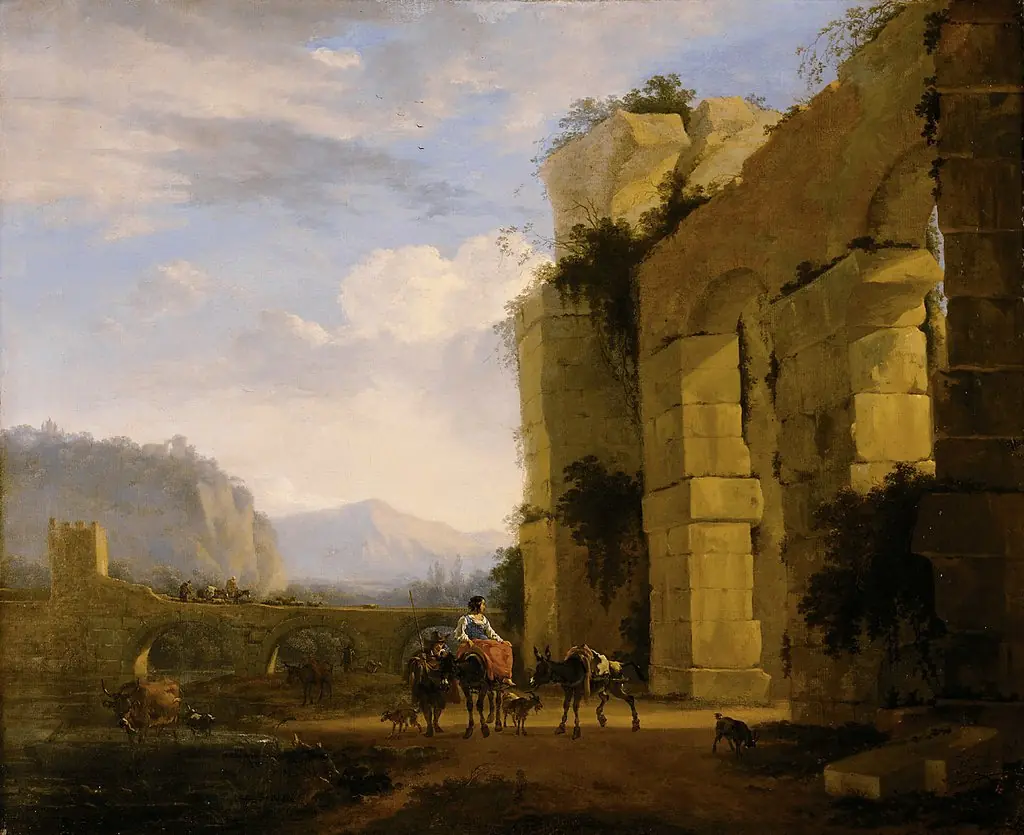 Landscape with the ruin of an aquaduct
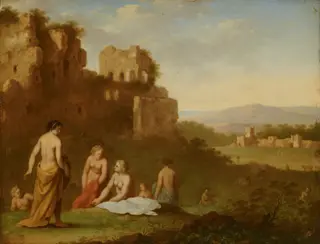 Nymphs Bathing
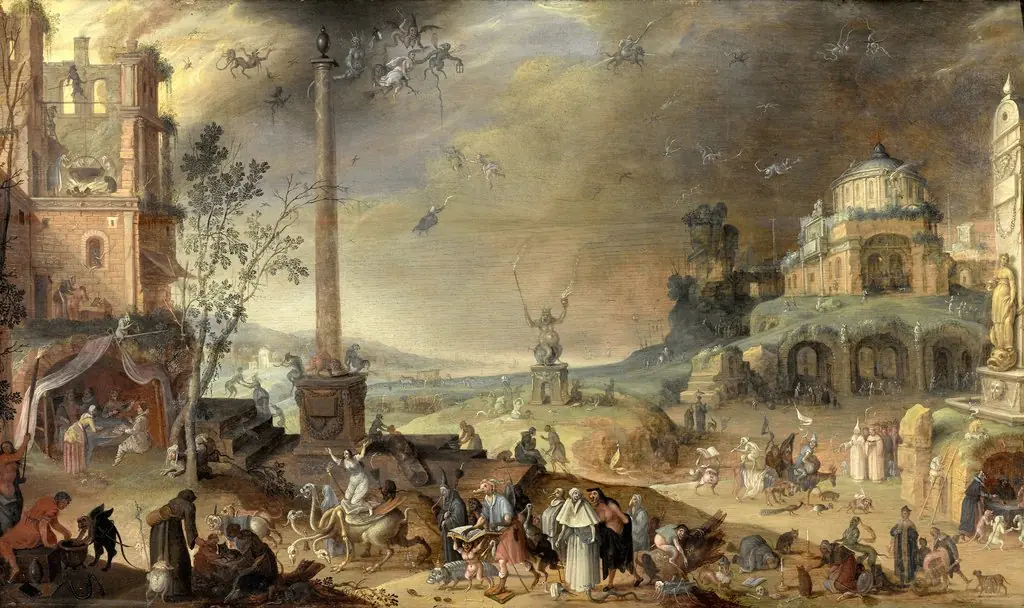 Witches' sabbath
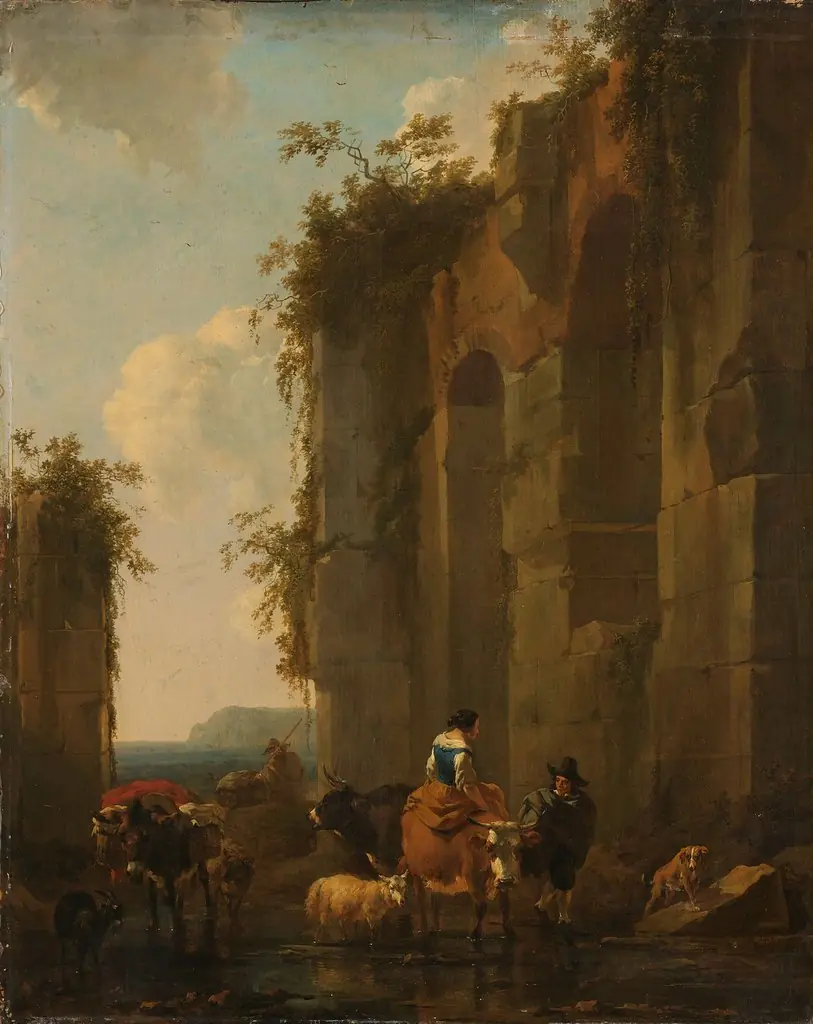 Ruins in Italy
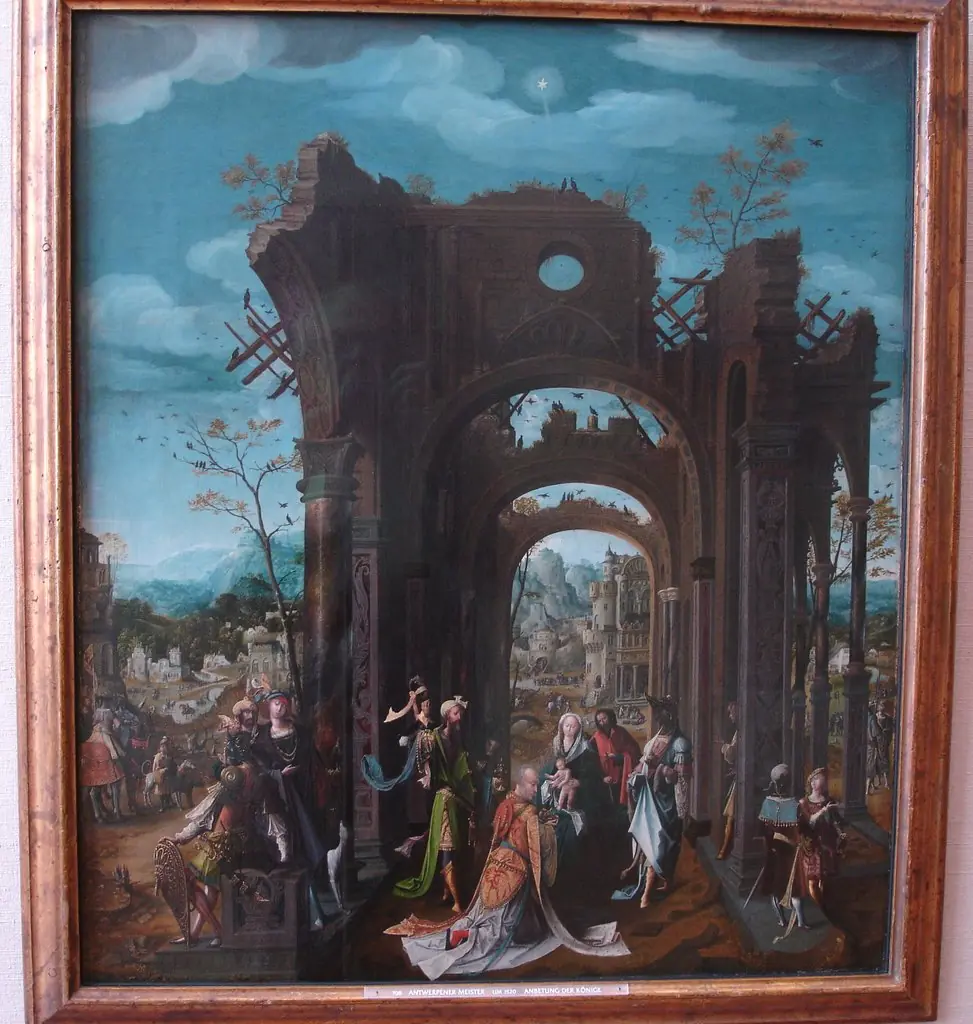 The Adoration of the Magi
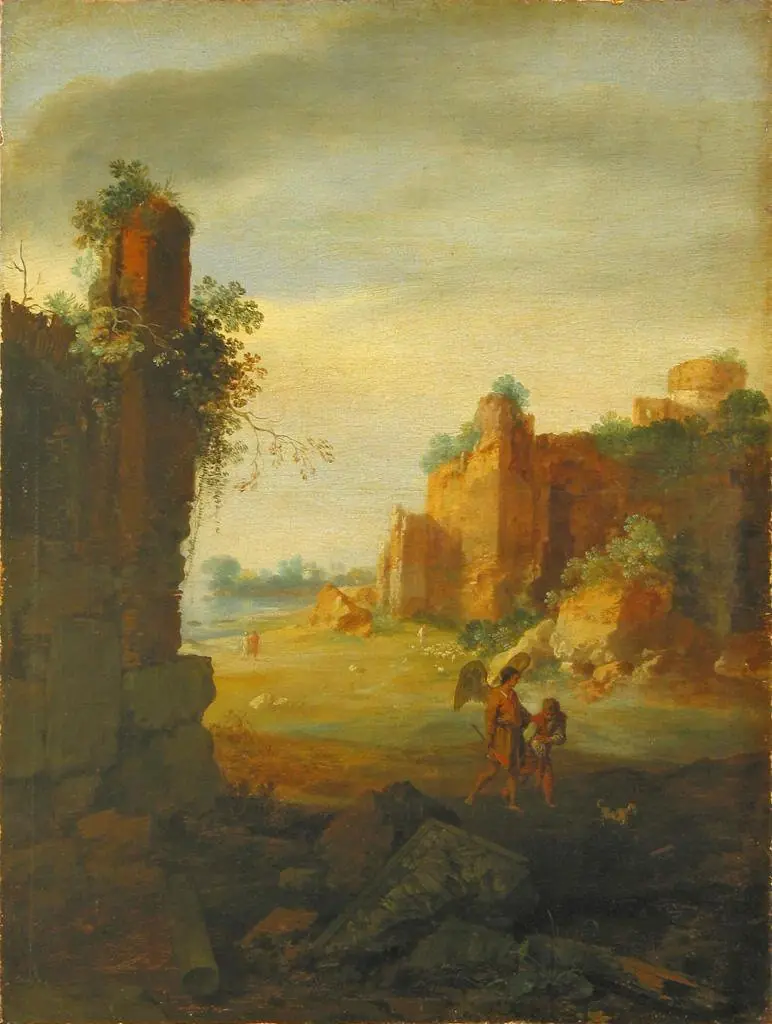 Landscape with Tobias and the Angel
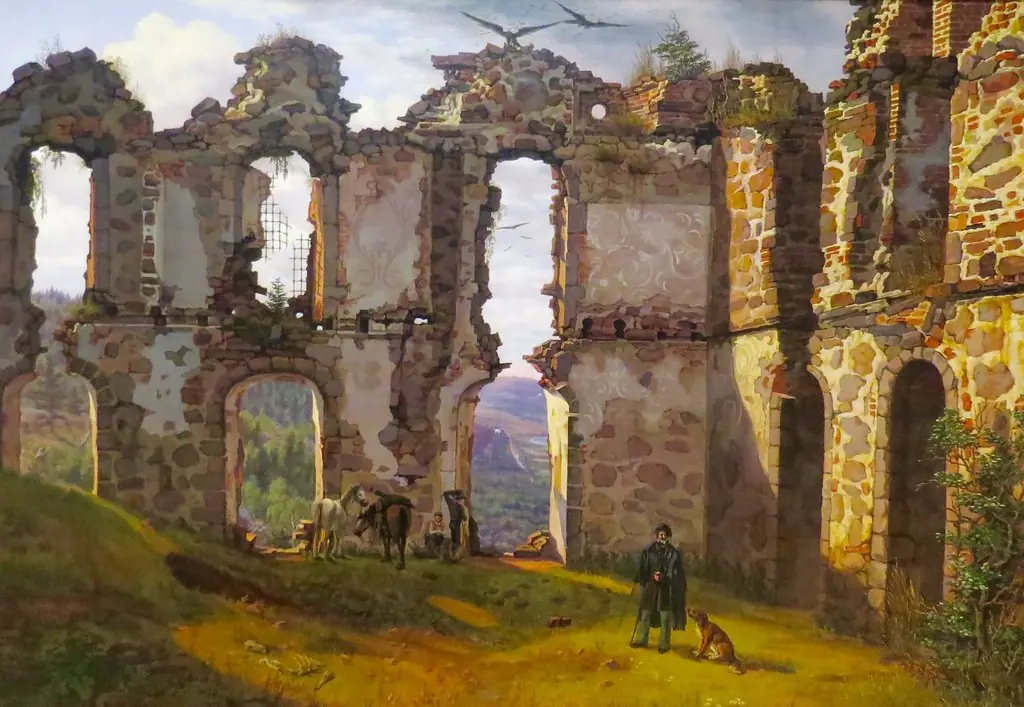 The Ruins of Brahehus near Jönköping, Sweden
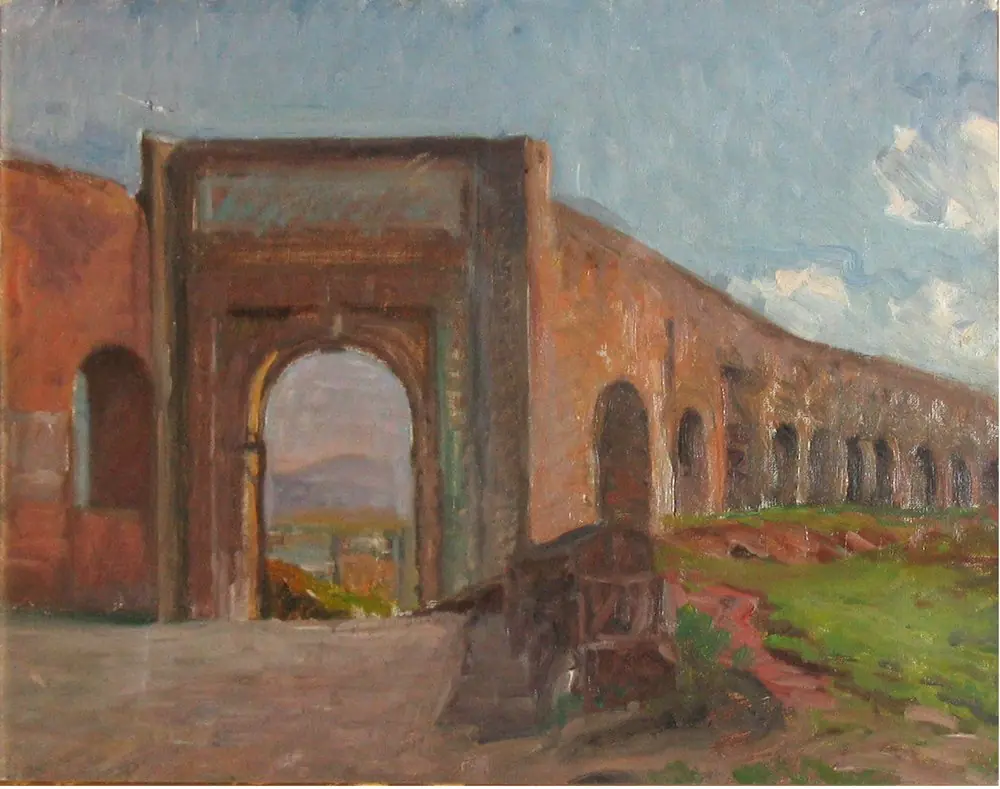 Porta Furba, Rome
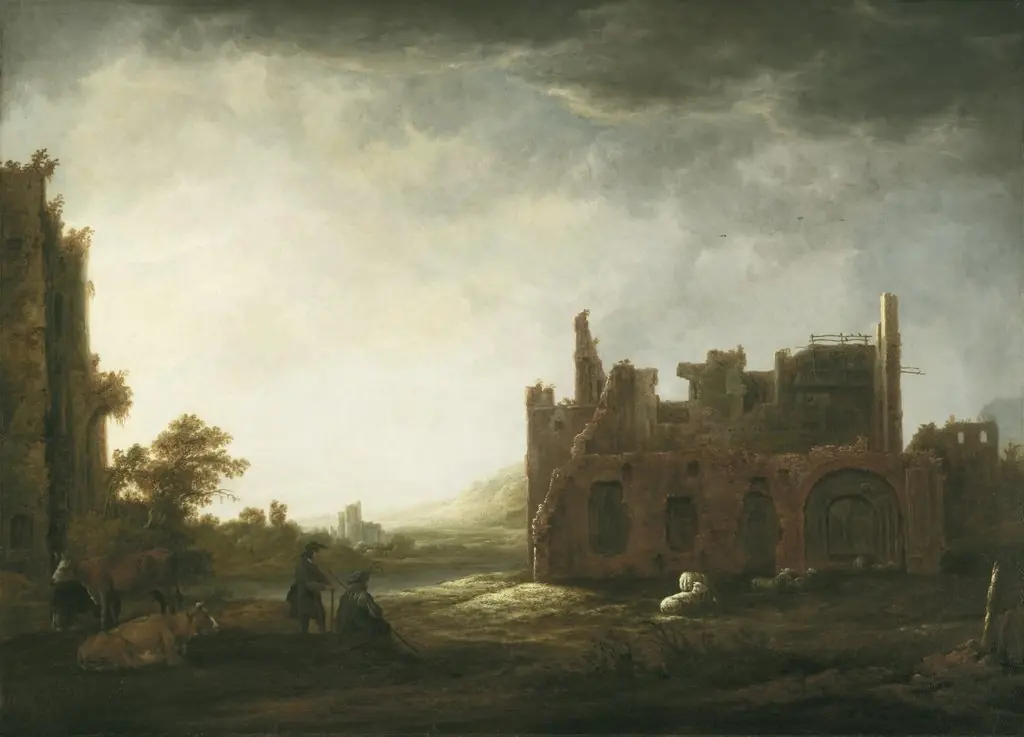 Landscape with the Ruins of Rijnsburg Abbey
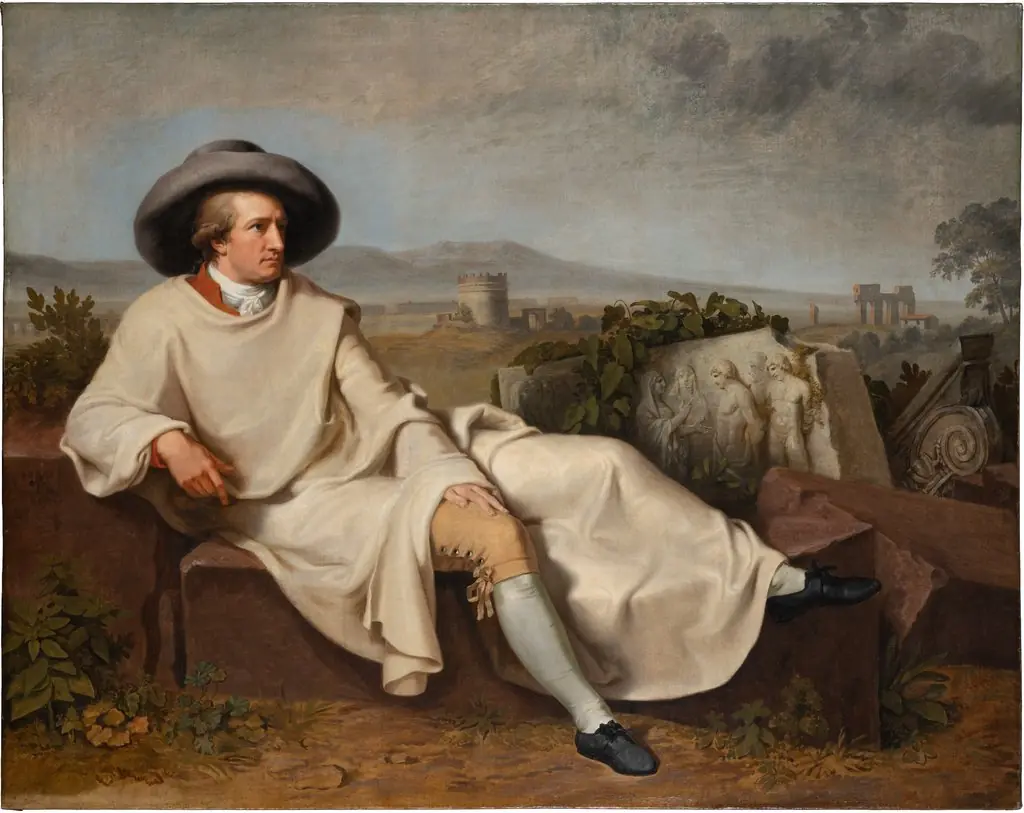 Goethe in the Roman Campagna
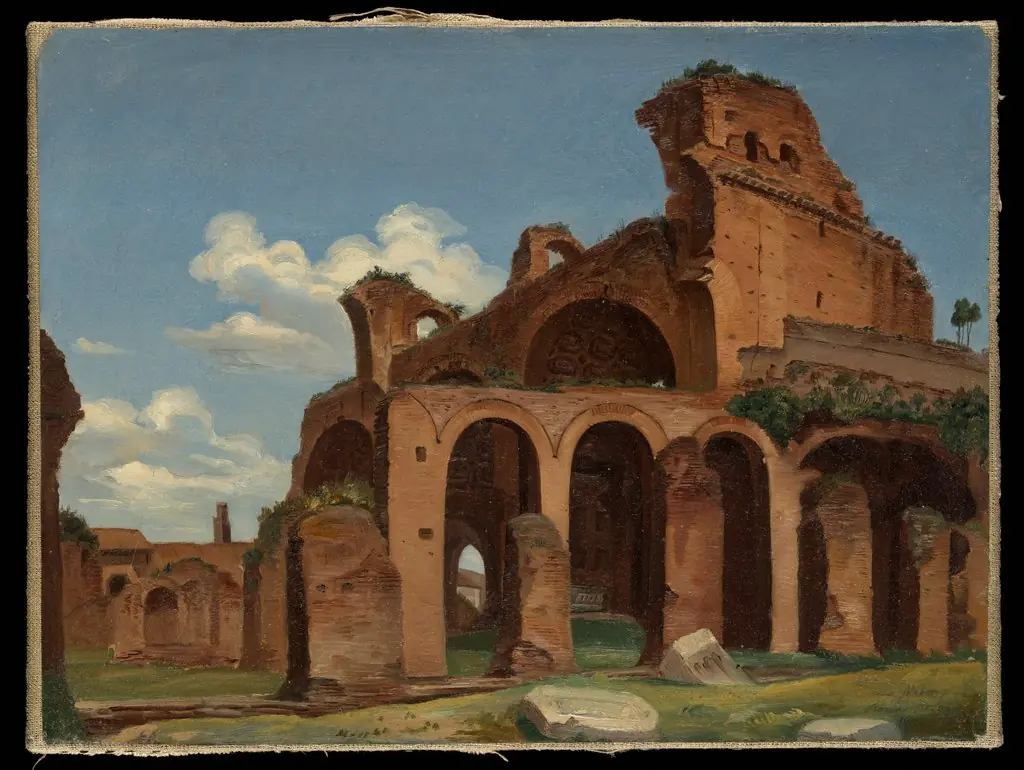 The Basilica of Constantine, Rome
 Landscape with Ruins (recto, from sketchbook)
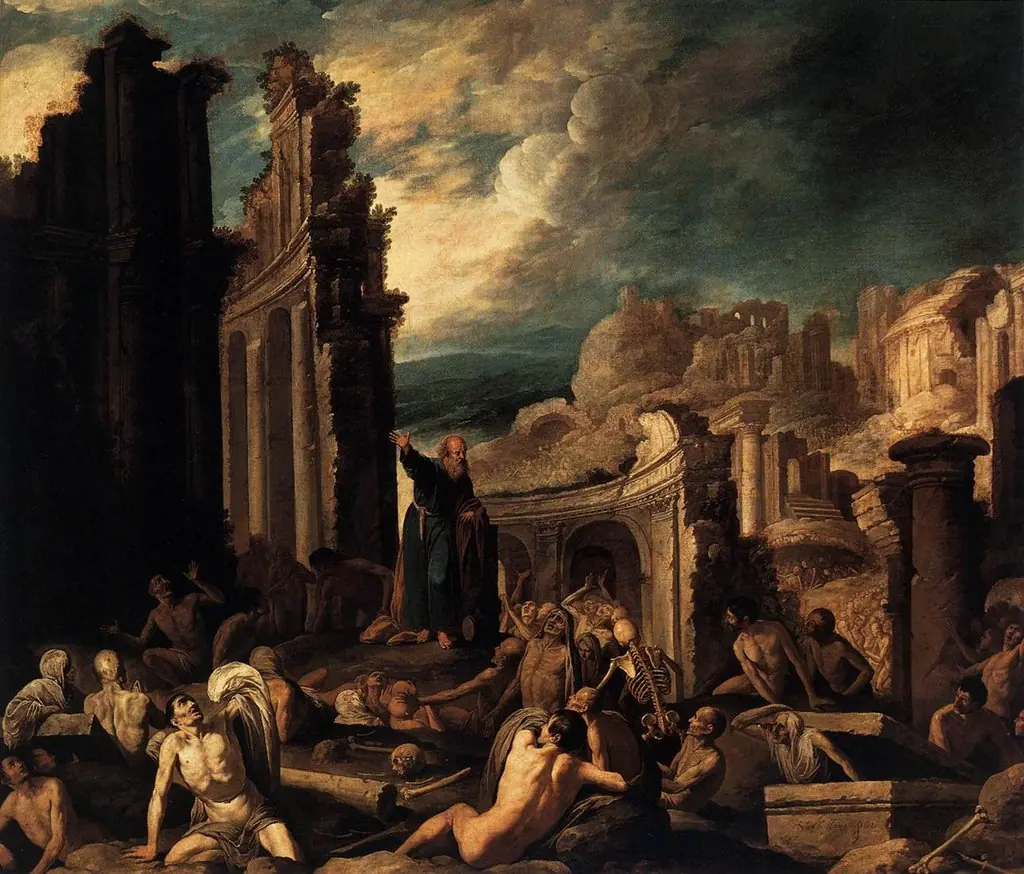 The Vision of Ezekiel
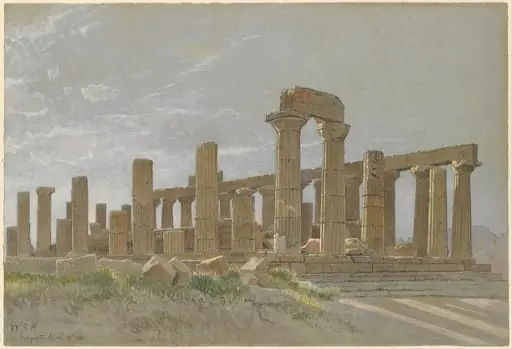 Girgenti (The Temple of Juno Lacinia at Agrigentum)
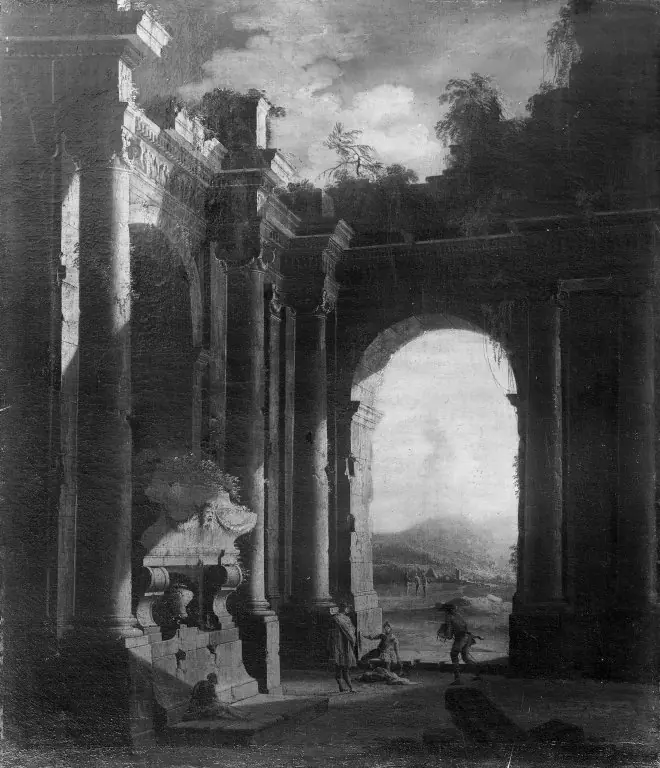 Capriccio of Ruins with Figures beneath an Archway
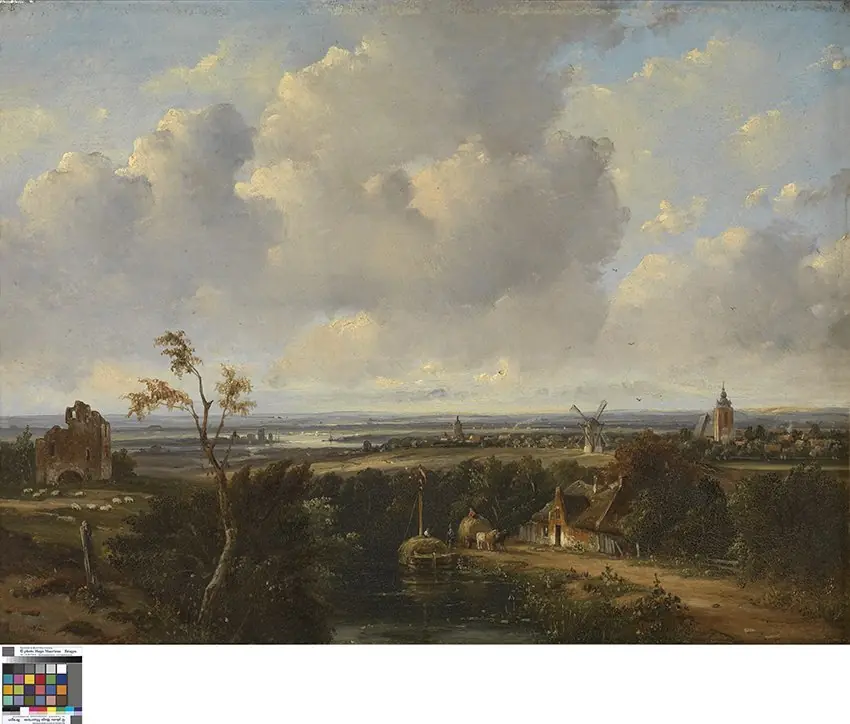 Landschap in Holland
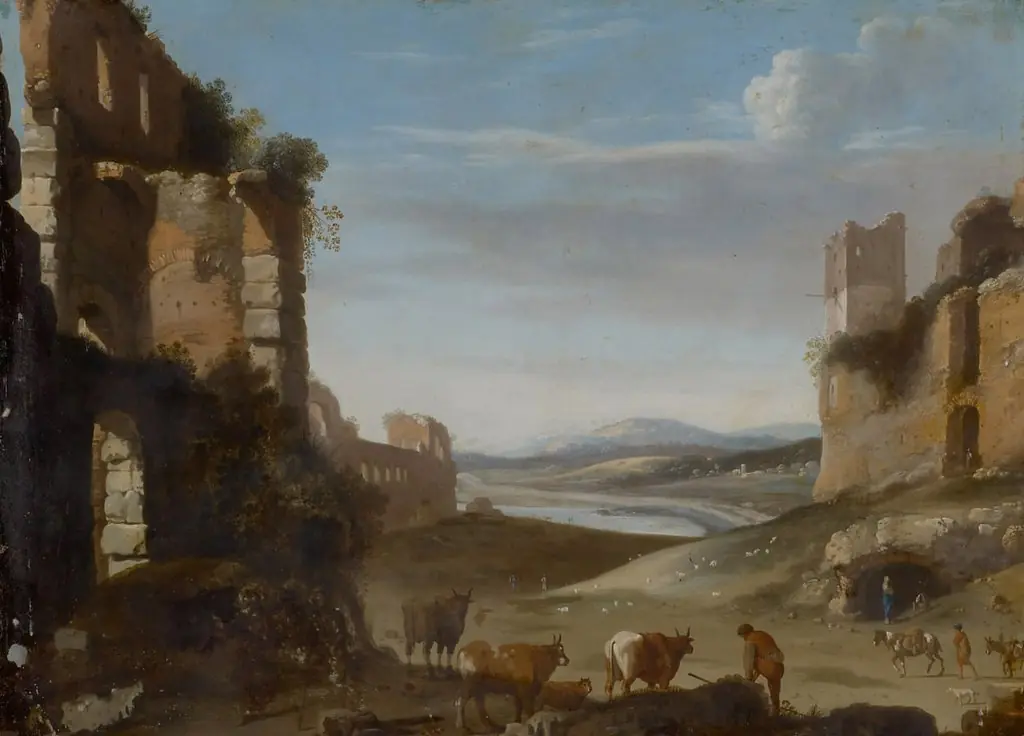 Capriccio Roman landscape with ruins
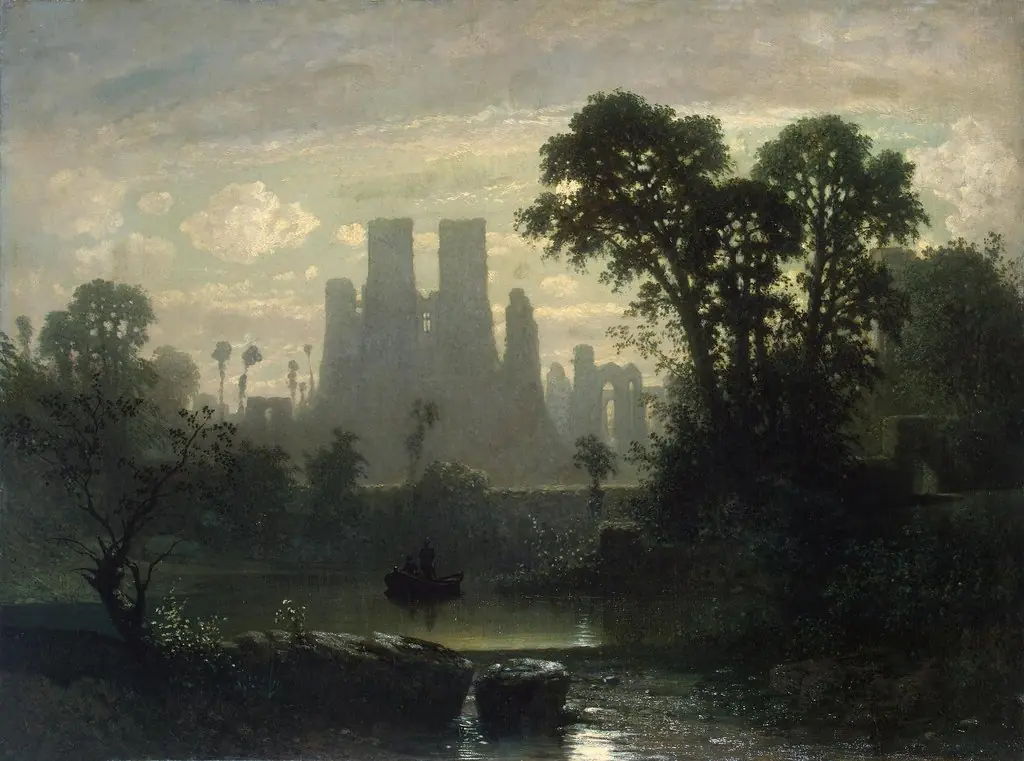 Ruins of the Castle of Kenilworth
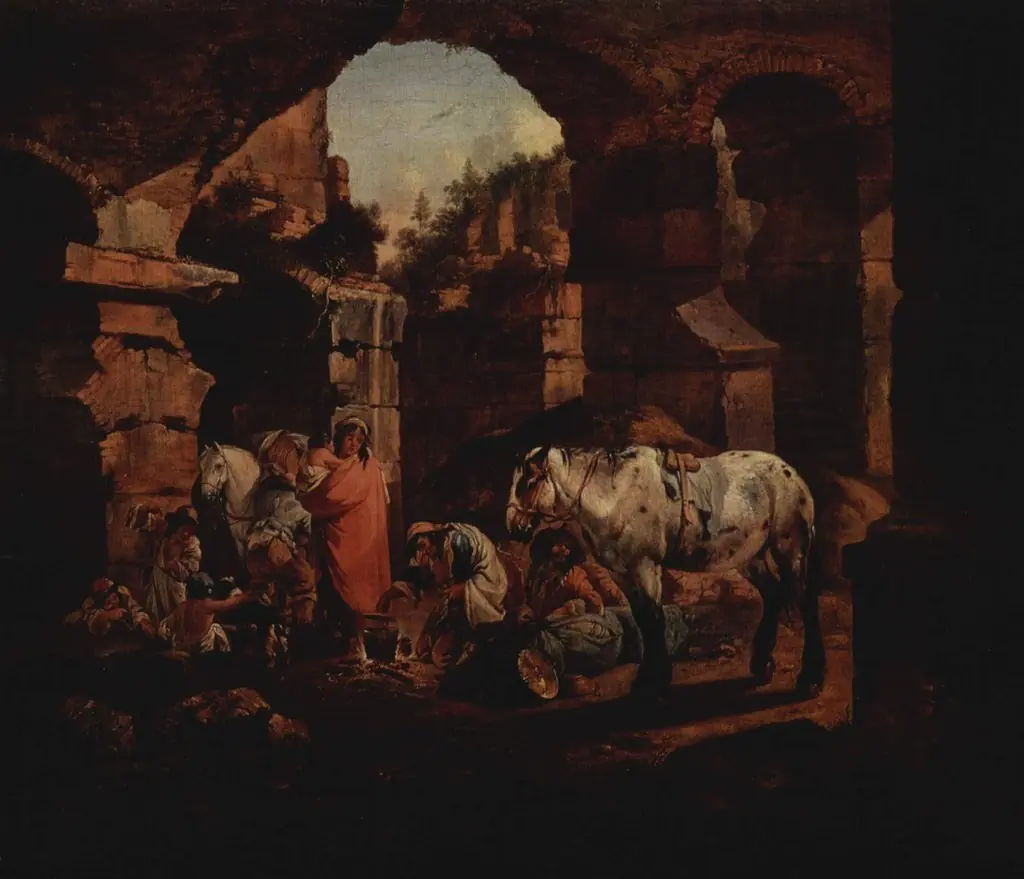 Gipsy Camp in Ancient Ruins
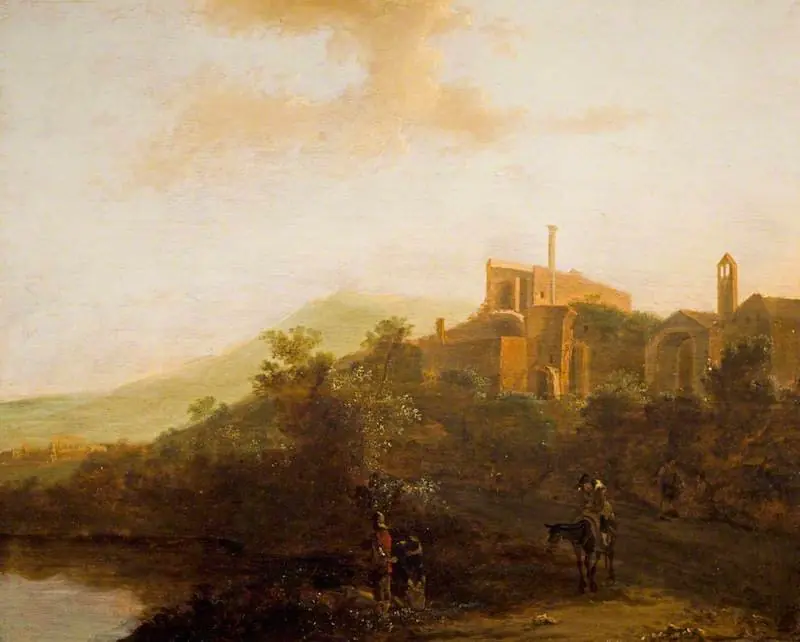 Landscape
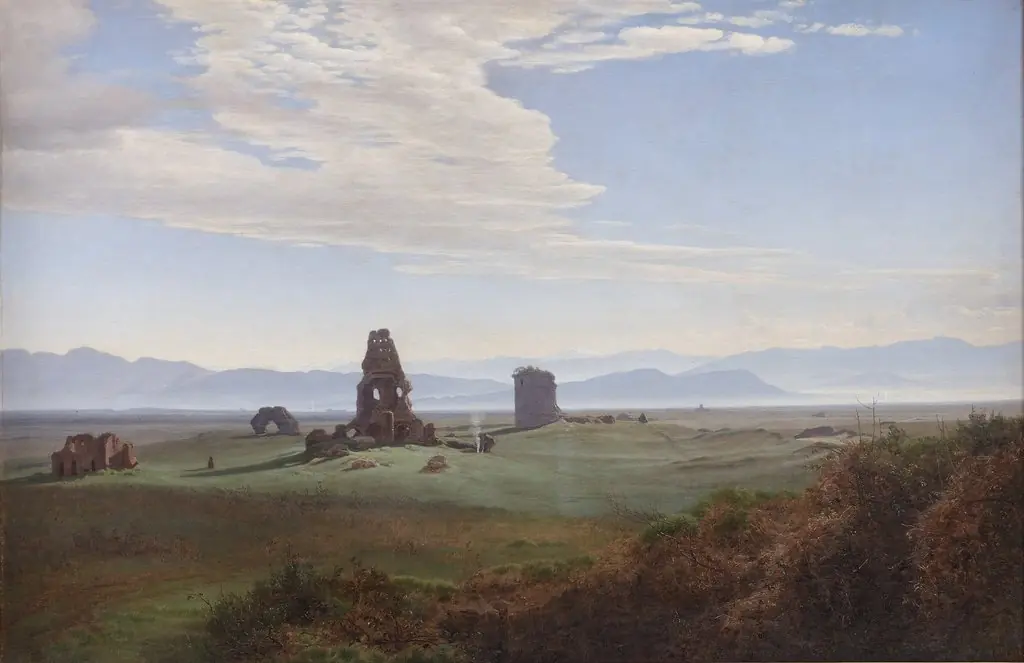 Ruins in the Roman Campagna
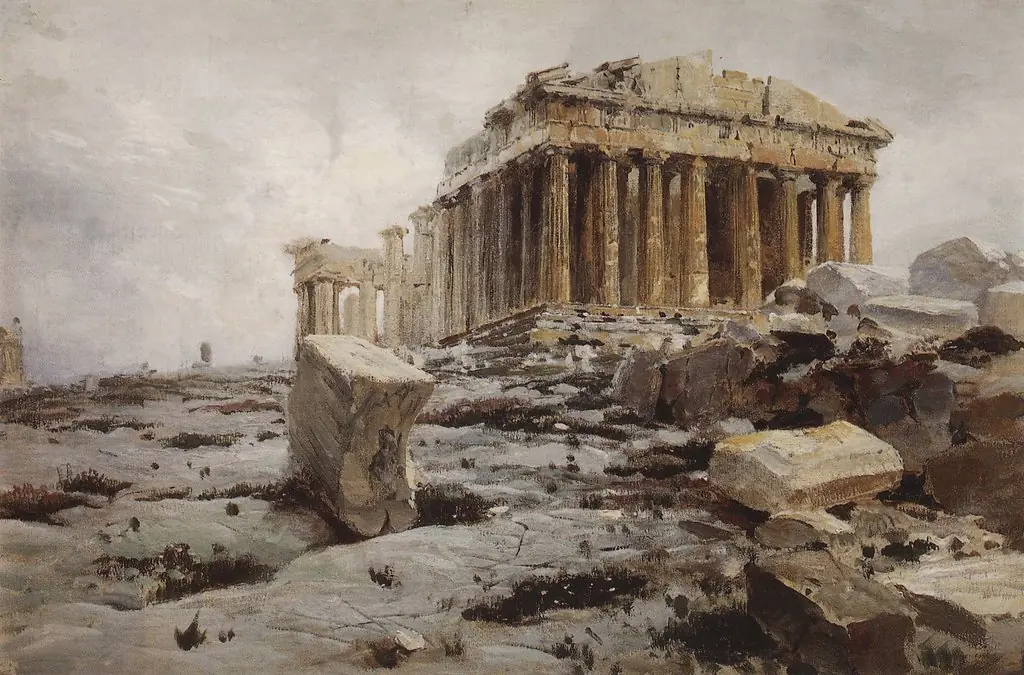 Parthenon
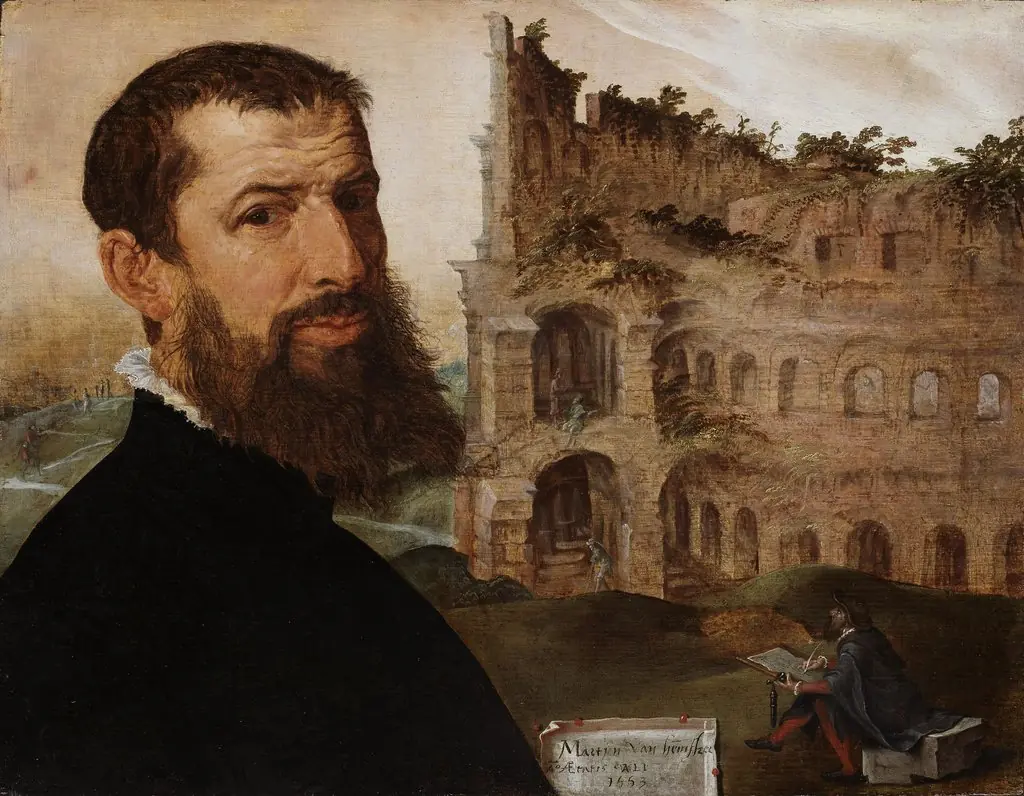 Self-portrait with the Colosseum
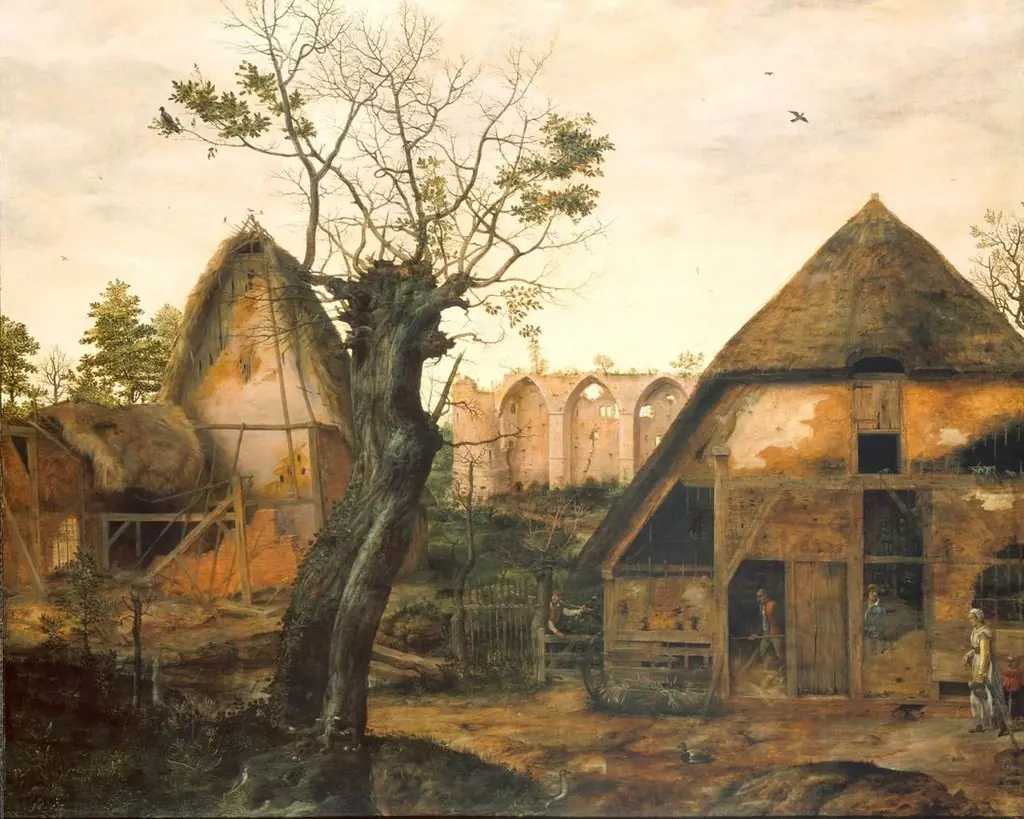 Landscape with Farm
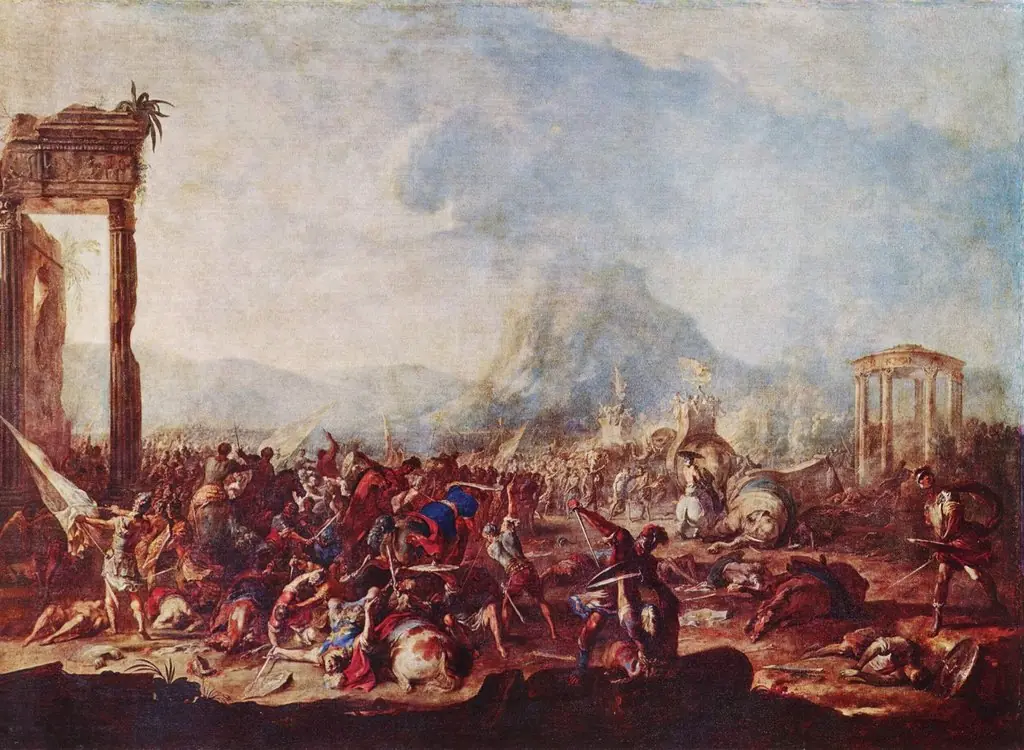 Battle Painting
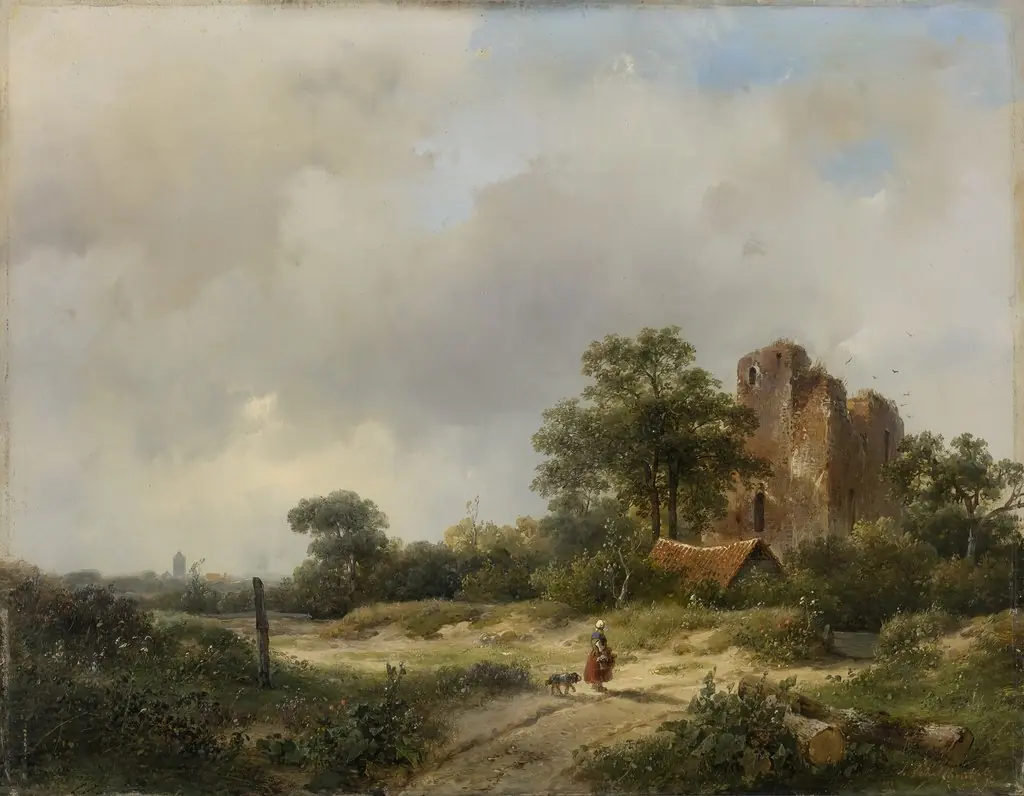 Landscape with the ruins of Castle Brederode in Santpoort
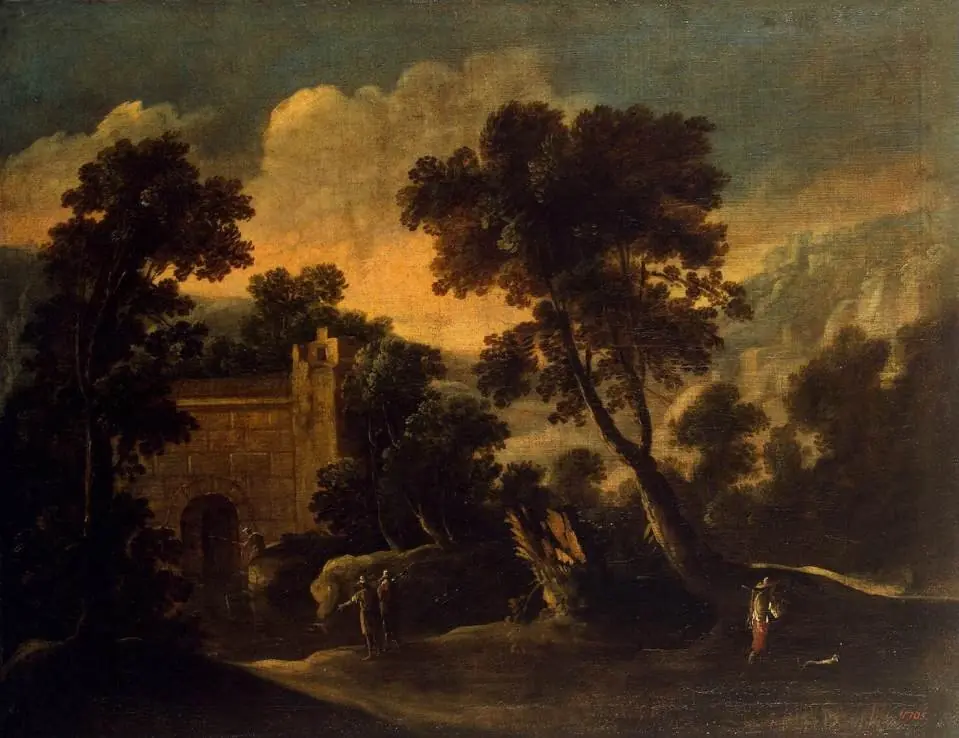 Landscape with Ruins
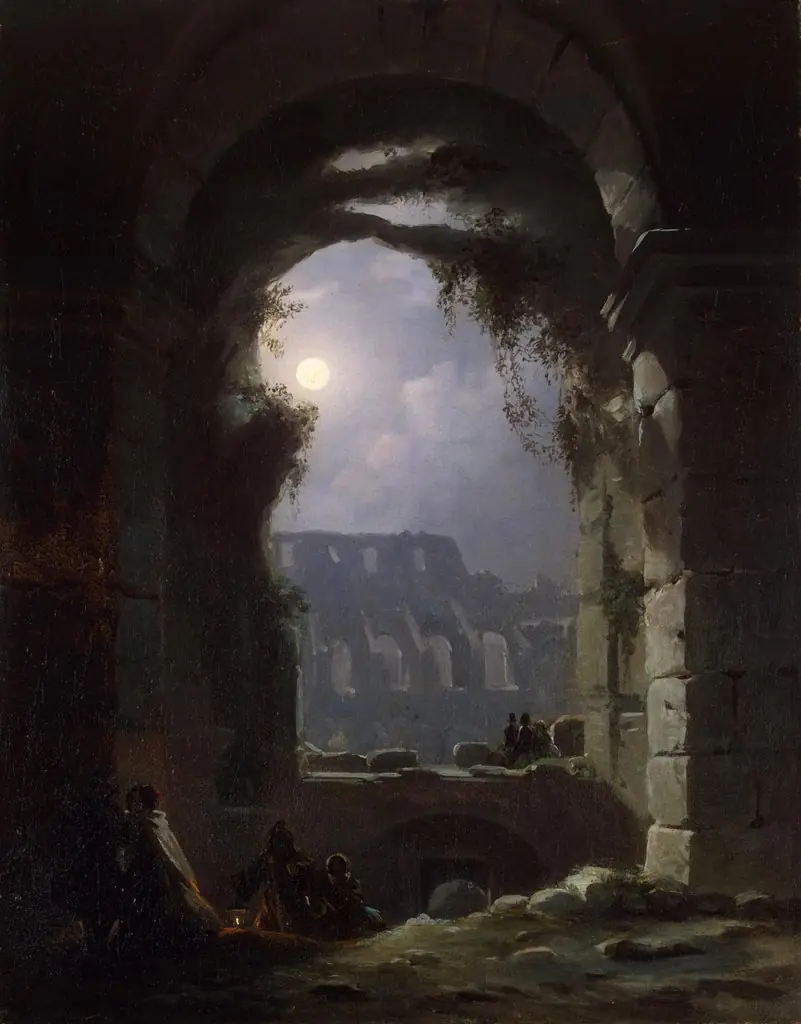 View of the Colosseum by Night
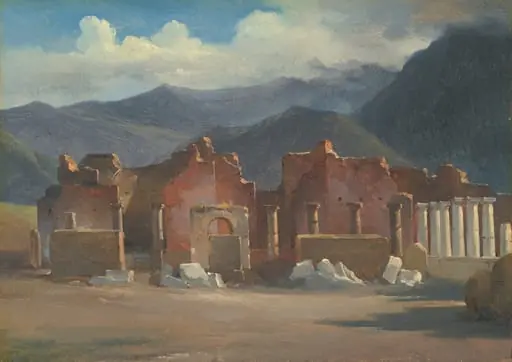 The Forum at Pompeii
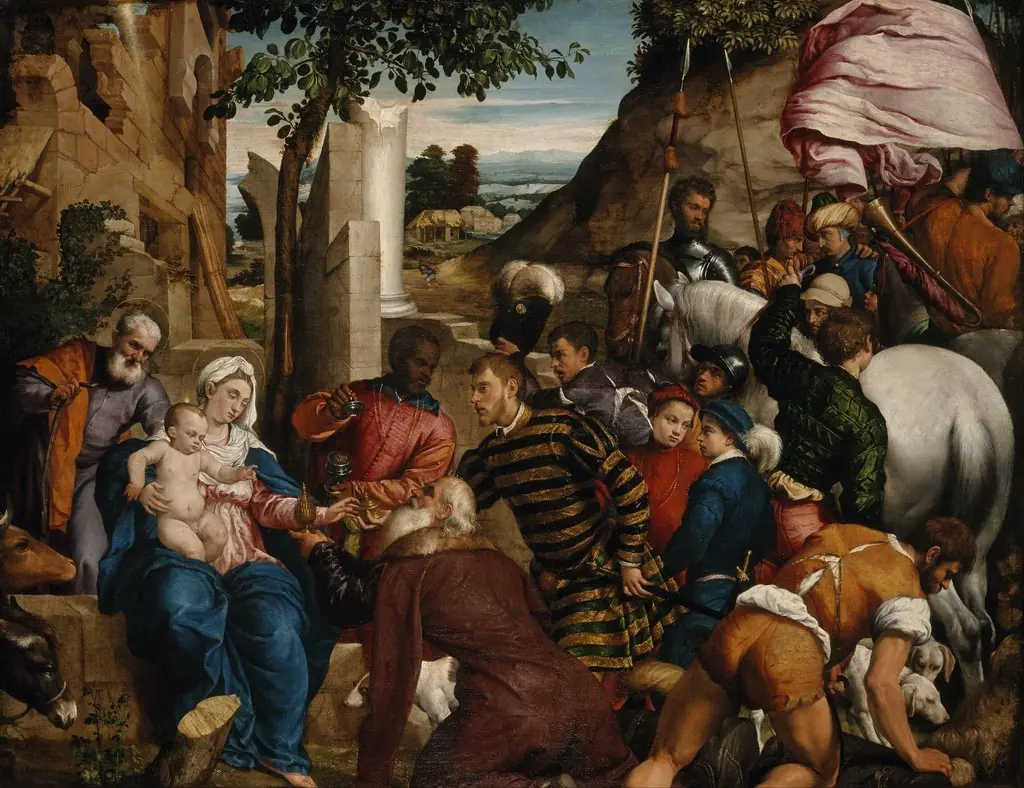 The Adoration of the Kings
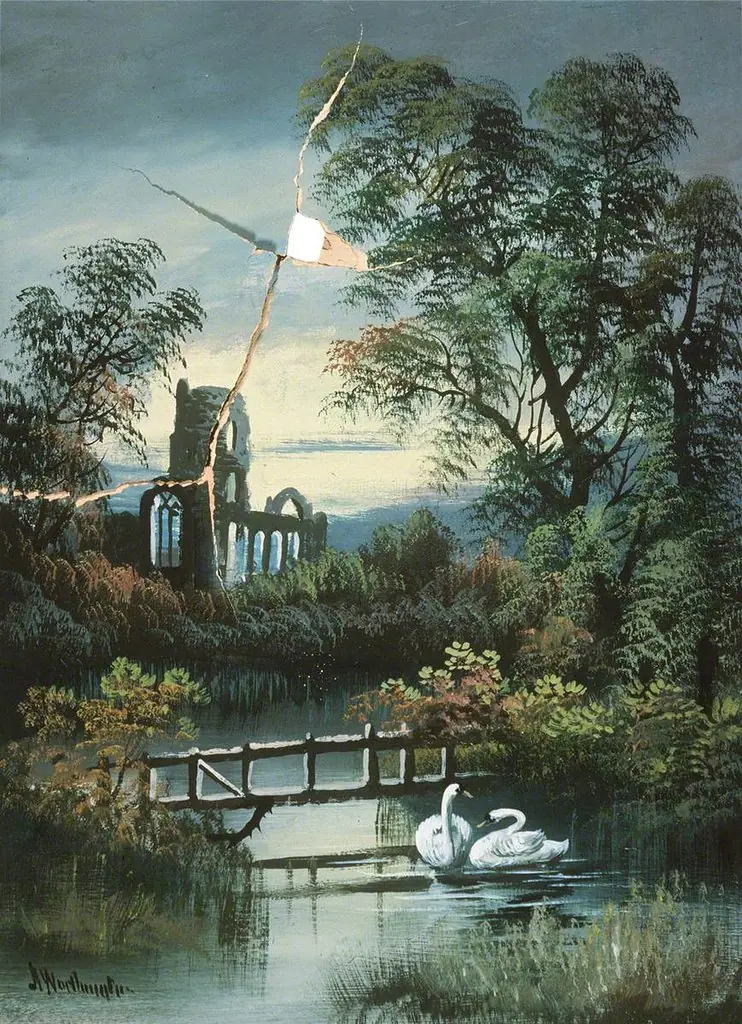 River Landscape and a Ruined Abbey
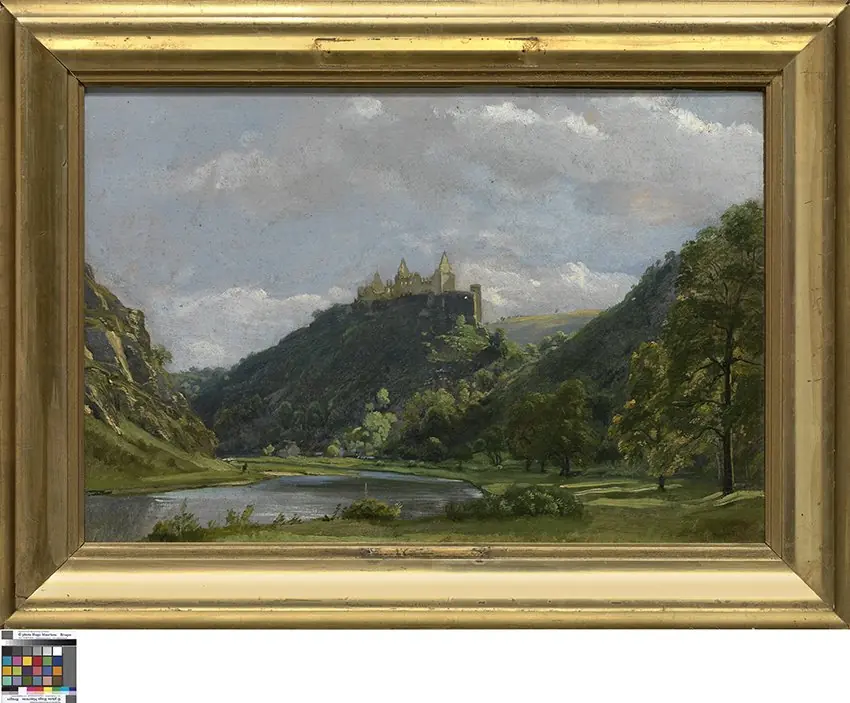 Mountain landscape near Vianden
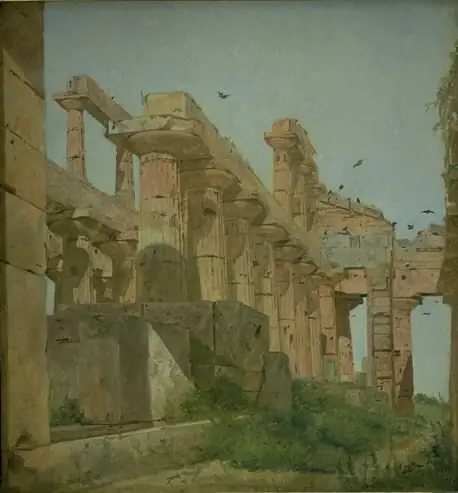 The Temple of Hera at Paestum, Italy
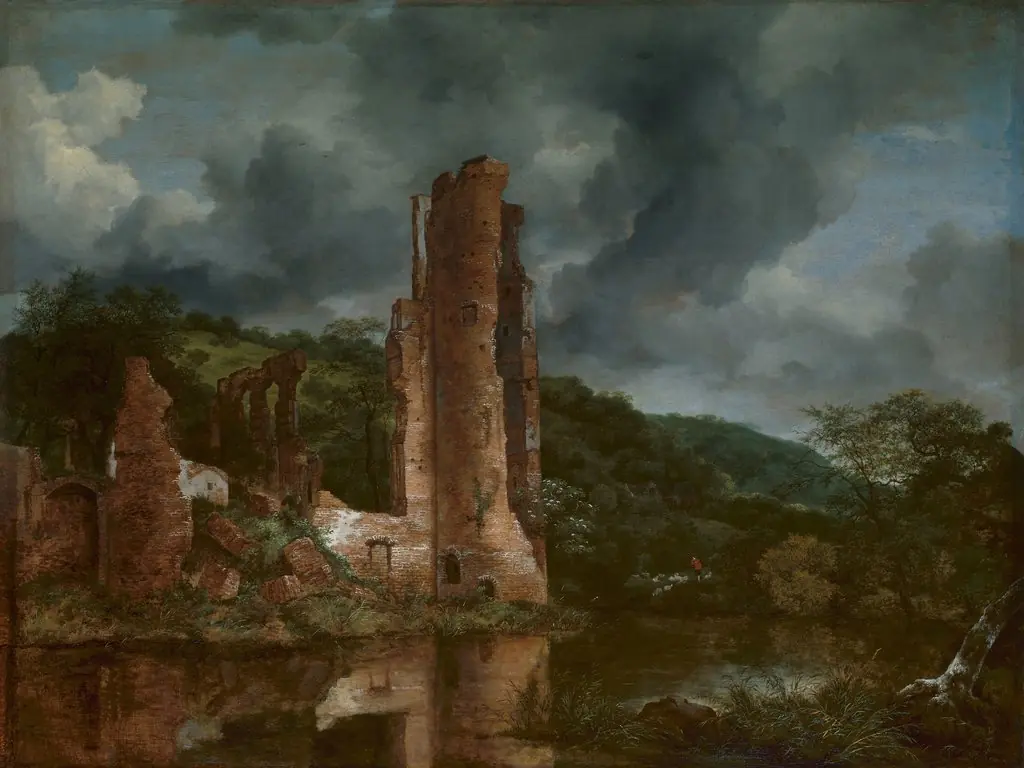 Landscape with the Ruins of the Castle of Egmond
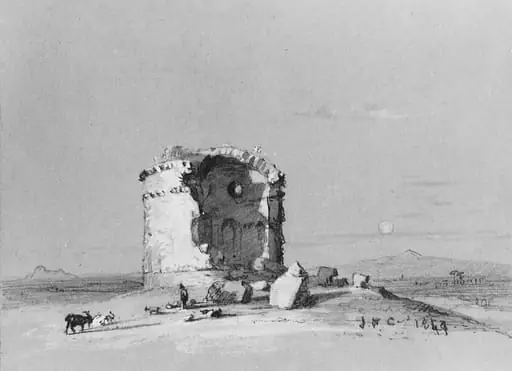 Torre dei Schiavi, The Roman Campagna (from Cropsey Album)
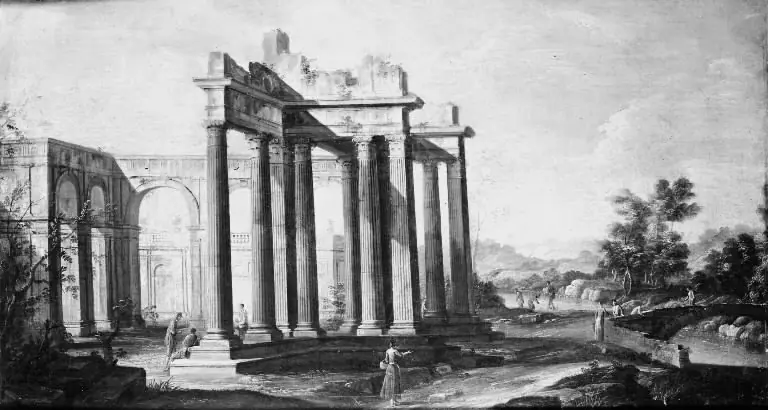 Landscape with Ruins
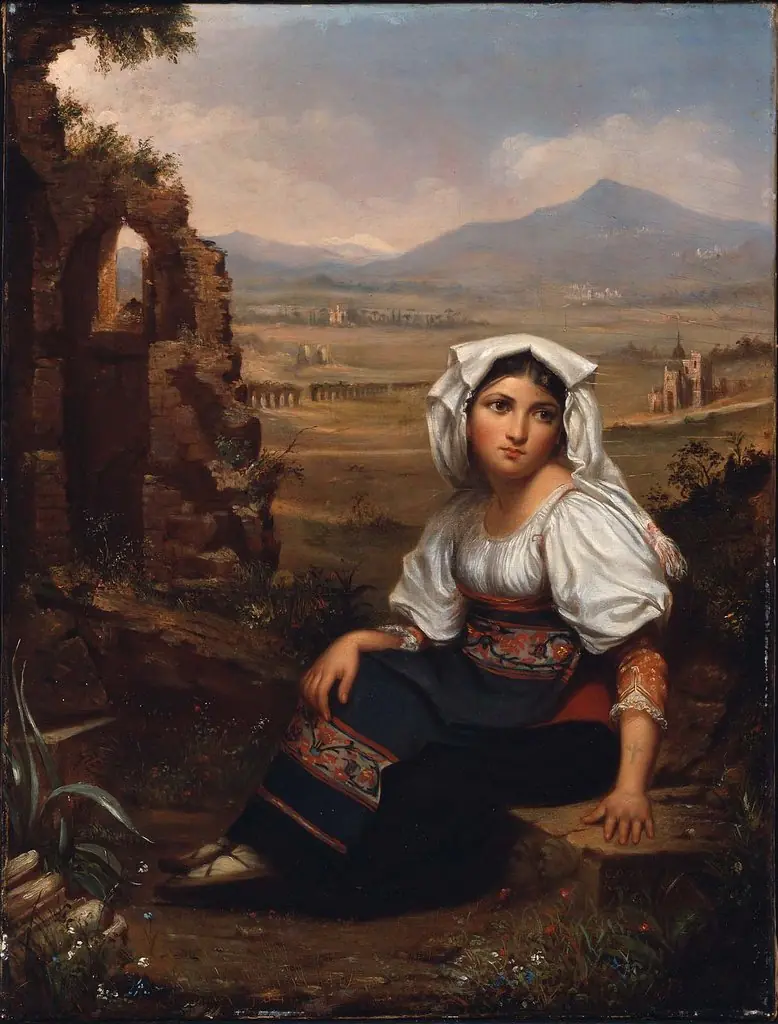 Memories of Italy
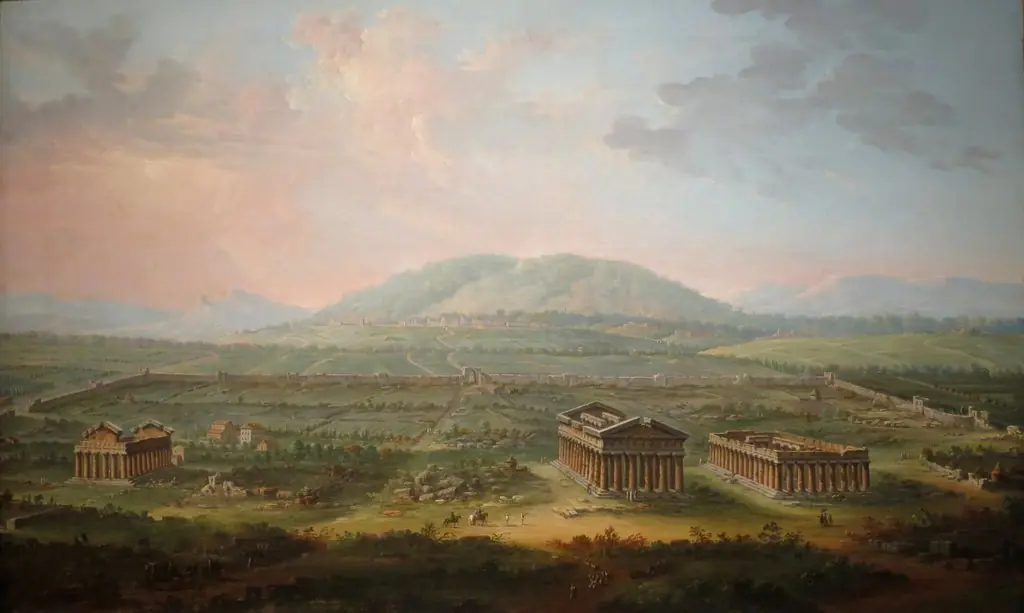 A View of Paestum
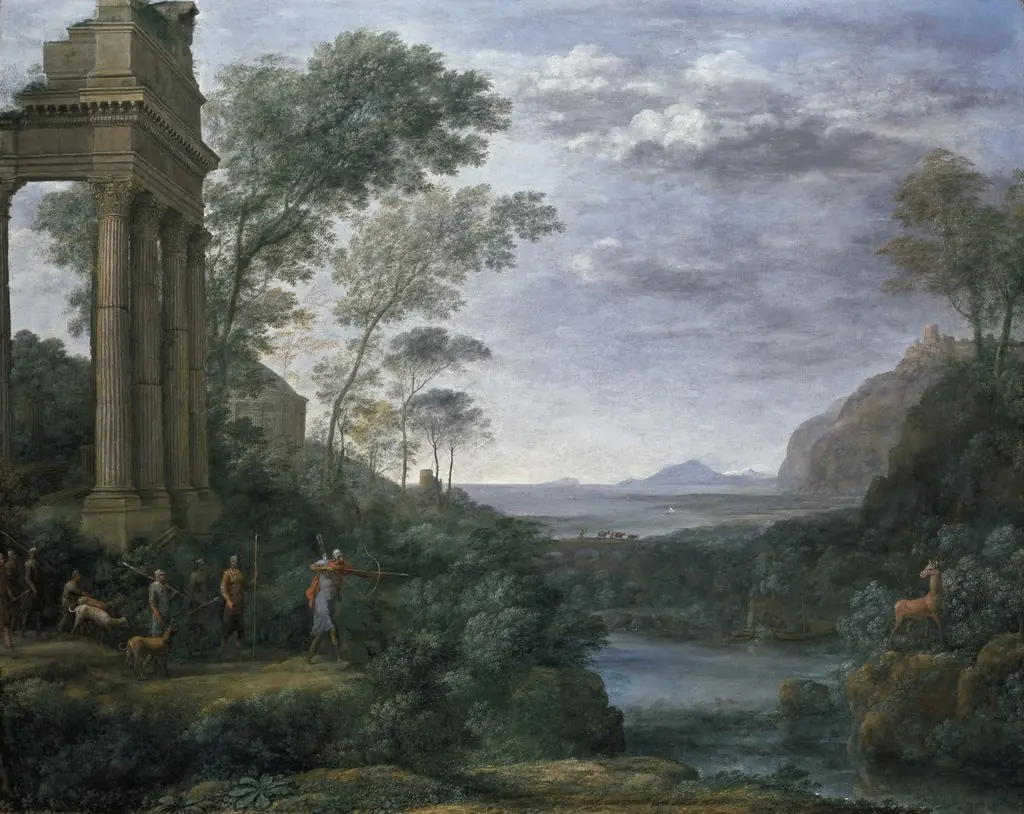 Ascanius Shooting the Stag of Sylvia
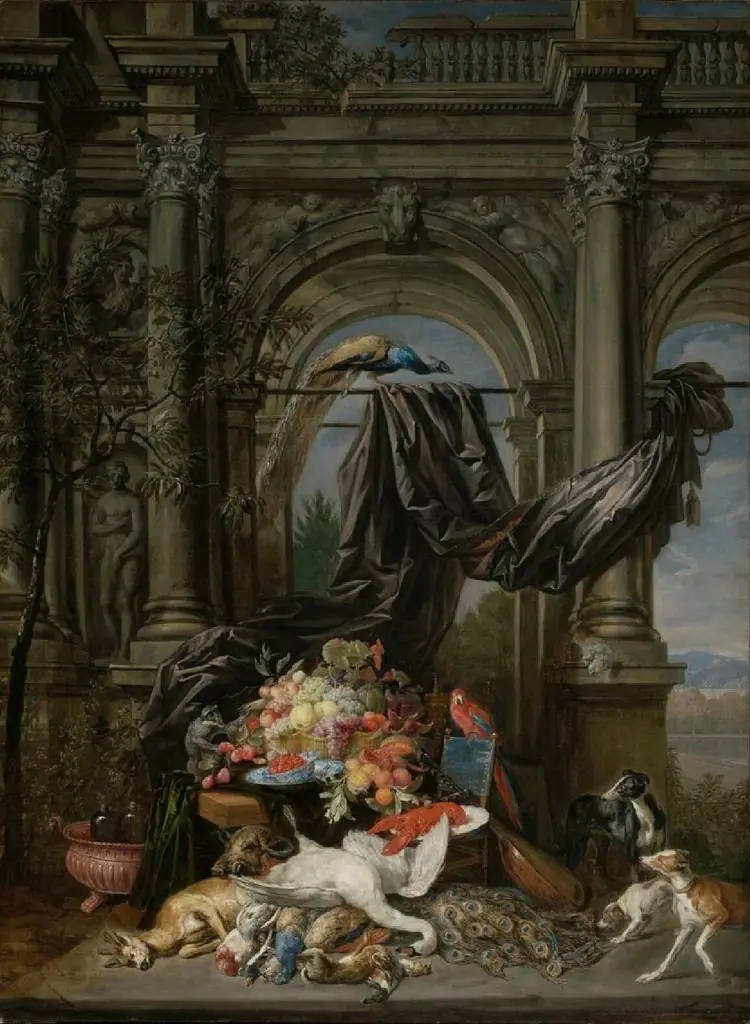 Still Life in an Architectural Setting
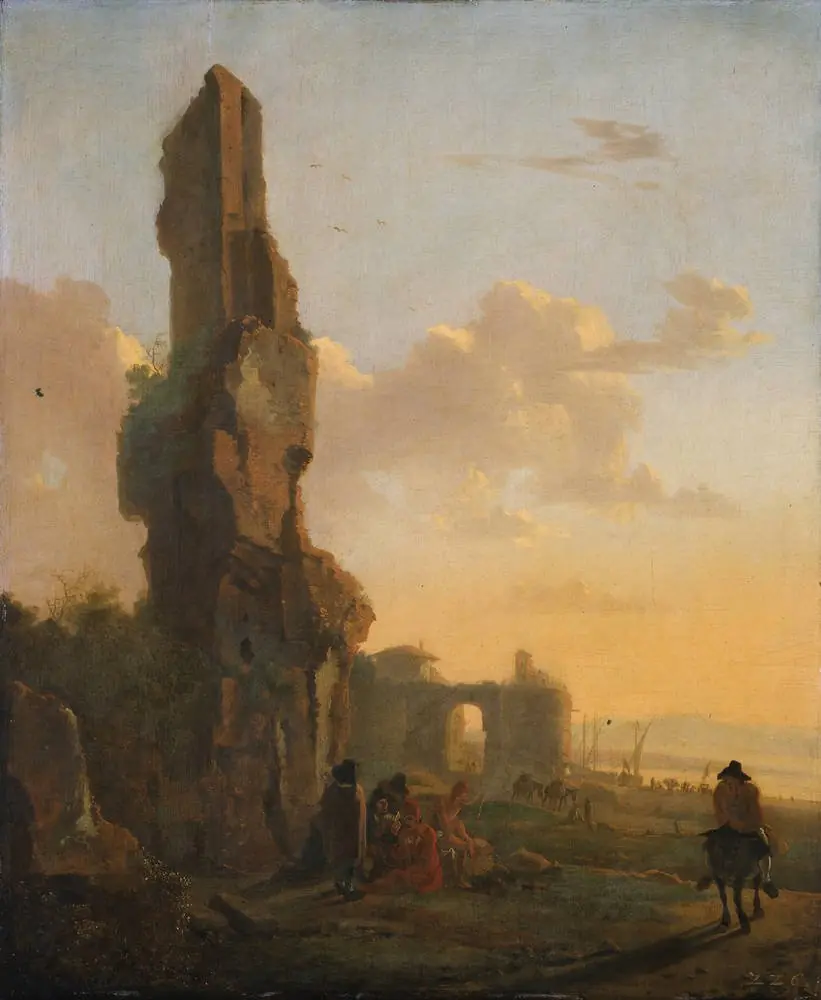 Ruins on the Edge of a Lake
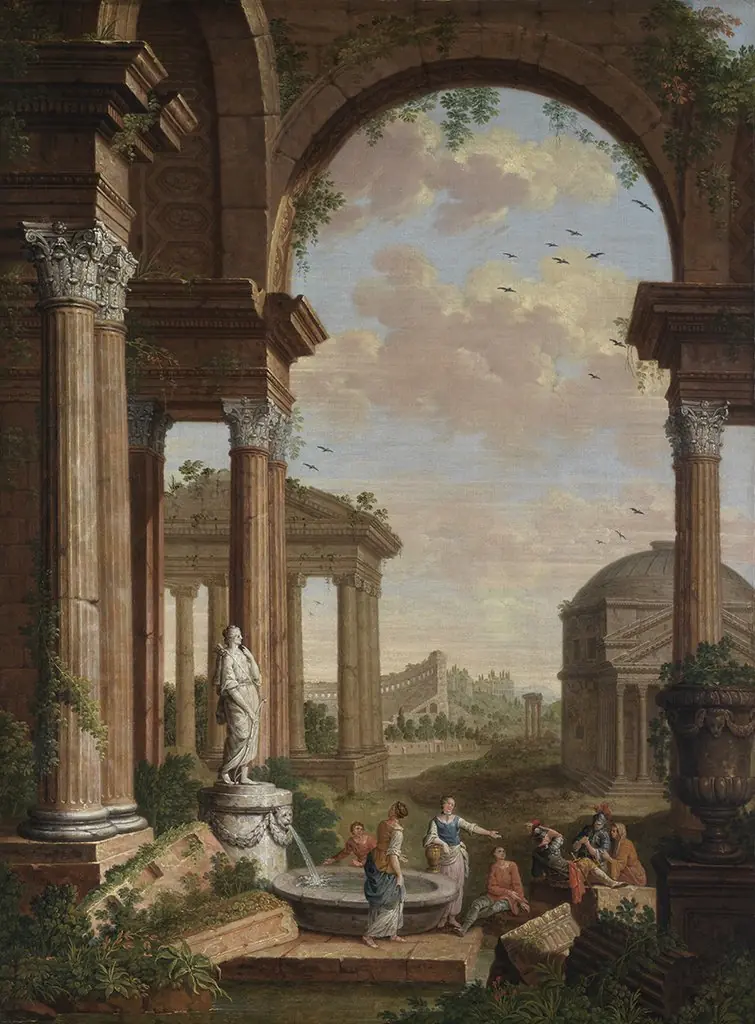 Landscape with Roman Ruins
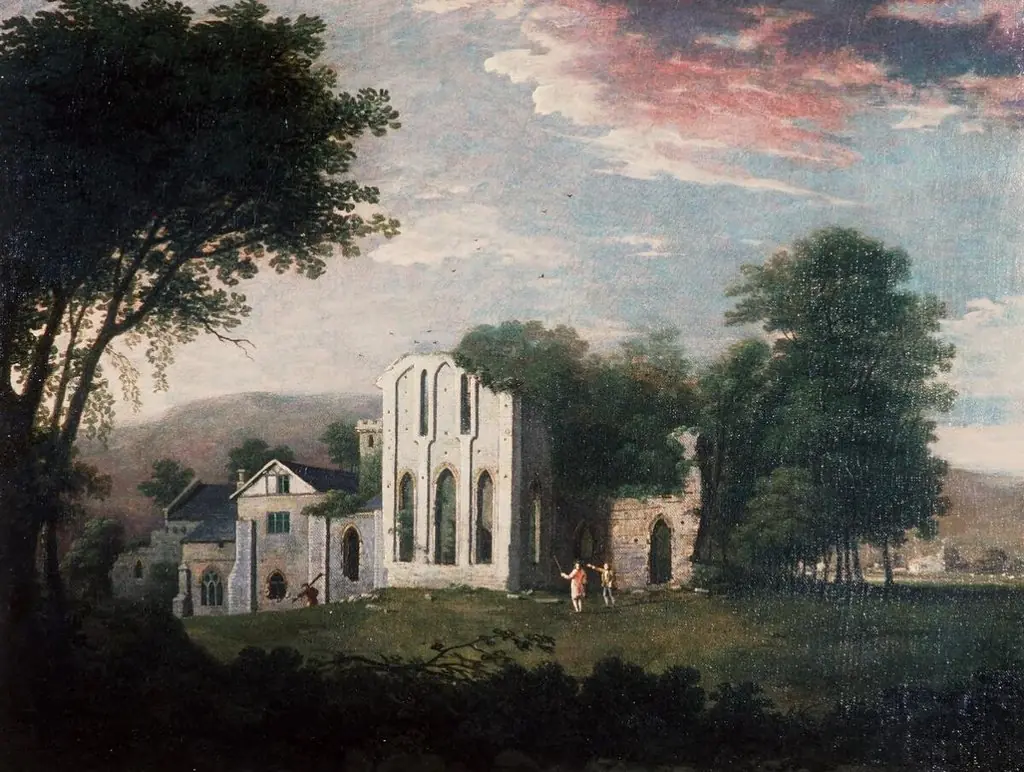 Valle Crucis Abbey
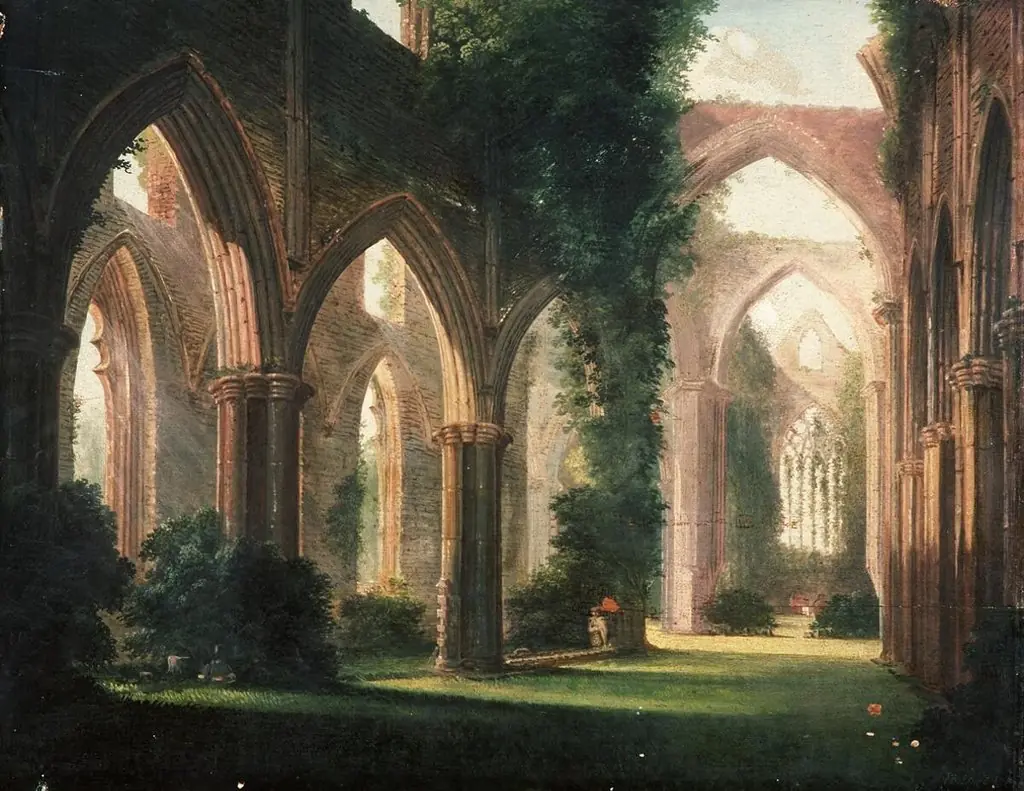 Tintern Abbey
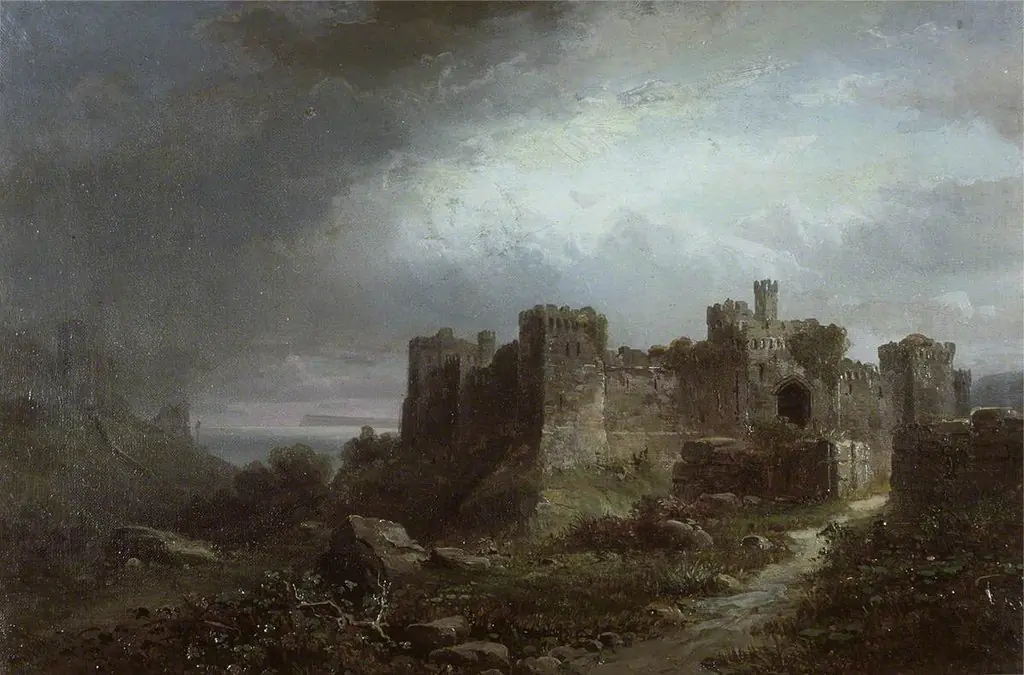 Manorbier Castle
 Landscape with sheep
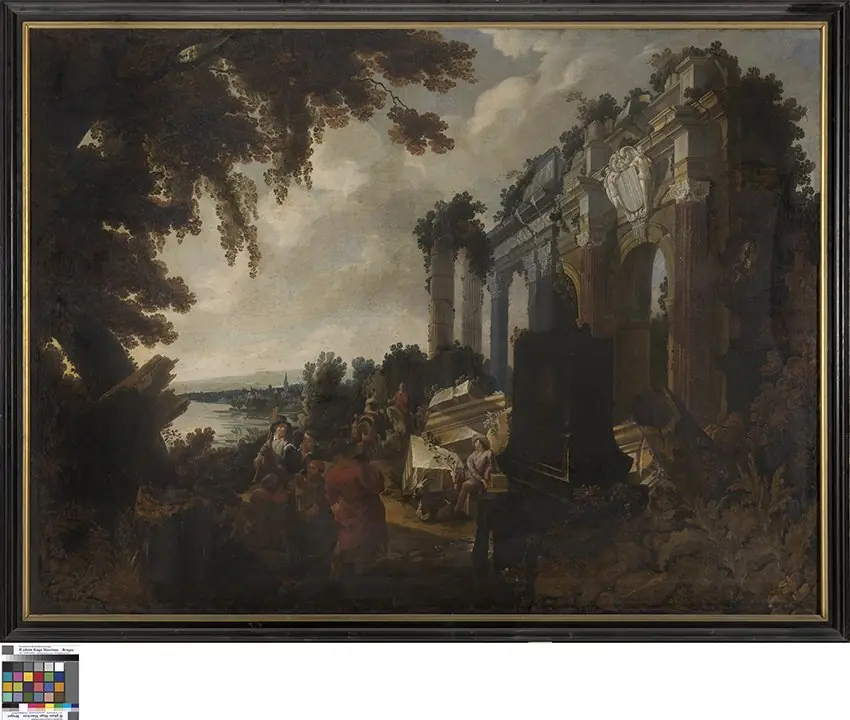 Landschap met ruïnes
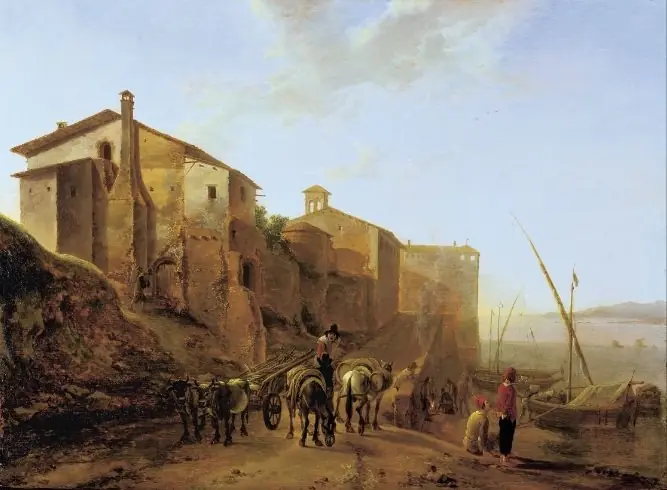 View of the Ripa Grande in Rome
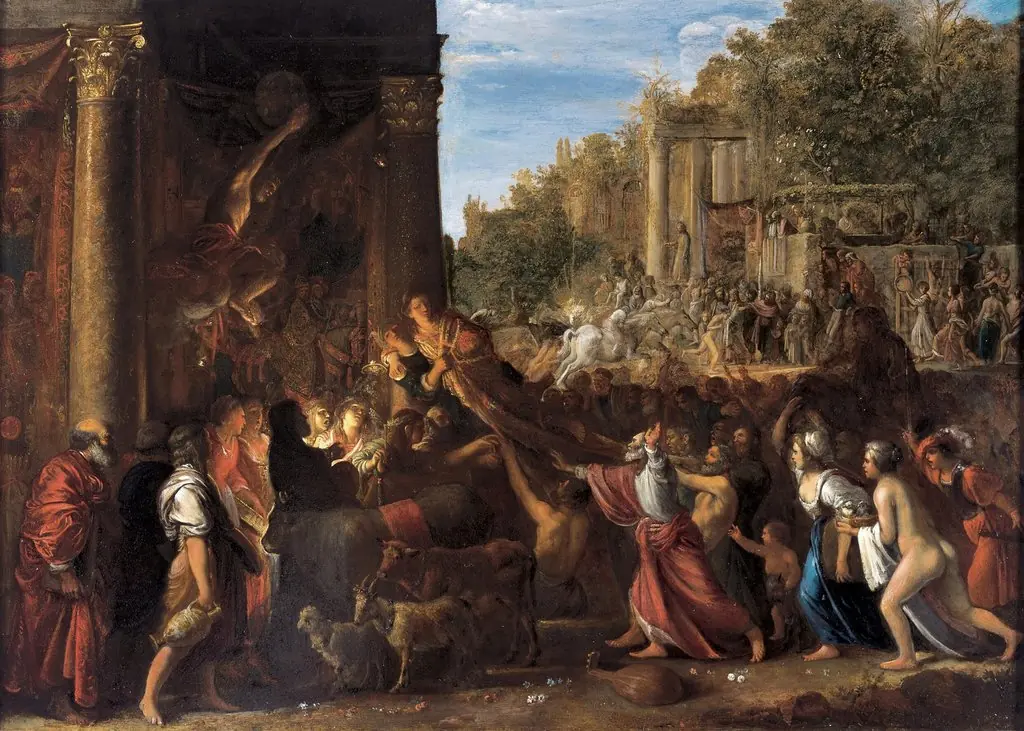 Il Contento
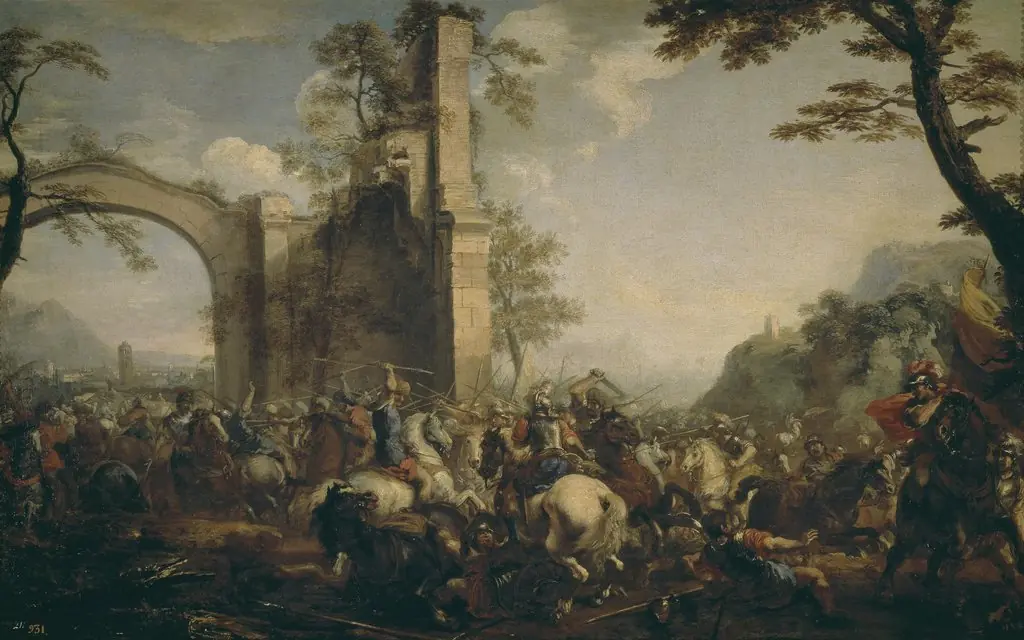 Battle between Christians and Moslems
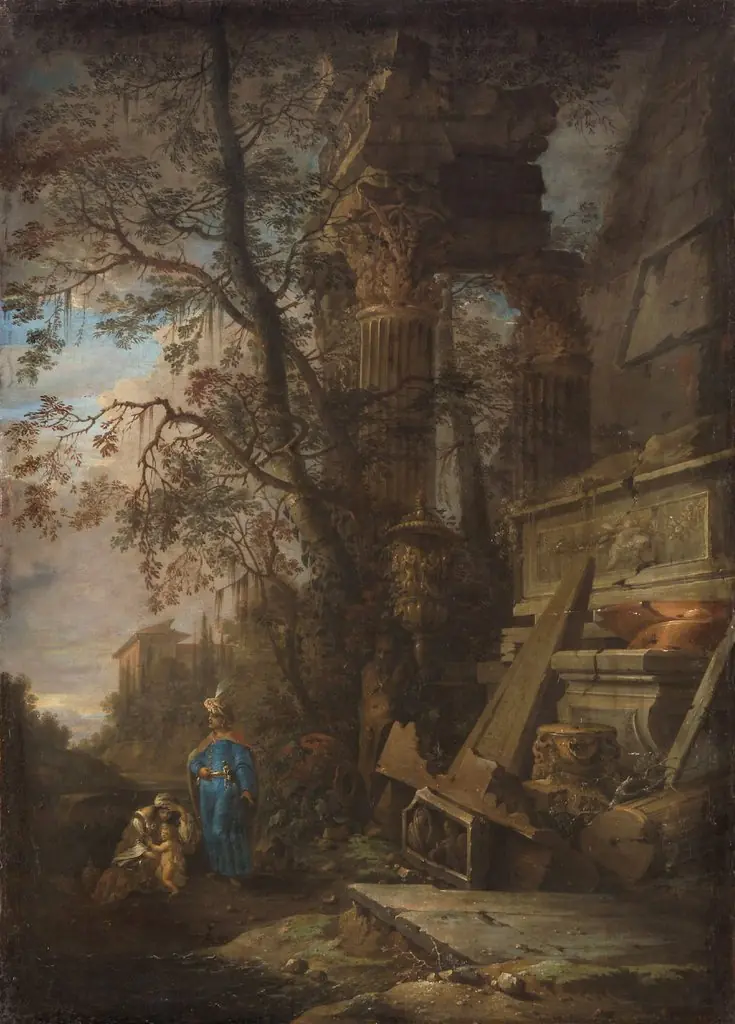 The Repudiation of Hagar
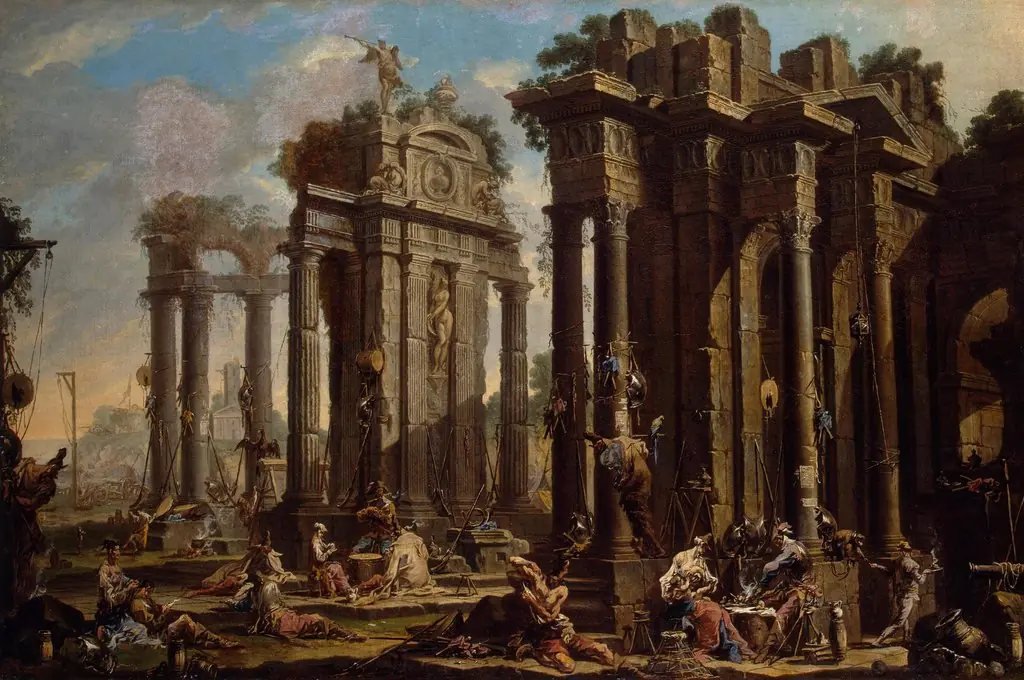 Halt of the Brigands
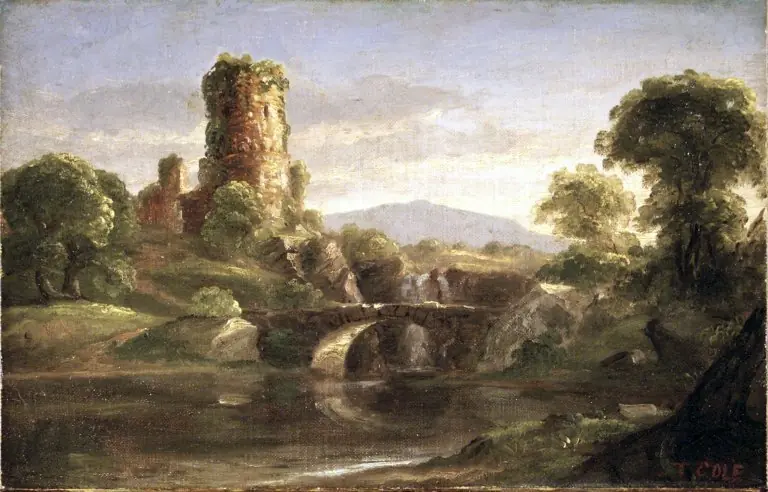 Ruined Castle and River
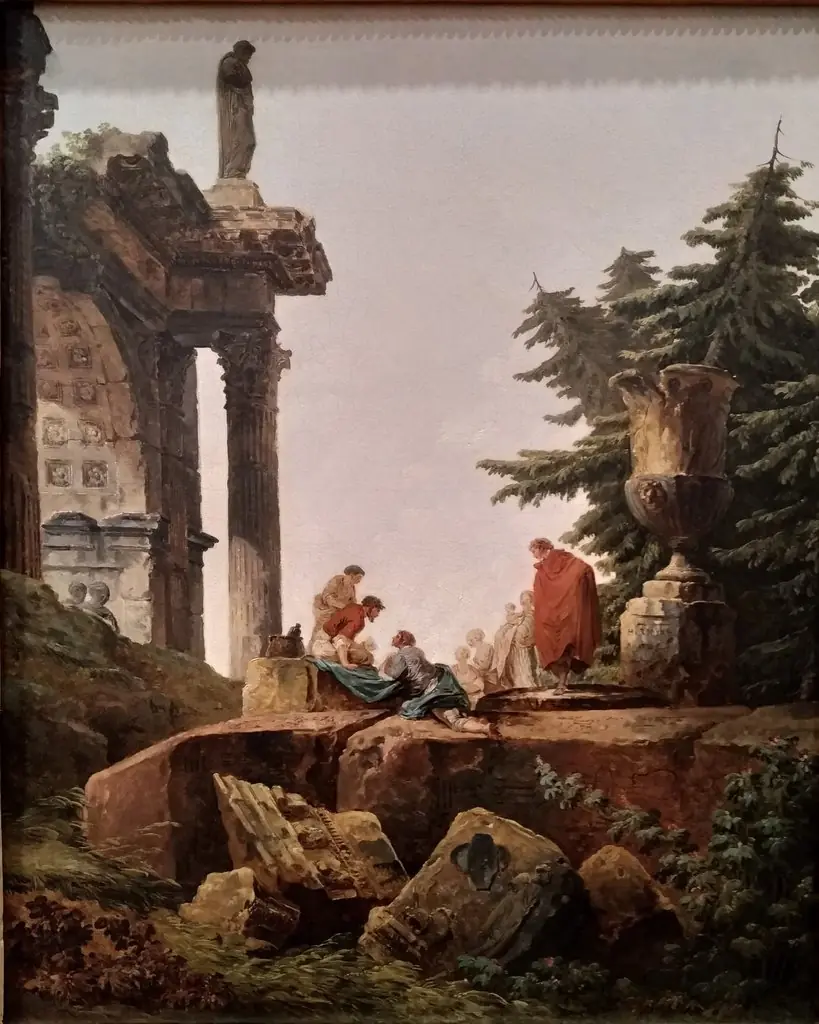 Arch of Triumph in Ruins
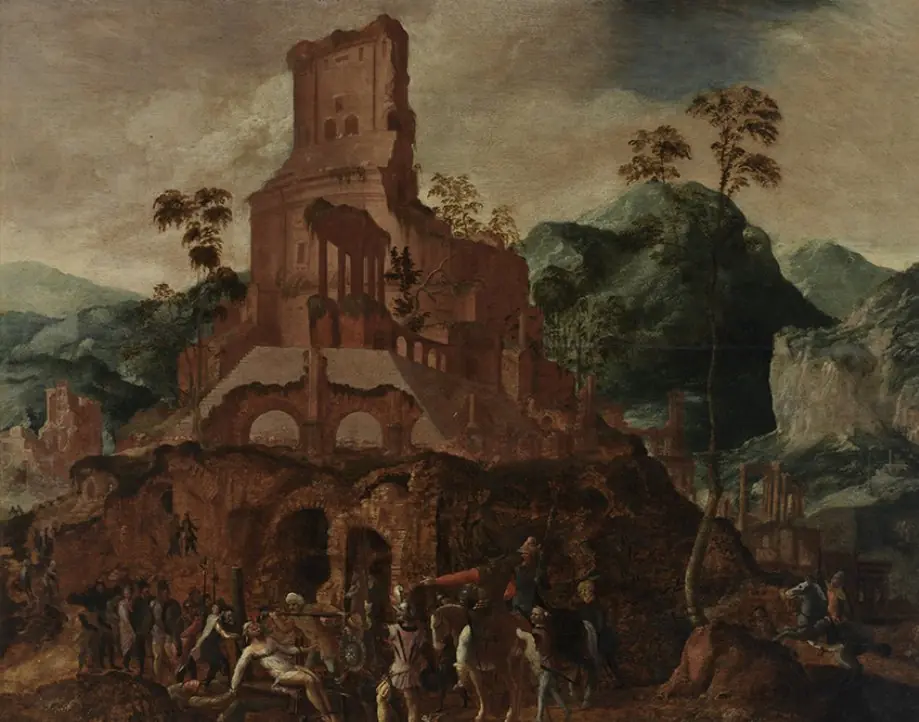 The death of Marcus Licinius Crassus
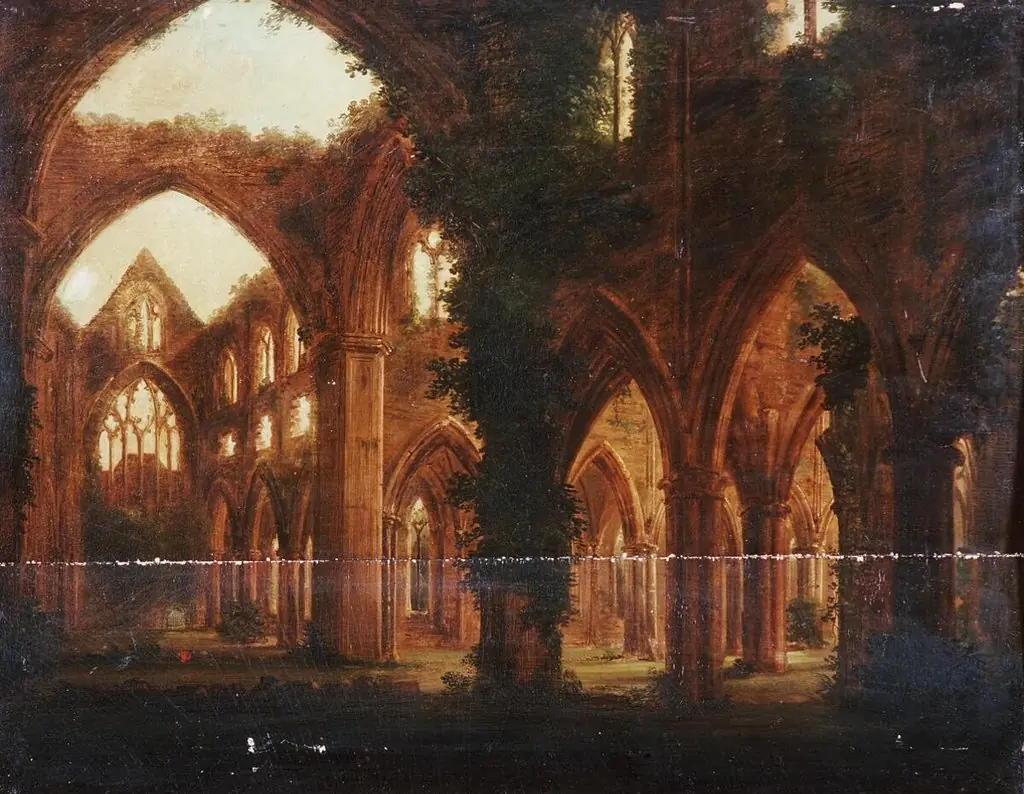 Tintern Abbey
 An Oriental Harbour
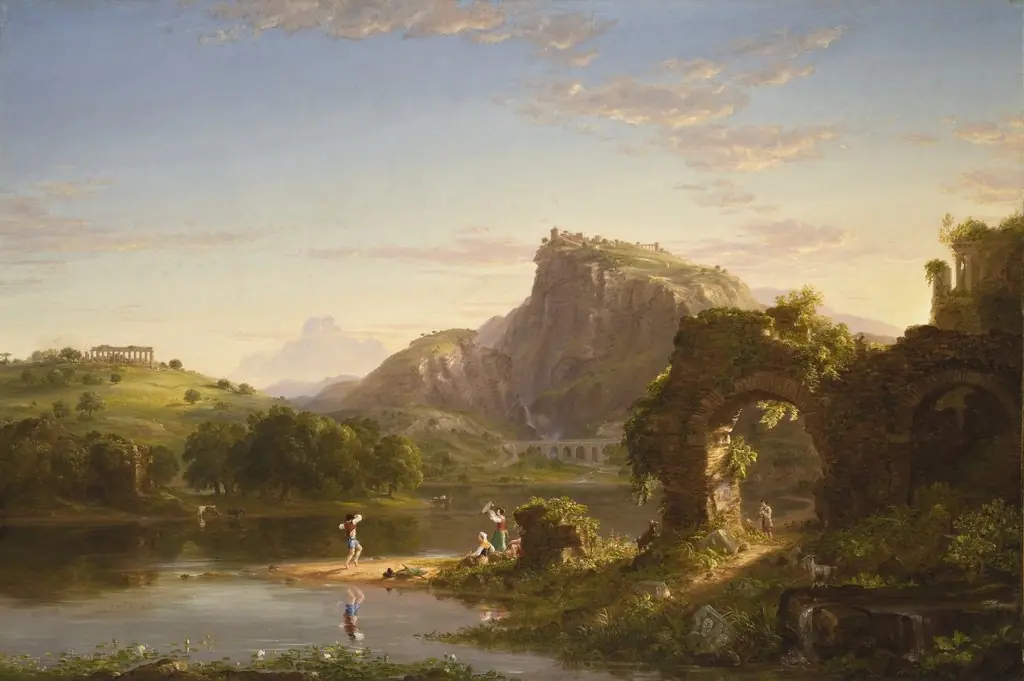 L-Allegro (Italian Sunset)
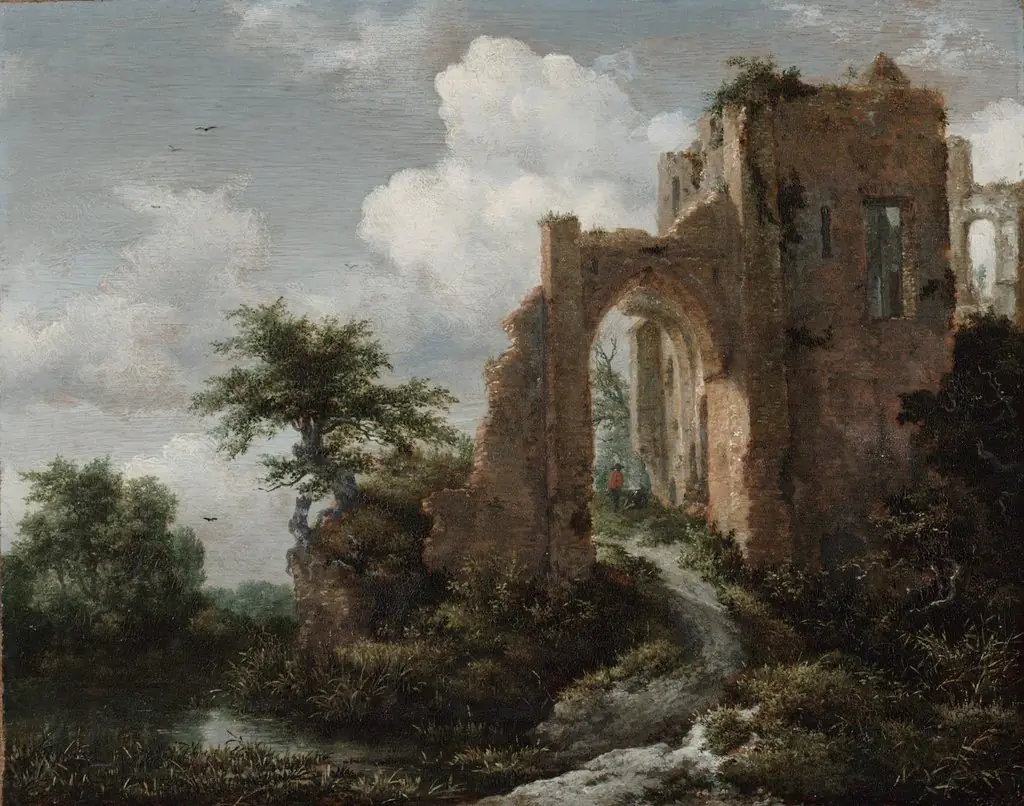 Ruins of Brederode
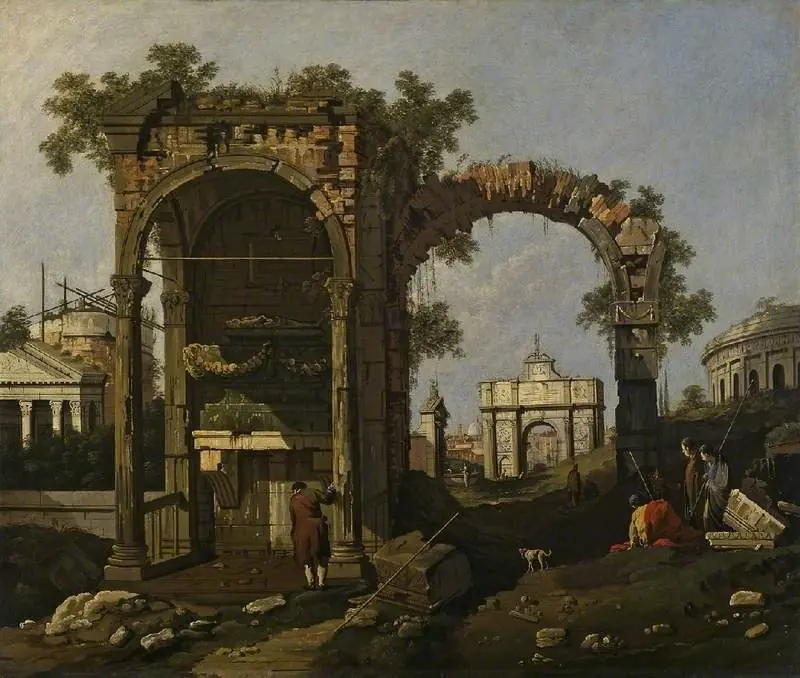 Ruins with Figures
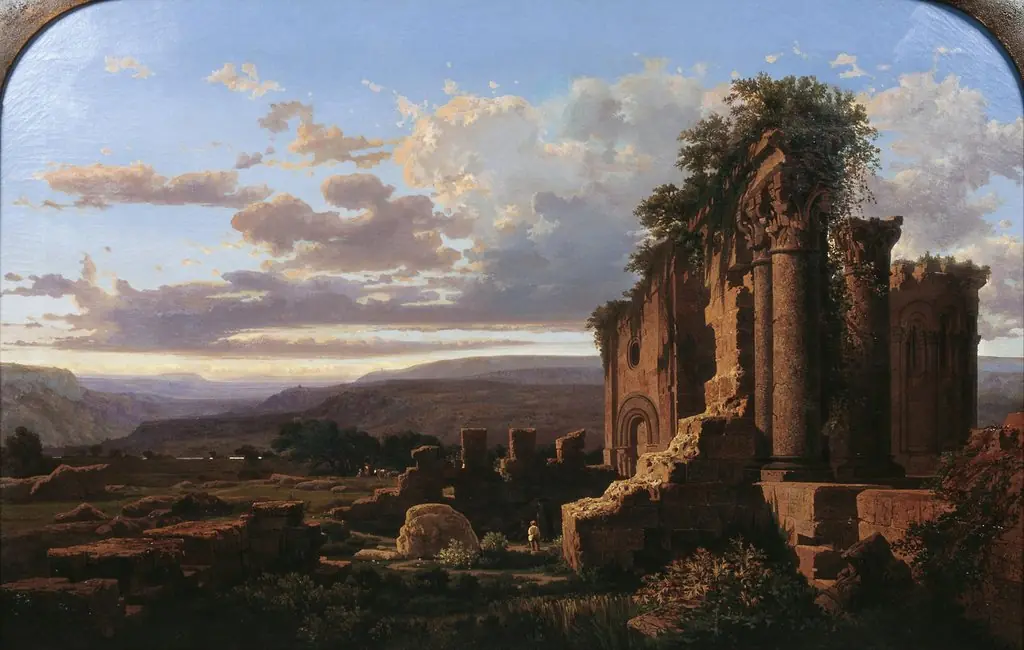 Ruins
Ruins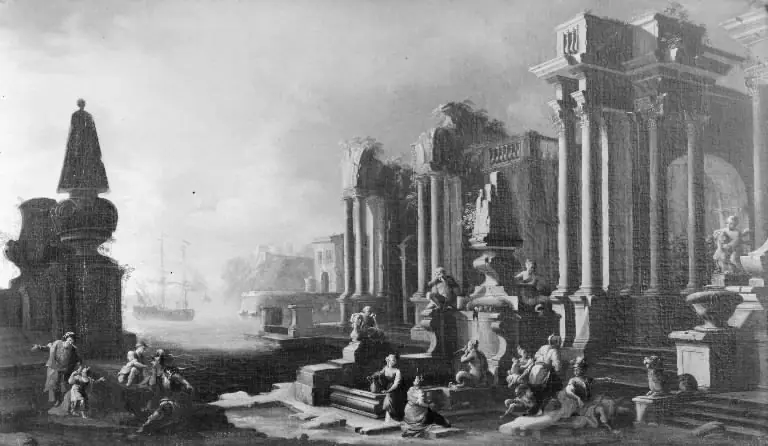 Ruins, Columns and a Triumphal Arch
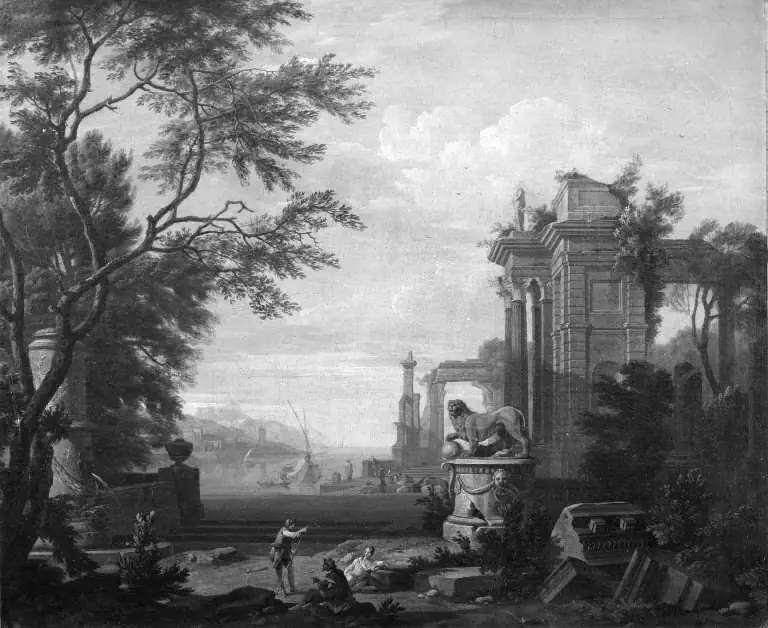 Southern Harbour
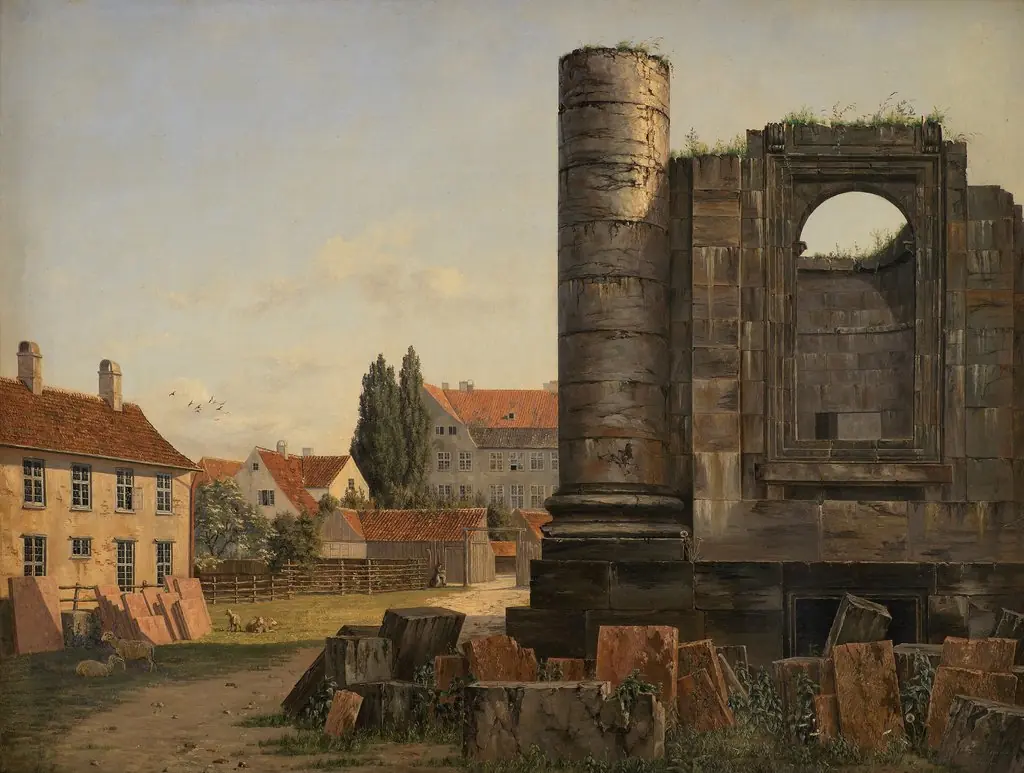 Parti af Marmorpladsen med ruinerne af den ufuldførte Frederikskirke
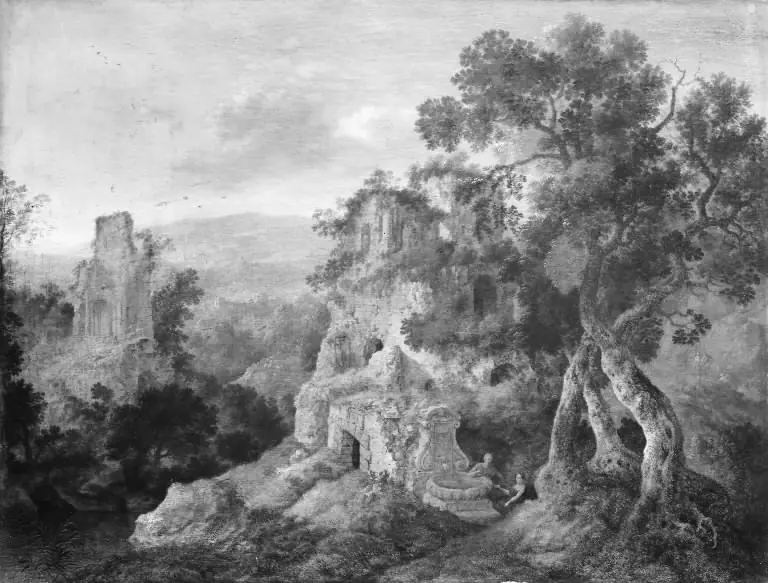 Fantasy of Mountain Scenery
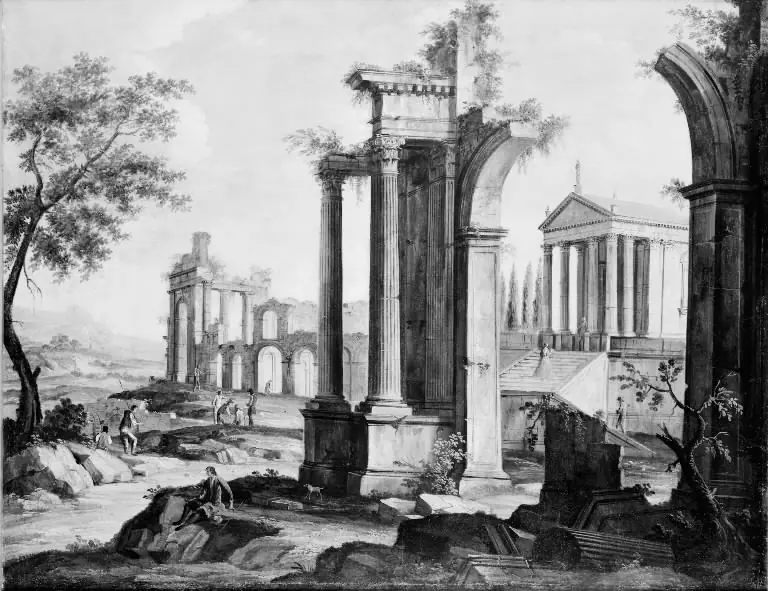 Decorative Painting with Imaginary Architecture
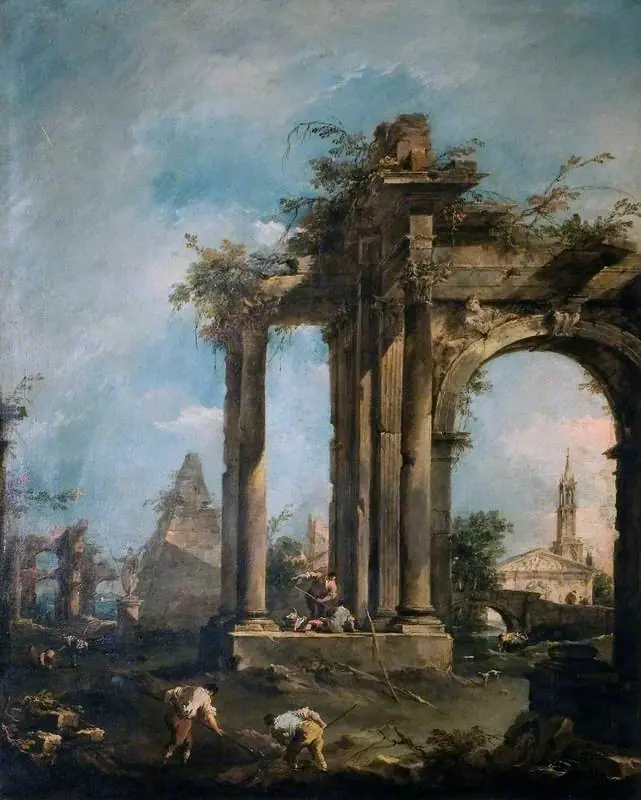 Capriccio with Ruins and Figures
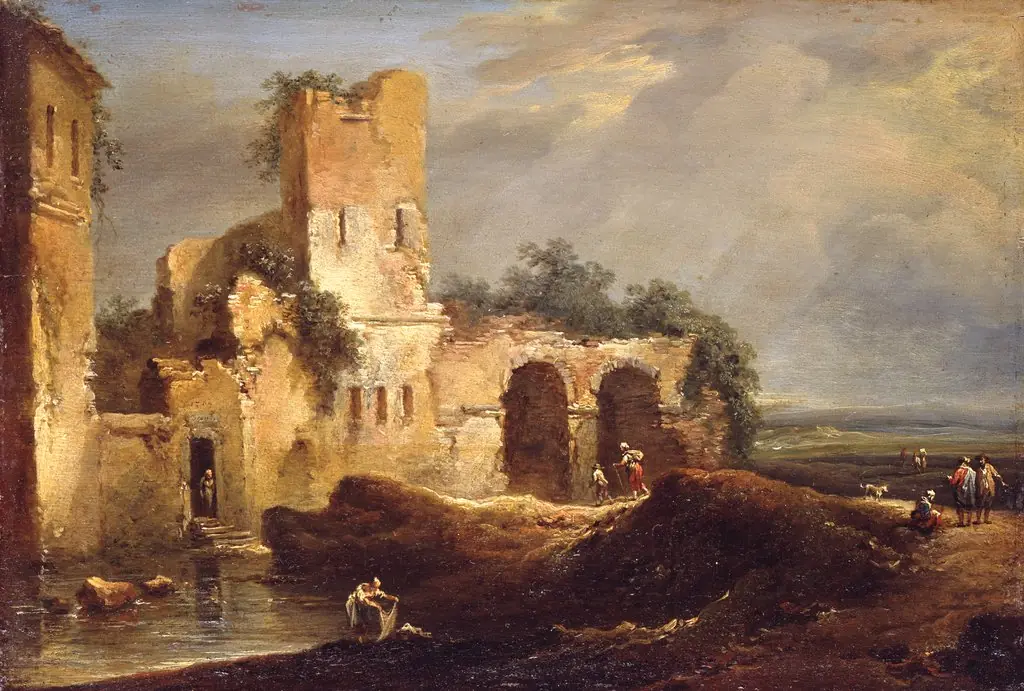 Landscape with a ruin at a stretch of water
 Abendlandschaft mit Vieh
 Italienische Ideallandschaft
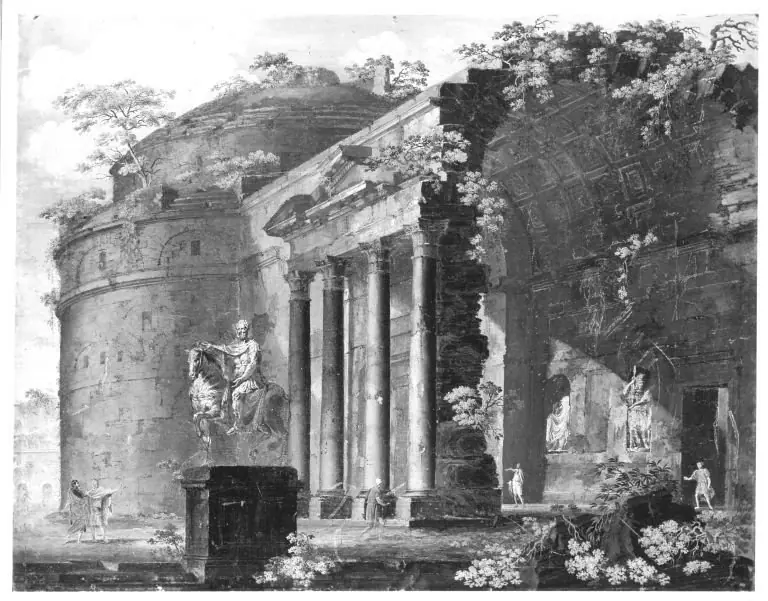 Römische Ruinenlandschaft
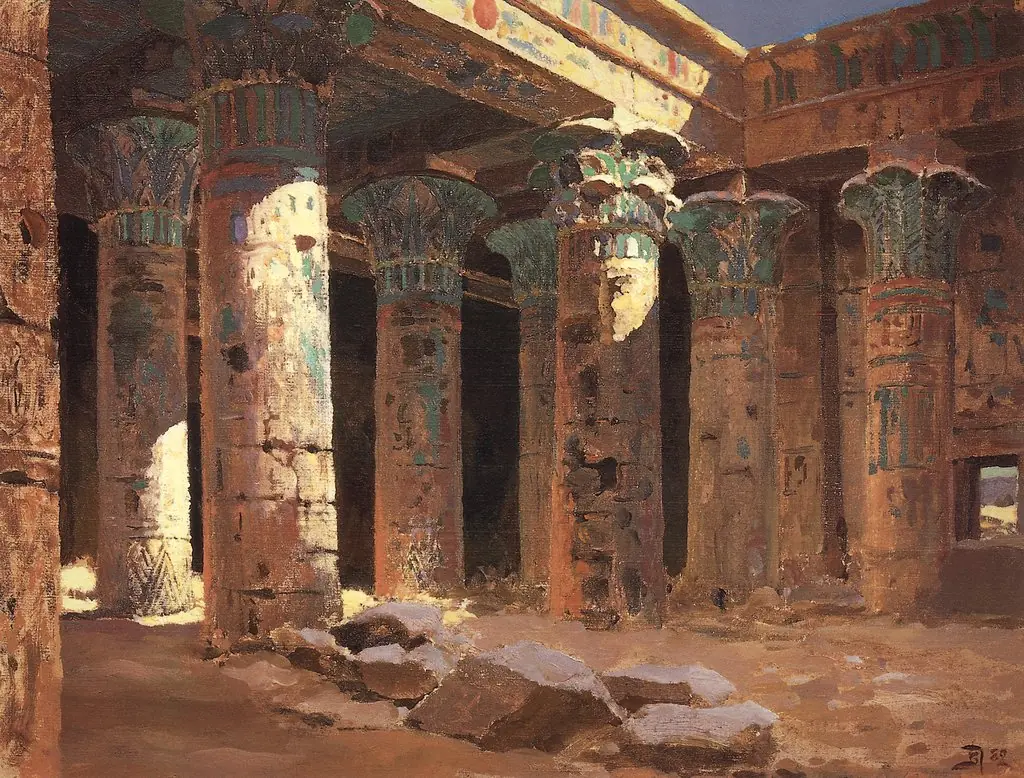 Temple of Isis, Philae
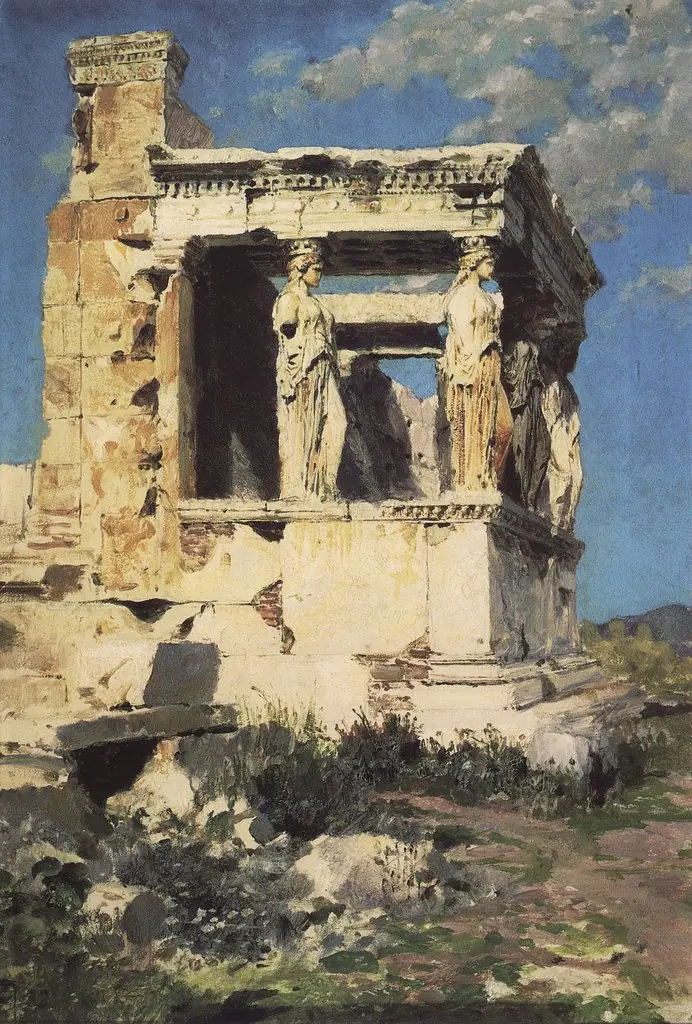 Erechtheion
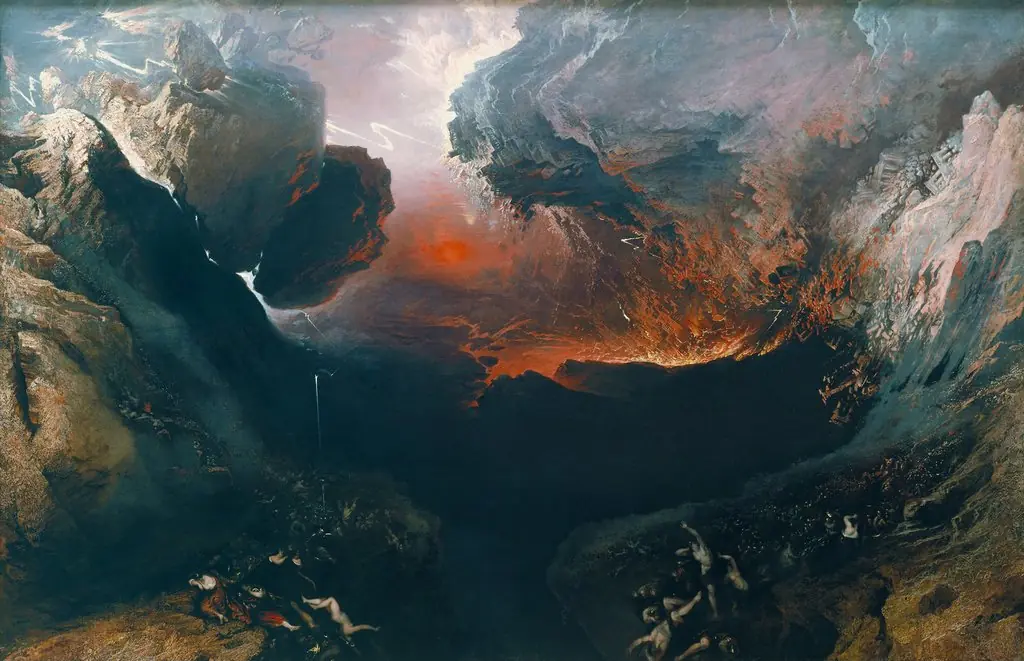 The end of the world
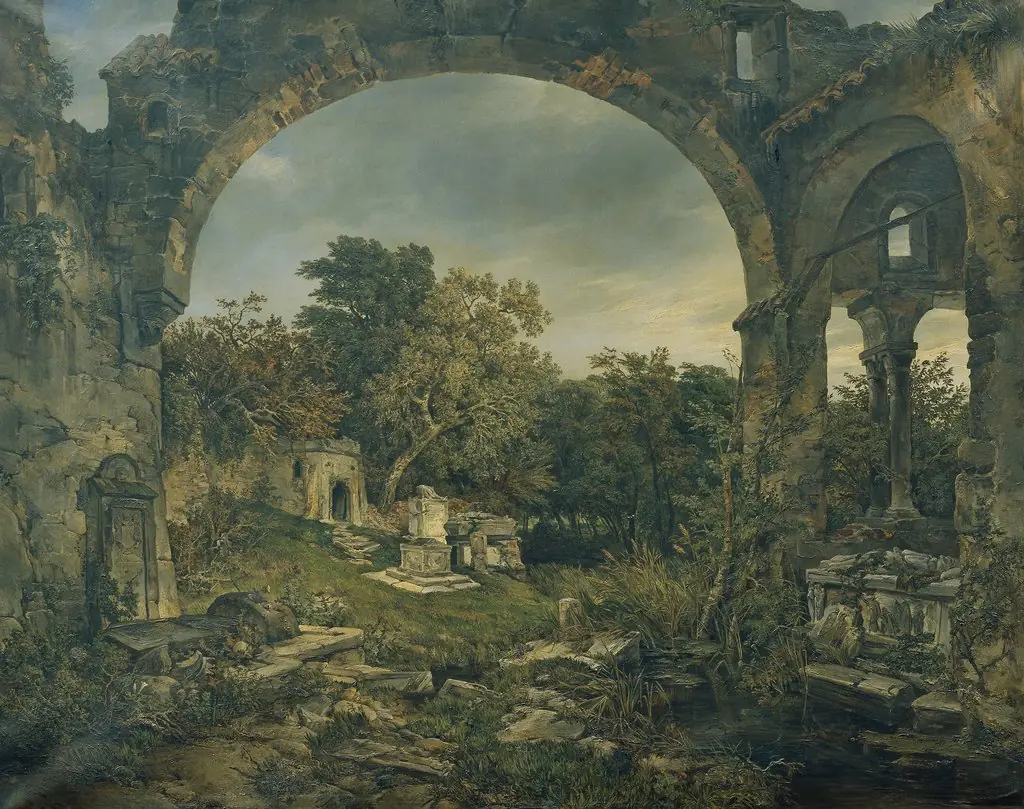 Verödeter Friedhof
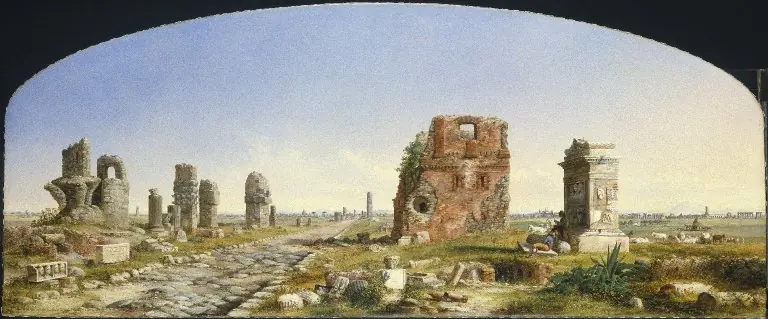 The Appian Way
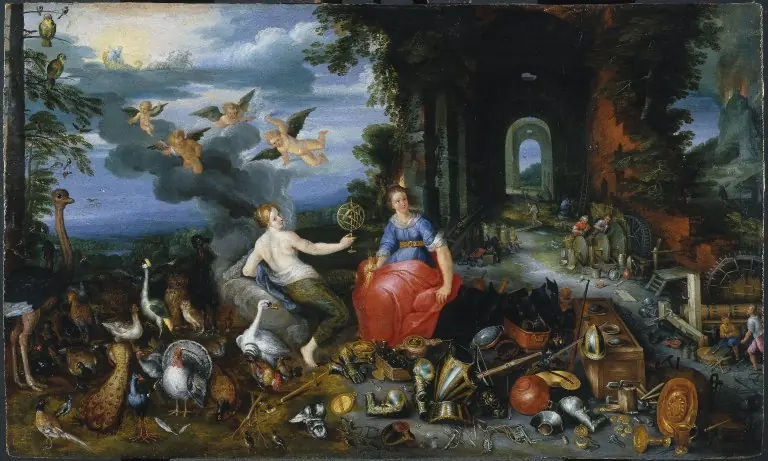 Allegory of Air and Fire
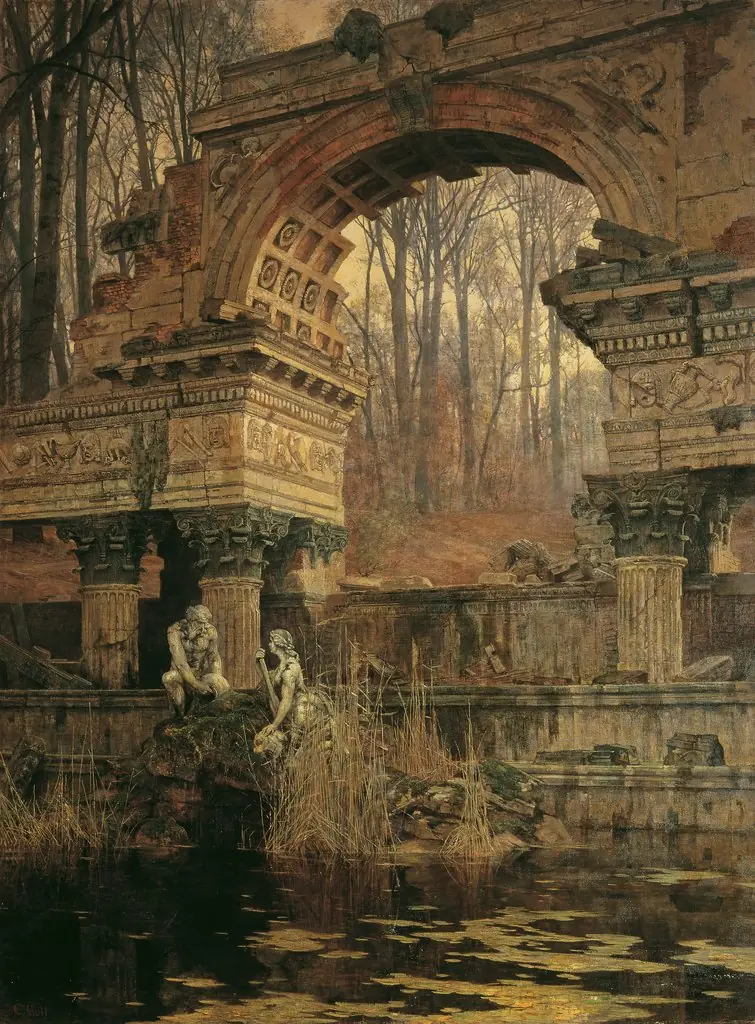 Die Römische Ruine in Schönbrunn
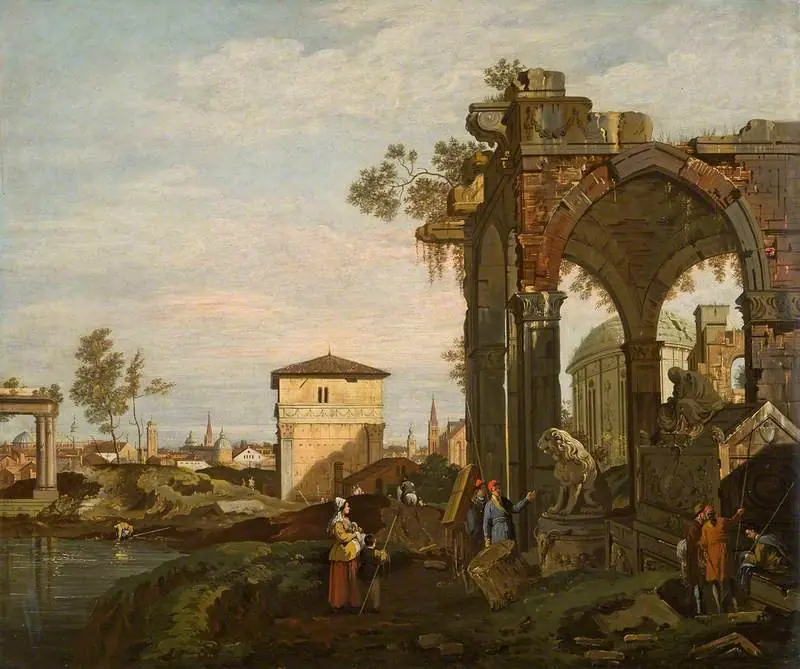 Ruins with Figures
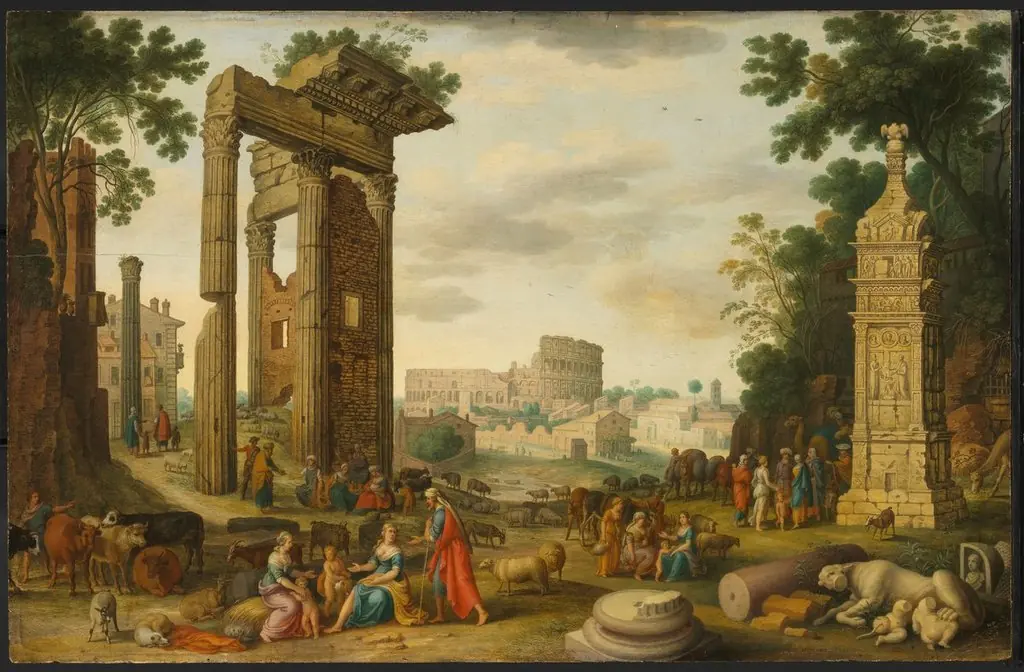 Roman Ruins and the Monument of Igel
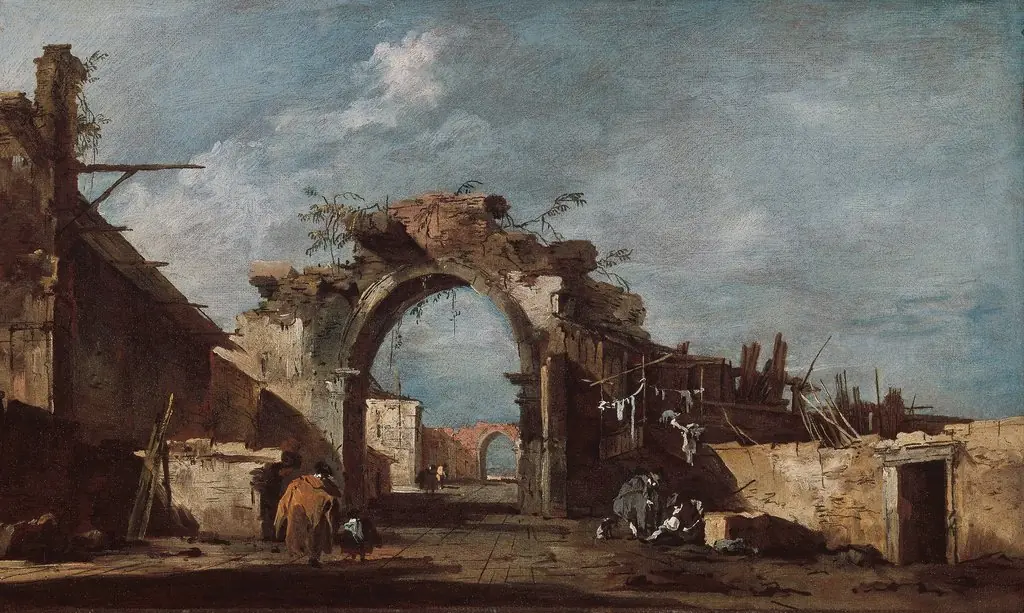 Ruined Archway
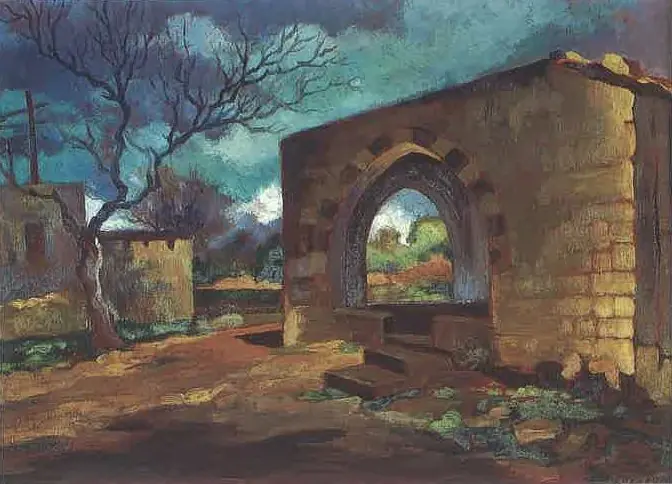 Al-Mrejeh
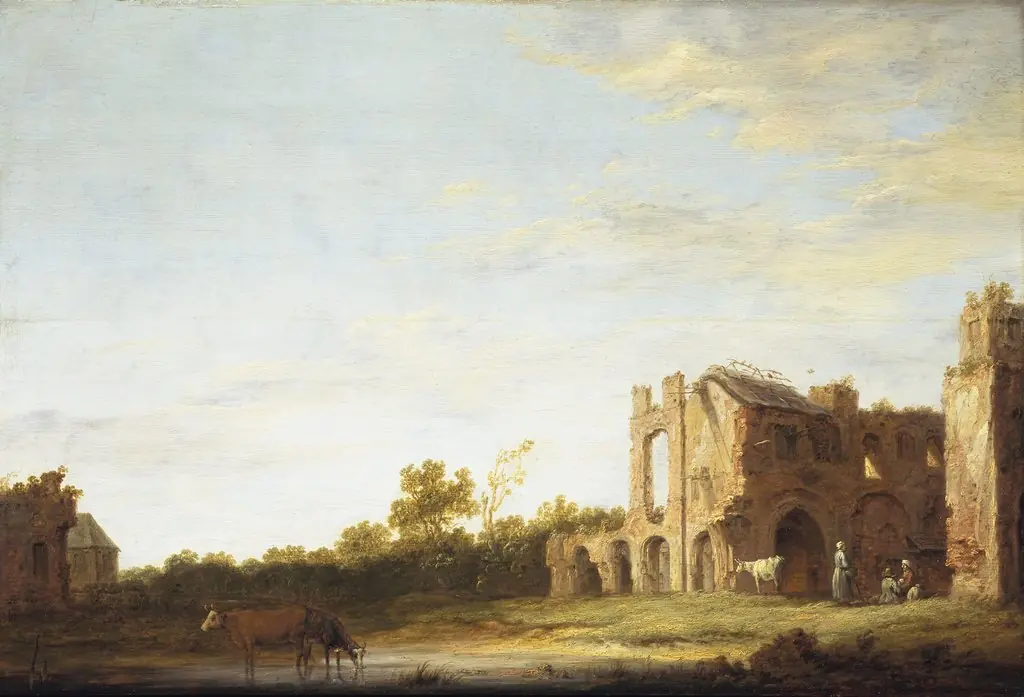 Landscape with the Ruins of Rijnsburg Abbey, near Leiden
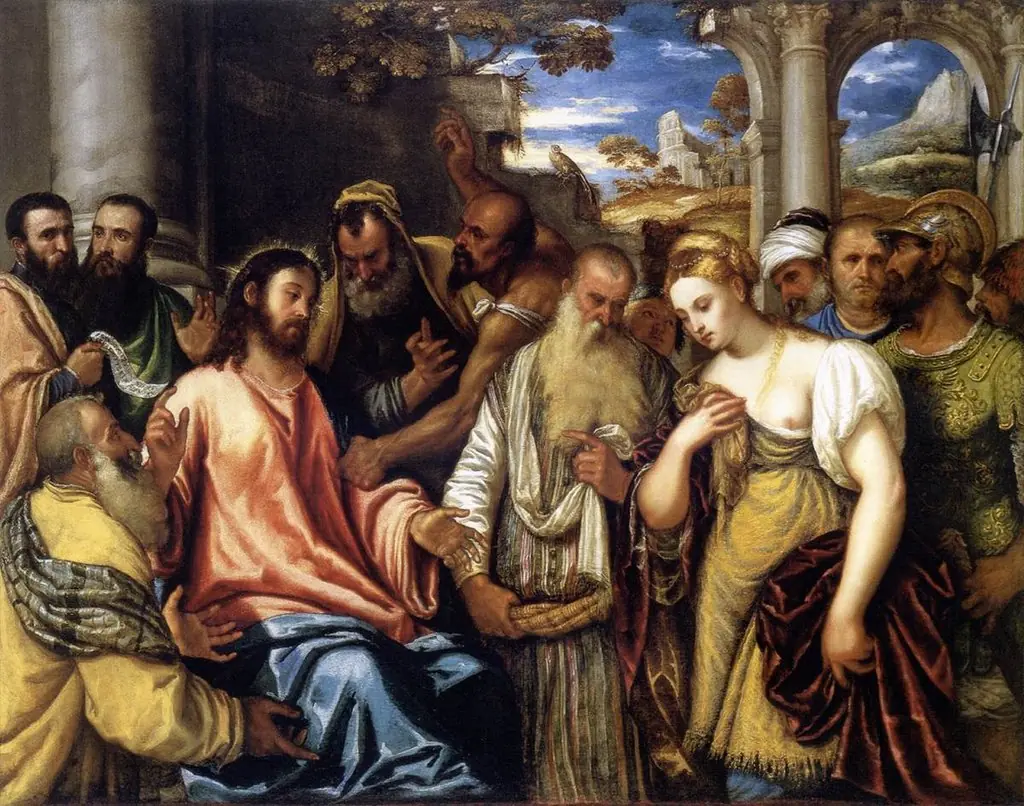 Christ and the Woman in Adultery
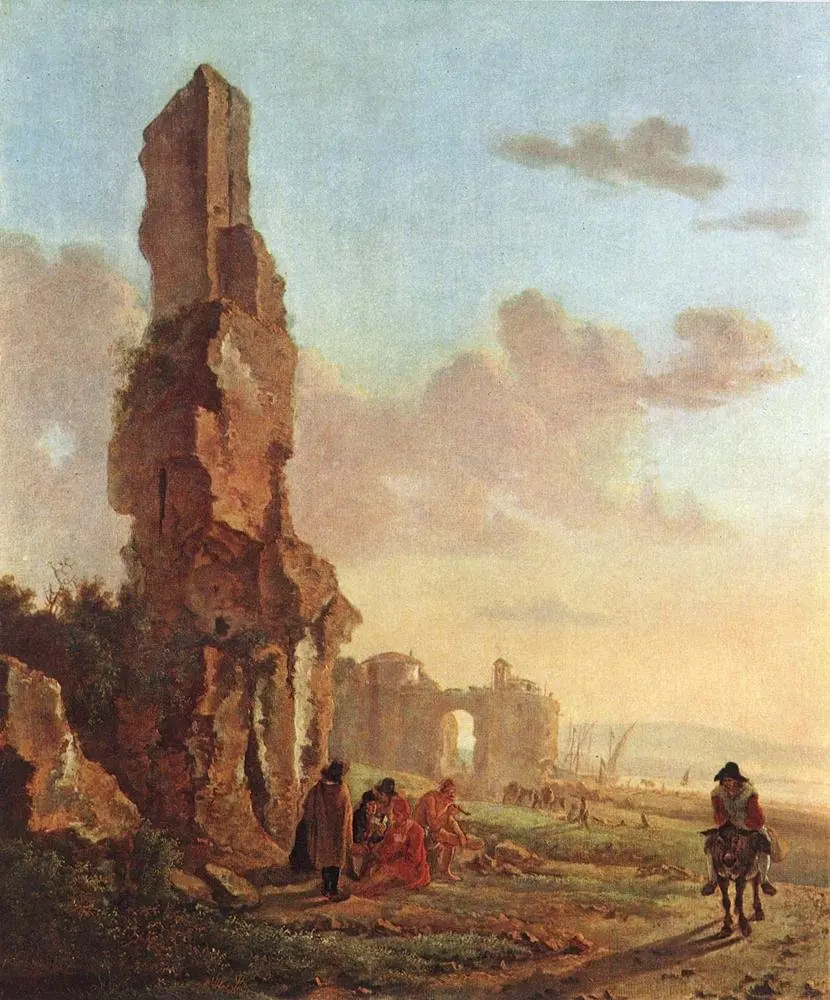 Ruins at the Sea
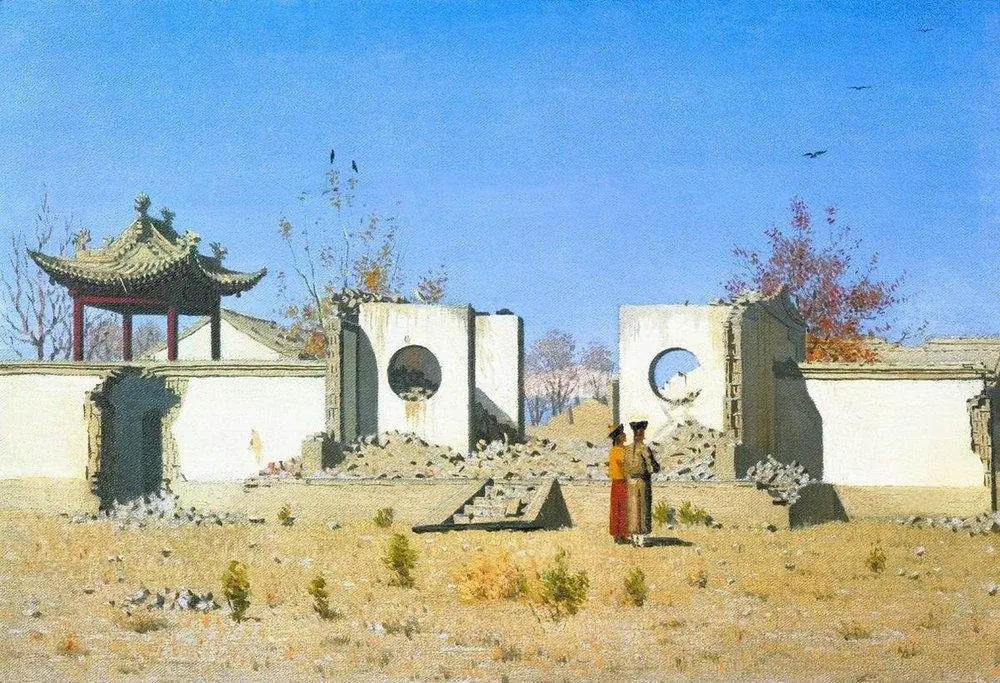 Ruins of Chinese sanctuary. Ak-Kent
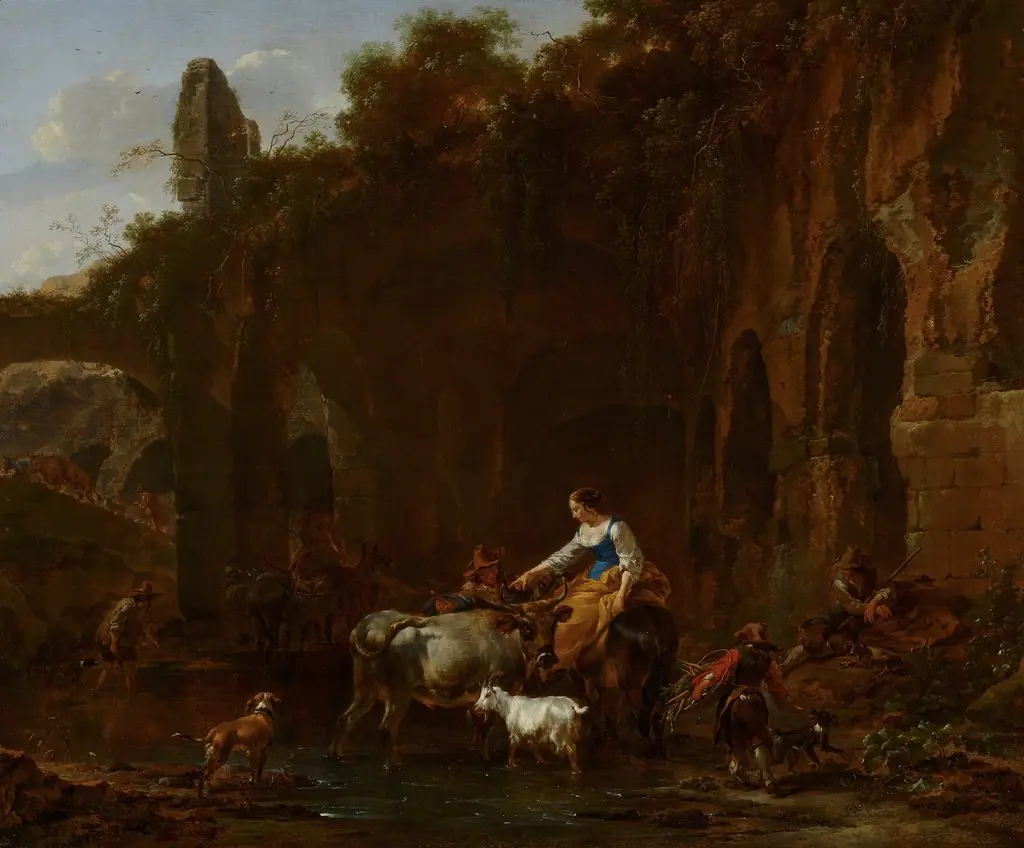 Shepherds beside Roman ruins
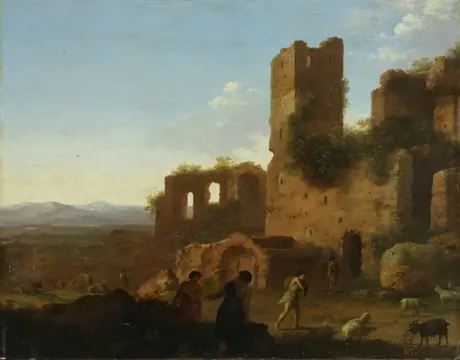 Landscape with figures and ruins
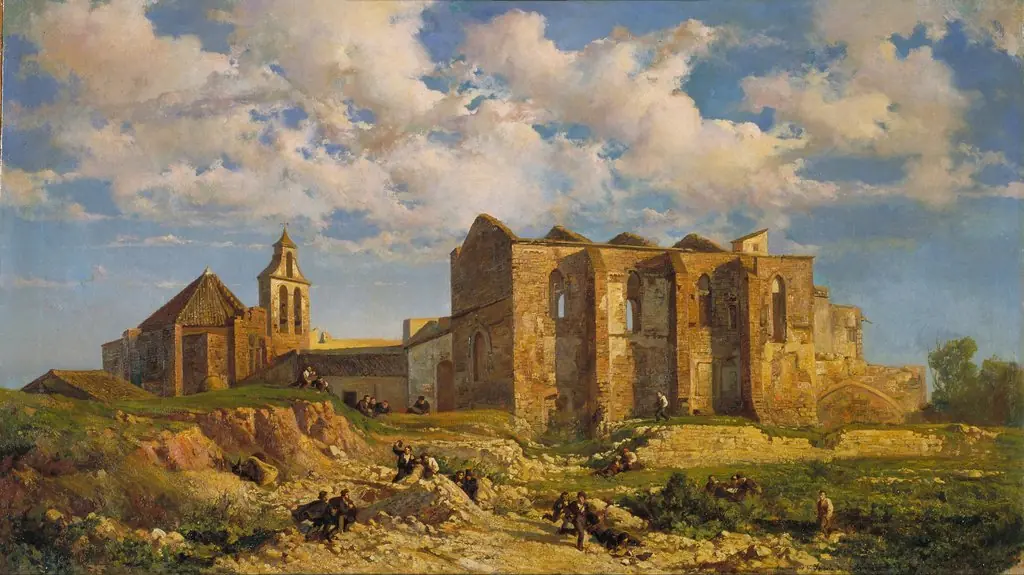 Ruins of the Church of the Holy Sepulchre
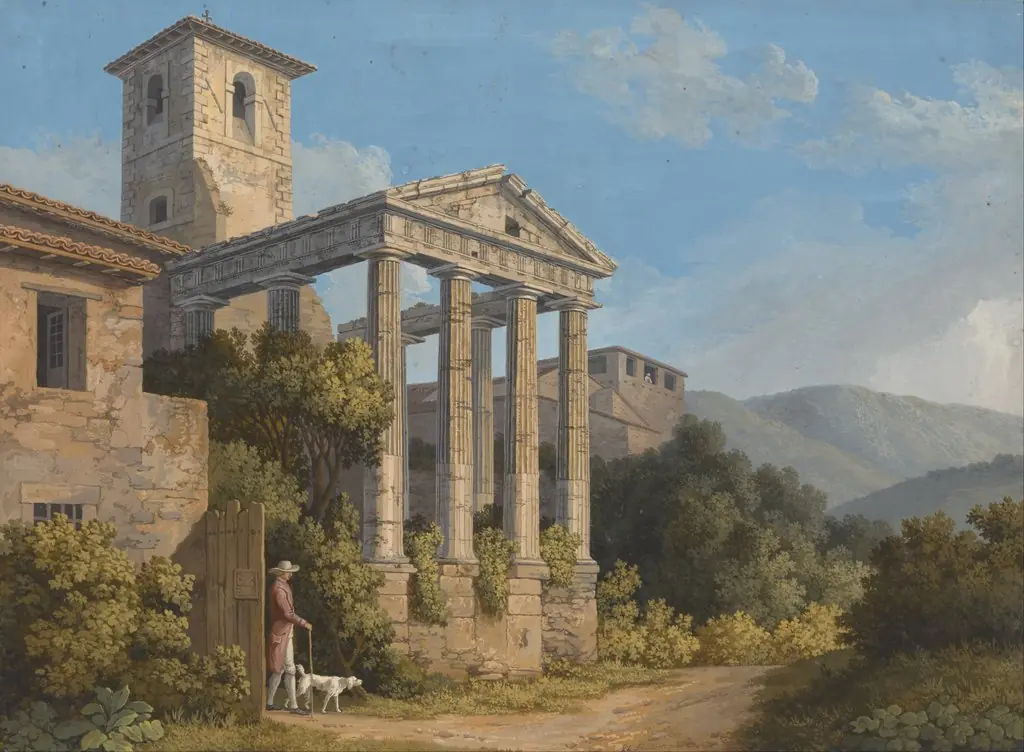 The Temple of Hercules in Cori near Velletri
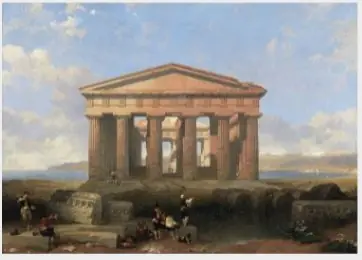 The Temple of Neptune at Paestum
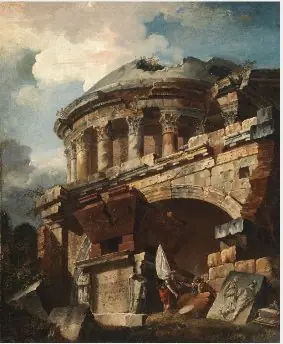 Roman Ruins
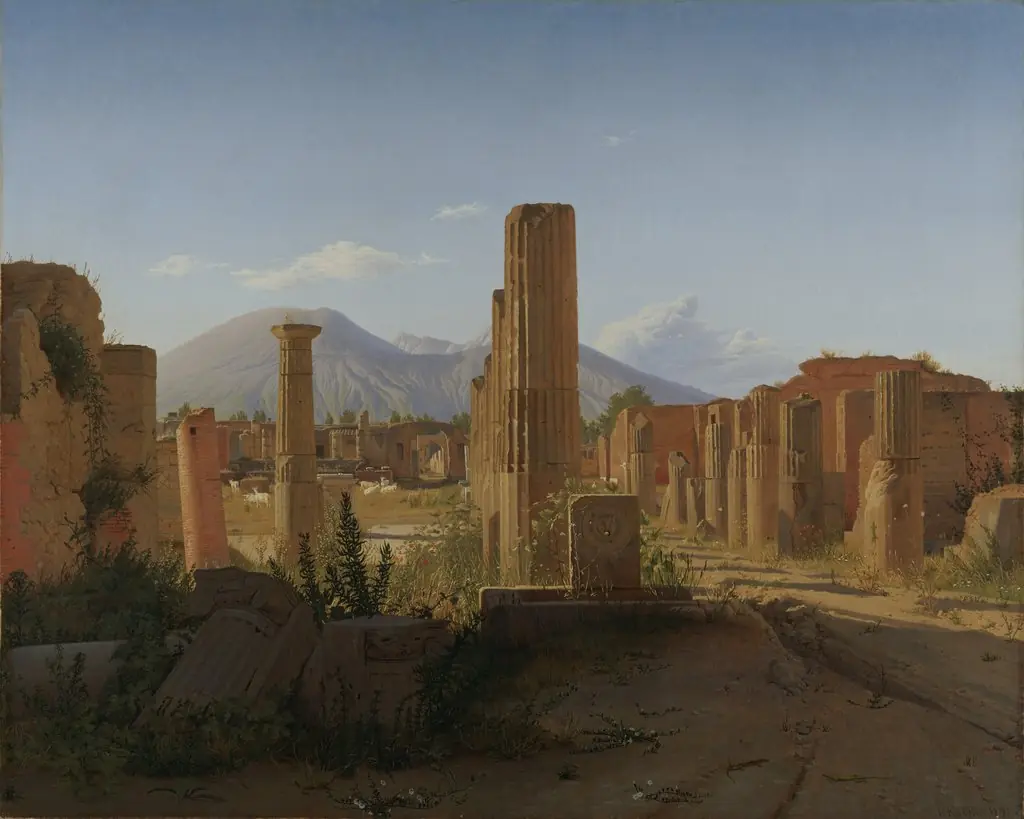 The Forum at Pompeii with Vesuvius in the Background
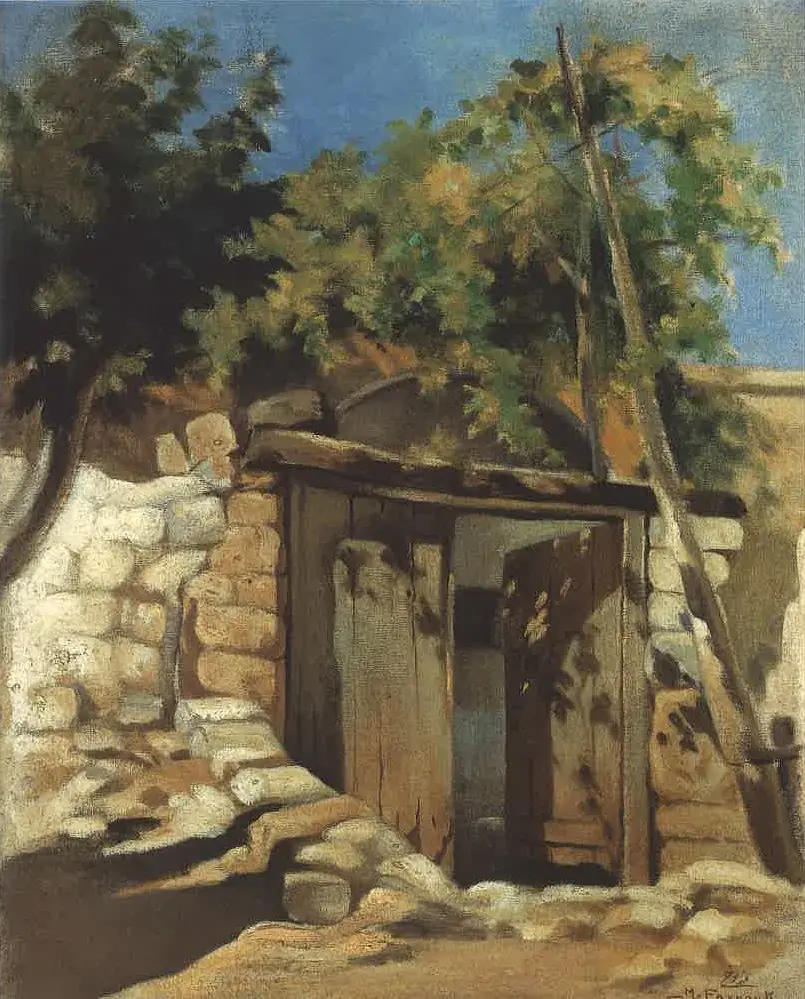 The Old Door at Abadiyeh
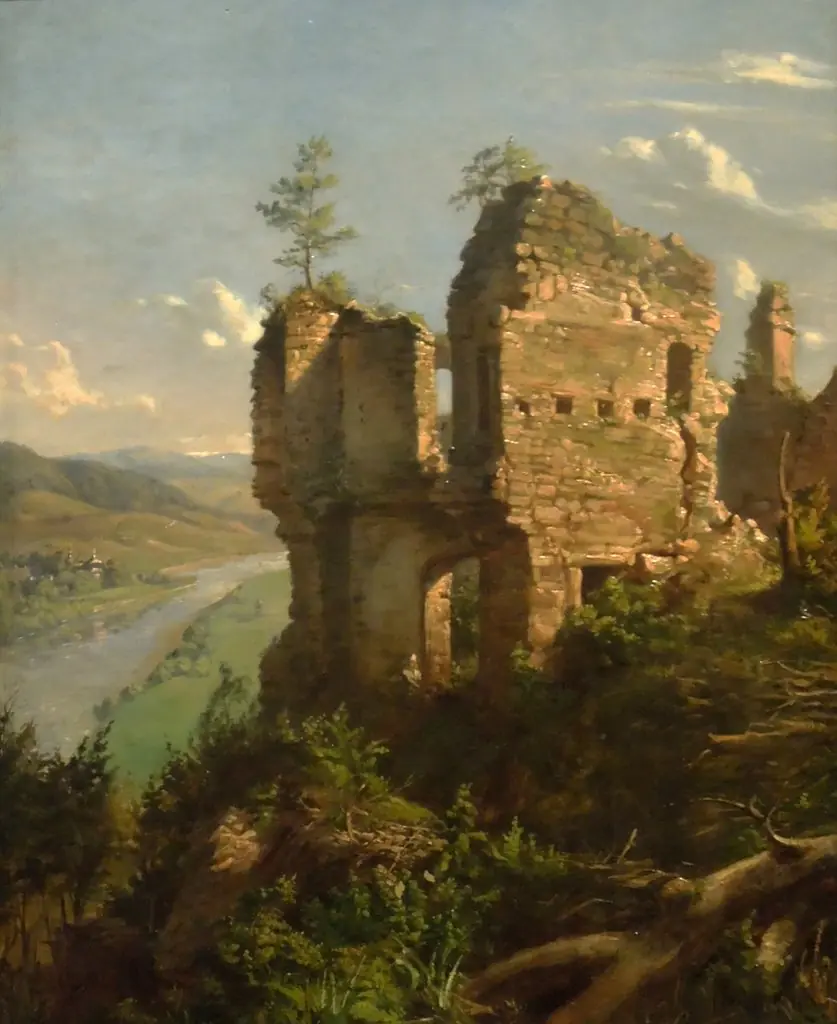 Ruins of Sobieniu Castle
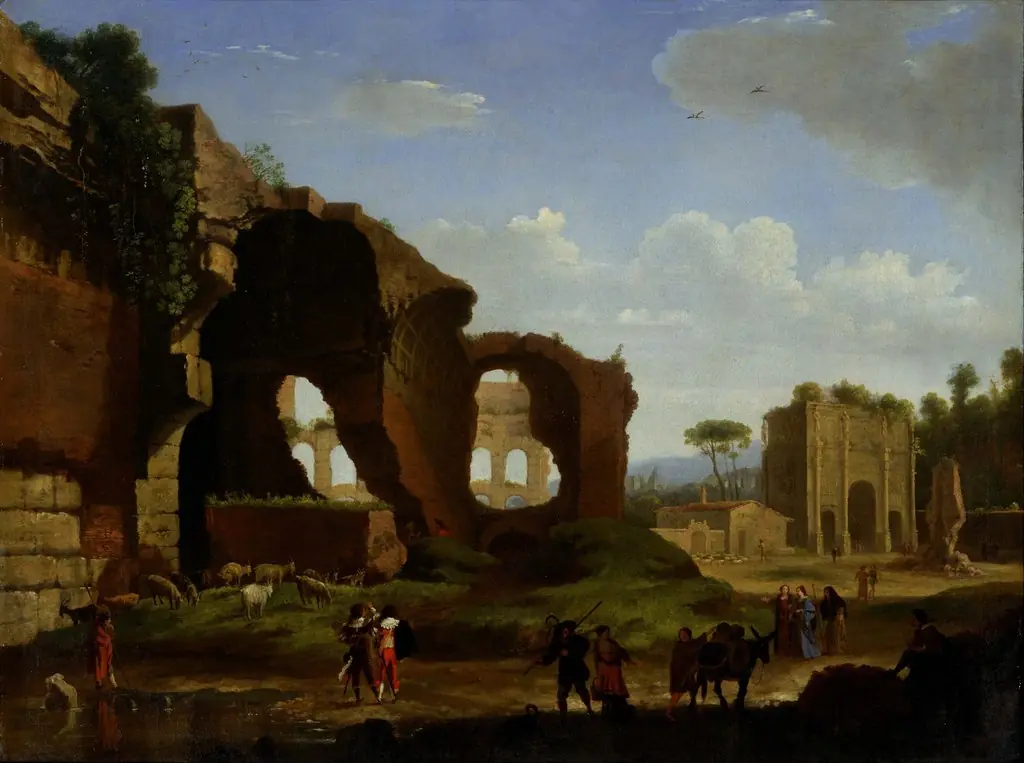 A Roman View of the Ruins of the Temple of Venus and Rome with the Colosseum and the Arch of Constantine
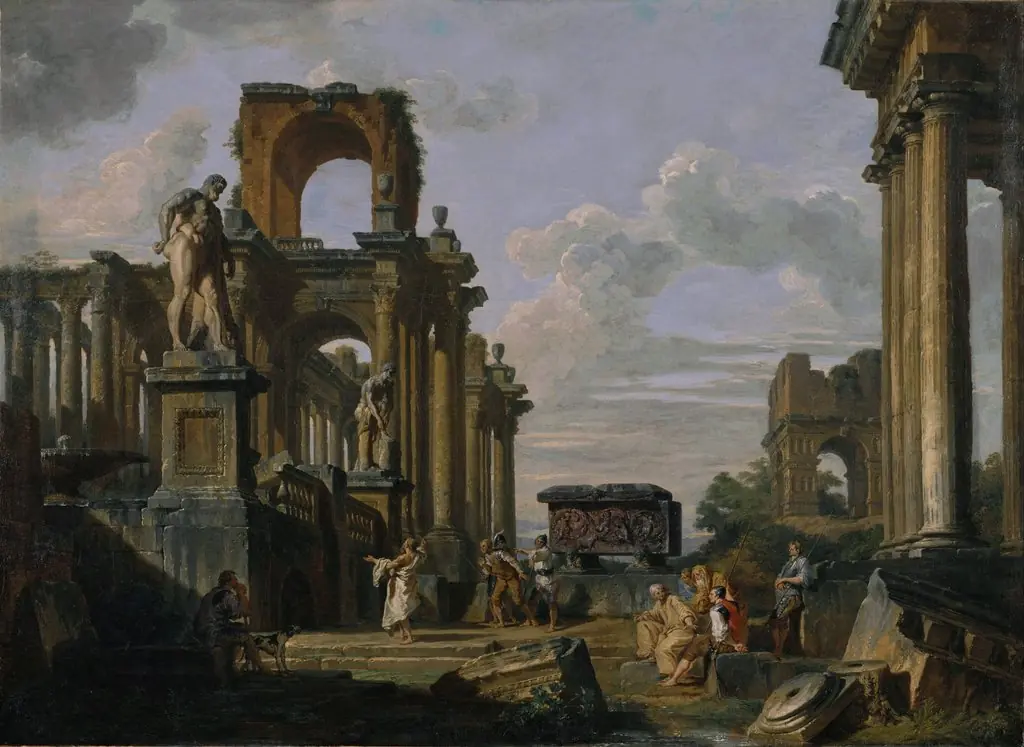 An Architectural Capriccio of the Roman Forum with Philosophers and Soldiers among Ancient Ruins, including the Arch of Janus Quadrifrons, the Sarcophagus of Santa Constanza, the Farnese Hercules and the Cincinnatus
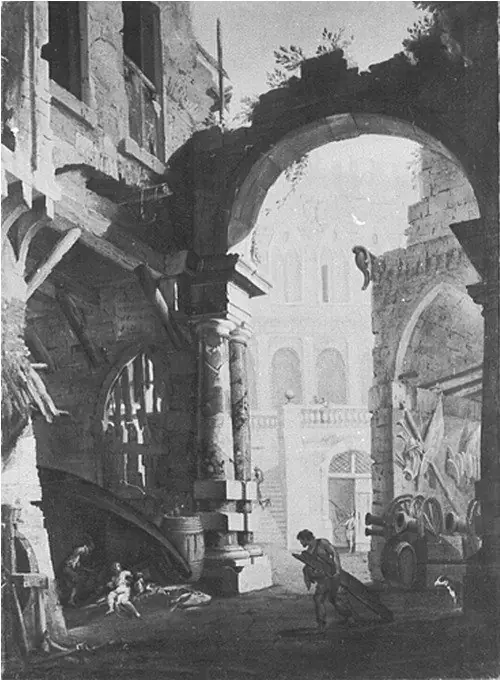 Architecture Piece
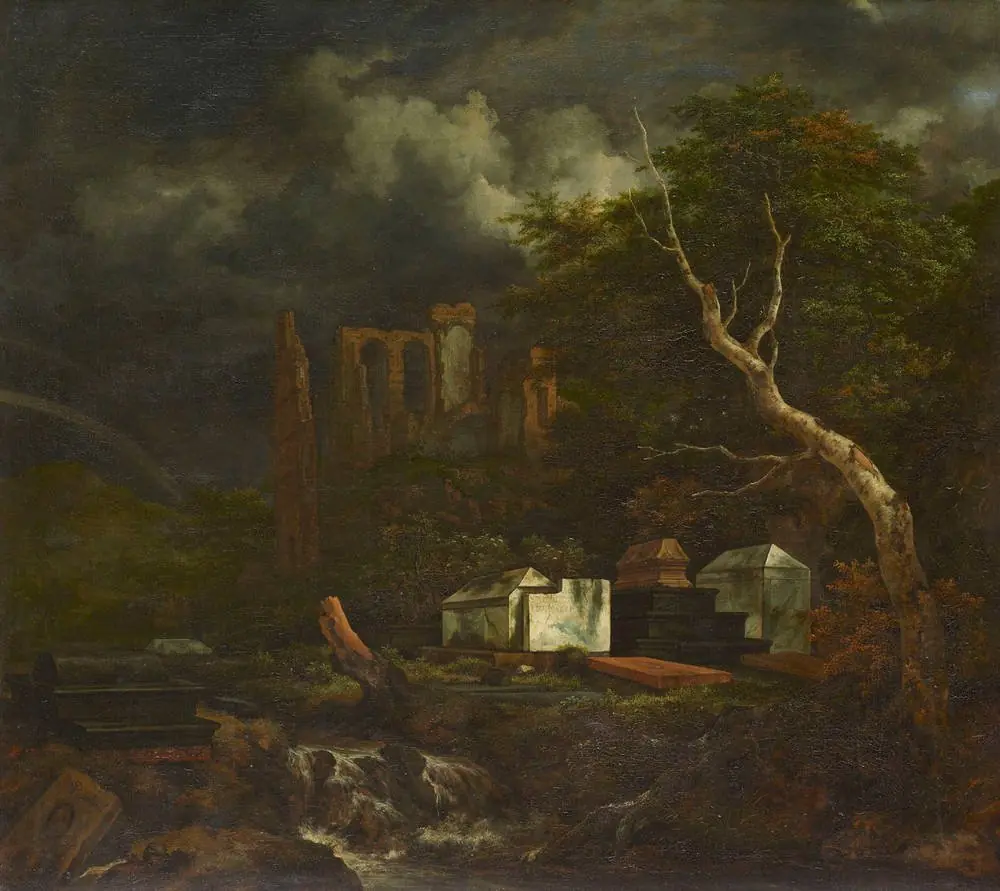 The Jewish Cemetery
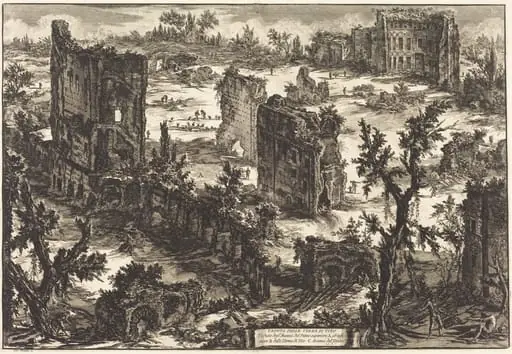 Veduta delle Terme di Tito
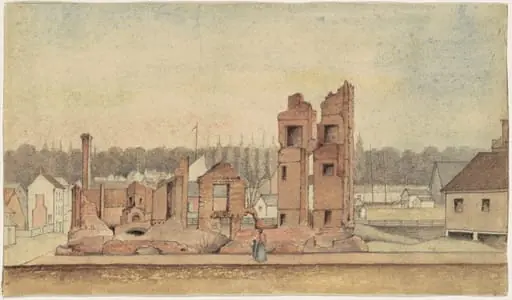 Ruins of a Tavern, Petersburg, Virginia
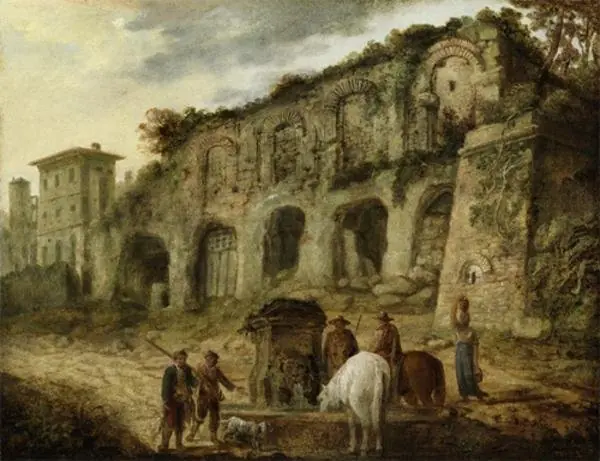 Peasants and Horses Standing By A Fountain: The Curia Ostilia and the Basilica Porzia on the Palatine Hill Beyond
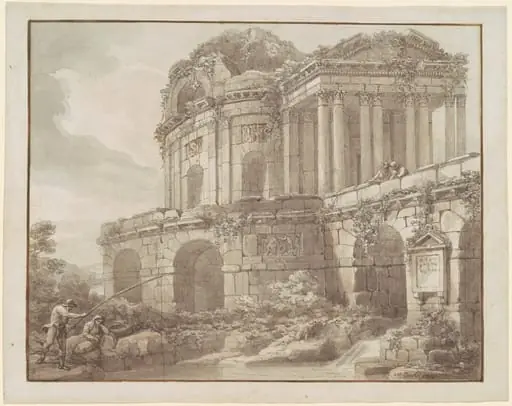 A Roman Ruin
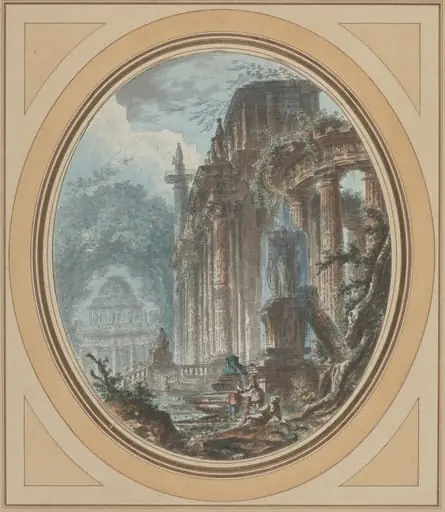 Garden Capriccio with Antique Ruins
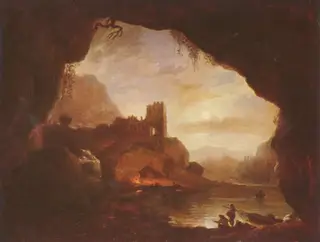 Landscape with Castle Ruins
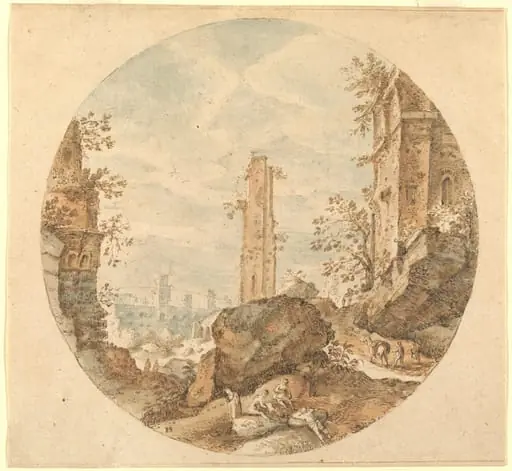 Travellers among Roman Ruins
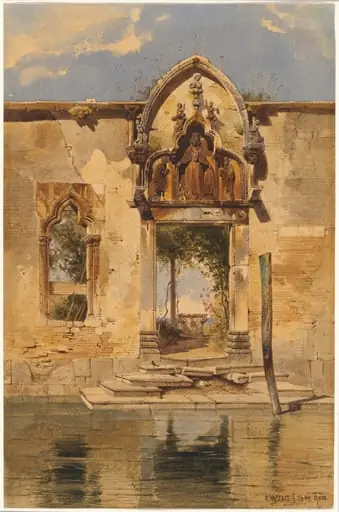 The Portal of the Madonna della Misericordia from the Canal
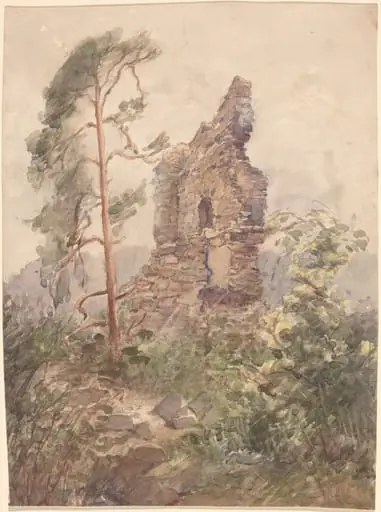 Landscape with Ruin
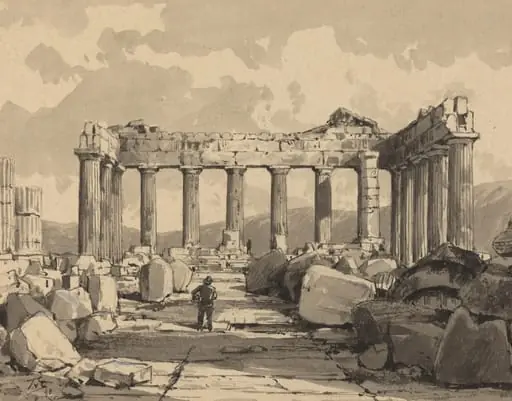 Parthenon, Inside
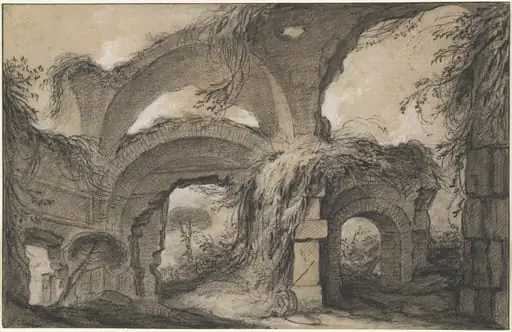 Arches of the Larger Baths at Hadrian's Villa
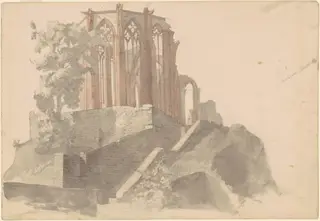 Cathedral Ruins, Bacharach
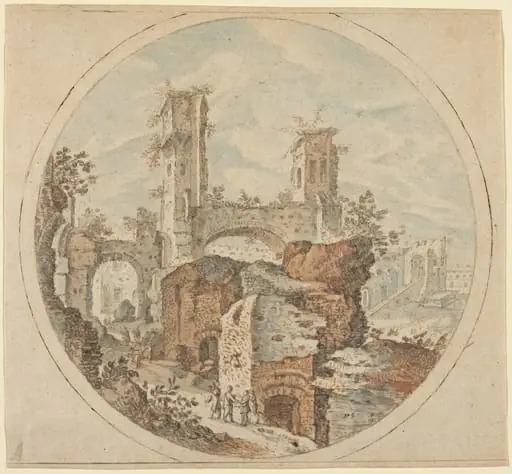 Travellers among Roman Ruins
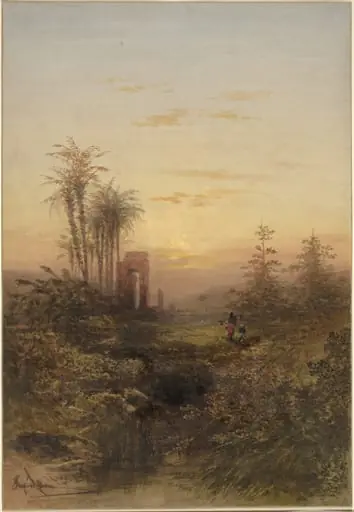 Sunset in an Oriental Landscape
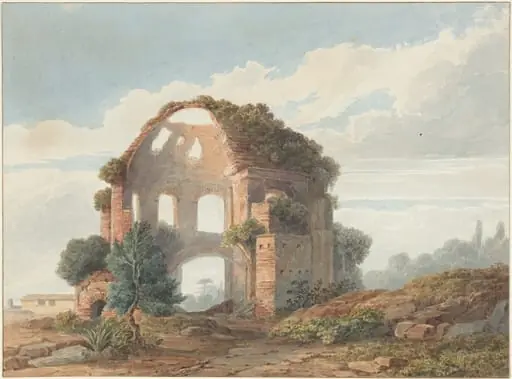 The Temple of Minerva Medica
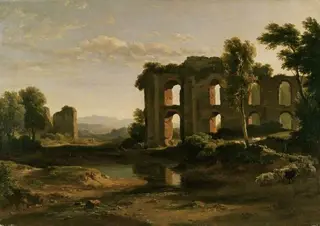 Landscape near Tivoli, with part of the Claudian Aqueduct
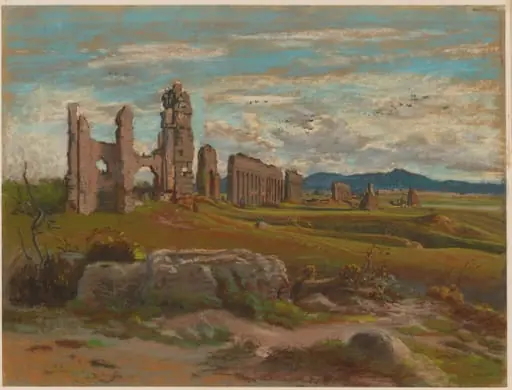 The Aqua Claudia in the Roman Campagna
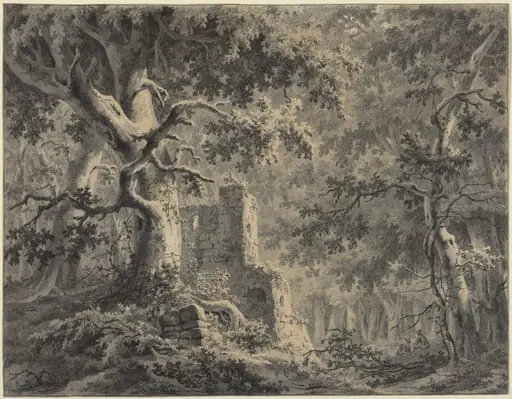 Ruins by a Woodland Stream
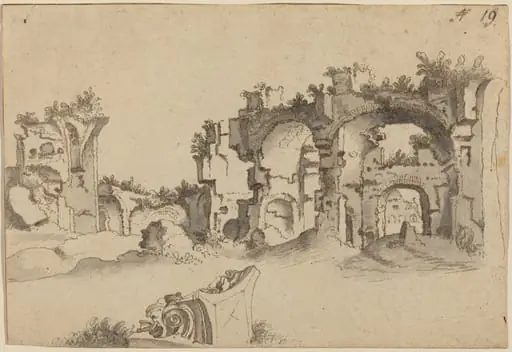 The Baths of Caracalla, Rome
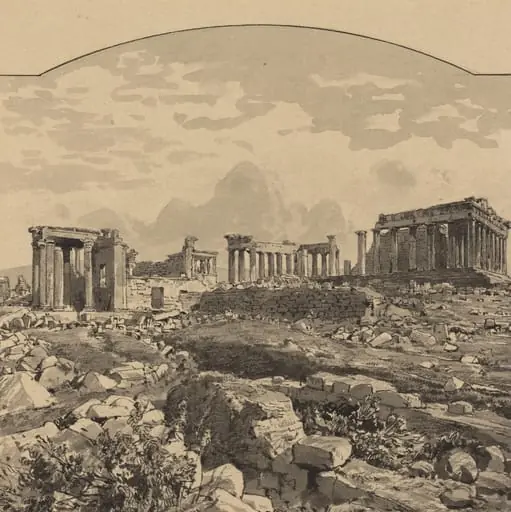 The Parthenon from the East
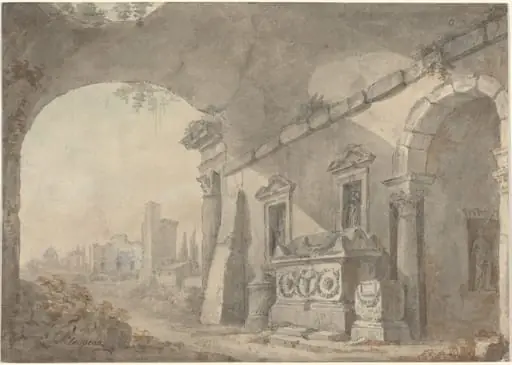 Roman Ruins with a Sepulchre
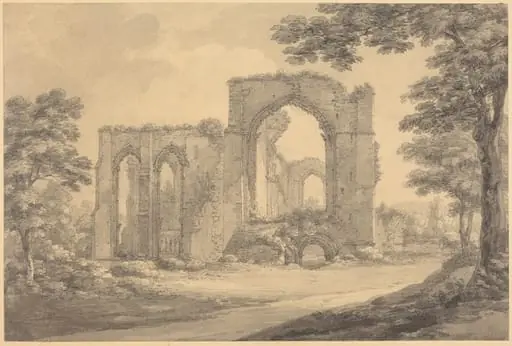 Furness Abbey
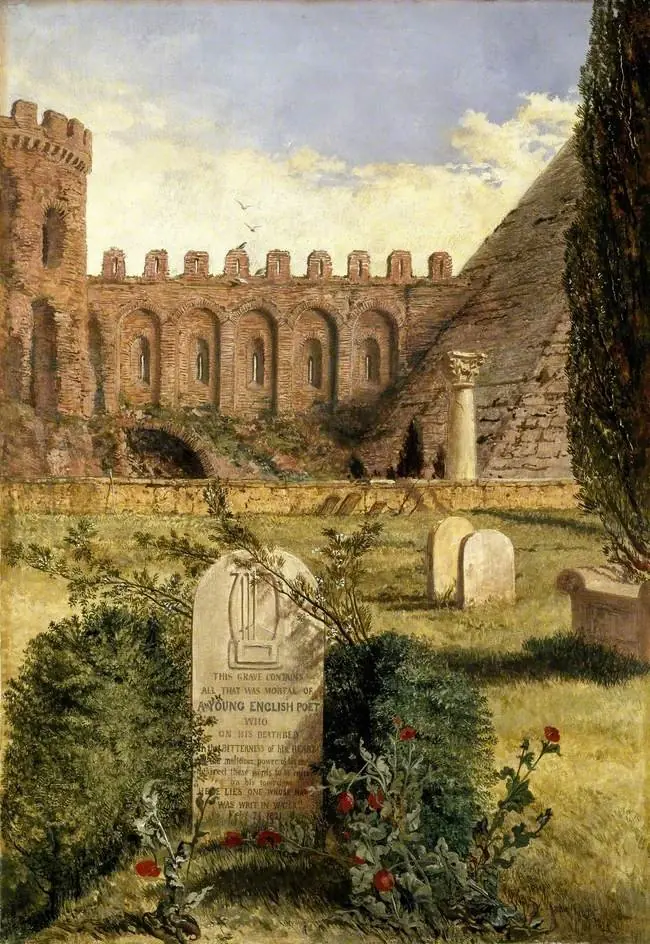 Keats's Grave
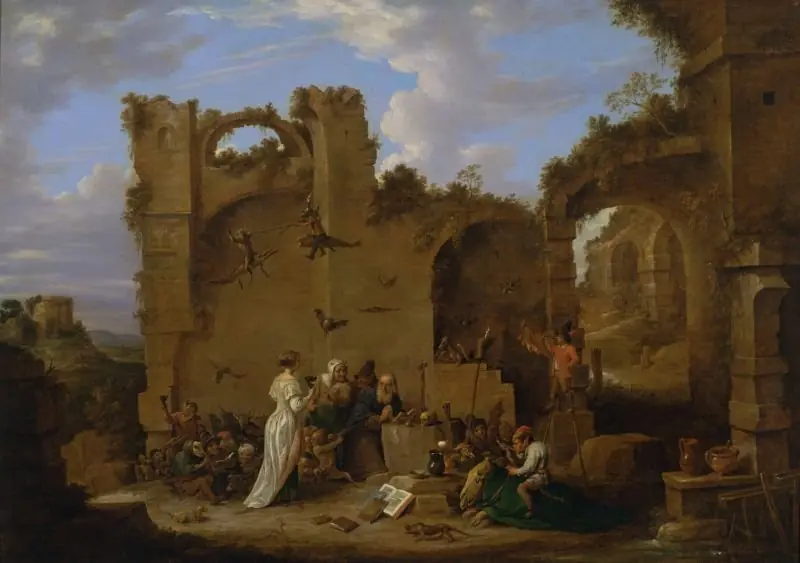 The Temptation of Saint Anthony (NMWA)
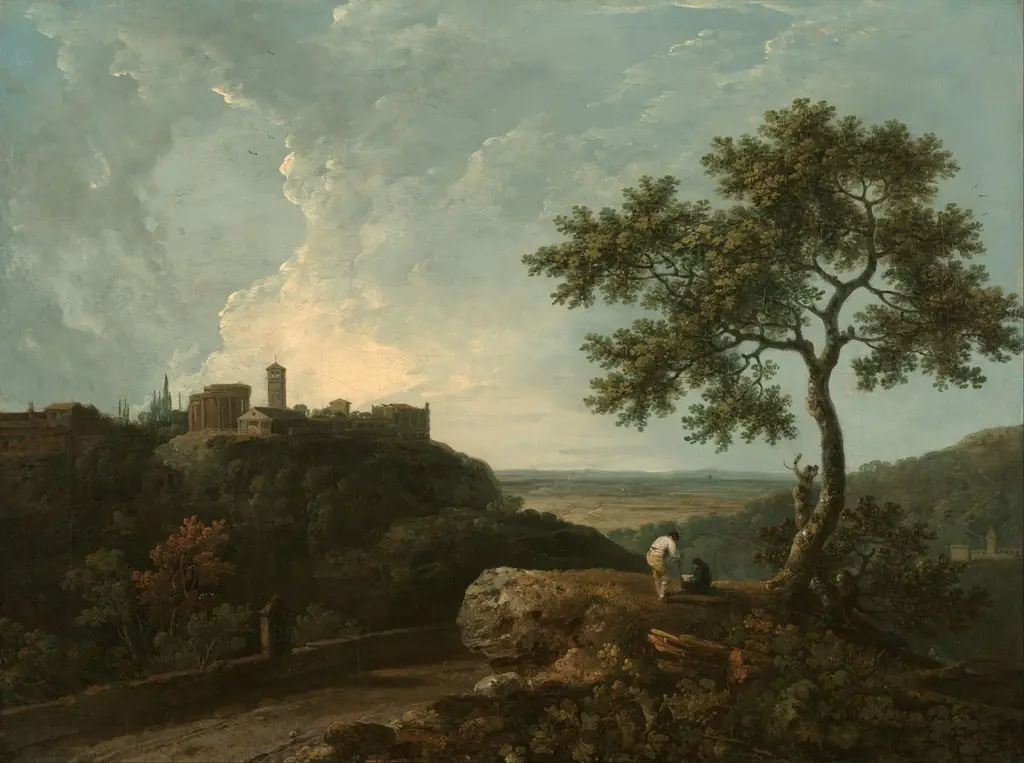 Tivoli: The Temple of the Sybil and the Campagna
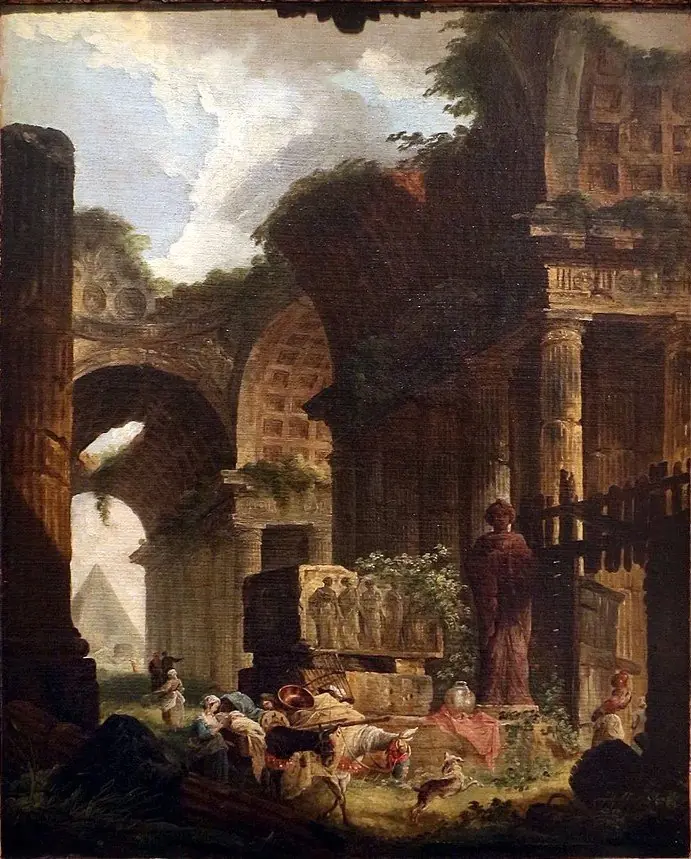 Templo em Ruínas
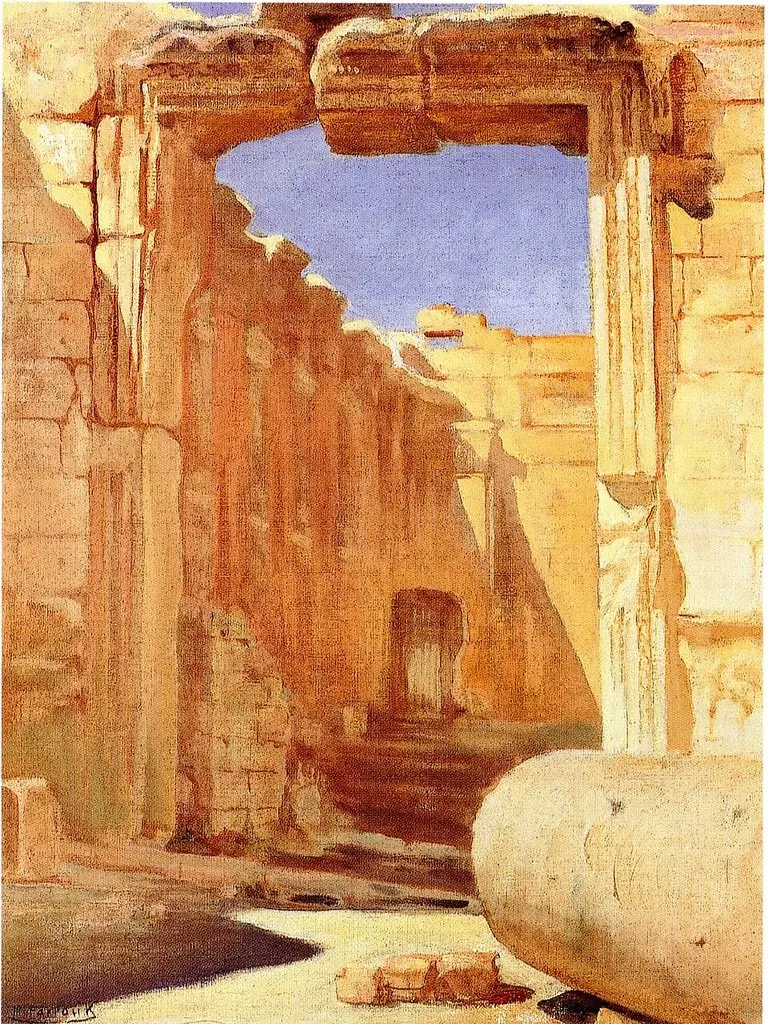 Baalbek, Temple of Bacchus
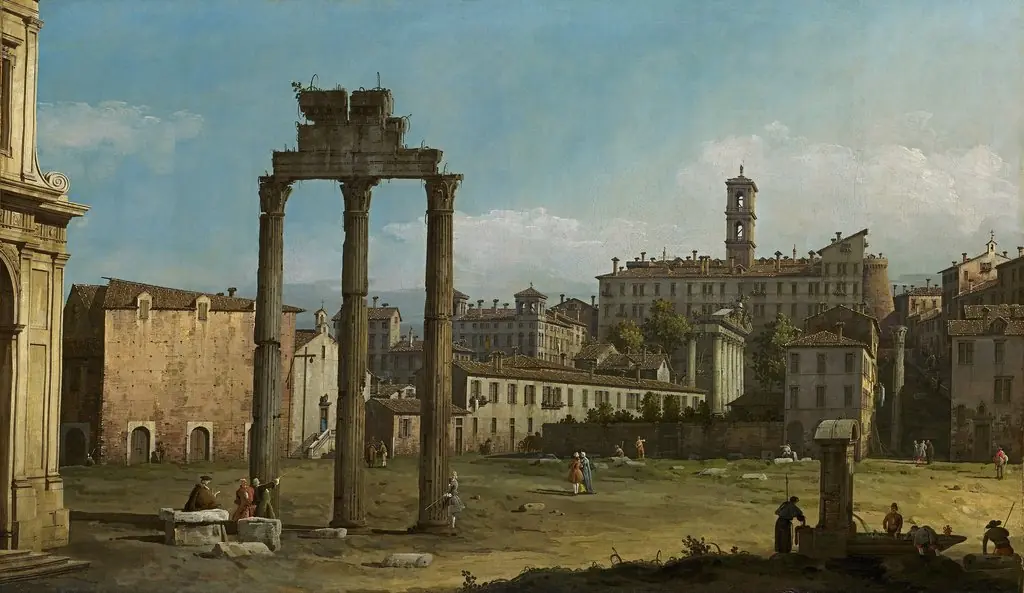 Ruins of the Forum, Rome
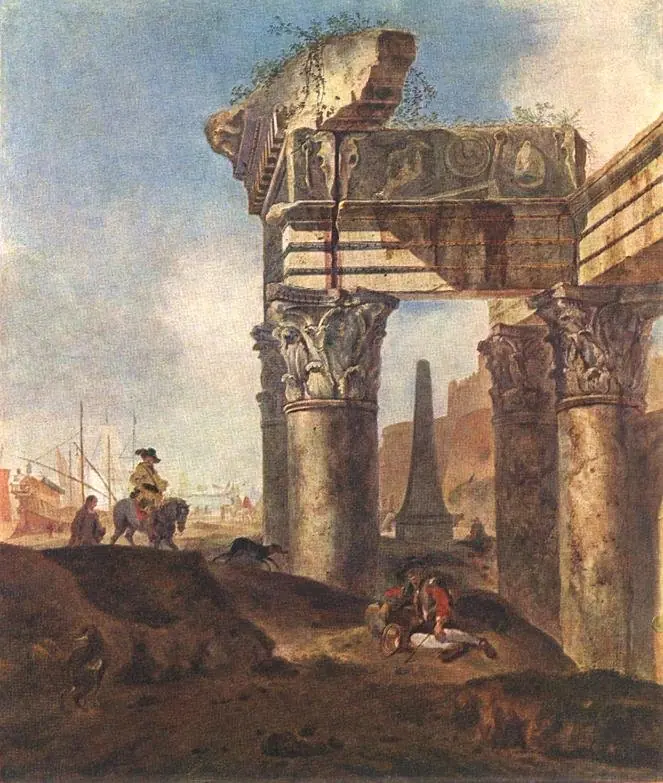 Ancient Ruins
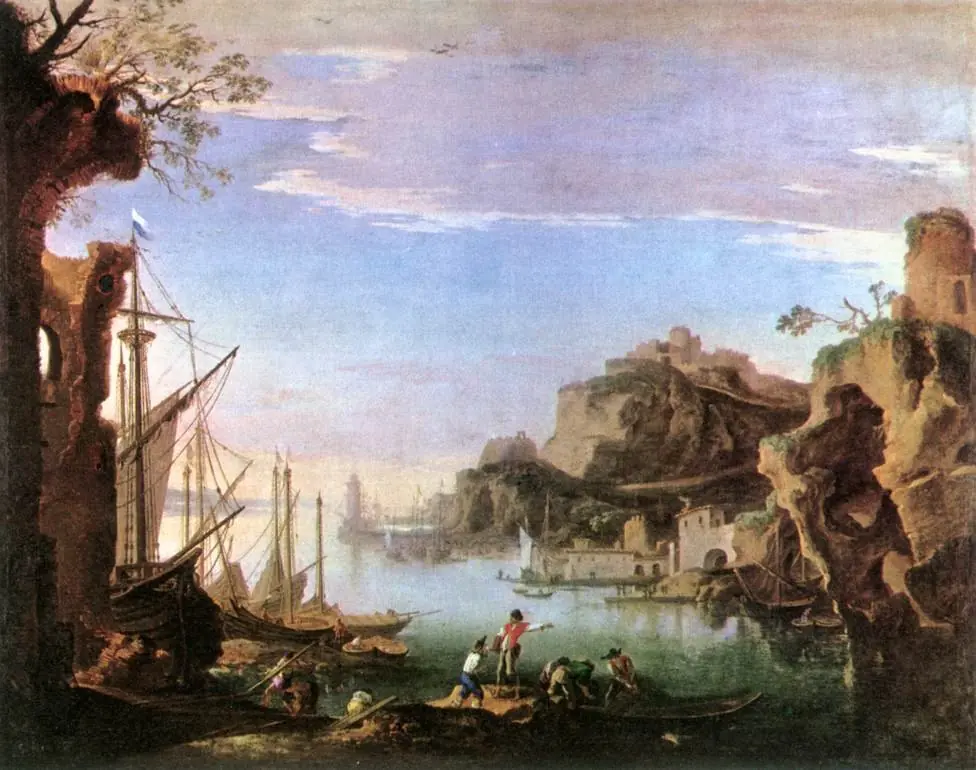 Harbour with Ruins
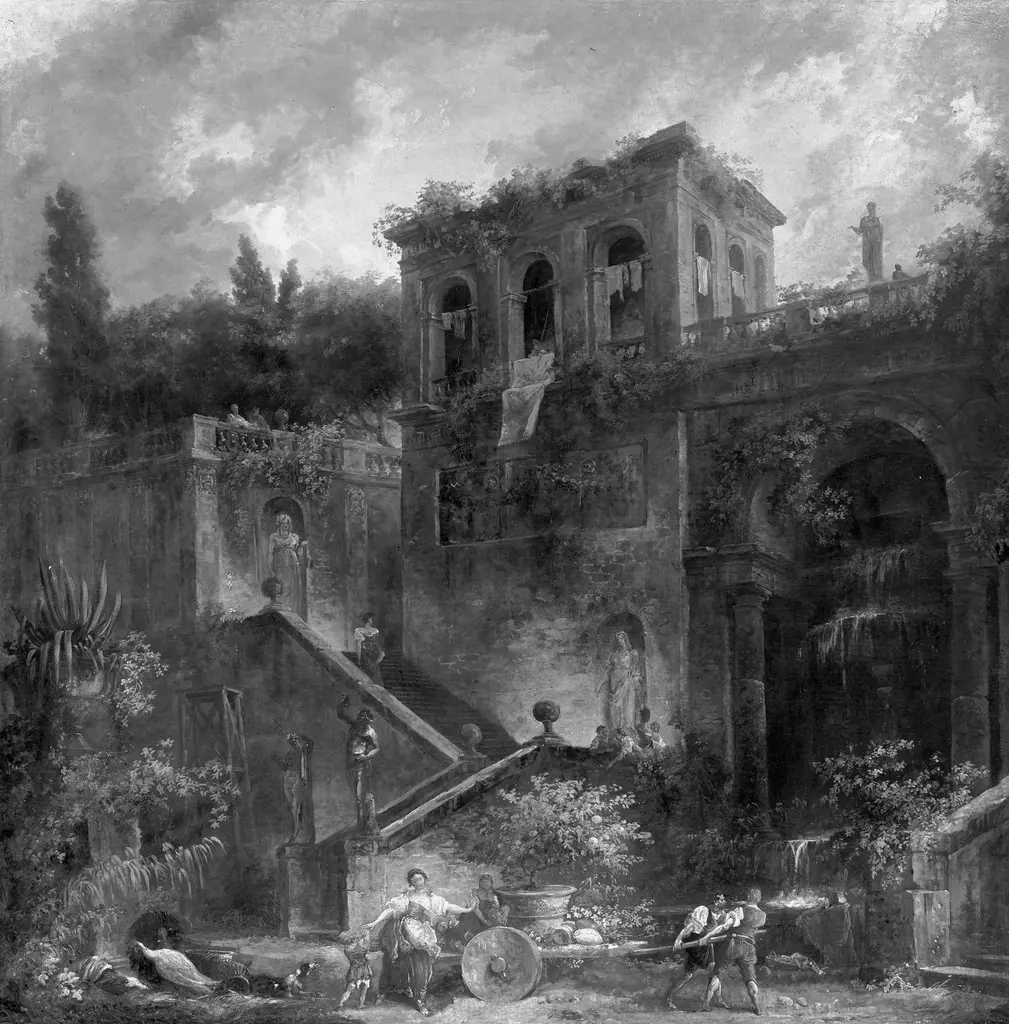 Ascent to the Farnese Gardens on the Palatine
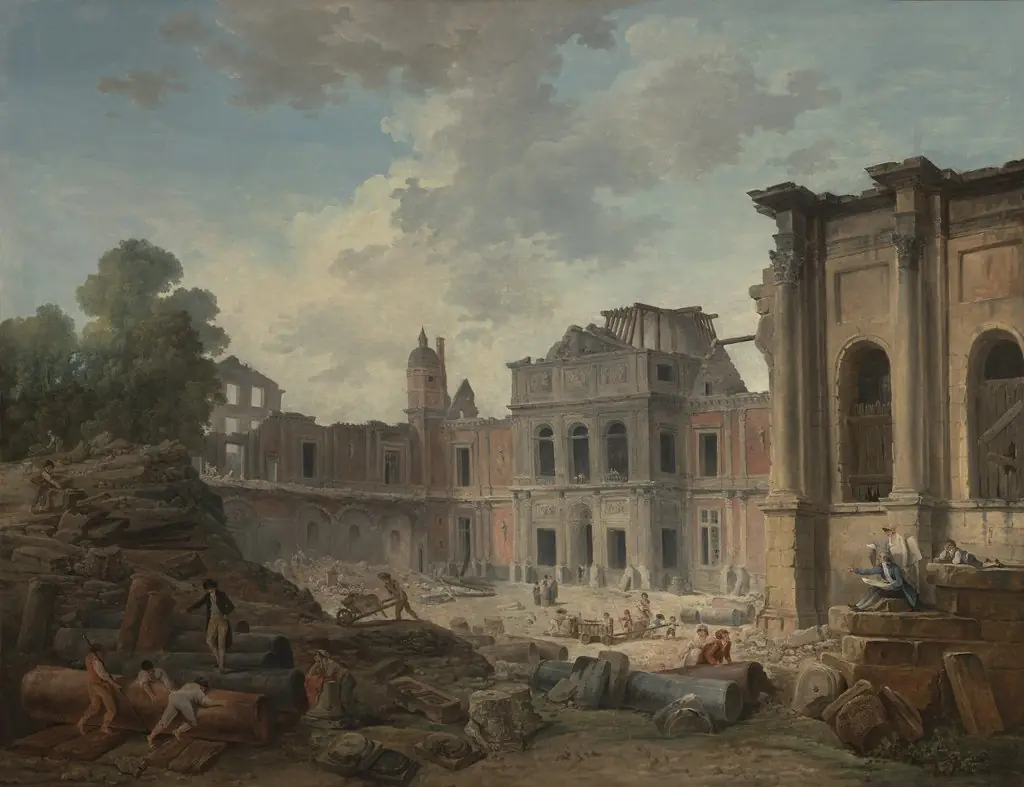 Demolition of the Château of Meudon
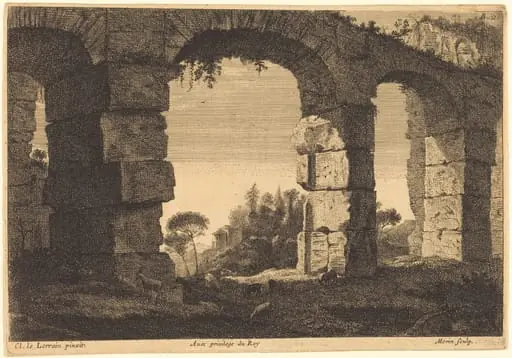 Ruins of an Aqueduct
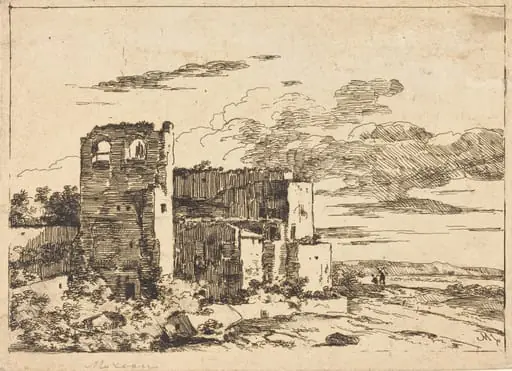 Ruined Buildings near a River Bank
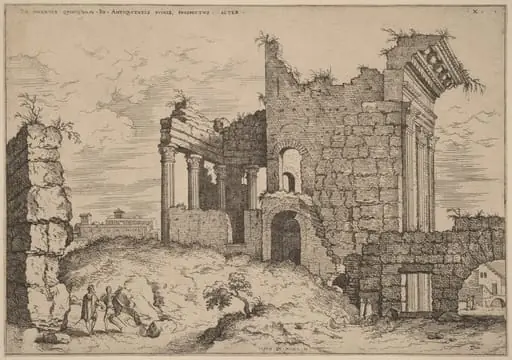 Second View of the Forum of Nerva
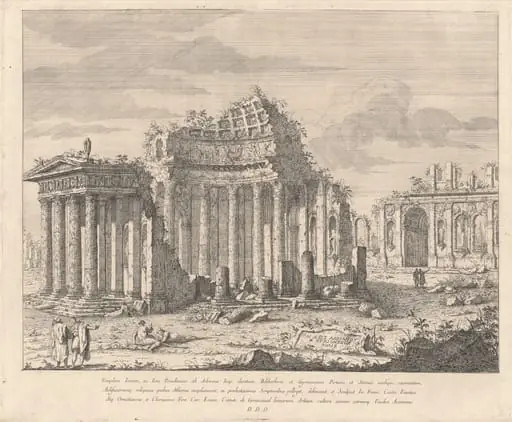 Templum Iunoni, ac Iovi Pavellennio (The Temple of Juno and Jupiter)
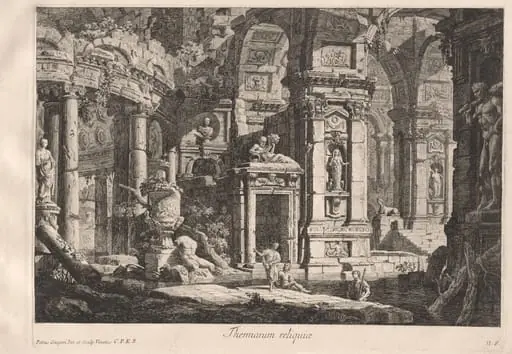 Thermarum reliquiae
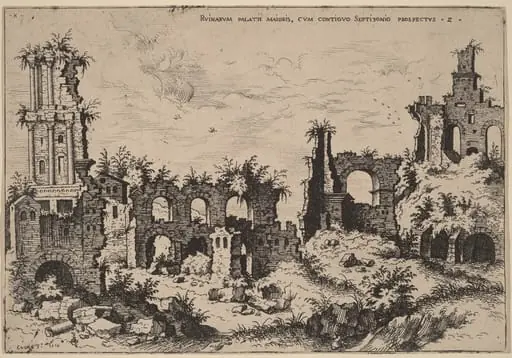 Ruins on the Palatine with the Septizonium
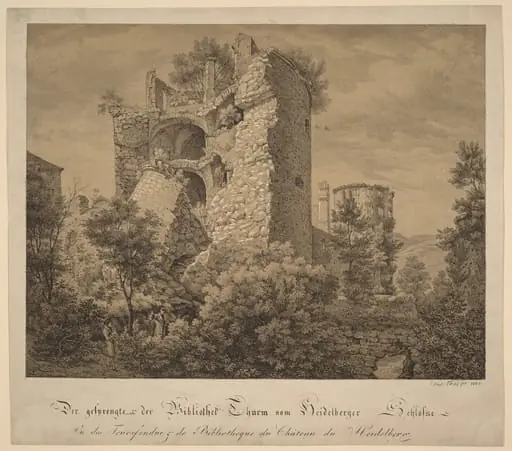 Der Gesprengte und der Bibliotheke Thurm von Heidelberger Schloß (The Exploded Tower and the Library of Heidelberg Castle)
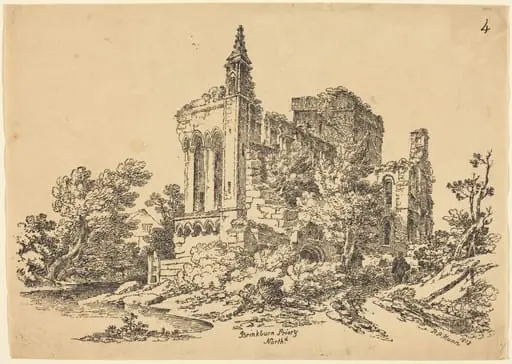 Brinkman Priory
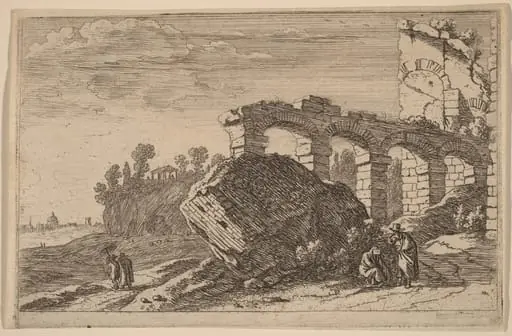 The Four Ruined Arches
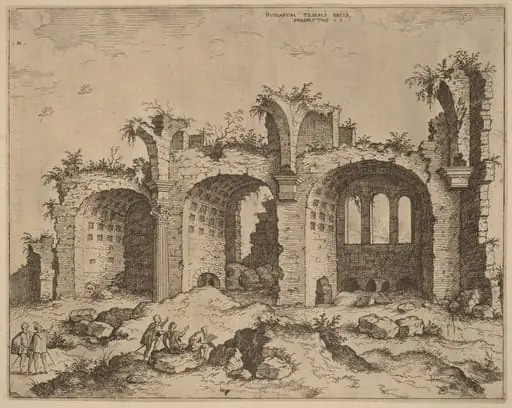 The Basilica of Constantine
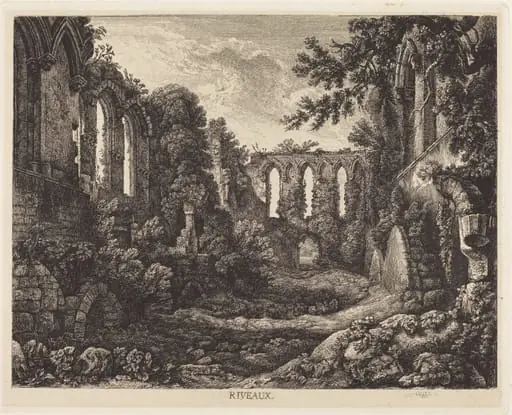 Riveaux
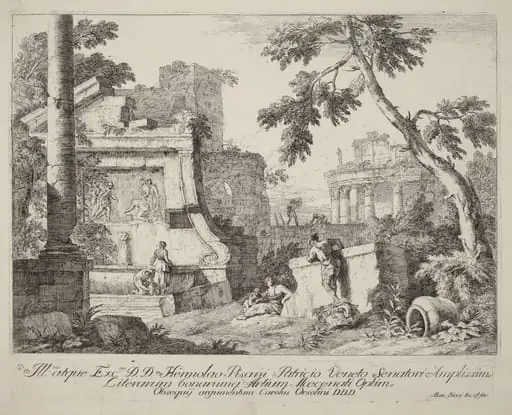 Landscape with Ruins
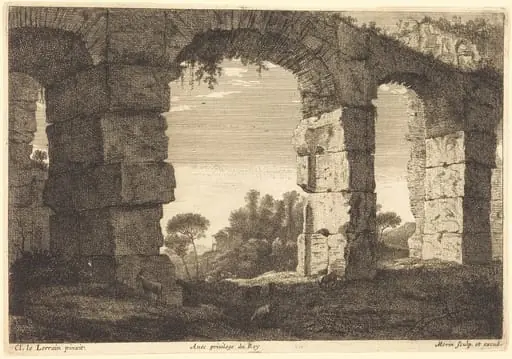 Ruins of an Aqueduct
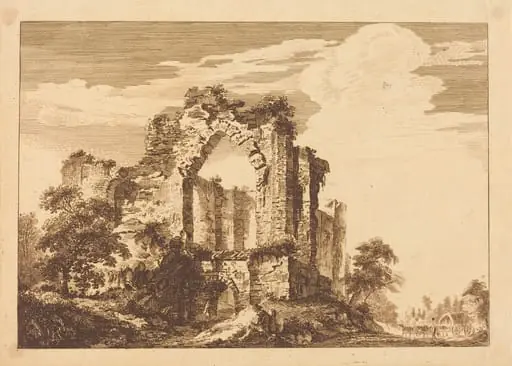 Ruins with a Seated Man, and a Covered Wagon in the Distance
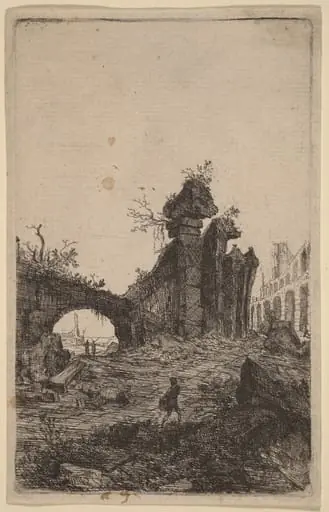 The Ruins of the Colosseum
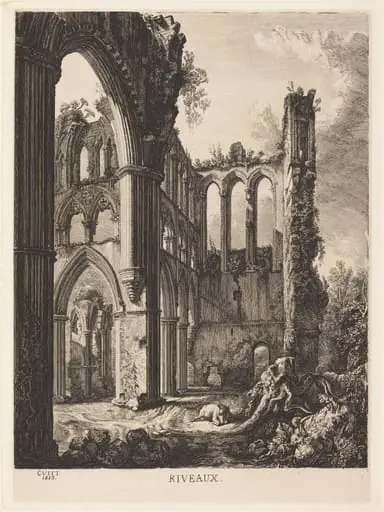 Riveaux
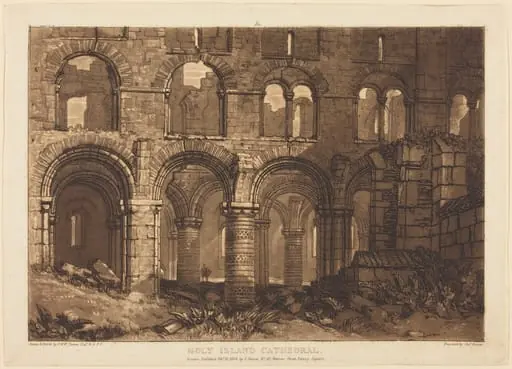 Holy Island Cathedral
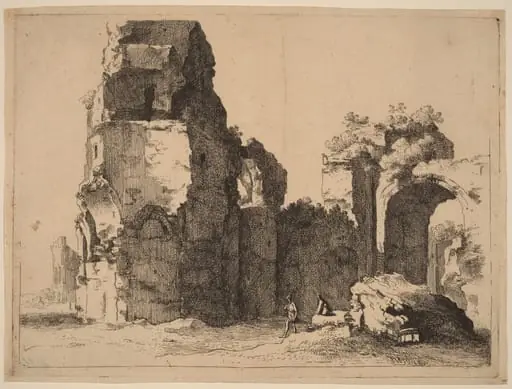 Ruins
Ruins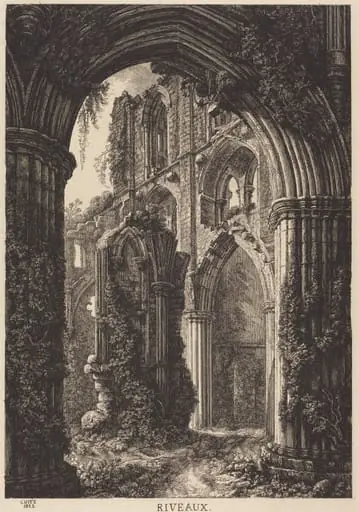 Riveaux
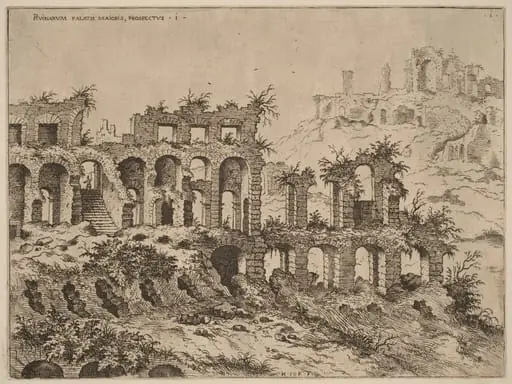 View of the Colosseum with the Palatine in the Background
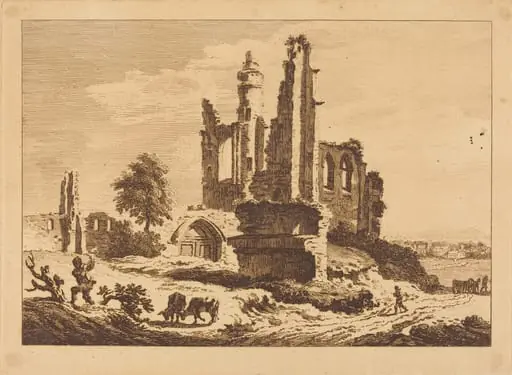 Ruined Abbey with Cattle and a Man Chopping Wood
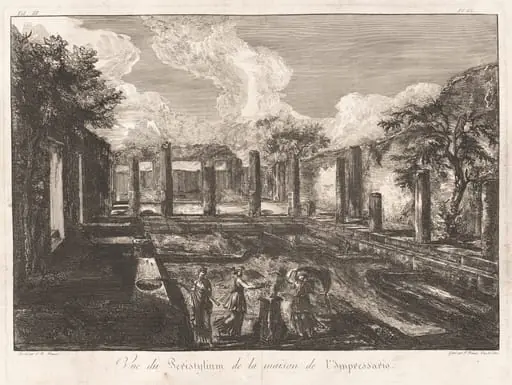 Vue du Peristylium de la maison de l'Impressario
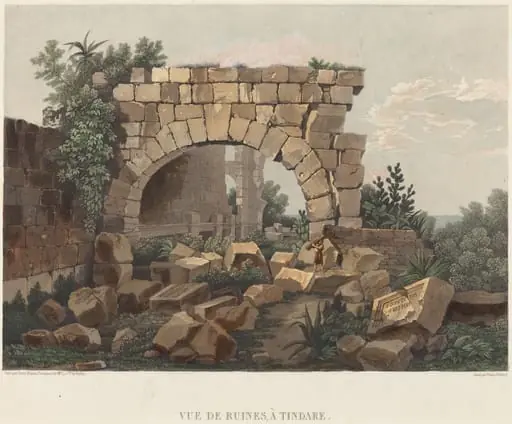 Vue de Ruines, à Tindare
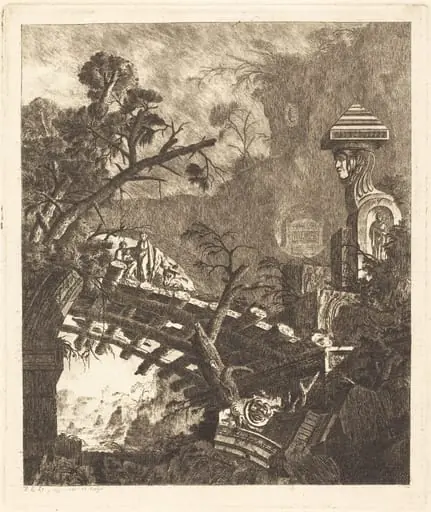 The Flight into Egypt
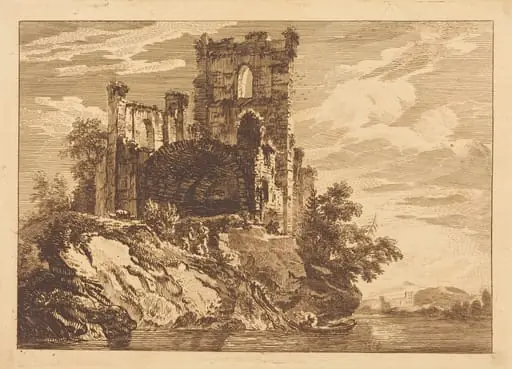 Ruins by a River with a Man in a Boat
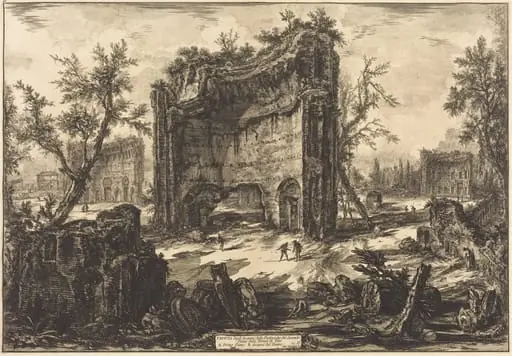 Veduta ... delle Terme di Tito
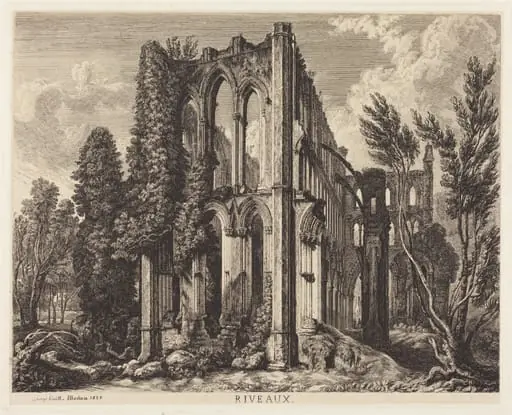 Riveaux
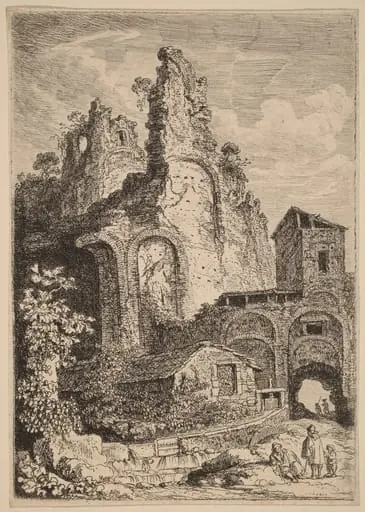 The Old Palace at Tivoli
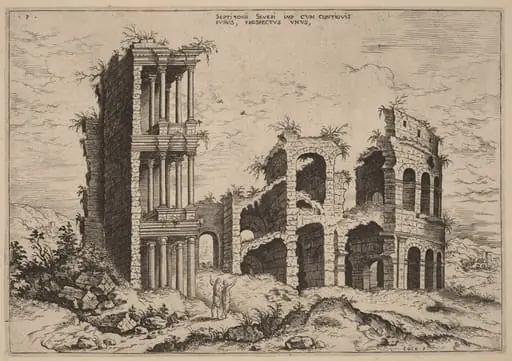 The Septizonium and the Colosseum
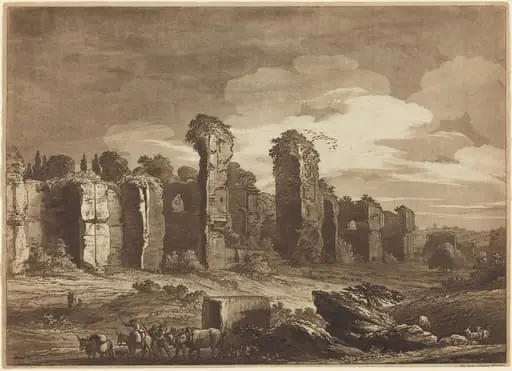 View of the Remains of Caracalla's Baths, Taken from the Jesuits Gardens at Rome
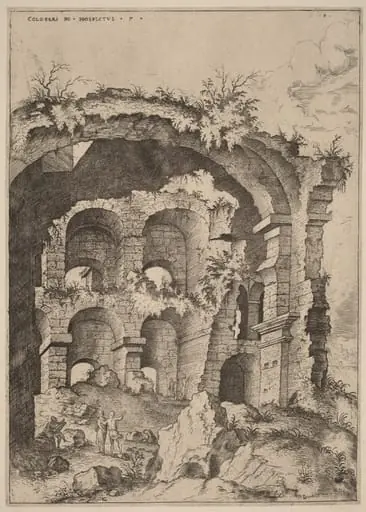 Seventh View of the Colosseum
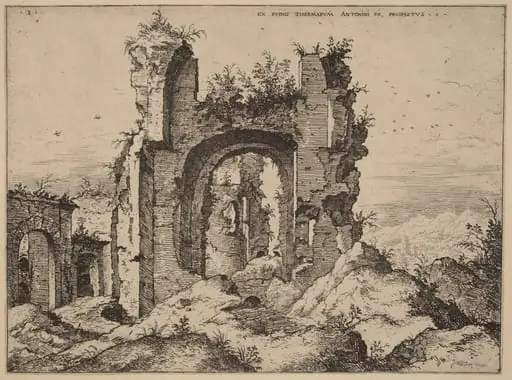 View of the Baths of Caracalla
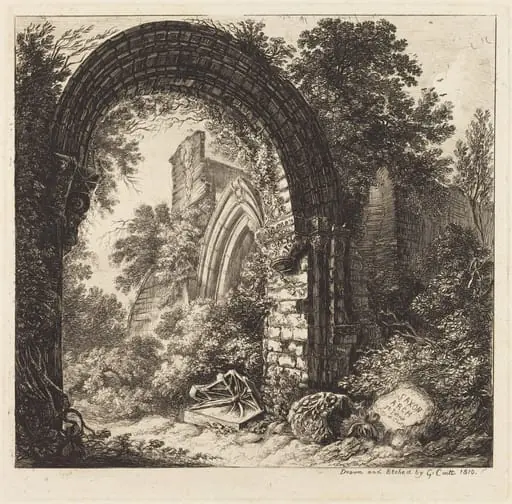 Saxon Arch
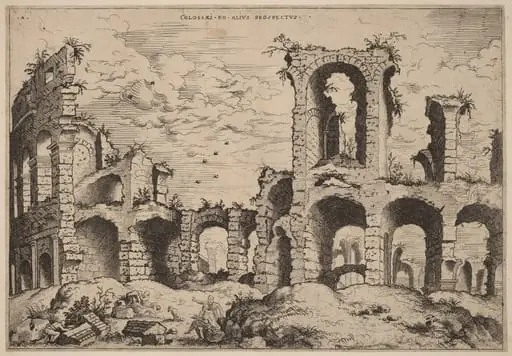 Second View of the Colosseum
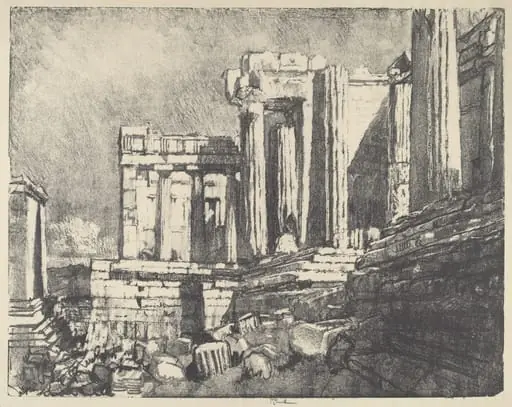 The Propylaea, Athens
Frequently asked questions
What is Ruins?
Ruins (from Latin ruina 'a collapse') are the remains of a civilization's architecture.
How many Ruins works does Artifact World Gallery have?
Artifact World Gallery holds 200 public-domain Ruins works, all free to view and download.
Who are the key Ruins artists?
Key Ruins artists in the collection include Paolo Veronese, Thomas Cole and Jasper Francis Cropsey.
Where can I see Ruins works?
Ruins works in the collection are held by National Gallery of Art, Victoria and Albert Museum and Cleveland Museum of Art.