Artwork
Kälber (Calves)
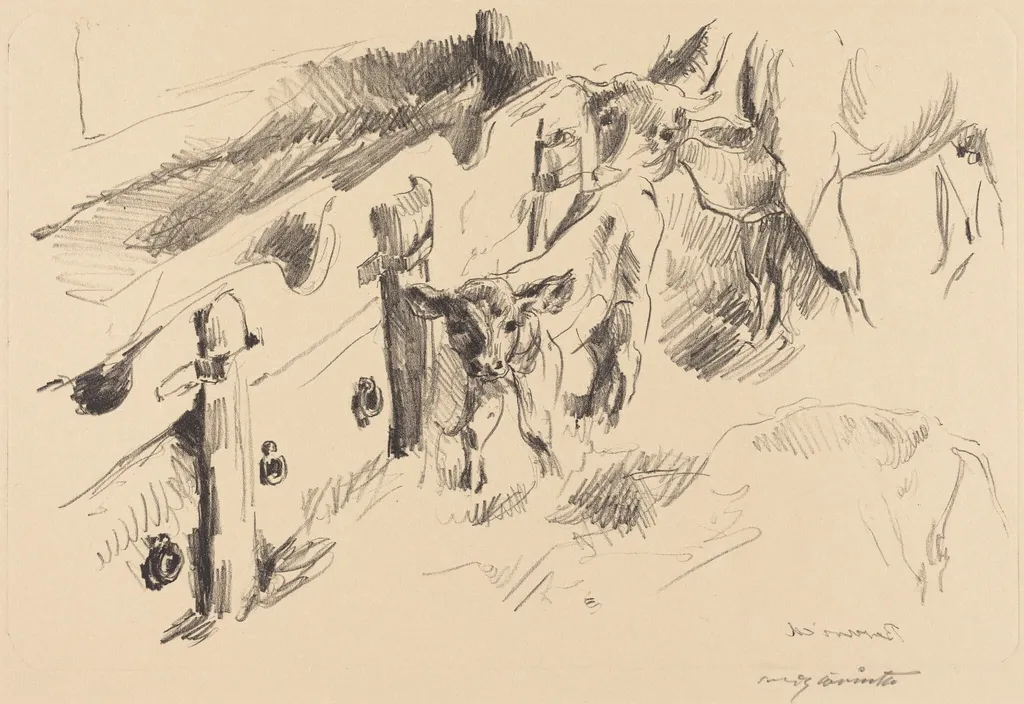
Kälber (Calves) is an ink print by Lovis Corinth. It dates from 1912 and is held in the collection of the National Gallery of Art.
- Inscription
- Inscribed:lower right in plate: Bernried; lower right in graphite: Lovis Corinth; lower left verso in graphite by unknown hand: 4 Bl. 13 Schw. 94
About this work
Overview
Kälber (Calves) is a 1912 lithograph in black on wove paper by Lovis Corinth, a German artist known for bridging impressionism and expressionism. The work showcases a single calf in a sparse, wooden-floored room, characterized by expressive, rough-hewn lines that depart from the typically smooth lithographic prints of the time.
Subject & Meaning
The subject, a calm calf with perked ears and soft under-chin shadows, is rendered with directness and emotional intensity. This simplicity and expressive focus mark a shift in Corinth’s style, particularly noticeable post-1911.
Technique & Style
Corinth achieved the lithograph’s distinctive texture by scratching the stone, resulting in visible, unpolished lines that imbue the calf with a sense of realism. This technique reflects his post-stroke style, which emphasized expressive looseness.
History & Provenance
Created in 1912, following Corinth’s association with the Berlin Secession (of which he later became president), Kälber (Calves) exemplifies his evolving artistic approach during this period.
Context
Within the context of early 20th-century printmaking, Kälber (Calves) stands out for its bold, expressive use of lithography, contrasting with the smoother, more refined prints common at the time.
Own this work as a print
Artist & collection
Artist
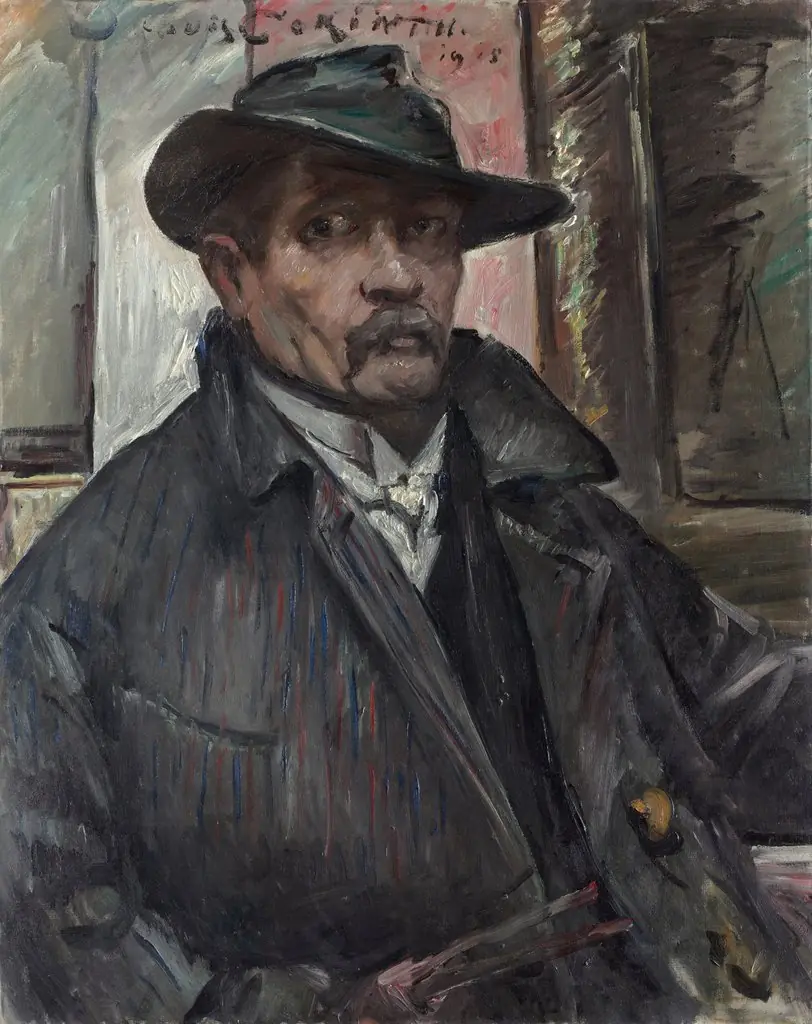
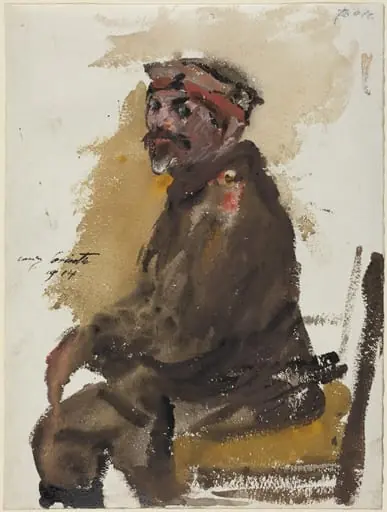
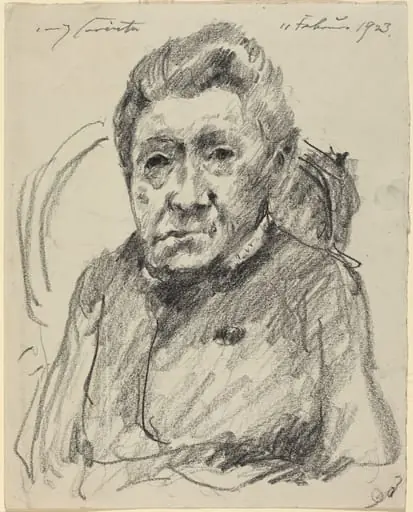
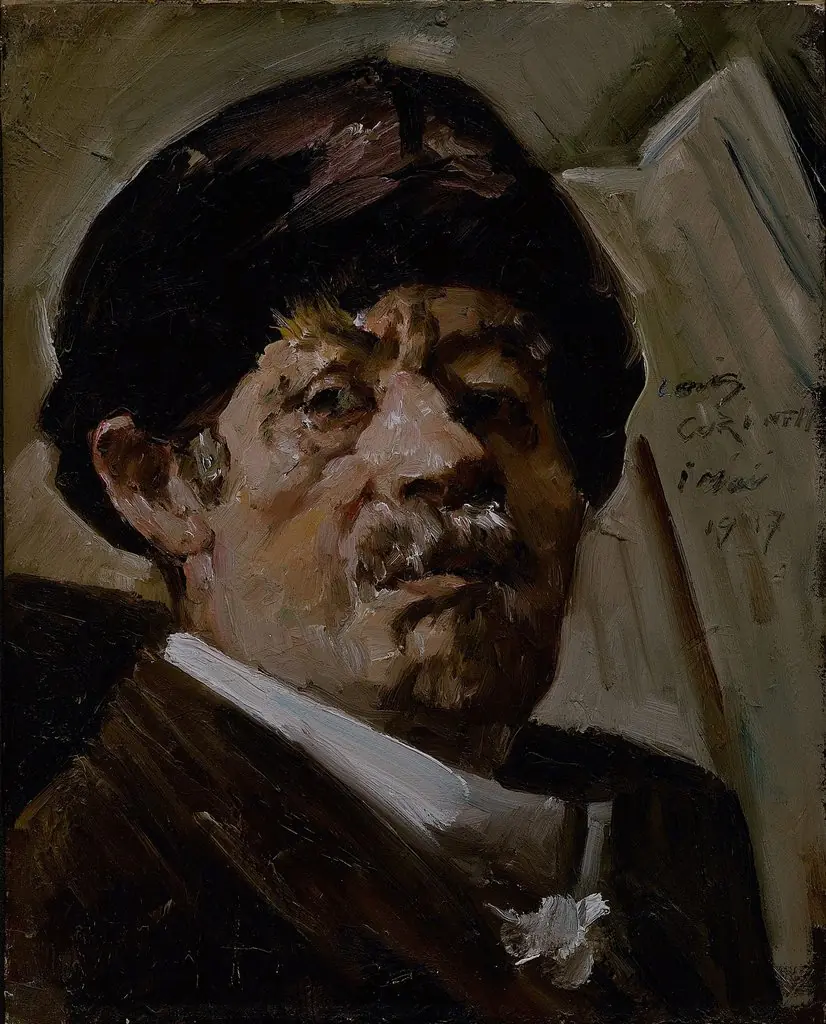
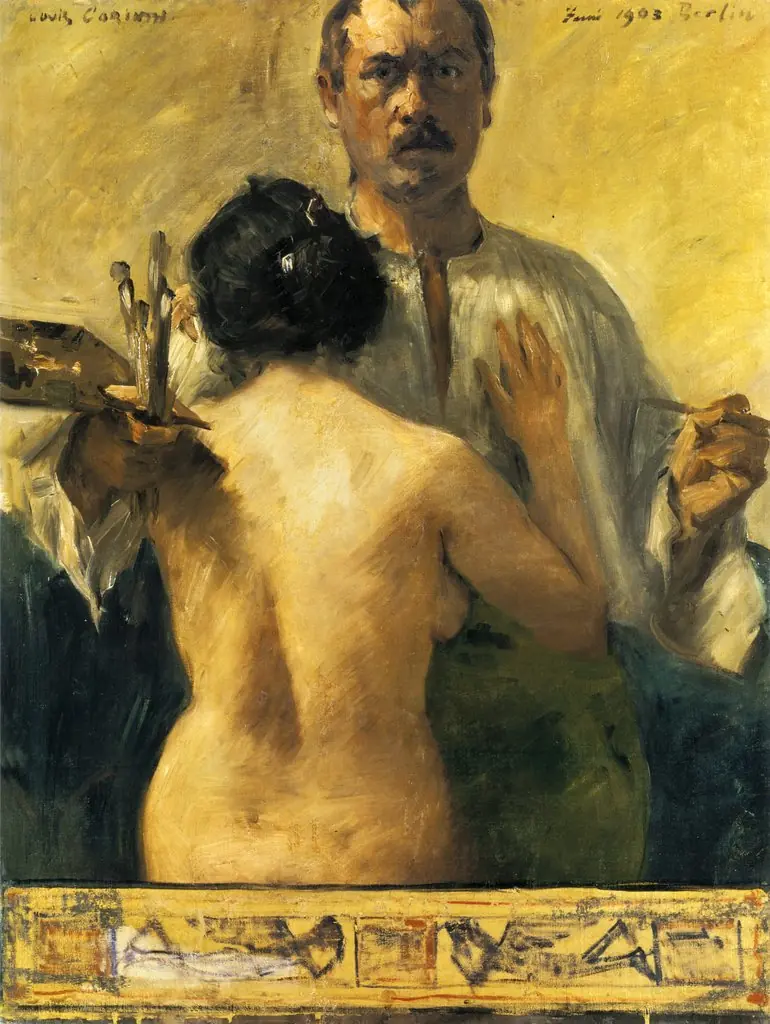
Lovis Corinth (21 July 1858 – 17 July 1925) was a German artist and writer whose mature work as a painter and printmaker realized a synthesis of impressionism and expressionism.

- Kühe (Cows)
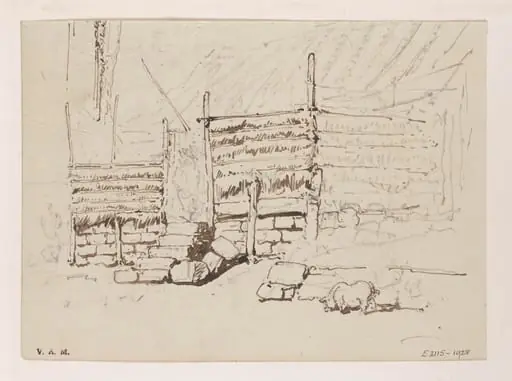 An enclosure, Macau
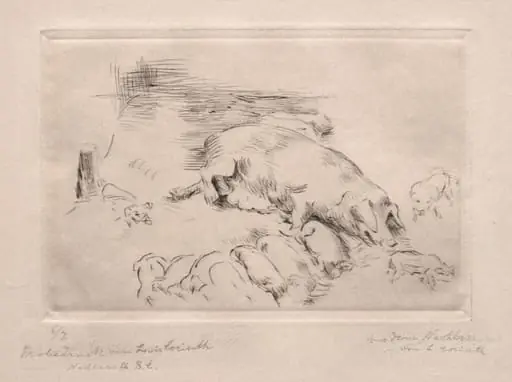 Sows and Piglets
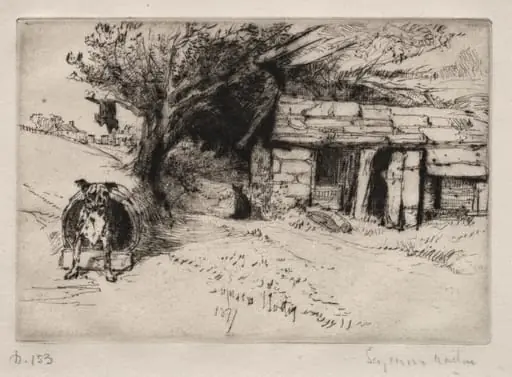 The Cabin
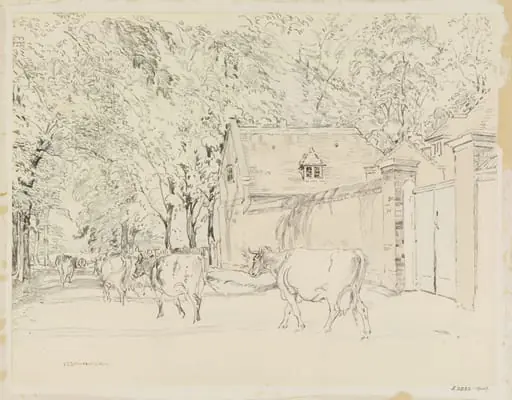 Ham Street, Cows from Manor Farm passing Ham House stables
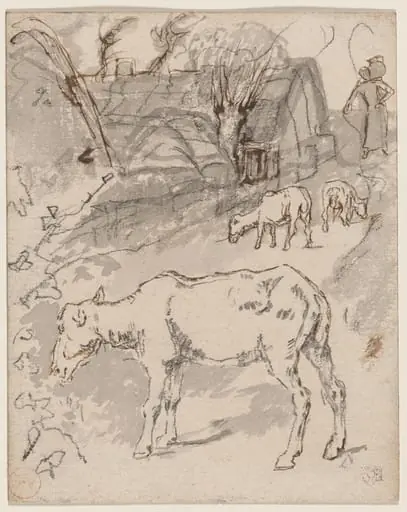 Three Sheep by a Cottage (recto)/Sketches of Cows (verso)
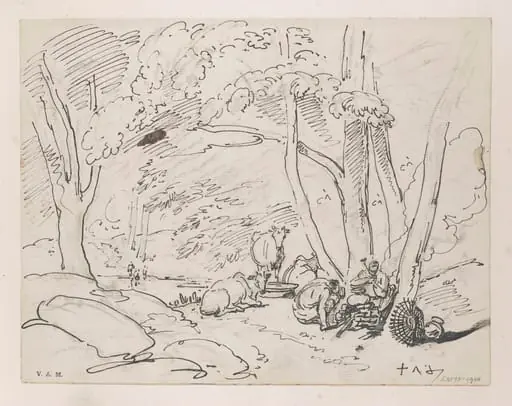 A wooded landscape with Indian figures and cattle
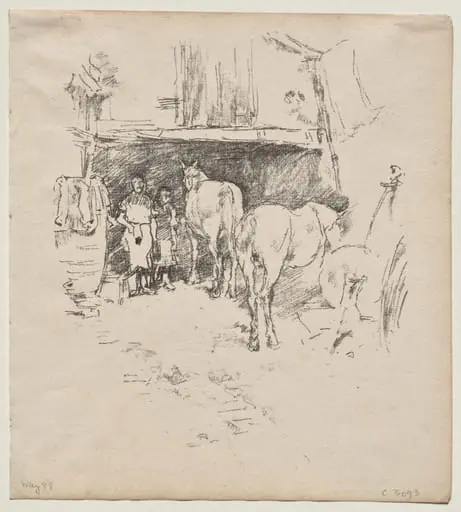 The Smith's Yard
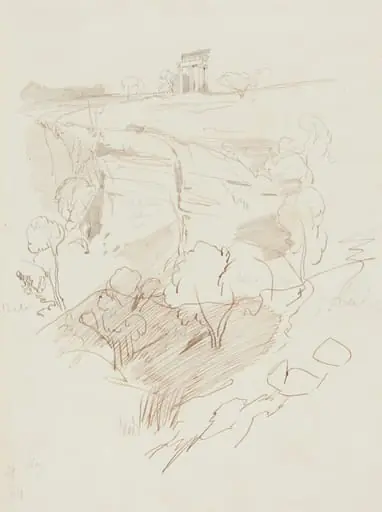 Ruined Temple on a Hill
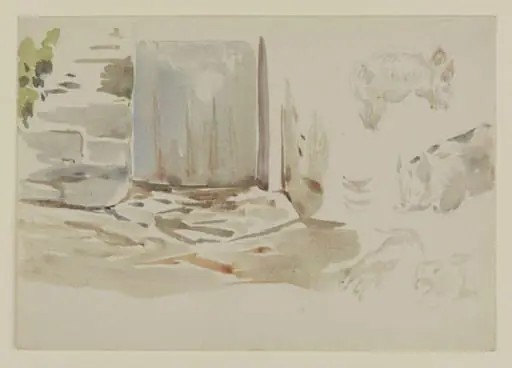 Three studies of a piglet (right) and study of a gate in a wall (left)
 Encombe Woods (No.1)
 Campagna di Roma (Roman Countryside) (recto)