Artwork
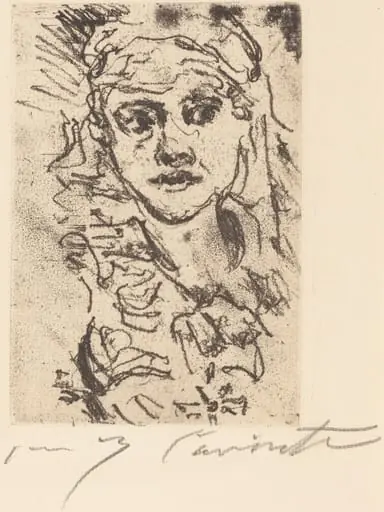
Bildnis einer Jungen Dame—Anneliese Halbe (Portrait of a Young Woman—Anneliese Halbe)
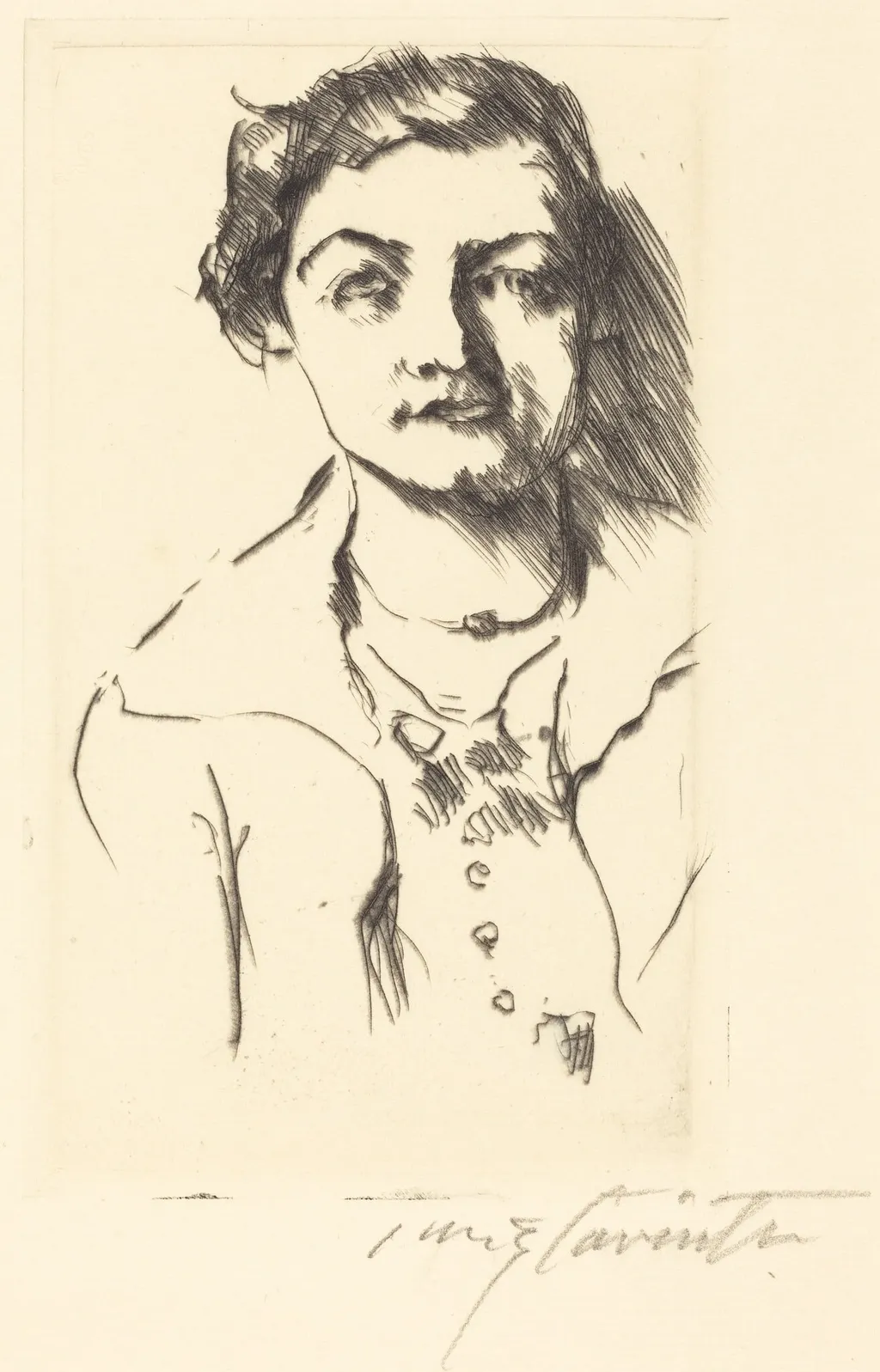
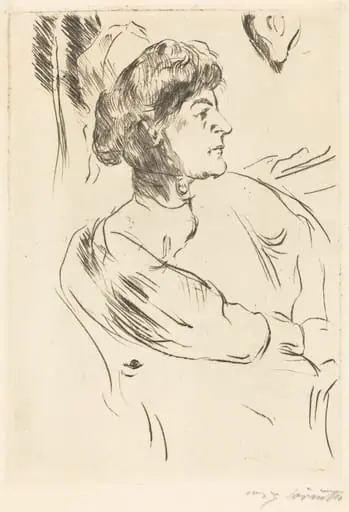
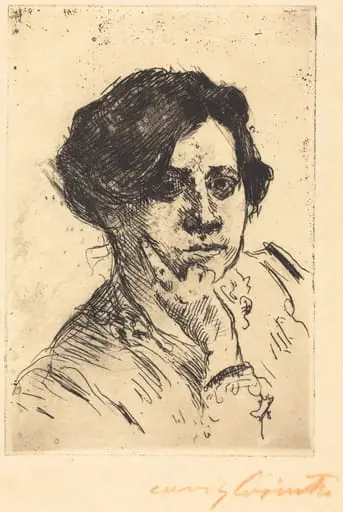
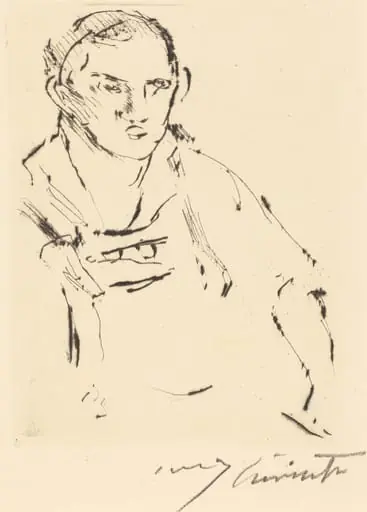
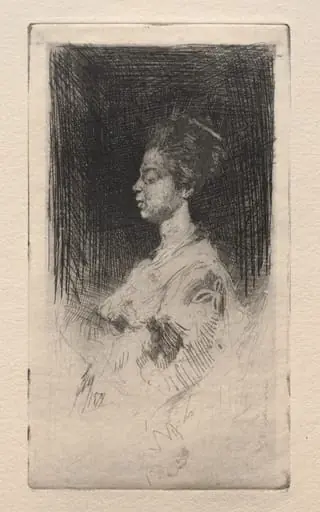
Bildnis einer Jungen Dame—Anneliese Halbe (Portrait of a Young Woman—Anneliese Halbe) is an ink print by Lovis Corinth. It dates from 1918 and is held in the collection of the National Gallery of Art.
- Inscription
- Inscribed:lower right in graphite: Lovis Corinth; lower left verso in graphite by unknown hand: Schw. 345
About this work
Overview
Lovis Corinth's 1918 drypoint print, Bildnis einer Jungen Dame, Anneliese Halbe, is a portrait of a young woman executed in black on laid paper. The work showcases Corinth's skill in printmaking and his mature style, developed after a stroke in 1911.
Subject & Meaning
The portrait depicts Anneliese Halbe with a calm and gentle expression, gazing directly at the viewer. The depiction conveys a sense of quiet intimacy, suggesting that Halbe was someone significant to Corinth.
Technique & Style
Corinth employed drypoint, a technique involving scratching a design into a plate, to create the portrait. His use of line and expressive qualities reflects a blend of impressionist and expressionist techniques characteristic of his mature period.
History & Provenance
Corinth was associated with the Berlin Secession, an art movement he later led as president after Max Liebermann. The portrait was created in 1918, during a period when Corinth's style had evolved significantly following his stroke in 1911.
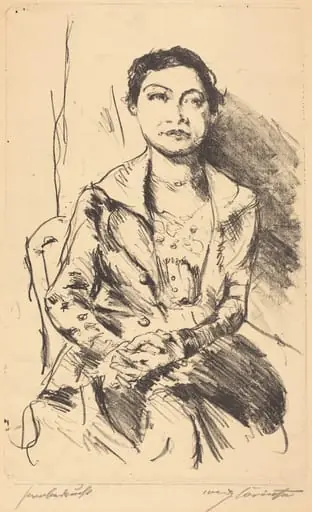
Own this work as a print
Artist & collection
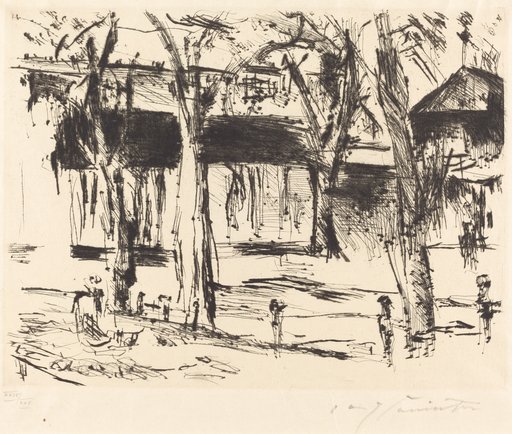
Artist
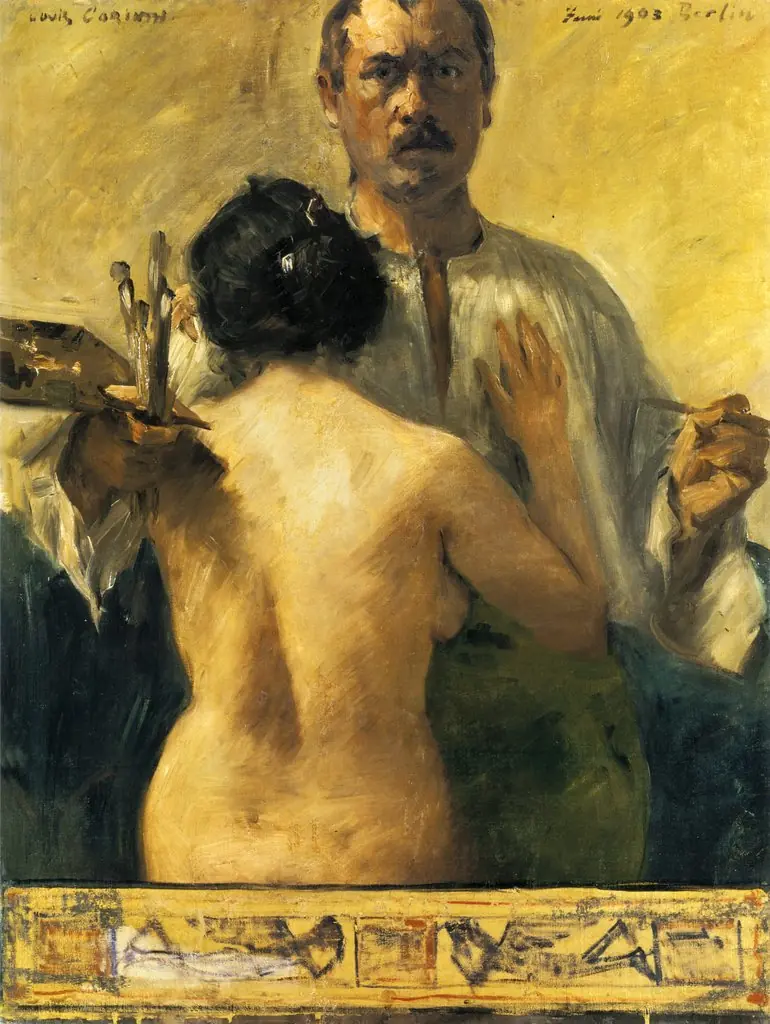
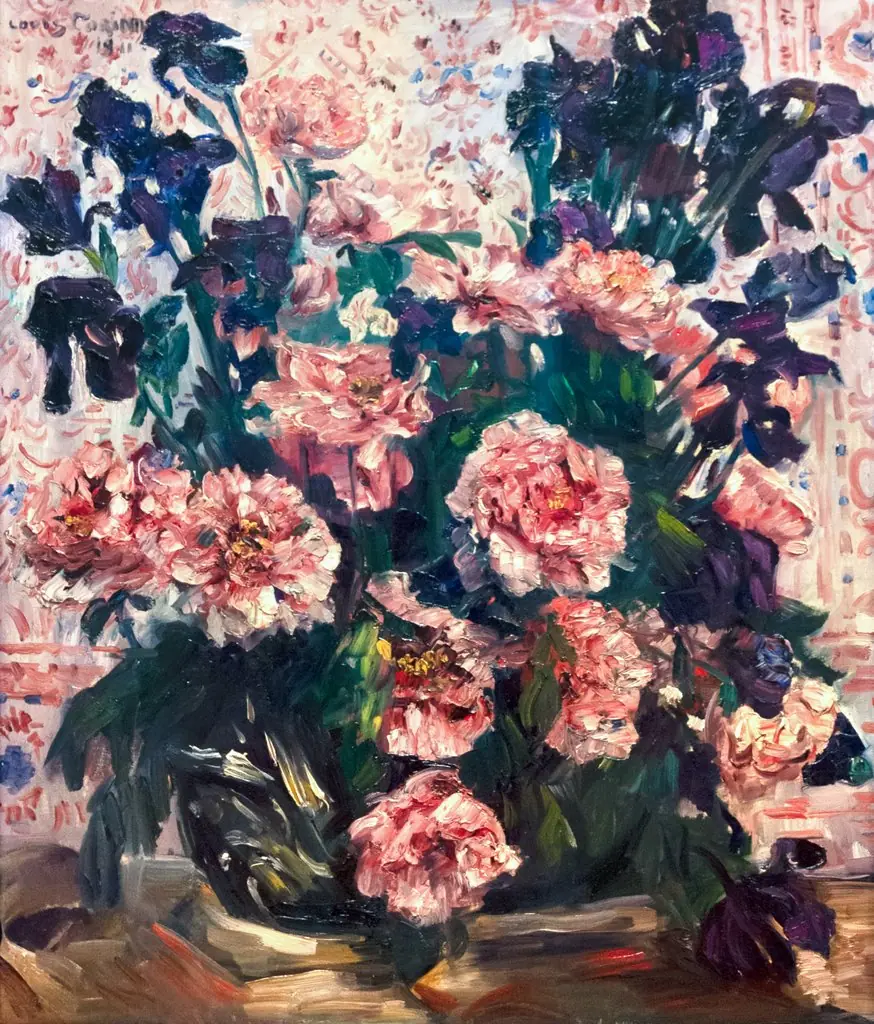
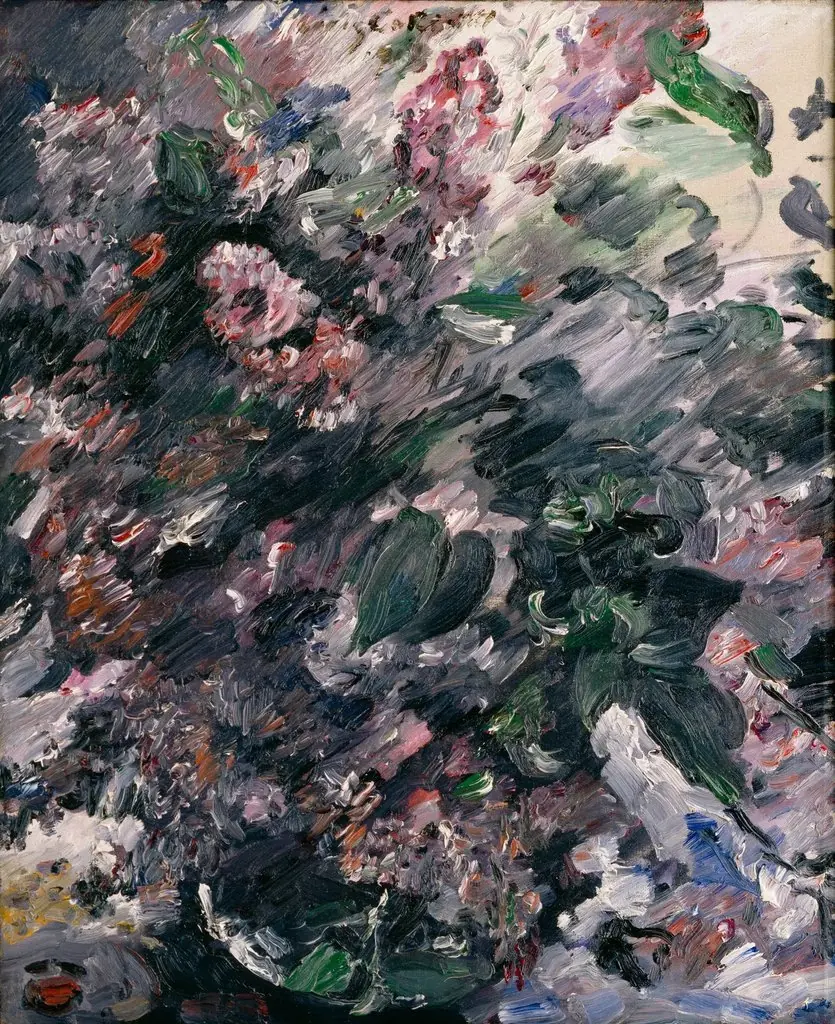
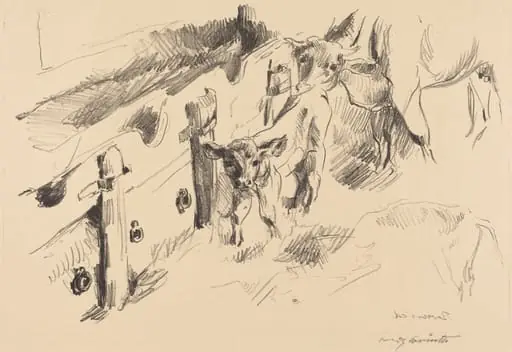
Lovis Corinth (21 July 1858 – 17 July 1925) was a German artist and writer whose mature work as a painter and printmaker realized a synthesis of impressionism and expressionism.