Artwork
Iris und Päonien
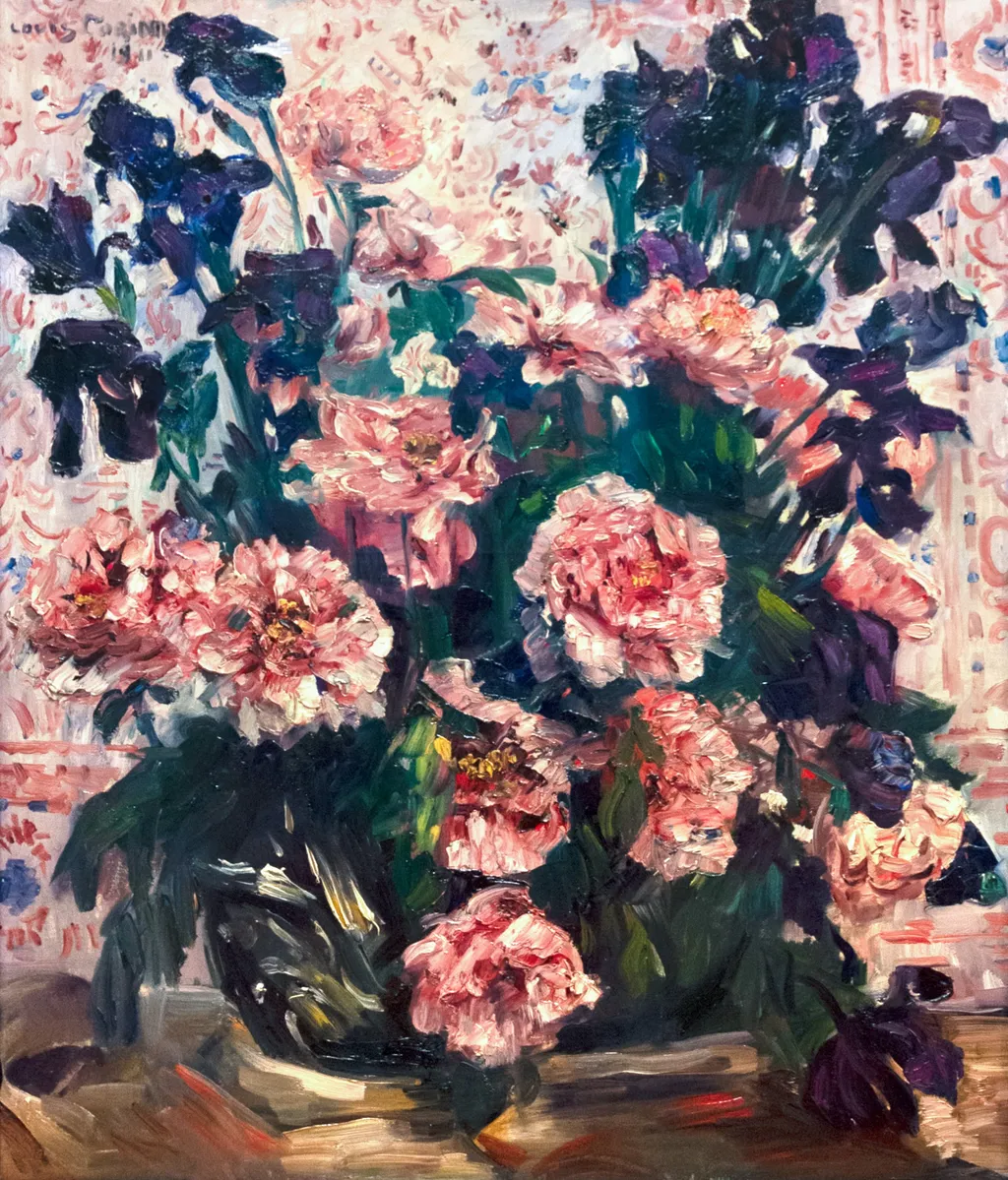
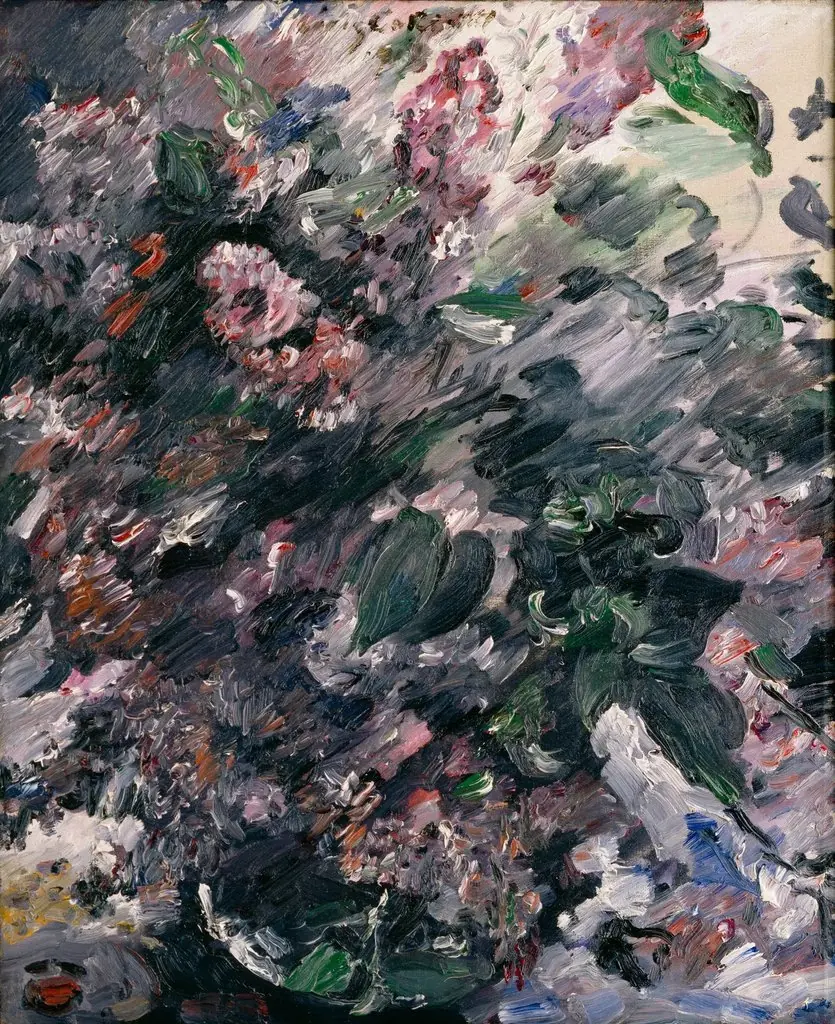
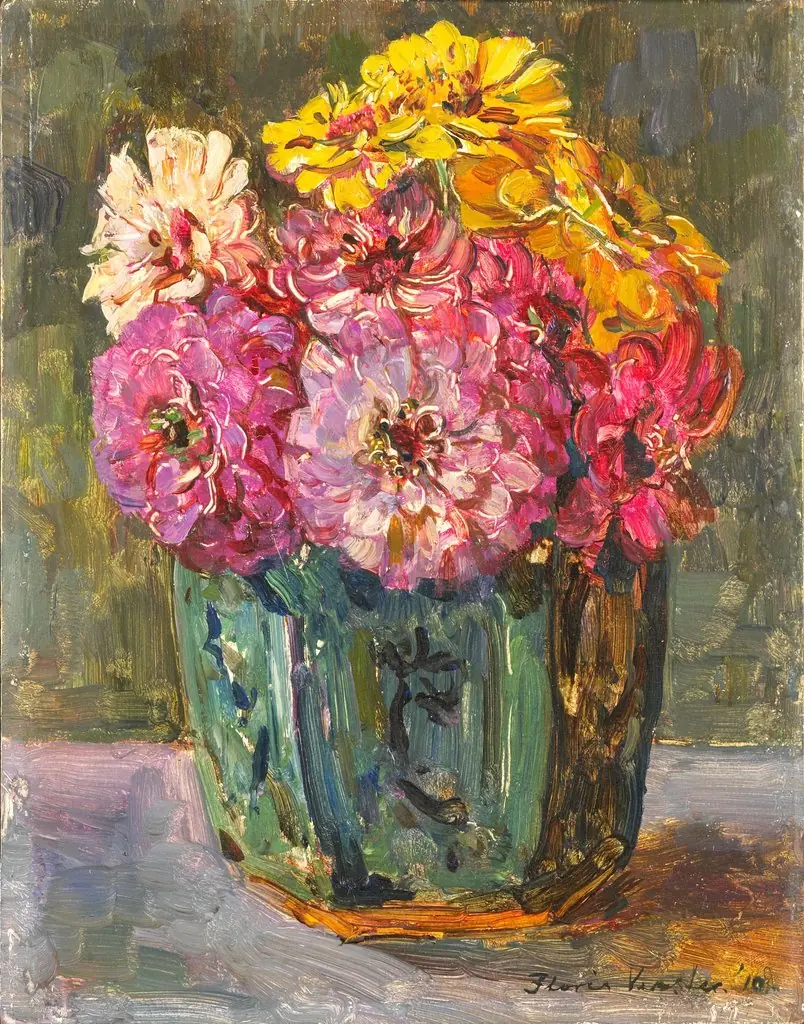
Iris und Päonien is an oil painting by the German Expressionist artist Lovis Corinth. It dates from 1911 and is held in the collection of the Hermitage Museum.
About this work
Overview
The painting’s physicality is emphasized through thick, uneven application of paint, distinguishing it from more polished floral studies of the period.
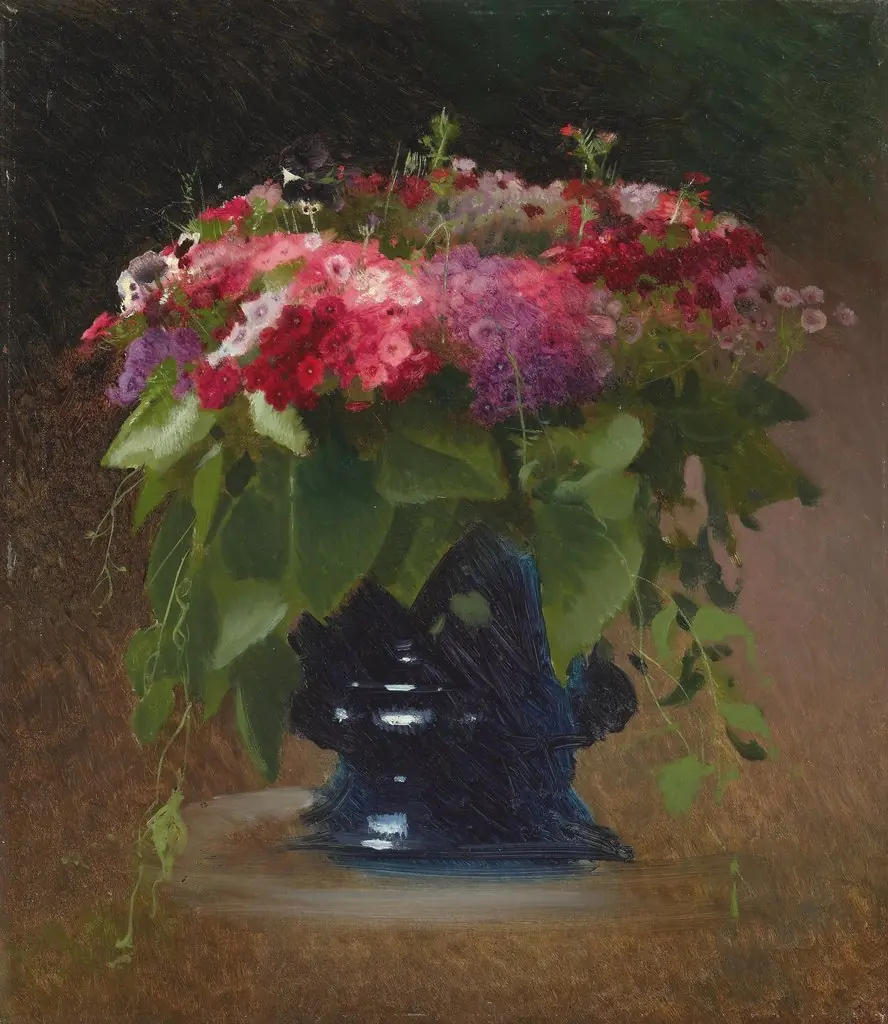
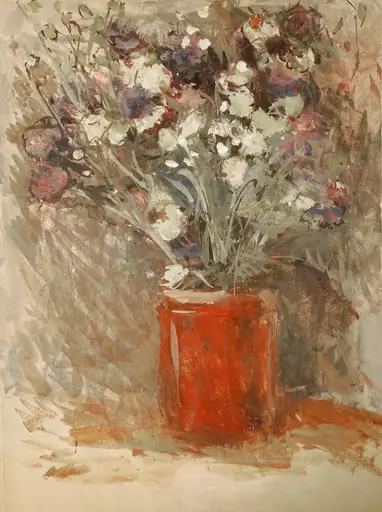
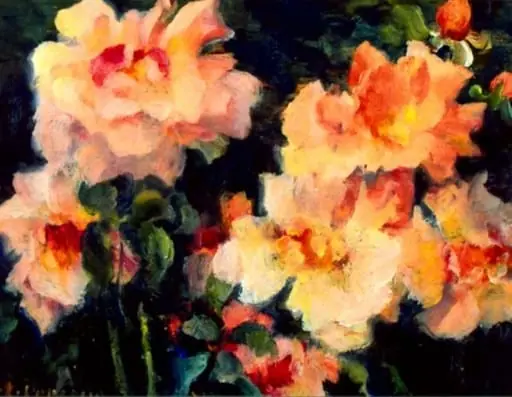
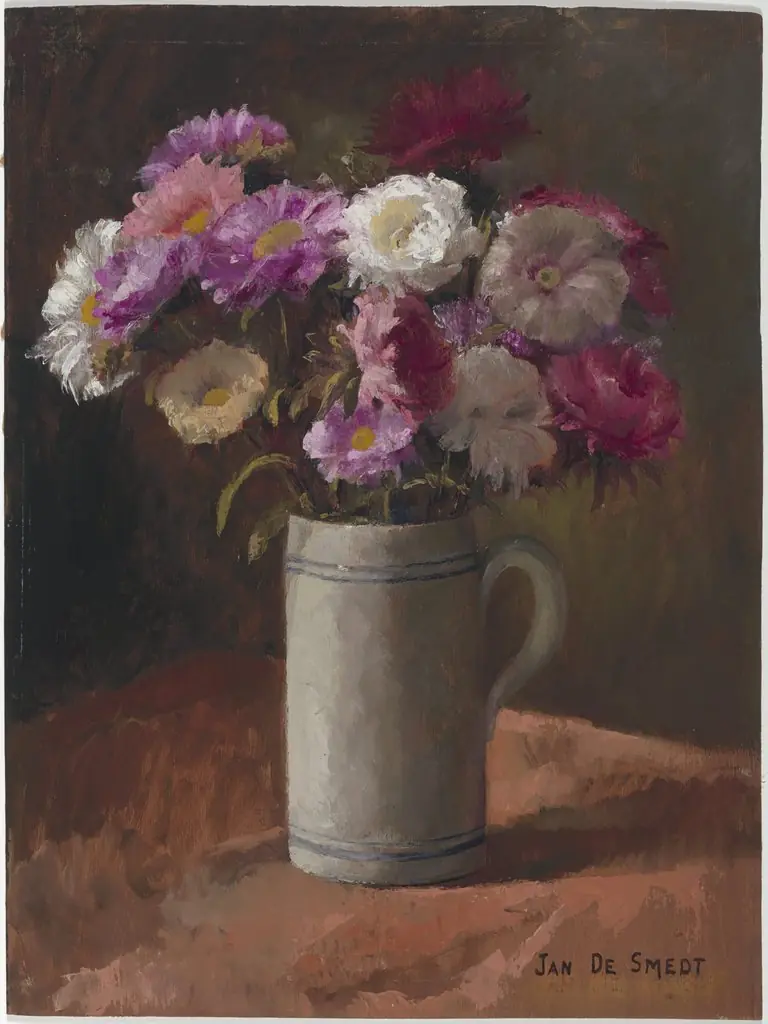
Painted in 1911, Iris und Päonien is an oil still life by Lovis Corinth, depicting a dense arrangement of flowers in a dark vessel. The work resides in the State Hermitage Museum in Saint Petersburg. Its composition is unstructured, with blooms spilling beyond the vase’s rim, suggesting spontaneity rather than formal arrangement.
The painting’s physicality is emphasized through thick, uneven application of paint, distinguishing it from more polished floral studies of the period.
Subject & Meaning
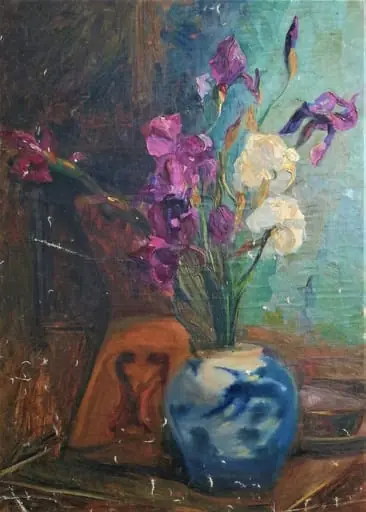
The painting presents a tangle of irises and peonies, their petals overlapping in a chaotic yet deliberate manner. The flowers, rendered in soft pinks and whites, are set against muted greens and a hazy background of blue and purple. Rather than symbolizing purity or transience in a traditional sense, the work conveys vitality through disorder, flowers appear in active decay, their forms pushed to the edge of recognition, suggesting nature’s untamed persistence.
Technique & Style
Corinth employed heavy impasto, layering paint with visible, aggressive brushwork and occasional scraping. Colors are not blended smoothly; instead, they sit side by side in ridges and clumps, creating a tactile surface. The background is thinly washed, allowing the foreground blooms to dominate through contrast.
This method prioritizes sensory immediacy over detail, transforming the canvas into a record of the artist’s physical engagement with the subject.
History & Provenance
Created during Corinth’s mature period, the painting entered the State Hermitage Museum’s collection in the 20th century. Its acquisition reflects Soviet-era interest in German Expressionist and post-impressionist works. While little is documented about its early ownership, its presence in the Hermitage confirms its recognition as a significant example of early 20th-century German painting outside its country of origin.
Context
Painted shortly after Corinth’s recovery from a stroke, Iris und Päonien reflects a shift toward more expressive, physically charged brushwork. This period saw him moving away from academic precision toward a looser, more visceral style influenced by both post-impressionism and emerging expressionist tendencies. The painting aligns with broader European trends that valued emotional intensity over idealized form in still-life subjects.
Legacy
The work exemplifies Corinth’s late style, where texture and movement replaced traditional harmony. It influenced later artists interested in the materiality of paint and the emotional potential of unrefined form. While not widely reproduced, its presence in a major public collection ensures its role as a reference point for studies of early modern German painting and the evolution of still-life conventions.
Own this work as a print
Artist & collection
Artist
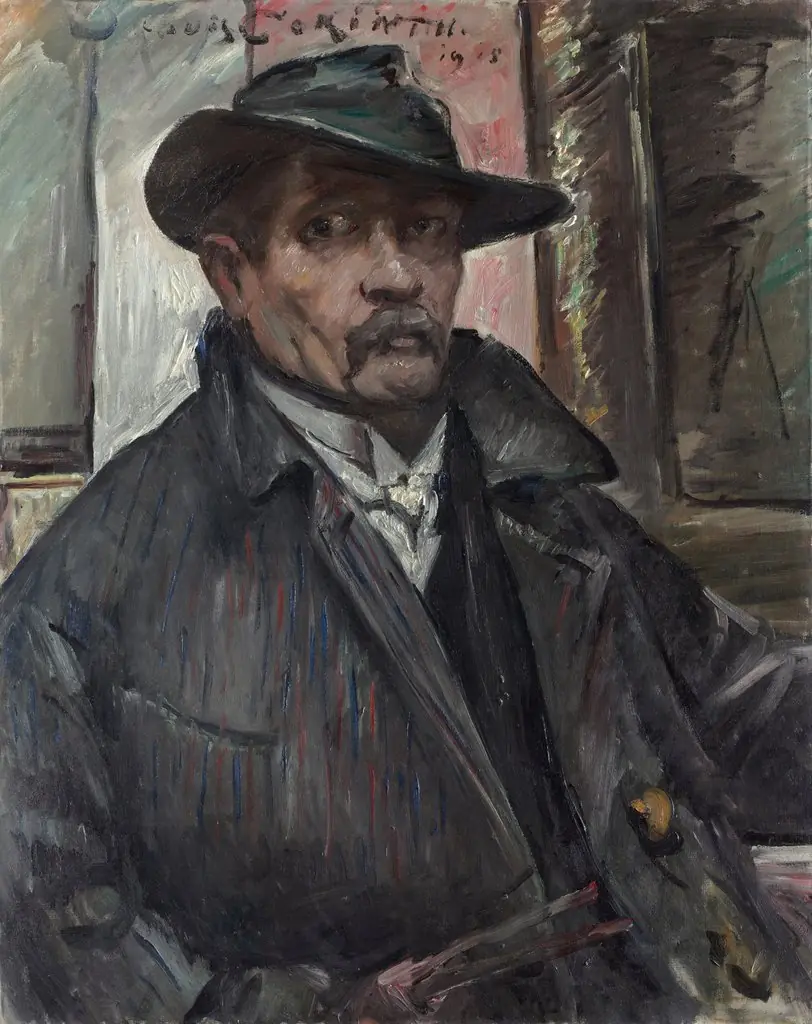
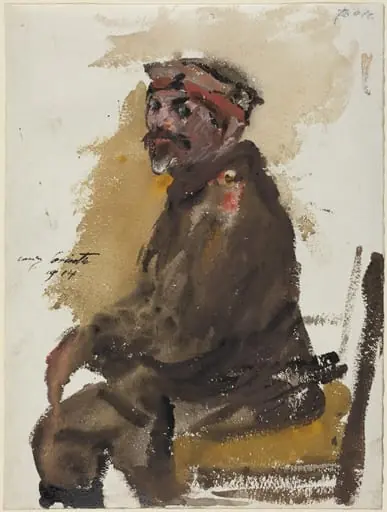
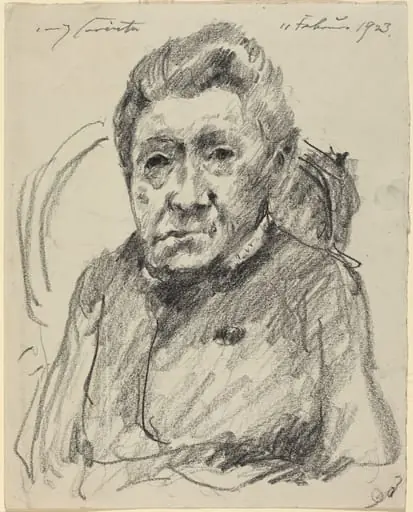
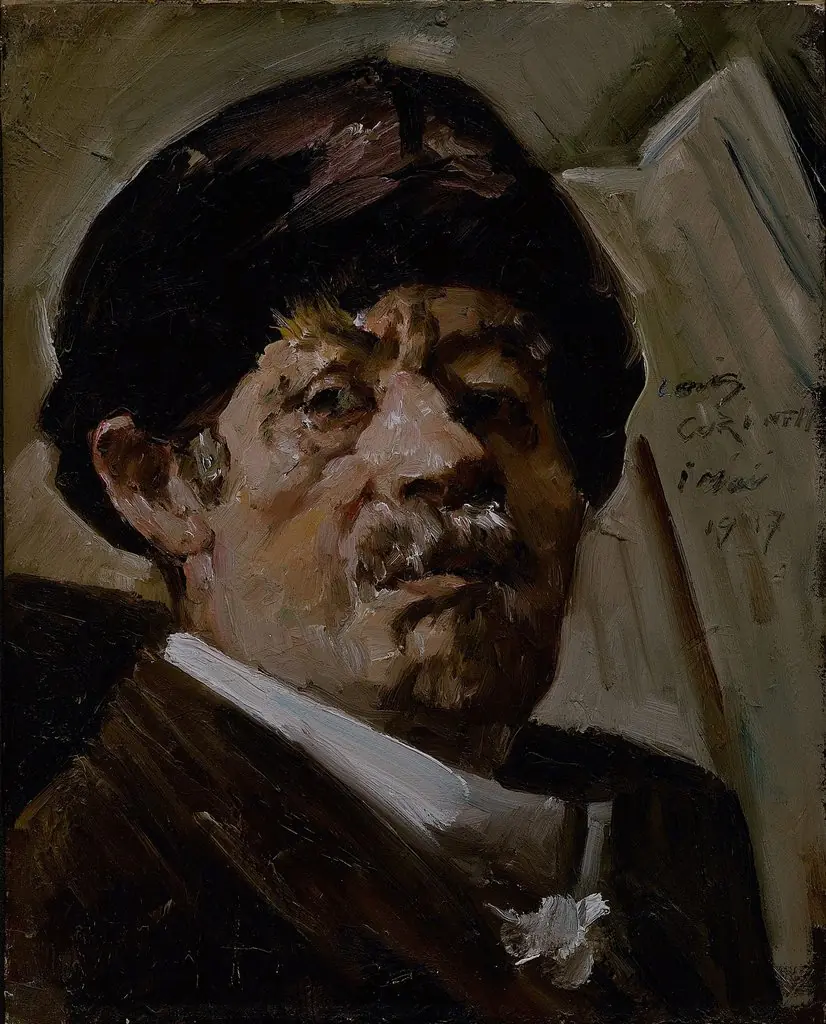
Lovis Corinth (21 July 1858 – 17 July 1925) was a German artist and writer whose mature work as a painter and printmaker realized a synthesis of impressionism and expressionism.