Artwork
Anne de Pisseleu (1508–1576), Duchesse d'Étampes
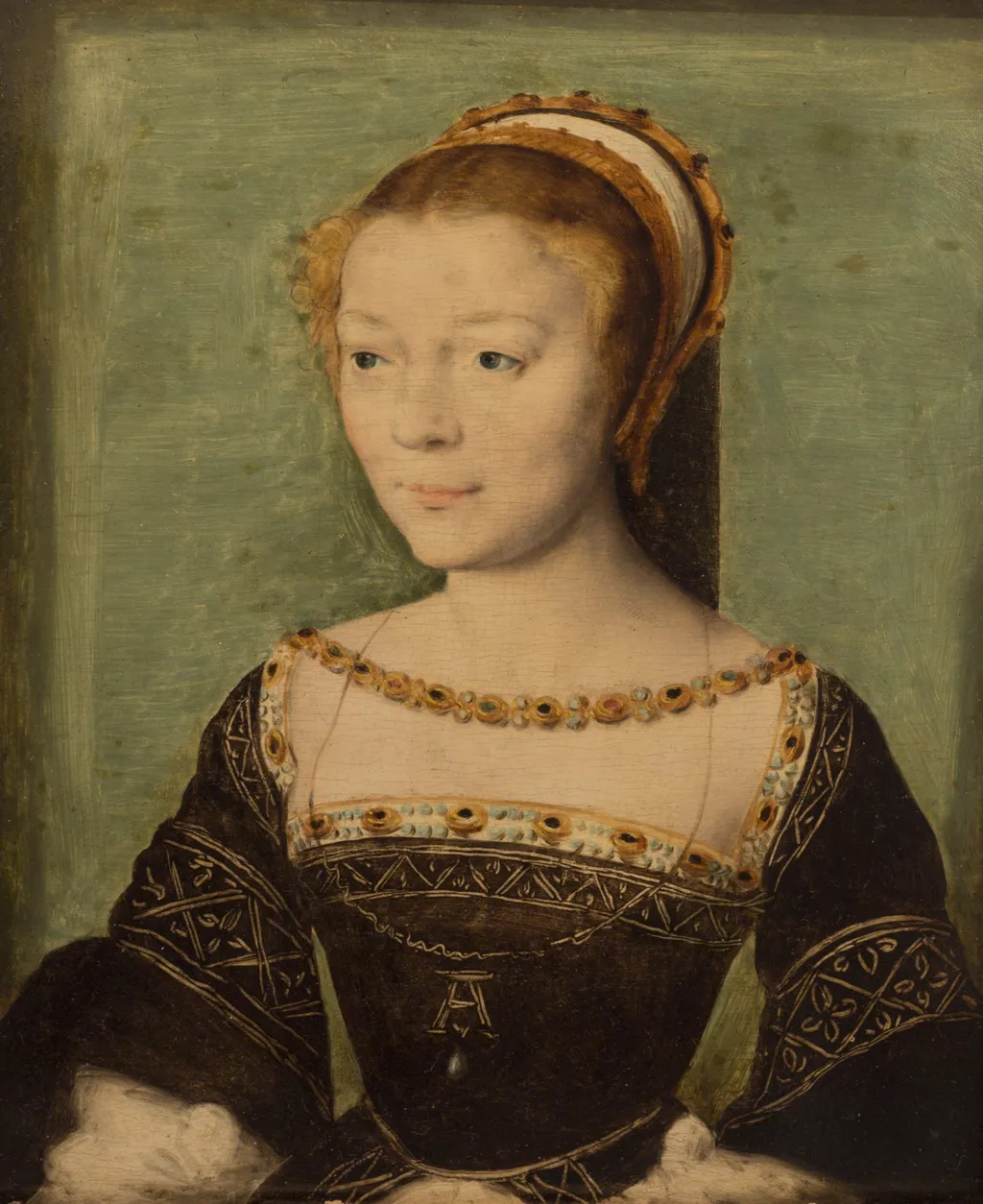
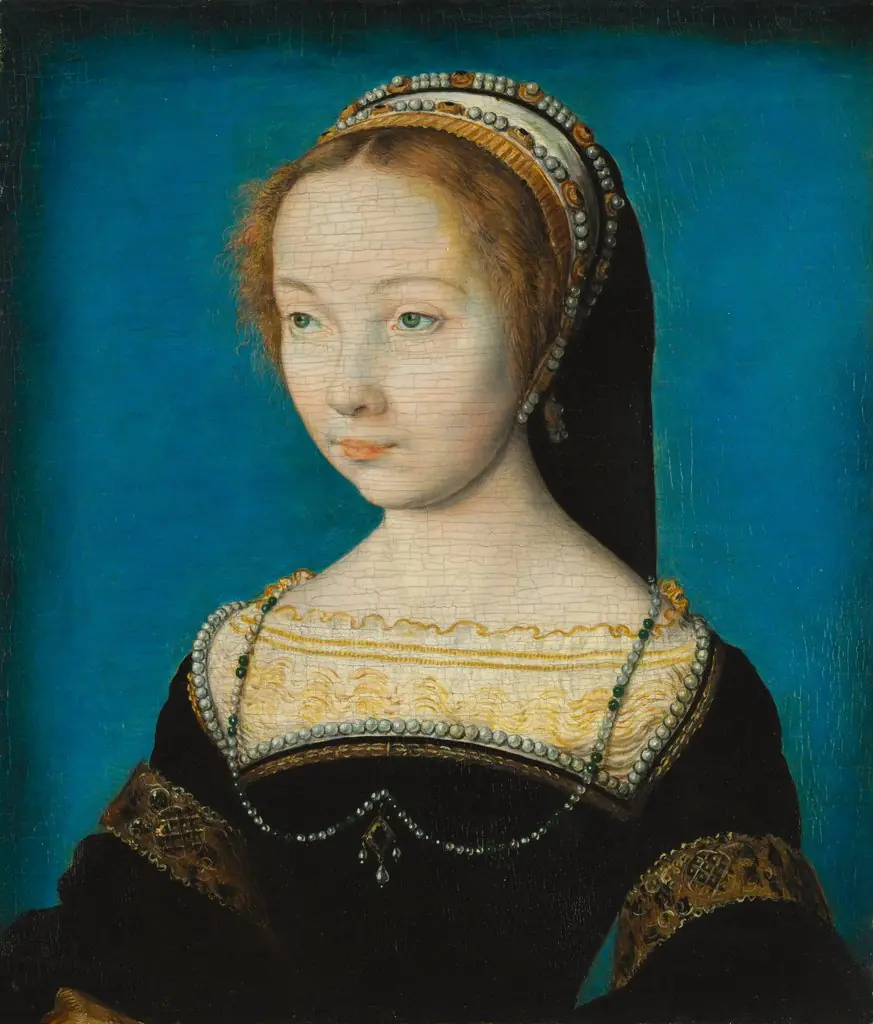
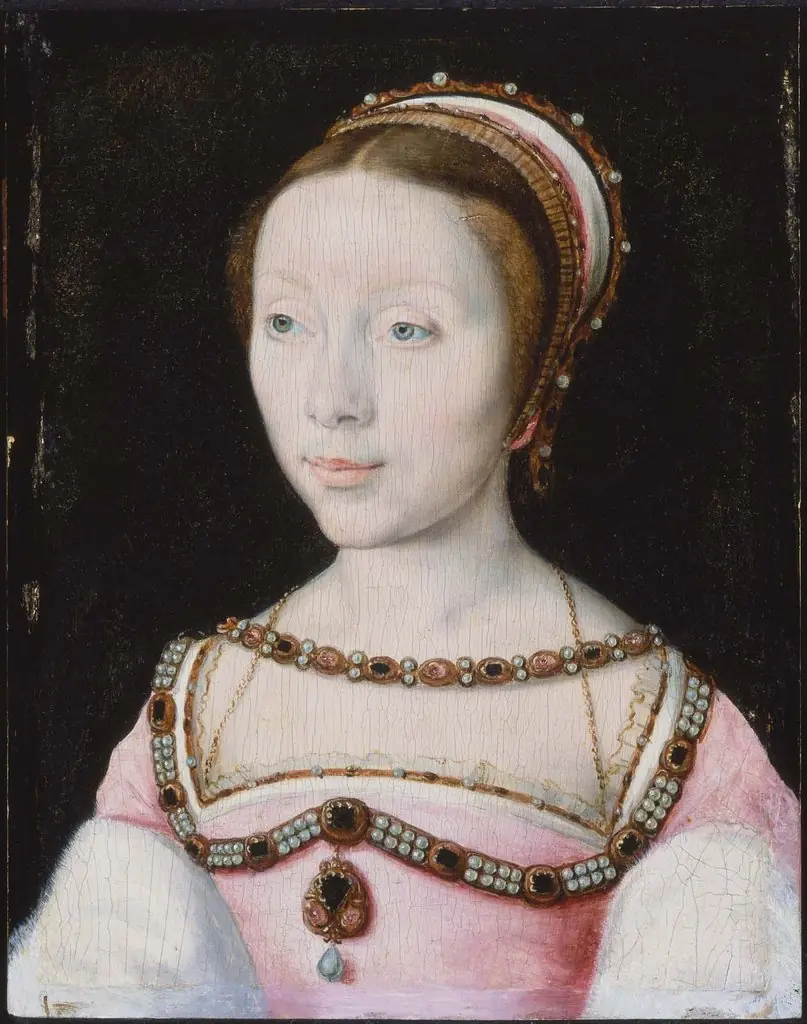
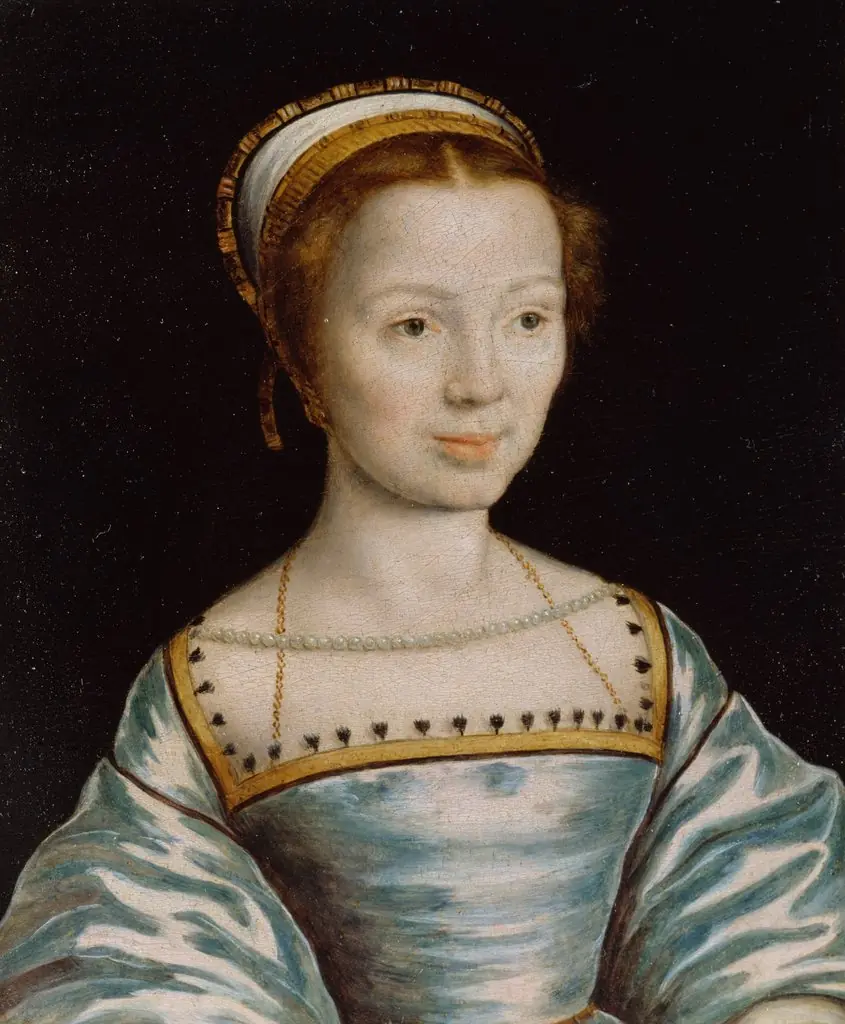
Anne de Pisseleu (1508–1576), Duchesse d'Étampes is an oil painting by the Dutch Golden Age artist Corneille de Lyon. It dates from 1535 and is held in the collection of the Metropolitan Museum of Art.
About this work
Subject & Meaning
Scholars have supported the identification through comparison with drawings of the duchess preserved at the Musée Condé in Chantilly.
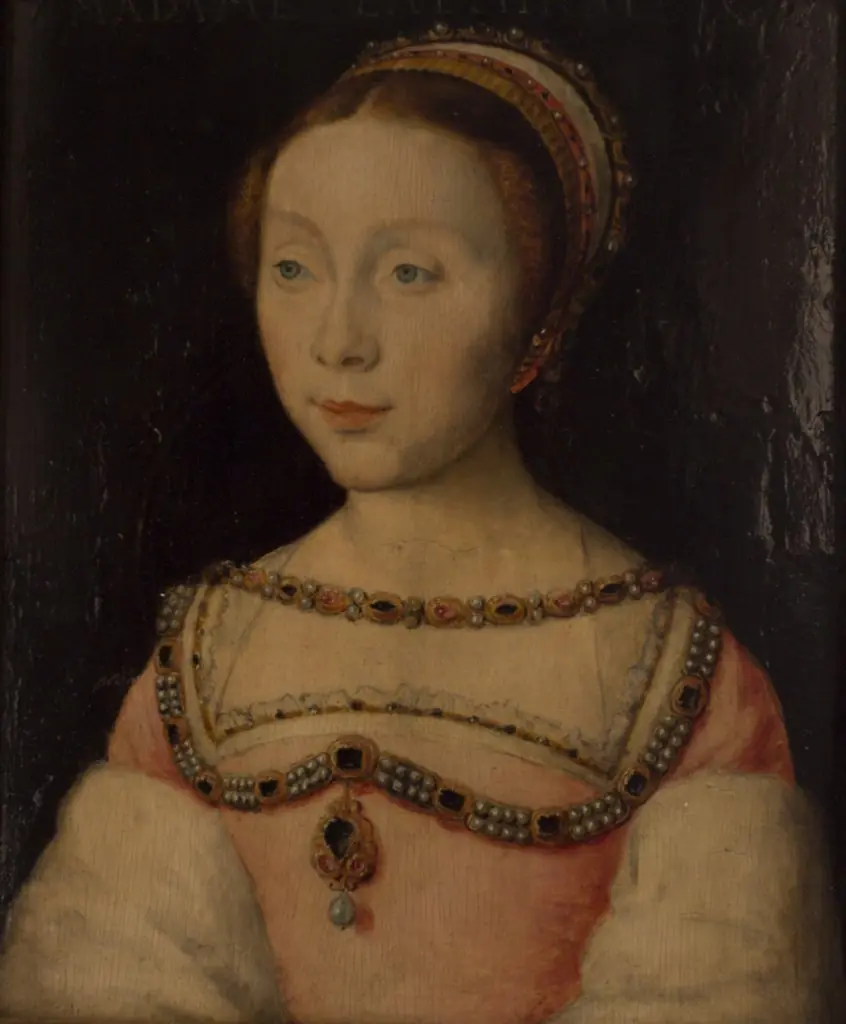
The portrait depicts Anne de Pisseleu d'Heilly, Duchess of Étampes, identified as a young woman dressed in richly ornamented attire characteristic of the French court in the second half of the 1530s. Scholars have supported the identification through comparison with drawings of the duchess preserved at the Musée Condé in Chantilly. A key iconographic element is the jewel shaped like the letter "A" that she wears, which matches the one shown in her portrait at the Vienna museum, reinforcing the sitter's identity.
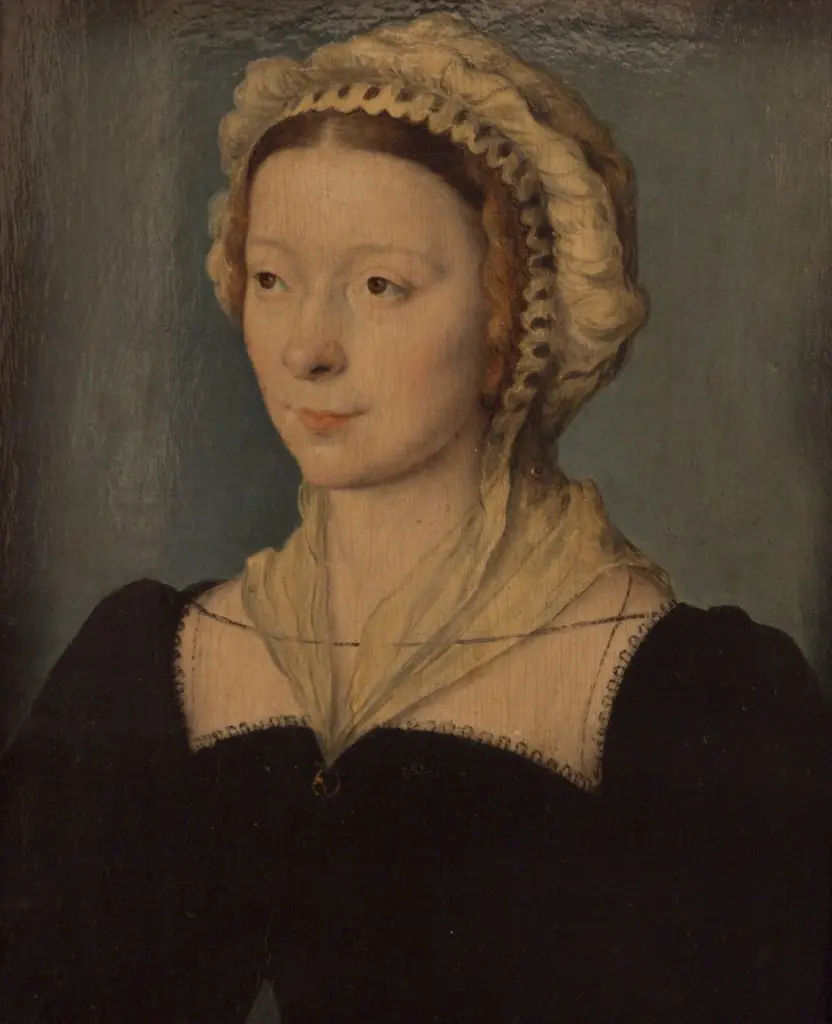
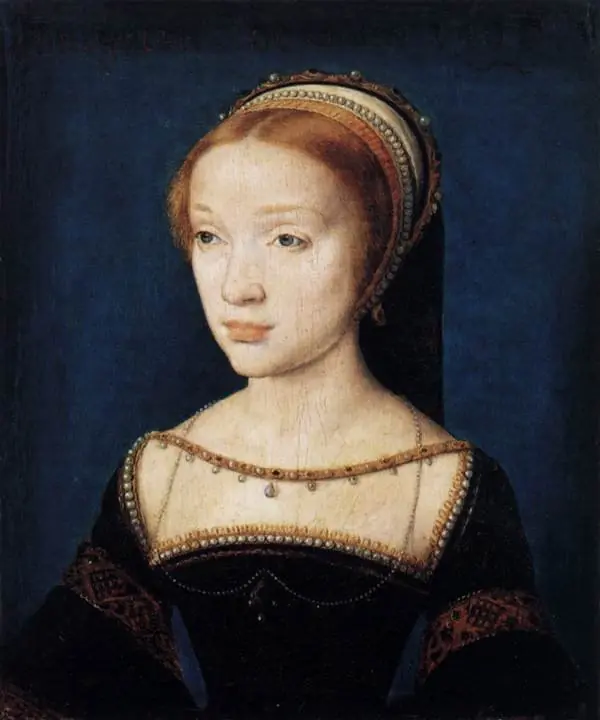
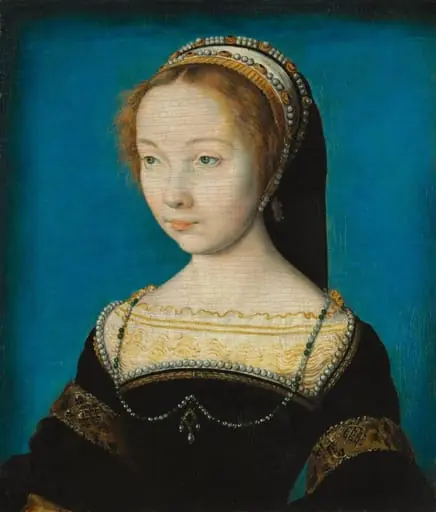
The painting emphasizes her status through elaborate jewelry and embroidery rendered with a lively, light touch, while the background is executed in broad brushstrokes. The costume and facial treatment link the work to other portraits by Corneille de Lyon, such as those of the Marquise de Rothelin and a painting in Cleveland, situating the image within the visual culture of the French Renaissance court.
Technique & Style
The portrait is executed in oil paint on panel, a small-format work measuring approximately 17.8 by 14.3 cm, dated to 1535. Corneille de Lyon's handling is characterized by a lively, light touch, particularly visible in the rendering of the jewelry and embroidery, which are painted with a quick, delicate hand. The hair on the left side of the face is merely sketched, while the background is applied in broad, visible brushstrokes whose marks have not been blended away.
Scholars have noted that surface glazes may have been lost through over-aggressive cleaning. Stylistically, the New York panel is considered more vivid and lightly handled than the related portrait in Vienna, with the treatment of the costume and face aligning it with Corneille de Lyon's portraits of the marquise de Rothelin and the Cleveland panel.
History & Provenance
Anne de Pisseleu (1508–1576), Duchesse d'Étampes, is portrayed in an oil on panel portrait attributed to Corneille de Lyon, dated to 1535–1540. The work was created in the mid‑1530s, likely during the sitter’s visits to the Lyon court in 1537–38. It entered the collection of Louisine Havemeyer before being acquired by the Metropolitan Museum of Art, which currently holds the piece.
The painting, classified as a Renaissance portrait, measures 17.8 × 14.3 cm and features richly embroidered garments and a distinctive "A"‑shaped pendant also seen in other depictions of the duchess. No explicit record of the original commission survives in the documented sources.
The portrait of Anne de Pisseleu, Duchess of Étampes, painted circa 1535, is housed in the Metropolitan Museum of Art in New York. It entered the museum as part of the Louisine Havemeyer bequest and remains in the institution’s collection. The work was included in the 1904 Lyon Renaissance exhibition titled « Arts et humanisme », marking one of its early public showings.
Its display history reflects both the 16th‑century French court portrait tradition and later scholarly interest in Corneille de Lyon’s oeuvre.
Context
Scholarship regarding this portrait has focused on resolving dating discrepancies and confirming the sitter's identity. While Henri Bouchot argued in 1904 for a later date of 1548, suggesting the subject was absent from court after Francis I's death, Anne Dubois de Groër and Louis Dimier established a creation window between 1535 and 1540. They validated the identification as Anne de Pisseleu by comparing the work to drawings at the Musée Condé and noting a specific 'A'-shaped jewel identical to that in a Vienna portrait.
The painting is stylistically linked to Corneille de Lyon's portraits of the Marquise de Rothelin and a Cleveland tableau, distinguished by a livelier execution. Critical analysis highlights the delicate rendering of jewelry against a broadly brushed background, though some surface glazes may have been lost to aggressive cleaning. A known copy formerly belonged to the G. de Montbrison collection.
Overview
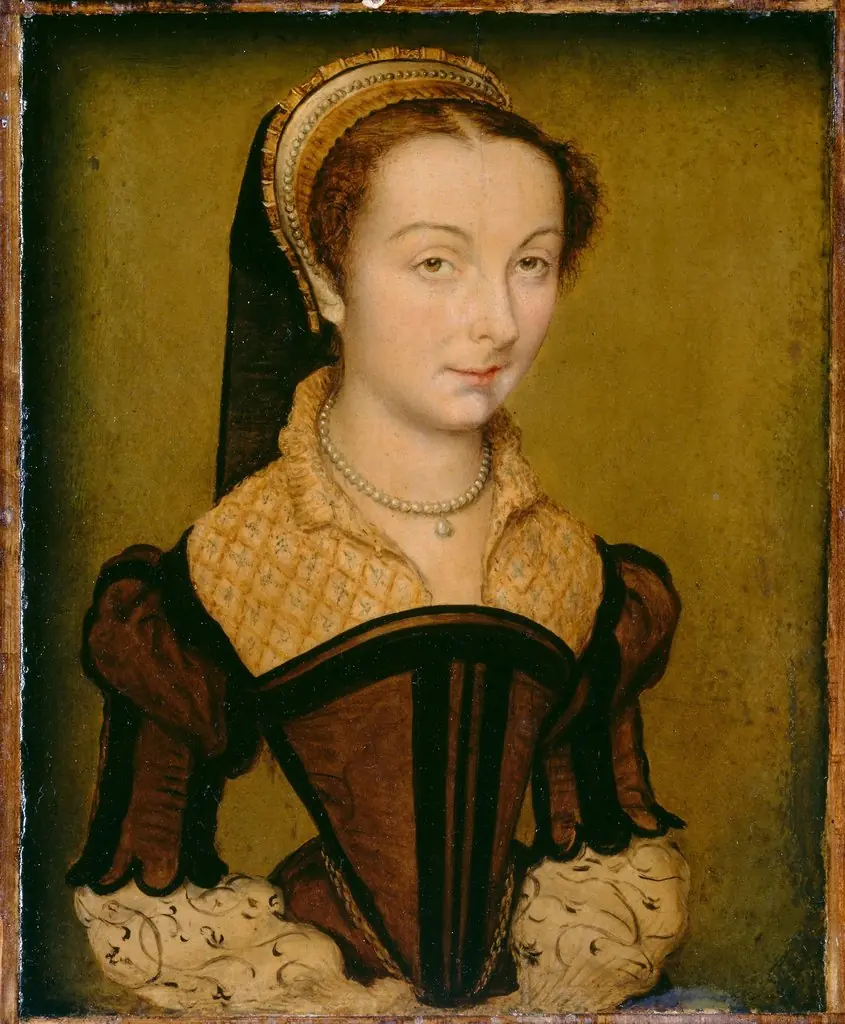
Painted in 1535 by Corneille de Lyon, this oil portrait depicts Anne de Pisseleu, Duchesse d'Étampes, a prominent figure at the court of Francis I of France. The work exemplifies the artist's distinctive style of small-scale panel portraits, characterized by a direct gaze and a restrained, intimate composition. The sitter is presented against a flat, muted green background that isolates her figure and emphasizes her facial features and attire.
She wears a dark dress adorned with intricate gold embroidery on the sleeves and bodice, complemented by a beaded necklace and a dark cap that frames her light brown hair. Her fair skin and composed expression reflect the Renaissance ideal of courtly elegance. As the mistress of the French king, Anne's portrayal serves both as a personal likeness and a statement of her elevated status.
This piece is a significant example of Corneille de Lyon's contribution to French Renaissance portraiture, bridging Dutch technical precision with French courtly aesthetics. The painting remains a key document of 16th-century aristocratic fashion and the visual culture of the Valois court.
Own this work as a print
Artist & collection
Artist
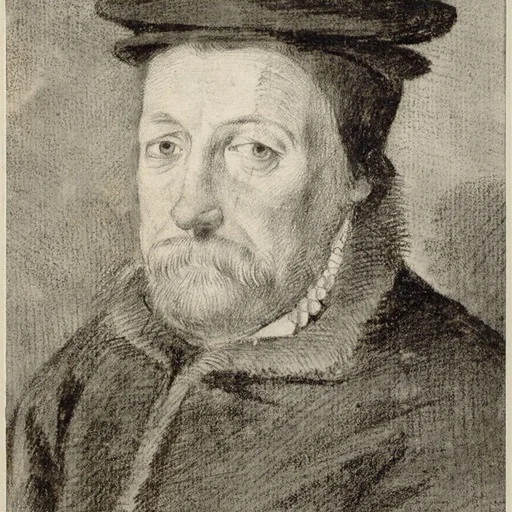
Corneille de Lyon was a Dutch painter of portraits who was active in Lyon, France, from 1533 until his death. In France and the Netherlands he is also still known as Corneille de La Haye after his birthplace, The Hague.