
Movement
French Renaissance
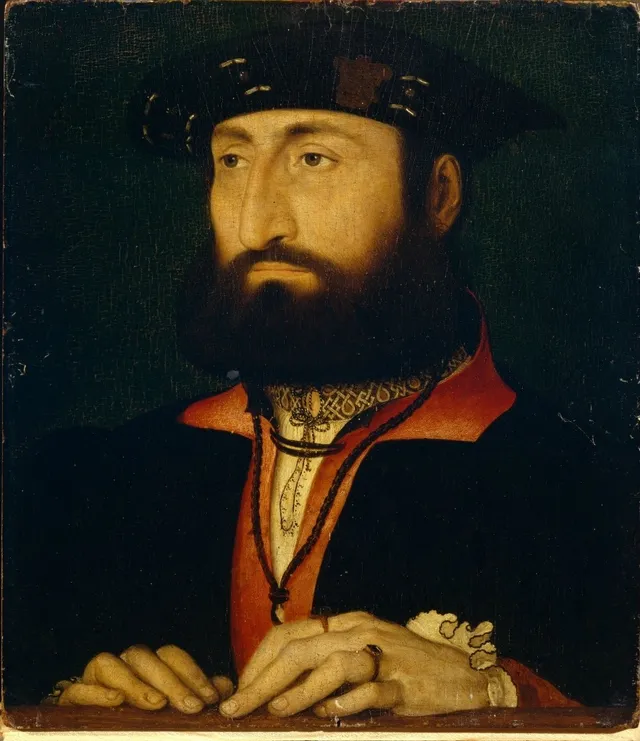
French Renaissance is an art movement of the 1500–1700 period. The gallery holds 1 work in this movement, including works by Jean Clouet. Browse French Renaissance paintings, portraits, pictures and artworks from the world's public-domain museum collections.
The French Renaissance was the cultural and artistic flowering that spread through France from the late fifteenth to the early seventeenth century, as Italian humanist ideas and forms crossed the Alps and fused with native Gothic traditions. Its decisive patron was King Francis I (reigned 1515–1547), a voracious collector who lured Italian masters northward—most famously Leonardo da Vinci, who entered the king's service in 1516 and settled at the Château du Clos Lucé in the Loire Valley until his death in 1519. The movement was as much architectural and decorative as pictorial: the great Loire châteaux, above all Chambord (built 1519–1547 with its celebrated double-helix staircase), translated classical symmetry and Italianate ornament into a distinctly French idiom.
The stylistic core of the period crystallised at the royal palace of Fontainebleau, where Francis I began rebuilding in 1528. The resulting School of Fontainebleau (c. 1530–1610) introduced Mannerism to France and shaped Northern European taste for generations. Imported Florentine and Bolognese artists—Rosso Fiorentino (1494–1540), who arrived around 1530, followed by Francesco Primaticcio—pioneered a luxurious decorative system that married painted panels with high-relief stucco nudes, garlands, and Rosso's much-imitated "strapwork." The hallmark manner was elegant and artificial: elongated, sensuous figures in cool colours, set within classical and mythological scenes.
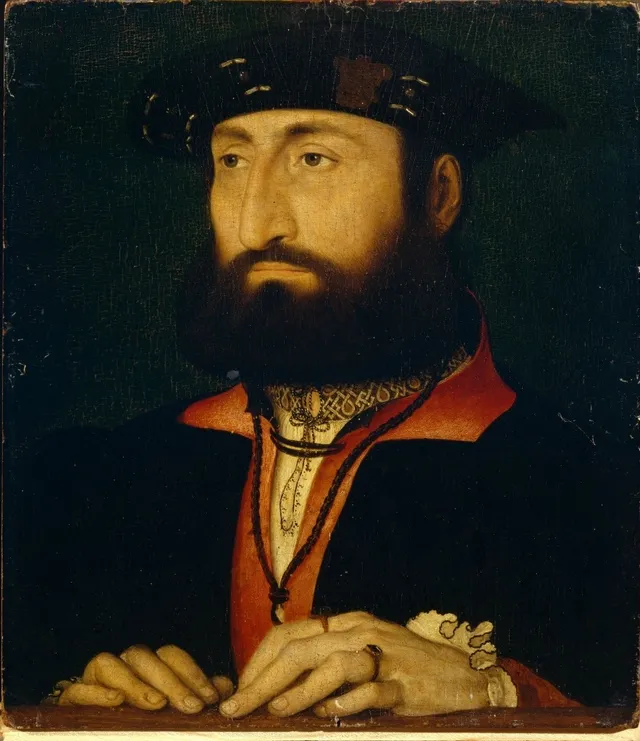
Alongside this courtly Mannerism ran a sober, penetrating tradition of portraiture. Jean Clouet (c. 1485–1540), chief painter to Francis I from 1516, was prized for the delicacy and psychological acuity of his likenesses and preparatory drawings—qualities visible in works such as the *Portrait of Louis de Clèves* held in this collection. His son François Clouet (d. 1572) succeeded him and served three kings, absorbing the modelling of Italian Mannerists like Bronzino; his signed *A Lady in Her Bath* (c. 1571, now in Washington) became the template for a vogue of allegorical bath portraits. Flemish-born artists working in Paris, among them the illuminator and designer Noël Bellemare, also fed the period's cosmopolitan exchange.
The French Renaissance thus bridged late-Gothic France and the grandeur of the Baroque, supplying the decorative vocabulary later codified at the court of Louis XIV. Its synthesis of Italian Mannerism, Northern naturalism, and royal patronage left an enduring imprint on French architecture, portraiture, and the ornamental arts.
Key artists
Works
Frequently asked questions
What is French Renaissance?
French Renaissance is an art movement. The French flowering of Renaissance ideas from the late 15th through early 17th centuries, accelerated by the Italian campaigns of Francis I.
Who are the key French Renaissance artists?
Key French Renaissance artists in the collection include Jean Clouet.
When did French Renaissance take place?
French Renaissance dates from 1500–1700.
Where can I see French Renaissance works?
French Renaissance works in the collection are held by Accademia Carrara.