Artwork
Design for a Burgonet Helmet
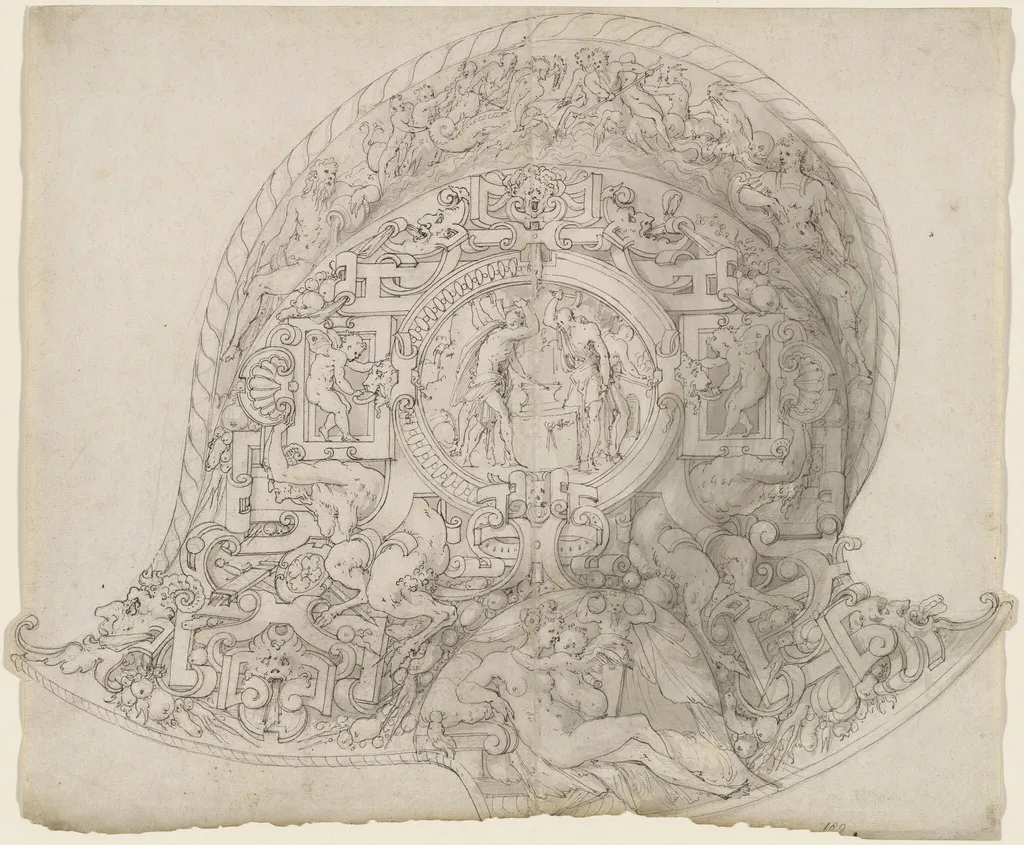
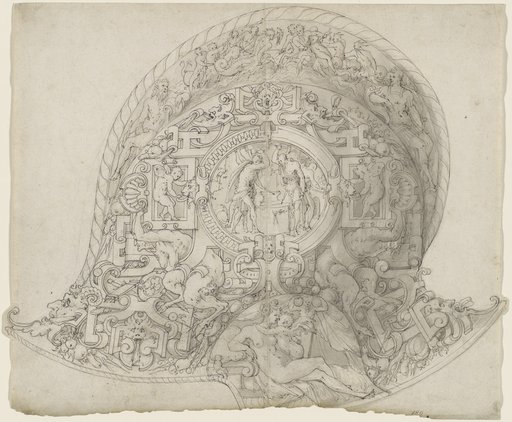
Design for a Burgonet Helmet is an ink drawing by the Renaissance artist Jean Cousin the Elder. It dates from 1545 and is held in the collection of the National Gallery of Art.
- Inscription
- Inscribed:by later hand, lower right in brown ink: 189
About this work
Overview
The work belongs to a tradition of decorative arts planning in Renaissance France, where functional objects were elevated through intricate visual language.
This ink and gray wash drawing on laid paper, dated around 1545, is a preparatory design by Jean Cousin the Elder for a burgonet helmet. Executed with precision, it combines architectural symmetry with elaborate ornamentation, reflecting the artist’s role as both designer and draftsman. The work belongs to a tradition of decorative arts planning in Renaissance France, where functional objects were elevated through intricate visual language.
Subject & Meaning
At the center lies a crowned human face, possibly symbolizing authority or divine protection, encircled by swirling motifs and miniature figures. Surrounding frames contain vegetal tendrils, mythological creatures, and inscribed letters, suggesting allegorical or heraldic intent. The composition merges secular power with symbolic imagery, common in elite armor design, where visual narratives reinforced status and identity.
Technique & Style
Cousin employed pen and black ink with subtle gray washes over a black chalk underdrawing to achieve depth and contrast. Fine lines define intricate patterns, while tonal gradations model forms without full modeling. The precision of the draftsmanship reveals a methodical approach, balancing rhythmic repetition with asymmetrical details to guide the eye across the helmet’s surface.
History & Provenance
The drawing is one of several surviving designs by Cousin the Elder linked to royal and noble armor commissions in mid-16th-century France. Though no matching helmet is known to survive, similar ornamentation appears in contemporary pieces from the French court. Its preservation suggests it was valued as an artistic artifact, not merely a working sketch.
Context
Created during the height of the French Renaissance, the design reflects the era’s fusion of classical motifs with Northern European decorative traditions. Armor was increasingly treated as a canvas for artistic expression, influenced by Italian Mannerism and the humanist fascination with symbolism. Cousin’s work aligns with courtly workshops that blurred lines between fine art and applied design.
Legacy
Cousin’s helmet design remains a rare example of a complete, standalone armor concept from the period. It informs modern understanding of how Renaissance artists engaged with functional objects, elevating craftsmanship to the level of intellectual design. The drawing’s survival underscores the cultural weight placed on visual planning in elite material culture.
Own this work as a print
Artist & collection

- Trophy of arms
 Rib Cages
 Various Sketches of Figures and Plants (verso)
 End elevation of the cenotaph of Akbar. Sikandra.
 Gothic Ornament with a Lady and a Parrot
 The Triumph of Amphitrite
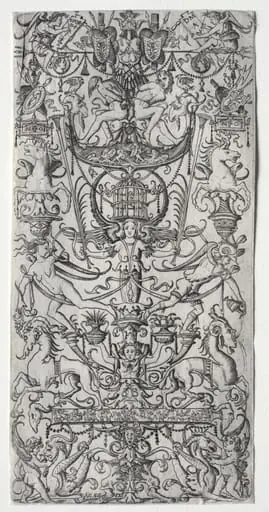 Ornament Panel with a Bird Cage
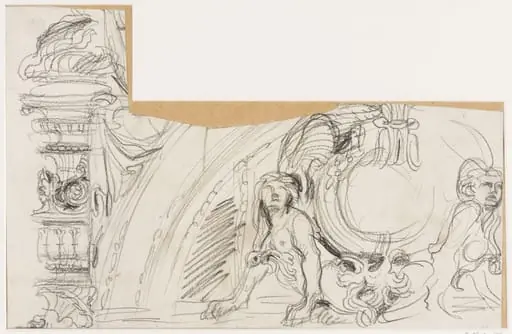 Studies for Dorchester House
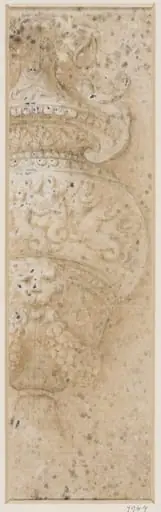 Vase
Vase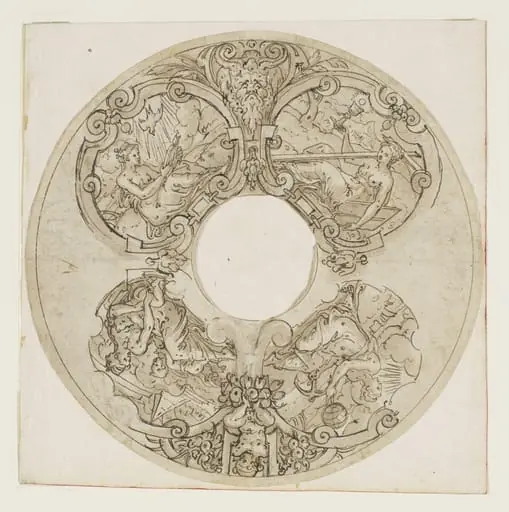 Design for the decoration of the underside of a tazza
 Chinese figures and a Tanka boat
 Figure Studies