Artwork
Nine Figures
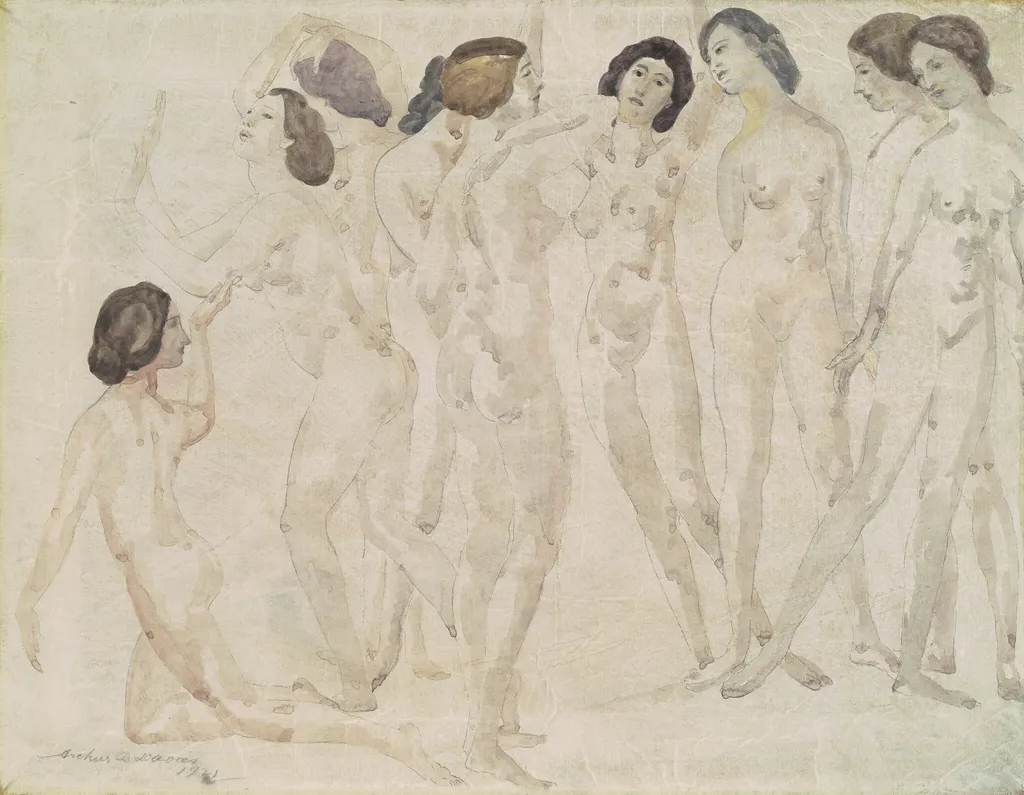
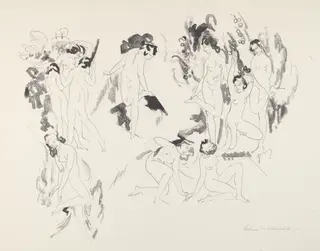
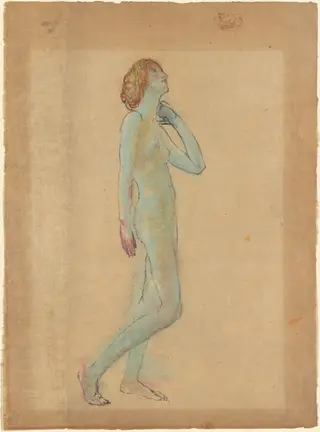
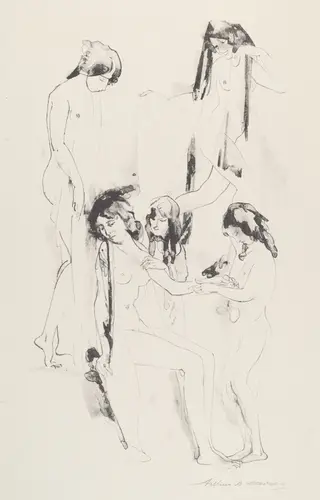
Nine Figures is a graphite drawing by Arthur B. Davies. It dates from 1921 and is held in the collection of the National Gallery of Art.
- Inscription
- Inscribed:lower left in graphite: Arthur B. Davies / 1921
About this work
Overview
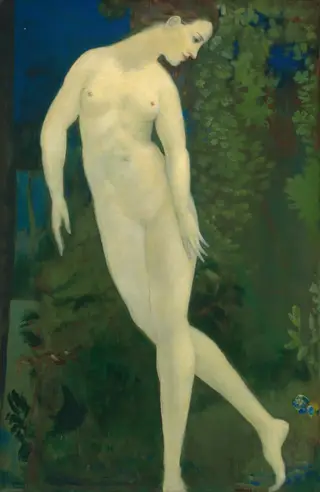
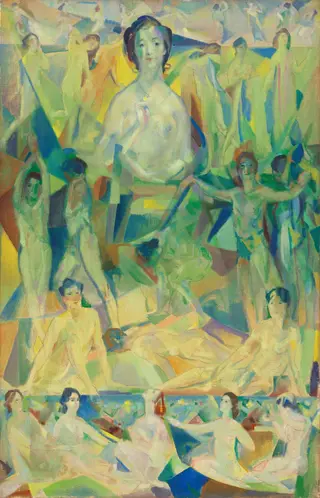
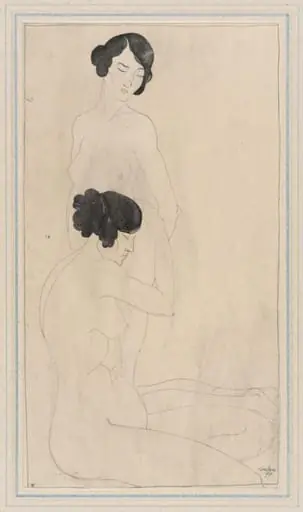
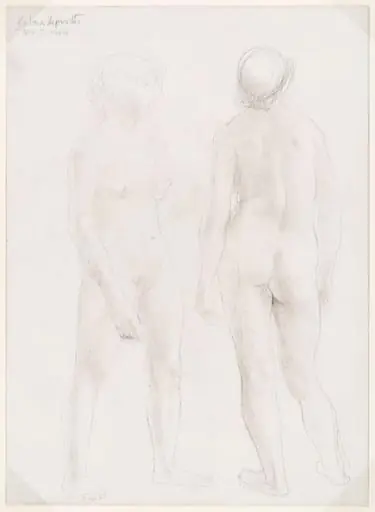
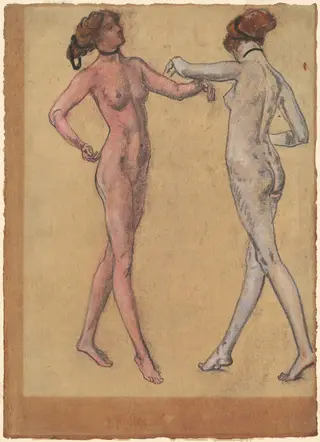
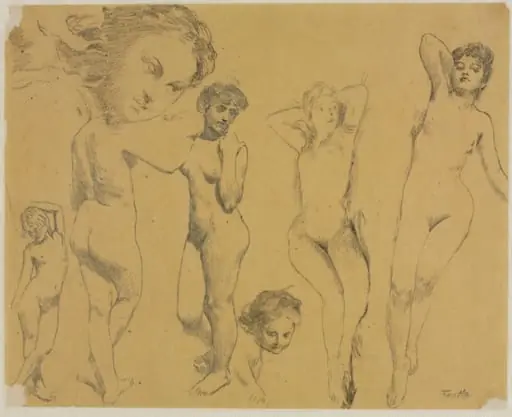
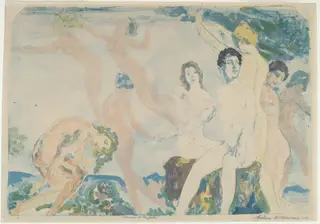
Created in 1921, Nine Figures is a drawing executed with watercolor and graphite on laid paper that has been affixed to a paperboard support. The composition presents a series of nine nude women positioned in a loosely ordered line, some standing, others kneeling or seated, against an unadorned, light‑toned background.
Subject & Meaning
The work focuses on the human form, portraying a range of skin tones and varied hairstyles that suggest individuality within a collective arrangement. By simplifying details and emphasizing silhouette, the artist invites contemplation of the bodies as both distinct entities and components of a unified visual rhythm.
Technique & Style
Davies combined the fluid transparency of watercolor with the precise line work of graphite, applying both to laid paper, a textured surface that lends subtle grain to the image. The figures are rendered with minimal modeling, relying on flat washes of color and restrained shading to convey volume.
History & Provenance
Arthur B. Davies, an American painter active in the early twentieth century, produced the piece during a period when he championed modernist ideas in the United States. The drawing reflects his interest in merging representational content with a stylized, almost decorative approach characteristic of his later output.
Own this work as a print
Artist & collection
Artist
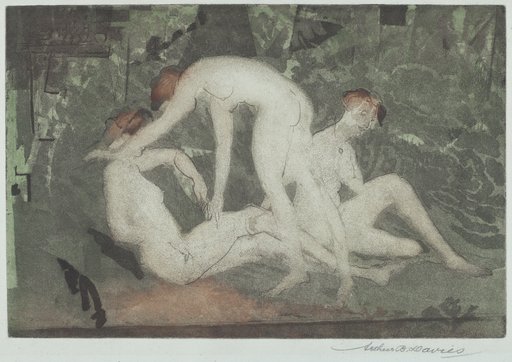
Arthur Bowen Davies (September 26, 1862 – October 24, 1928) was an avant-garde American artist and influential advocate of modern art in the United States c. 1910–1928.