Artwork
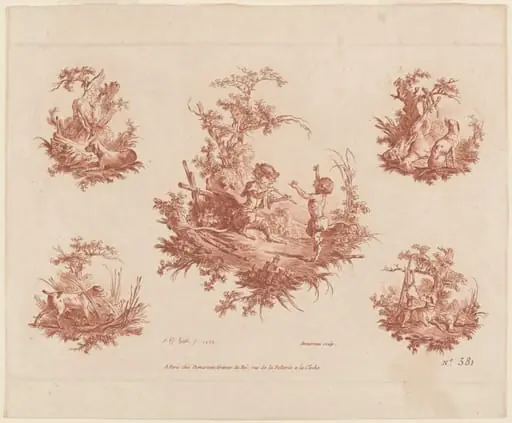
Five Trophies with Themes of Hunting, Love, and Folly
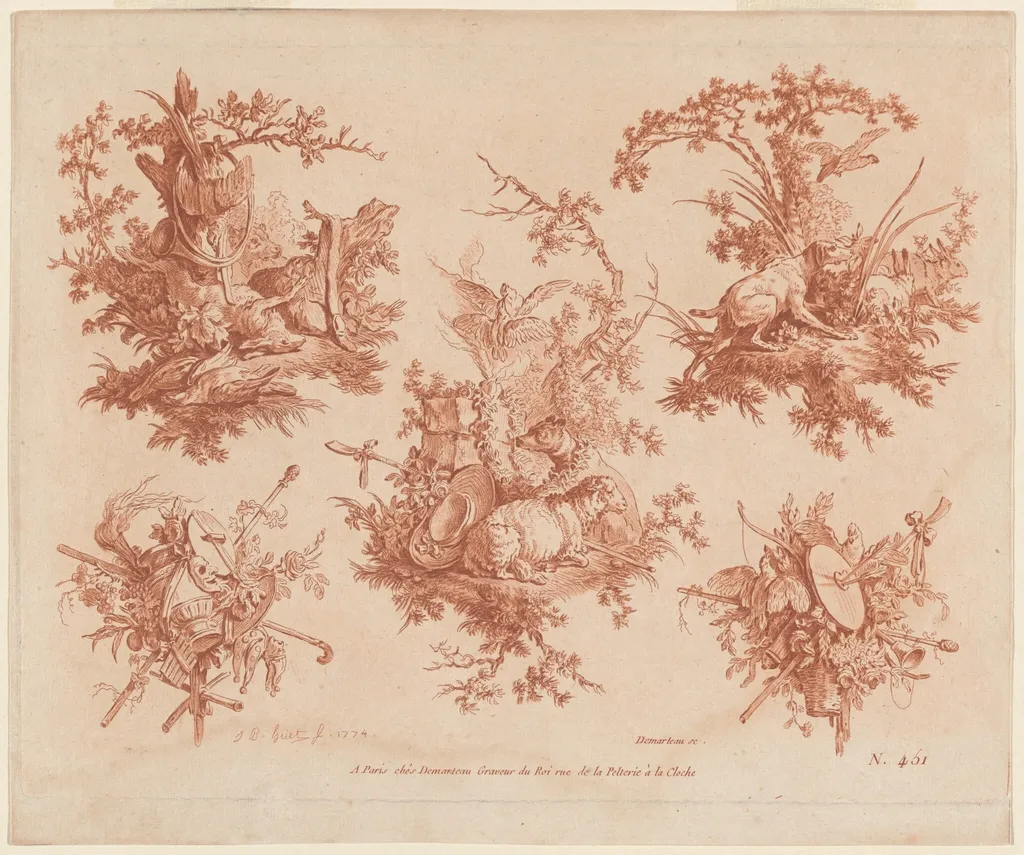
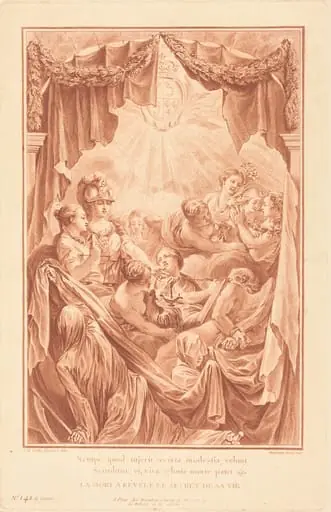
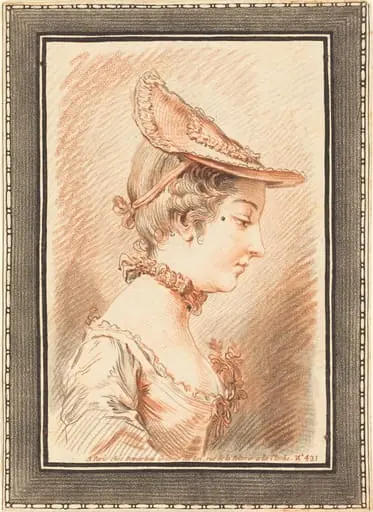
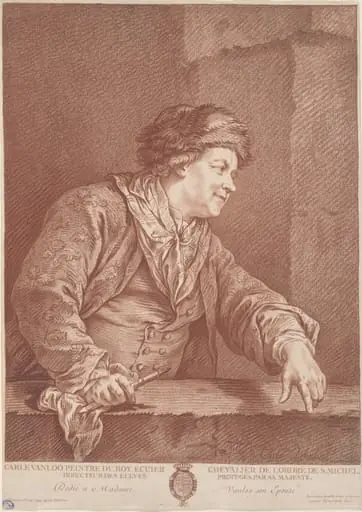
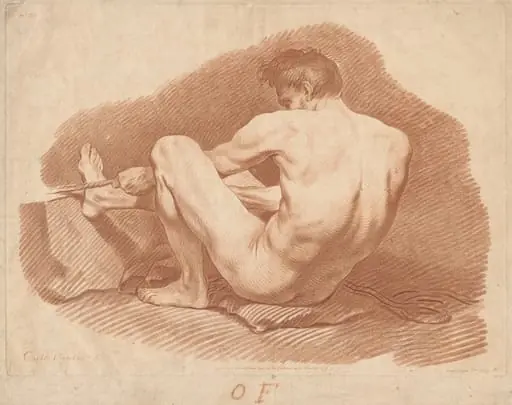
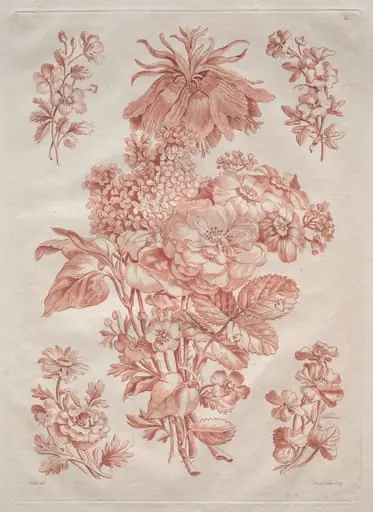
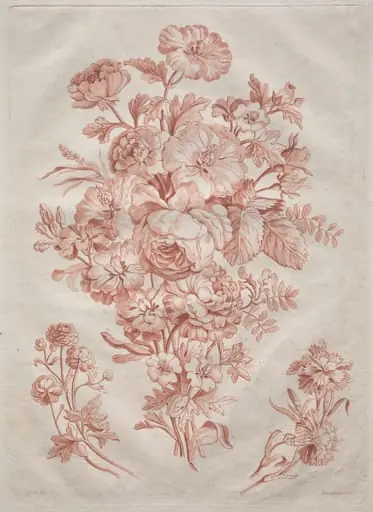
Five Trophies with Themes of Hunting, Love, and Folly is a chalk print by the Baroque artist Gilles Demarteau the Elder. It dates from 1774 and is held in the collection of the National Gallery of Art.
- Inscription
- Inscribed:lower center in plate: J B hüet f. 1774; Demarteau sc. / A Paris chés Demarteau Graveur du Roi rue e la Pelterie à la Cloche; lower right in plate: No. 451
About this work
Overview
Created in 1774 by Gilles Demarteau the Elder, this print titled Five Trophies with Themes of Hunting, Love, and Folly presents a quartet of elongated figures entwined with vines, foliage, and blossoms. Each figure bears a distinct emblem, a hunting horn, a broken column, a lute, and a mask, rendered in a loose, sketch‑like manner that balances ornamental excess with a certain disorder.
Subject & Meaning
The four symbolic objects reference traditional allegorical themes: the horn alludes to the sport of hunting, the broken column suggests the fragility of fame or ambition, the lute evokes music and love, while the mask points to theatrical folly. By grouping these motifs, the work juxtaposes the pursuits of the aristocratic leisure class with the transitory nature of pleasure and reputation.
Technique & Style
The lines are deliberately rough and heavily cross‑hatched, giving the image a tactile, almost improvised quality.
Demarteau employed a traditional copper‑plate etching, incising the design with a needle before applying ink. The lines are deliberately rough and heavily cross‑hatched, giving the image a tactile, almost improvised quality. After printing, a red chalk pigment was pressed onto the paper, providing a uniform sanguine tone that accentuates the vegetal ornamentation and the starkness of the etched outlines.
History & Provenance
The print originates from the late eighteenth‑century French market for decorative prints, a genre in which Demarteau was a prolific producer. While specific ownership records are scarce, the work reflects the period’s taste for allegorical series that could be displayed in salons or collected as part of a broader assemblage of genre prints.
Context
Issued during the Enlightenment, the image aligns with contemporary interests in symbolism and the moralizing potential of art. Its combination of hunting, music, architecture, and theater mirrors the era’s fascination with the four liberal arts and the moral lessons they could convey about virtue, vanity, and the fleeting nature of worldly pursuits.
Own this work as a print
Artist & collection