Artwork
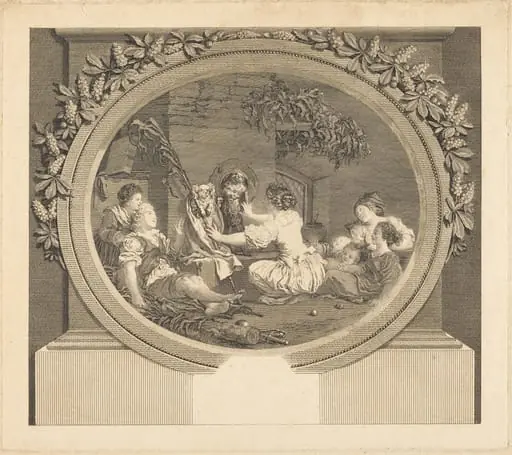
Allegory on the Death of the Dauphin
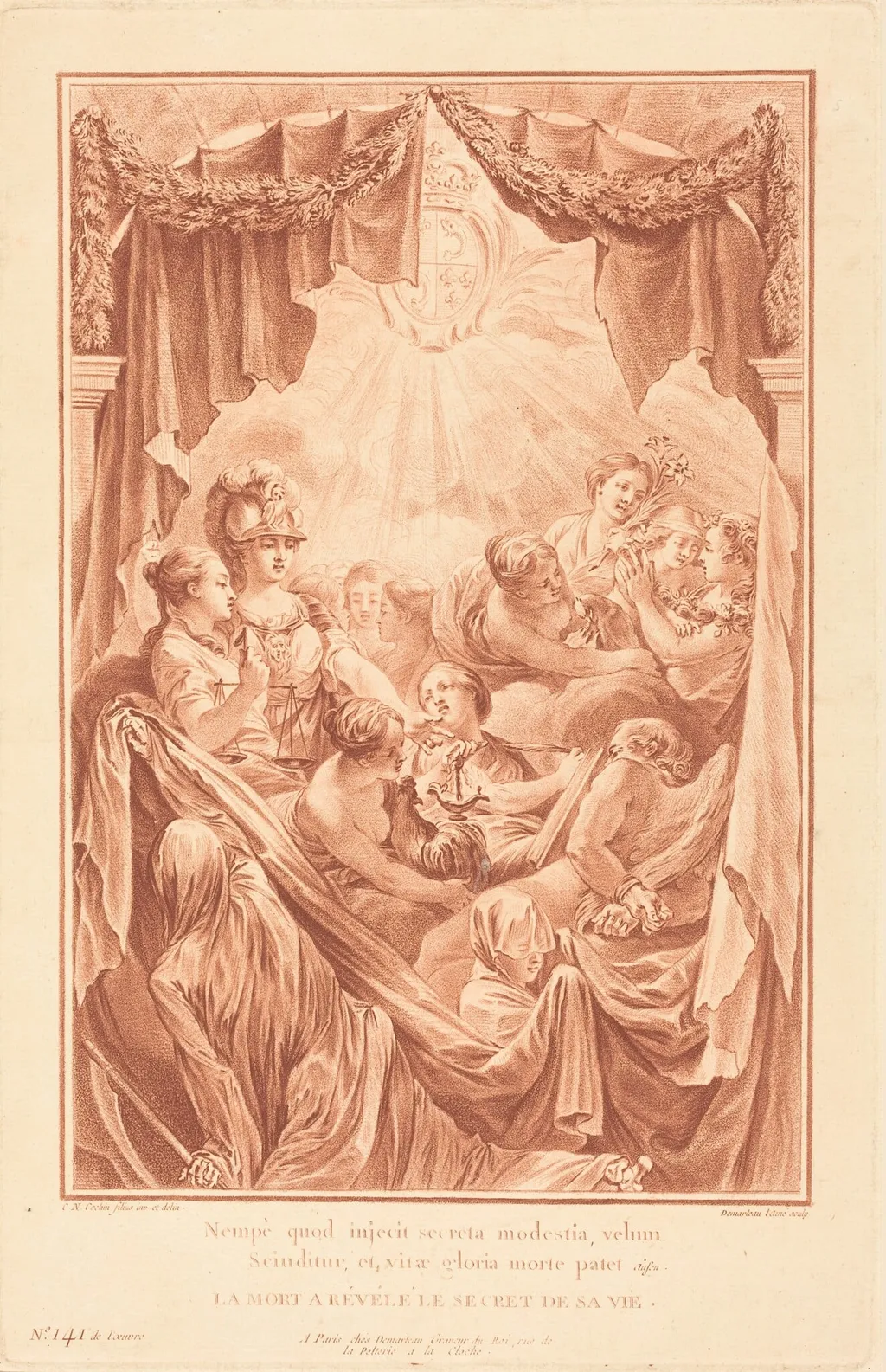
Allegory on the Death of the Dauphin is a chalk print by the Romanticist artist Gilles Demarteau the Elder. It dates from 1767 and is held in the collection of the National Gallery of Art.
- Inscription
- Inscribed:lower left in plate: C.N. Cochin filius inv.et delin.; lower right in plate: Demarteau l'Aine sculp.; across bottom in plate: Nempe quod injecit secreta modestia, velum / Scinditur, et vitae gloria morte patet ausen. / LA MORT A REVELE LE SECRET DE SA VIE.; lower left in plate: No. 141 de l'oeuvre; lower center in plate: A Paris ches Demarteau Graveur du Roi, rue de / la Pelterie a la Cloche.; lower center below plate mark in graphite: Allegorie sur les Vertus et Occupations du Dauphin.; lower center in graphite: rB
About this work
Overview
This 1767 print by Gilles Demarteau the Elder presents an allegorical scene rendered in red-brown chalk manner on laid paper. The composition centers on a group of robed figures gathered around a reclining form, evoking themes of bereavement through expressive gestures and somber tonalities.
Subject & Meaning
The scene commemorates the death of the Dauphin, heir to the French throne. Female figures in classical drapery display varied postures of sorrow, with one prominently clasping the hand of the deceased. Their grief-stricken expressions underscore the gravity of the loss, framing mortality as a shared human experience.
Technique & Style
Demarteau employed the chalk-manner technique, a reproductive printmaking method designed to emulate the soft, blended effects of red or black chalk drawings. The use of chiaroscuro, contrasting light and shadow, heightens the emotional weight of the scene while lending spatial depth to the figures.
History & Provenance
Created in 1767, the print responds to the passing of Louis, Dauphin of France, who died earlier that year. As a reproductive work, it likely derived from a drawing or painting, though its specific model remains unidentified. Its survival in collections reflects its role in eighteenth-century commemorative print culture.
Context
The work emerges from a period when allegorical prints served both private mourning and public memorialization. The Dauphin’s death resonated deeply in court circles, prompting artistic responses that blended classical symbolism with contemporary grief. Such prints circulated among elites, reinforcing dynastic continuity amid personal tragedy.
Own this work as a print
Artist & collection


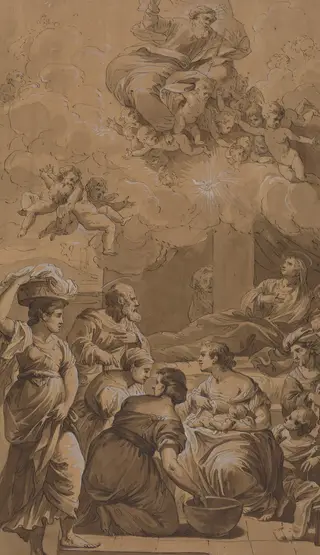 Birth of the Virgin
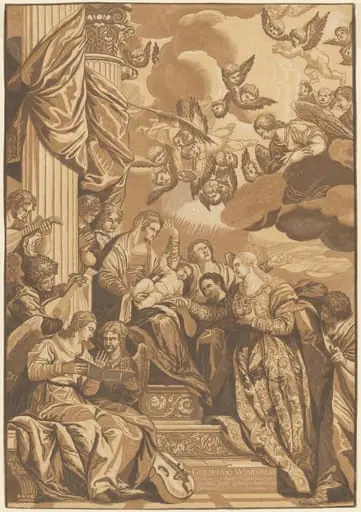 Mystic Marriage of St. Catherine
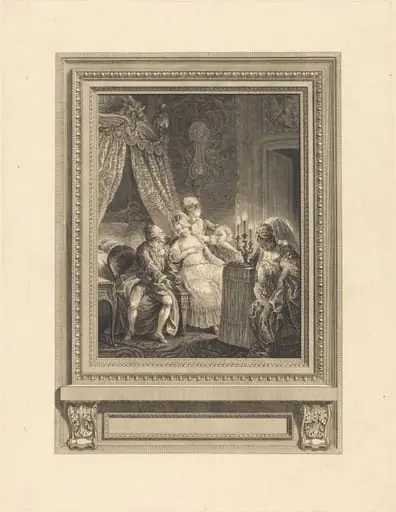 La nuit
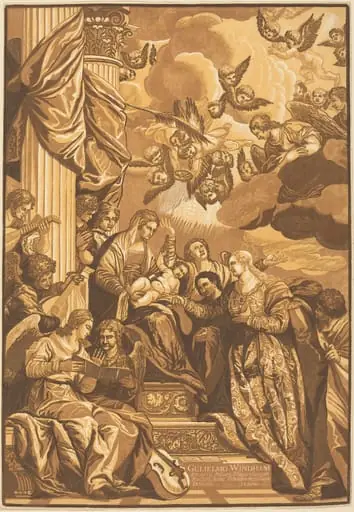 The Mystic Marriage of Saint Catherine
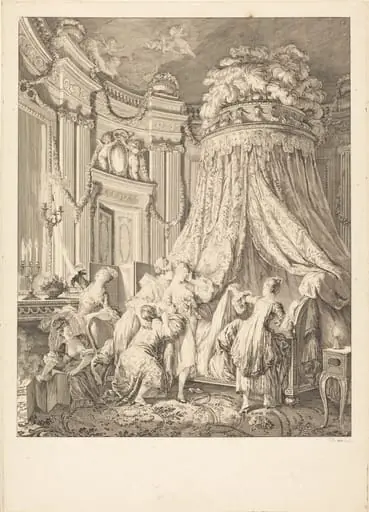 Le couché de la mariée
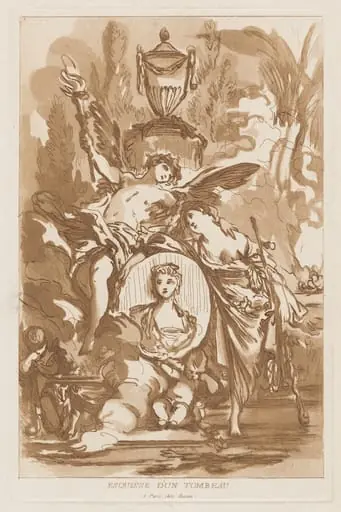 Esquisse d’un tombeau (Sketch for a Tomb)
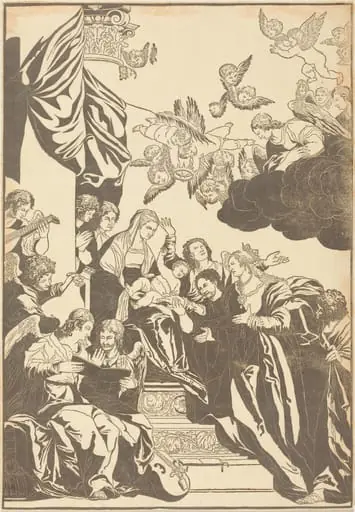 The Mystic Marriage of Saint Catherine
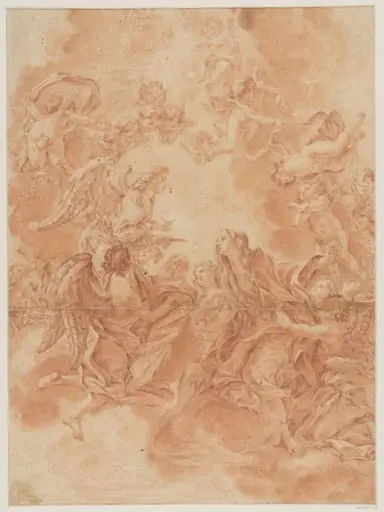 The Communion of St Mary Magdalene
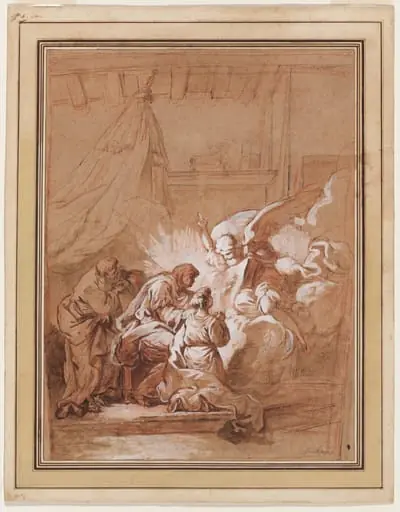 The Education of the Virgin
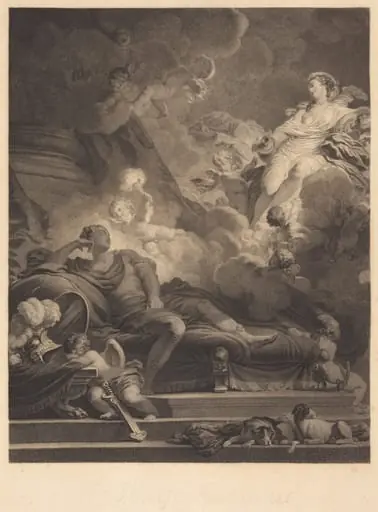 Le Songe d'Amour (Love's Dream)
 L'Education fait tout
- Allegory in Honor of Henri IV