Artwork
Skating Masquerade, or Carnival on Ice at the Kipdorppoort Moats in Antwerp
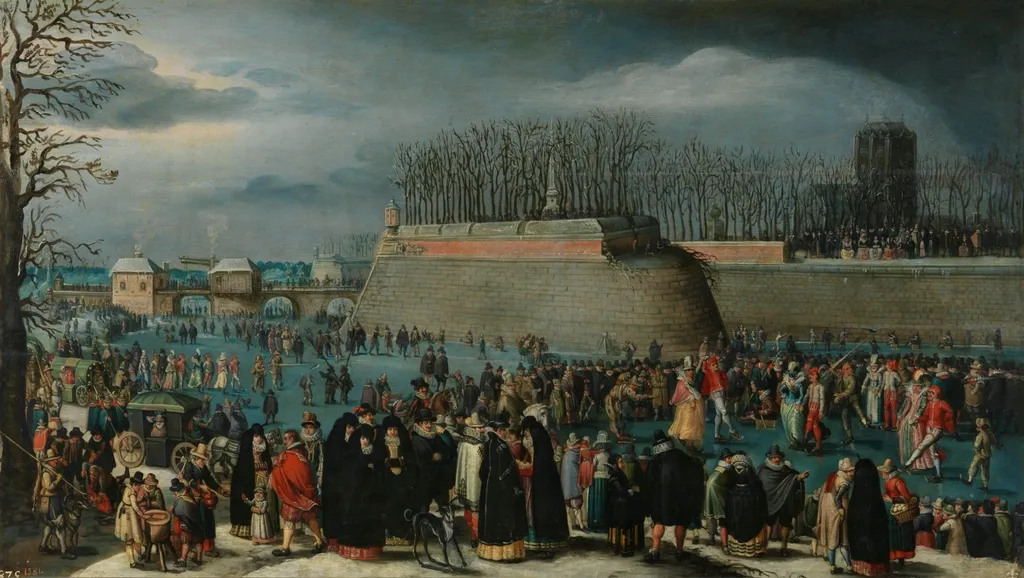
Skating Masquerade, or Carnival on Ice at the Kipdorppoort Moats in Antwerp is an oil painting by the Dutch Golden Age artist Denis van Alsloot. It dates from 1620 and is held in the collection of the Museo del Prado.
About this work
Subject & Meaning
The painting shows a festive winter scene on the frozen Kipdorpbrug in Antwerp, where masked figures and onlookers partake in ice skating amid carnival revelry.
The painting shows a festive winter scene on the frozen Kipdorpbrug in Antwerp, where masked figures and onlookers partake in ice skating amid carnival revelry. Its depiction of a masked procession on ice evokes the seasonal celebrations and symbolic inversion of social order typical of 17th‑century Flemish carnival imagery. The work reflects contemporary aristocratic enjoyment of public spectacles and the transitory nature of such festivities, linking leisure activity with elite patronage during the Spanish Habsburg period. The scene’s lively composition underscores themes of communal celebration and the ephemeral pleasures of winter carnivals.
The iconography of masks, carriages, and frozen waterways conveys both literal recreation and allegorical commentary on the fleeting nature of joy and the power of spectacle within elite culture. The painting’s provenance among Spanish monarchs highlights its significance as a diplomatic and artistic treasure, reinforcing its representation of cultural exchange between the Low Countries and the Spanish court.
The work’s meaning extends to a broader commentary on the role of leisure in early modern society, where ice skating served as a visual metaphor for social harmony and the transitory pleasures enjoyed by the privileged. Its presence in royal collections underscores its status as a symbol of refined taste and the capacity of art to capture and preserve fleeting moments of collective celebration.
Technique & Style
The work is executed in oil paint on panel, a support combination typical of Flemish cabinet pictures of the early seventeenth century. Measuring 57 by 100 centimeters, the painting adopts a horizontal landscape format suited to its panoramic winter scene. Its genre is landscape, populated with figures engaged in ice skating, a carriage, and a masquerade party set near the Kipdorpbrug.
The composition reflects Denis van Alsloot's characteristic winter landscape manner, in which a low horizon and broad expanse of ice are animated by crowds of skaters and festive activity.
History & Provenance
The work was painted in 1620 by Denis van Alsloot, likely on commission for the Spanish royal collection during the early seventeenth century. It entered the holdings of the Spanish monarchy under Philip V, recorded among royal possessions under his reign. Subsequent inventories list the painting as part of the collection of Elisabeth Farnese.
By the early nineteenth century the work was inventoried in the Royal Palace of Aranjuez, where it remained in the Spanish royal collection. In 1819 it was transferred to the Museo del Prado’s storage at the Royal Palace of La Granja de San Ildefonso, later moving to the Prado’s main site.
Skating Masquerade, or Carnival on Ice at the Kipdorppoort Moats in Antwerp is held in the collection of the Museo del Prado in Madrid. The painting, an oil on panel measuring 57 by 100 cm, is associated with the royal Spanish holdings and has been recorded as owned by a succession of Spanish monarchs, including Philip V of Spain, Elisabeth Farnese, Charles III of Spain, and Ferdinand VII of Spain. Beyond its current location at the Museo del Prado, the work is also linked to the Royal Palace of Aranjuez and the Royal Palace of La Granja de San Ildefonso, suggesting it was historically displayed across multiple royal residences before entering the museum's collection.
Legacy
The painting influenced later representations of winter festivities in European art, particularly in 17th‑century Flemish genre scenes that emphasized communal leisure on frozen waterways. Its depiction of elaborate masquerade alongside ice skating was cited in 19th‑century art historical surveys as an early example of combining narrative spectacle with topographical detail, shaping scholarly interpretations of festive landscapes. The work's inclusion in royal Spanish collections contributed to its dissemination and reinforced the prestige of such seasonal subjects in courtly patronage.
Overview
Created in 1620 by the Flemish painter Denis van Alsloot, this oil on canvas captures a winter celebration on the frozen moats of the Kipdorppoort in Antwerp. The composition presents a bustling crowd gathered on the ice, surrounded by the city’s brick walls and a distant bridge, under a cloudy sky that hints at the season’s chill.
Context
Van Alsloot, known for documenting local festivals and ceremonies, often depicted the interplay between urban settings and natural elements. This painting situates the festive ice‑skating tradition within the specific topography of Antwerp’s defensive moats, illustrating how public celebrations were integrated into the city’s infrastructure.
Artist & collection
Artist
Denis van Alsloot or Denijs van Alsloot (c. 1570 – c. 1626) was a Flemish landscape and genre painter, draughtsman, and tapestry designer. He was employed as a court painter and worked for the local elite in Brussels.…

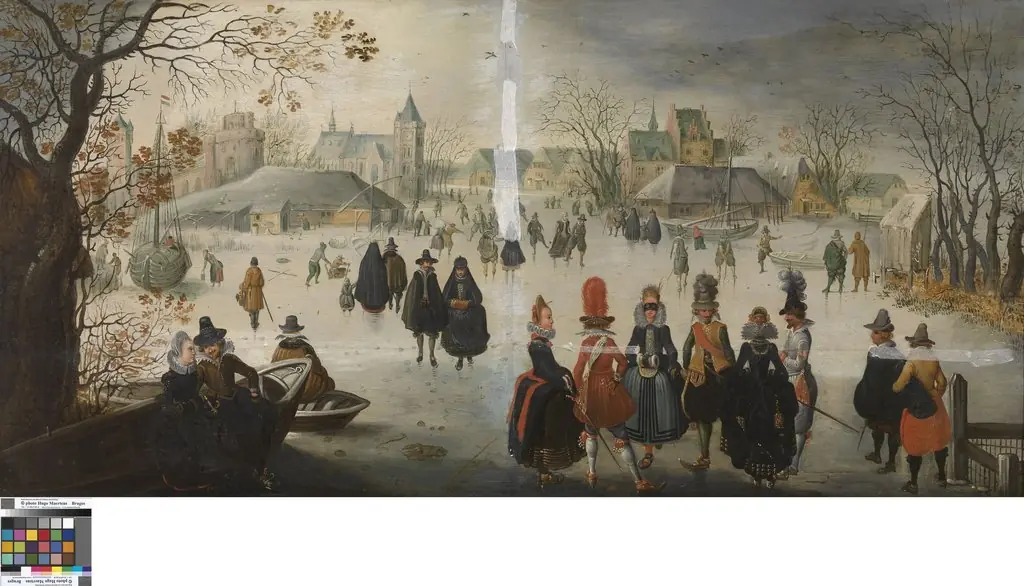 winter landscape with skating
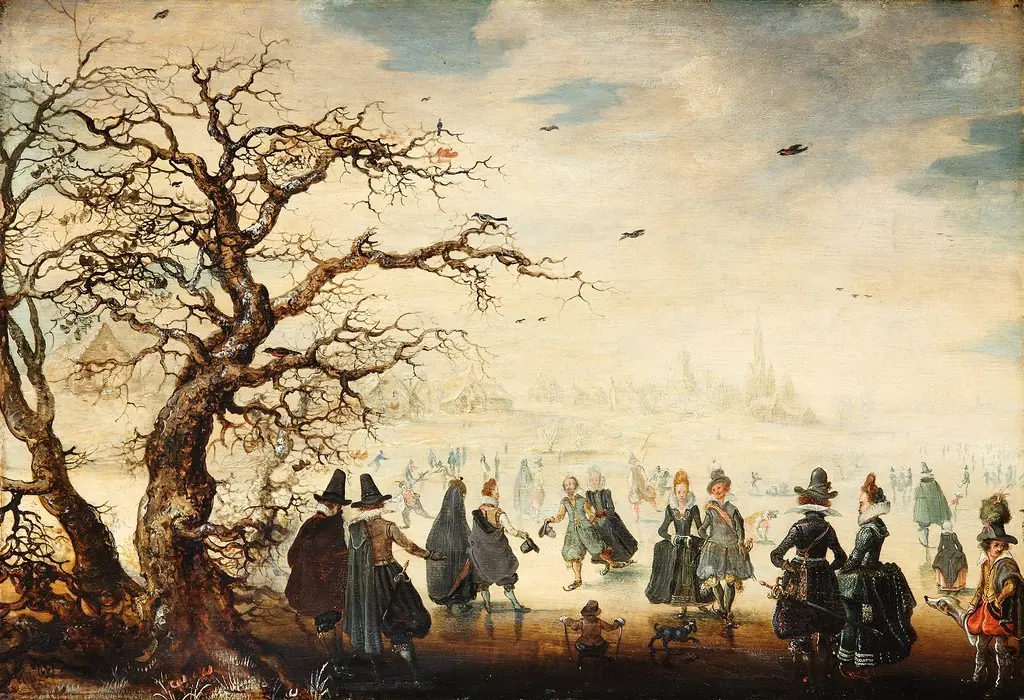 Winter landscape with elegant figures ice-skating
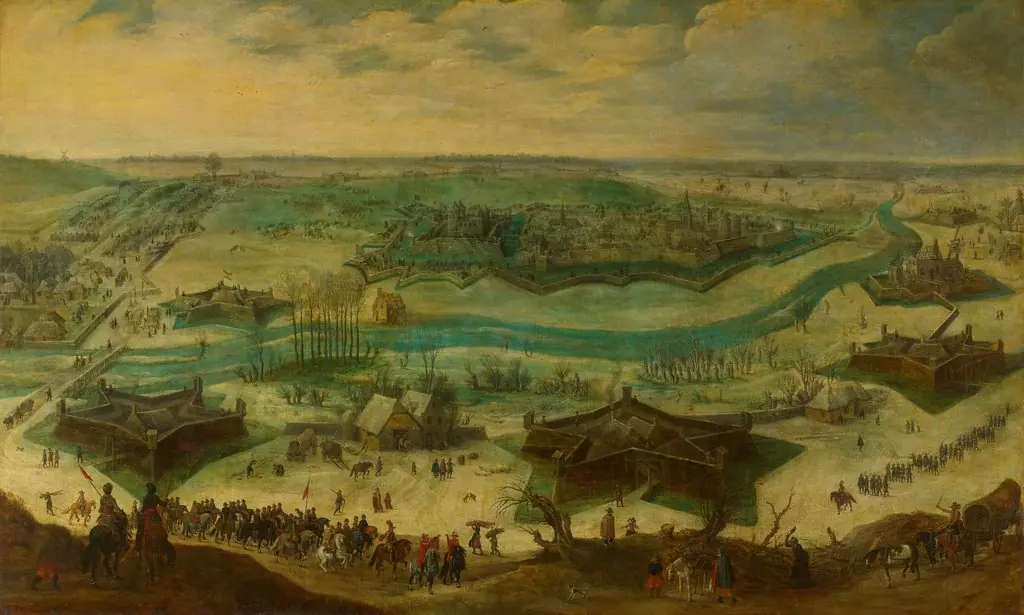 A siege of a city, thought to be the siege of Gulik by the Spanish under the command of Hendrik van den Bergh, 5 September 1621-3 February 1622
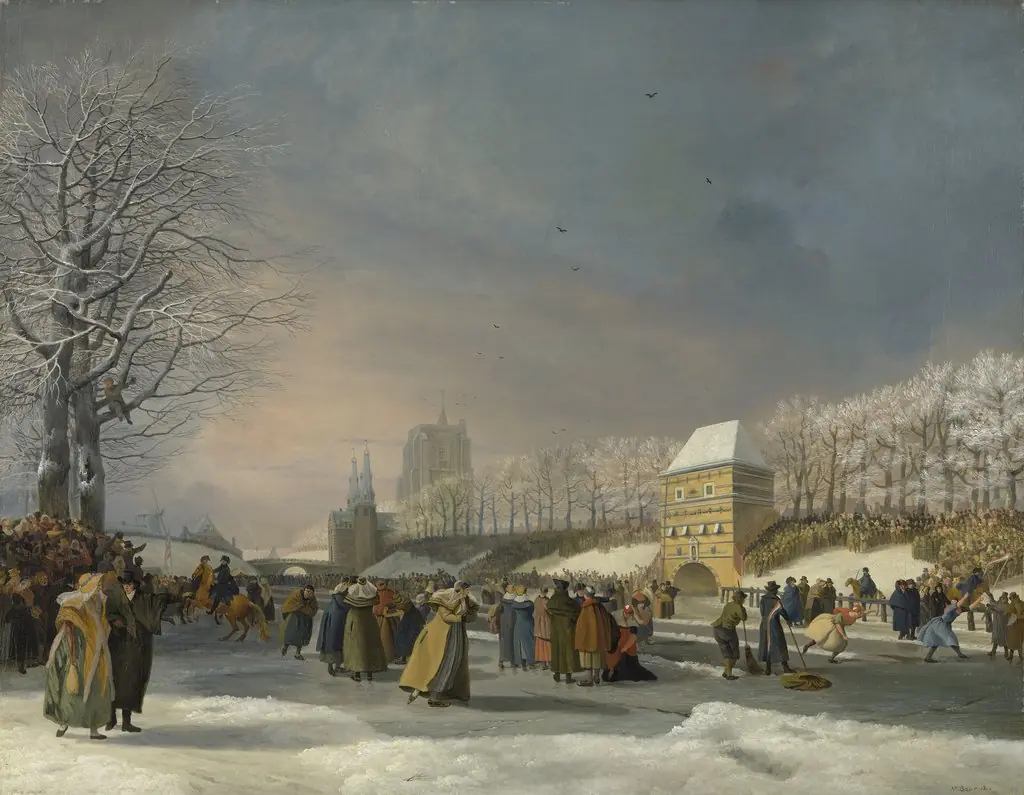 Women’s Skating Competition on the Stadsgracht in Leeuwarden, 21 January 1809
 A Feast in an Italian Villa
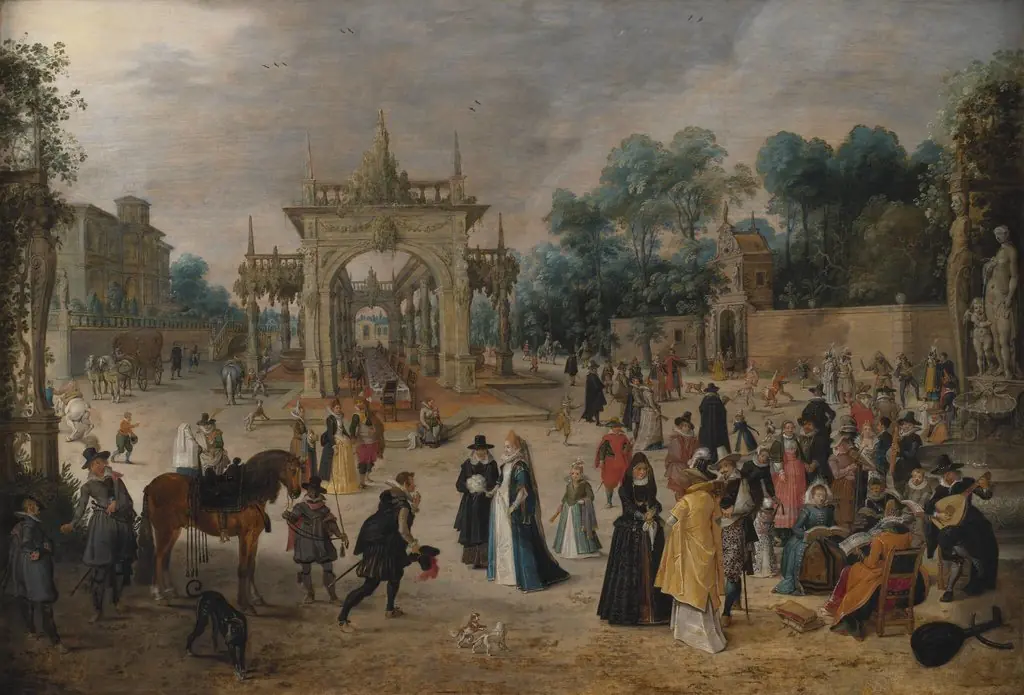 A Feast in an Italian Villa
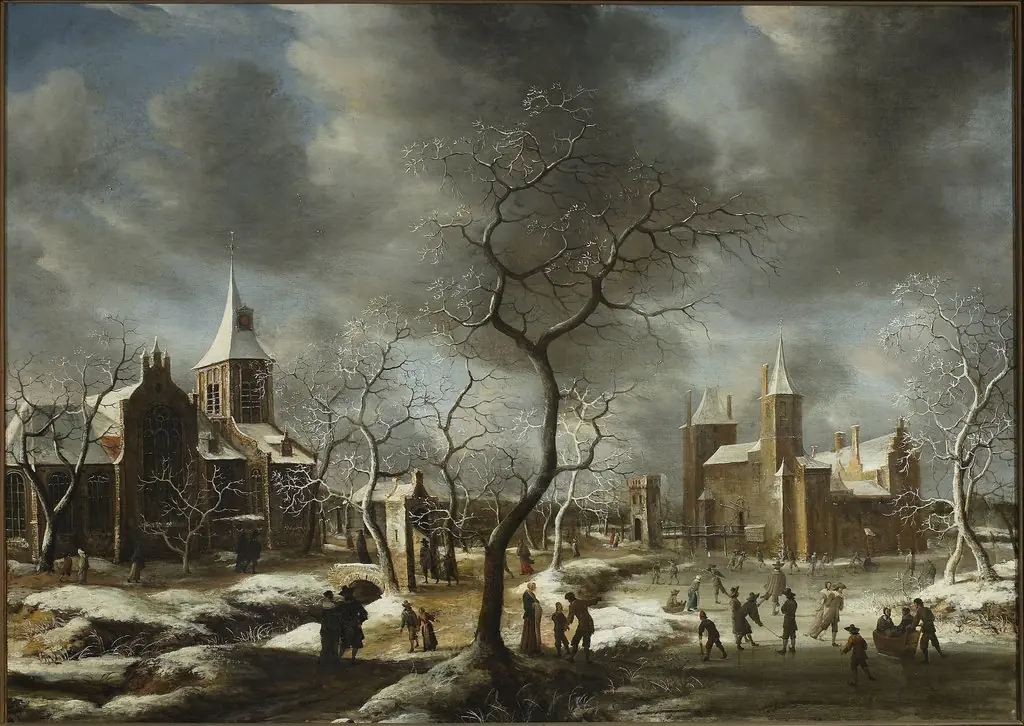 Landscape with ice-skaters
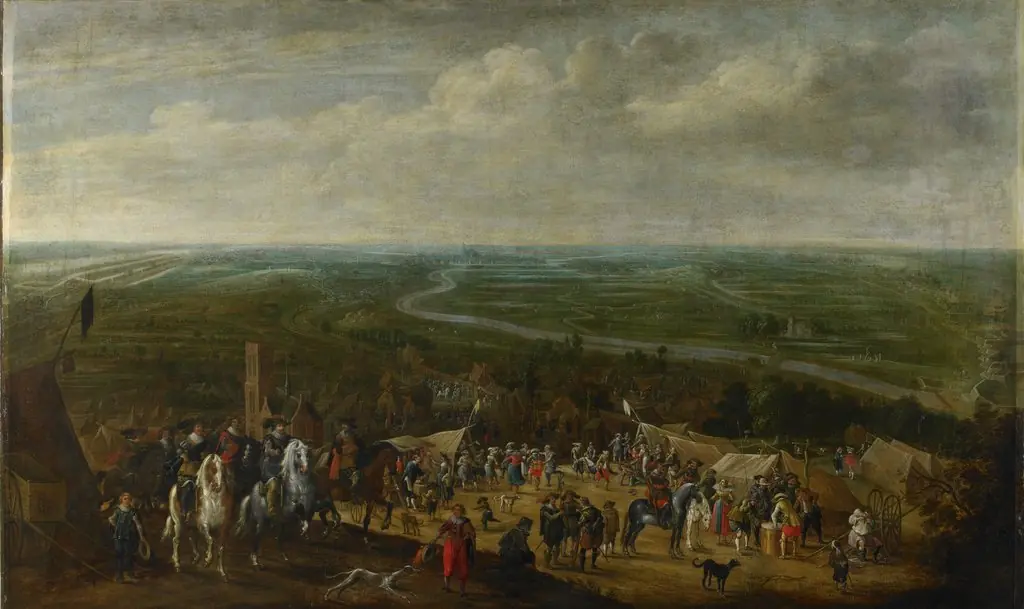 Prince Frederik Hendrik at the siege of 's-Hertogenbosch, 1629
 Sitio de Ostende