Artwork
A siege of a city, thought to be the siege of Gulik by the Spanish under the command of Hendrik van den Bergh, 5 September 1621-3 February 1622
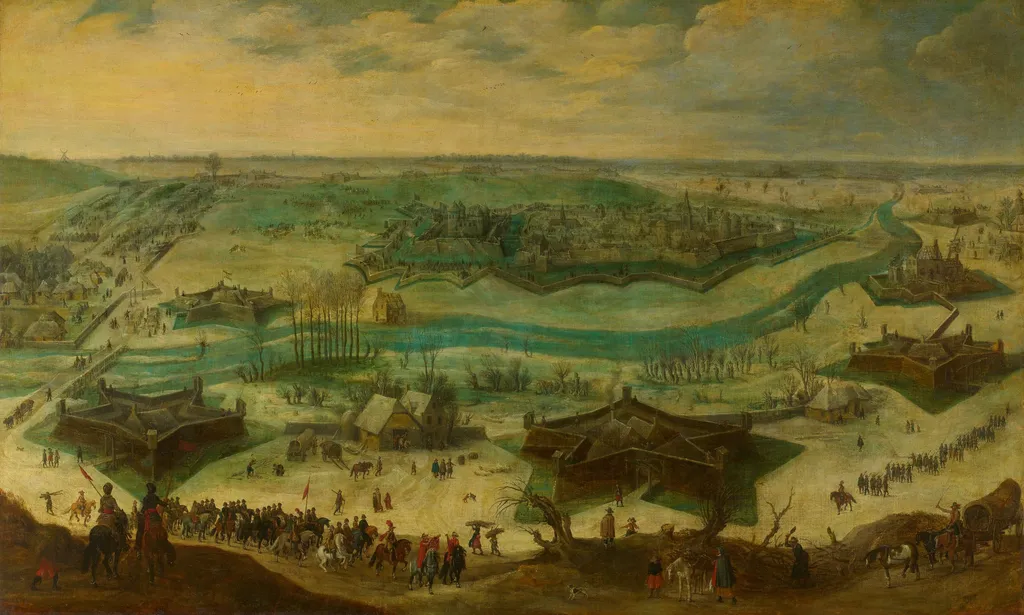
A siege of a city, thought to be the siege of Gulik by the Spanish under the command of Hendrik van den Bergh, 5 September 1621-3 February 1622 is an oil painting by the Flemish Baroque painting artist Peter Snayers. It dates from 1650 and is held in the collection of the Rijksmuseum.
About this work
Subject & Meaning
As a history painting created by Peter Snayers in 1650, the work functions as a visual record of this historical event.
The painting depicts a military siege of a city, specifically identified as the siege of Gulik (Jülich) conducted by Spanish forces under the command of Hendrik van den Bergh between September 1621 and February 1622. As a history painting created by Peter Snayers in 1650, the work functions as a visual record of this historical event. The composition incorporates landscape elements typical of the genre, featuring structures such as houses and bridges alongside natural features like trees to establish the setting of the conflict.
Rendered in oil on canvas, it represents the strategic environment of the siege and the fortified nature of the targeted city within the broader context of the Eighty Years' War.
Technique & Style
Executed in 1650, this history painting by Peter Snayers is rendered in oil paint on a canvas support. The work measures 144 cm in height and 236 cm in width. Produced in Antwerp, the composition depicts a landscape setting featuring architectural elements such as houses and bridges, alongside natural features like trees, which frame the military subject matter.
History & Provenance
The painting was created by Peter Snayers around 1650 in Antwerp. It entered the collection of the Rijksmuseum in Amsterdam, where it remains held today, catalogued as a depiction of the Siege of Jülich (Gulik) by Spanish forces led by Hendrik van den Bergh in 1621–1622, though the painting itself was executed decades after the event. It is executed in oil on canvas and measures 144 cm in height by 236 cm in width.
The provided sources do not list a specific inventory or accession number, nor do they document the work's provenance prior to the 19th century or any exhibition history.
Context
The work presents a city under siege, likely representing the Spanish assault on Gulik commanded by Hendrik van den Bergh between 5 September 1621 and 3 February 1622. Executed in oil on canvas in 1650 in Antwerp, it belongs to the history painting genre within Peter Snayers' oeuvre. The painting is housed in the Rijksmuseum collection, where it is catalogued alongside other works by Snayers that document contemporary military events.
Its placement within 17th-century Northern European martial imagery reflects the role of visual imagery in documenting the conflicts of the era.
Overview
Peter Snayers, a Flemish artist active in the early‑mid‑17th century, painted this oil work around 1650. It presents a sprawling siege scene, with a frozen river bisecting the composition, a fortified town in the distance, and a multitude of figures, soldiers, cavalry, and wagons, crowding the foreground.
Own this work as a print
Artist & collection
Artist
Peter Snayers or Pieter Snayers (1592–1667) was a Flemish painter known for his panoramic battle scenes, depictions of cavalry skirmishes, attacks on villages, coaches and convoys and hunting scenes.

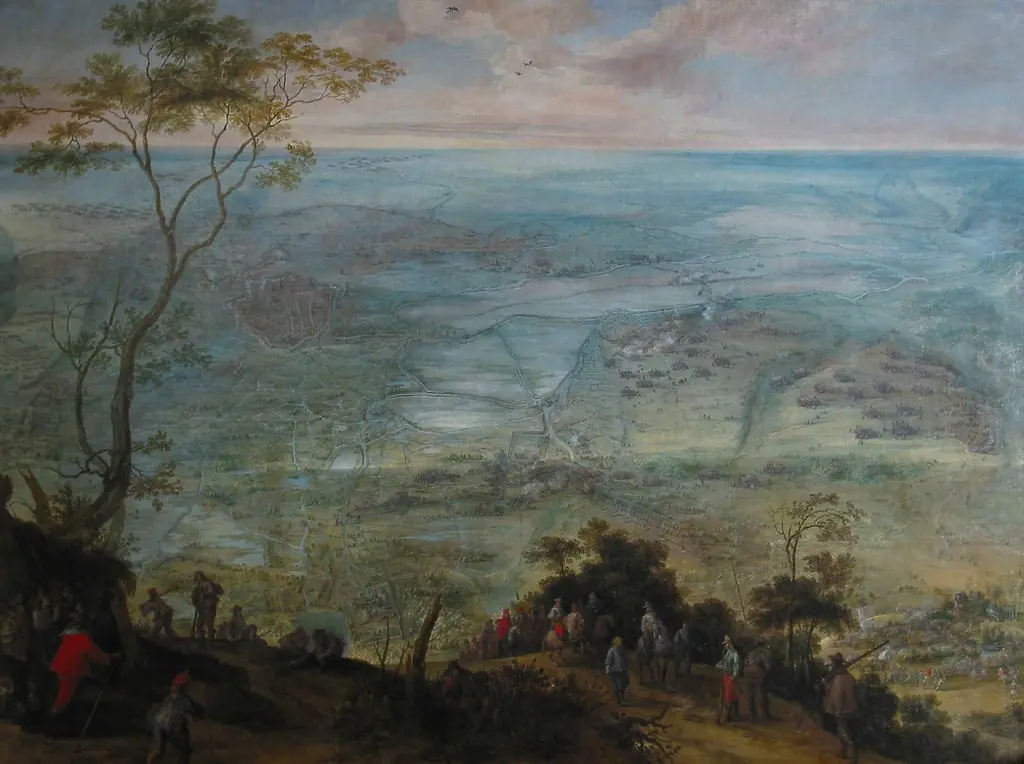 Relief from Saint-Omer, 12 July 1638
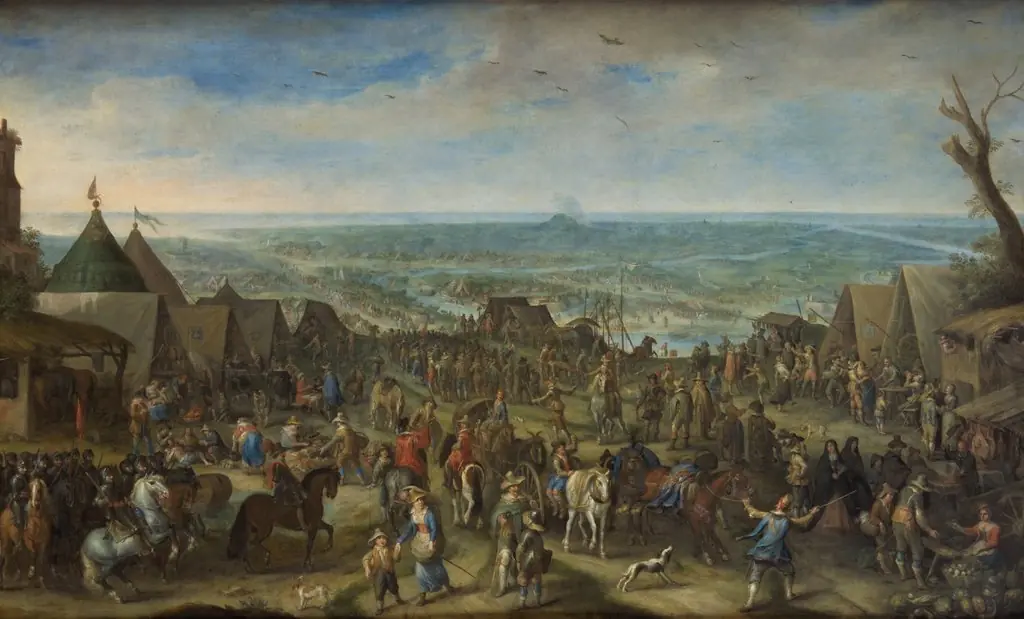 Field camp
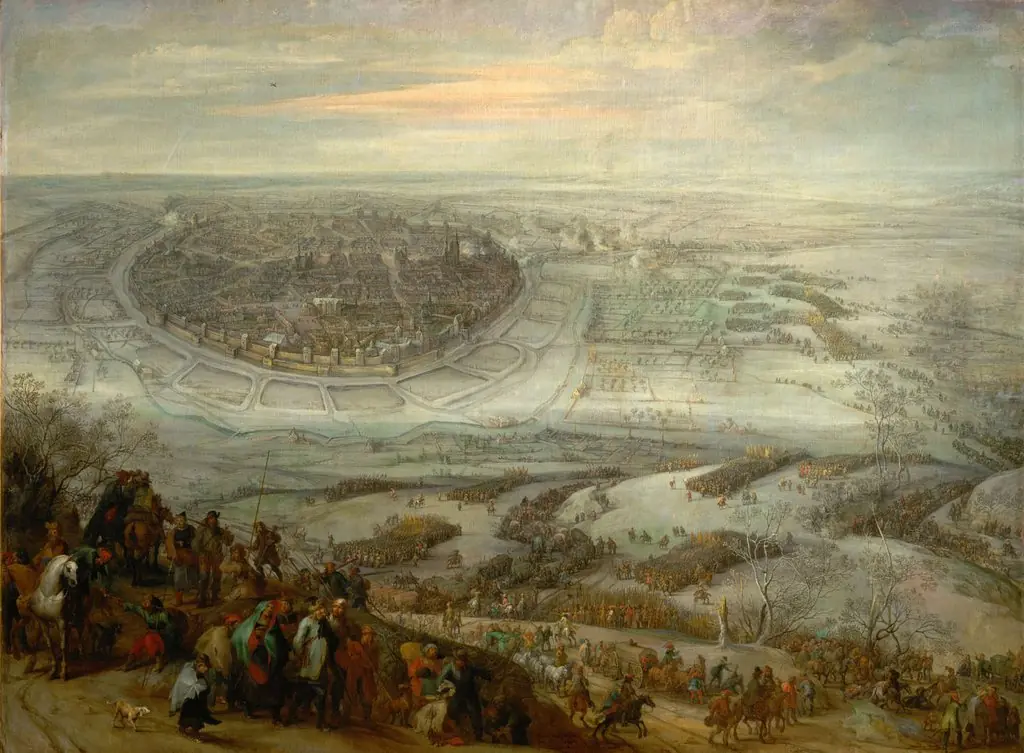 The Relief of Meissen
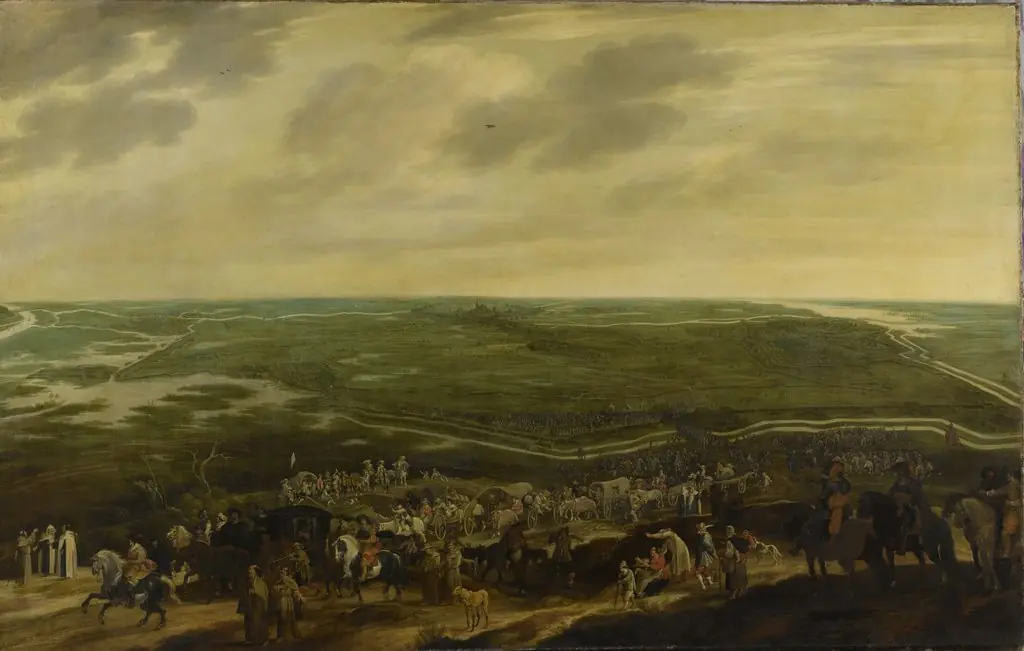 The defeated Spanish garrison leaving 's-Hertogenbosch, 17 September 1629
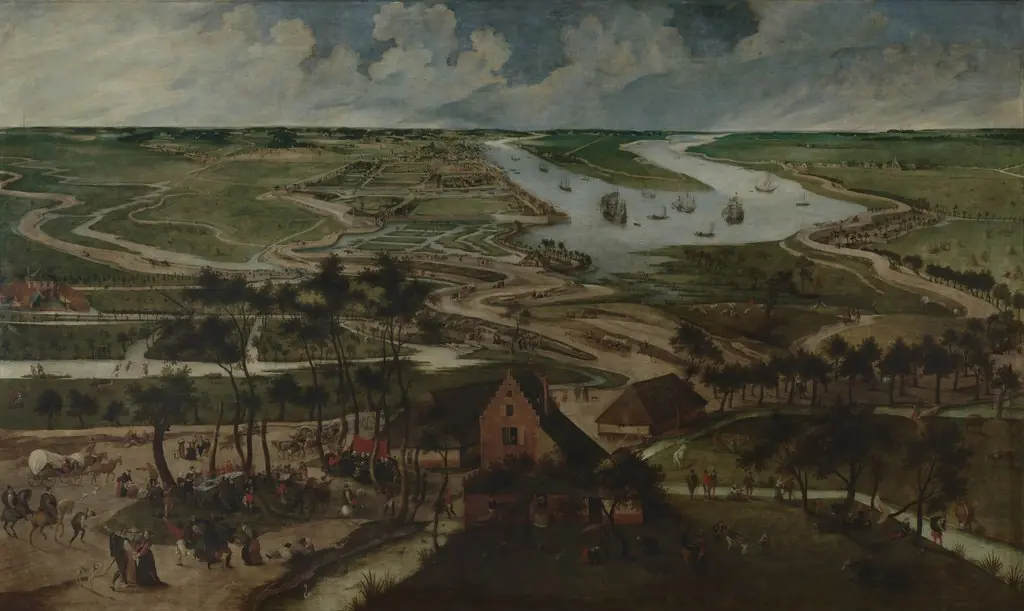 The Eel Huts in the Antwerp Polder outside the Lillo or Slijk Gate
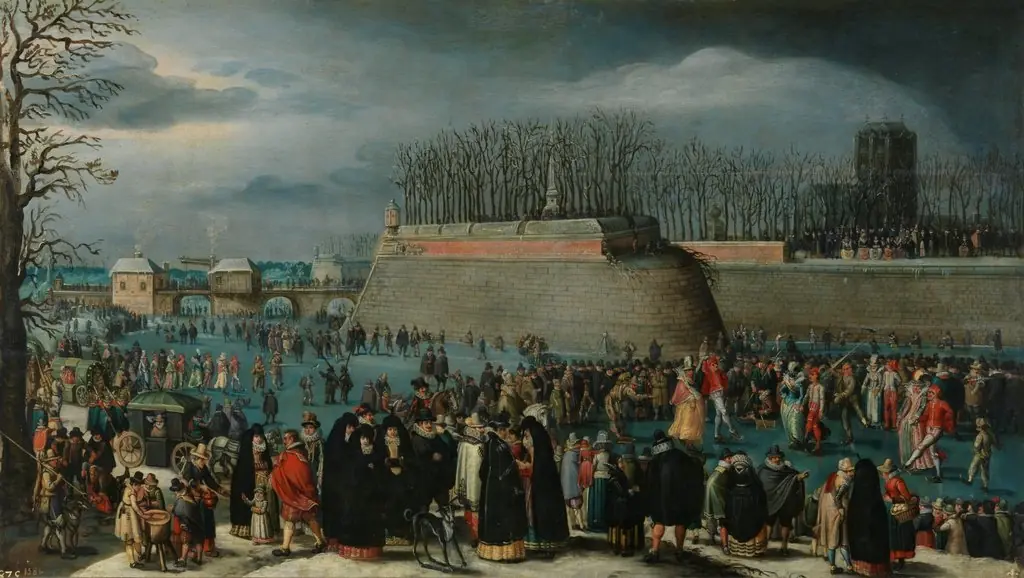 Skating Masquerade, or Carnival on Ice at the Kipdorppoort Moats in Antwerp
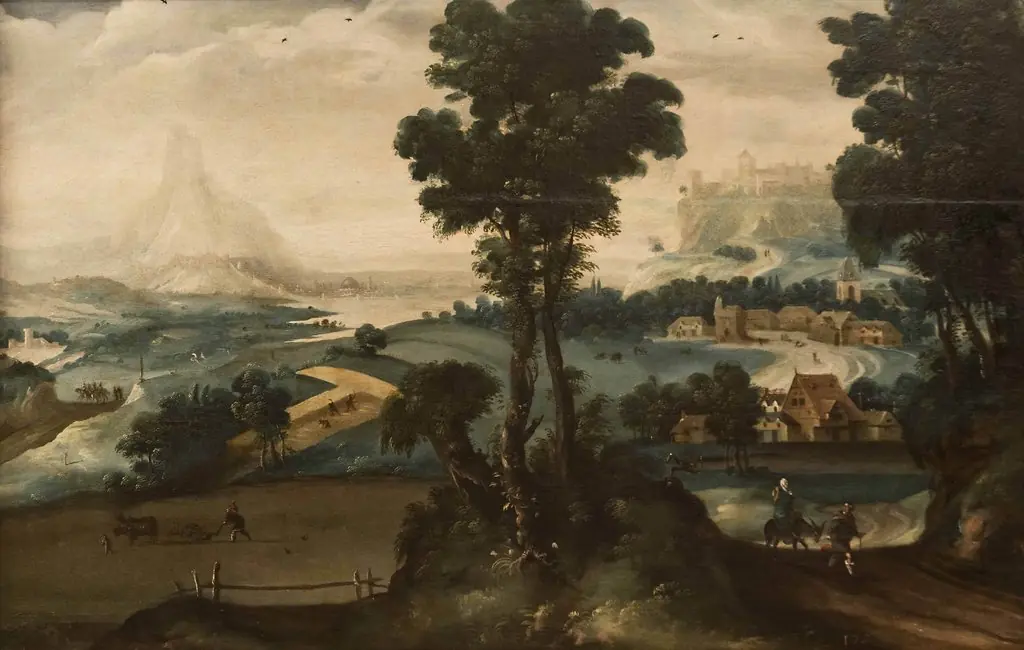 Landscape with The Flight into Egypt
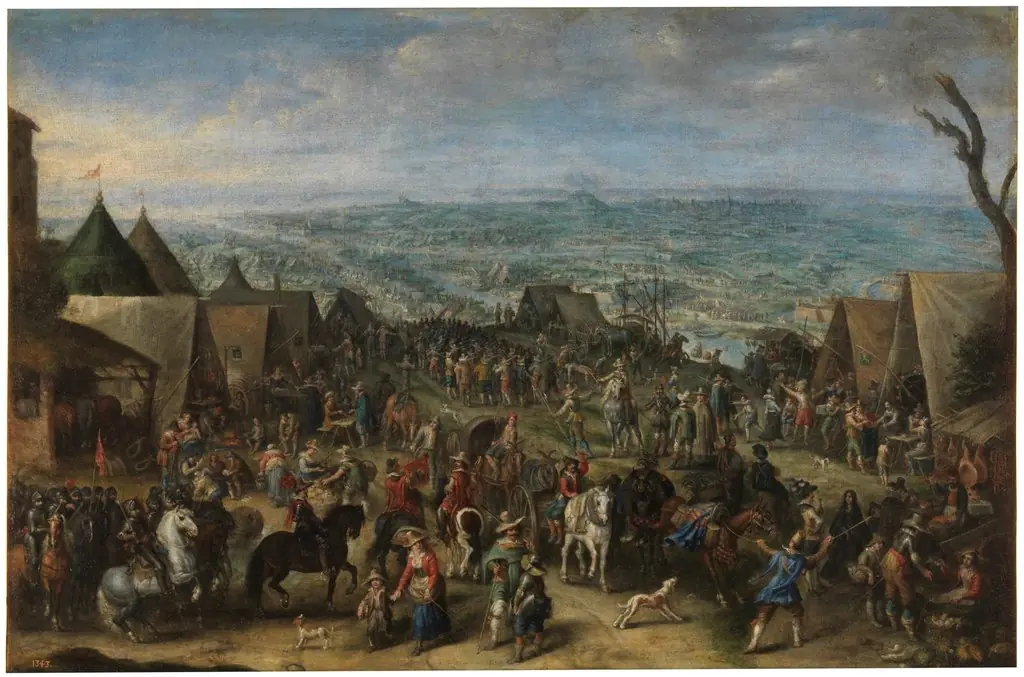 Sitio de Ostende
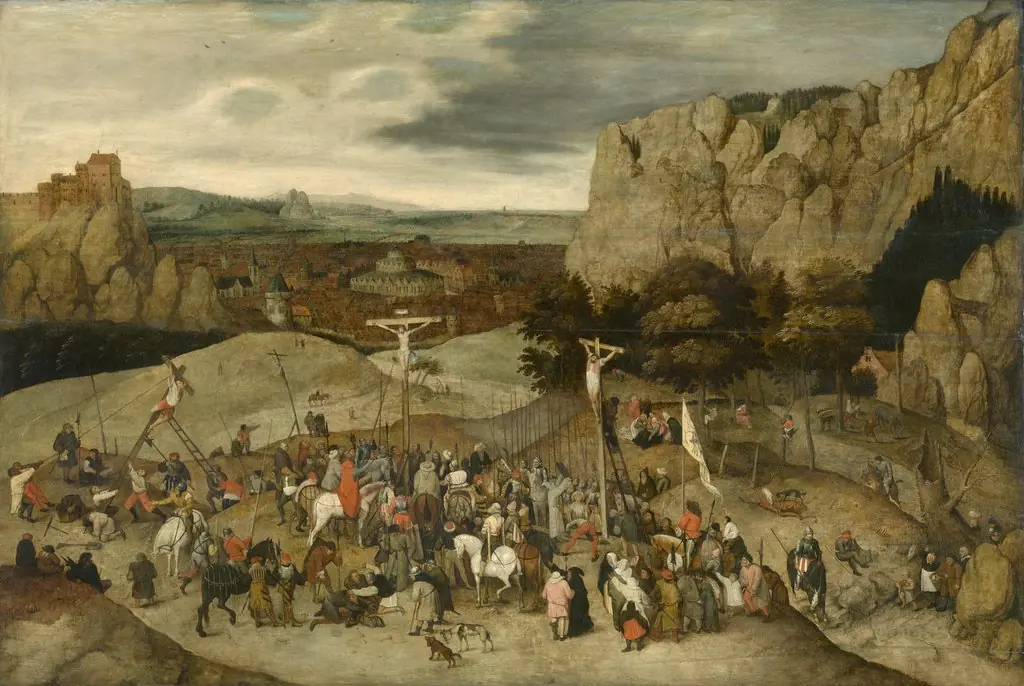 Crucifixion
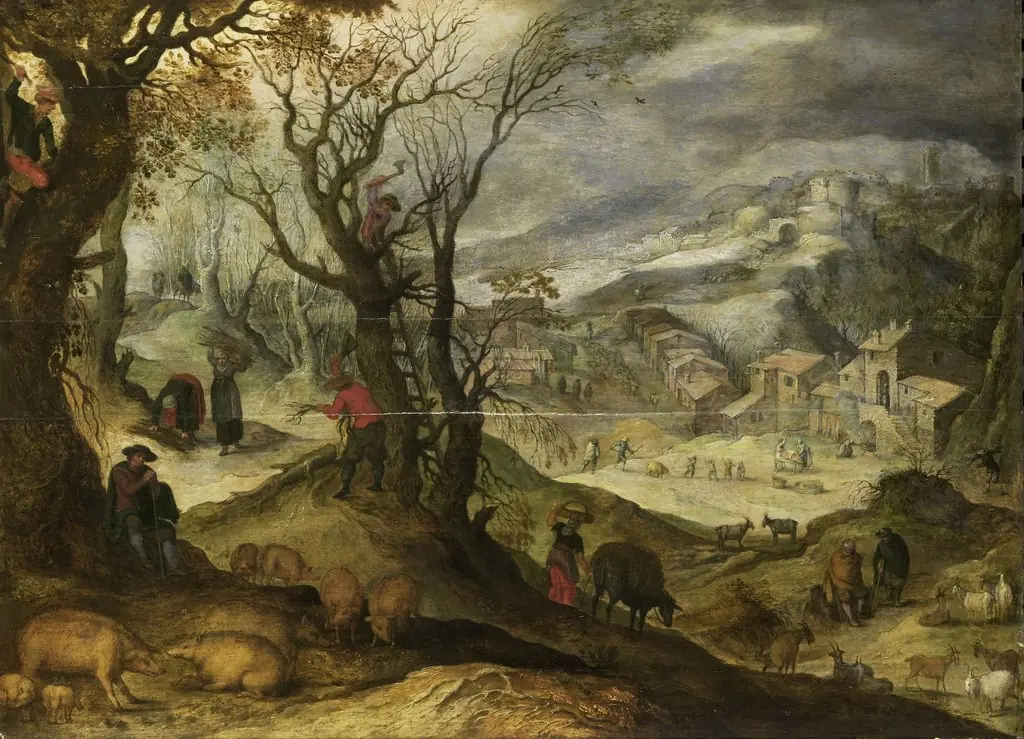 Winter Landscape