Artwork
Bailadoras (Andalucia)
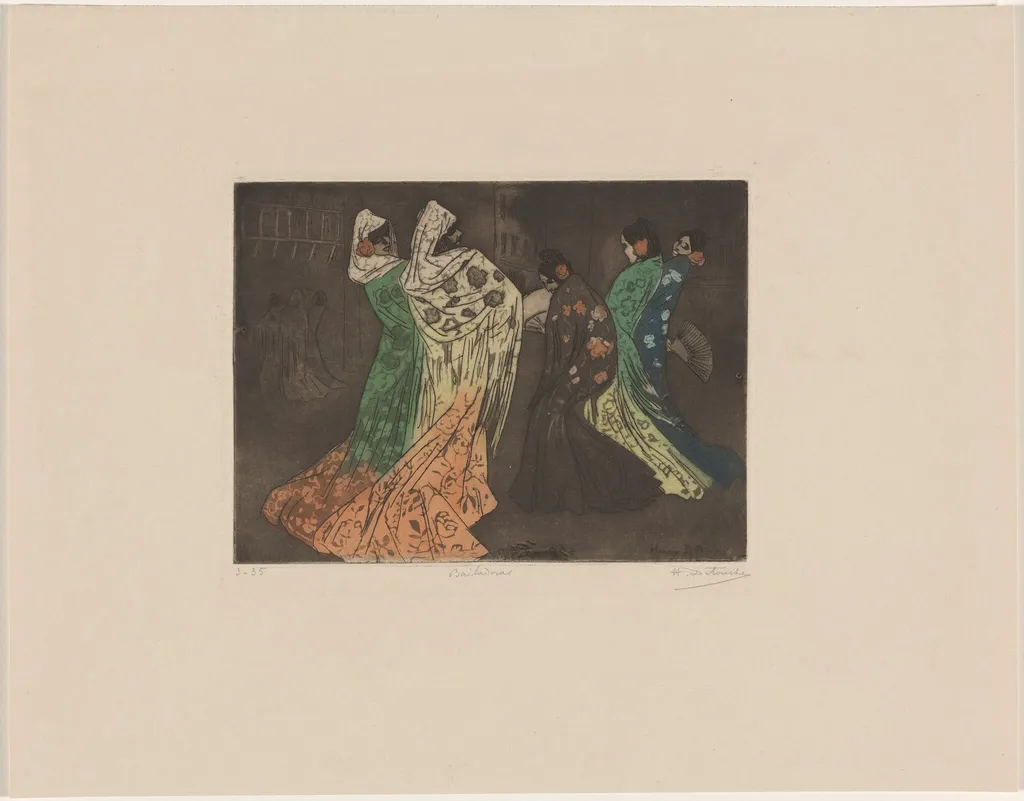
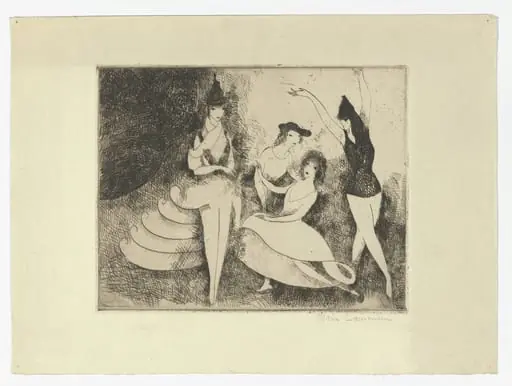
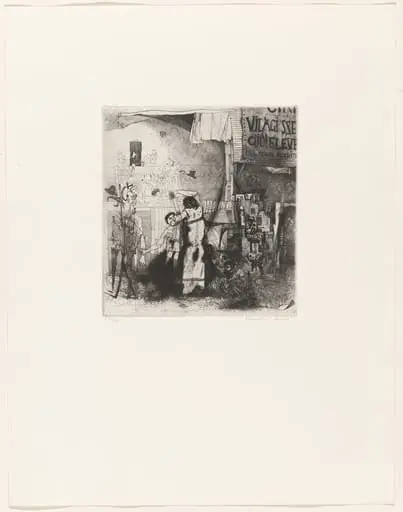
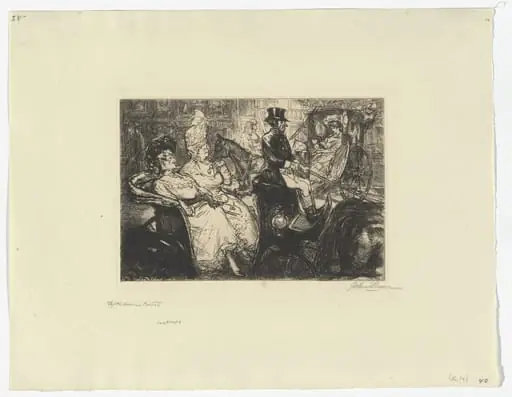
Bailadoras (Andalucia) is an ink print by the Impressionist artist Henry Julien Detouche. It dates from 1898 and is held in the collection of the National Gallery of Art.
About this work
Overview
Bailadoras (Andalucia), created in 1898 by Henry Julien Detouche, is a multicolor etching and aquatint on tan wove paper.
Bailadoras (Andalucia), created in 1898 by Henry Julien Detouche, is a multicolor etching and aquatint on tan wove paper. It belongs to the print collection of the National Gallery of Art in Washington, D.C. The work captures a moment of informal dance among three women in southern Spain, rendered through layered printing techniques that blend subtle tonal shifts with delicate line work. Its quiet intensity stems from restrained color and atmospheric depth rather than overt drama.
Subject & Meaning
The print portrays three female figures engaged in a regional dance, their identities obscured by draped shawls and veils. The central figure, dressed in black with floral embroidery, draws focus through contrast and detail, while the others recede into shadowed motion. The scene evokes communal ritual rather than performance, suggesting cultural continuity in everyday life. The anonymity of the figures emphasizes collective tradition over individual identity.
Technique & Style
Detouche employed multiple copper plates to layer colors in etching and aquatint, achieving nuanced gradations in the dresses and background. The dark, muted ground enhances the figures’ forms through negative space, while soft edges and blurred contours suggest movement. The style blends observational realism with impressionistic light handling, avoiding idealization in favor of quiet, unposed authenticity. Texture is implied rather than detailed, reinforcing the sense of fleeting motion.
History & Provenance
Created in 1898, the print entered the National Gallery of Art’s collection through established acquisition channels, likely as part of early 20th-century efforts to document European printmaking. Detouche’s work was exhibited in Parisian salons during the 1890s, and this piece reflects his interest in Spanish subjects during a period of heightened cultural fascination with Andalusian traditions. Its preservation in a major American institution underscores its recognition among collectors of graphic art.
Context
In the late 19th century, European artists increasingly turned to regional folk life as subject matter, drawn by authenticity and exoticism. Detouche’s depiction aligns with broader trends in printmaking that favored intimate, non-theatrical scenes over grand narratives. Andalusia, with its rich visual customs, was a frequent focus for foreign artists, though Detouche’s approach avoids sentimentality, presenting the dancers as part of an unbroken, quiet rhythm of daily existence.
Legacy
Though Detouche is not widely known today, Bailadoras (Andalucia) remains a representative example of fin-de-siècle color printmaking that prioritized subtlety over spectacle. Its presence in the National Gallery of Art ensures continued access for study, particularly among scholars of graphic arts and Spanish cultural representation. The work contributes to a broader understanding of how non-Spanish artists interpreted local traditions with restraint and respect.
Own this work as a print
Artist & collection