Artwork
Tirodasari Aripana
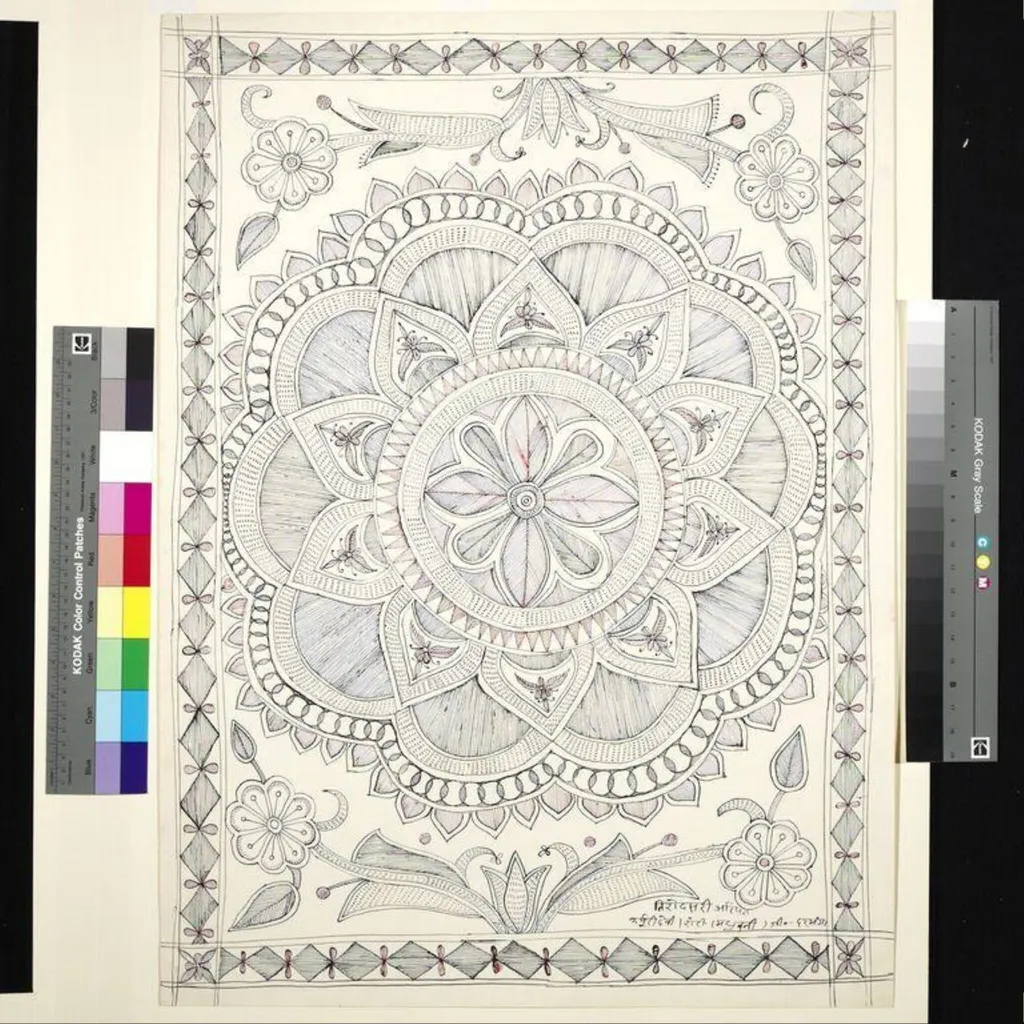
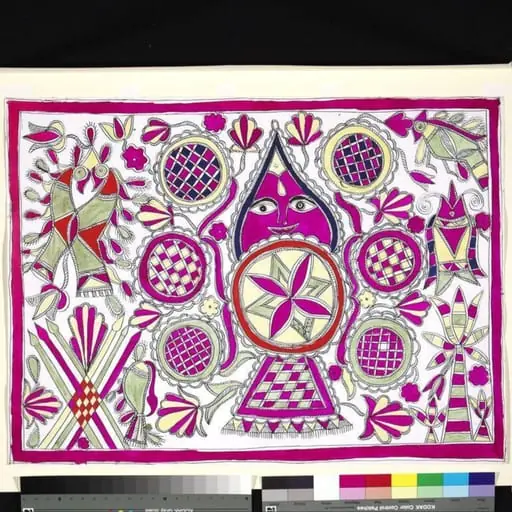
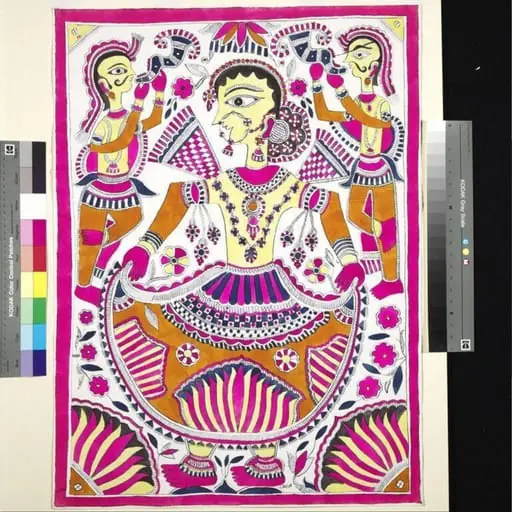
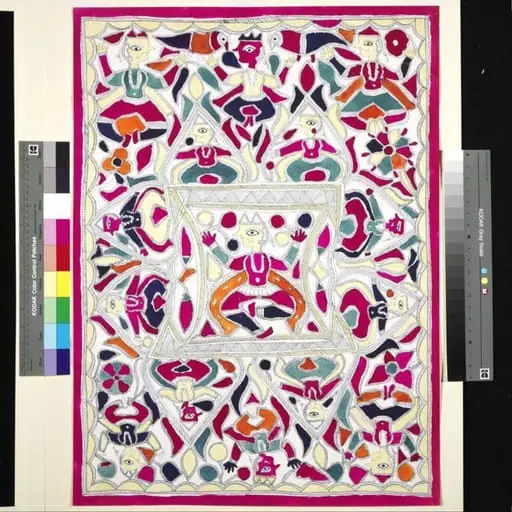
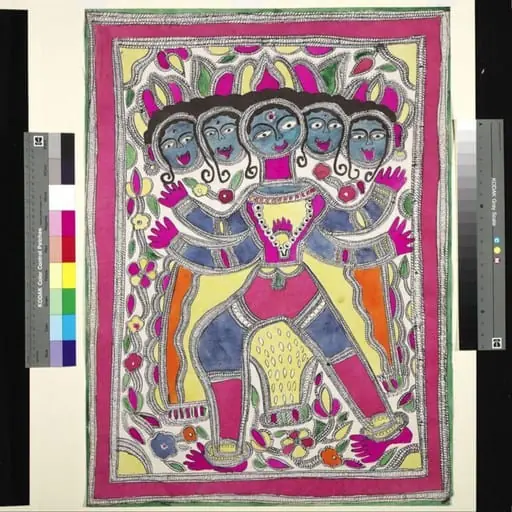
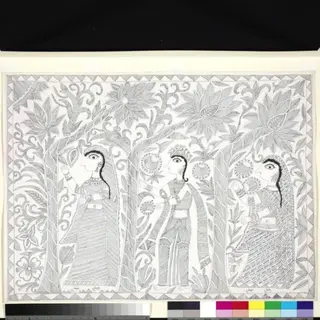
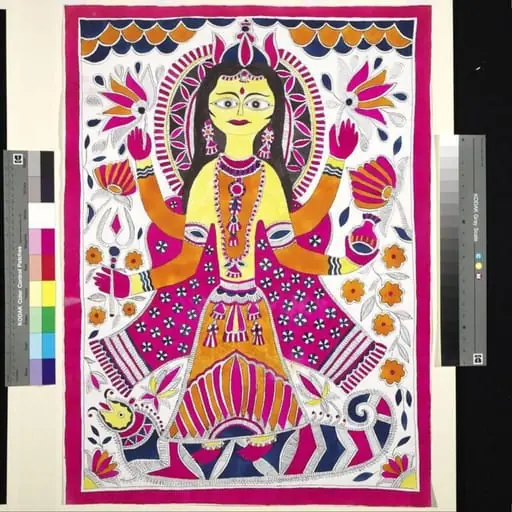
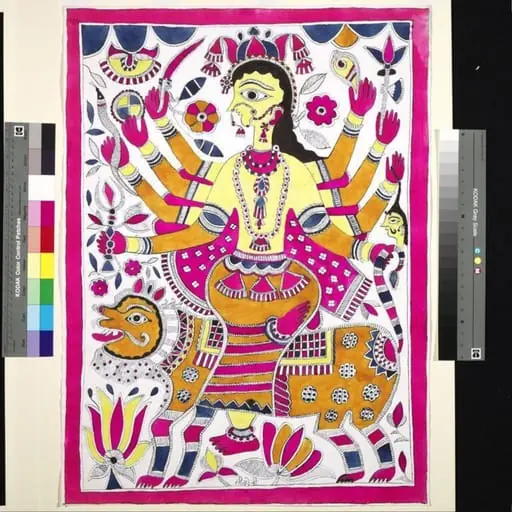
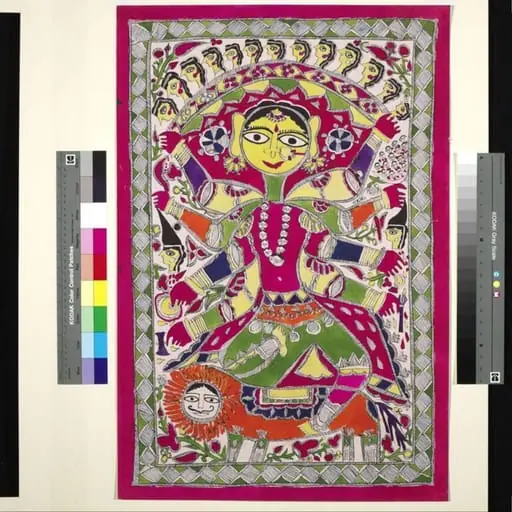
Tirodasari Aripana is a paint painting by the Nanga artist Karpuri Devi. It dates from 1974 and is held in the collection of the Victoria and Albert Museum.
About this work
Overview
Unlike wall paintings traditionally made with natural pigments, this work adapts the practice to paper, reflecting a shift toward portable art forms.
Tirodasari Aripana is a geometric ink drawing on paper by Karpuri Devi, rooted in the Madhubani tradition of northern Bihar. Unlike wall paintings traditionally made with natural pigments, this work adapts the practice to paper, reflecting a shift toward portable art forms. Its dense, hand-drawn patterns follow ancestral templates used in wedding rituals, preserving cultural forms while transitioning into new mediums.
Subject & Meaning
The central lotus motif symbolizes purity and cosmic order, echoing Hindu mandala traditions. Surrounding elements, circles, stars, leaves, and dots, form a layered visual language tied to fertility, abundance, and spiritual protection. These symbols, arranged with symmetry and repetition, were historically applied to floors during marriage ceremonies to sanctify the space and invoke divine blessing for the couple.
Technique & Style
Rendered entirely in fine black ink, the composition relies on meticulous line work to fill every space without empty areas. The artist employs controlled, fluid strokes to create swirling organic forms that mimic natural growth while maintaining mathematical precision. Subtle traces of red and green suggest earlier use of natural dyes, though the piece now appears primarily in monochrome, emphasizing structure over color.
History & Provenance
Madhubani painting emerged from ritual wall decorations by women of the Brahmin and Kayastha communities in Bihar. After the 1934 earthquake displaced households, artists began transferring designs to paper for income. W.G. Archer’s documentation in the 1940s brought wider attention, leading to institutional interest. This work is part of that transition, bridging domestic ritual and emerging art markets.
Context
This piece belongs to a living tradition where art is inseparable from daily ritual. Women created these designs as temporary, sacred floor decorations for weddings, using rice paste and pigments. The shift to paper preserved the visual language while altering its function, from ephemeral ceremony to collectible object, reflecting broader changes in rural Indian artistic practice during the 20th century.
Legacy
Tirodasari Aripana exemplifies how indigenous women’s art evolved from private ritual to public recognition. While its original context was domestic and transient, its preservation on paper allowed it to enter museums and global collections. The work stands as a testament to the endurance of female artistic knowledge, passed through generations, now redefined by institutional frameworks without losing its symbolic depth.
Artist & collection
Artist
Karpuri Devi painted vivid floor murals and walls in the early 1970s, using rice paste and natural dyes.