Movement
Nanga
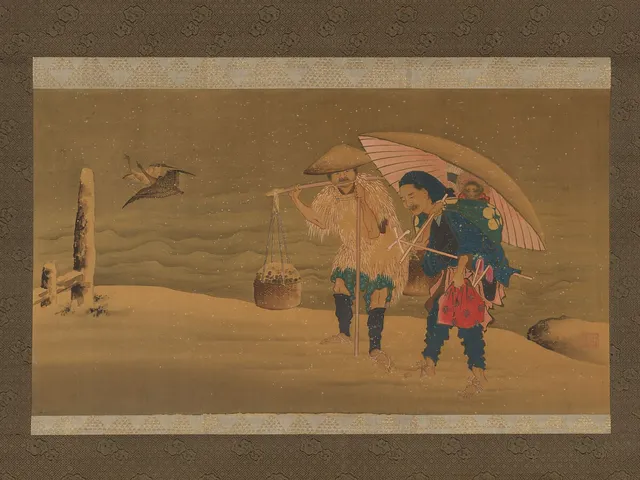
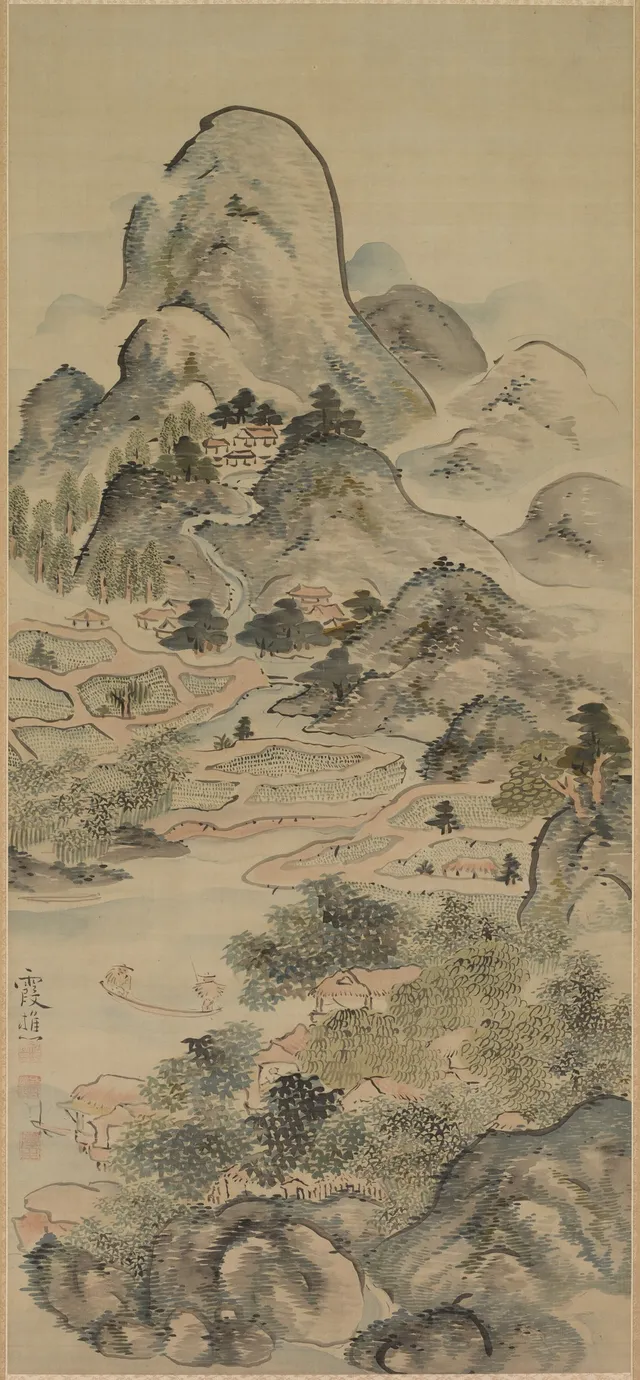
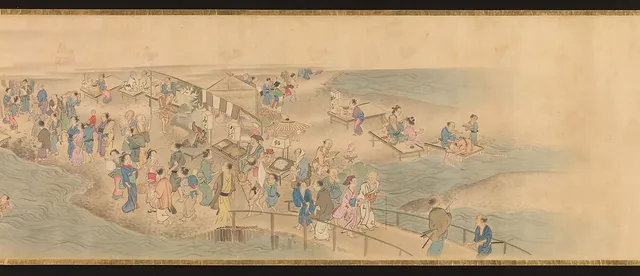
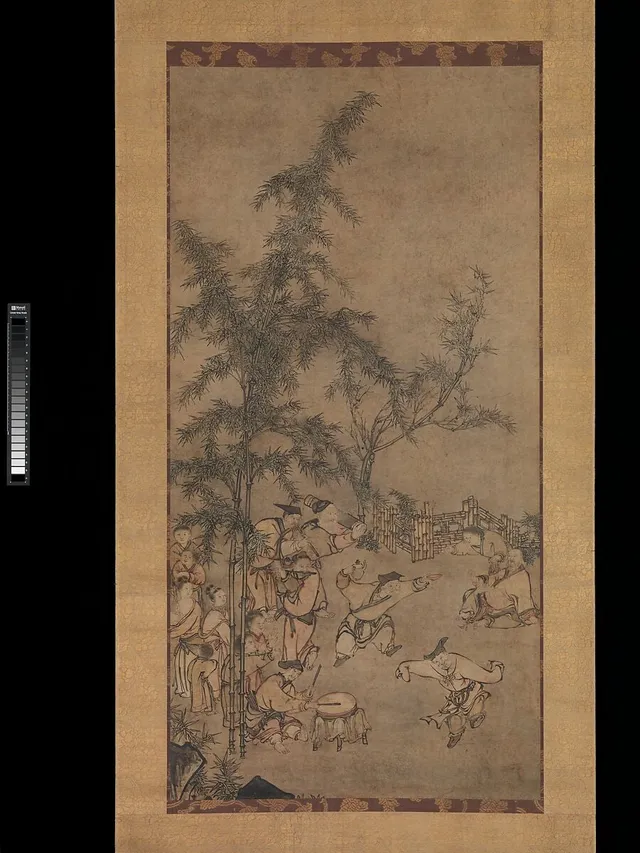
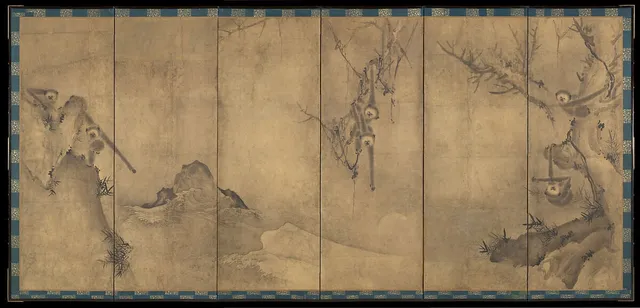
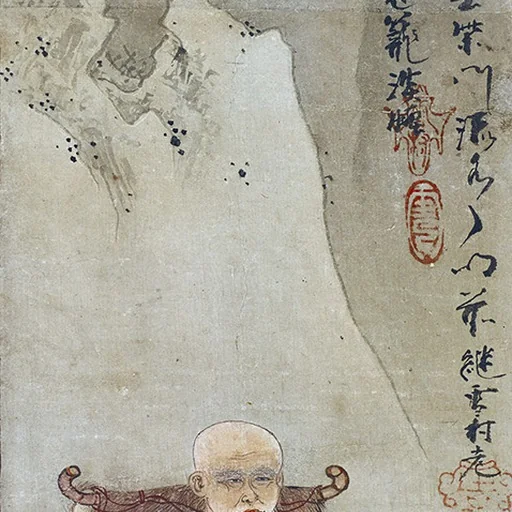
Nanga is an art movement. The gallery holds 147 works in this movement, including works by Sesson Shūkei, Genki and Soga Shōhaku. Browse Nanga paintings, portraits, pictures and artworks from the world's public-domain museum collections.
Nanga (南画, "Southern painting"), also known as Bunjinga (文人画, "literati painting"), was a school of Japanese painting that flourished in the late Edo period (roughly the mid-18th to mid-19th century) among artists who styled themselves bunjin, or scholar-amateurs in the Chinese mold. Its name derives from the "Southern School" of Chinese painting theorized by the Ming critic Dong Qichang, which prized the expressive, self-cultivating amateur over the polished professional. The movement took root partly as a reaction against Japan's official isolation: Chinese woodblock painting manuals such as the *Mustard Seed Garden Manual*, imported texts, and the émigré monks of the Ōbaku Zen sect at Manpukuji (founded south of Kyoto in 1661) gave Japanese intellectuals access to continental models of poetry, calligraphy, Confucian learning, and ink painting, a study the Tokugawa shogunate actively encouraged.
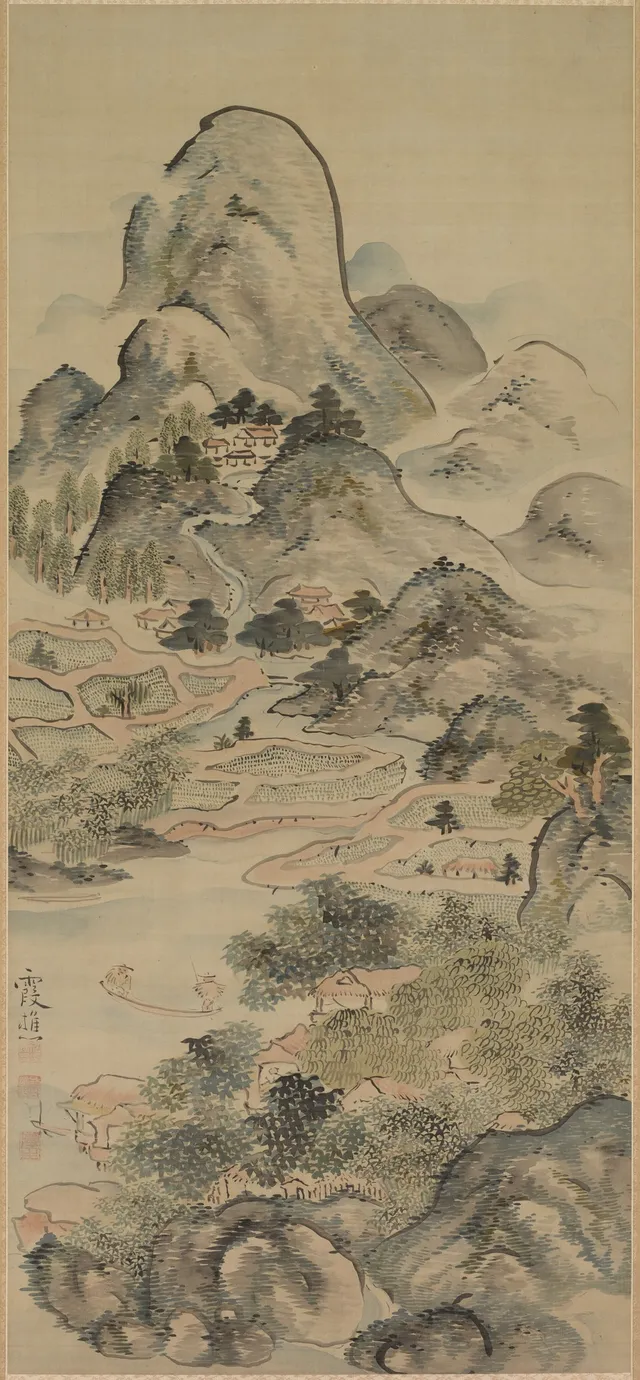
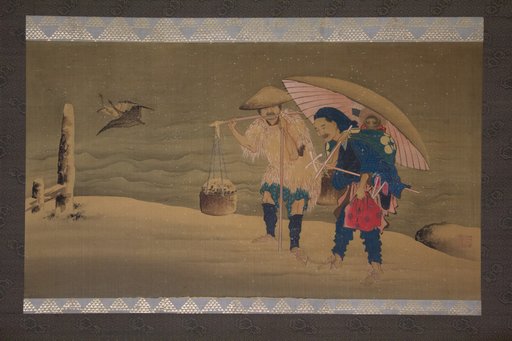
Visually, Nanga is defined by monochrome ink with occasional pale washes of color, an emphasis on calligraphic, gestural brushwork over realistic finish, and subjects drawn largely from the Chinese repertoire—idealized mountain-and-water landscapes, bamboo, plum, and reclusive scholars. The aim was to capture the inner rhythm or spirit of a scene rather than its surface appearance, and paintings were frequently inscribed with poetry, uniting the "three perfections" of poetry, calligraphy, and painting on a single sheet.
The genre's founding masters were Ike no Taiga (1723–1776) and the poet-painter Yosa Buson, who together brought Bunjinga to maturity; their collaborative album *Jūben jūgichō* ("Ten Conveniences and Ten Pleasures," 1771) is canonical. Taiga's free, buoyant manner—seen in works such as *Fishing in Springtime*—broke from mere copying of Chinese prototypes. Later generations, including Uragami Gyokudō, Tani Bunchō, Aoki Mokubei, Tanomura Chikuden, the Confucian scholar-painter Kameda Bōsai, Okada Hankō, and Watanabe Kazan, increasingly blended continental sources with Japanese sensibility and, in Kazan's case, Western shading.
Nanga descends directly from Yuan-dynasty Chinese literati painting, its acknowledged ancestor, and developed alongside the related Nanpin school of Chinese-style bird-and-flower realism. Though its amateur ethos waned after the Meiji Restoration opened Japan to Western art, Nanga remains central to Japanese art history as the country's most thoroughgoing absorption of the Chinese scholar-painter ideal.
Key artists


Works
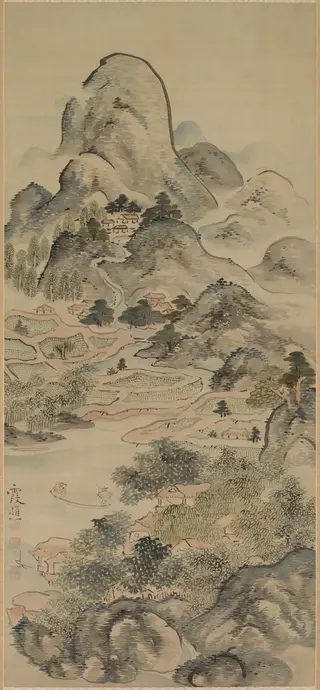 Fishing in Springtime
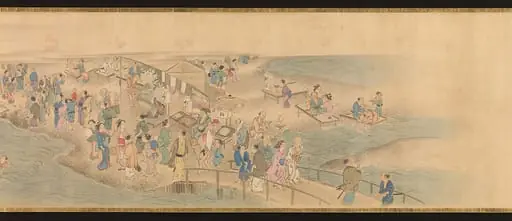 源琦筆 華洛四季遊楽図巻|Scenes of the Four Seasons in Kyoto
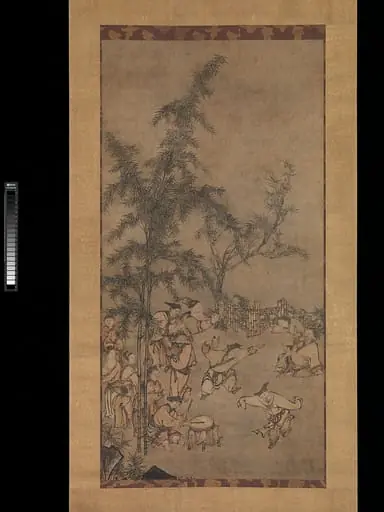 雪村周継筆 竹林七聖図|Seven Sages of the Bamboo Grove
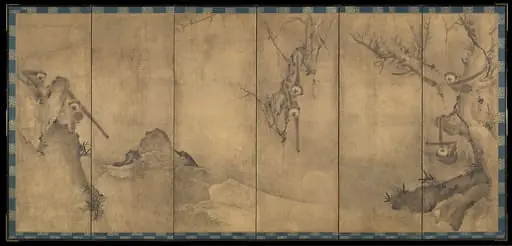 Untitled
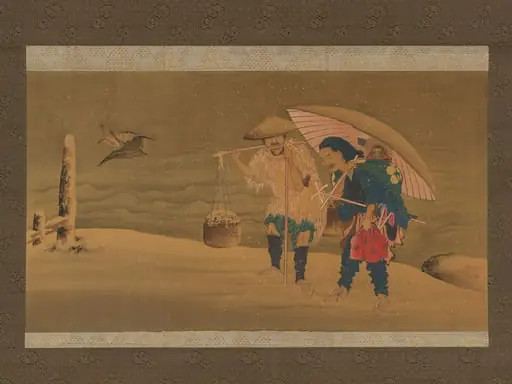 Untitled
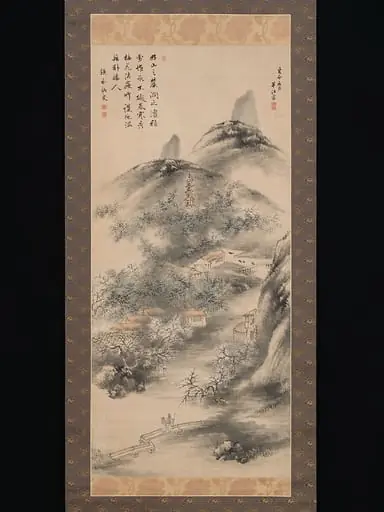 Untitled
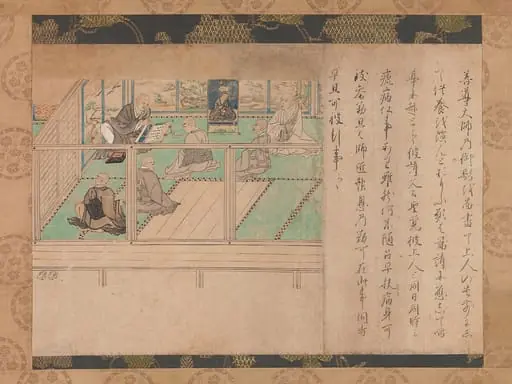 拾遺古徳伝絵断簡|Illustrated Biography of Hōnen (Shūikotokūden-e)
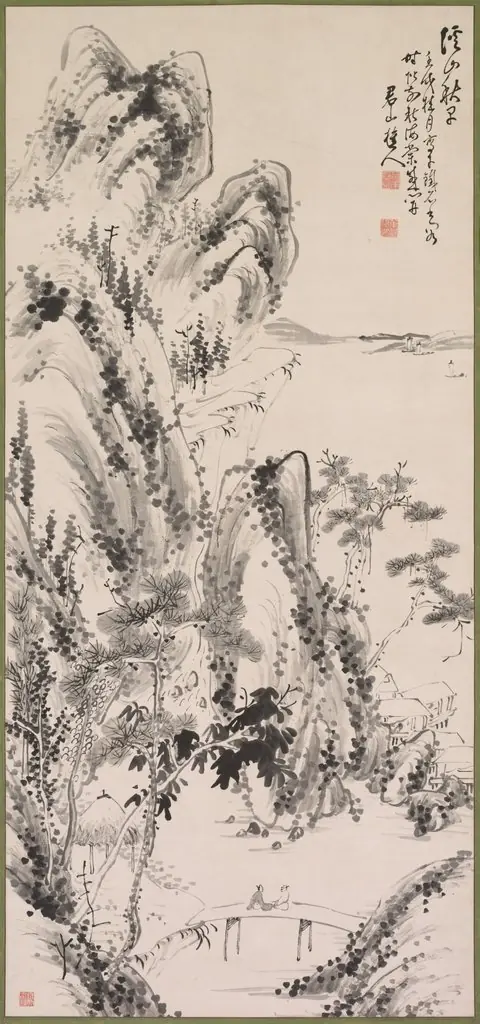 Landscape with Figures
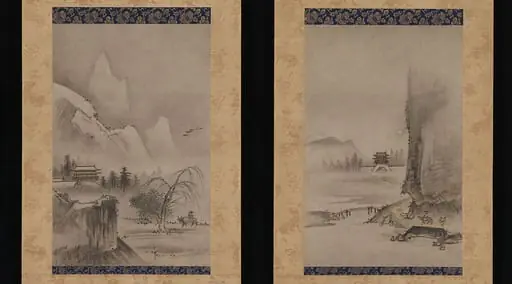 鑑貞筆 瀟湘八景中の二景図|Two Views from the Eight Views of the Xiao and Xiang Rivers
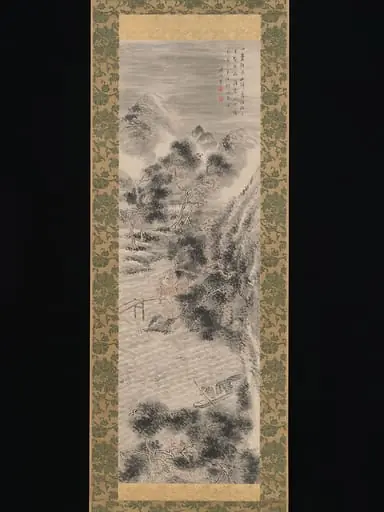 Untitled
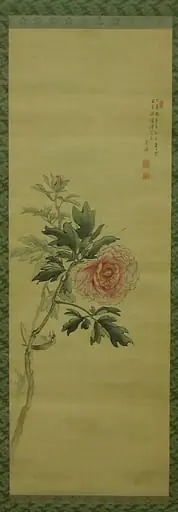 Untitled
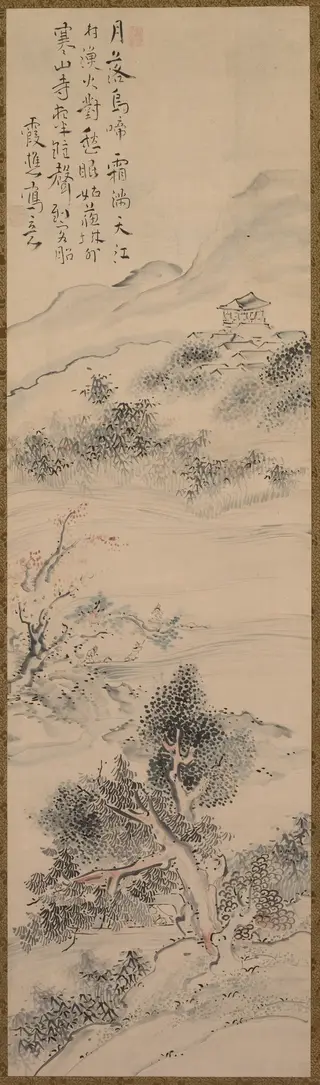 Illustration of Zhang Qi's Poem on the Cold Mountain Temple
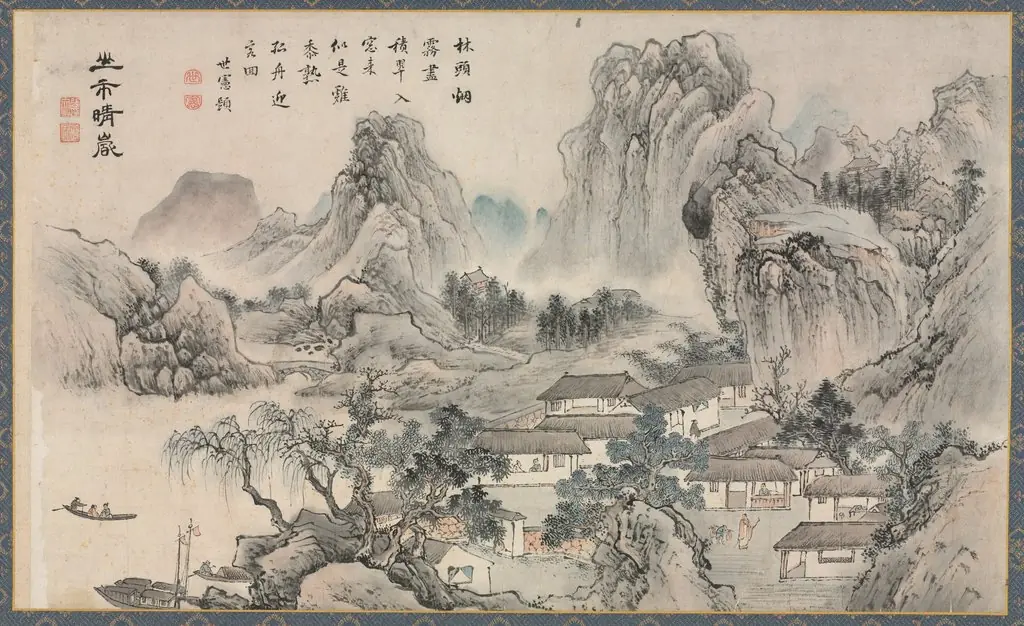 Four Motifs from the Eight Views of Xiao-Xiang
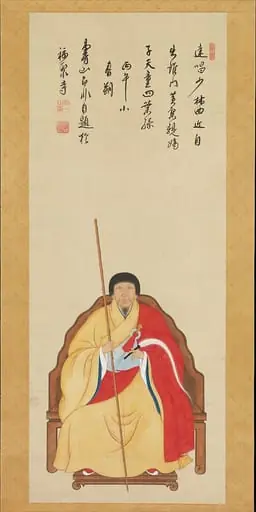 Untitled
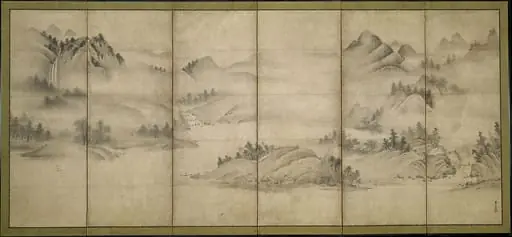 相阿弥筆 四季山水図 (瀟湘八景)|Landscape of the Four Seasons (Eight Views of the Xiao and Xiang Rivers)
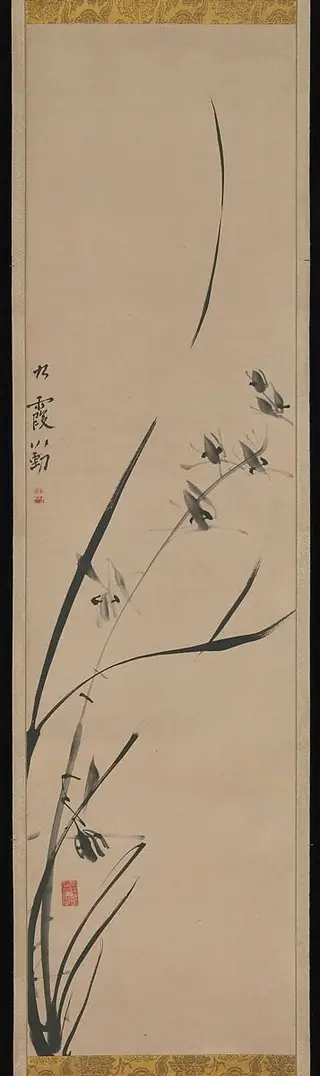 墨蕙図 (Bokkei zu)|Orchids
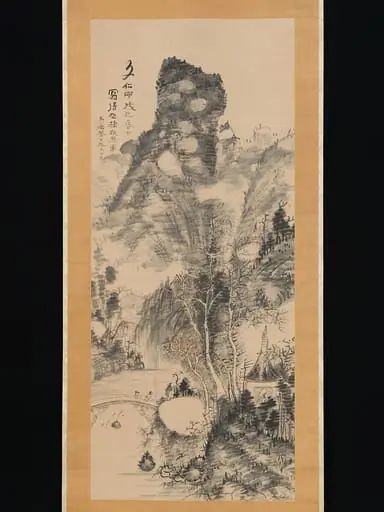 Untitled
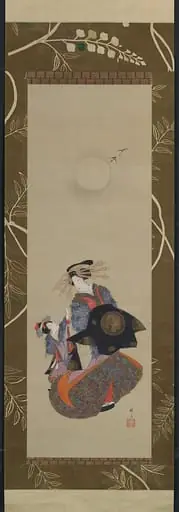 Untitled
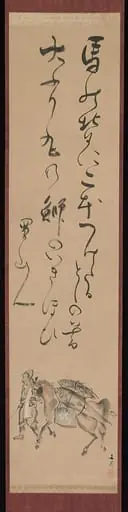 Untitled
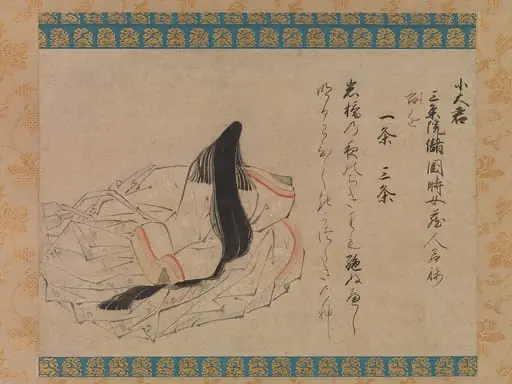 小大君 「藤房本 三十六歌仙絵巻」 断簡|The Poet Koōgimi, from the “Fujifusa Version” of Thirty-six Poetic Immortals (Fujifusa-bon Sanjūrokkasen emaki)l
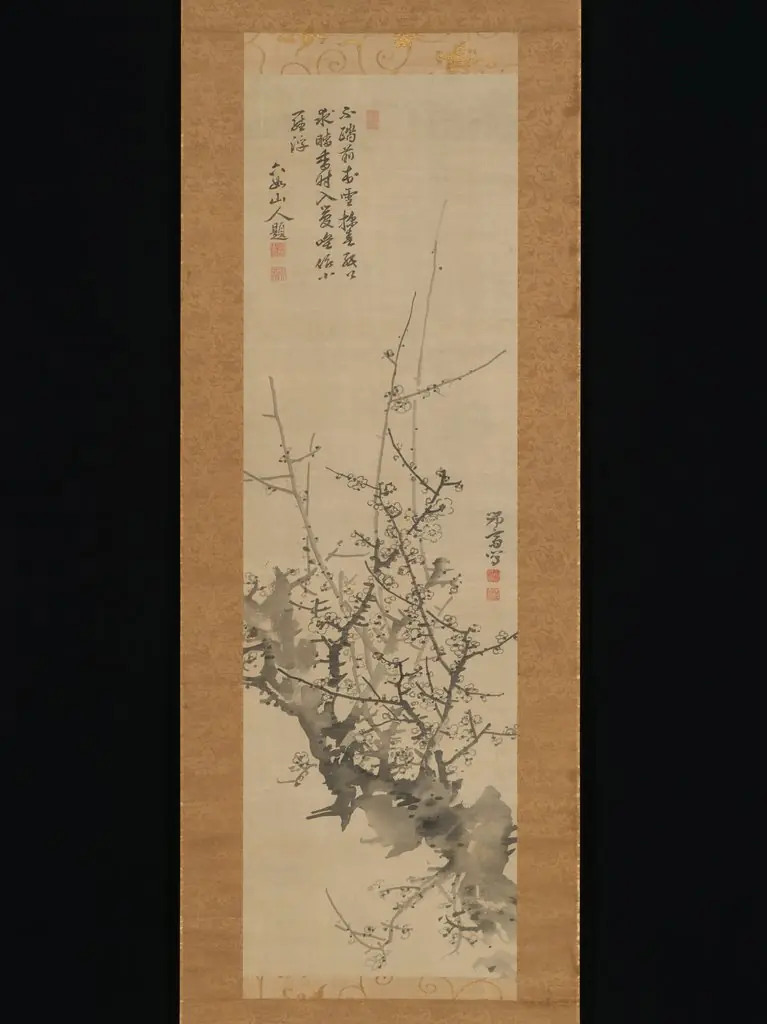 Plum Blossoms
 Untitled
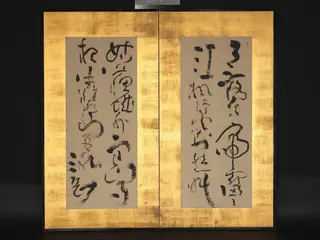 池大雅書 「楓橋夜泊」屏風|"Maple Bridge Night Mooring"
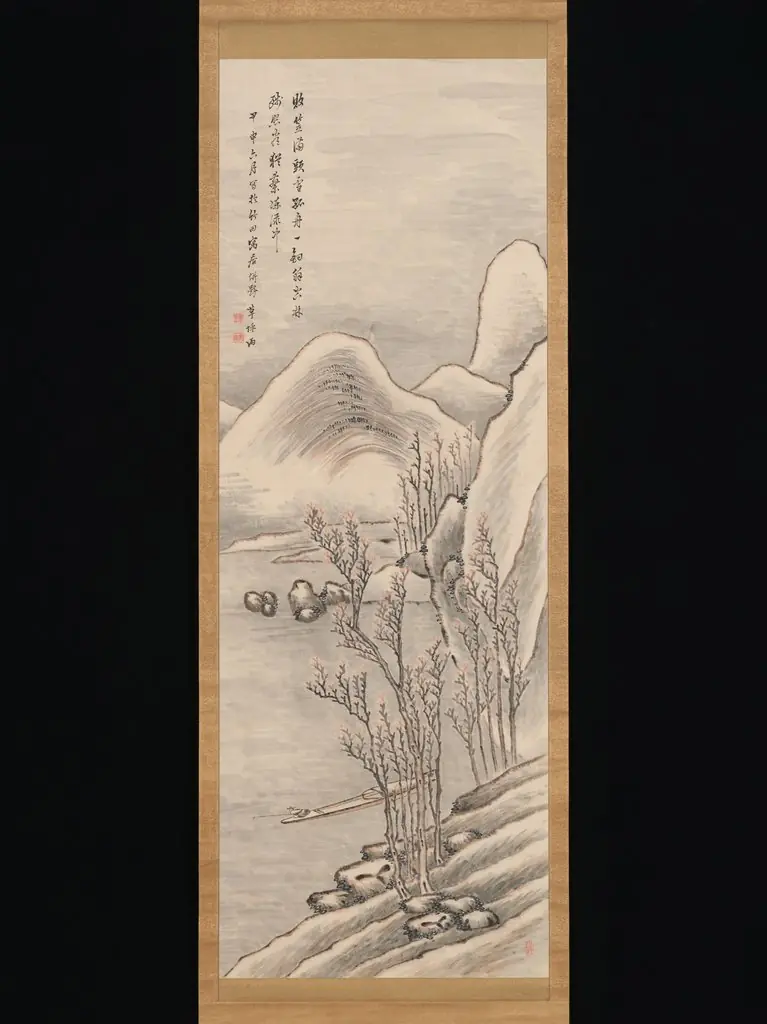 Snowy Landscape
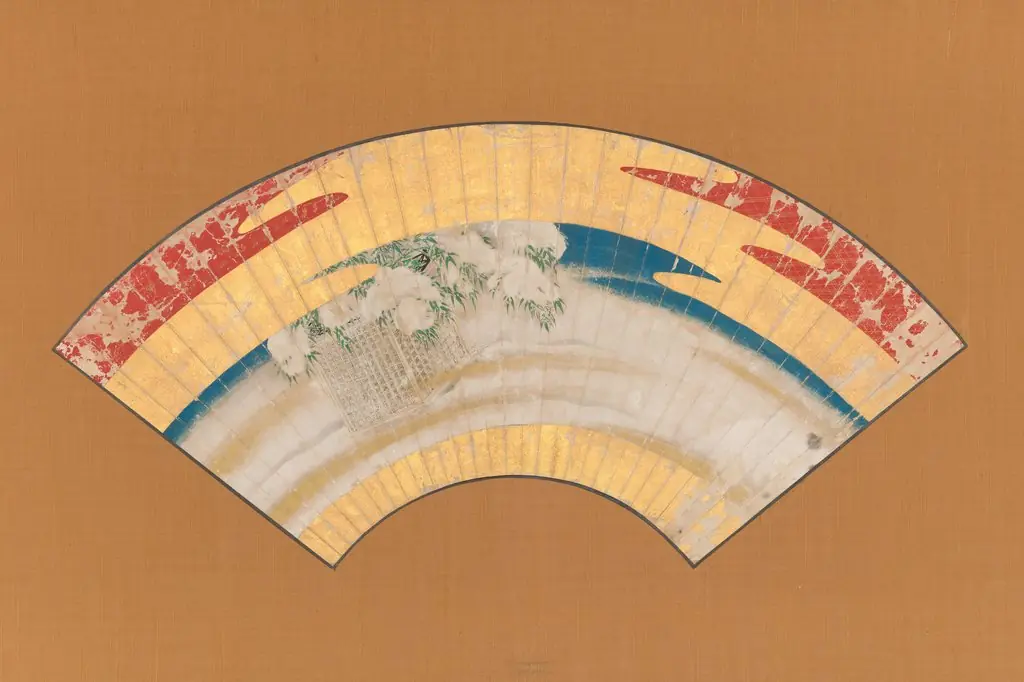 Breaking a Plum Branch on a Snowy Night; Bamboo in Snow
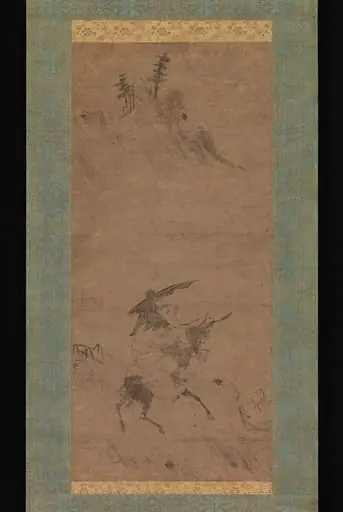 朴堂祖淳筆 蘇軾騎驢図|Su Shi Riding a Donkey
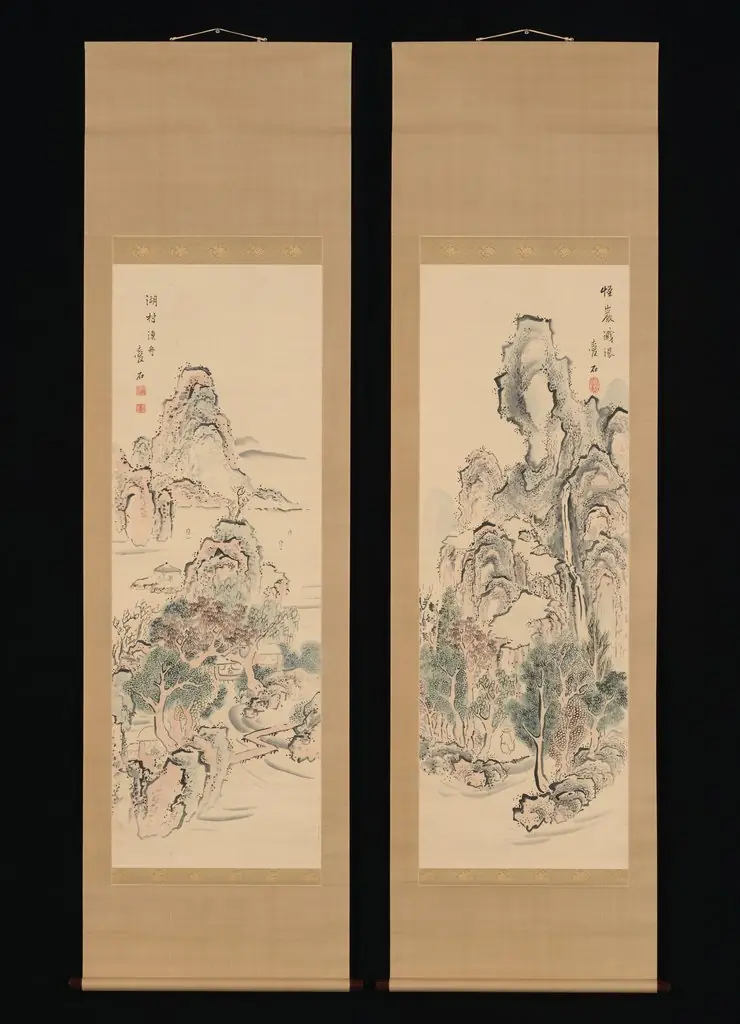 Fantastic Rocks with Cascading Waterfall; Fishing Boats by a Lake Hamlet
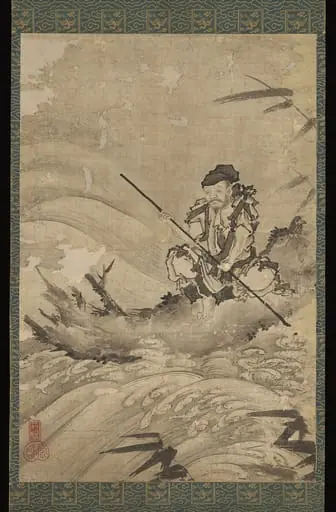 張騫図|The Chinese Explorer Zhang Qian on a Raft
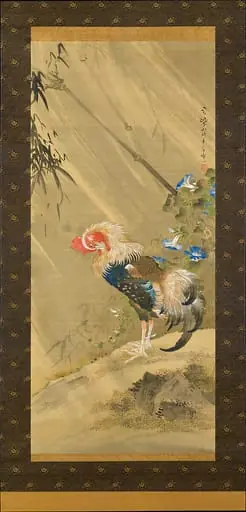 宋紫山筆 嵐に鶏図|Rooster in a Storm
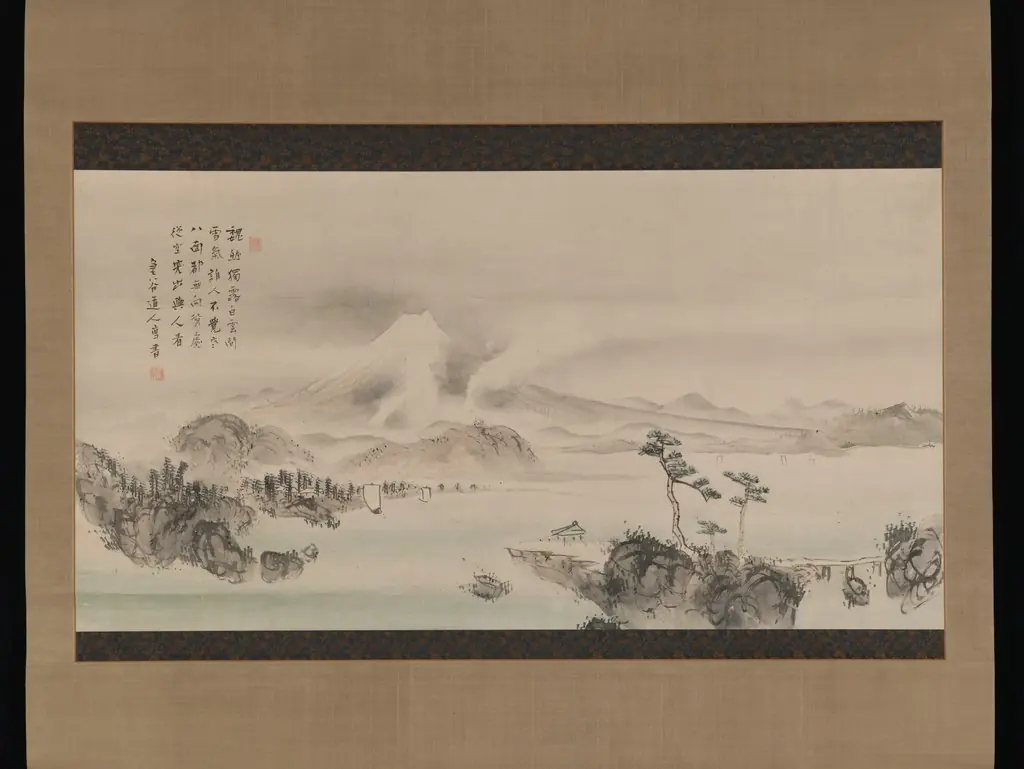 Mount Fuji
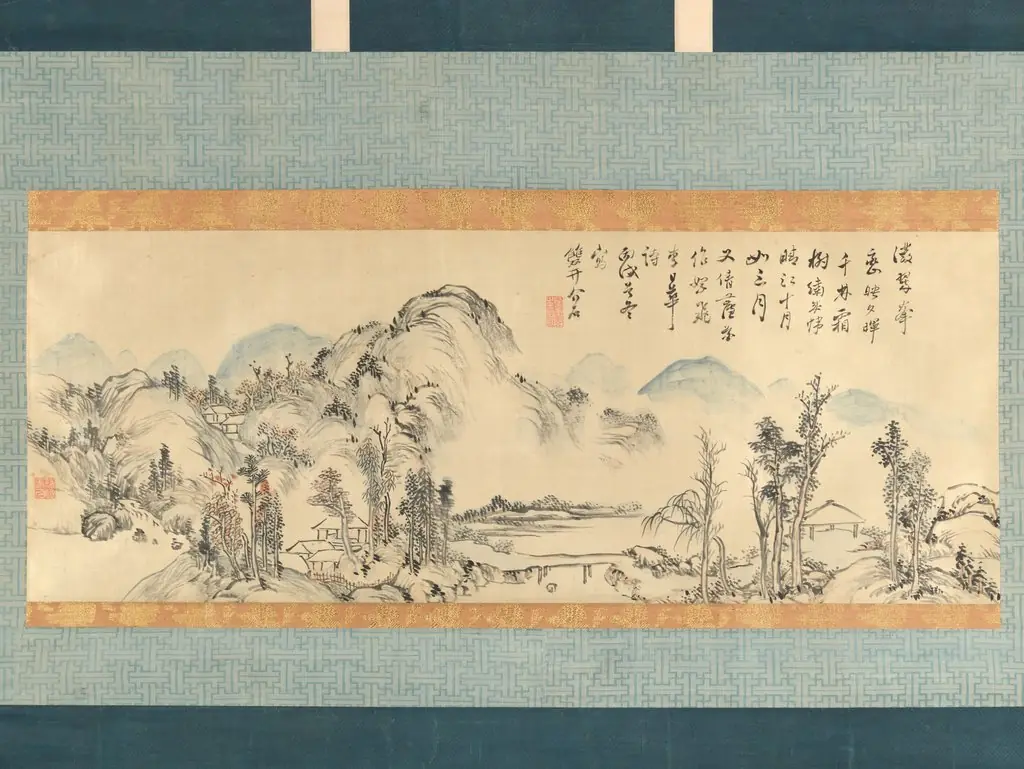 Green Peaks
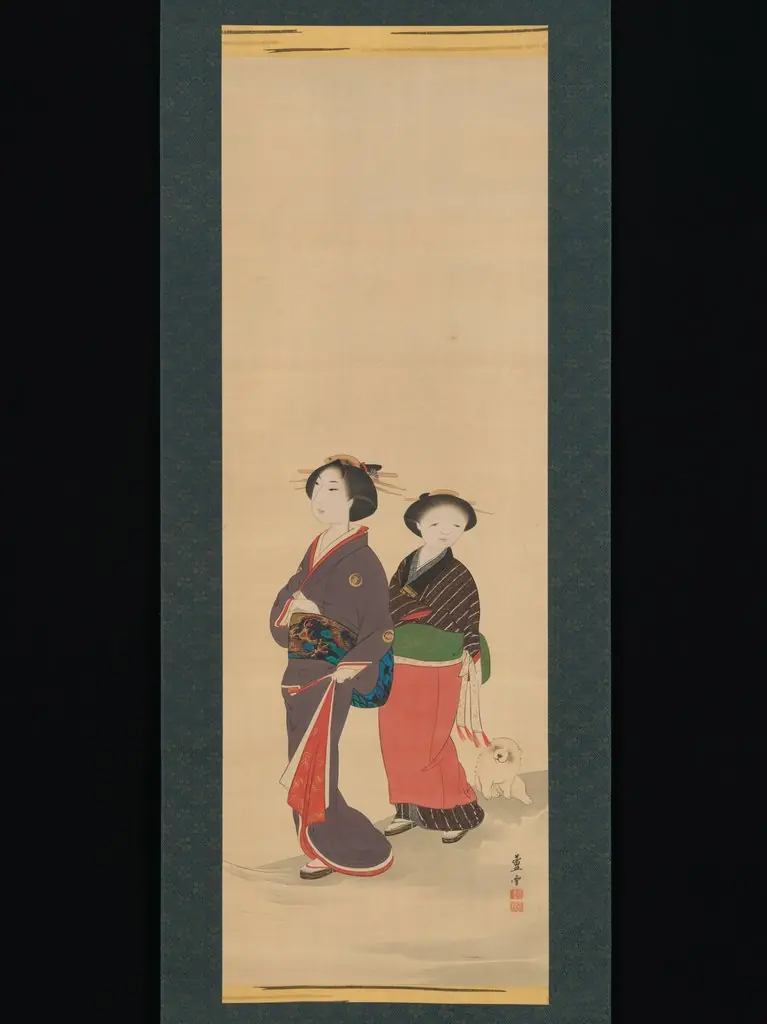 Two Women and a Puppy
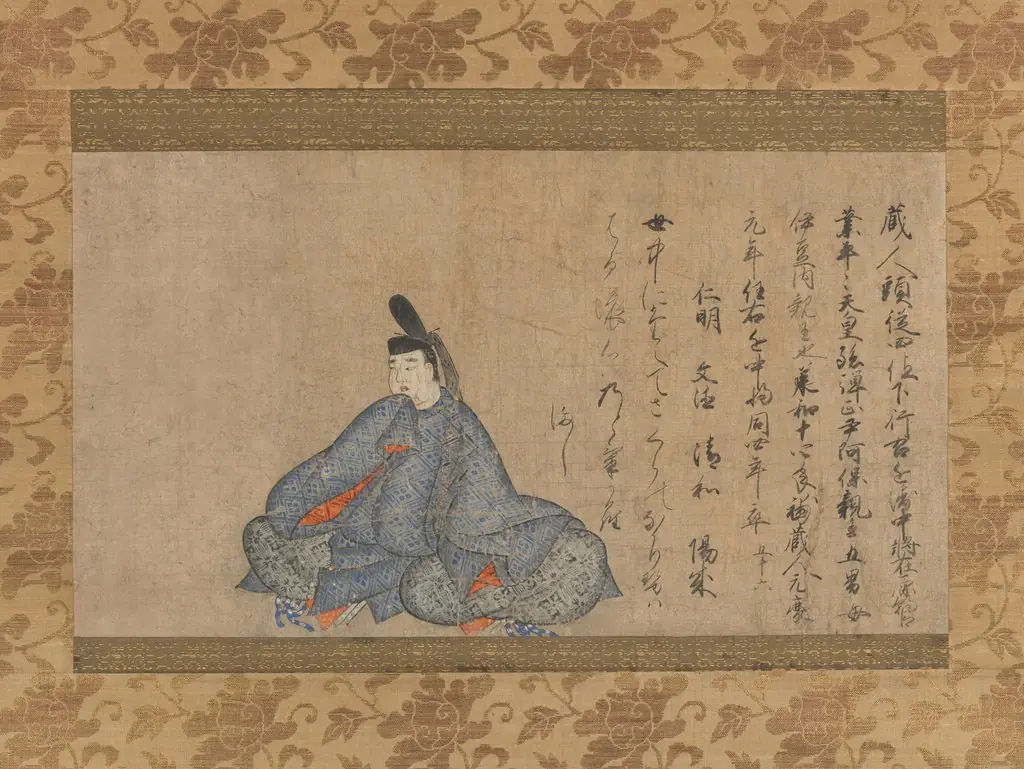 Ariwara Narihira (825–880), from the Fujifusa version of Thirty-six Immortal Poets
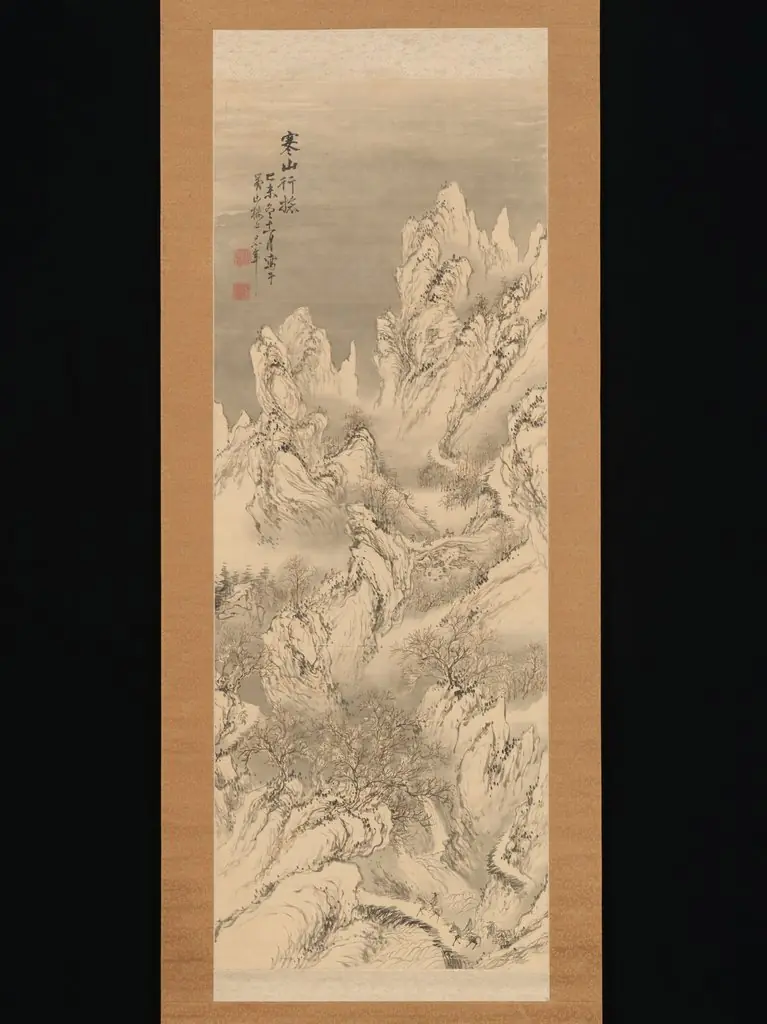 Travellers in Cold Mountains
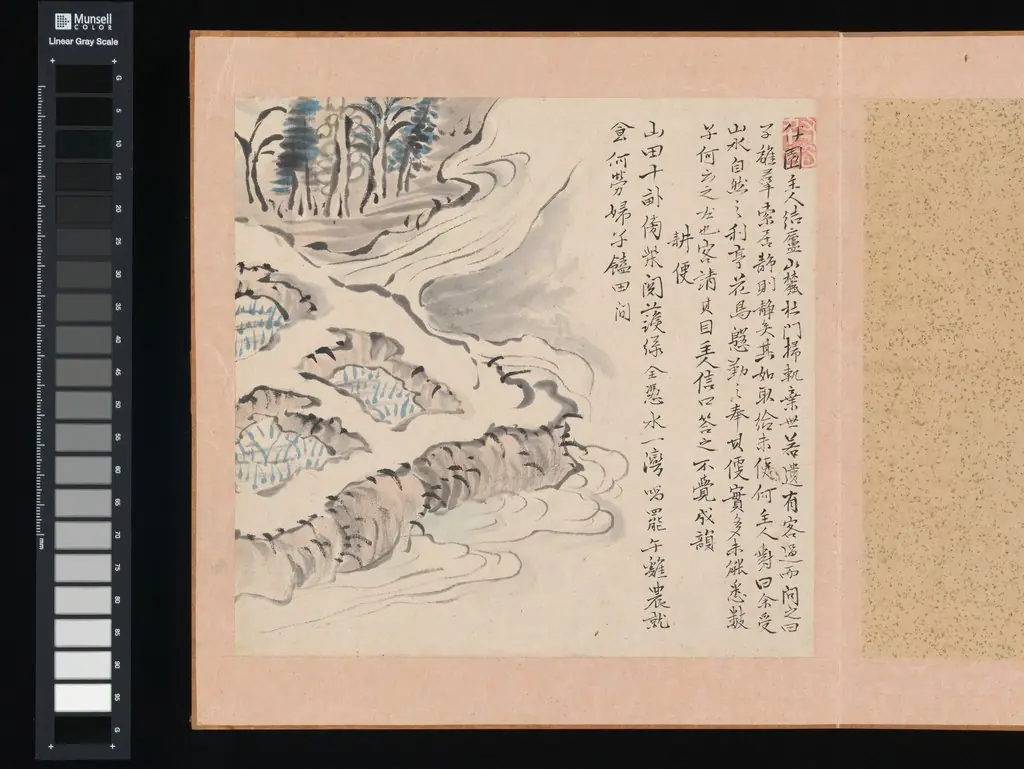 "Convenience in Drawing Water" from Jūben (Ten Conveniences); "Pleasure of Dawn" from Jūgi (Ten Pleasures)
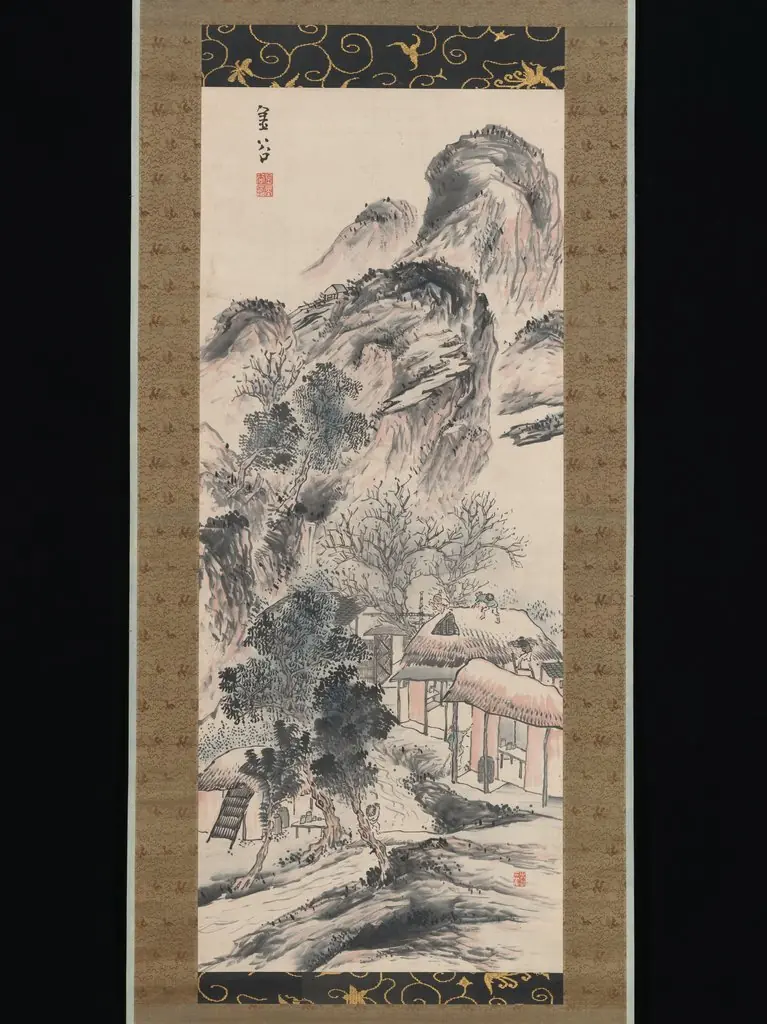 Spring Cleaning
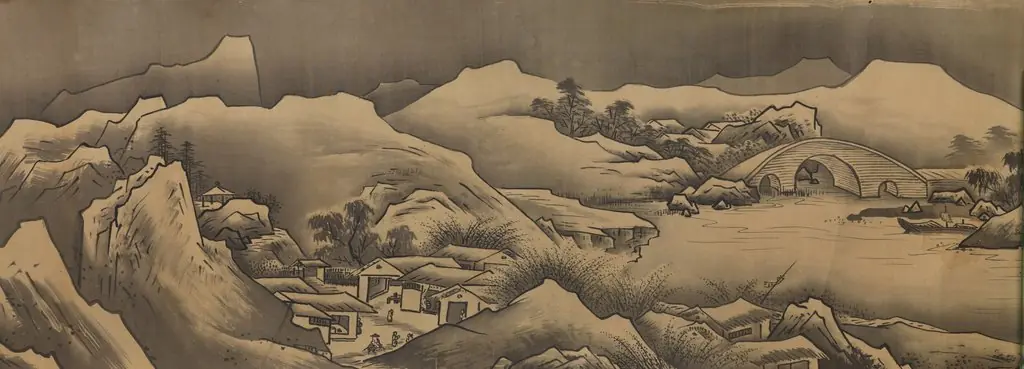 Landscape
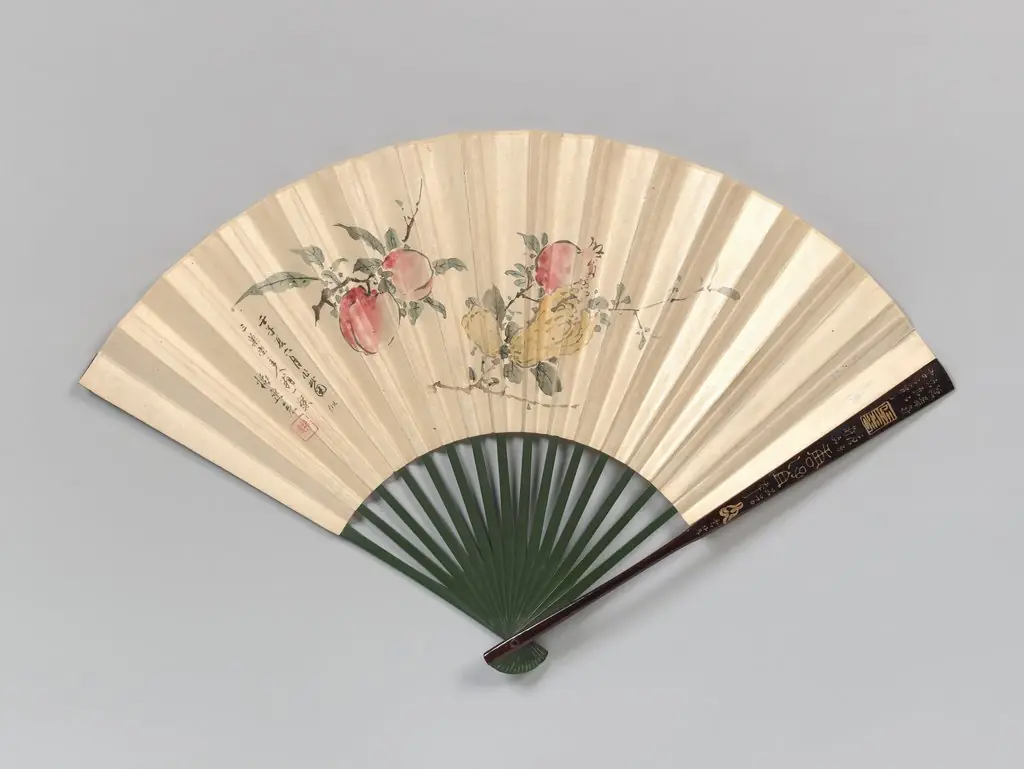 Peaches, Pomegranate, and Fingered Citron
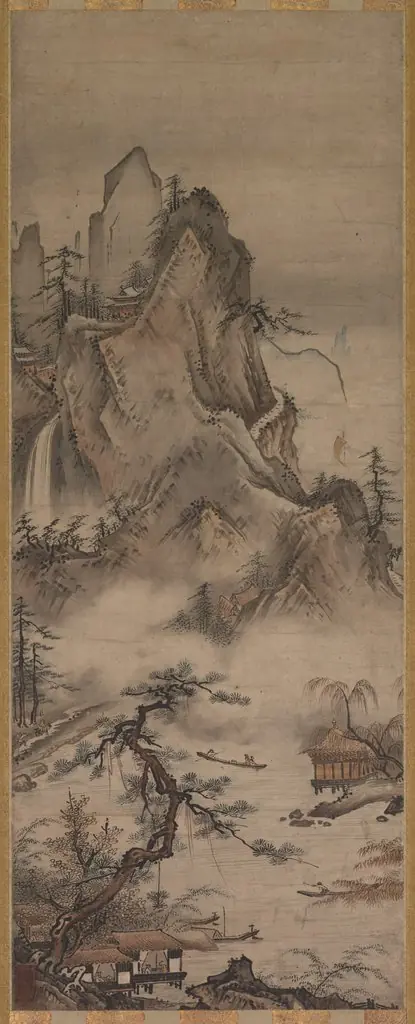 Landscape
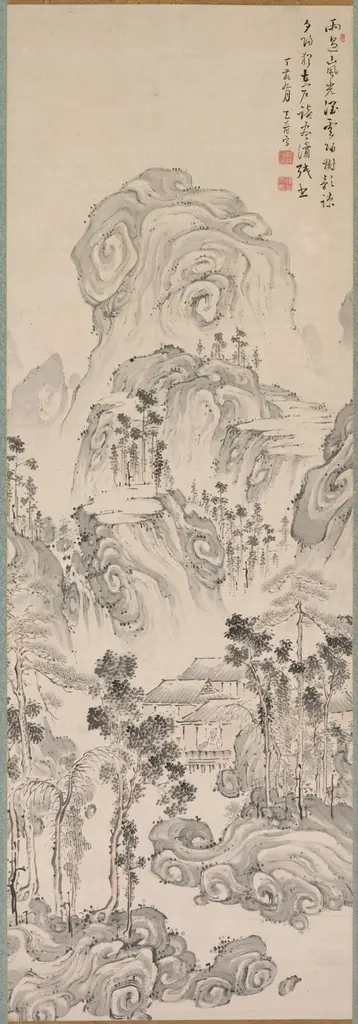 Landscape
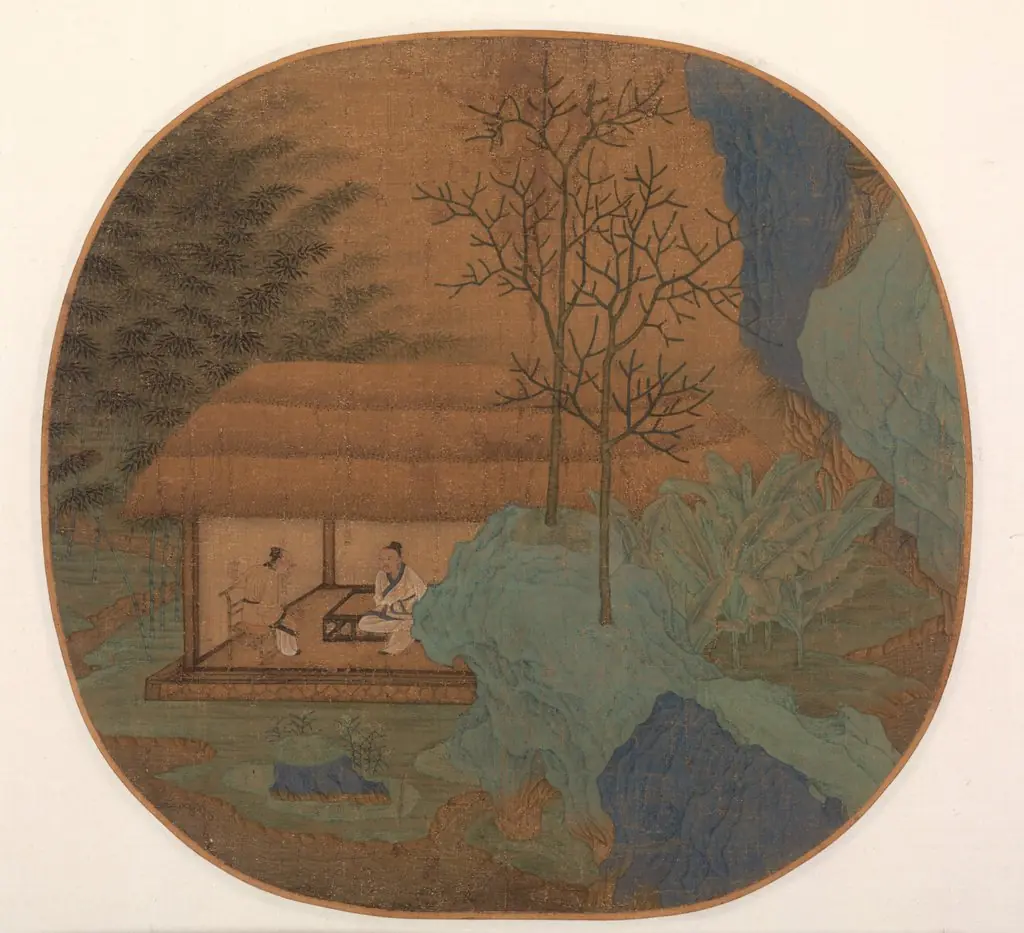 Conversation in a Thatched Hut
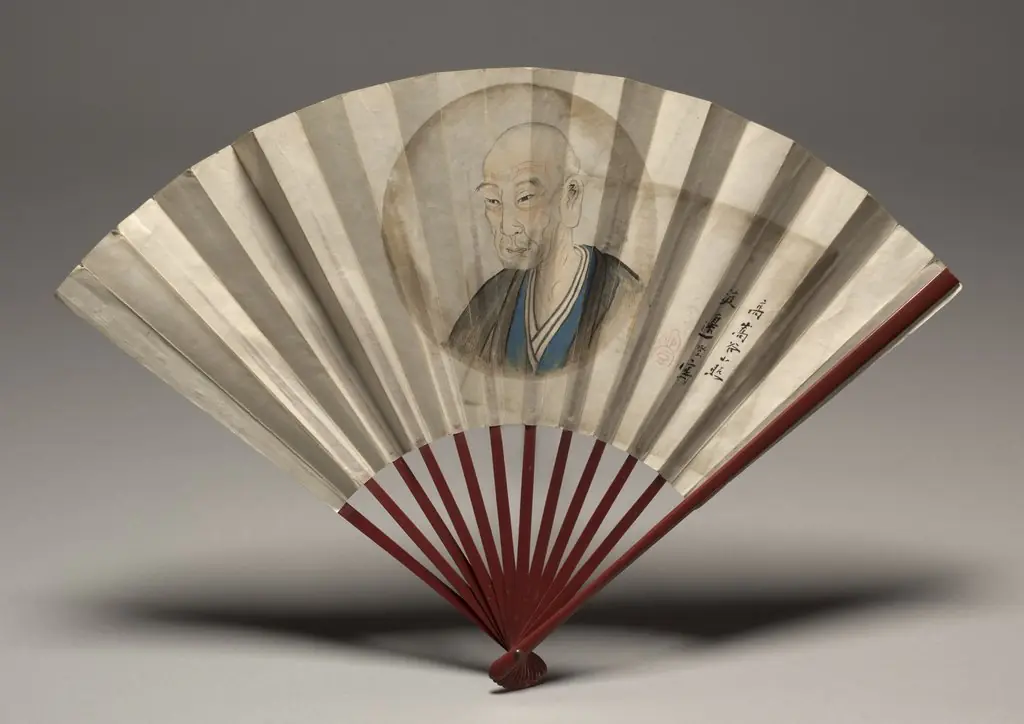 Portrait of Kō Sūkoku
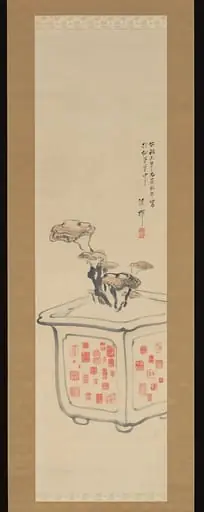 Untitled
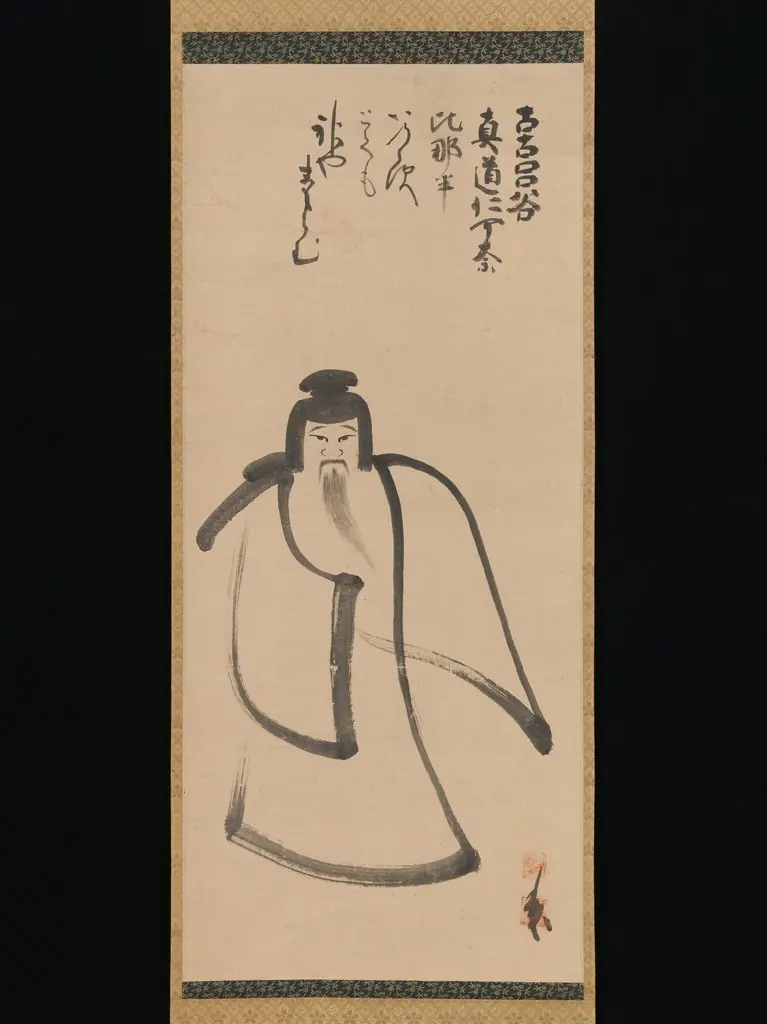 Tenjin Traveling to China
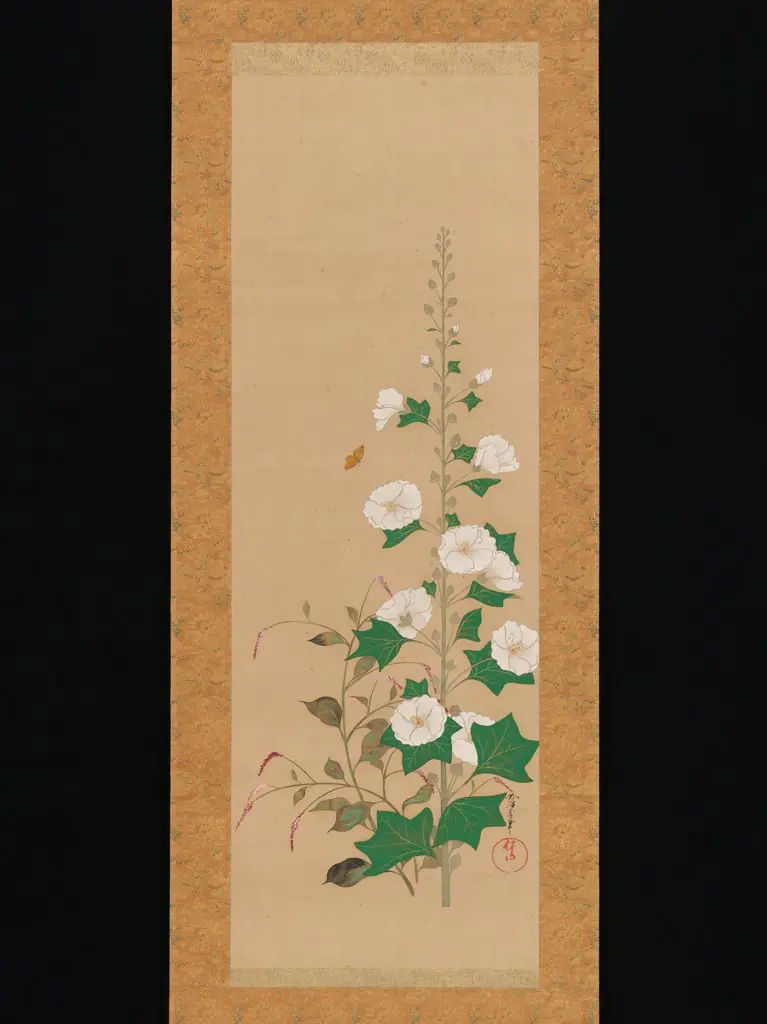 Hollyhocks and Prince’s-Feather Flowers
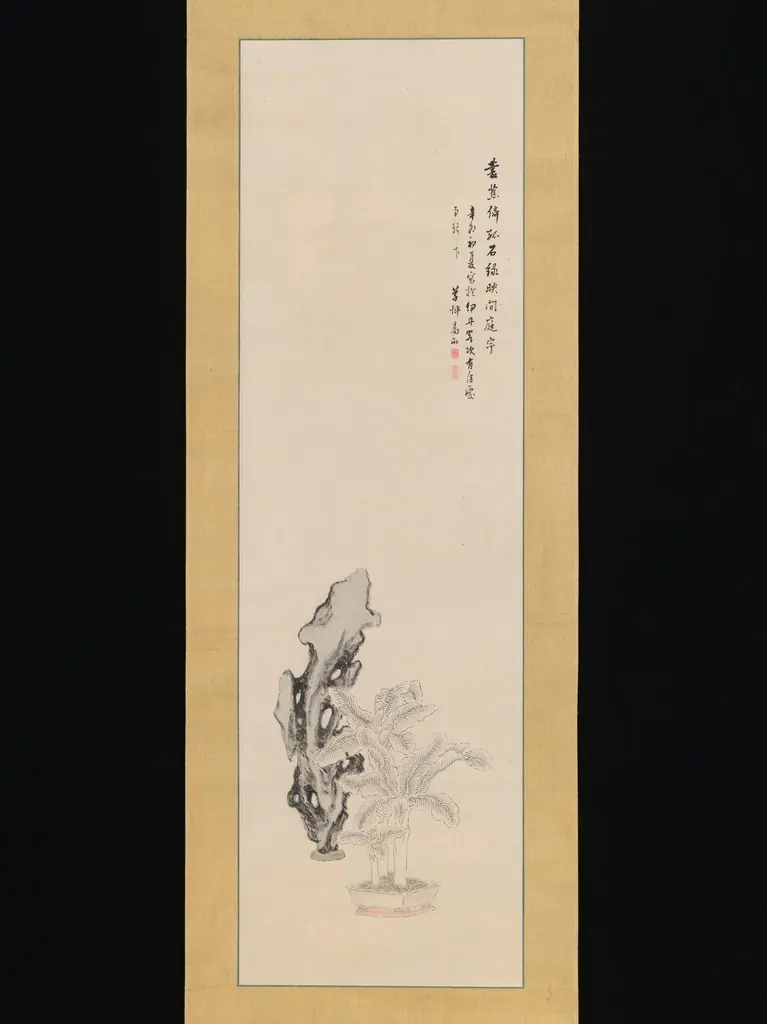 Taihu Rock and Banana Plant
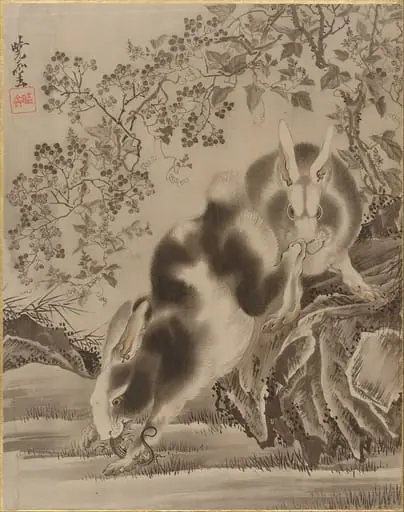 Untitled
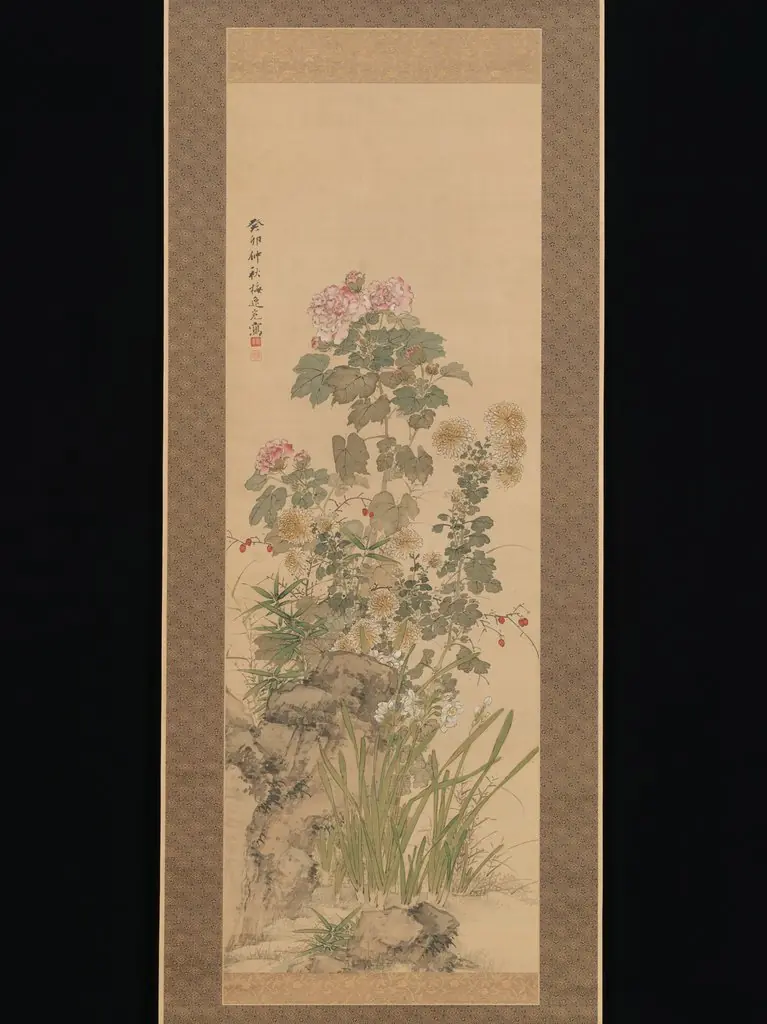 Autumn Flowers
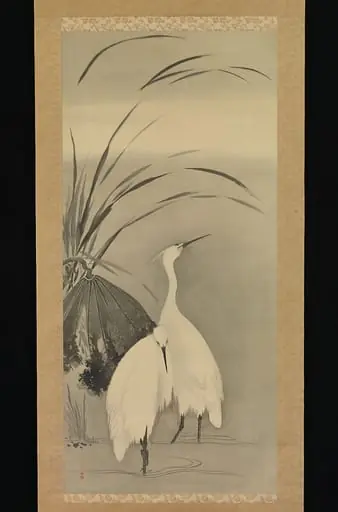 Untitled
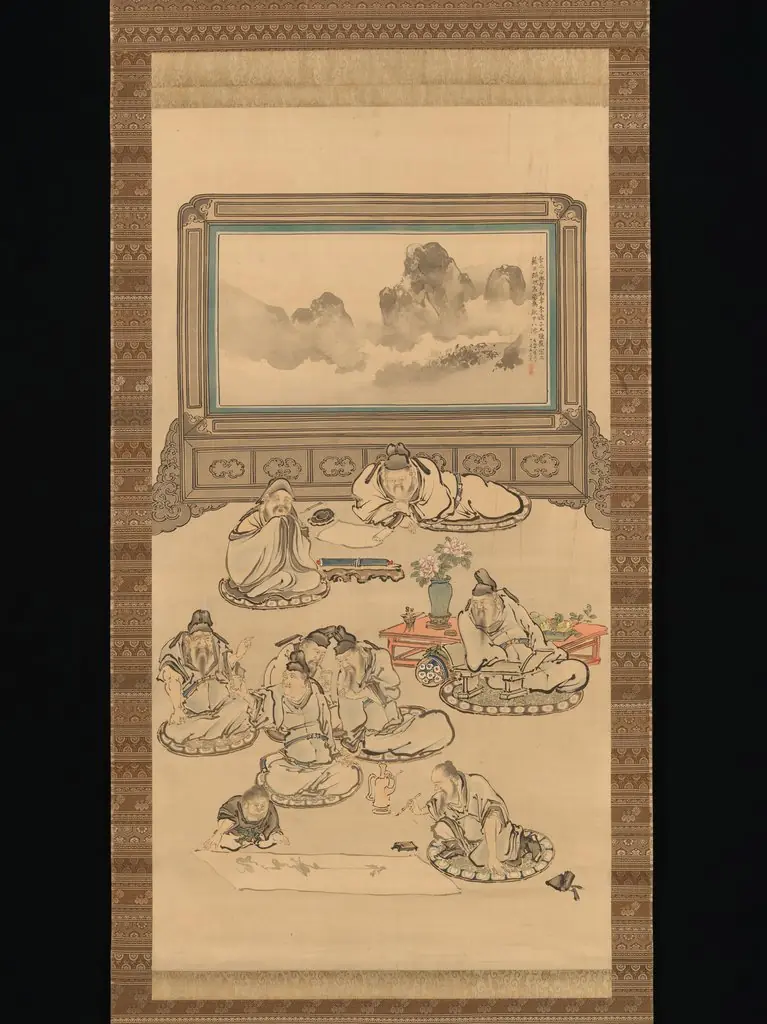 The Eight Immortals of the Wine Cup
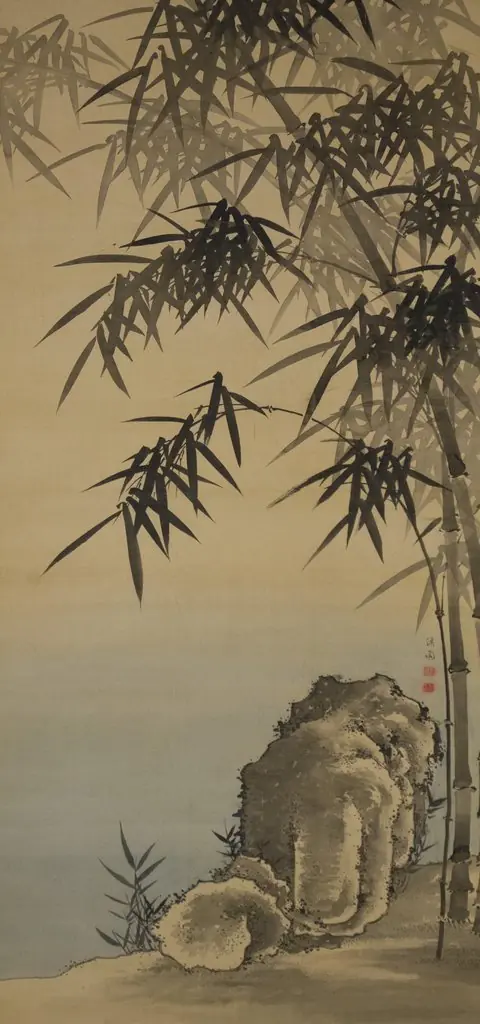 Rock and Bamboo (Chikuseki zu)
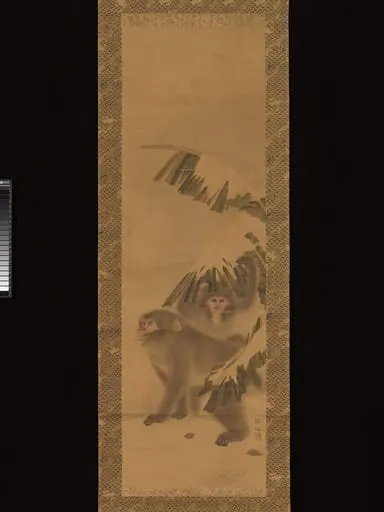 Untitled
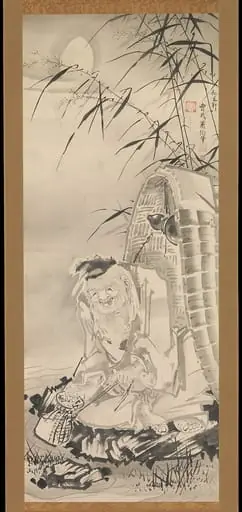 曽我蕭白筆 太公望図|Tōkaibō with a Fishing Basket
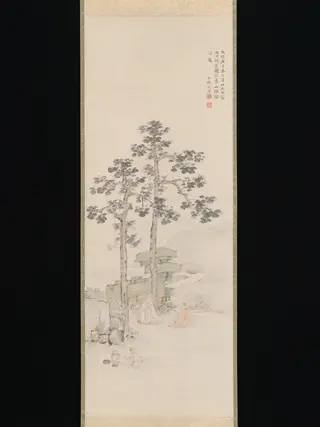 Sampling Tea beneath the Wu Trees
![For a hundred years [I have been] a person with no attachments, by Jiun, 1792](https://artifactworldgallery.com/img/jiun--for-a-hundred-years-i-have-been-a-person-with-no-attachments--b29f06e3a79d2459-w320.webp) For a hundred years [I have been] a person with no attachments
For a hundred years [I have been] a person with no attachments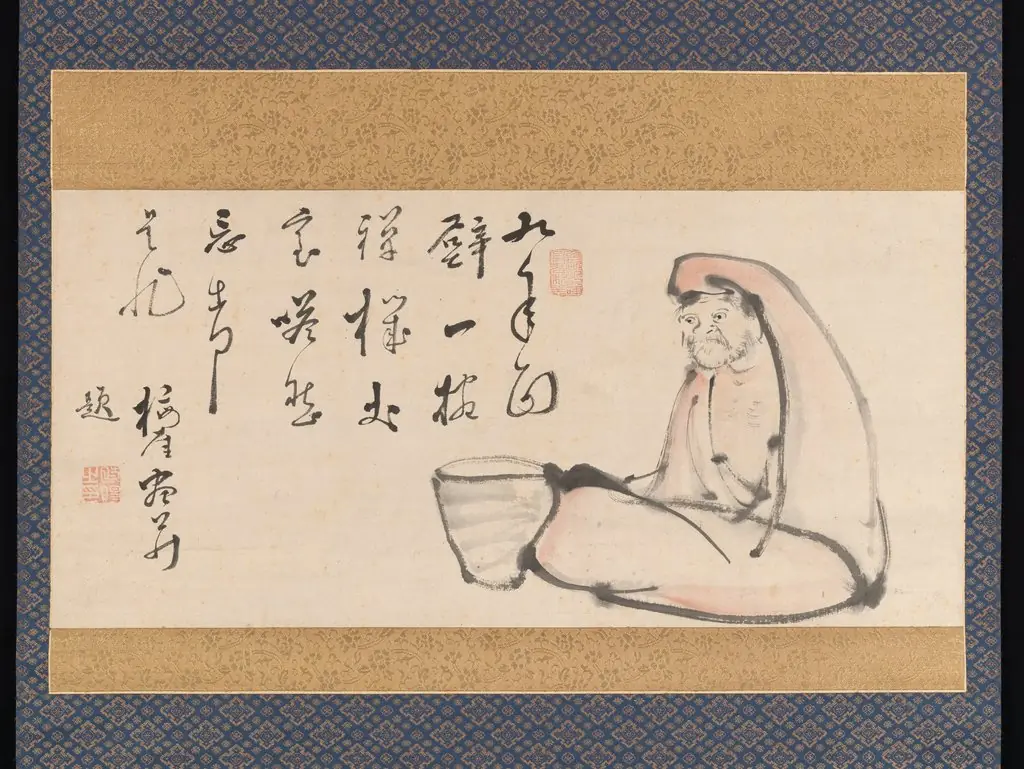 Daruma
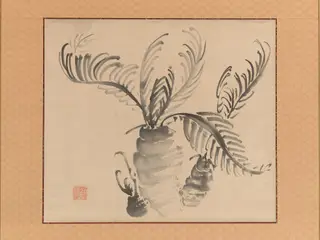 Cycad
Cycad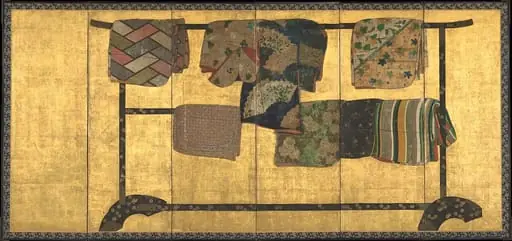 誰ヶ袖図屏風|Tagasode (“Whose Sleeves?”)
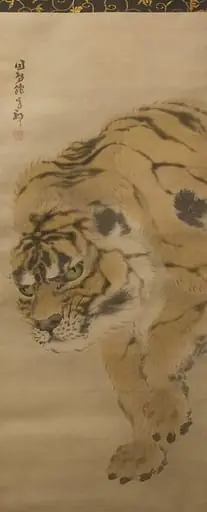 Untitled
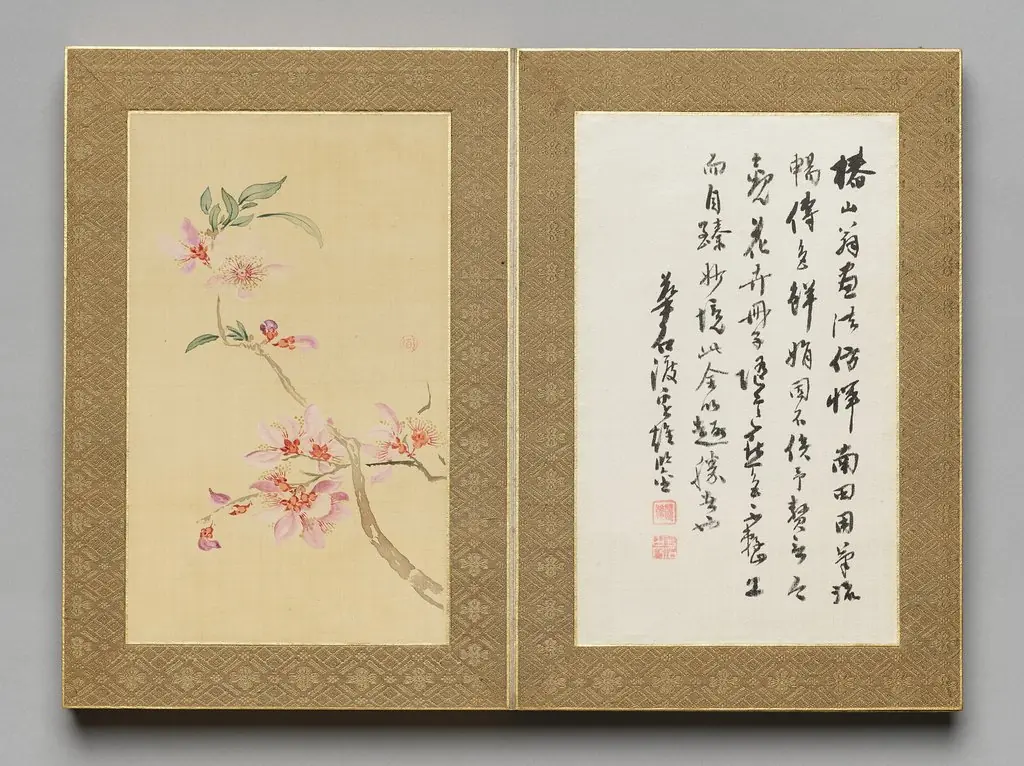 Preface from Flowers and Grasses
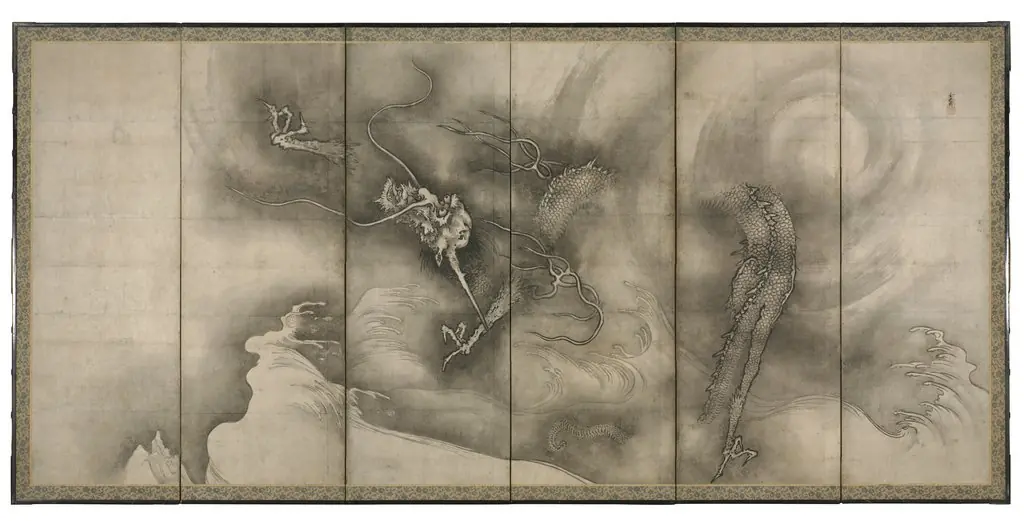 Dragon and Tiger
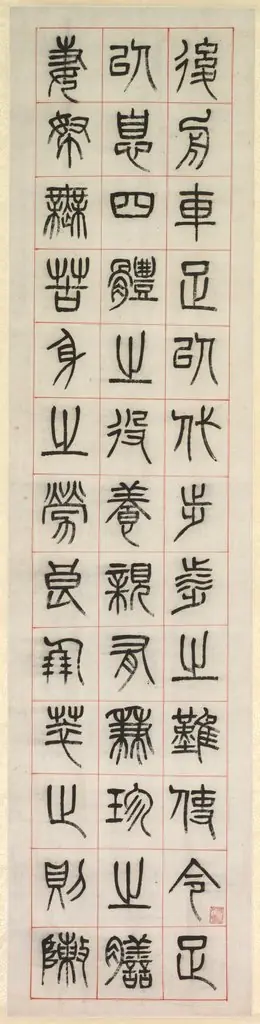 On Happiness, Calligraphy in Seal Script Style (zhuanshu)
 Selections from the New Collection of Japanese Poems from Ancient and Modern Times (Shinkokin wakashū) with Printed Designs of Chinese Lions and Crab Finger Grass
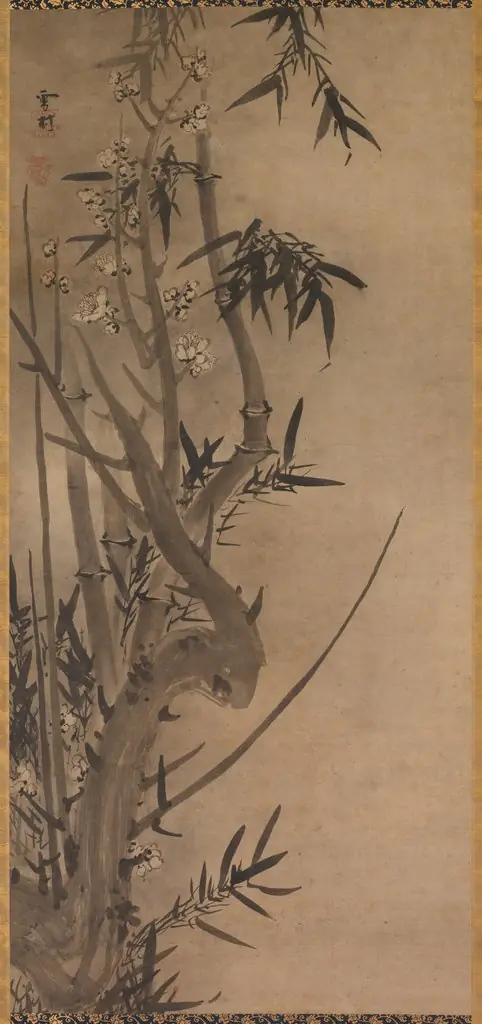 Bamboo and Plum
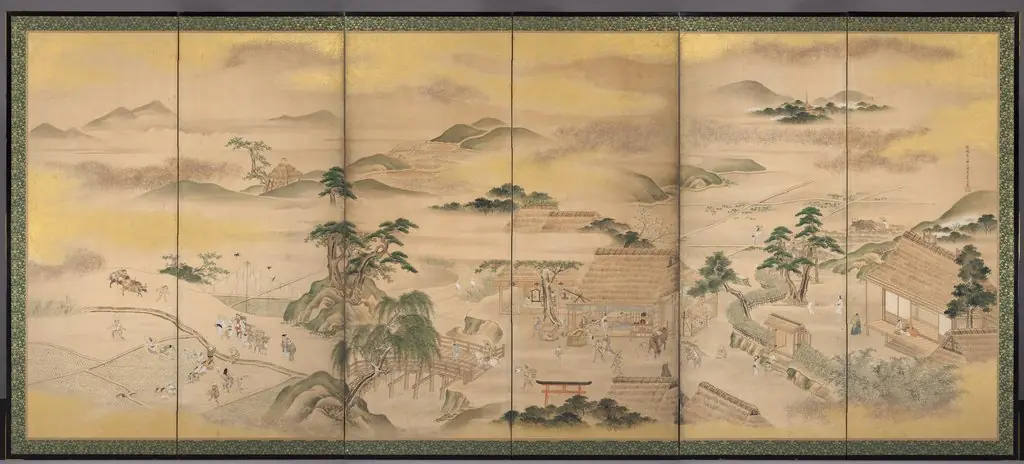 Spring and Autumn Farming (Spring)
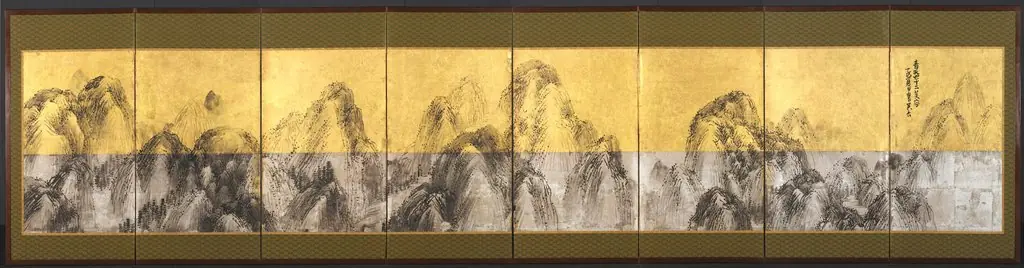 Seventy-two Peaks Against the Blue Sky
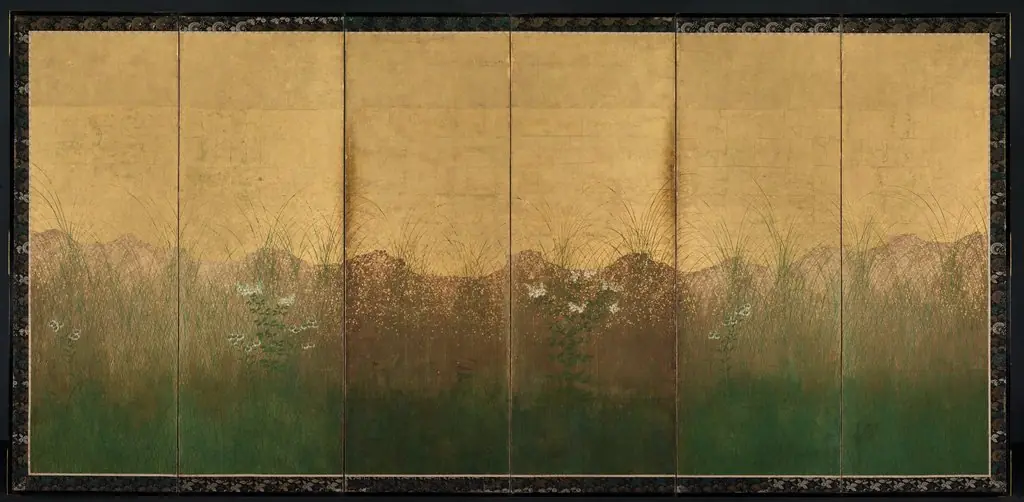 Autumn Evening with Full Moon on Musashino Plain
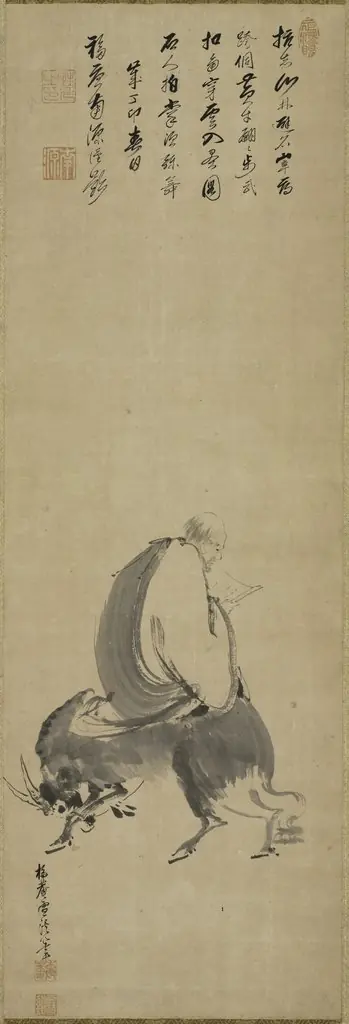 Weizheng Riding on an Ox
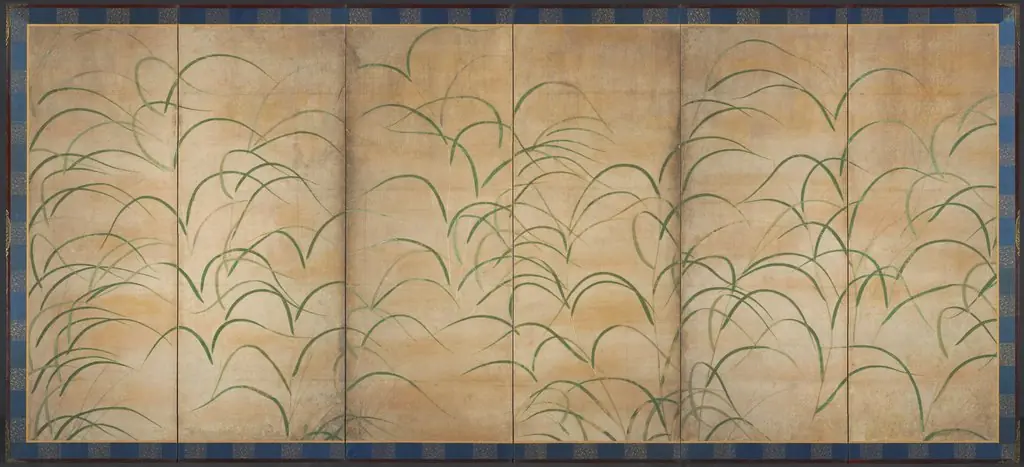 Susuki Grass
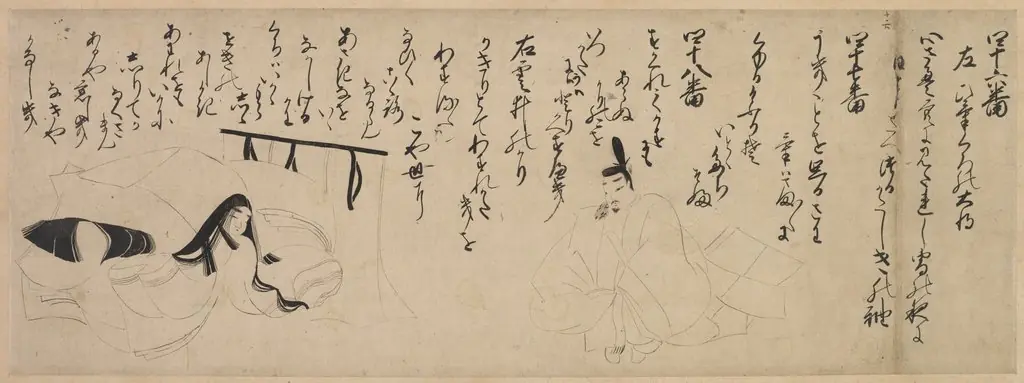 Section of an Illustrated Tale of Genji Poetry Contest
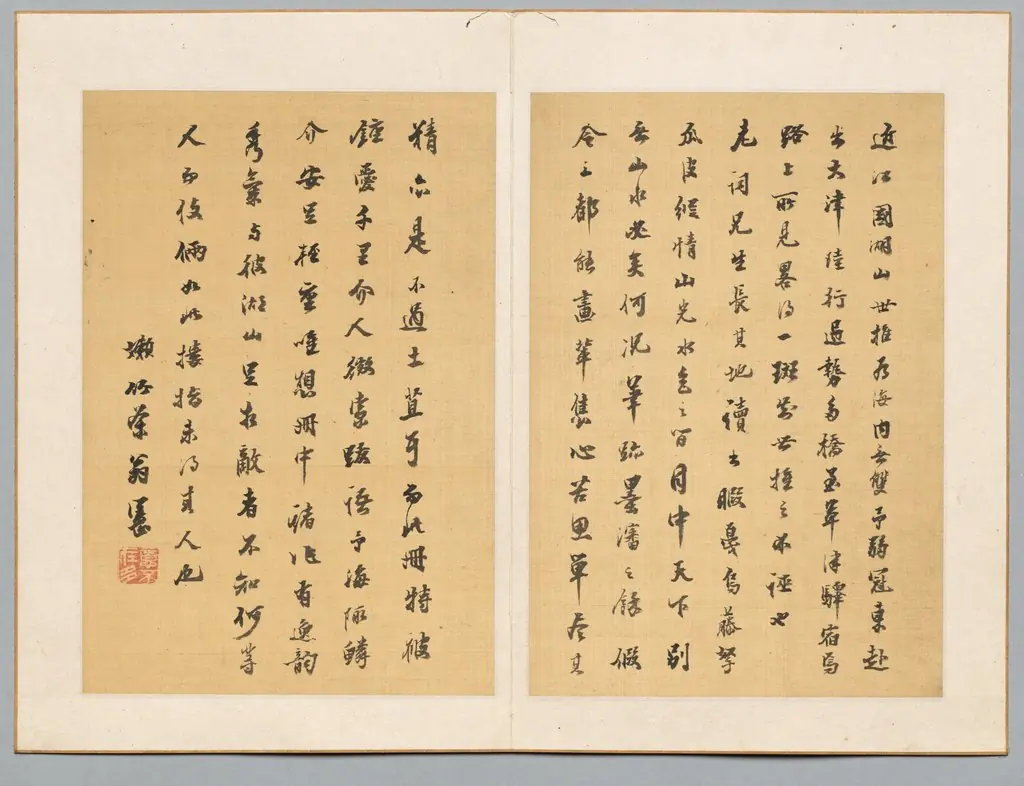 Calligraphy
 Fish in a Lotus Pond
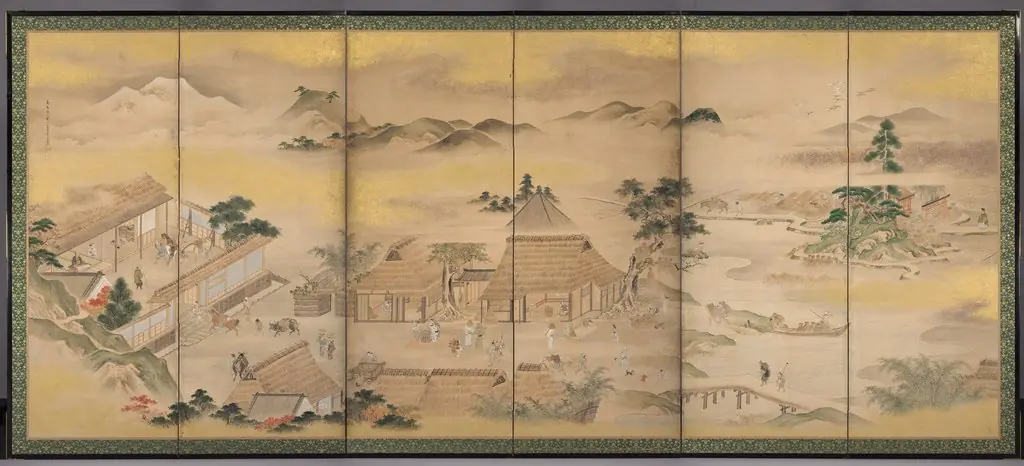 Spring and Autumn Farming (Autumn)
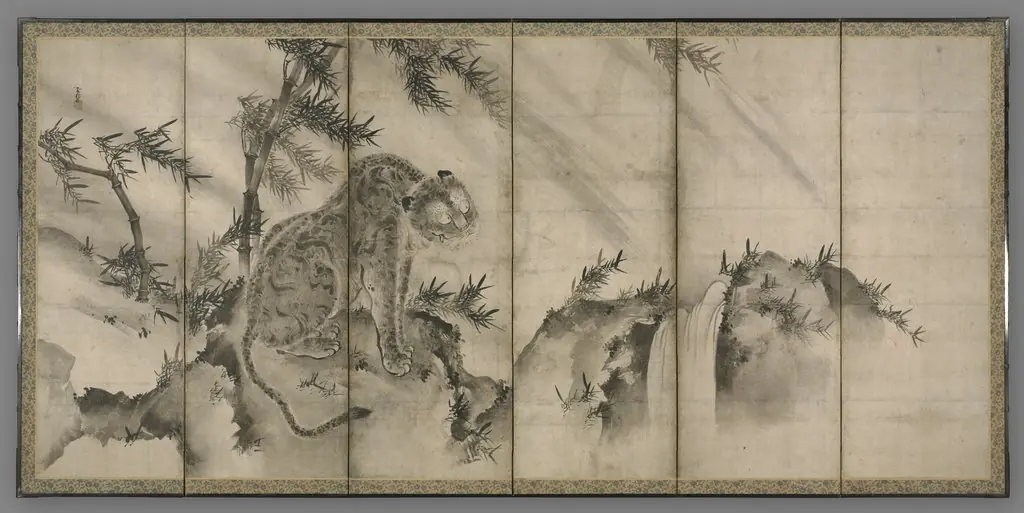 Dragon and Tiger
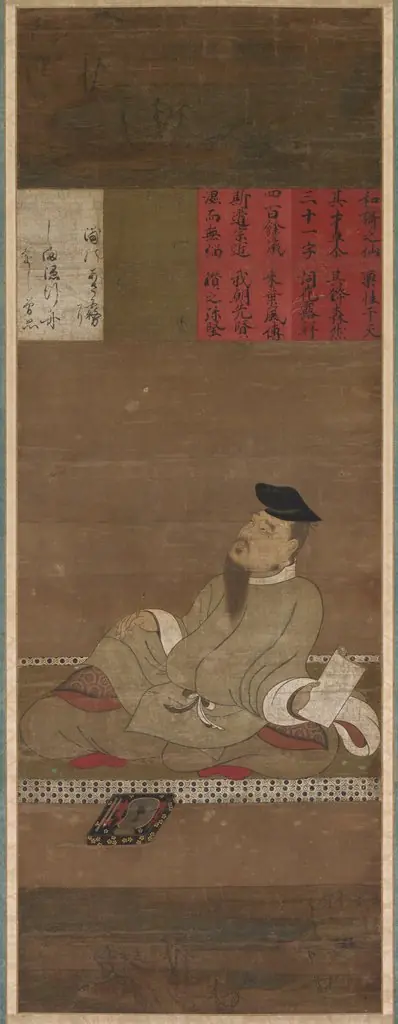 The Poet Kakinomoto no Hitomaro
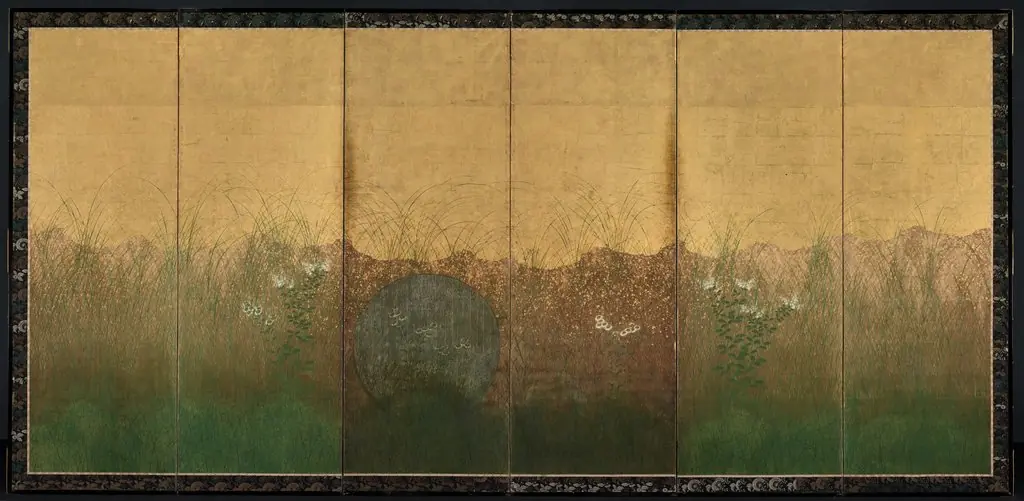 Autumn Evening with Full Moon on Musashino Plain
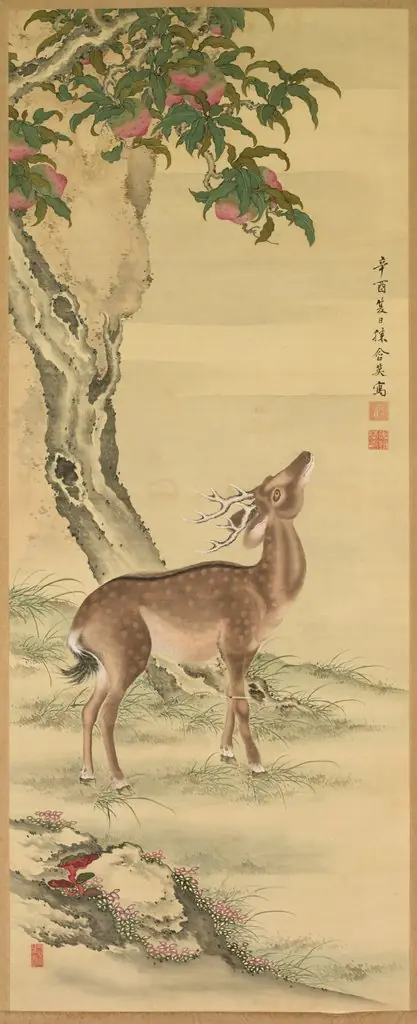 Symbols of Longevity: Deer under Peach and Pine
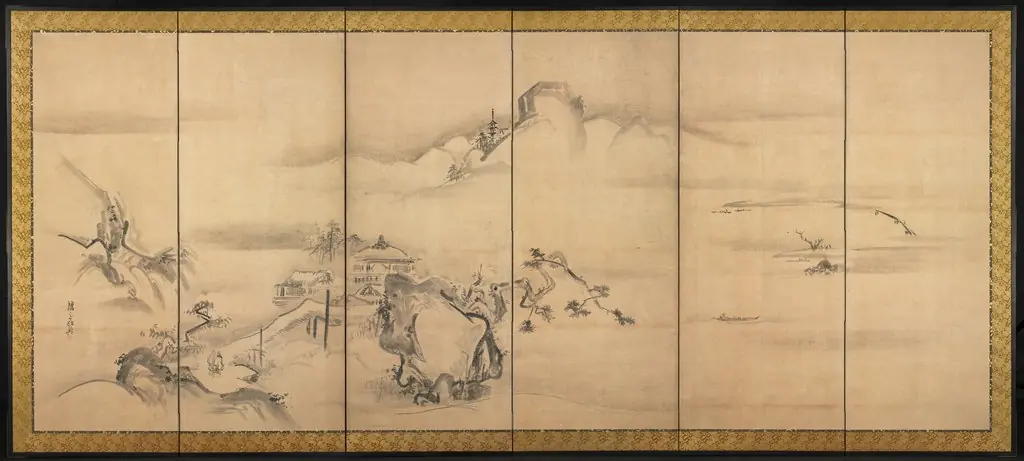 Eight Views of the Xiao and Xiang Rivers
 The Shadow Dancers
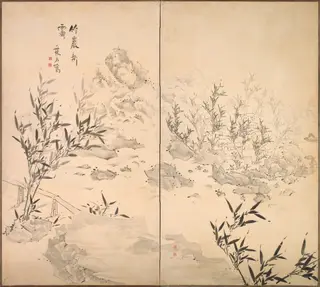 Bamboo in Fine Weather after Rain
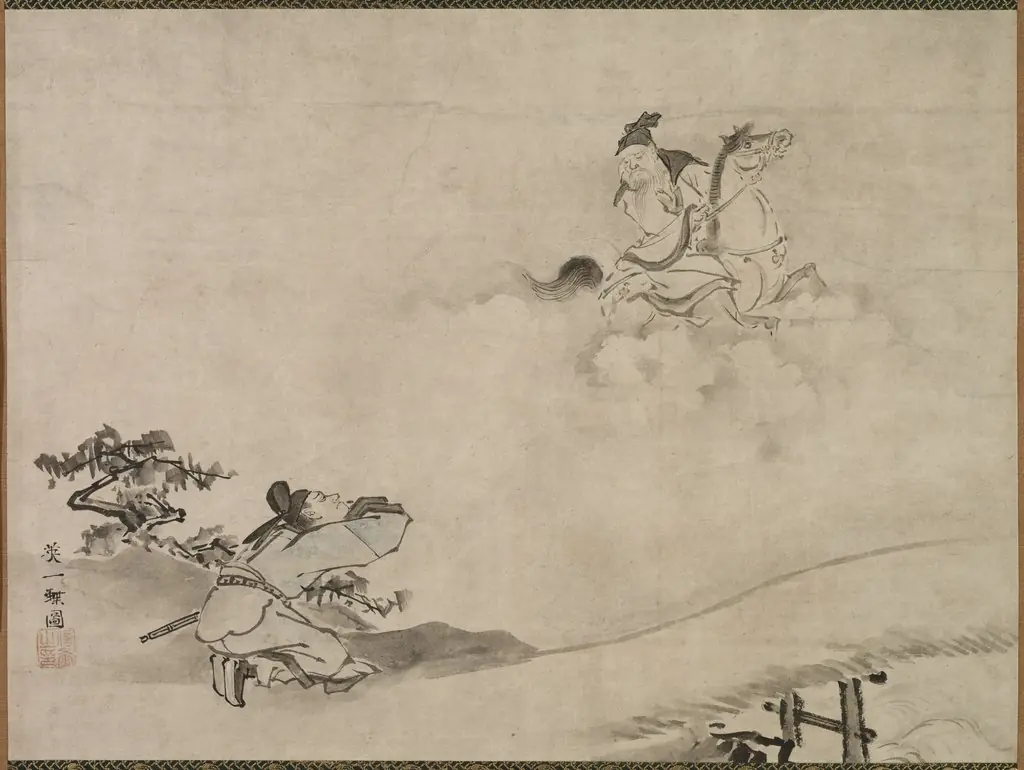 Daoist Immortal
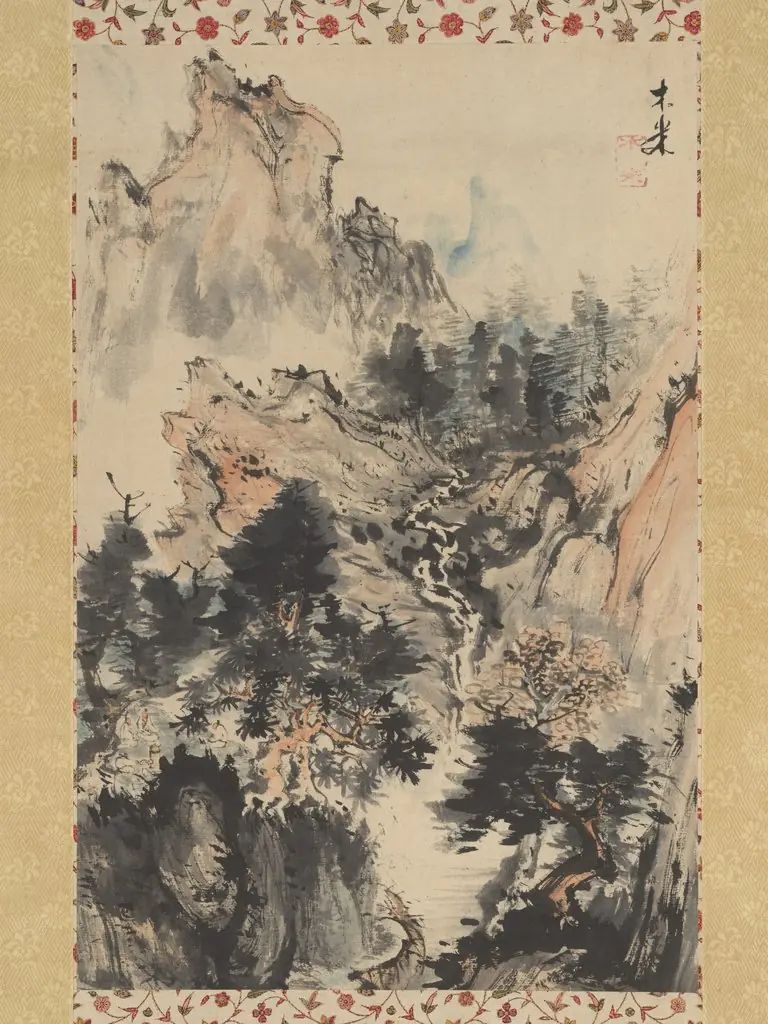 Brewing Tea in the Shade of Trees
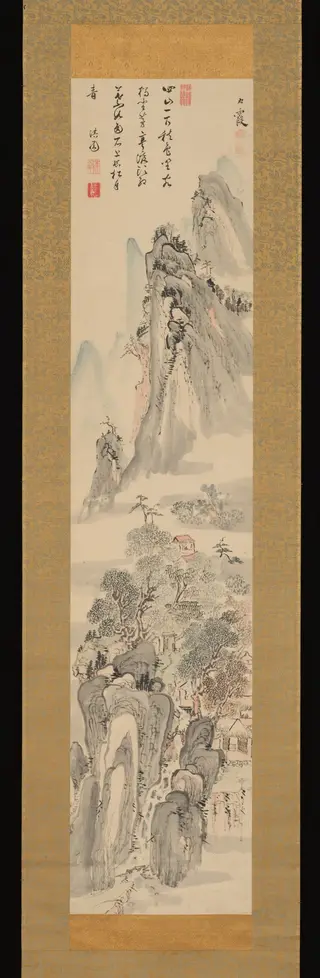 Autumn Landscape 秋景山水 図 (Shūkei sansui zu)
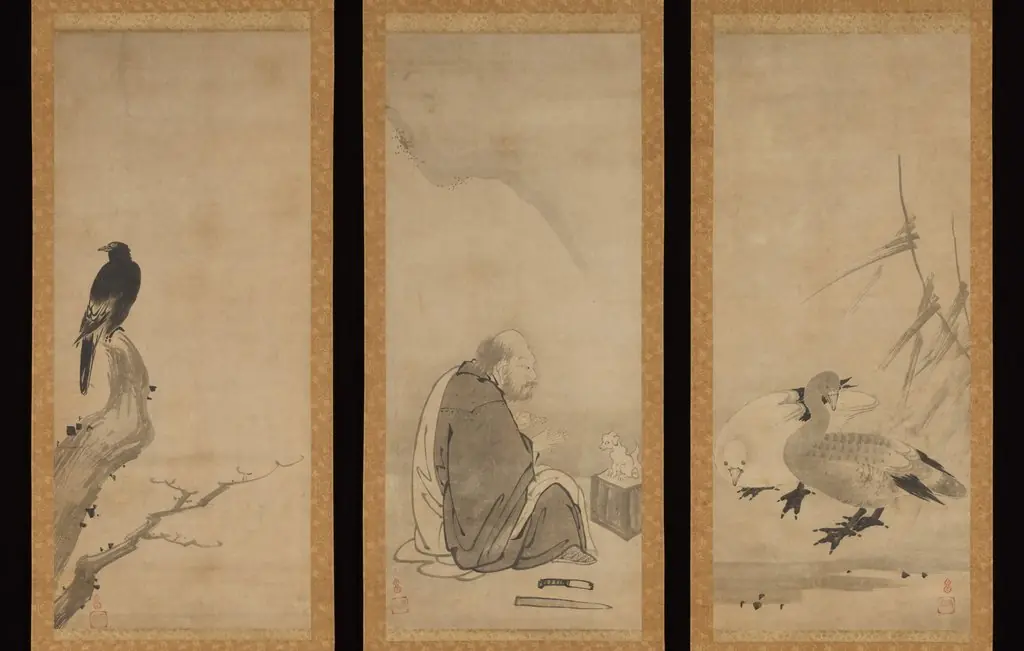 Huineng, the Sixth Patriarch of Zen, with Geese and Myna
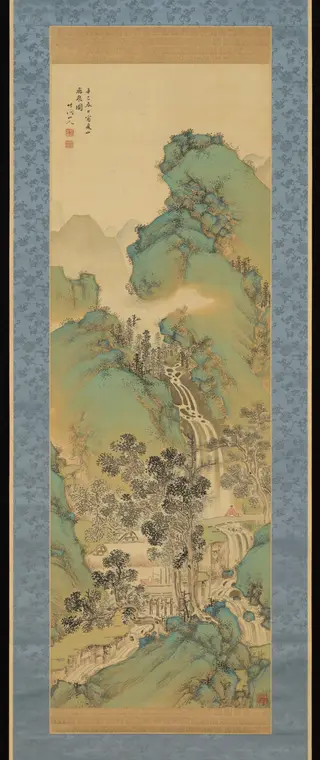 Waterfall in Summer Mountain (Kazan hisen zu) 夏山飛泉図
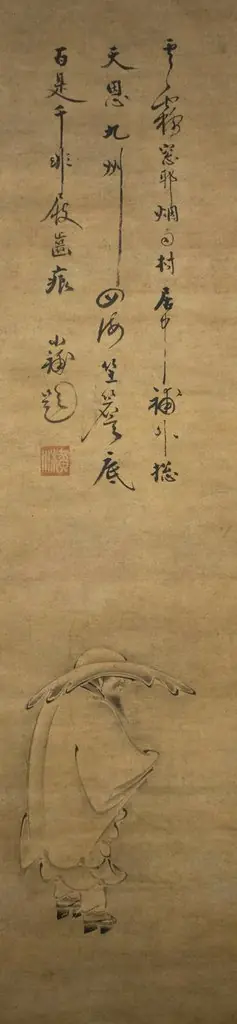 Su Dongpo in a Borrowed Hat (Tōba tairyū zu)
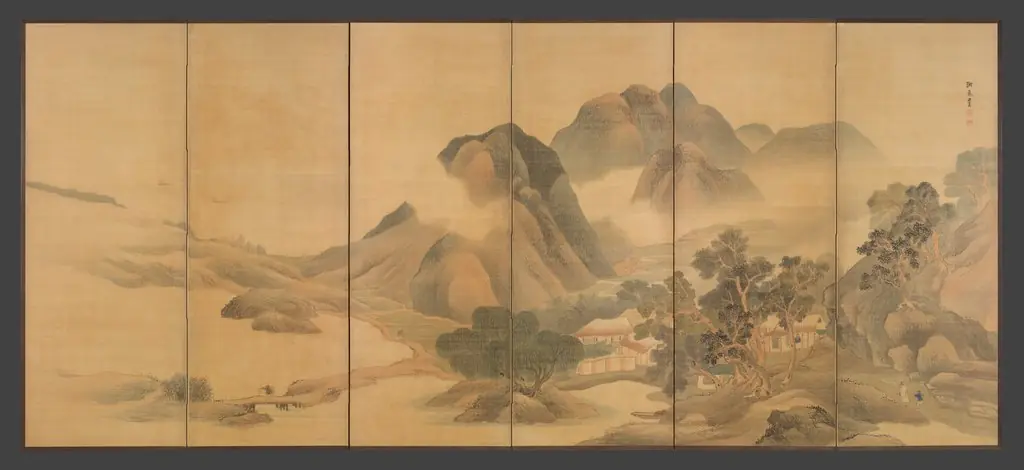 Travels through Mountains and Fields
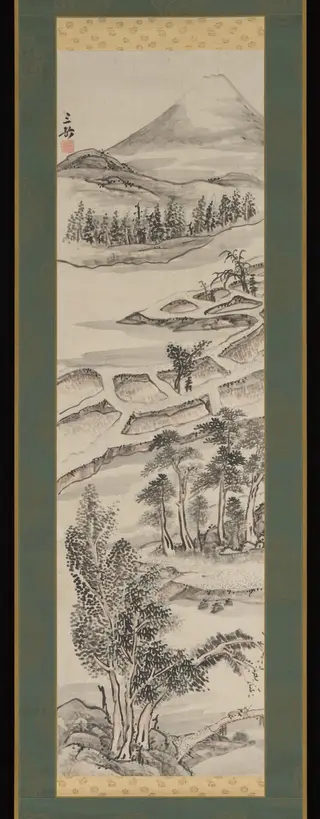 Mount Fuji
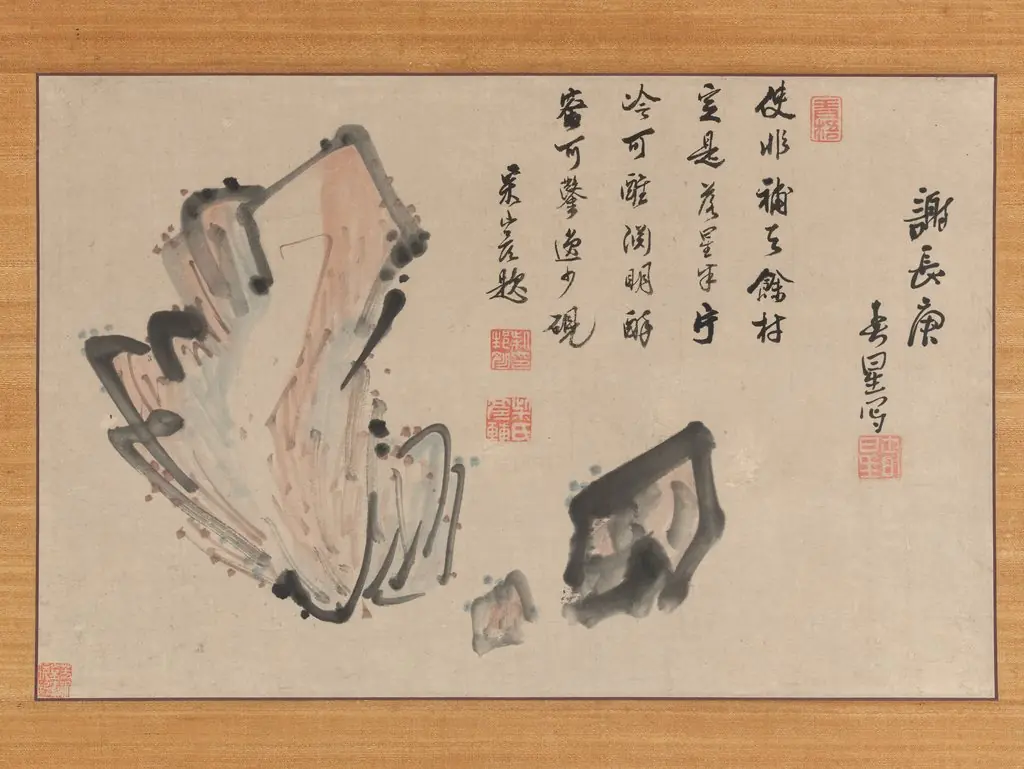 Rocks
Rocks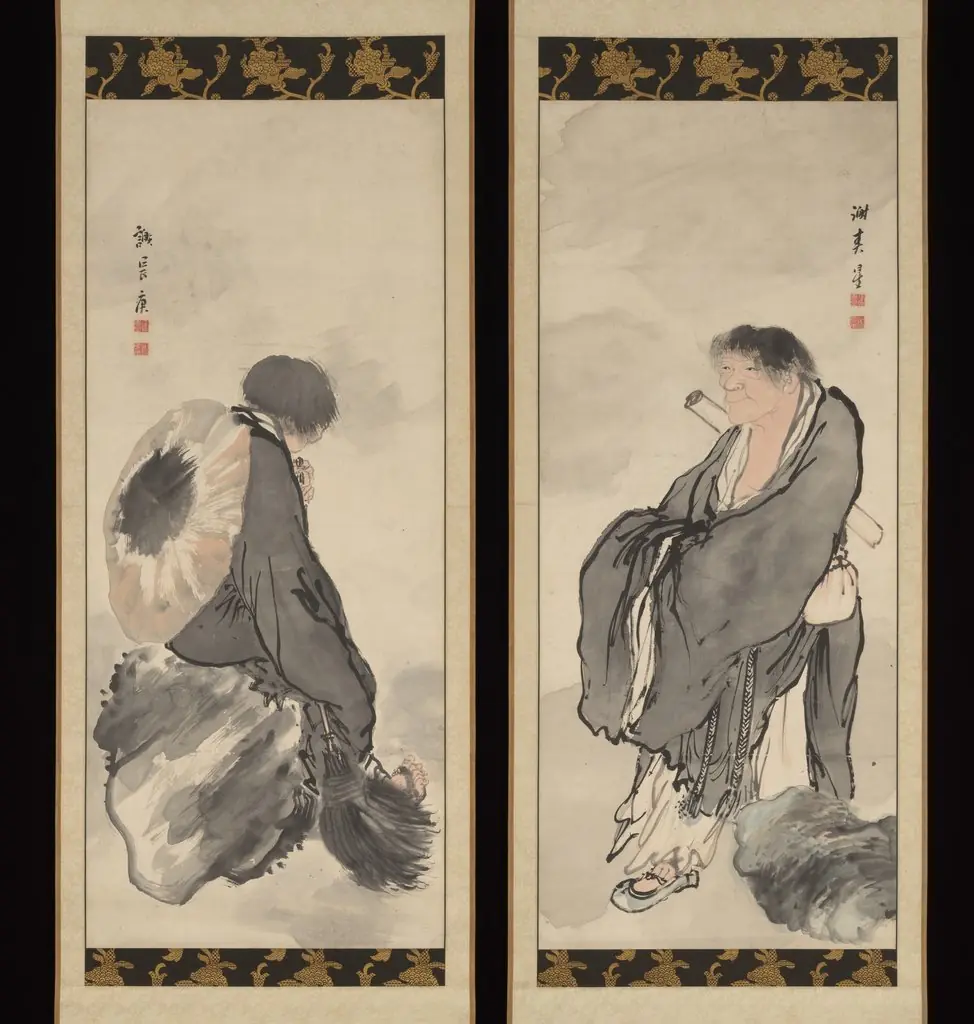 Hanshan and Shide
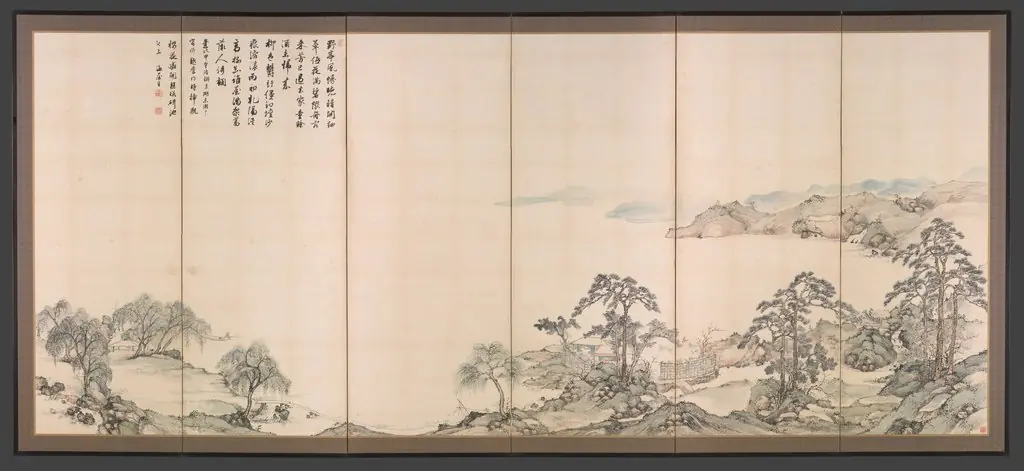 Lake Biwa in Four Seasons
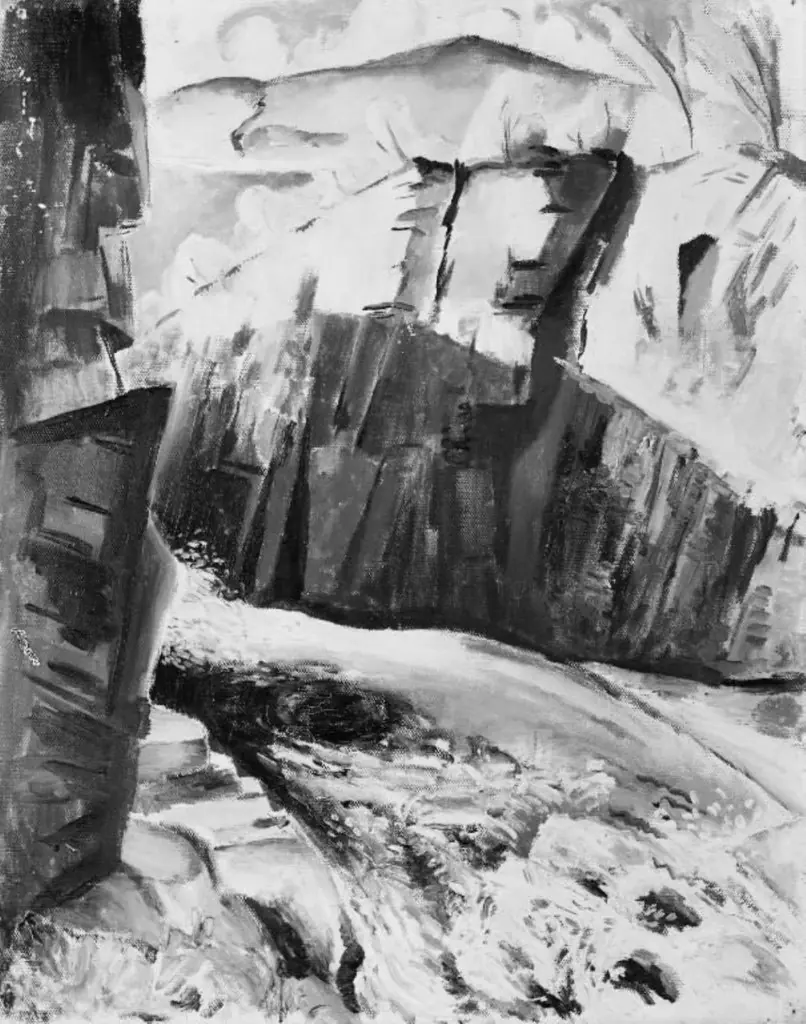 The Waterfall in the Ravine
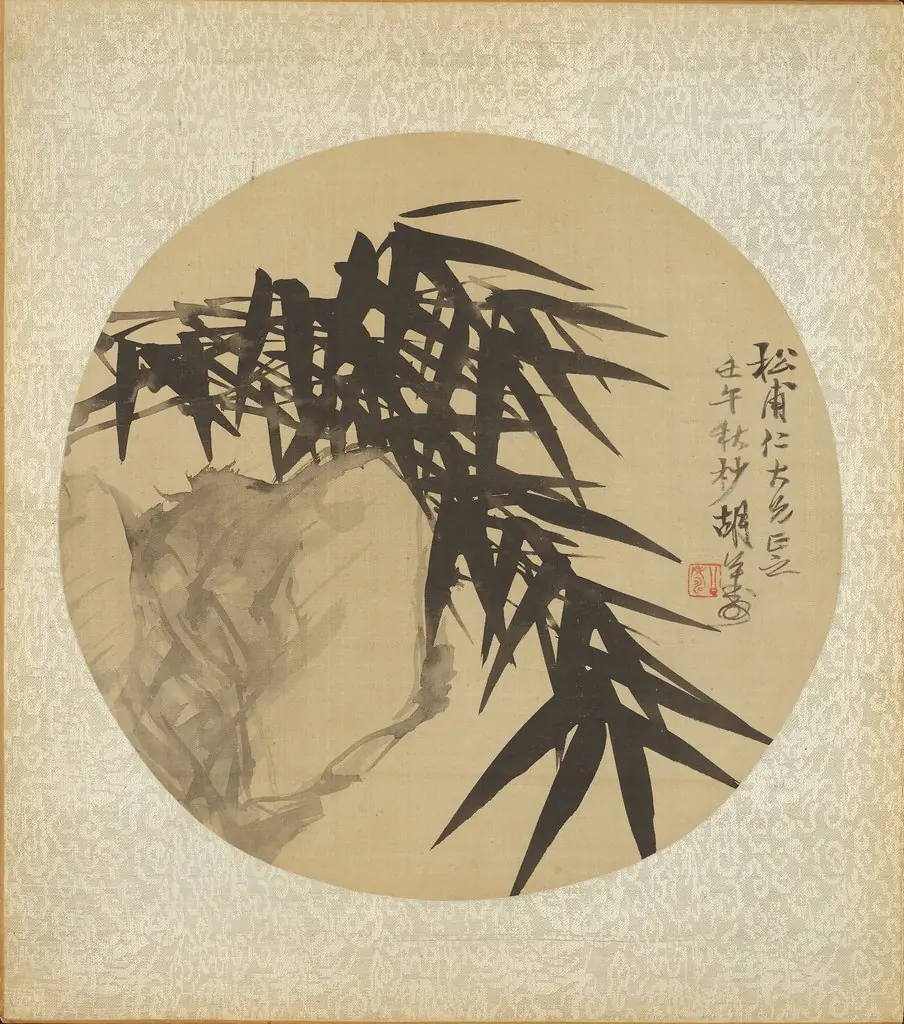 One of Sixteen Album Leaves
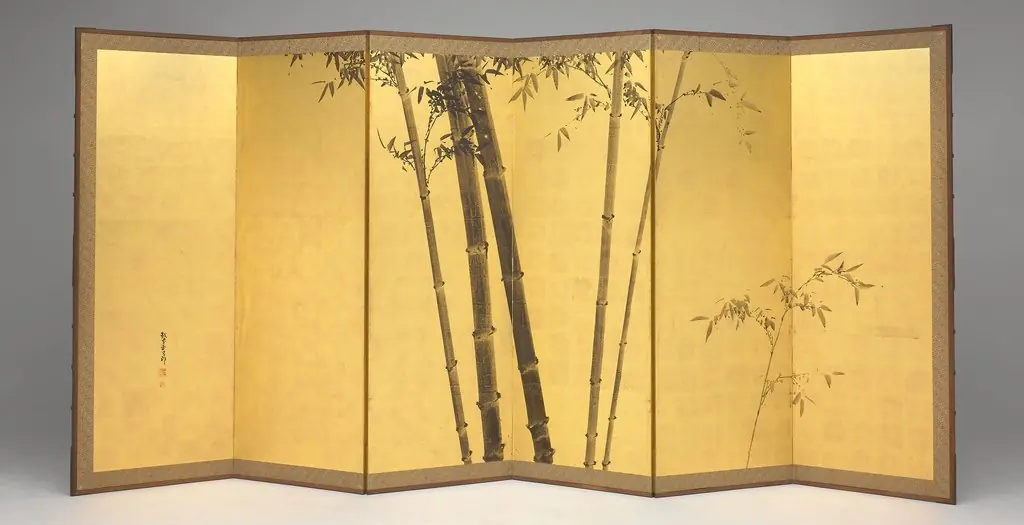 Bamboo
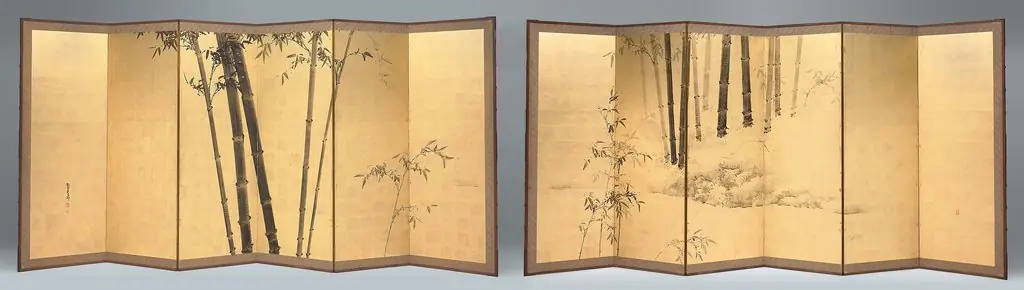 Bamboo
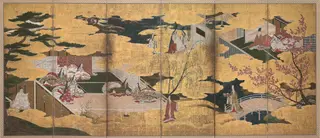 The Tale of Genji
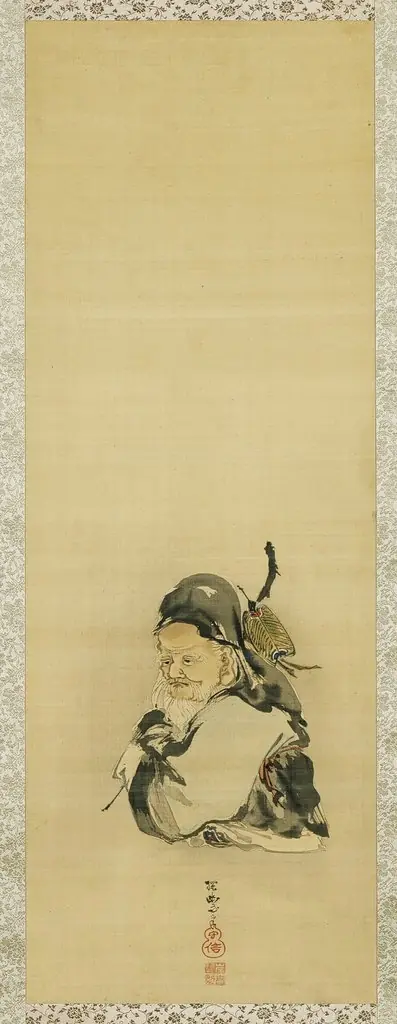 Buddhist Sage
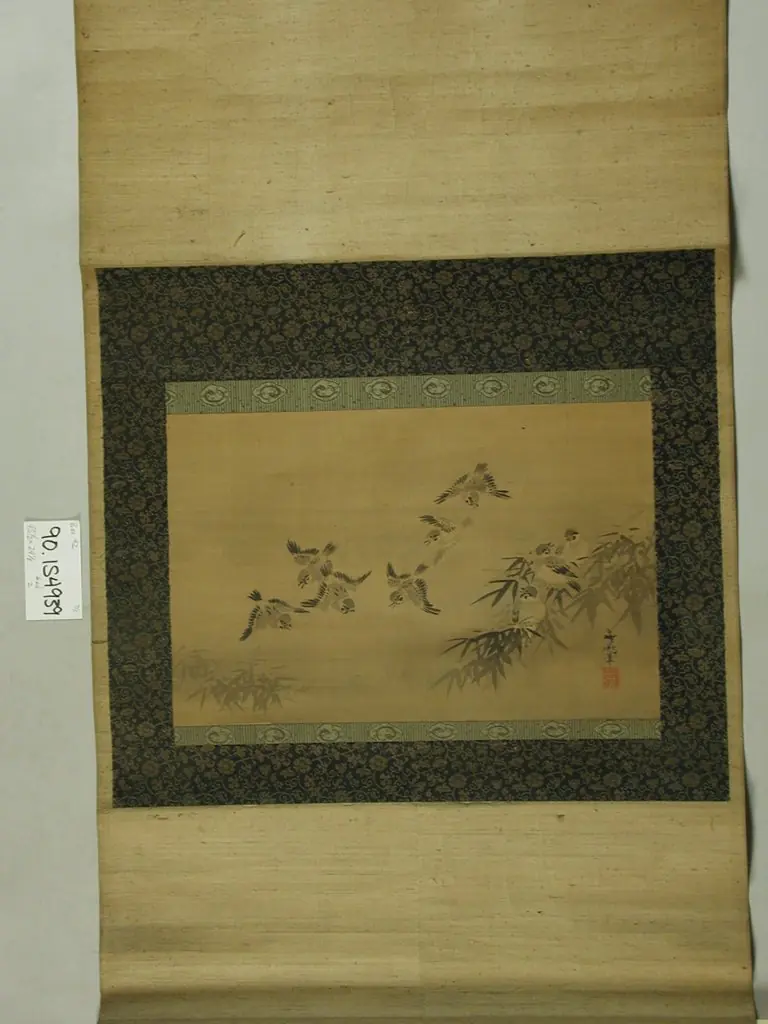 Kakemono
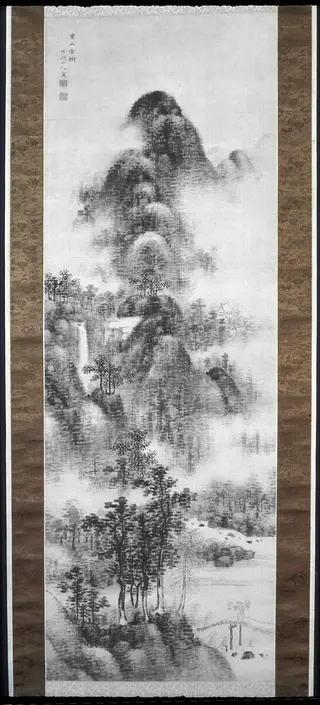 Misty Landscape
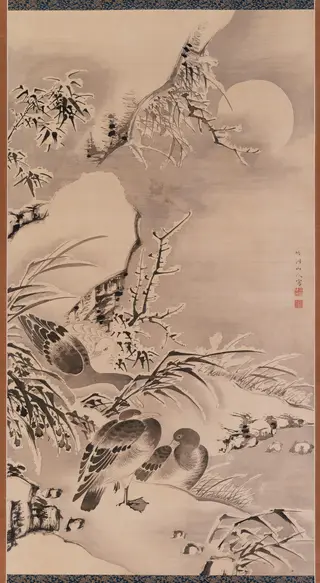 Ducks in the Winter Moonlight
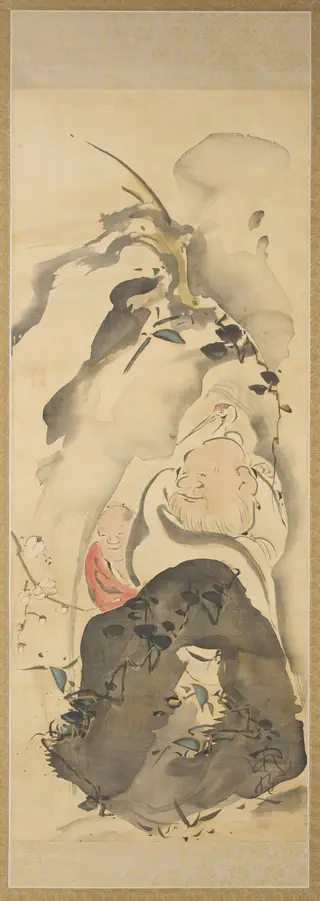 Lin Heqing and Plum Blossoms
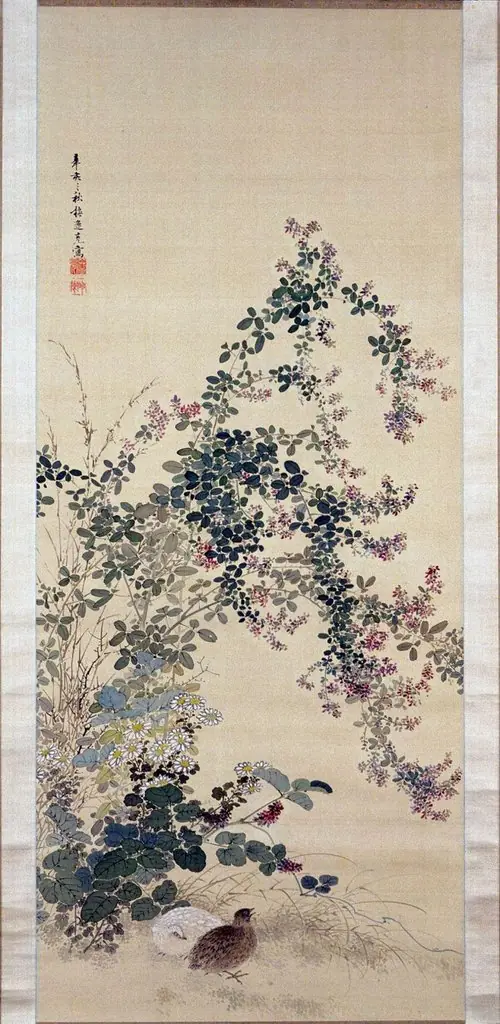 Bush Clover and Quails
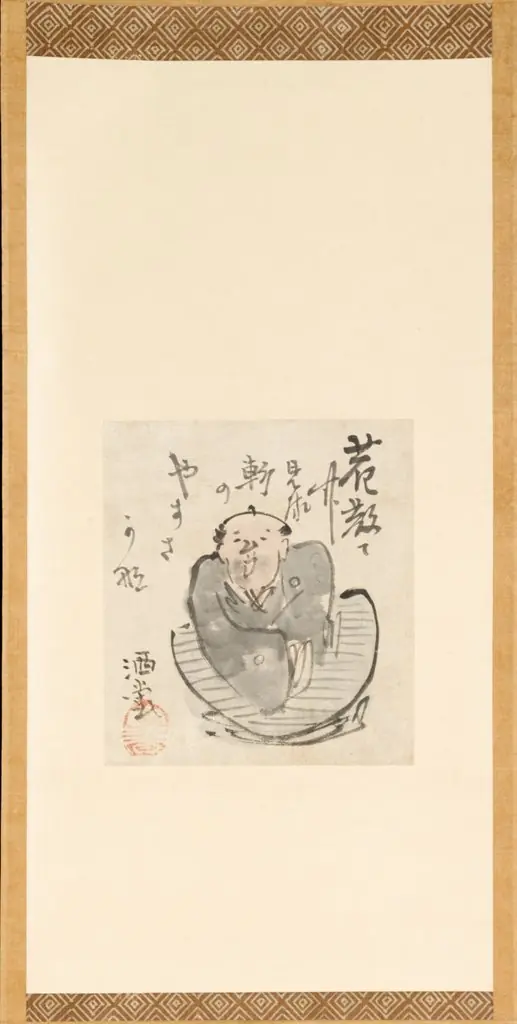 Portrait of Haiku Poet Shado
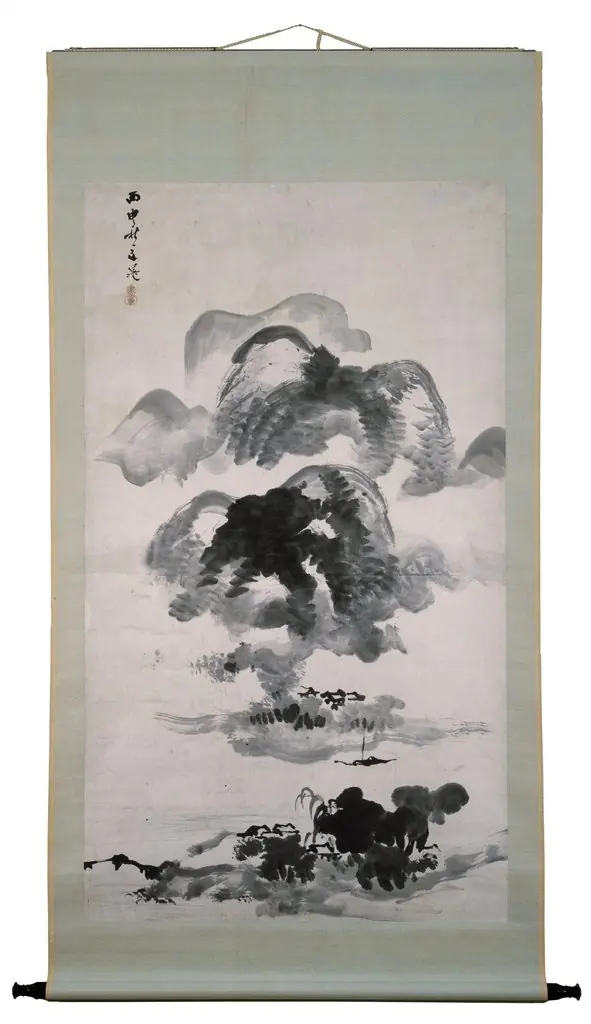 Landscape
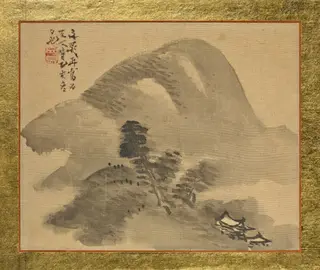 Mountain Landscape
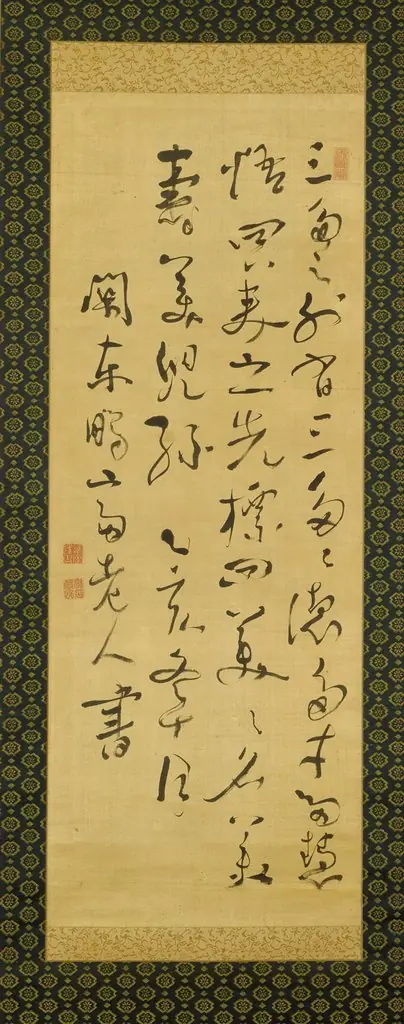 Confucian Poem
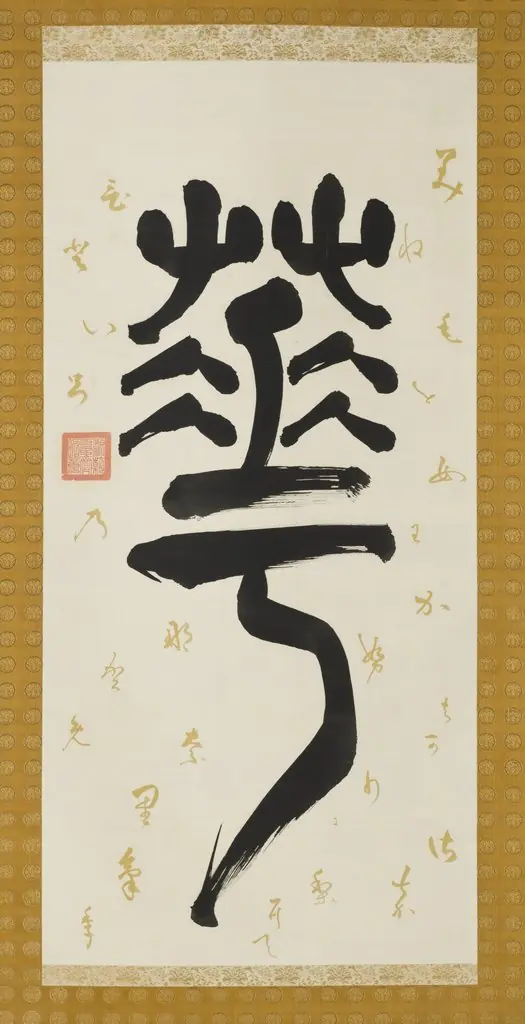 Snow, Moon, Flower Calligraphy
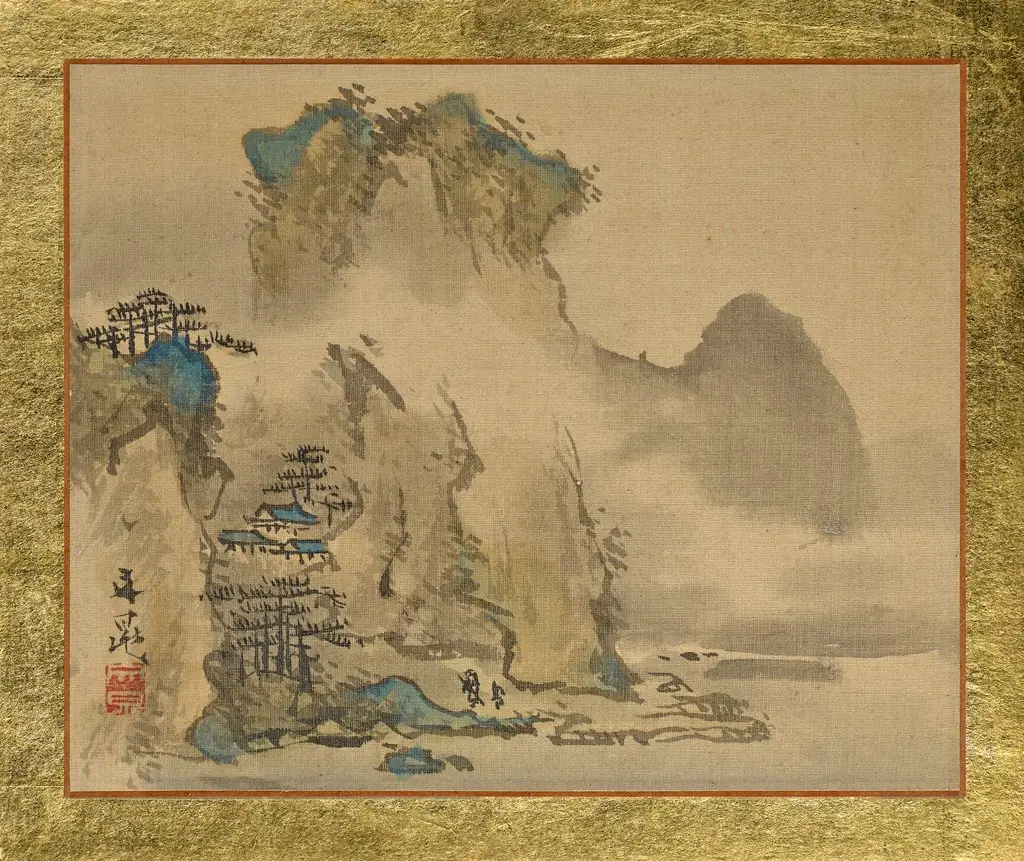 An Old Man and his Attendant heading towards a House on a Hill
 A House on a Cliff with Mountains in the Background
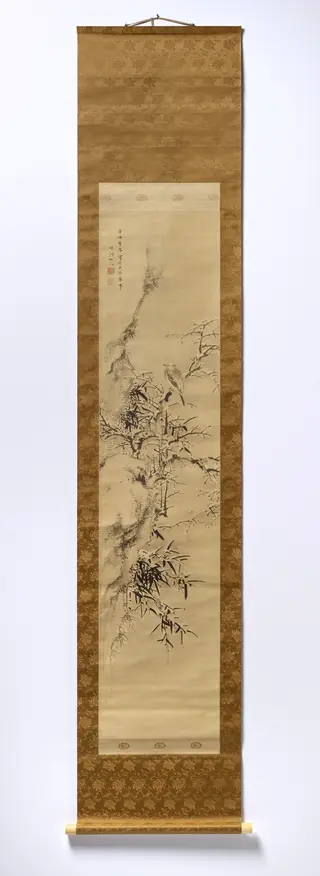 Bird in Snow
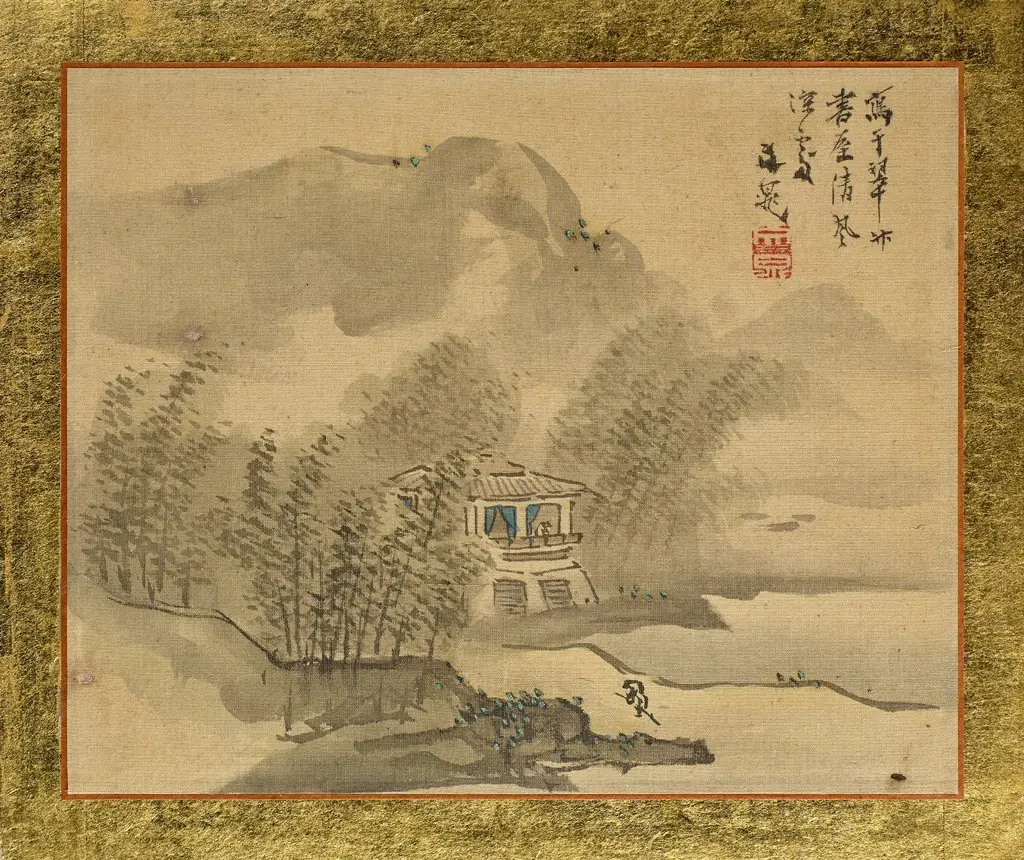 A House in a Bamboo Grove at the Shore
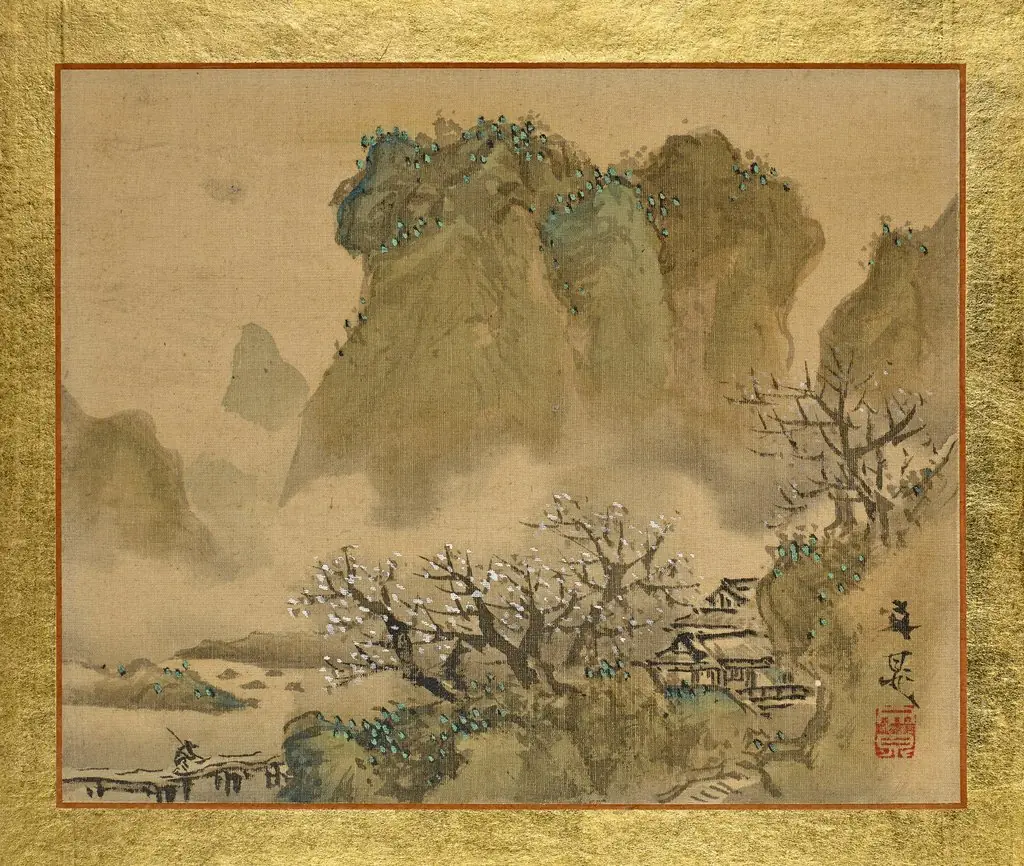 A Country House in a Valley with a Blossoming Plum Tree
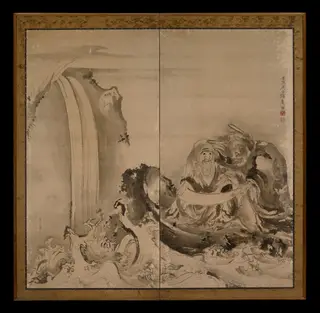 Two Figures (most likely Ryo Douhin receiving the Taoist law from Shou Rikken)
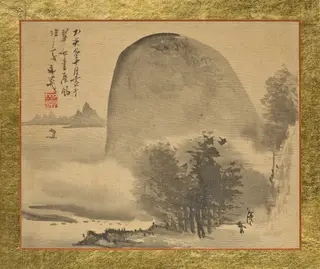 A Small Grove of Trees before a Rounded Hill at the Shore
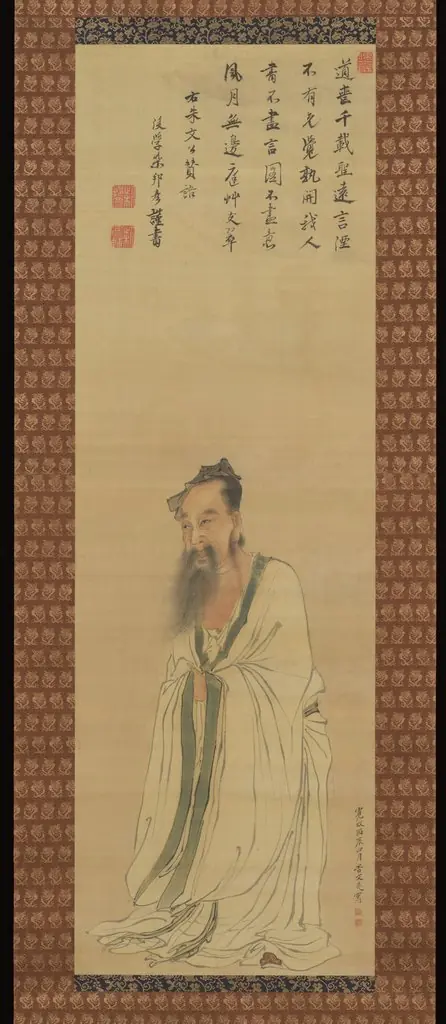 Portrait of Zhu Xi 朱熹像 (Shuki zō)
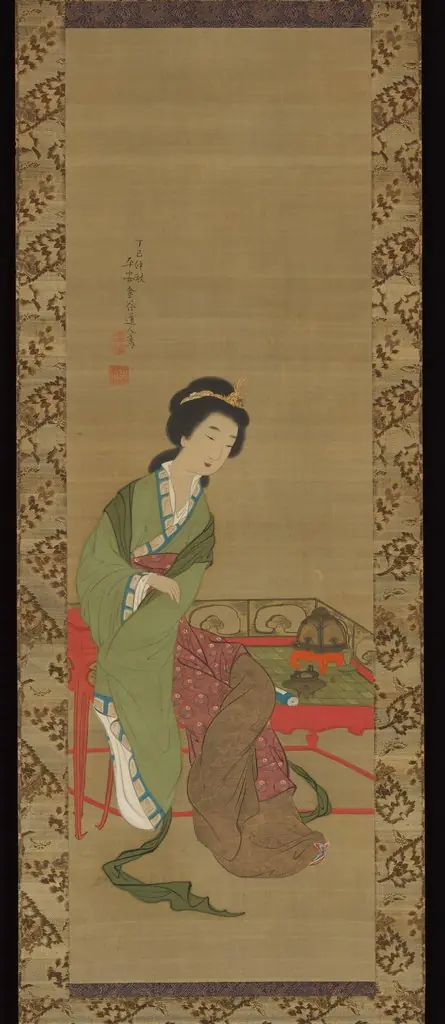 Chinese Beauty
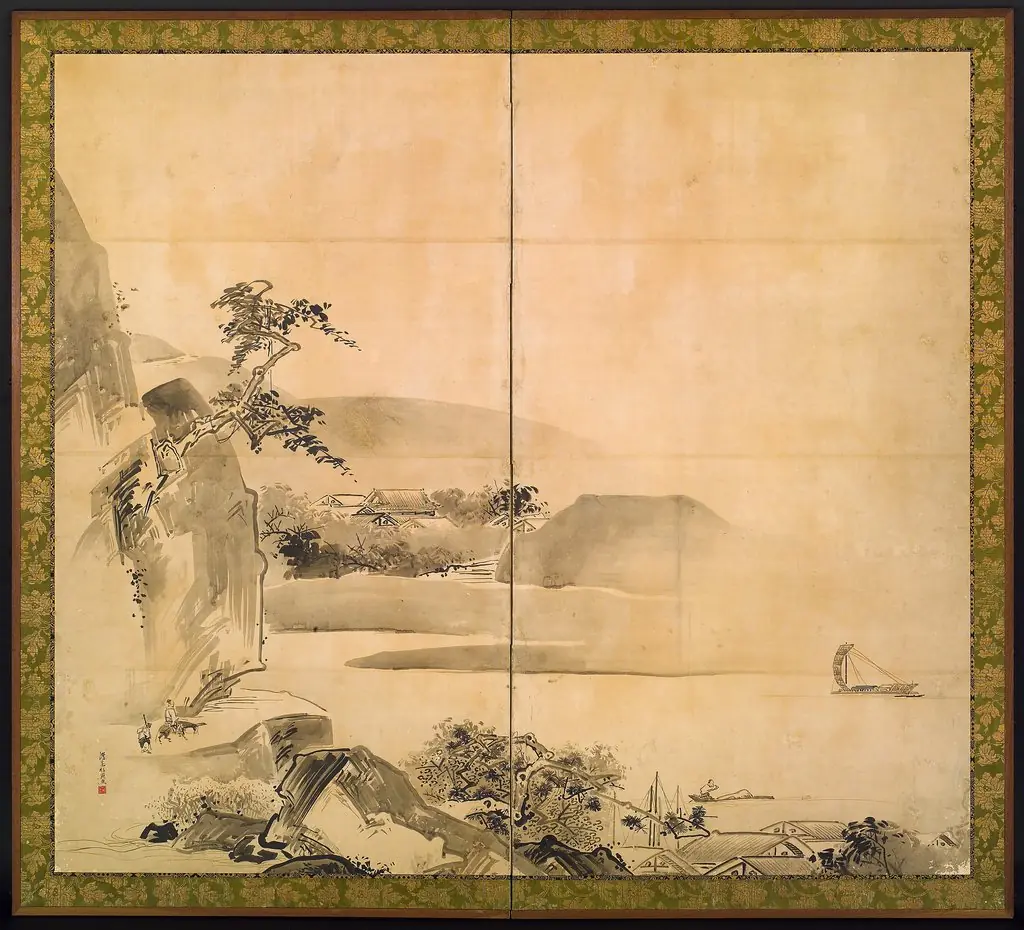 Landscape
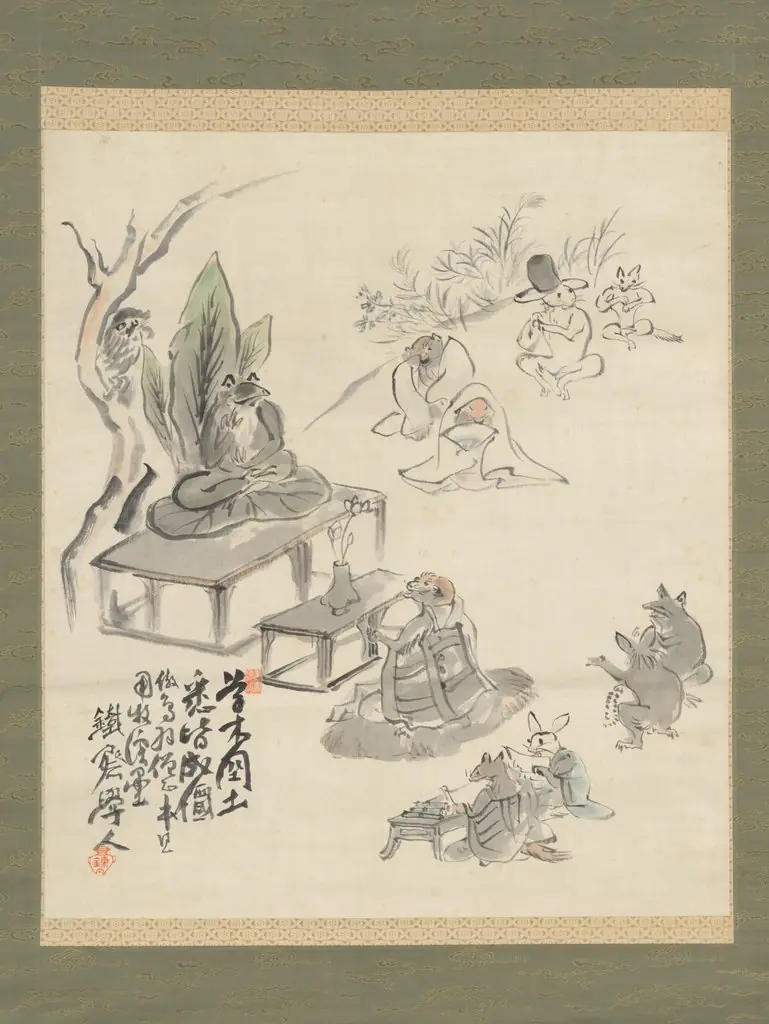 Scene Inspired by the Scrolls of Frolicking Animals and Humans
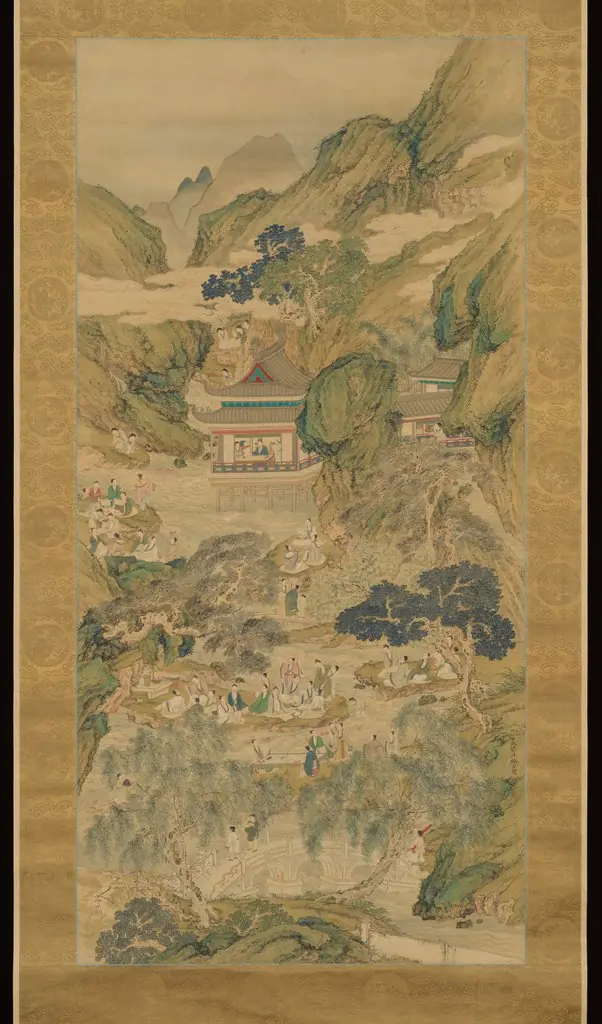 Lanting Gathering in Blue and Green 青緑蘭亭脩禊図 (Seiryoku rantei shūkei zu)
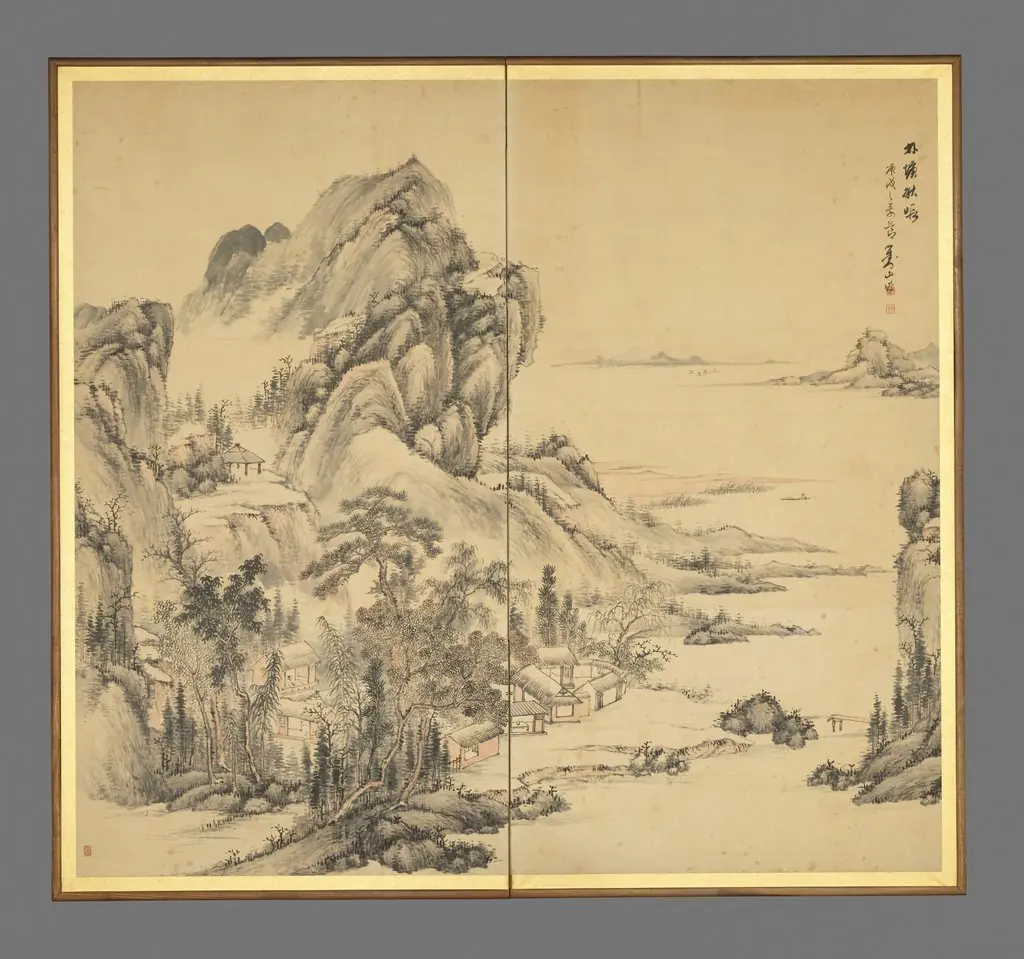 “At leisure in a lakeside grove in autumn”
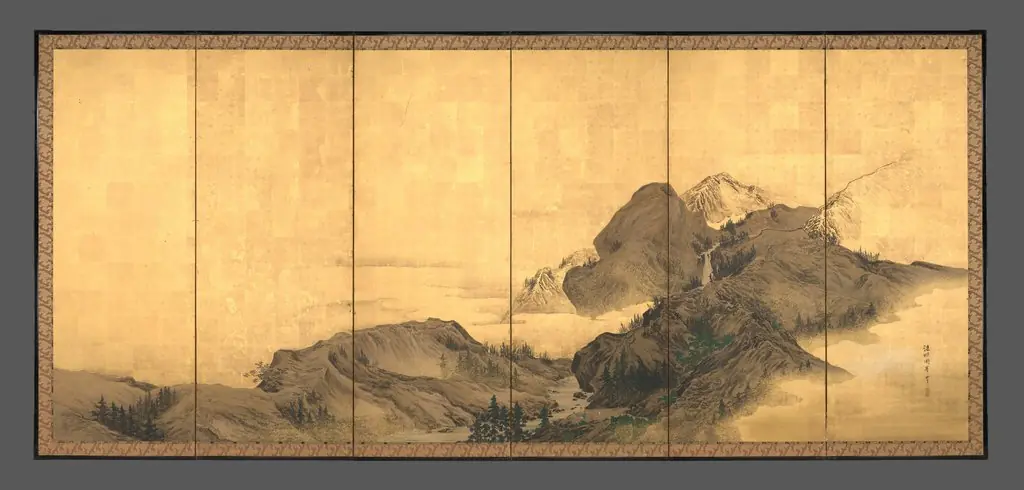 Landscape with Pavilion
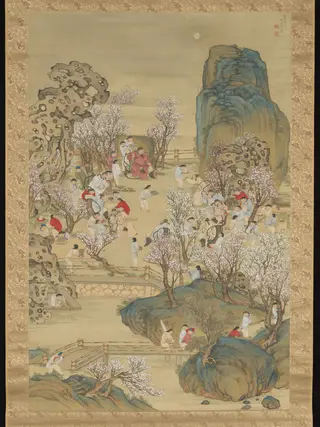 Fragrant Garden under a Hazy Moon
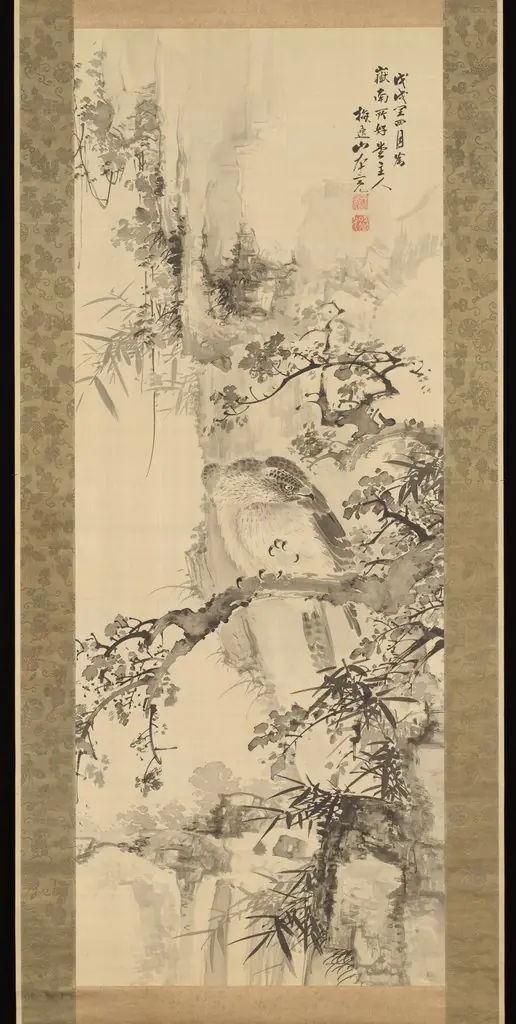 Wild Hawk on a Tree 野鷹棲樹図 (Notaka seiju zu)
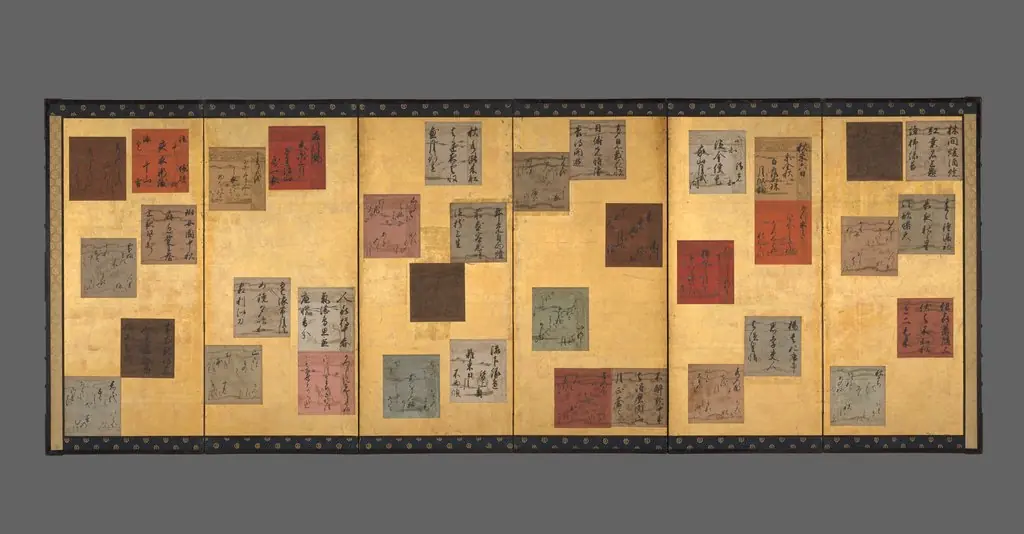 Japanese and Chinese Poems about the Four Seasons
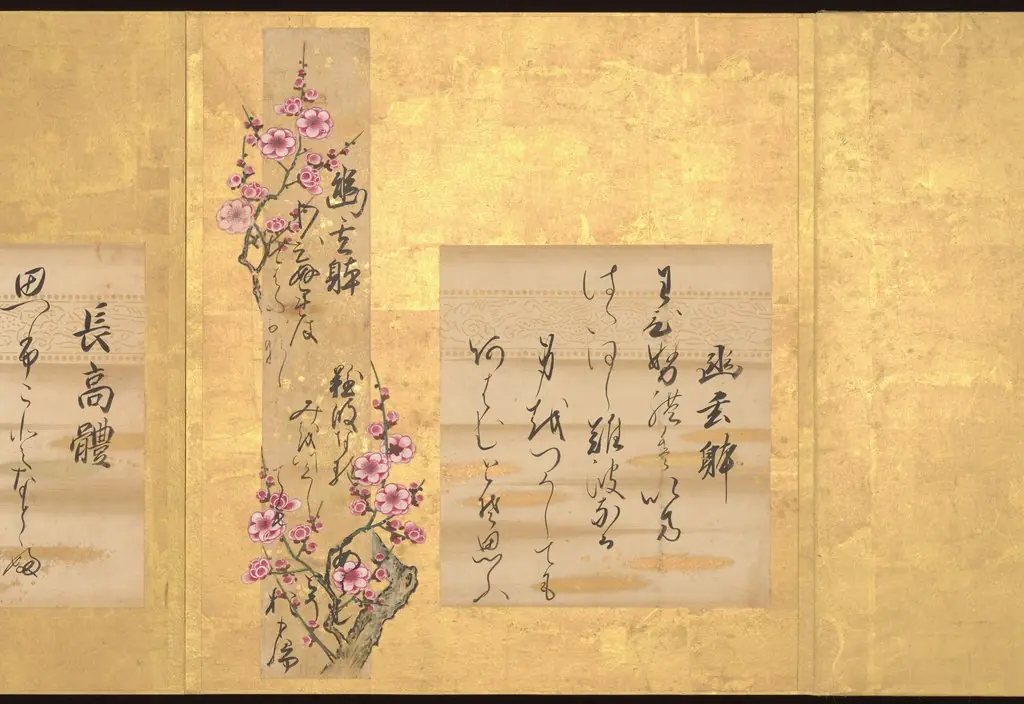 Teika’s Ten Styles of Japanese Poetry
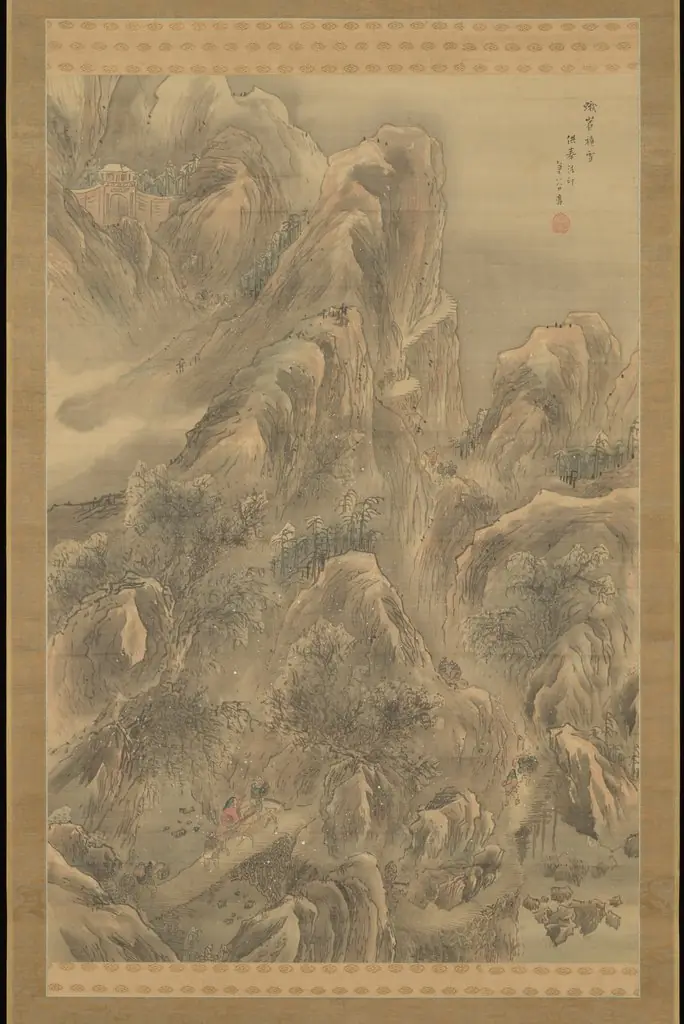 Snowfall on Mt. Emei 峨眉積雪図 (Gabi sekisetsu zu)
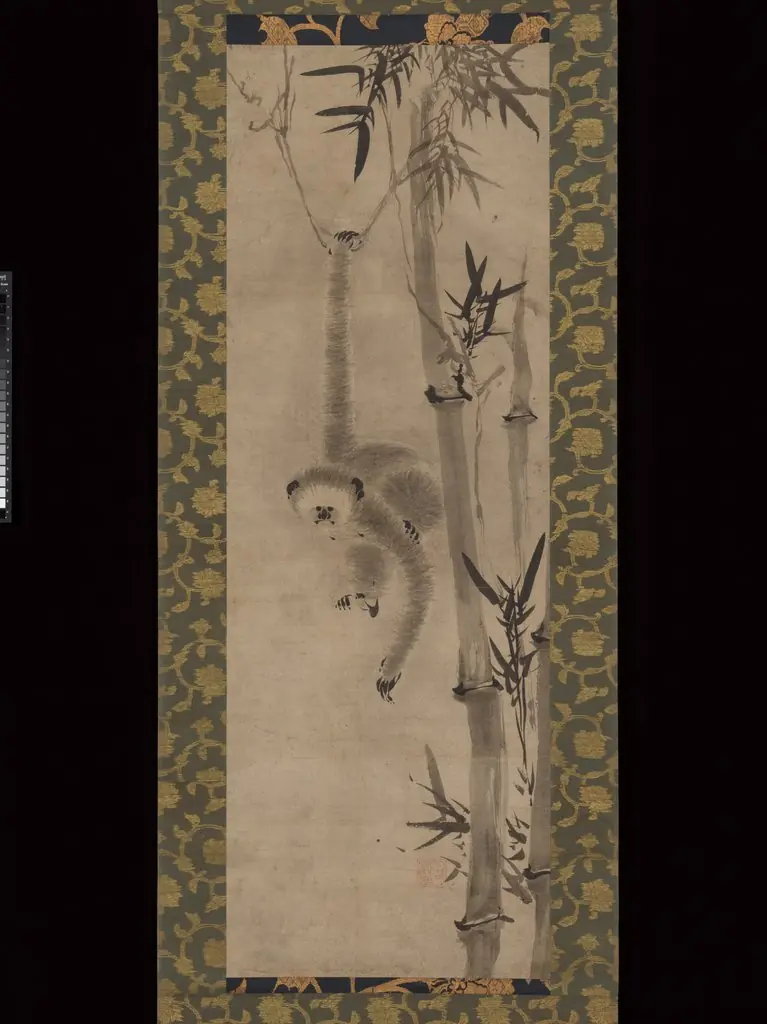 Gibbon and Bamboo
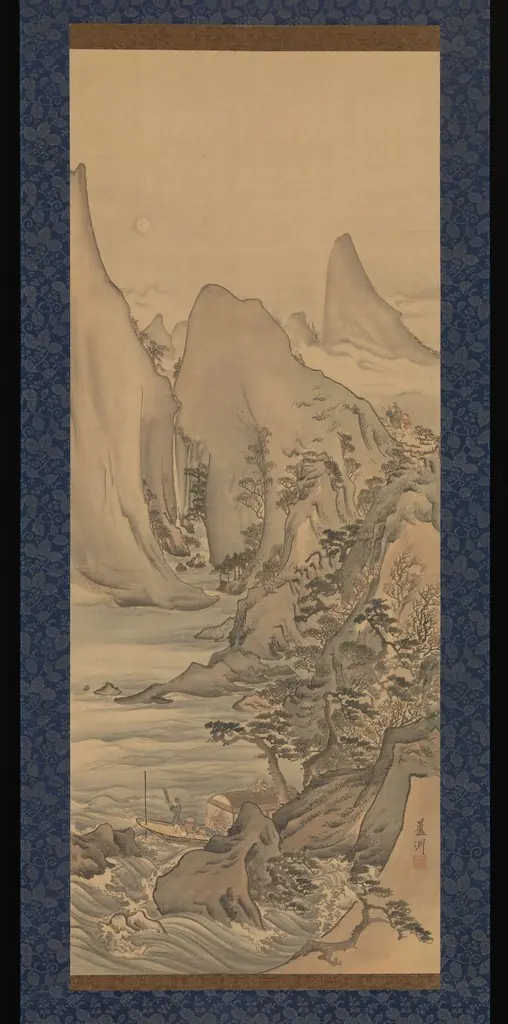 Boat under the Moon
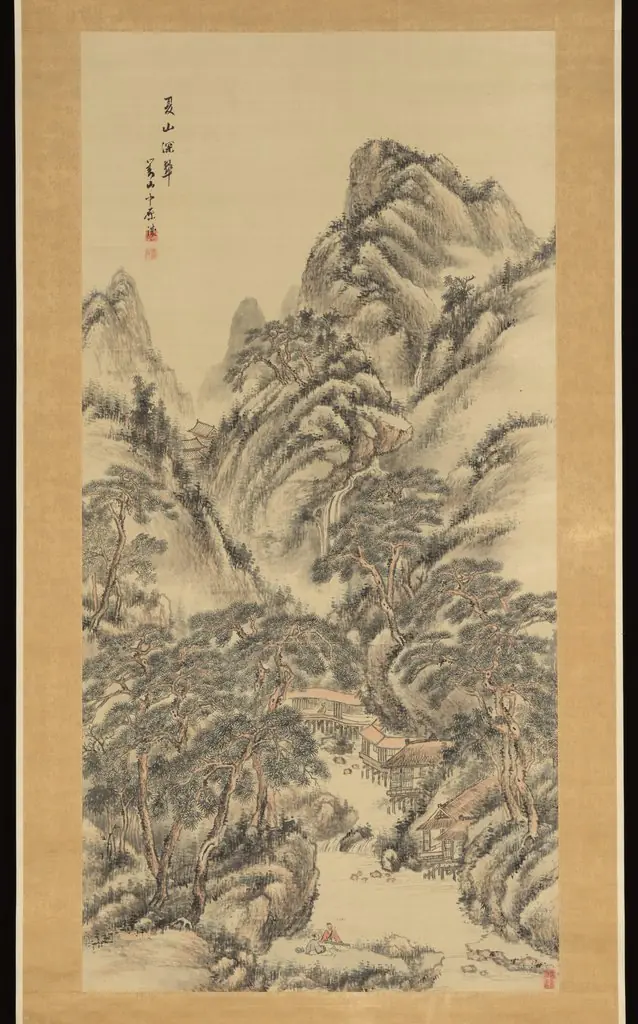 “The Deep Green of Summer Mountains”
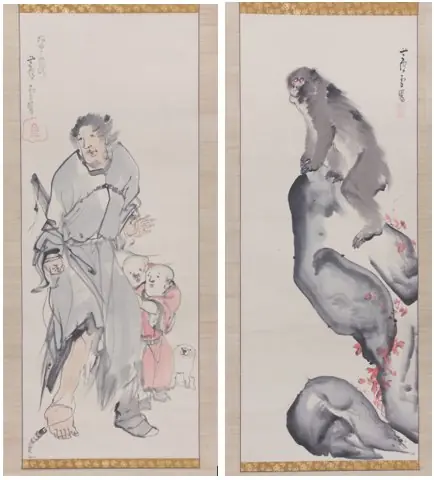 Monkey on a Rock; Monkey Trainer with Chinese Children and Puppy
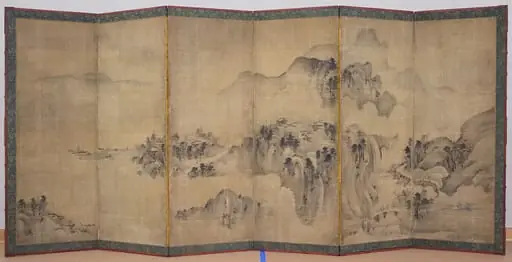 Untitled
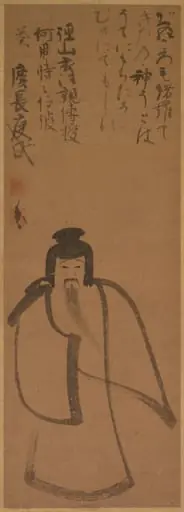 Tenjin Traveling to China
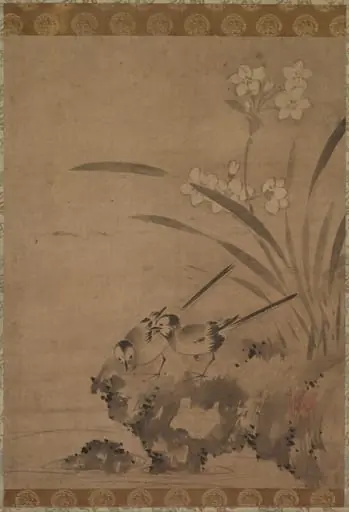 Wagtails and Narcissus
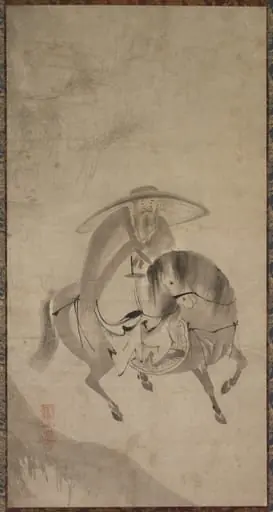 Su Dongpo Riding a Donkey
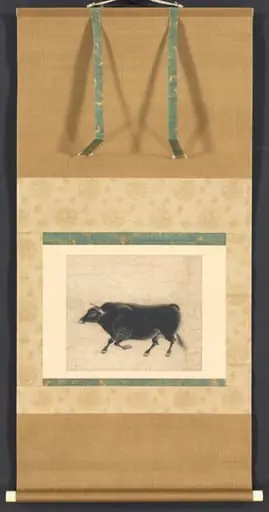 Swift Bull from the Ten Swift Bulls
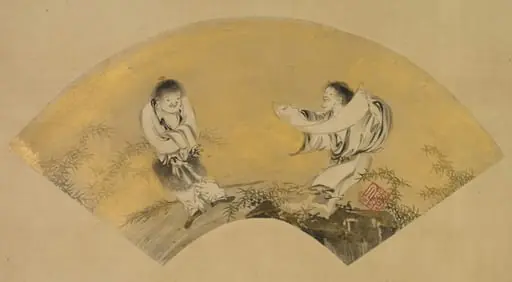 Hanshan and Shide (Kanzan and Jittoku)
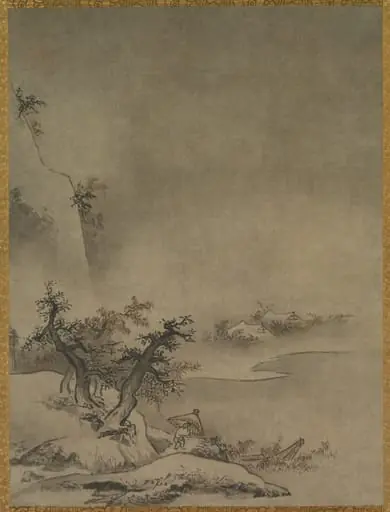 Chinese Servant Walking in the Rain
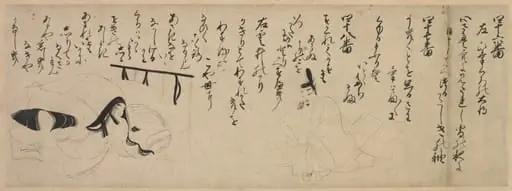 Section of an Illustrated Tale of Genji Poetry Contest
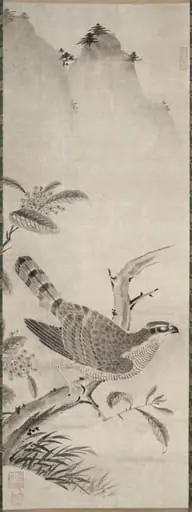 Hawk
Hawk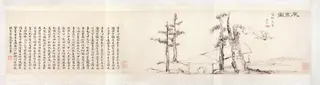 Sehando
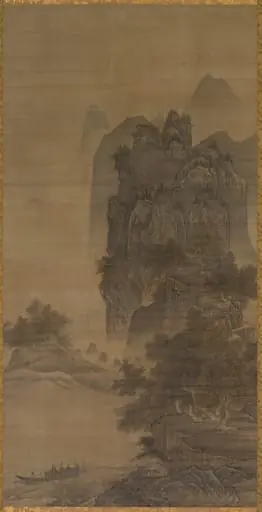 Sunset Glow over a Fishing Village, from Eight Views of Xiao-Xiang
 Chinese Seals and Poets
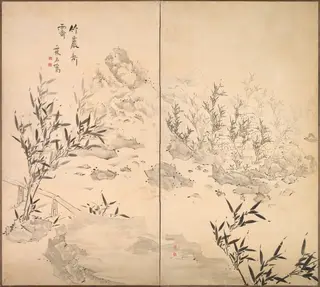 Bamboo and Rocks in Clearing Skies
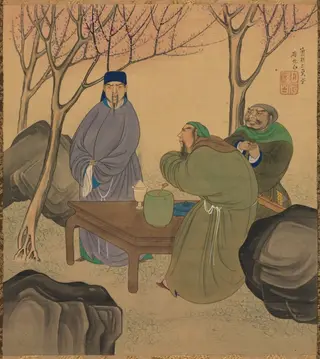 Oath of the Peach Garden, from Romance of the Three Kingdoms
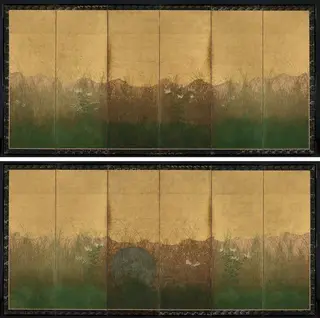 Autumn Evening with Full Moon on Musashino Plain
 Tirodasari Aripana
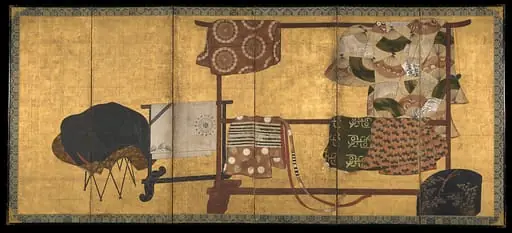 誰が袖図屏風|Whose Sleeves? (Tagasode)
Frequently asked questions
What is Nanga?
Nanga is an art movement. A Japanese literati painting school (also called Bunjinga) that emerged in the 18th century, inspired by Chinese scholar-amateur painting.
How many Nanga works does Artifact World Gallery have?
Artifact World Gallery holds 147 public-domain Nanga works, all free to view and download.
Who are the key Nanga artists?
Key Nanga artists in the collection include Sesson Shūkei, Genki and Soga Shōhaku.
Where can I see Nanga works?
Nanga works in the collection are held by Metropolitan Museum of Art, Cleveland Museum of Art and Museum of Fine Arts, Houston.