Artwork
Durga
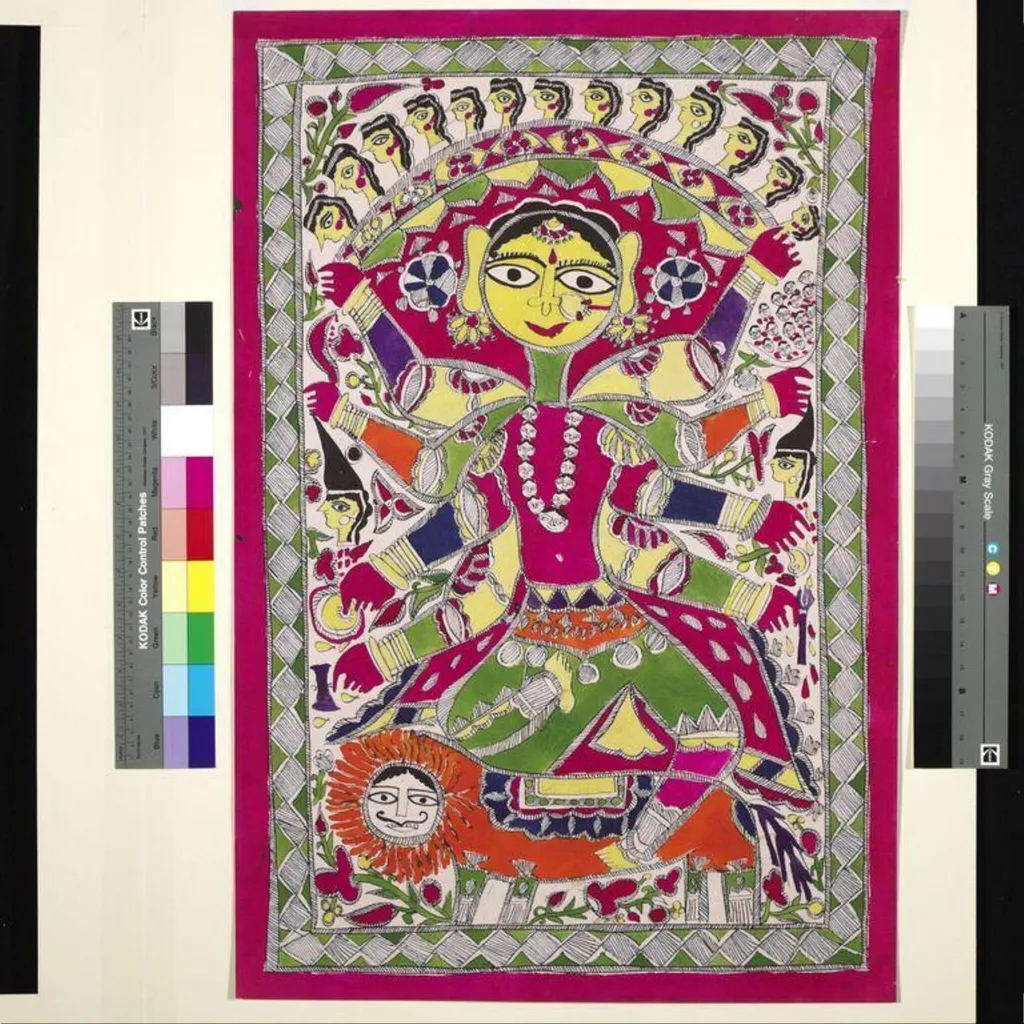
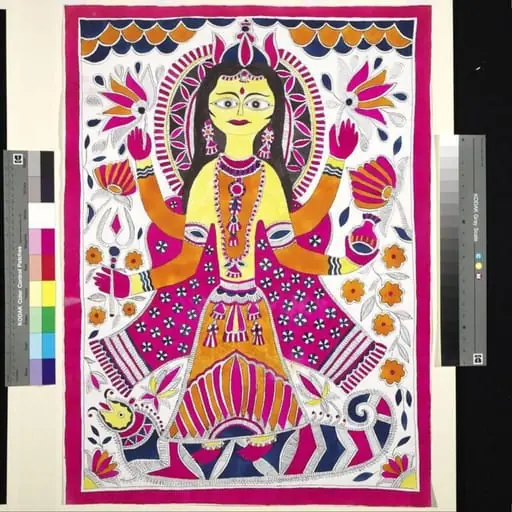
Durga is a paint painting by the Contemporary Abstract artist Lila Kumari. It dates from 1973 and is held in the collection of the Victoria and Albert Museum.
About this work
Overview
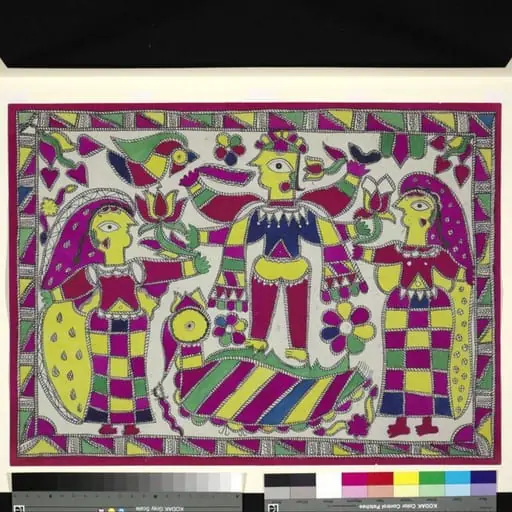
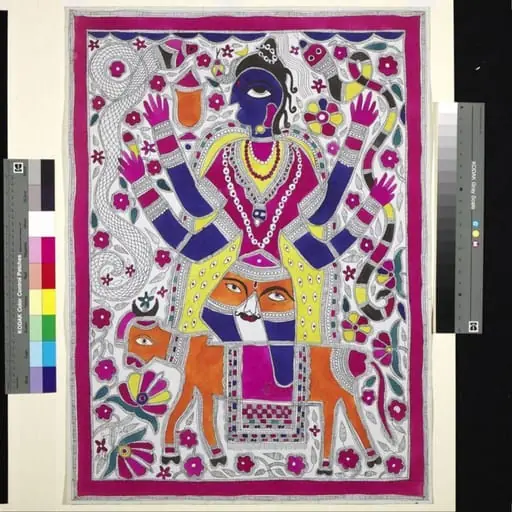
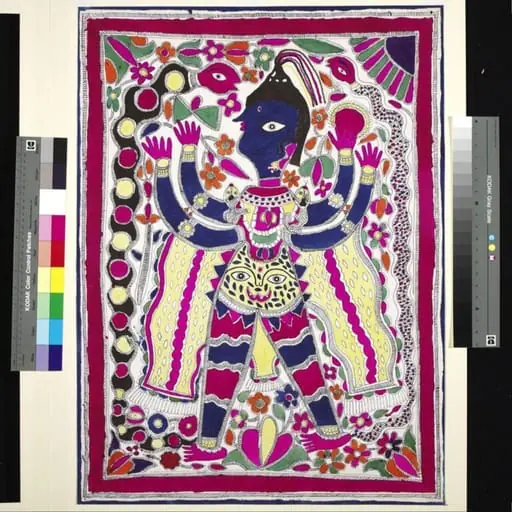
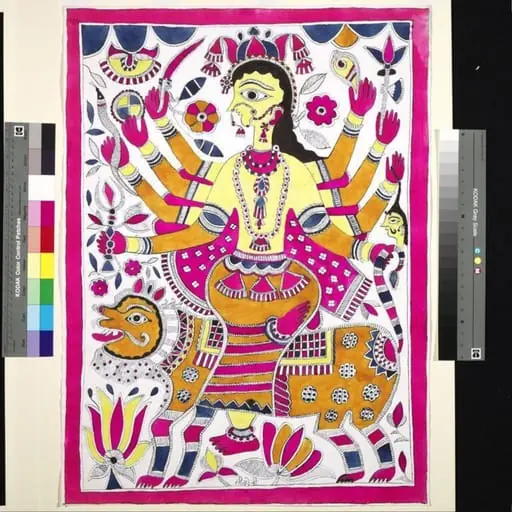
Lila Kumari’s 1973 work presents the Hindu deity Durga seated upon a lion, rendered in ink and paint on paper. The composition follows the Madhubani folk tradition of Mithila, employing vivid hues and dense decorative borders that frame the central figure.
Subject & Meaning
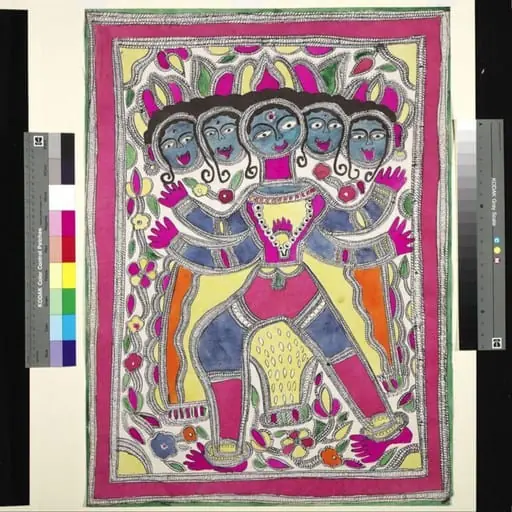
Durga is shown with eight arms, each grasping a band of thirteen skulls depicted in profile with pronounced eyes, a motif linked to her role as a vanquisher of evil. The surrounding smaller faces, varying between smiling and solemn expressions, reinforce the narrative of divine power and protection.
Technique & Style
The piece combines ink line work with opaque paint, characteristic of Madhubani’s flat, pattern‑filled surfaces. Bold colors, yellow, red, green, pink and black, populate the background, while geometric motifs border the composition, reflecting the style’s emphasis on intricate, repetitive ornamentation.
History & Provenance
Madhubani painting, traditionally practiced by women of Brahmin and Kayasth castes on interior walls, was documented in the mid‑20th century as a distinct folk art. Kumari’s work continues this lineage, translating wall motifs onto portable paper for broader exhibition.
Context
Durga is a frequent subject in Madhubani art, drawn from Hindu epics and ritual celebrations. The depiction aligns with regional devotional practices that honor the goddess’s triumph over demonic forces, integrating symbolic elements such as the skull garland.
Artist & collection
Artist
This artist painted vibrant scenes of gods and goddesses in the 1970s. Their Durga from around 1973 shows the fierce Hindu goddess riding a tiger, glowing in bold colors against a warm background. The work feels like a…