Artwork
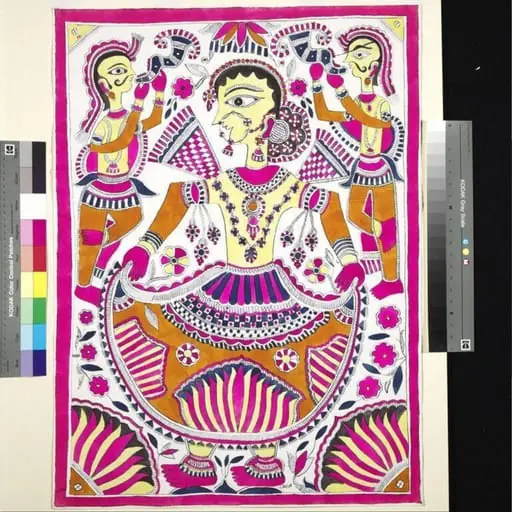
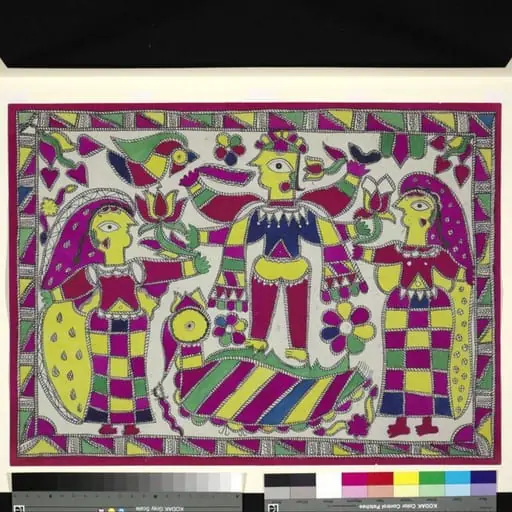
The Goddess Ganga standing on a makara
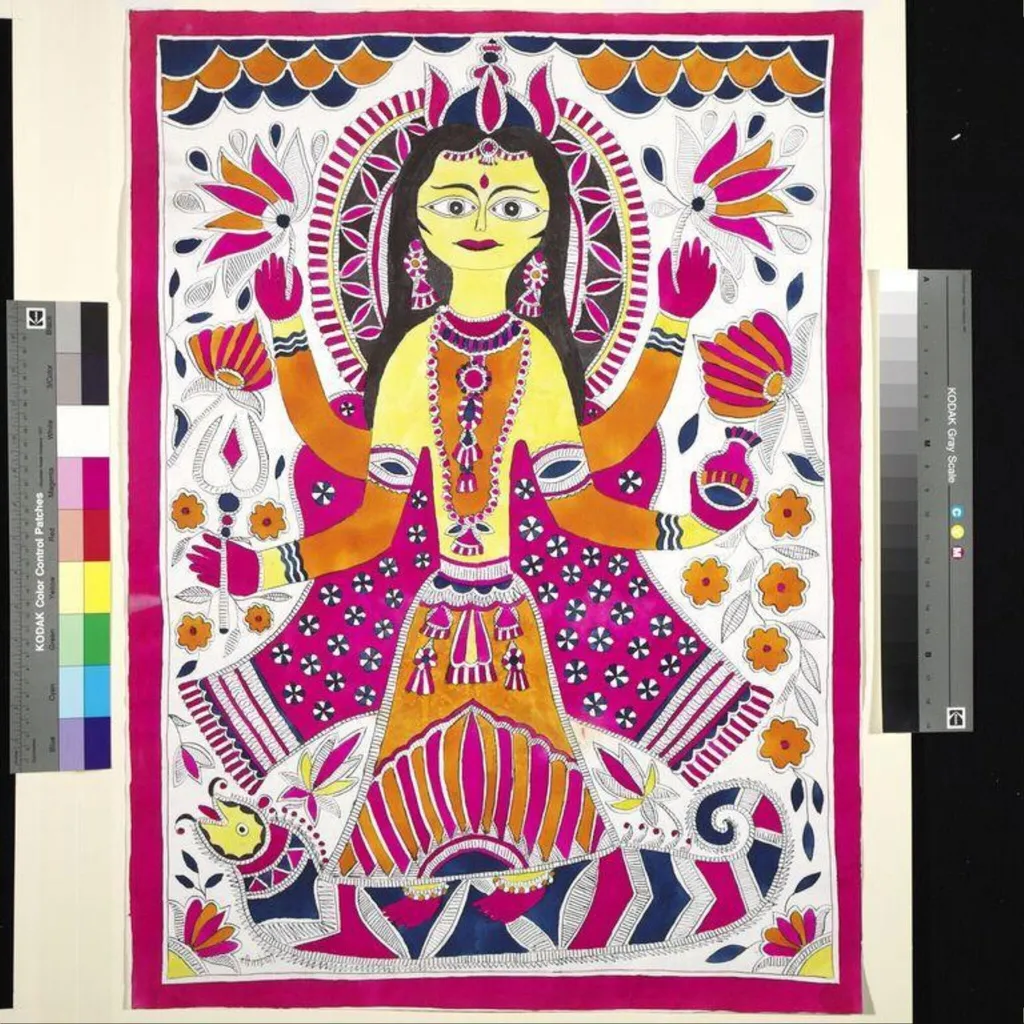
The Goddess Ganga standing on a makara is a paint painting by the Contemporary Abstract artist Sita Devi. It dates from 1973 and is held in the collection of the Victoria and Albert Museum.
About this work
Overview
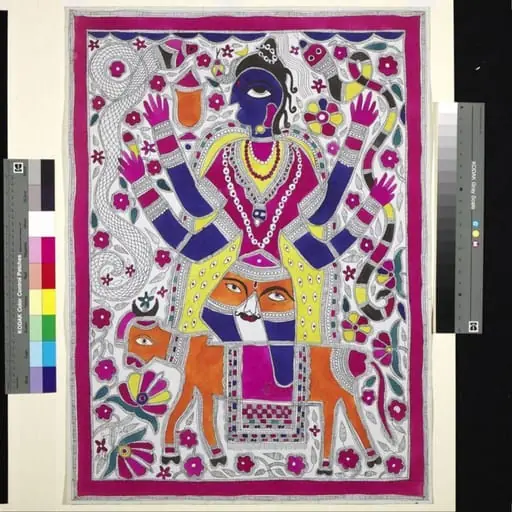
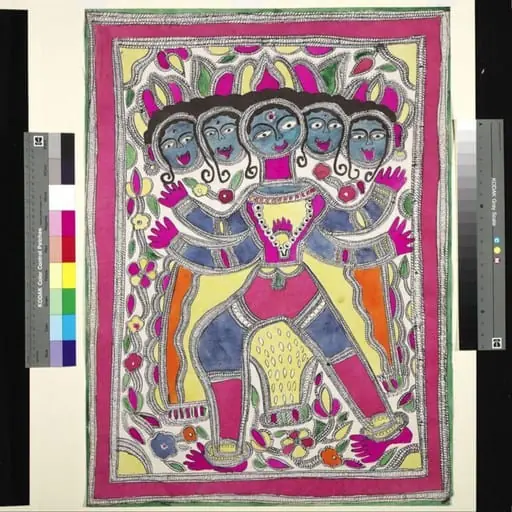
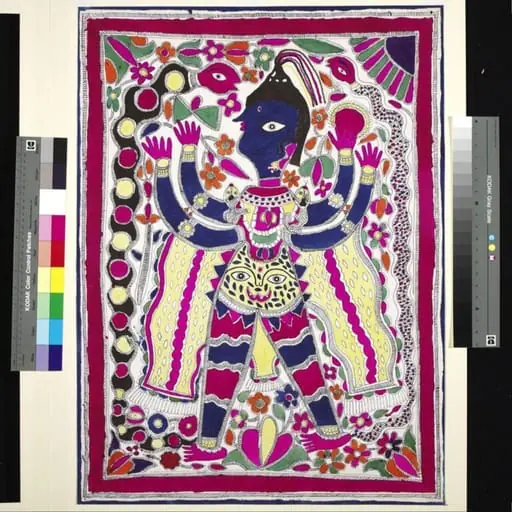
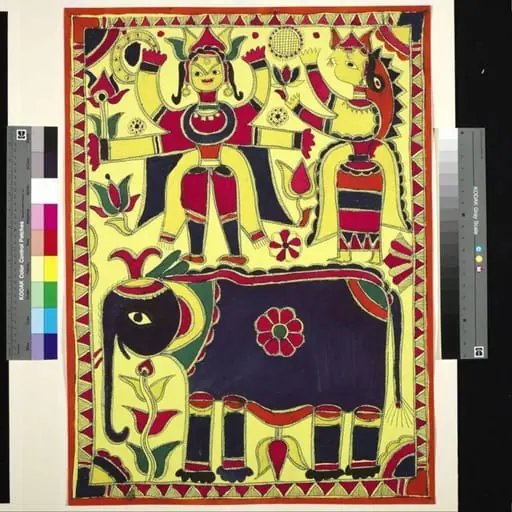
Created in 1973 by artist Sita Devi, this work portrays the Hindu deity Ganga with four arms, positioned atop a stylized makara, a mythic aquatic creature. Executed in ink and colored pigments on paper, the composition reflects the vibrant palette and flat, outlined forms characteristic of the Madhubani tradition.
Subject & Meaning
The central figure is the river goddess Ganga, identified by her four arms, a pot of water, and a lotus, symbols of purity and nourishment. The makara beneath her reinforces her association with water, while the surrounding halo and decorative motifs emphasize her divine status within Hindu iconography.
Technique & Style
The painting employs the Madhubani method of line work and dense patterning, with bold outlines separating bright hues of yellow, blue, pink, orange, and black. Motifs such as flowers, swirls, and geometric borders fill the goddess’s garments, creating a richly ornamented surface that remains flat against the white paper background.
History & Provenance
Madhubani art originated in the Mithila region of Bihar, traditionally rendered by Brahmin and Kayasth women on domestic walls. In the 1960s the practice shifted to paper for commercial purposes, allowing artists like Sita Devi to reach broader audiences. This 1973 piece exemplifies that transition from interior decoration to collectible artwork.
Context
The depiction of Ganga aligns with a broader Indian visual tradition that celebrates river deities as life‑giving forces. The makara, a composite sea creature, frequently appears in Hindu temple sculpture and painting as a vehicle for water deities, linking the work to longstanding mythological symbolism.
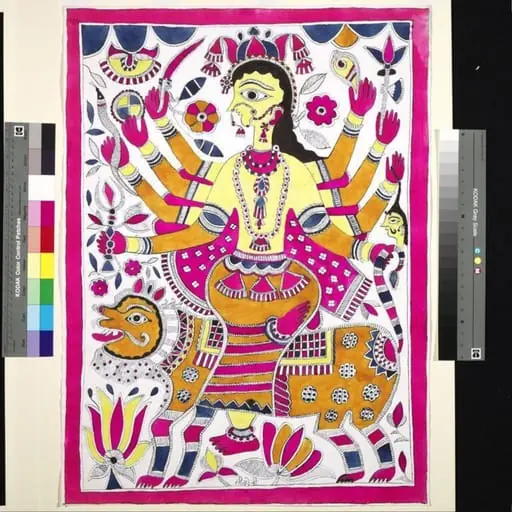
Artist & collection
Artist
Sita Devi painted the gods like family, layering their stories with the same bold colors she used for her neighbors’ wedding saris.