Artwork
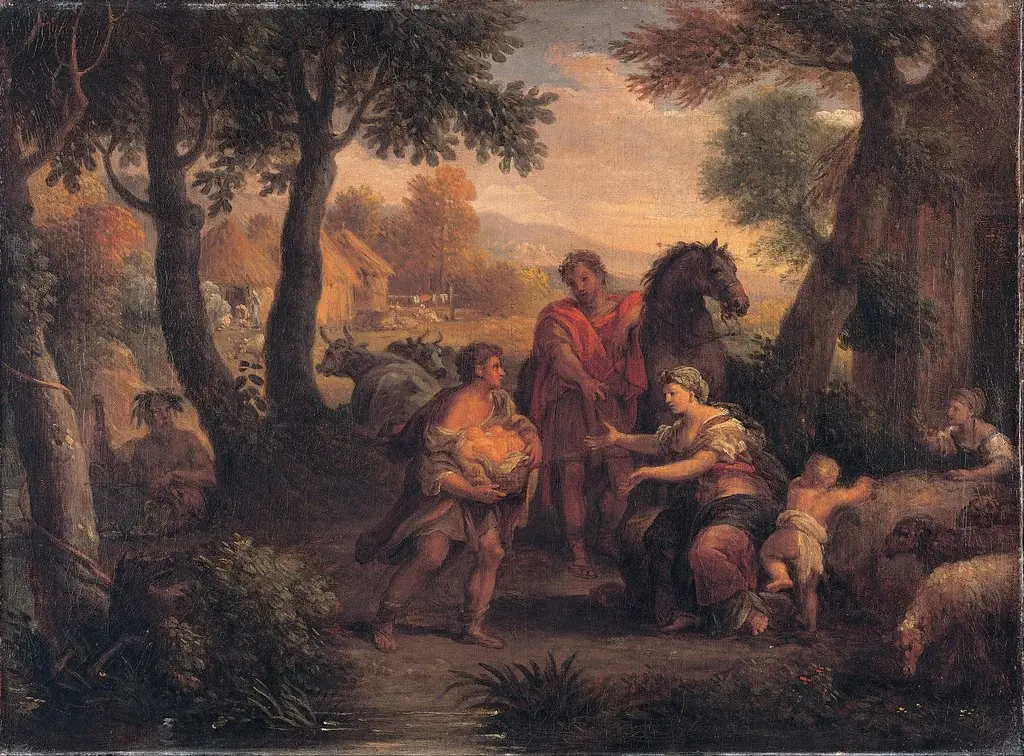
Rebecca and Eliezer at the Well
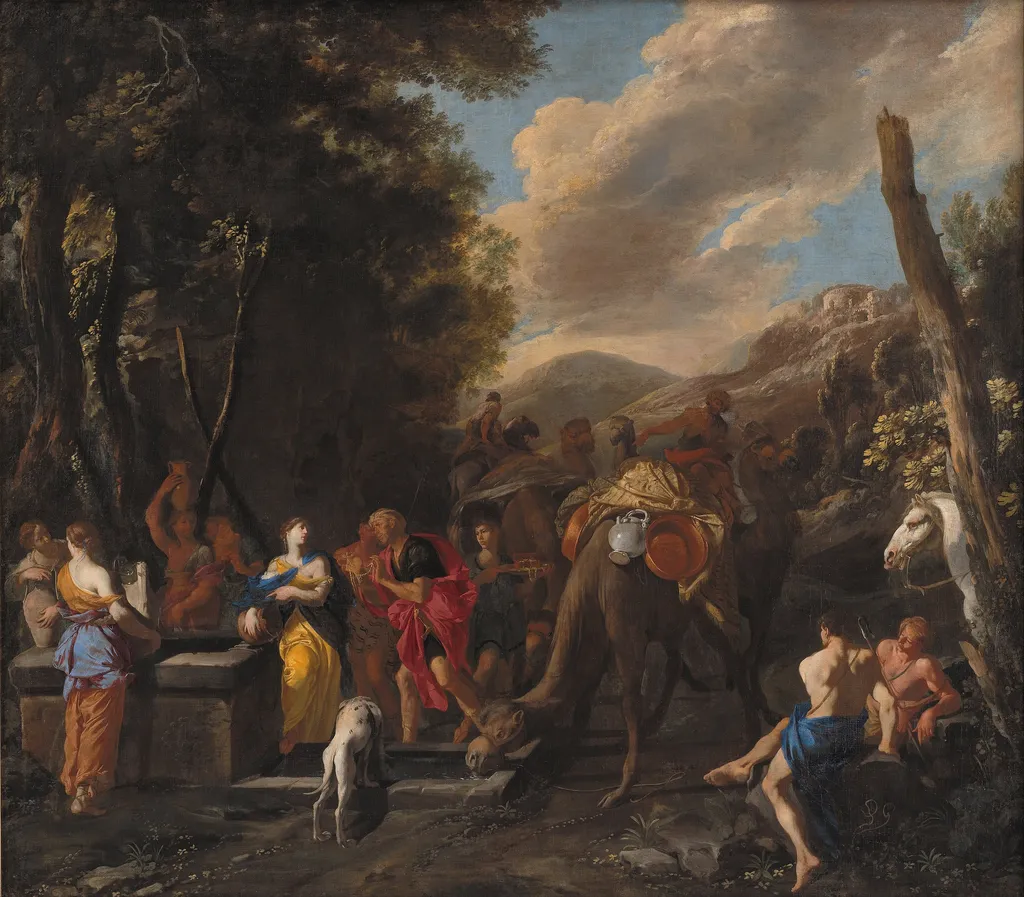
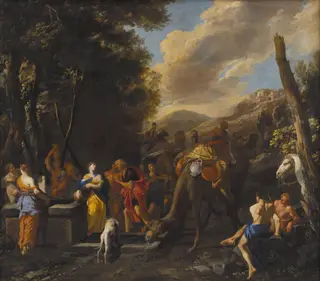
Rebecca and Eliezer at the Well is an oil painting by the Early Baroque Italian artist Domenico Gargiulo. It dates from 1650 and is held in the collection of the Statens Museum for Kunst.
About this work
Subject & Meaning
By illustrating this Old Testament story, the work conveys moral and theological significance, emphasizing virtue rewarded and God’s guidance in human affairs.
The painting depicts the biblical episode in which Eliezer, Abraham’s servant, encounters Rebecca at a well, a moment narrated in Genesis 24. In the scene, Rebecca is shown offering water to Eliezer and his camels, an act that reveals her virtue and suitability as a wife for Isaac. The well, a recurring motif in biblical iconography, symbolizes divine providence and the fulfillment of God’s plan.
The presence of camels and the travelers’ garments underscore the journey’s narrative context, reinforcing themes of hospitality and destiny. By illustrating this Old Testament story, the work conveys moral and theological significance, emphasizing virtue rewarded and God’s guidance in human affairs.
Technique & Style
Created in 1650, this religious painting by Domenico Gargiulo is executed in oil paint on a canvas support. The work measures 1350 cm in height and 1570 cm in width, presenting a substantial surface area. Stylistically, the composition focuses on the biblical narrative of Rebecca and Eliezer, adhering to the conventions of religious art from the mid-seventeenth century.
The application of oil medium allows for the detailed rendering of figures and setting characteristic of the artist's approach during this period.
History & Provenance
Domenico Gargiulo created the oil-on-canvas painting Rebecca and Eliezer at the Well in 1650. The work depicts the biblical figures Rebecca and Eliezer within a religious art genre. Currently, the piece is held in the collection of the Statens Museum for Kunst. The painting measures 135 cm in height and 157 cm in width.
Domenico Gargiulo's 1650 painting Rebecca and Eliezer at the Well is housed in the collection of the Statens Museum for Kunst, where it is catalogued under the inventory number KMS1968:12. The work has been exhibited in the museum's European Baroque gallery and featured in the 2015 exhibition Baroque Masters from the Nordic Collections.
Overview
Domenico Gargiulo, known by the nickname Micco Spadaro, created the oil painting Rebecca and Eliezer at the Well circa 1650. Executed in the Baroque idiom of mid‑seventeenth‑century Naples, the work presents a biblical encounter set within a lively, naturalistic landscape. The canvas is presently part of the collection of the Statens Museum for Kunst in Copenhagen.
Context
In the mid‑1600s Naples, artists such as Gargiulo blended religious subjects with everyday details, reflecting the Counter‑Reformation’s demand for accessible, emotionally resonant imagery. The work’s combination of biblical narrative, landscape, and genre elements exemplifies the regional Baroque tendency to merge devotional content with vivid, naturalistic settings.
Own this work as a print
Artist & collection
Artist
Domenico Gargiulo called Micco Spadaro (c. 1609 or 1610 – c. 1675) was an Italian painter of the Baroque period, mainly active in Naples and known for his landscapes, genre scenes, and history paintings.