Artwork
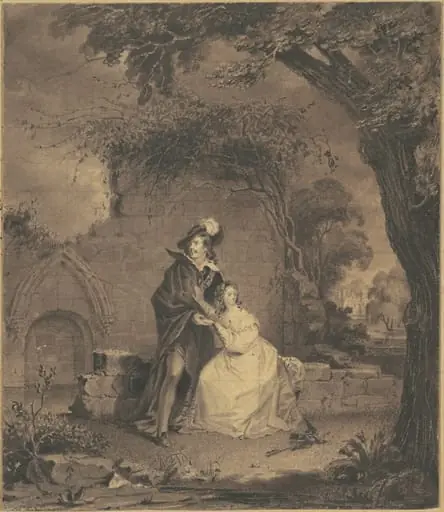
Outer Staircase of a Gothic Ruin
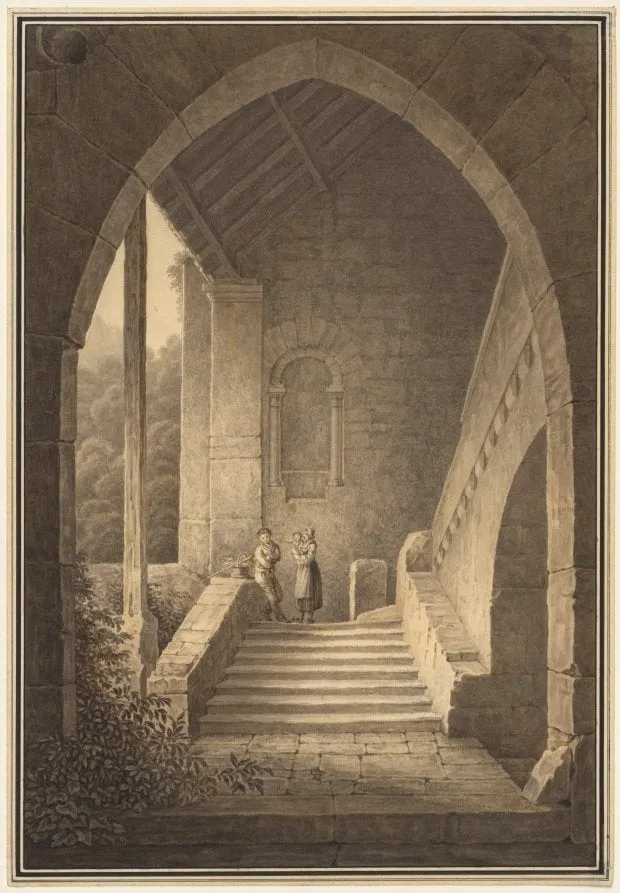
Outer Staircase of a Gothic Ruin is a drawing by the Romanticist artist Domenico Quaglio. It dates from 1830 and is held in the collection of the Cleveland Museum of Art.
- Accession no.
- 1980.218
- Credit line
- Anonymous gift in honor of Leona E. Prasse
About this work
Overview
Outer Staircase of a Gothic Ruin is a drawing by Domenico Quaglio, showcasing his focus on German architecture.
Subject & Meaning
The drawing depicts a man, woman, and child standing beneath a massive, ruined Gothic arch, conveying the contrast between human scale and the grandeur of nature and divine creation.
Technique & Style
Quaglio's work is characterized by its detailed representation of the overgrown, decaying architecture, emphasizing the relationship between nature and the built environment.
Context
Quaglio's emphasis on German Gothic architecture diverges from the prevailing interest in Italian landscapes and architecture among his contemporaries.
Artist & collection

Artist
Domenico Quaglio the Younger (1 January 1787 – 9 April 1837) was a German painter, engraver, stage designer, and architect.

 View of Frankfurt/M
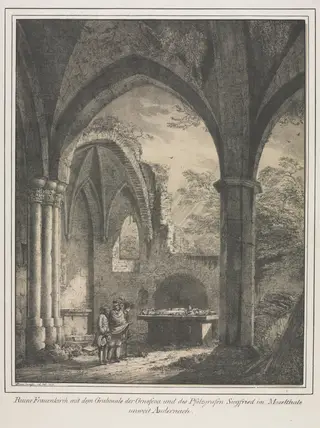 Notable Buildings of the Middle Ages in Germany: Ruins of the Church of the Virgin with the Tomb of Genevieve and Siegfried, Count Palatine of the Rhine, in the Moselle Valley near Andernack
 Munich-Hohenschwangau, Bavaria
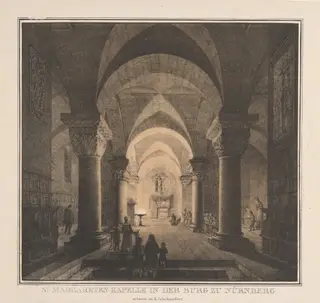 Notable Buildings of the Middle Ages in Germany: St. Margaret's Chapel in the Imperial Castle at Nuremberg
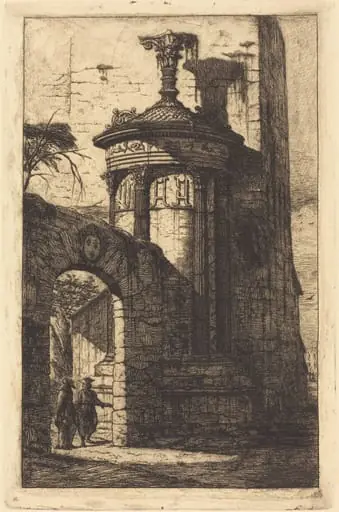 Entrée du Couvent des Capucins français à Athenes (Entrance to the French Capuchin Convent at Athens)
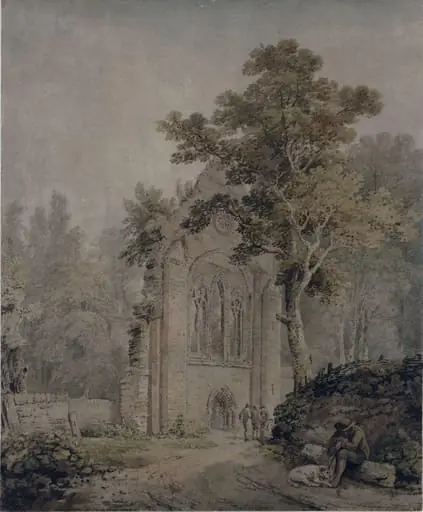 Doorway of a ruined abbey
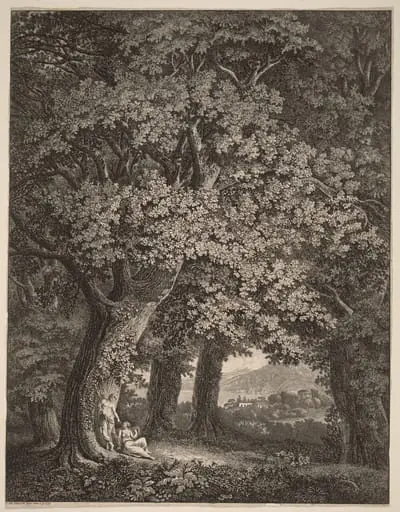 Italian Landscape with a Pair of Shepherds
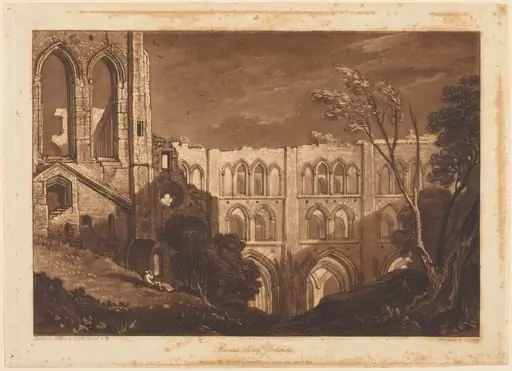 Rivaux Abbey
 Monastery Gate, St. Albans
 Villa Dracone at Frascati
 A Woodland Chapel at Evening
 Some Pleasing Landscapes and Ruins of Ancient Monuments: Brederode Castle
 The Bride of Lammermoor