Artwork
Jeanne Bécu, Comtesse du Barry
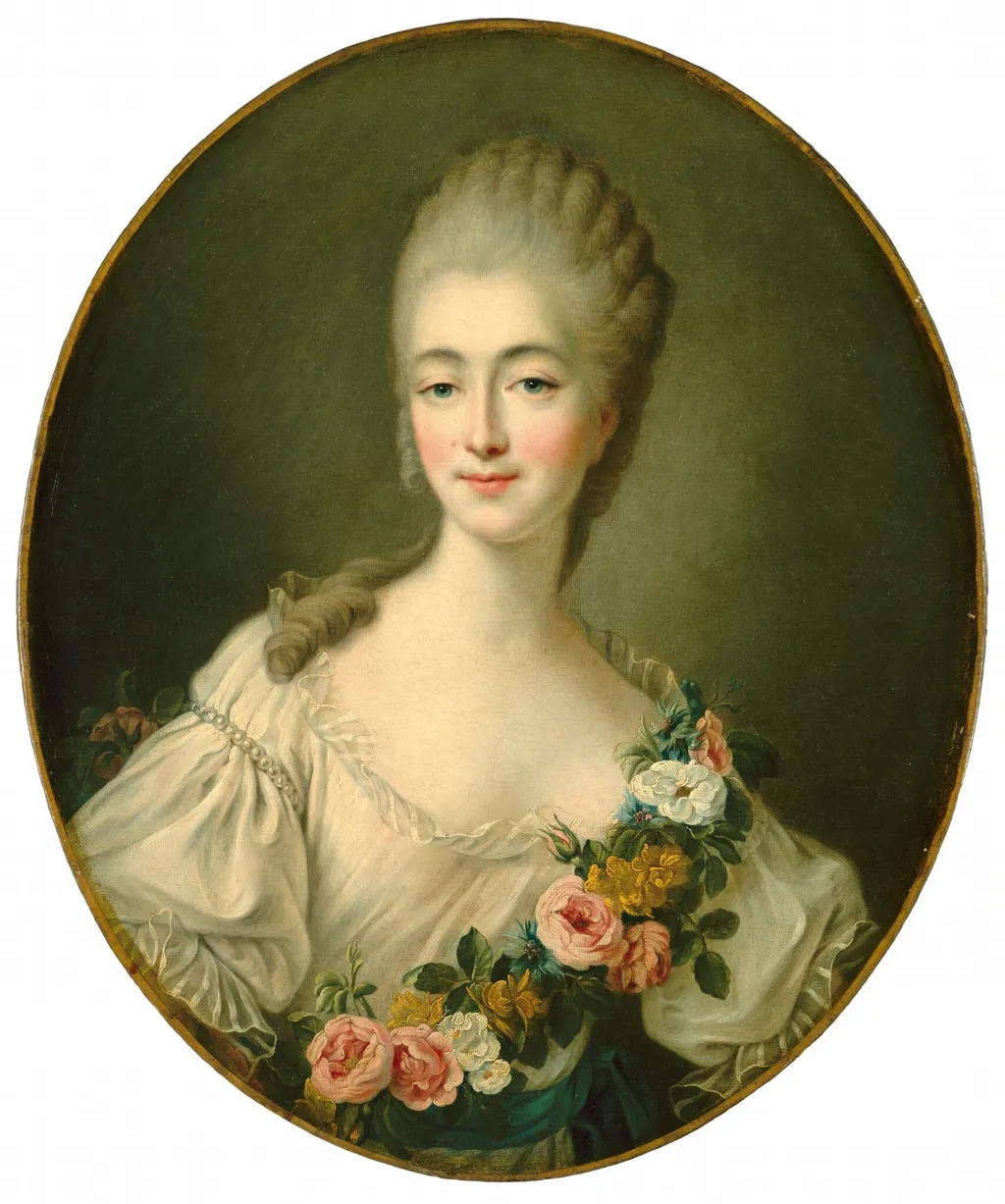
Jeanne Bécu, Comtesse du Barry is an oil painting by the Rococo painting artist François-Hubert Drouais. It dates from 1772 and is held in the collection of the National Gallery of Art.
About this work
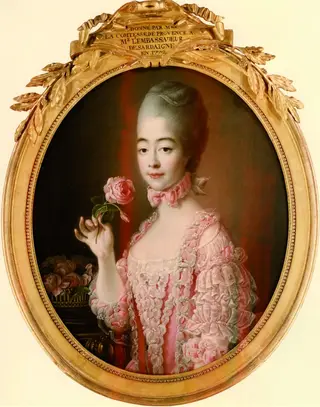
A woman in white holds a pink rose, her dark hair curling beneath a white cap and a green garland at her waist. As Louis XV's favorite she held real power that later turned dangerous, and the Revolution ended her life in 1793. Soft light models her face.
Subject & Meaning
The work remained in the Timken family before being bequeathed to the National Gallery of Art, where it is catalogued as a portrait genre piece.
The painting portrays Jeanne Bécu, Comtesse du Barry, the mistress of Louis XV, as a fashionable court figure. In this 1772 portrait by François-Hubert Drouais, she is shown wearing a garland of roses, an attribute noted in the descriptive records. The composition emphasizes her status and personal elegance, using the rose motif to highlight contemporary ideals of femininity and beauty.
The work remained in the Timken family before being bequeathed to the National Gallery of Art, where it is catalogued as a portrait genre piece.
Technique & Style
François-Hubert Drouais's 1772 portrait of Jeanne Bécu, Comtesse du Barry is executed in oil paint on a canvas support. The artwork measures 70 cm in height and 59 cm in width. As a portrait, the composition formally centers on Madame du Barry, integrating specific iconographic elements such as a garland and a rose into the depiction. The painting is part of the National Gallery of Art in Washington, D.C.
History & Provenance
The painting, an oil on canvas portrait of Madame du Barry, was created in 1772 by François‑Hubert Drouais. It measures 70 × 59 cm and originally entered the market through Frank Sabin in London before being sold in December 1912 to Wildenstein & Co. in New York. William R. Timken acquired it in March 1927, and after his death it passed to his wife Lillian Guyer Timken, who bequeathed the work to the National Gallery of Art in 1960. The piece remains in the Gallery's collection.
Overview
François-Hubert Drouais's oil on canvas portrait depicts Jeanne Bécu, Comtesse du Barry, a prominent figure in 18th-century French court life. As King Louis XV's final official mistress, she wielded considerable influence during her time at Versailles. The painting captures her likeness, hinting at the elegance and status she held before the dramatic political shifts of the French Revolution.
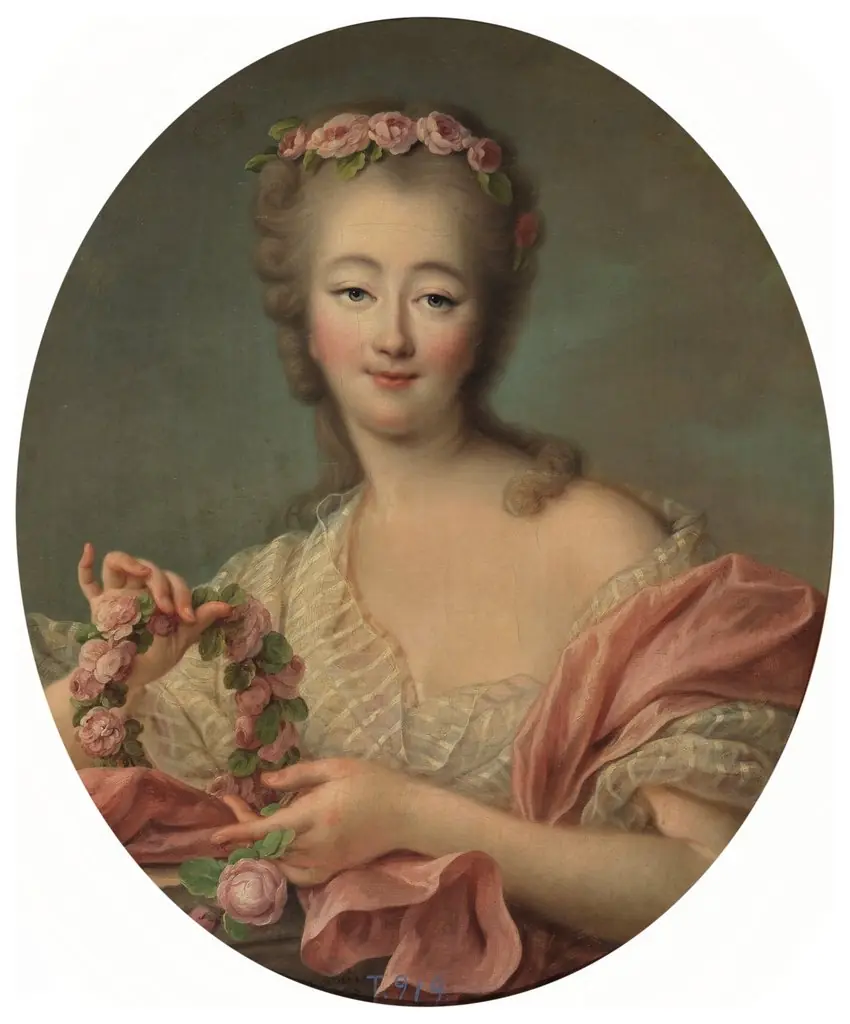
Own this work as a print
Artist & collection
Artist
François-Hubert Drouais (French pronunciation:; Paris, 14 December 1727 – Paris, 21 October 1775) was a leading French portrait painter during the latter years of Louis XV's reign.

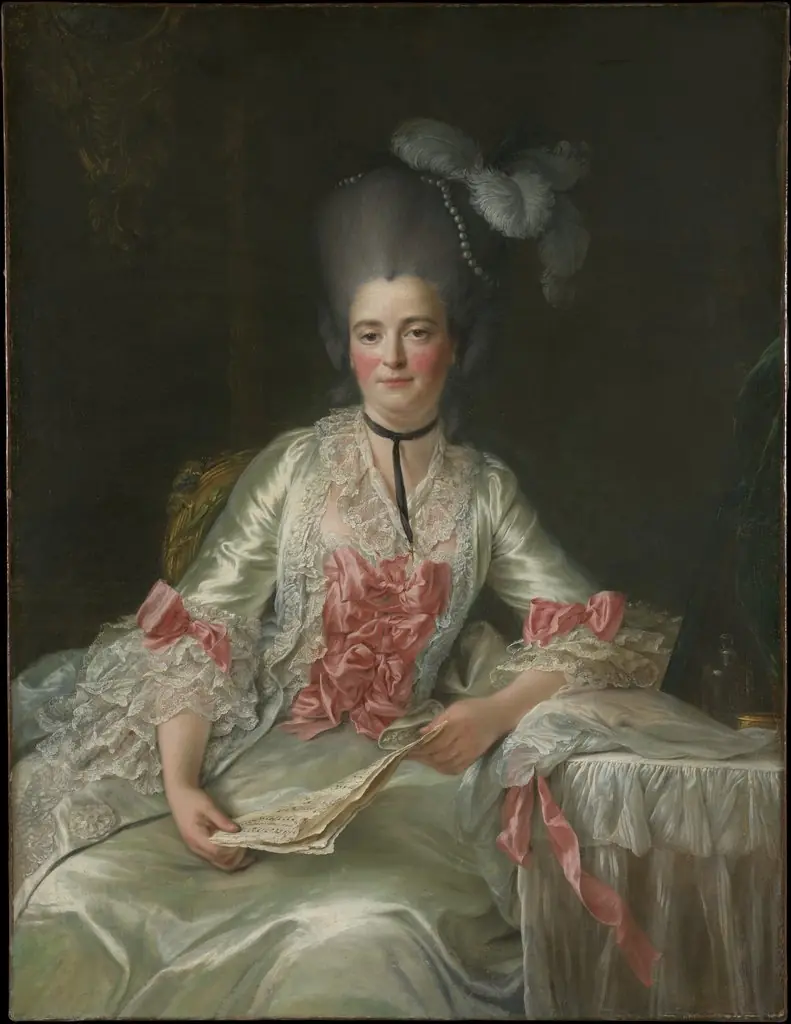 Marie Rinteau, called Mademoiselle de Verrières
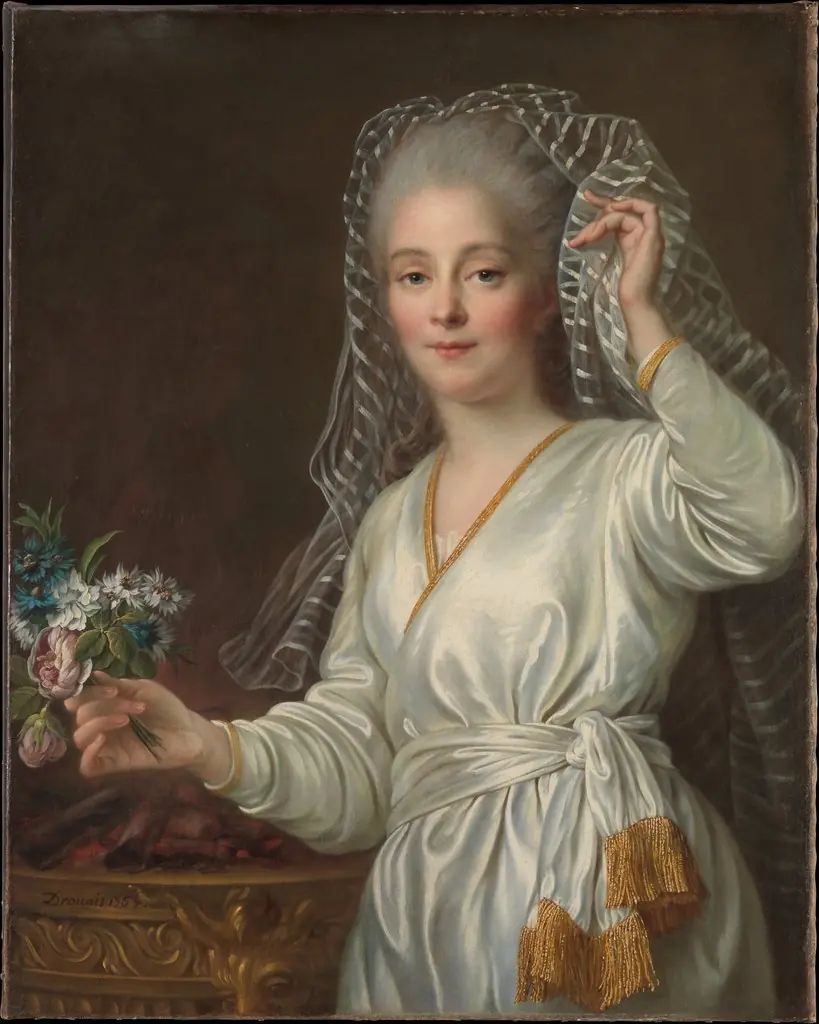 Portrait of a Young Woman as a Vestal Virgin
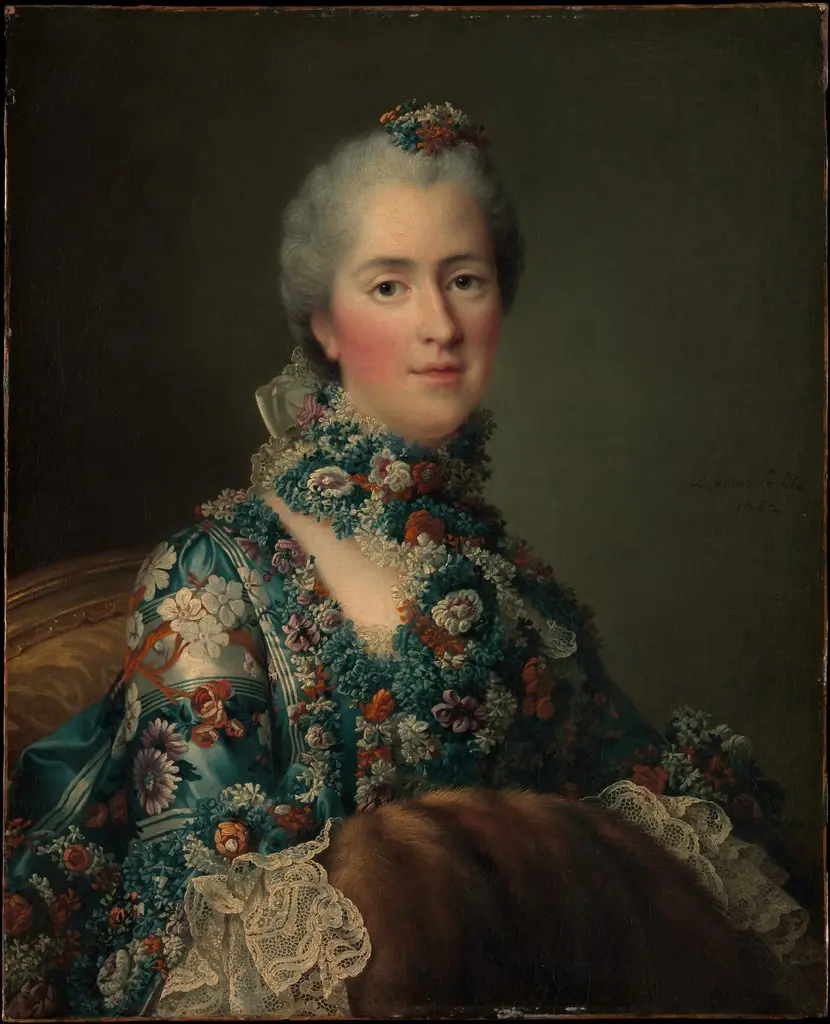 Madame Sophie de France (1734–1782)
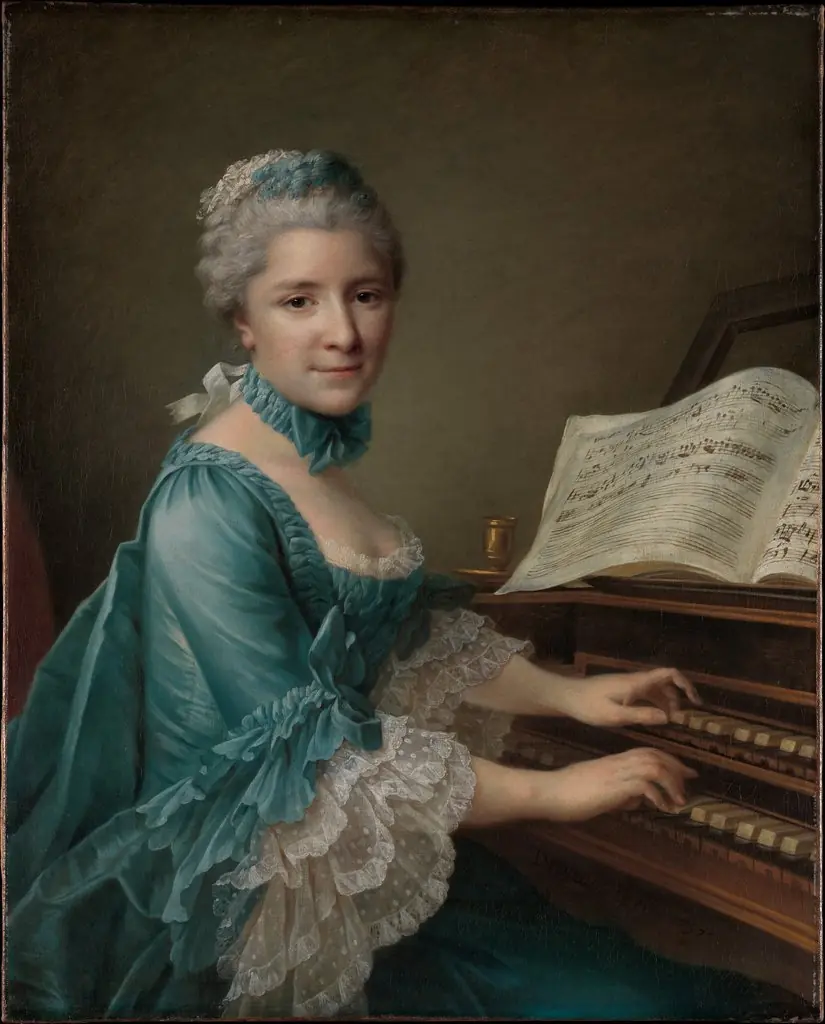 Portrait of a Woman, Said to be Madame Charles Simon Favart (Marie Justine Benoîte Duronceray, 1727–1772)
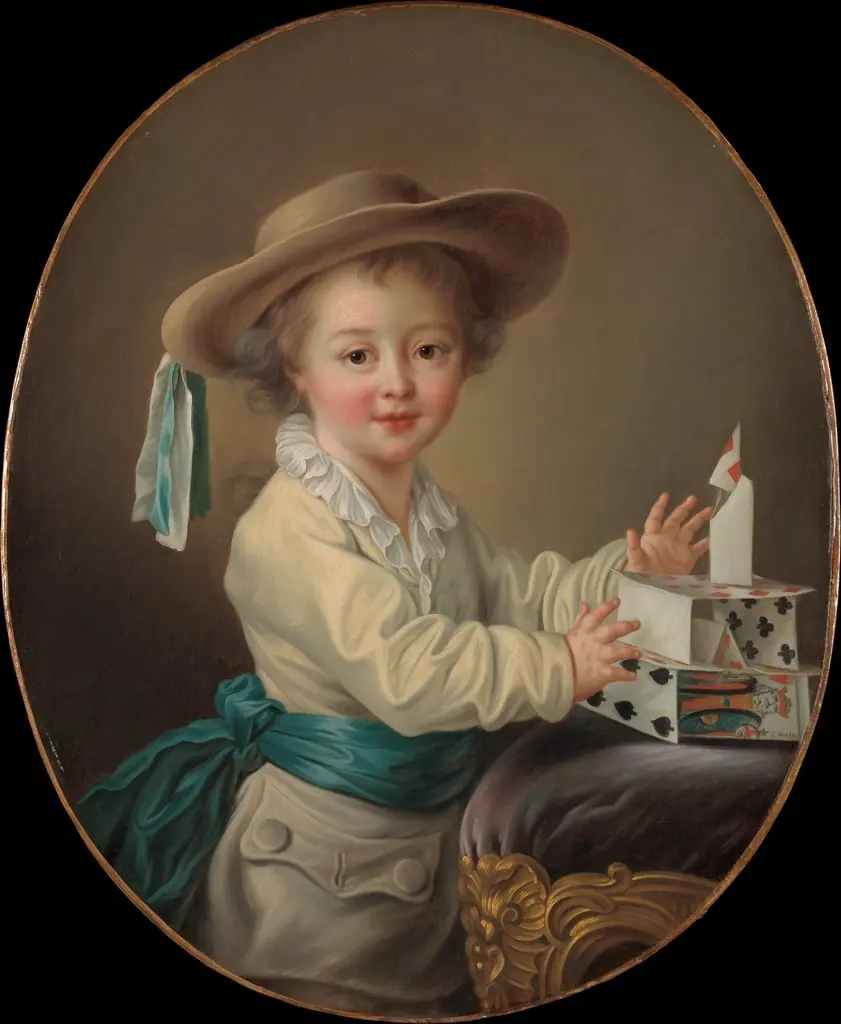 Boy with a House of Cards
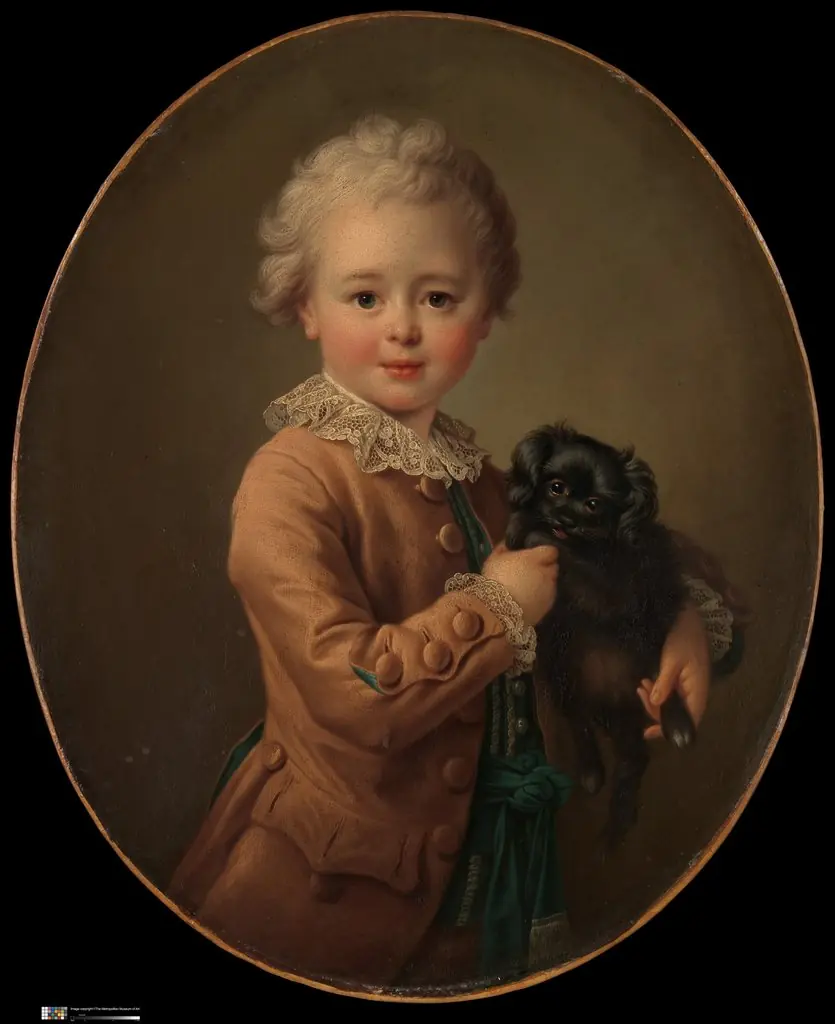 Boy with a Black Spaniel
 Family Portrait
 Portrait of the Marquise d'Aguirandes