Artwork
Two Asses
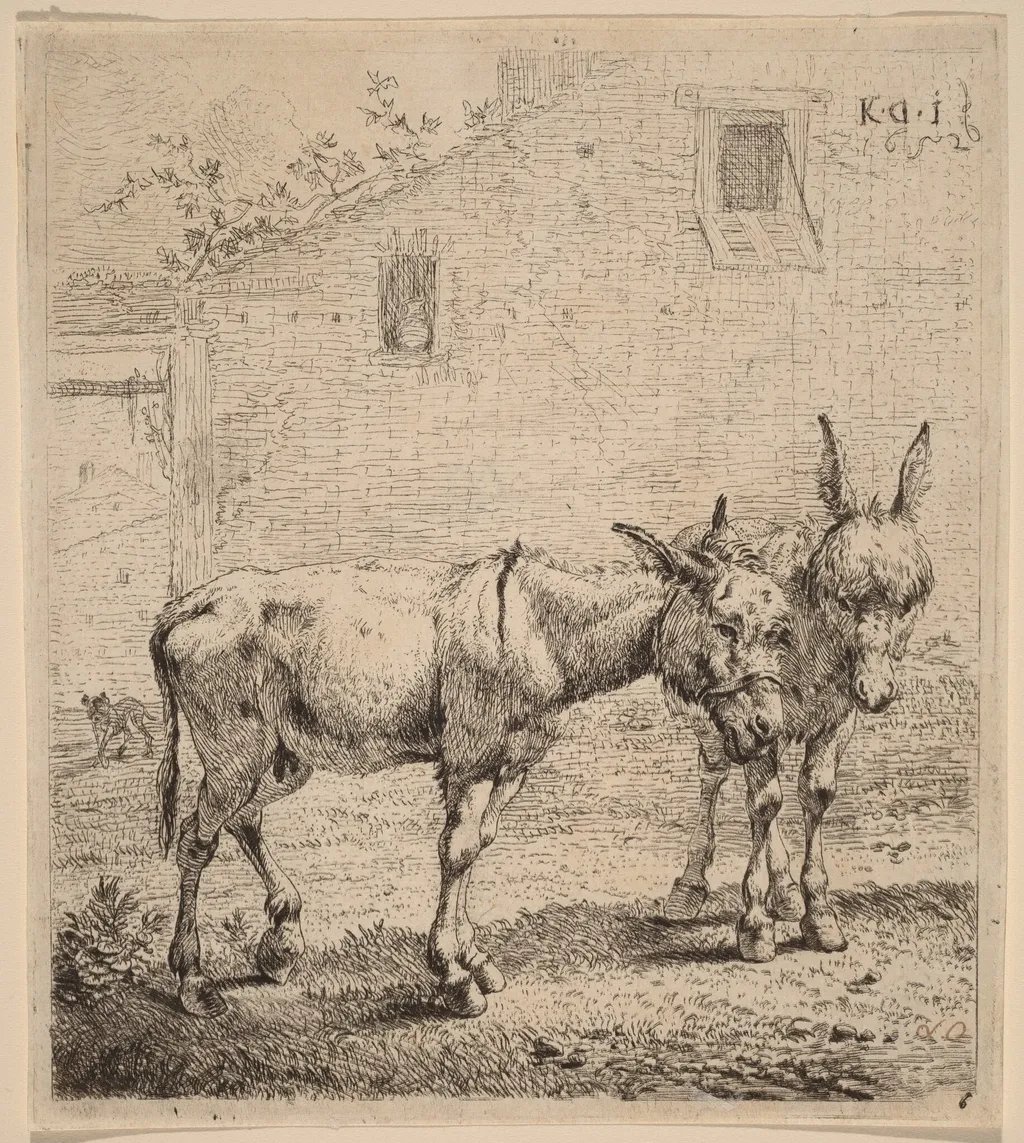
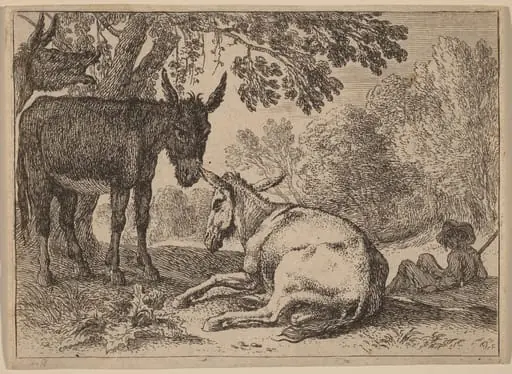
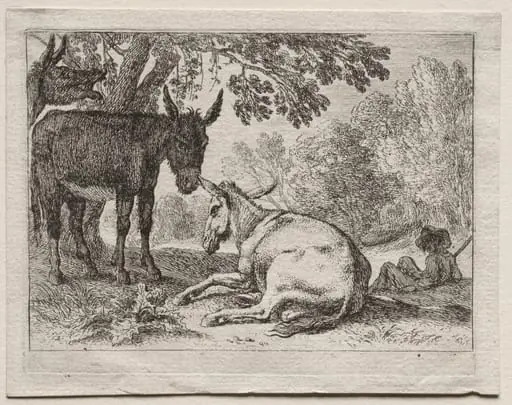
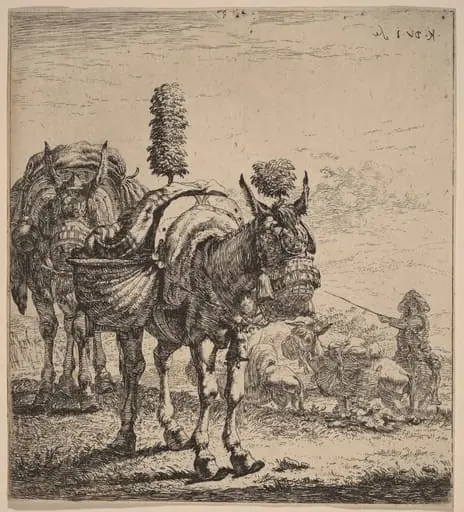
Two Asses is an ink print by the Baroque artist Karel Dujardin. It dates from 1652 and is held in the collection of the National Gallery of Art.
- Inscription
- Inscribed:recto: in plate, at upper right: K D I f / 1652; in plate, at lower right: 6; in brown ink, at lower right: L. O. [Adam Vassilievitch Olsoufiev, Lugt 1752]; verso: in graphite, at center: 10
- Markings
- Marked:none
About this work
Overview
Unlike his later, more idealized Italianate landscapes and history paintings, this piece reflects a grounded, observational approach to animal portraiture.
Created in 1652, Two Asses is an etching on laid paper by the Dutch artist Karel Dujardin. The composition features two donkeys standing side by side within a simple enclosure, rendered with a distinct linear quality. One animal faces the viewer directly with alert ears, while the other is turned away, presenting its rear.
Dujardin employs scratchy yet precise lines to define the forms, creating a texture reminiscent of pencil drawing on paper. This work exemplifies the artist's early interest in animal subjects and his mastery of the etching medium, where grooves cut into a metal plate hold ink to produce the image. Unlike his later, more idealized Italianate landscapes and history paintings, this piece reflects a grounded, observational approach to animal portraiture.
The depiction avoids heroic grandeur, instead capturing the weary, mundane reality of the beasts. Produced during a formative period in Dujardin's career, shortly before his move to Italy, the etching demonstrates his technical skill in translating naturalistic detail into the graphic arts.
Subject & Meaning
The image shows a pair of donkeys standing side by side. One faces the viewer, ears alert, while the other turns away, appearing contemplative. The portrayal emphasizes the ordinary, labor‑related existence of the animals rather than any allegorical or heroic narrative.
Technique & Style
Dujardin employed traditional etching methods, incising the design into a metal plate, inking the recessed lines, and pressing the plate onto laid paper. The resulting marks are crisp yet slightly irregular, reminiscent of a pencil sketch, highlighting the artist’s skill in rendering texture and form through line work.
Context
Created in the mid‑seventeenth century, the print reflects the Dutch Golden Age’s interest in genre scenes and everyday subjects. Dujardin, known for pastoral and animal studies, often used prints to disseminate such modest depictions beyond the reach of his painted works.
Own this work as a print
Artist & collection