Artwork
Carmosine
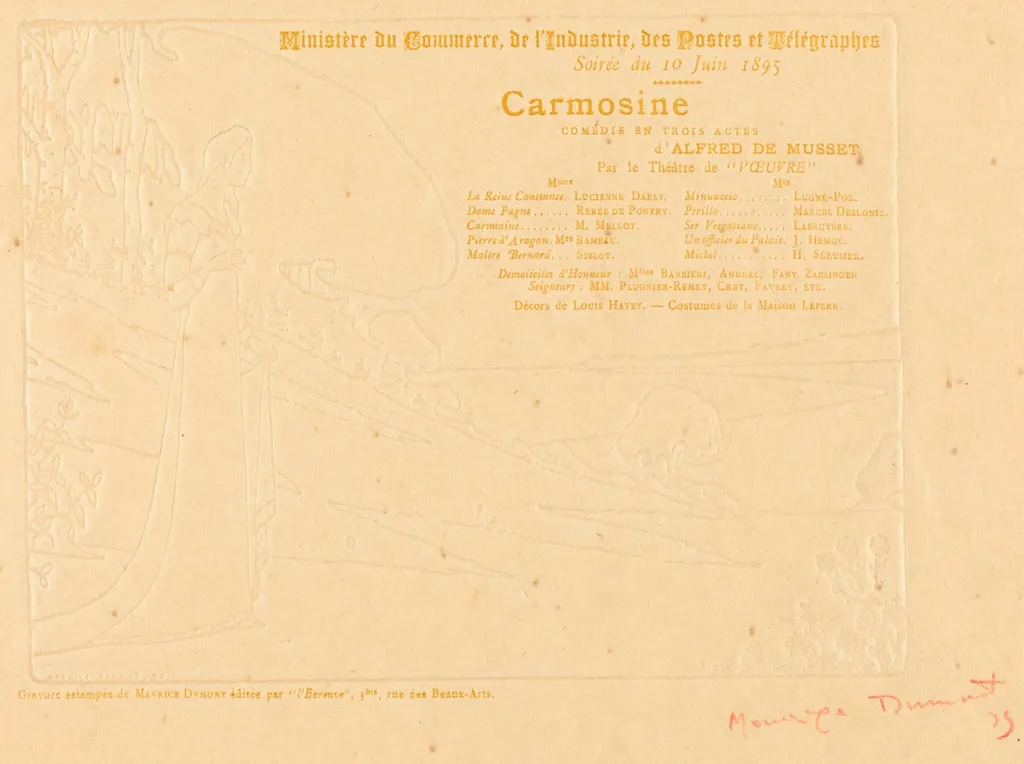
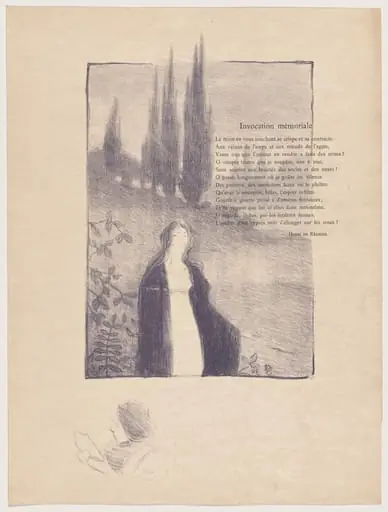
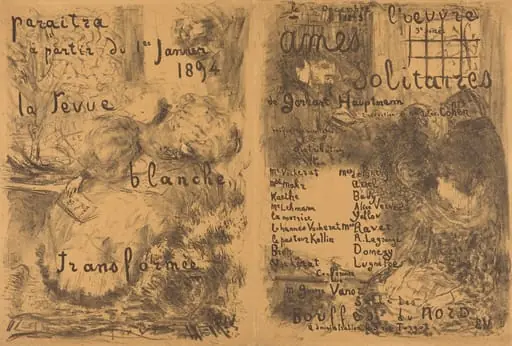
Carmosine is a print by the Impressionist artist Maurice Dumont. It dates from 1895 and is held in the collection of the National Gallery of Art.
- Inscription
- Inscribed:lower right in red pencil: Maurice Dumont / 95; across top printed: ... / Soirée du 10 Juin 1895 / Carmosine / Comédie en Trois Actes / d'ALFRED DE MUSSET; lower left plate: Maurice Dumont
About this work
Overview
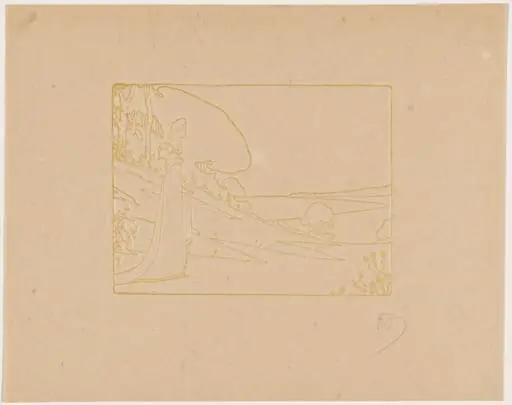
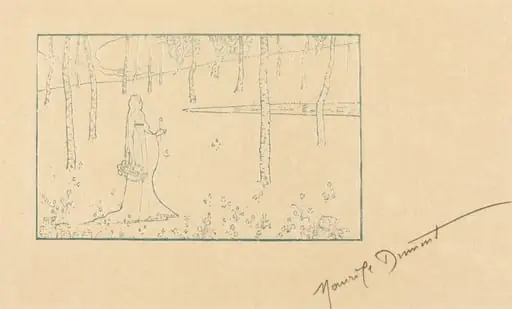
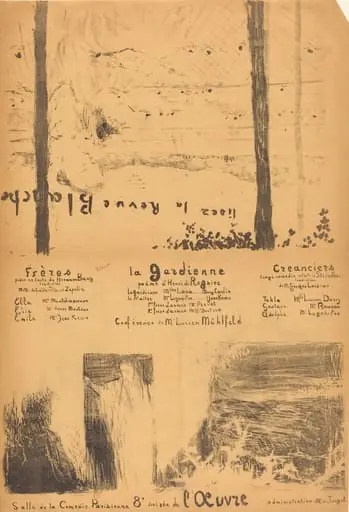
Maurice Dumont’s 1895 print titled Carmosine is executed as a glyptograph on simili‑japon paper. The composition presents a solitary female figure in a long, flowing dress, positioned before a solitary tree. The background is rendered in a muted beige tone, with faint silhouettes of additional foliage that suggest a tranquil outdoor setting.
Subject & Meaning
The central figure, a woman possibly shielding herself with a parasol, is rendered with limited facial detail, emphasizing her silhouette and attire rather than individual identity. The serene posture and the gentle surrounding landscape convey a mood of quiet contemplation, inviting viewers to experience a moment of calm within a natural environment.
Technique & Style
Carmosine employs glyptography, a process in which an image is incised onto a hard surface before being transferred to paper. This method imparts a subtle, tactile quality to the lines and tones. The artist’s choice of soft, light‑colored pigments and delicate contours enhances the work’s overall sense of stillness and atmospheric softness.
History & Provenance
Created in 1895, the print belongs to the later period of Dumont’s career, when he explored experimental printmaking methods. While specific ownership records are scarce, the work has been documented in catalogues of late‑19th‑century French prints and remains cited as an example of Dumont’s engagement with emerging graphic techniques.
Own this work as a print
Artist & collection