Artwork
Le Chariot de terre cuite
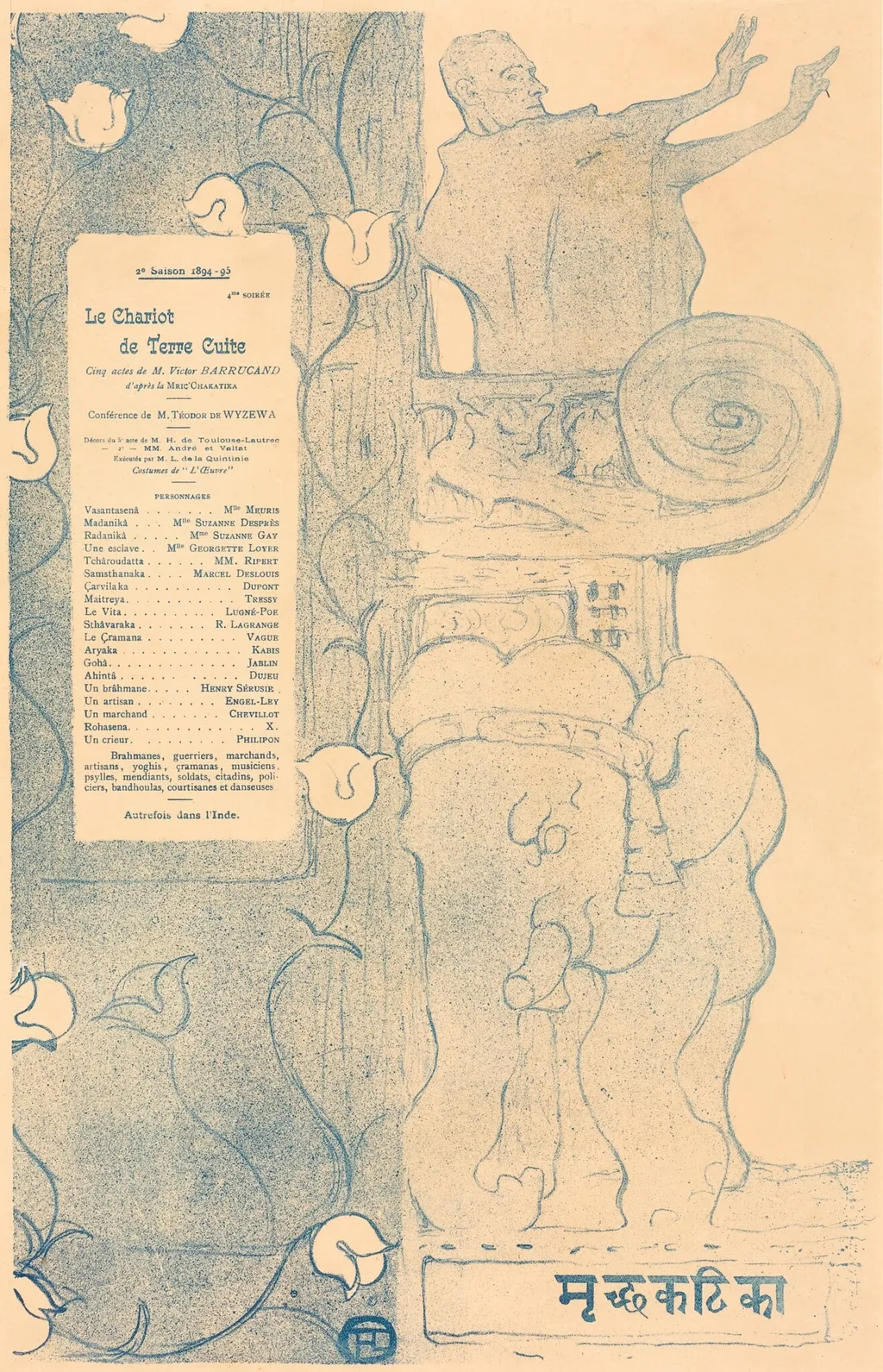
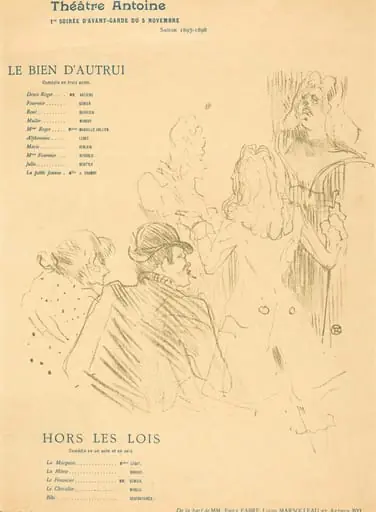
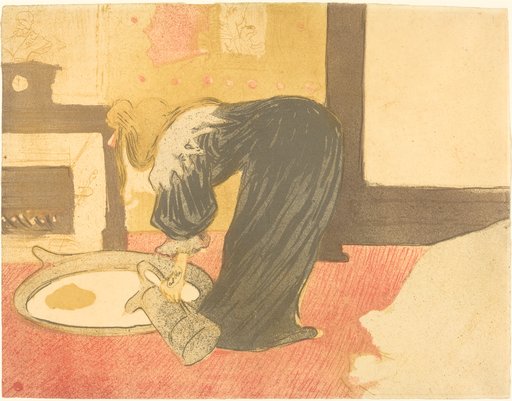
Le Chariot de terre cuite is an ink print by the Impressionist artist Henri de Toulouse-Lautrec. It dates from 1895 and is held in the collection of the National Gallery of Art.
- Inscription
- Inscribed:lower center in stone: T-L; upper left printed: 2e Saison 1894-95 / 4me SOIRÉE / Le Chariot / de Terre Cuite / Cinq actes de M. Victor BARRUCAND / d'après la MRIC'CHAKATIKA...; by later hand, lower right in pen and blue ink: A Spo Ke(?) / T-Lautrec; by later hand, lower right in graphite: D.77; by later hand, lower left in graphite: LX Le Chariot de terre cuite. D. 77; by later hand, lower center in graphite: signed (illeg.); by later hand, upper right in graphite: Toulouse-Lautrec / (illeg) !
About this work
Overview
Henri de Toulouse‑Lautrec’s lithograph Le Chariot de terre cuite was produced in 1895. Executed on wove paper, the print employs a limited palette of light blue and pink inks, creating a delicate, almost ethereal atmosphere. The composition centers on an elaborately decorated chariot occupied by a standing figure, surrounded by stylized foliage and floral motifs.
Subject & Meaning
The image presents a solitary figure within a richly ornamented chariot, clutching a staff or spear, while vines and blossoms cascade around the vehicle. Though the scene is not tied to a specific narrative, its emphasis on a ceremonial carriage and natural embellishment reflects Toulouse‑Lautrec’s interest in the theatrical and marginal spectacles of Parisian life.
Technique & Style
Toulouse‑Lautrec employed the lithographic process, drawing directly onto a stone surface with greasy mediums before transferring the image to wove paper. The use of two contrasting inks, soft blue and pink, allows for subtle tonal variations and a dreamlike quality. Fine line work outlines the intricate patterns on the chariot, while broader washes suggest depth and atmosphere.
History & Provenance
The work exists as a proof, indicating it was part of a limited edition intended for collectors familiar with the artist’s printmaking output.
Created during the artist’s most productive period, the print dates to 1895, a year when Toulouse‑Lautrec was actively documenting the nightlife and peripheral figures of Montmartre. The work exists as a proof, indicating it was part of a limited edition intended for collectors familiar with the artist’s printmaking output. Its provenance traces back to early 20th‑century collections of French lithographs.
Own this work as a print
Artist & collection
Artist
Comte Henri Marie Raymond de Toulouse-Lautrec-Montfa (24 November 1864 – 9 September 1901), known as Toulouse-Lautrec (French: ), was a French painter, printmaker, draughtsman, caricaturist, and illustrator.