Artwork
The Dragon and the Beast
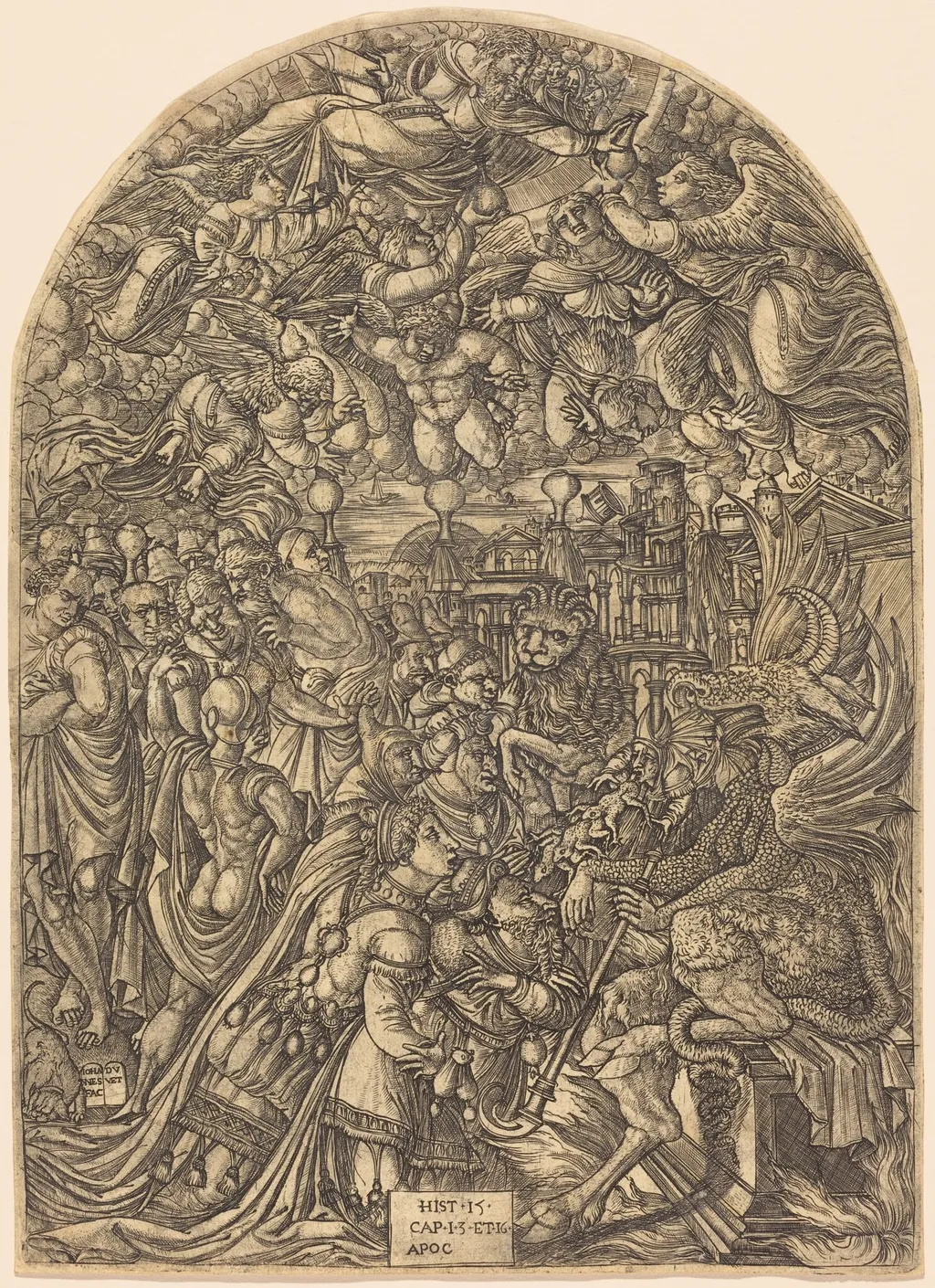
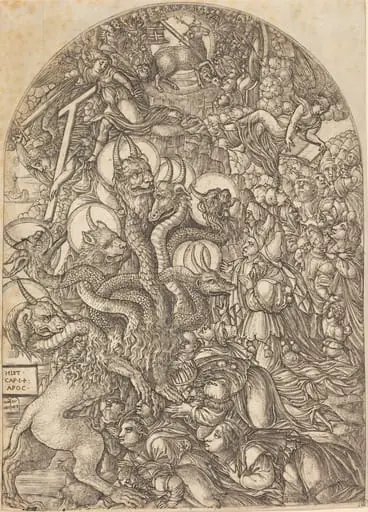
The Dragon and the Beast is an ink print by the Renaissance artist Jean Duvet. It dates from 1551 and is held in the collection of the National Gallery of Art.
- Inscription
- Inscribed:"IOHA / NNES / DV / VET / FAC" recto, on plate, on double-tablet at lower left. "HIST 15 / CAP 13 ET 16 / APOC" recto, on plate, on plaque at lower center. "arllal" verso, lower right margin, graphite, unknown hand.
- Markings
- Marked:"National Gallery of Art, LJR" vero, lower right, black stamped ink.
About this work
Overview
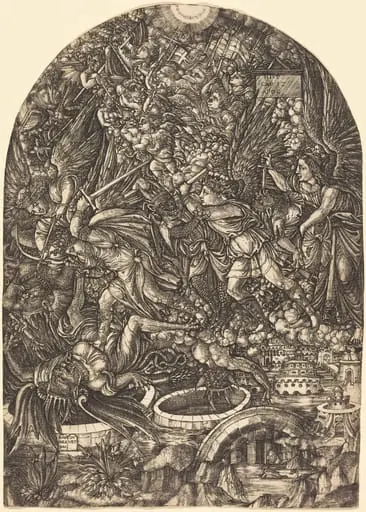
Created in 1551, The Dragon and the Beast is an engraving on laid paper by French artist Jean Duvet. The print presents a densely packed scene of intertwined figures, a winged beast and a coiling dragon, set against a chaotic urban backdrop. Fine linear work generates a sense of depth despite the crowded composition, and a marginal inscription references a biblical passage.
Subject & Meaning
The central motif features a ferocious, toothed creature rising from the ground, encircled by a dragon, suggesting a confrontation drawn from apocalyptic imagery. Surrounding figures, standing, climbing, and moving through the space, reinforce a narrative of struggle and divine judgment, aligning with Duvet’s preoccupation with intense religious themes.
Technique & Style
Duvet employed delicate, intersecting lines to model shadow and texture, achieving a precise yet vigorous effect. The engraving’s crowded arrangement and somewhat naïve rendering distinguish it from contemporary French prints, while its energetic line work anticipates later expressive approaches, such as those seen in William Blake’s oeuvre.
History & Provenance
Jean Duvet, recognized as the first major French printmaker, produced roughly 73 plates during his career. The Dragon and the Beast belongs to this body of work and bears the inscription “Hist. Is.
Cap. 13. Etig. Apoc.”, indicating a scriptural source. The print has survived in several museum collections, attesting to its continued scholarly interest.
Context
Working in the mid‑sixteenth century, Duvet combined his goldsmith’s precision with the emerging possibilities of printmaking. His engravings, marked by dense compositions and strong religious content, reflect the Counter‑Reformation climate in France, where visual art served as a vehicle for doctrinal reinforcement.
Own this work as a print
Artist & collection
Artist
Jean Duvet (1485 – after 1562) was a French Renaissance goldsmith and engraver, now best known for his engravings.

 Saint Michael and the Dragon
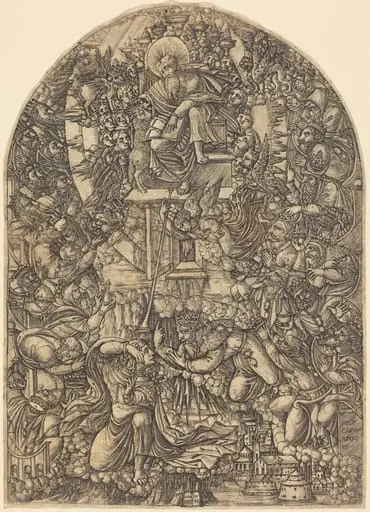 Saint John Summoned to Heaven
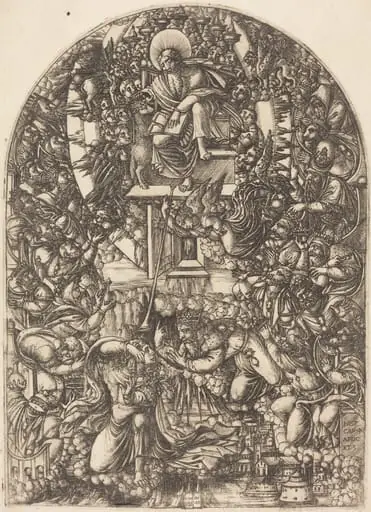 Saint John Summoned to Heaven
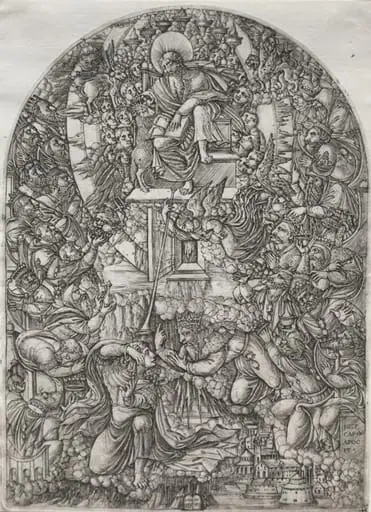 The Apocalpse: St. John Summoned to Heaven
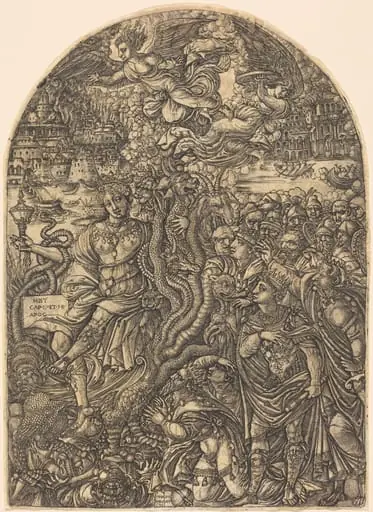 The Babylon Harlot
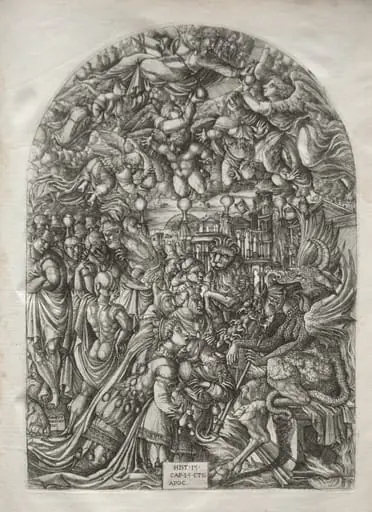 The Apocalypse: The Woman Clothed with the Sun
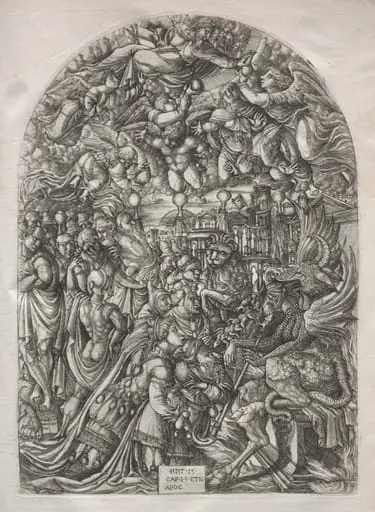 The Apocalypse: The Dragon with Two Horns and the Beast with Seven
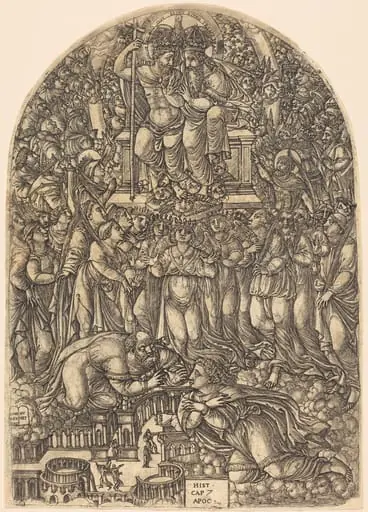 The Multitude Which Stands before the Throne