Artwork
The Beast with Seven Heads and Ten Horns
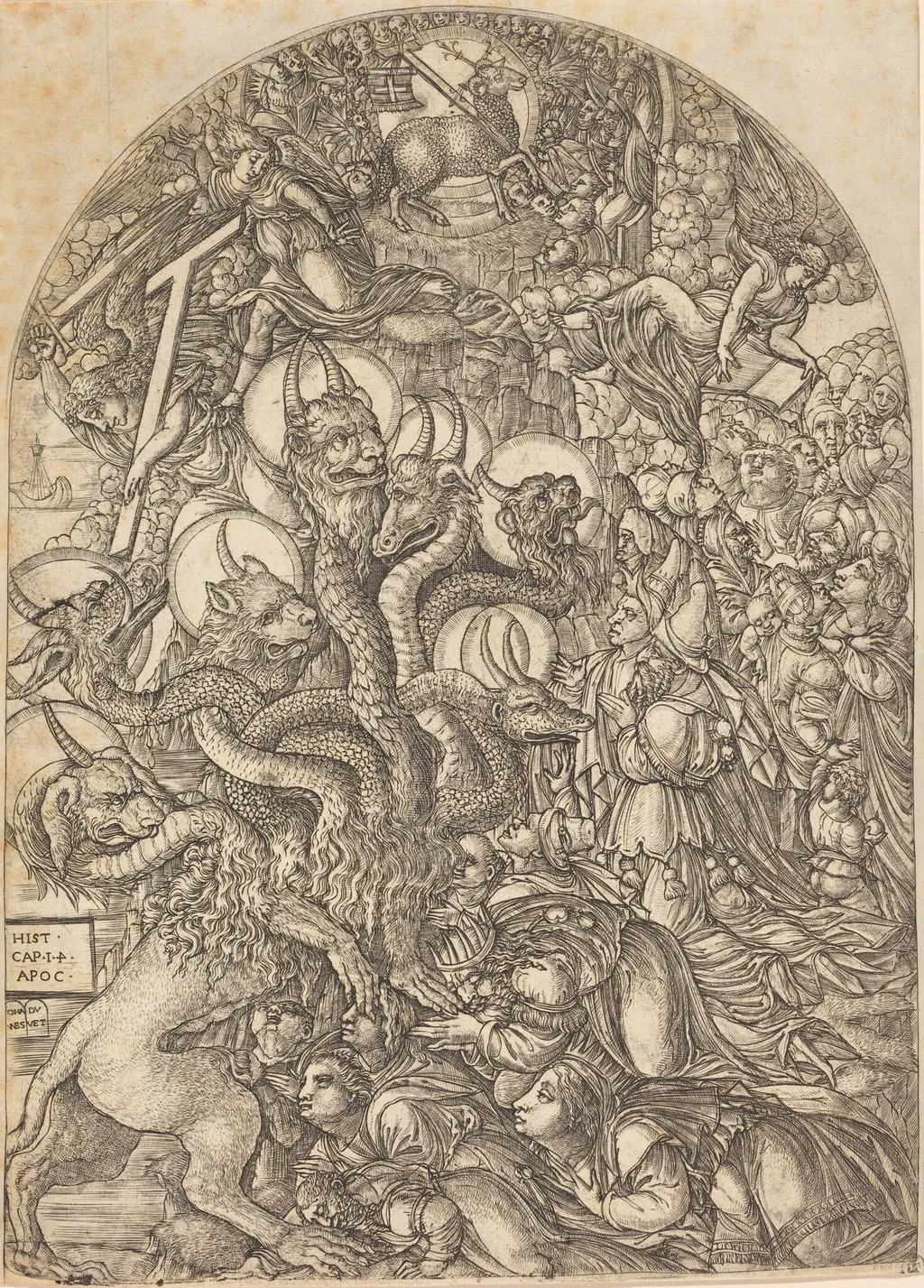
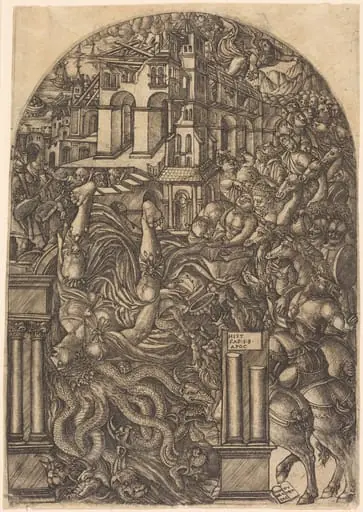
The Beast with Seven Heads and Ten Horns is an ink print by the Renaissance artist Jean Duvet. It dates from 1551 and is held in the collection of the National Gallery of Art.
- Inscription
- Inscribed:"IOHA / NNES / DV / VET / FAC" recto, on plate, on double-tablet at lower left. "HIST. / CAP.1.4 [reversed]. / APOC" recto, on plate, on plaque at lower left. "B.26 / R-D 40 / R-D (XI) 40L" verso, in graphite, at lower center. "142 90" verso, in graphite, lower left. "42 93" verso, in black ink, lower center.
- Markings
- Marked:Friedrich August II (Lugt 972) recto, lower right corner, partial stamp in black ink. "National Gallery of Art" verso, lower right, black stamped ink. "LJR" verso, lower right, black stamped ink.
About this work
Overview
The Beast with Seven Heads and Ten Horns is a 1551 engraving on laid paper by Jean Duvet, a pioneering French Renaissance goldsmith and printmaker. This densely detailed work exemplifies Duvet's characteristic style, blending crowded compositions with intense religious themes.
Subject & Meaning
The engraving visually interprets the apocalyptic beast from the Book of Revelation, depicting a fantastical creature with seven heads, some emerging from water, amidst a backdrop of clouds, buildings, and miniature human figures, conveying a sense of chaotic spirituality.
Technique & Style
Duvet employed sharp, busy lines and cross-hatching techniques to achieve dynamic contrasts of light and dark, creating a paradoxically chaotic yet meticulously planned visual landscape. This approach distinguishes his work from other Renaissance printmakers, emphasizing freedom and immediacy.
History & Provenance
Created in 1551, this piece is part of Duvet's oeuvre of approximately 73 plates. As the first significant French printmaker, Duvet's style, marked by a naive quality and religious intensity, has drawn comparisons to William Blake's work.
Context
Within the broader Renaissance art landscape, Duvet's engraving stands out for its naive, expressive quality, diverging from the more refined techniques prevalent during the period. Its religious themes reflect the era's strong spiritual influences on art.
Legacy
The Beast with Seven Heads and Ten Horns contributes to Duvet's legacy as a innovator in French printmaking, influencing subsequent artists with its expressive freedom and thematic depth, despite the relatively lesser-known status of his work compared to other Renaissance masters.
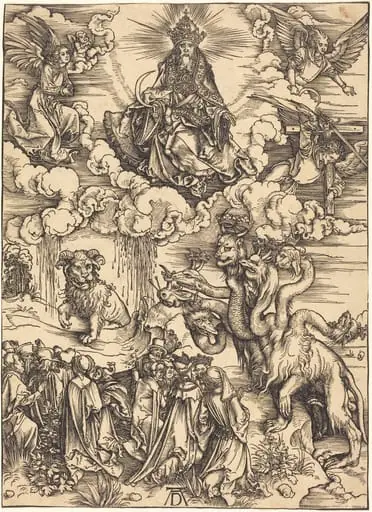
Own this work as a print
Artist & collection
Artist
Jean Duvet (1485 – after 1562) was a French Renaissance goldsmith and engraver, now best known for his engravings.

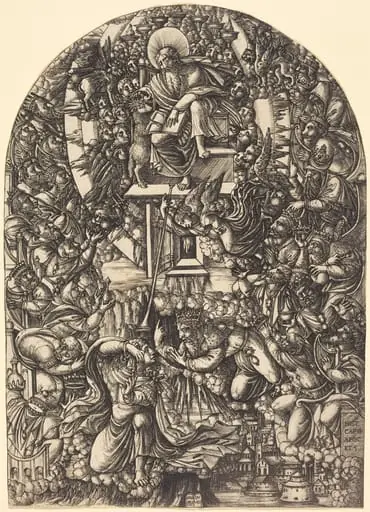
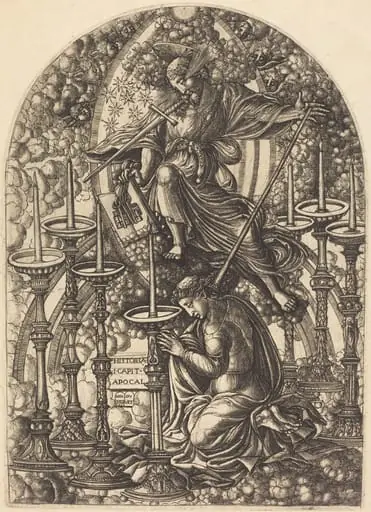
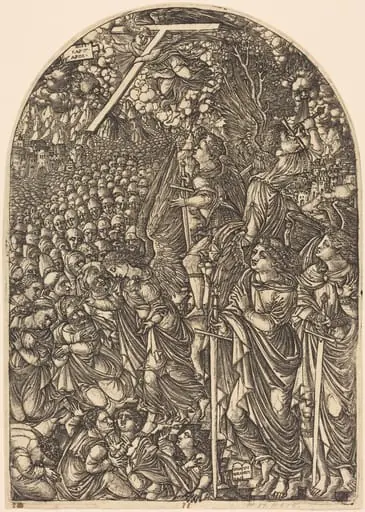
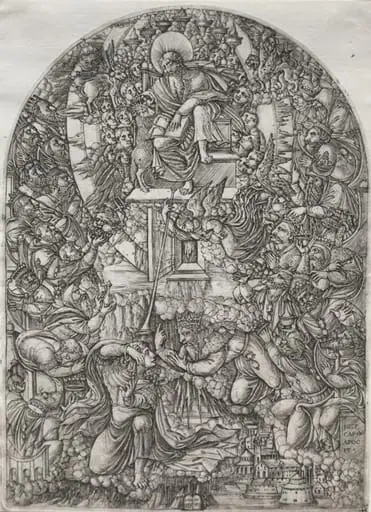 The Apocalpse: St. John Summoned to Heaven
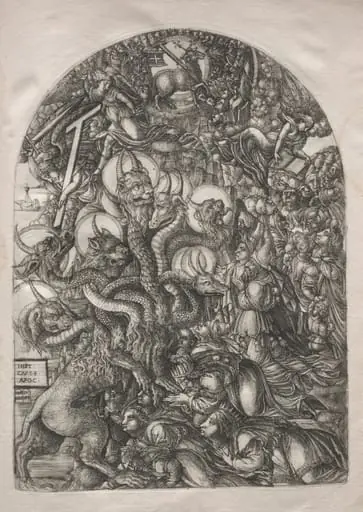 The Apocalypse: The Beast with Seven Heads and Ten Horns
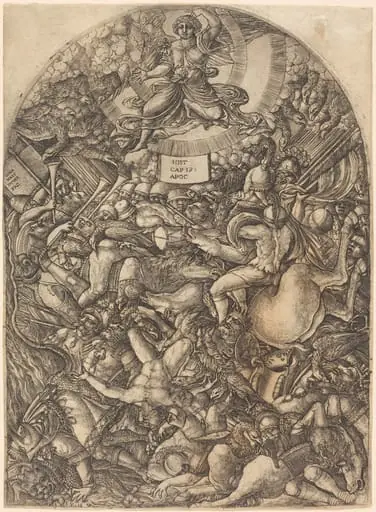 The Angel in the Sun Calling the Birds of Prey
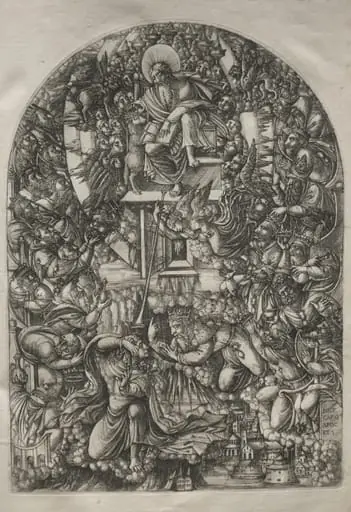 The Apocalypse: St. John Summoned to Heaven
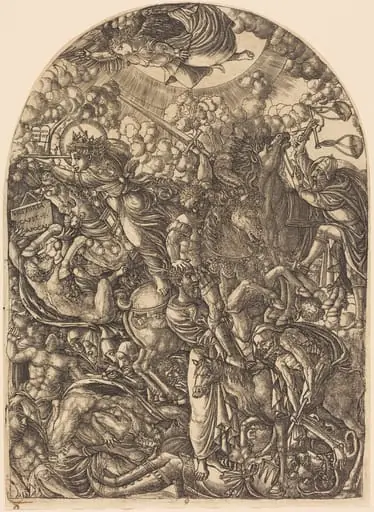 Saint John Sees the Four Horsemen
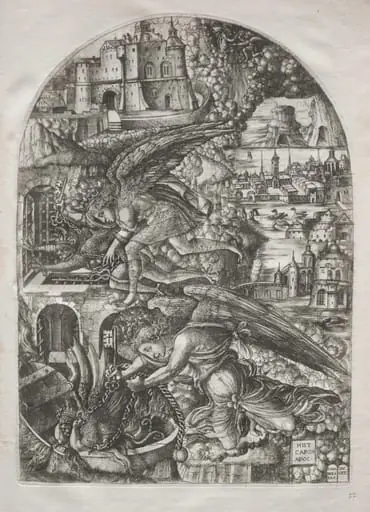 The Apocalypse: Satan Bound for a Thousand Years
 The Fall of Babylon
 Saint Michael and the Dragon