Artwork
Overcast Day
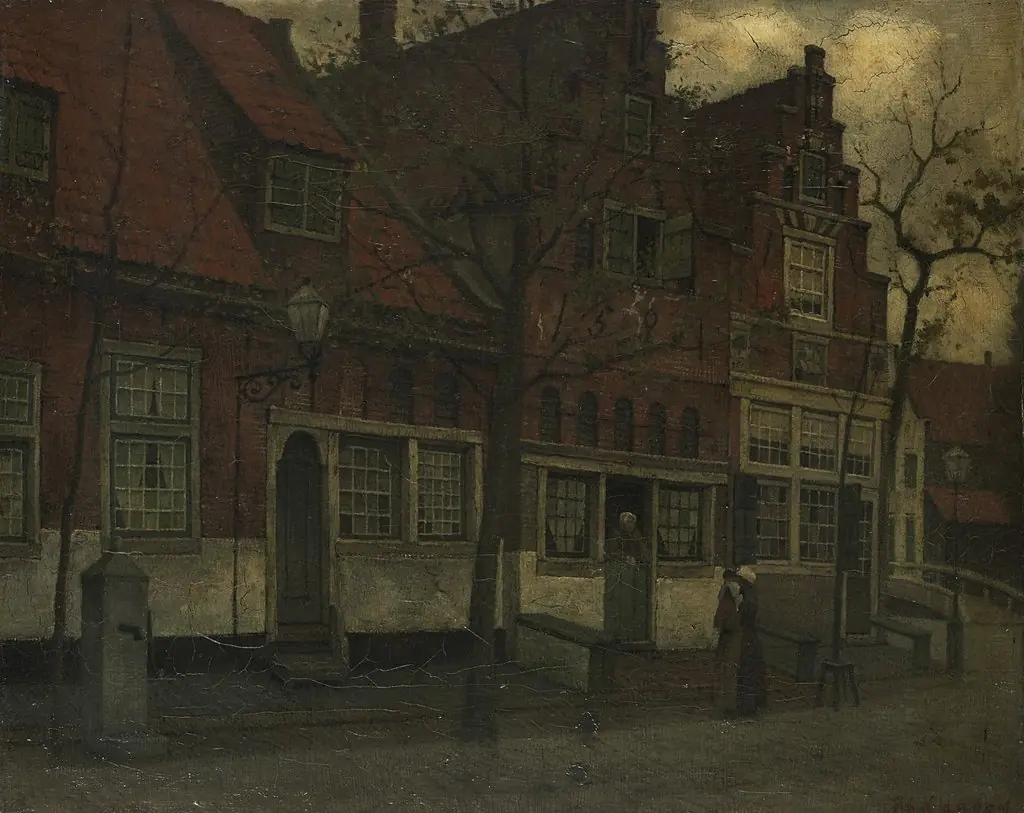
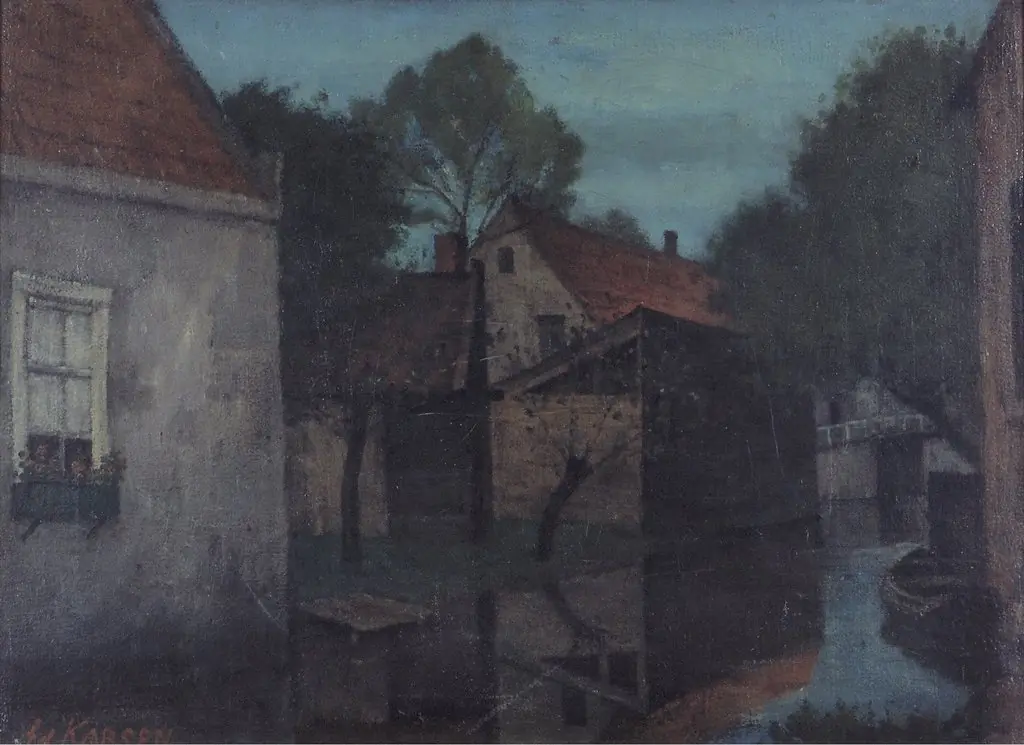
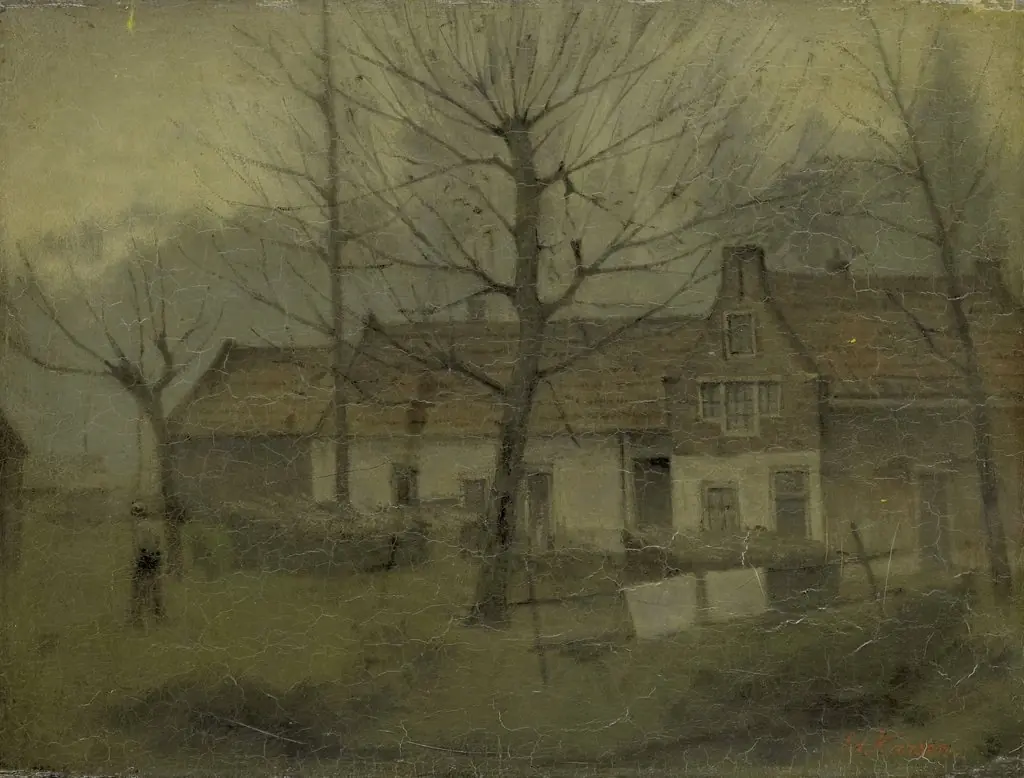
Overcast Day is an oil painting by the Post-Impressionist artist Eduard Karsen. It dates from 1896 and is held in the collection of the Rijksmuseum.
About this work
Subject & Meaning
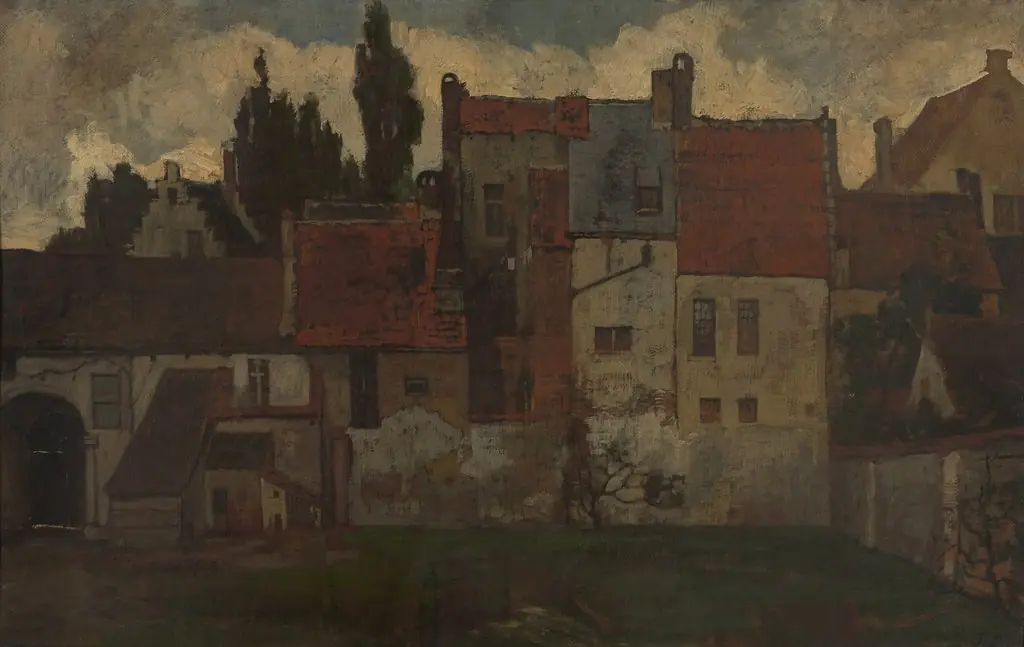
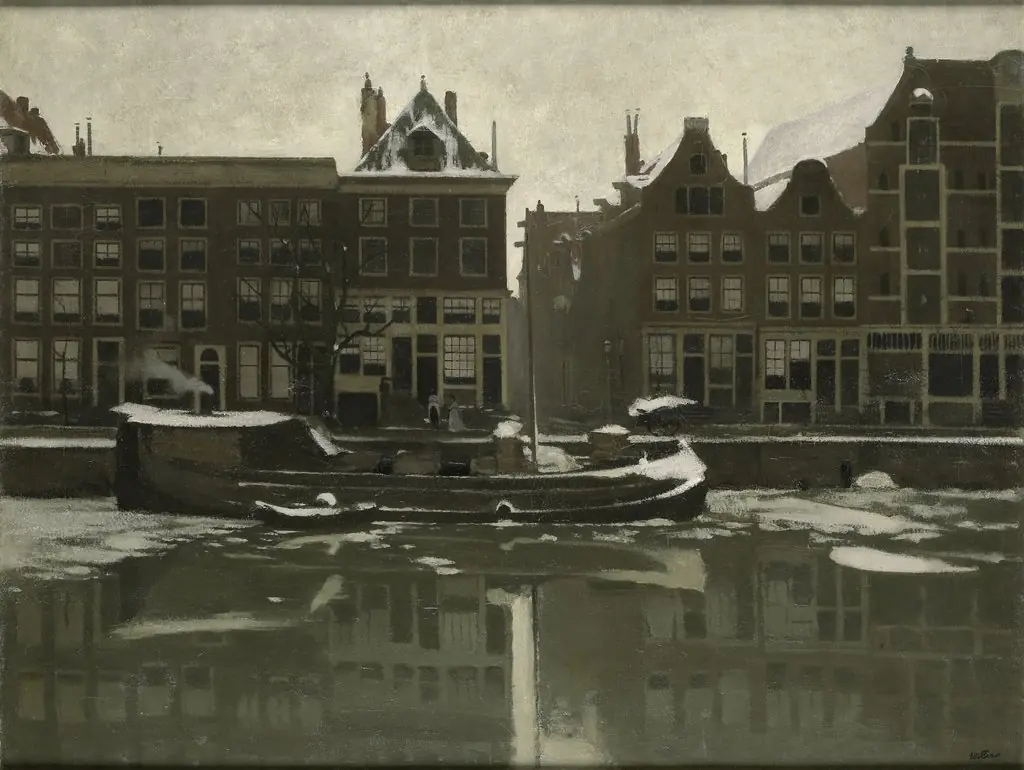
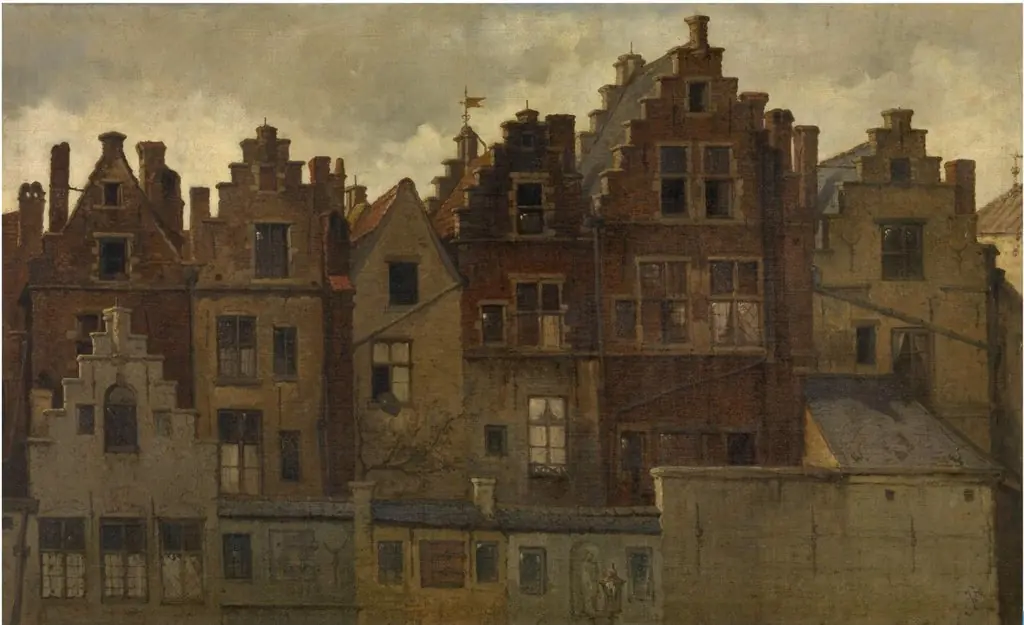
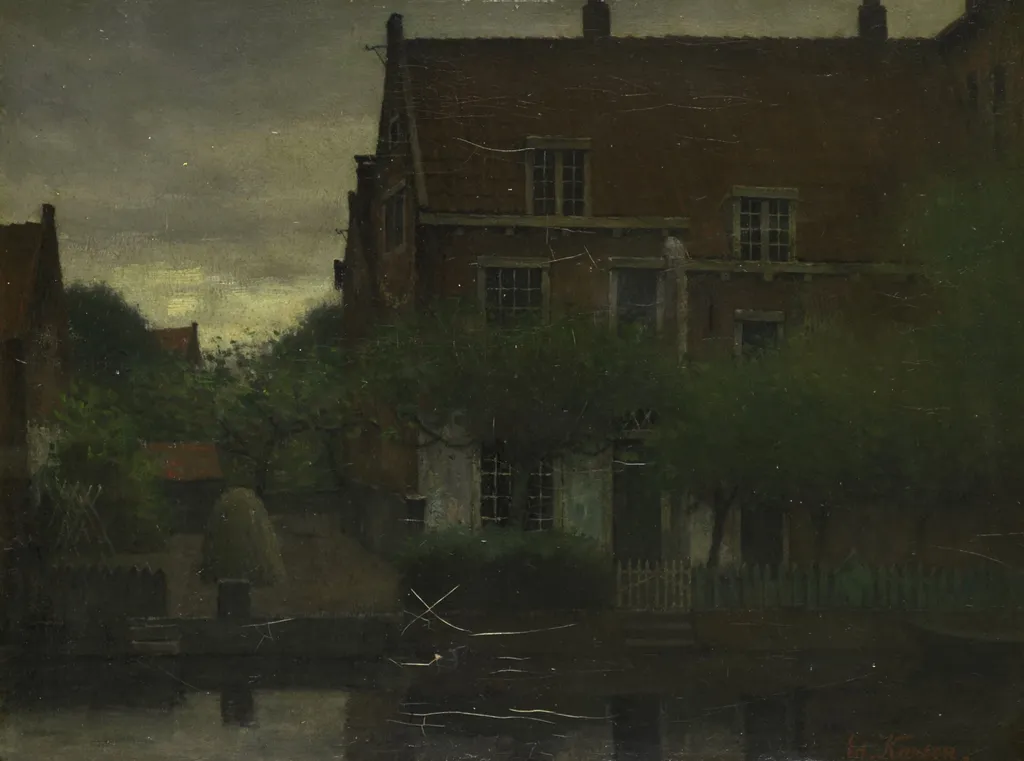
Karsen's work captures a quiet, everyday street scene that emphasizes atmospheric conditions and the interplay of light and shadow on built forms.
The painting depicts a tree and a house beneath a cloudy sky, set in an urban environment. Karsen's work captures a quiet, everyday street scene that emphasizes atmospheric conditions and the interplay of light and shadow on built forms.
The overcast weather serves as a visual metaphor for stillness and introspection, reflecting the artist's interest in observing subtle changes in nature and city life.
The composition balances architectural detail with natural elements, suggesting a harmonious relationship between human habitation and the surrounding environment.
Technique & Style
The work is executed in oil paint on canvas, a standard support for late‑19th‑century easel painting. Its dimensions of 34 cm by 45 cm are recorded in the Rijksmuseum catalogue, and the surface shows typical handling marks of the period. Stylistically, it depicts a tree and a house within an urban setting, characteristic of Karsen’s cityscape genre.
The composition is rendered in a restrained palette that conveys an overcast atmosphere, with soft tonal transitions typical of Dutch municipal art of the 1890s.
History & Provenance
Eduard Karsen painted Overcast Day in 1892, an oil on canvas cityscape depicting a tree and house. The work measures 34 cm by 45 cm and was created as part of his cityscape genre output. It is held by the Rijksmuseum, where it remains in the institution's collection.
The painting's provenance is recorded through its inclusion in the museum's holdings, with its creation dating to 1892.
Overcast Day is held in the collection of the Rijksmuseum, as recorded in the Wikidata entry for the painting. No specific inventory or accession number is provided in the available sources.
No exhibition history is documented for the work in the sources reviewed.
Overview
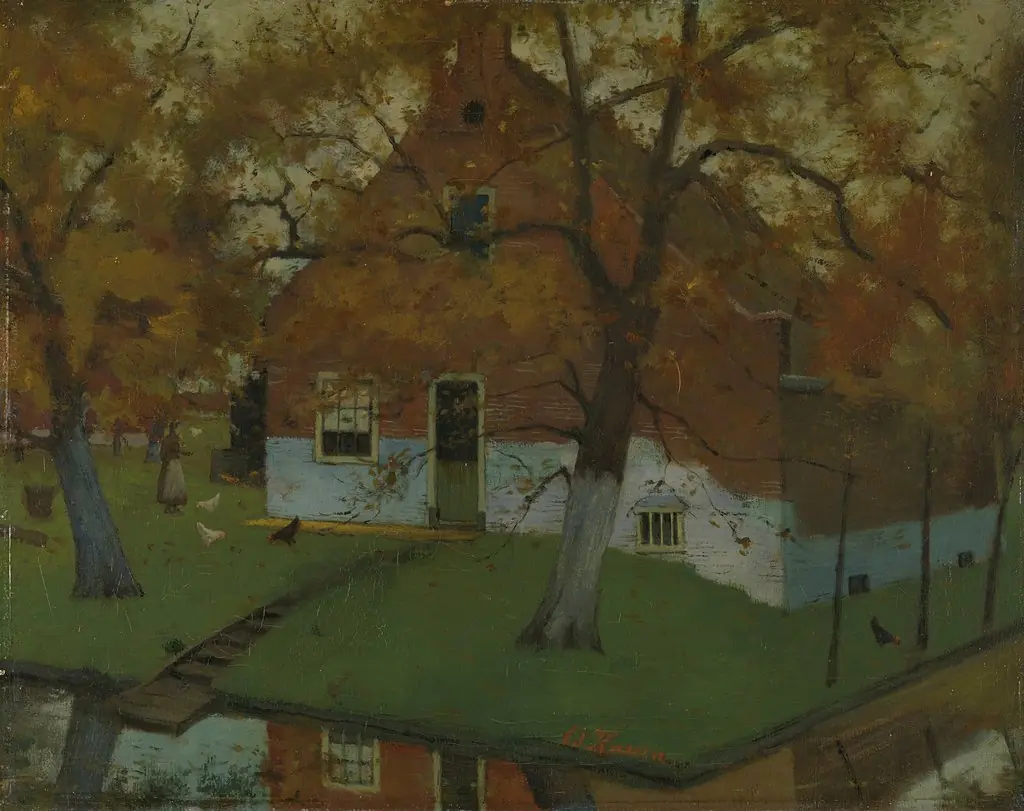
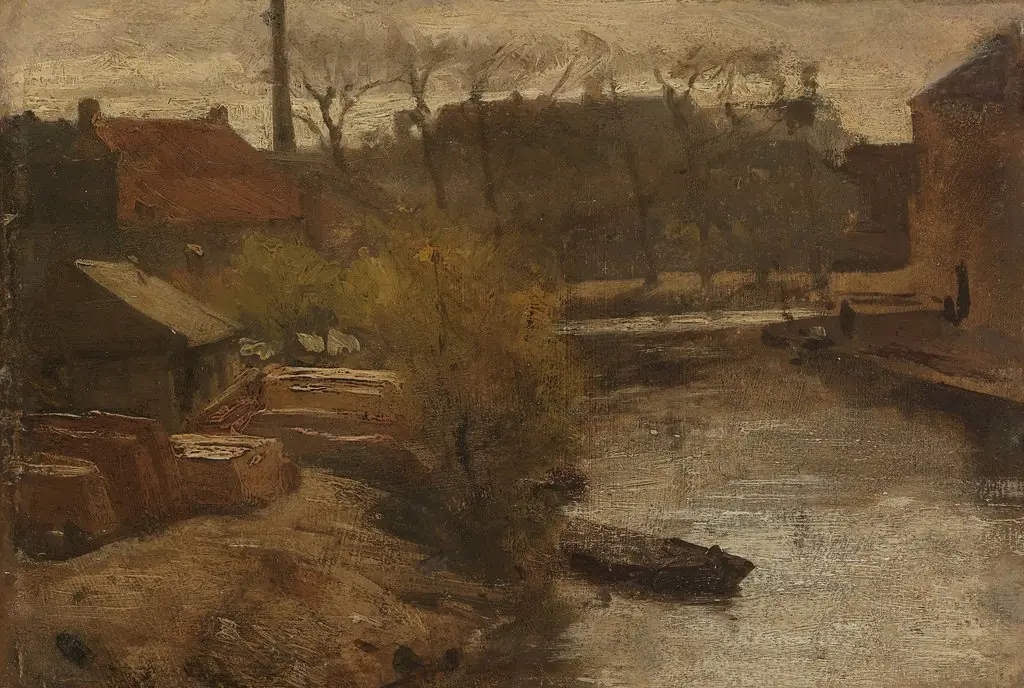
Created in 1896, Overcast Day is an oil painting by Dutch artist Eduard Karsen. The work presents a modest architectural structure beneath a muted sky, surrounded by foliage and a small water feature. Its subdued palette and quiet composition convey a tranquil moment, characteristic of Karsen’s focus on atmospheric rural scenes. The piece belongs to the collection of the Rijksmuseum in Amsterdam.
Context
Eduard Karsen was linked to the Tachtigers, a Dutch literary movement that championed personal expression and emotional intensity. Though primarily a painter, his work shares the movement’s emphasis on mood and interiority, translating literary sensibilities into visual form. Overcast Day exemplifies this crossover, portraying a seemingly ordinary setting imbued with psychological depth.
Own this work as a print
Artist & collection
Artist
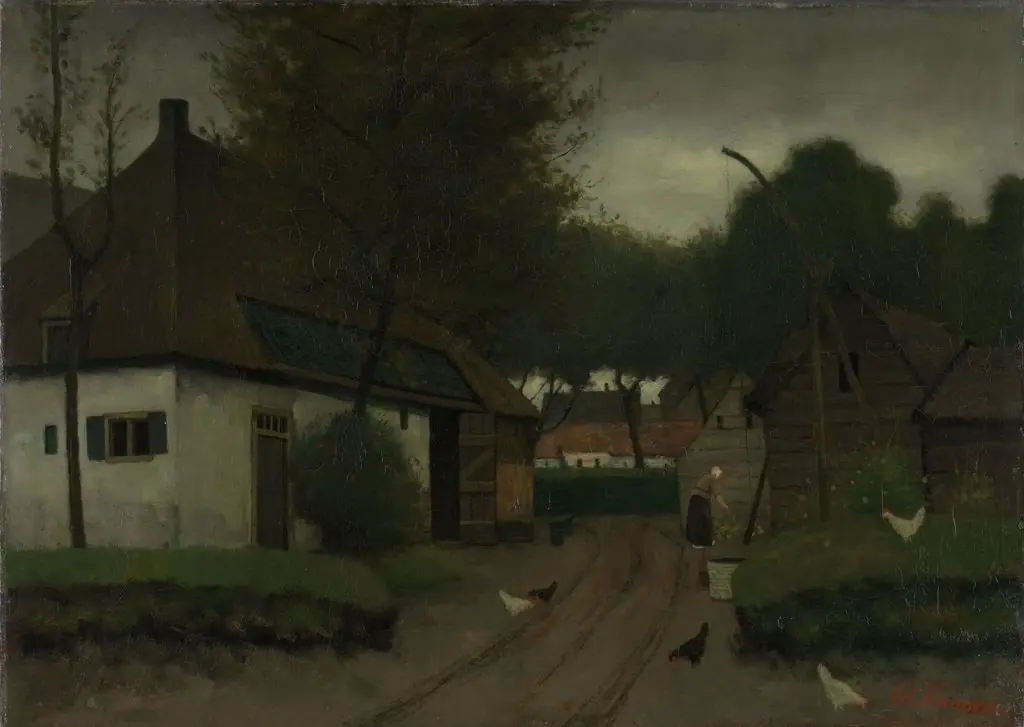
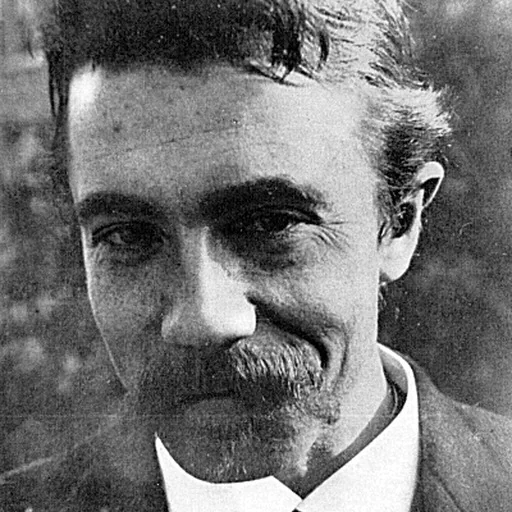
Johann Eduard Karsen (10 March 1860, Amsterdam - 31 October 1941, Amsterdam) was a Dutch Post-Impressionist painter, known for his moody scenes featuring villages and farmhouses; usually containing a solitary figure.