Artwork
Houses in a Village
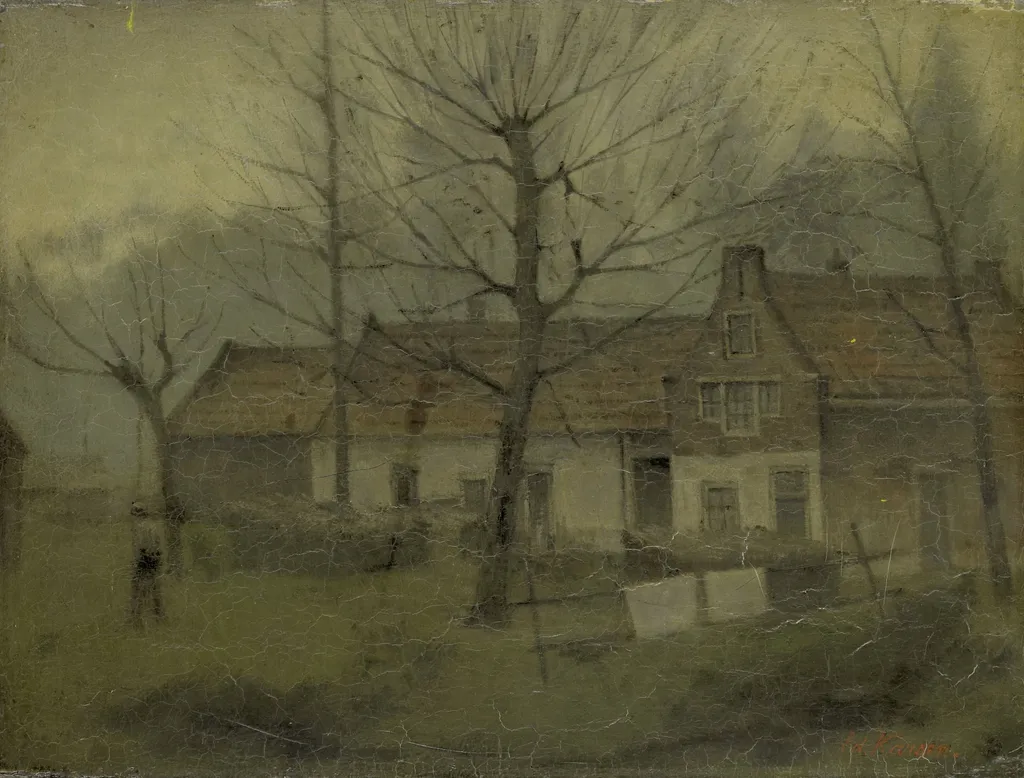
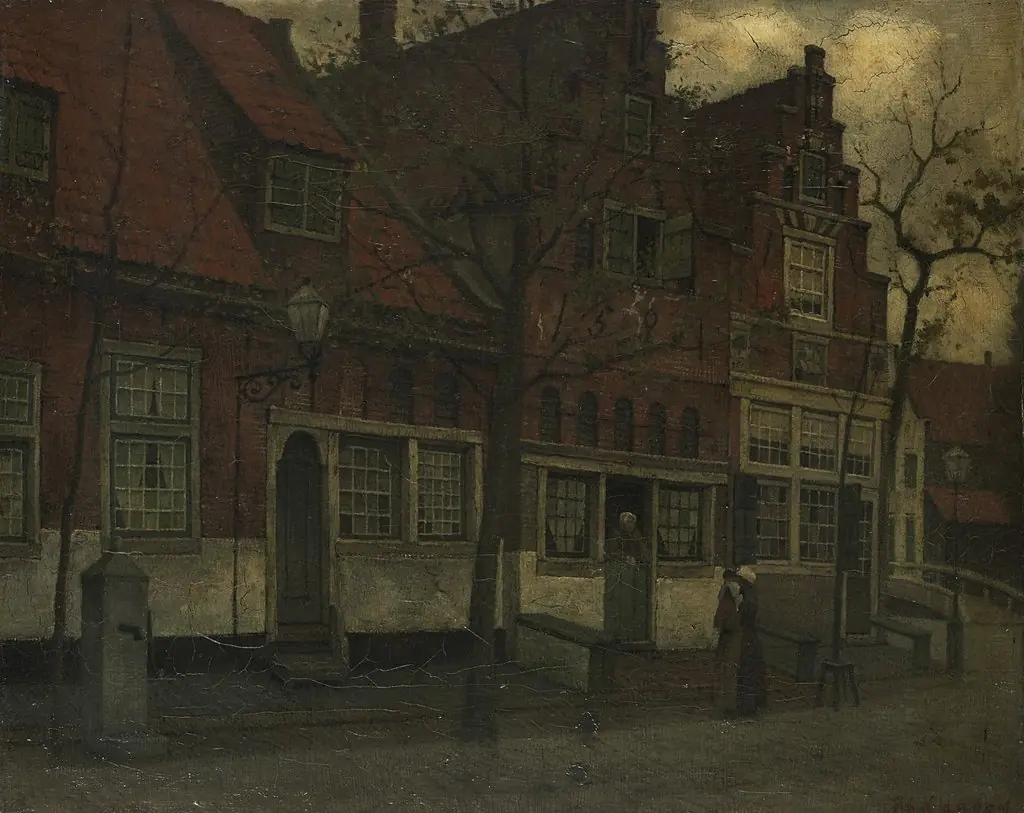
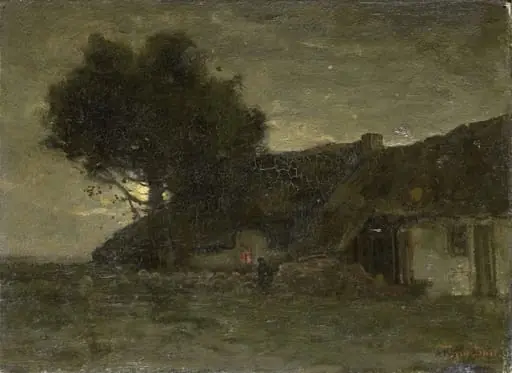
Houses in a Village is an oil painting by the Post-Impressionist artist Eduard Karsen. It dates from 1898 and is held in the collection of the Rijksmuseum.
About this work
Technique & Style
Created in 1896 by Eduard Karsen, the work belongs to the cityscape genre, depicting trees and houses within a village setting.
Houses in a Village is an oil painting on canvas, measuring 34 by 44 cm. Created in 1896 by Eduard Karsen, the work belongs to the cityscape genre, depicting trees and houses within a village setting. The artist's handling of the medium and the painting's formal qualities reflect the conventions of late-19th-century Dutch landscape painting, though specific stylistic details are not documented in the available sources.
History & Provenance
Houses in a Village by Eduard Karsen is dated 1896 and was created in oil on canvas.
The work entered the Rijksmuseum collection through Cornelis Hoogendijk, whose ownership is recorded in the museum’s records. The painting remains in the Rijksmuseum’s holdings, where it is catalogued with dimensions of 34 cm in height and 44 cm in width.
The painting is held by the Rijksmuseum in Amsterdam, where it is recorded as part of the national collection. Its accession number within the museum’s holdings is SK-C-1932.
It was included in the exhibition “De Vrouw 1813–1913” held at the Stedelijk Museum, Amsterdam, in 1913, as part of a broader program commemorating the centennial of Dutch independence.
Overview
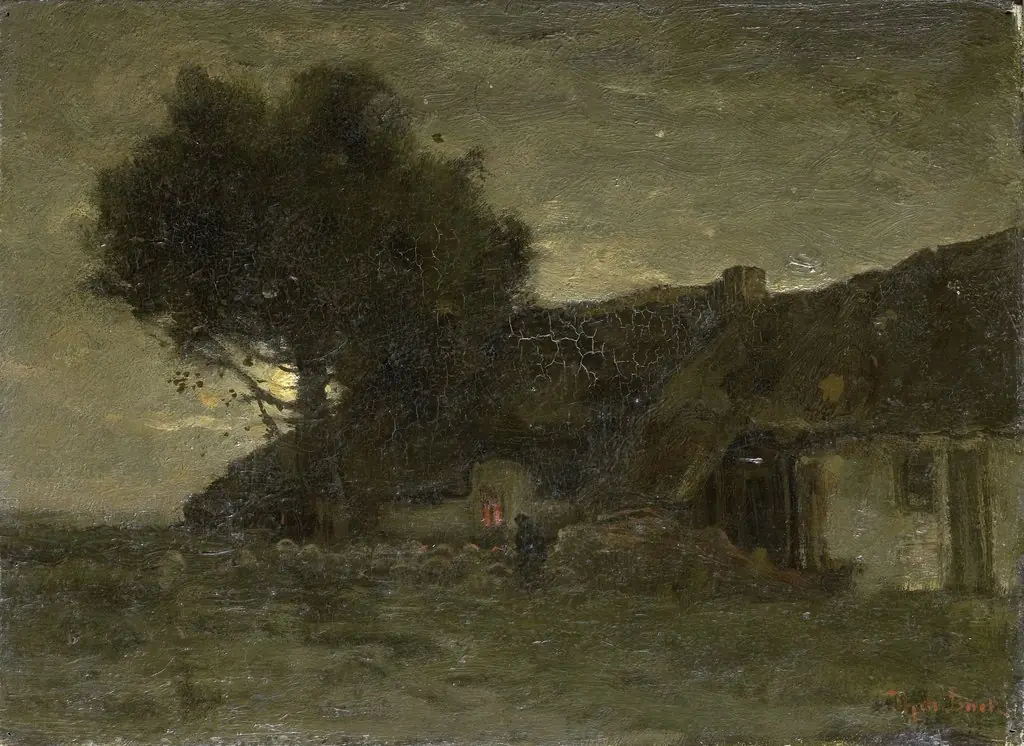
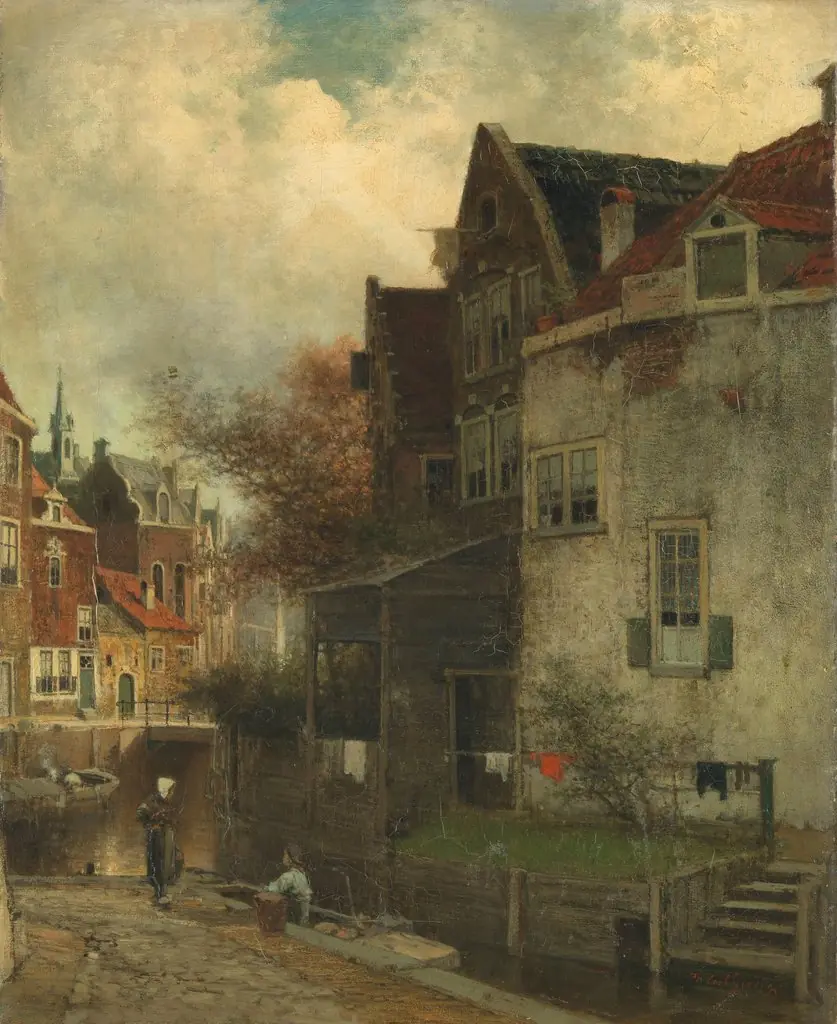
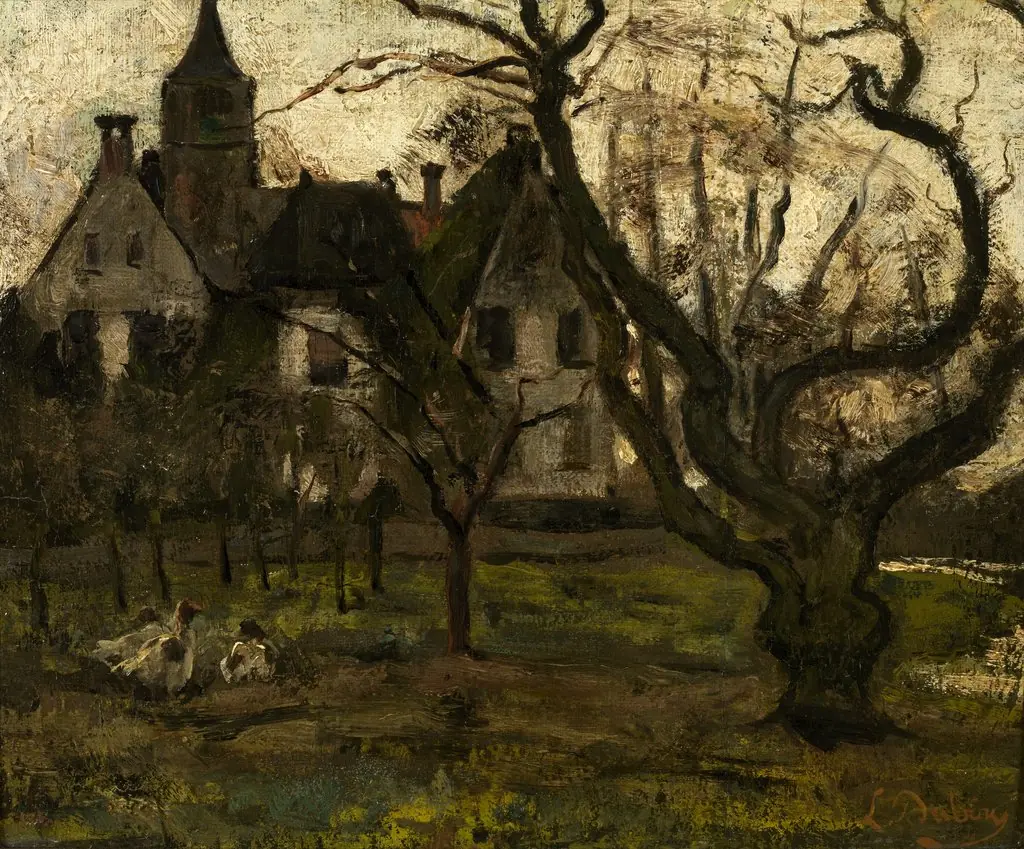
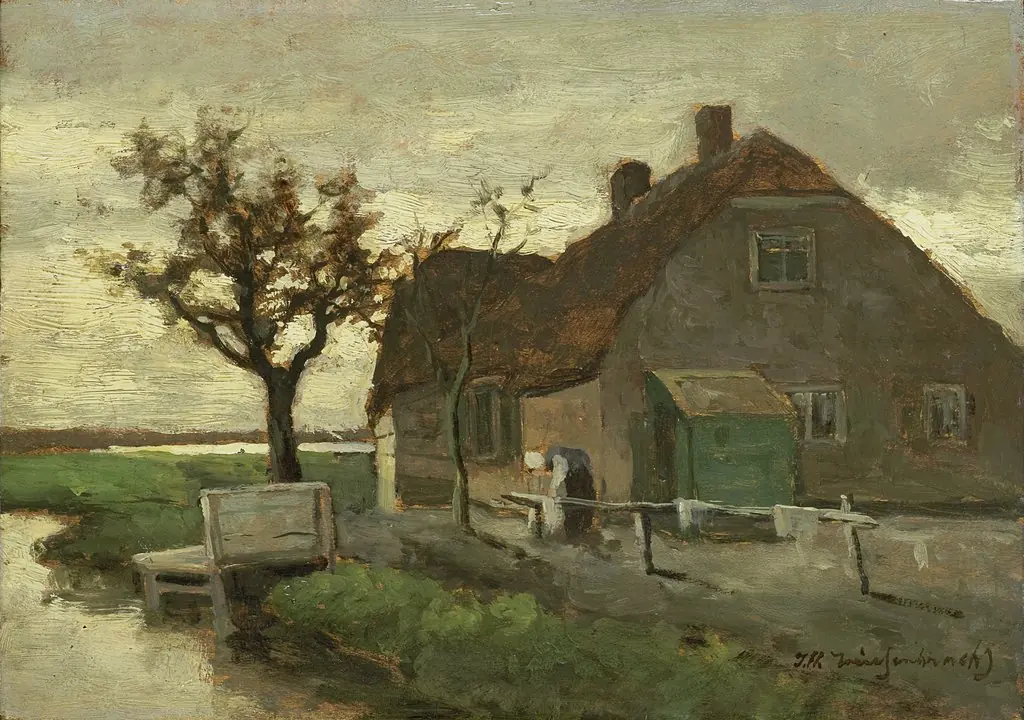
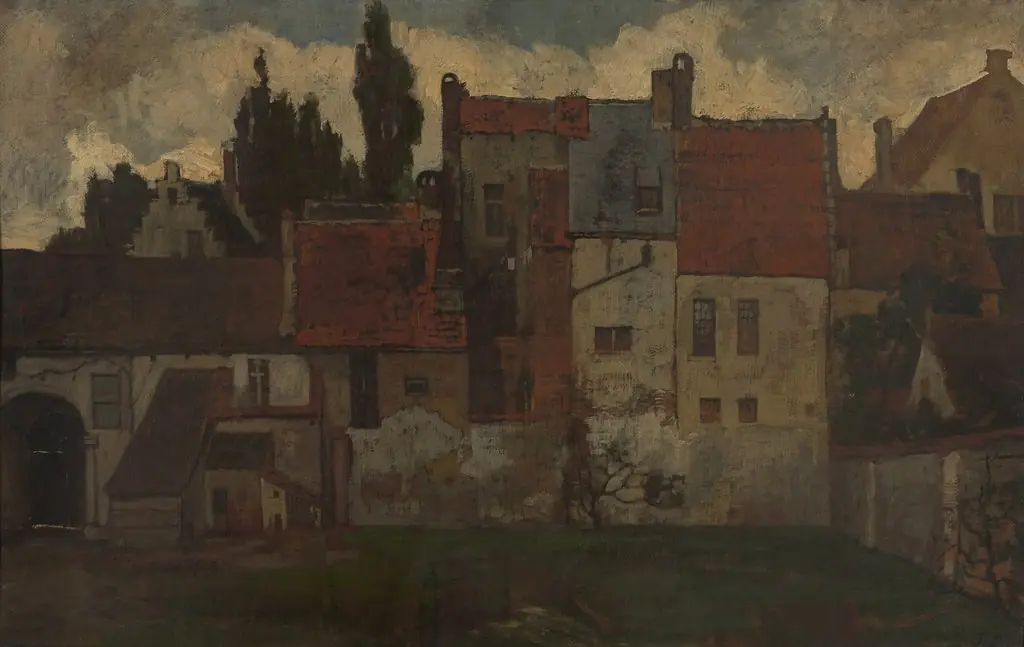
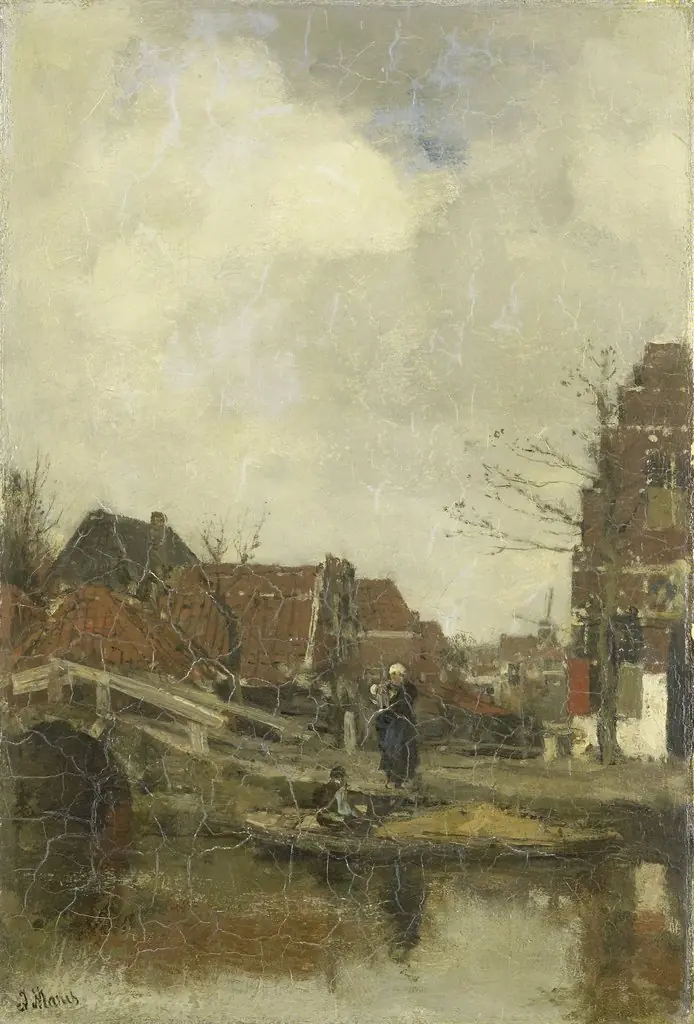
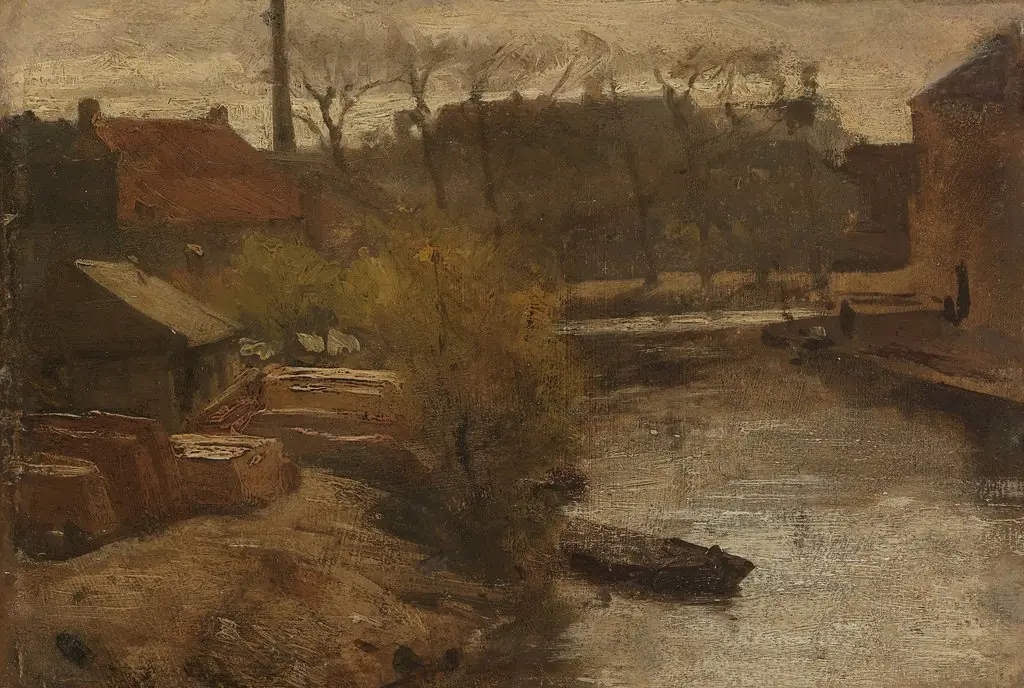
Eduard Karsen’s 1898 oil painting Houses in a Village presents a modest rural setting composed of two white‑walled houses with dark roofs, positioned side by side beneath a sparse, leafless tree. The composition is rendered in a restrained palette of muted greens, browns and grays, giving the scene a subdued, atmospheric quality. The work belongs to the collection of the Rijksmuseum.
Subject & Meaning
The image captures a quiet moment in a small settlement, emphasizing the simplicity of domestic architecture and the starkness of the surrounding landscape. The bare tree and the lack of human figures convey a sense of isolation, a recurring theme in Karsen’s depictions of village life.
Context
During the 1890s Karsen was known for moody rural scenes that often featured solitary figures or empty spaces, aligning his visual language with the broader Post‑Impressionist interest in mood and atmosphere over strict realism.
Own this work as a print
Artist & collection
Artist
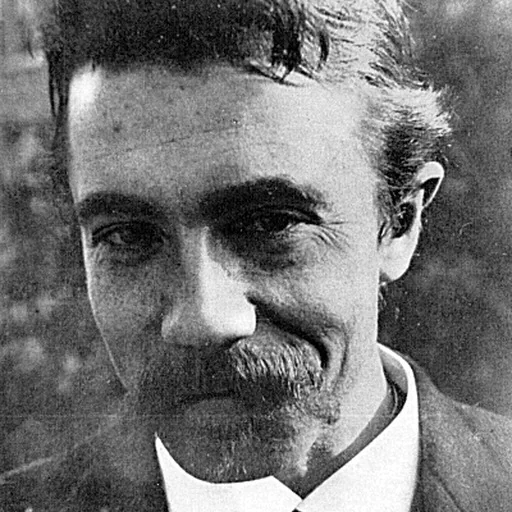
Johann Eduard Karsen (10 March 1860, Amsterdam - 31 October 1941, Amsterdam) was a Dutch Post-Impressionist painter, known for his moody scenes featuring villages and farmhouses; usually containing a solitary figure.