Artwork
The North Dutch Church, Fulton and William Streets, New York
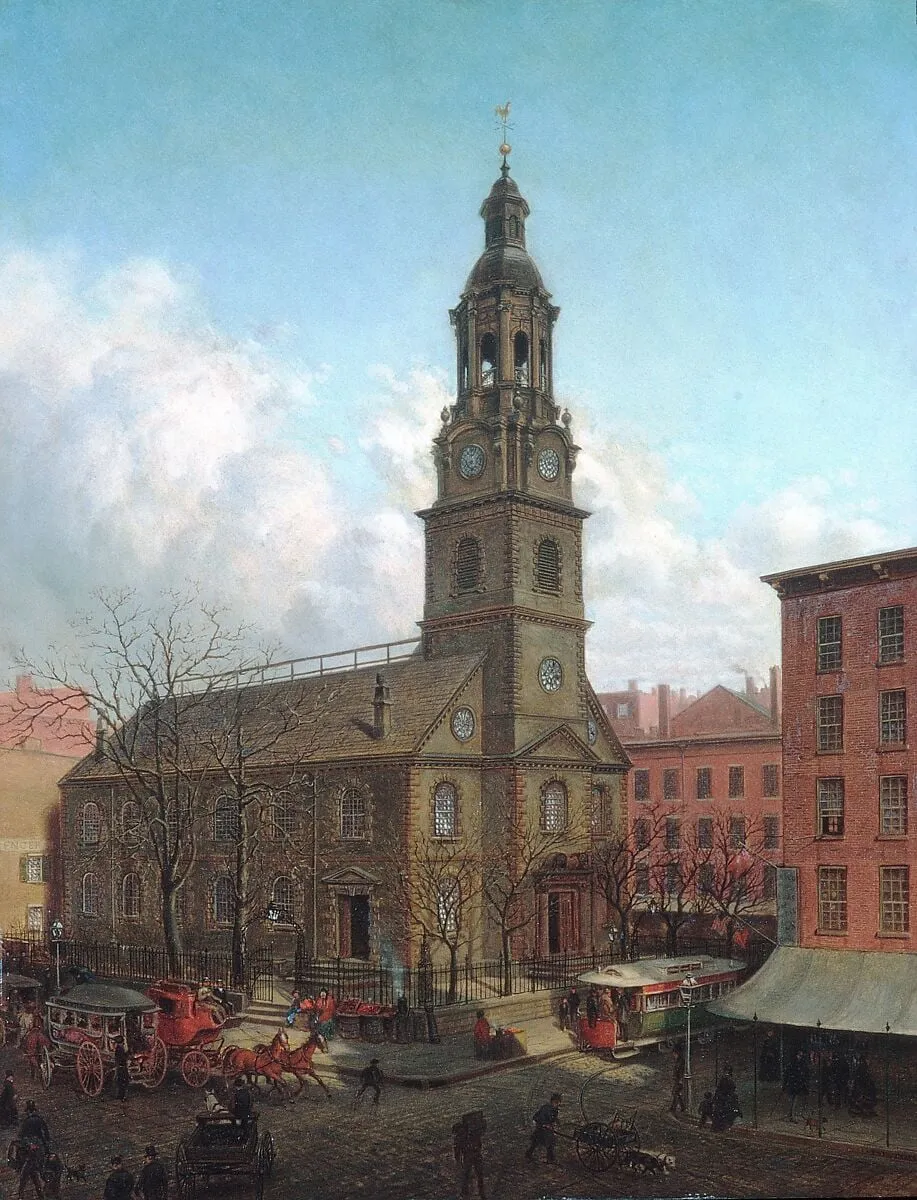
The North Dutch Church, Fulton and William Streets, New York is an oil painting by the American Folk Art artist Edward Lamson Henry. It dates from 1869 and is held in the collection of the Metropolitan Museum of Art.
About this work
A quiet New York street corner in 1869: a tall brick church, two men chatting, a horse-drawn carriage waiting. Edward Lamson Henry painted it the year the church was demolished, fond of recording places about to vanish. Small touches, mud on the wheels and a dog in the shadows, give it the feel of a snapshot.
Technique & Style
Executed in the cityscape genre, the work portrays a street scene that includes a church building, a carriage, a horse, a man and surrounding street activity.
The North Dutch Church, Fulton and William Streets, New York is an 1869 oil painting on academy board, measuring 45.7 × 35.6 cm. Executed in the cityscape genre, the work portrays a street scene that includes a church building, a carriage, a horse, a man and surrounding street activity. The composition is housed in the Metropolitan Museum of Art, where it is listed under The American Wing classification. Its formal qualities reflect a realistic rendering of urban architecture and everyday movement, characteristic of mid‑nineteenth‑century American cityscapes.
History & Provenance
The North Dutch Church, Fulton and William Streets, New York is an 1869 oil on academy board cityscape by Edward Lamson Henry. The work portrays the church, a carriage, horse, man and street intersection at Fulton and William Streets in New York. It was created as a genre cityscape and later entered the collection of the Metropolitan Museum of Art, where it remains on view in The American Wing.
The painting’s dimensions are 45.7 cm by 35.6 cm. No record of a specific commission has been identified; its creation history is documented through its exhibition as part of the museum’s permanent holdings.
The painting is held by the Metropolitan Museum of Art, accessioned in 1869 and catalogued as part of the museum’s holdings. It is located within The American Wing, a department specializing in American art. The work has not been listed as part of any documented exhibitions in the provided sources.
Overview
Edward Lamson Henry's 1869 oil on academy board, The North Dutch Church, Fulton and William Streets, New York, captures a specific moment in the city's architectural history just before the demolition of the subject. The composition centers on the tall brick structure of the North Dutch Church, situated at the intersection of Fulton and William Streets. Henry frames the scene with a quiet street corner atmosphere, featuring two men engaged in conversation in the foreground and a horse-drawn carriage waiting nearby.
The artist's characteristic attention to period detail is evident in the depiction of mud on the carriage wheels and a dog resting in the shadows, grounding the scene in the everyday reality of 1869 New York. Painted in the same year the church was torn down, the work serves as a visual record of a disappearing landmark, reflecting Henry's broader artistic interest in preserving vanishing aspects of American life. Executed during the early phase of his mature career, the painting demonstrates his skill in combining precise topographical accuracy with a narrative, genre-like approach to urban subjects. The work stands as a testament to the rapid urban transformation occurring in post-Civil War New York.
Subject & Meaning
The central subject of the painting, the North Dutch Church, is depicted in its final year of existence before its demolition in 1869. The artist, Edward Lamson Henry, frequently sought to document structures and scenes on the brink of disappearance. This work thus serves as a visual record, preserving the memory of a specific architectural landmark and the surrounding urban environment at a pivotal moment of change.
Context
Created during a period of rapid urban development in New York City, this painting reflects a broader artistic trend of documenting the changing cityscape. Henry's decision to portray the North Dutch Church just before its destruction aligns with his practice of preserving visual records of places facing obsolescence. The work contributes to a visual history of 19th-century New York, capturing its architecture and the rhythms of its daily existence.
Artist & collection

Artist
Edward Lamson Henry (January 12, 1841 – May 9, 1919), commonly known as E.L. Henry, was an American genre painter, born in Charleston, South Carolina.

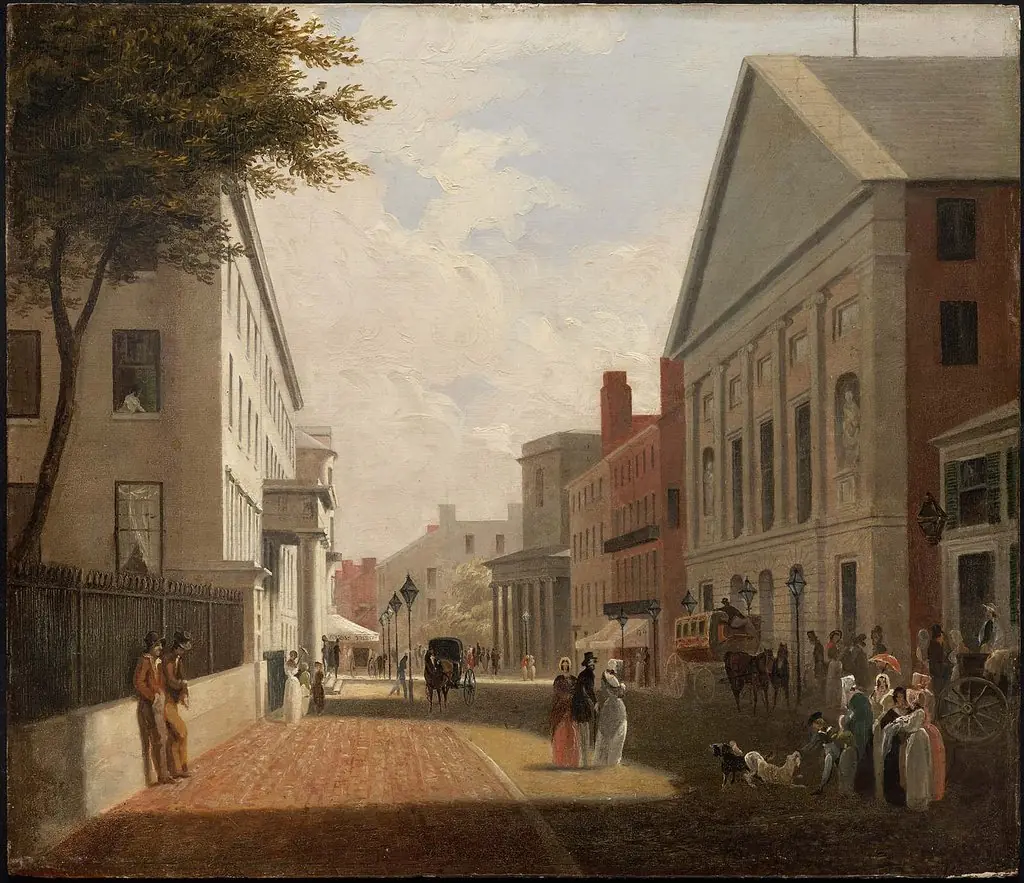 Tremont Street, Boston
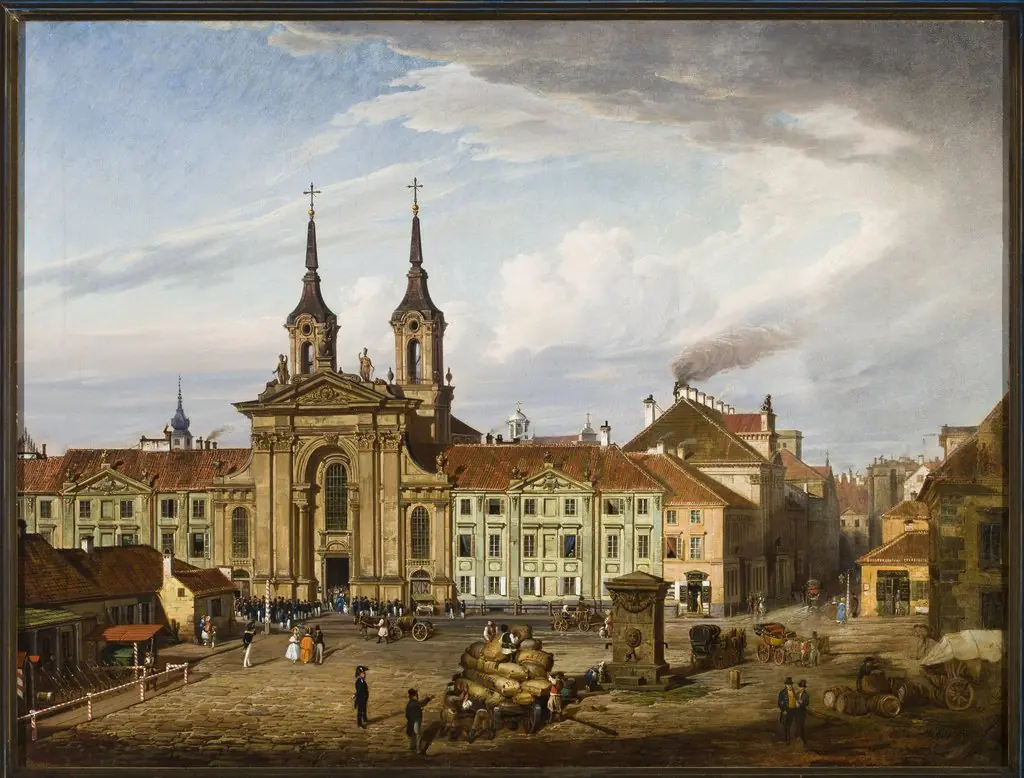 Krasiński Square and the Piarist church
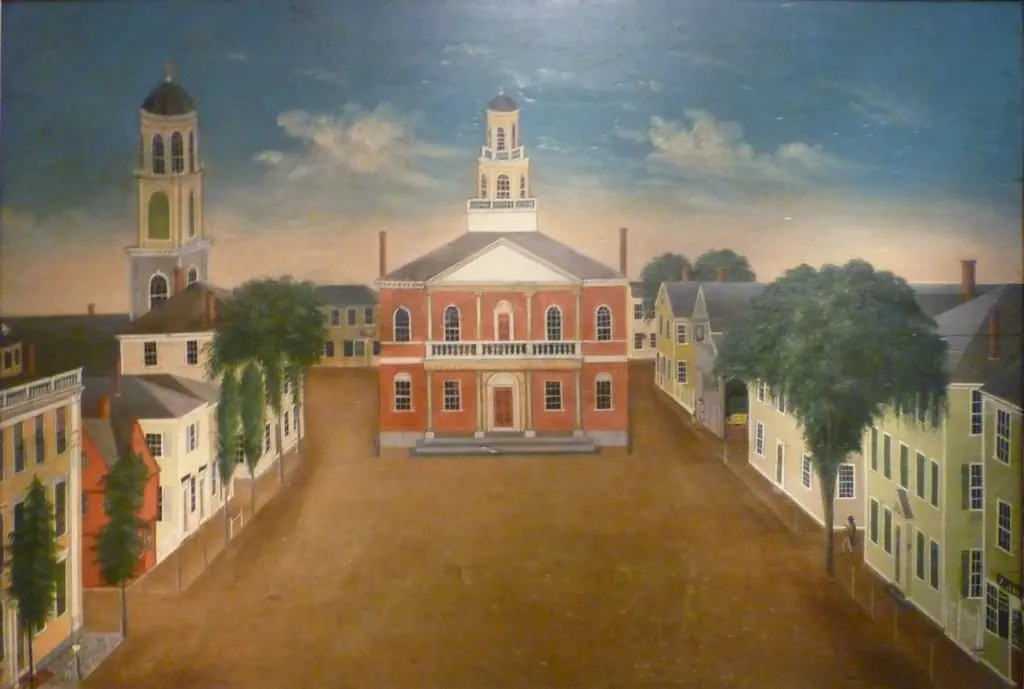 View of Courthouse Square
 Untitled
 Pickman-Derby House, 70 Washington Street, Salem, Massachusetts
 Broadway, New York: From the Western Union Telegraph Building Looking North
 The Post House, Amboise
 The Strand, with Somerset House and St Mary's Church
 Biserica Evanghelică din Sibiu