Artwork
The 9:45 Accommodation
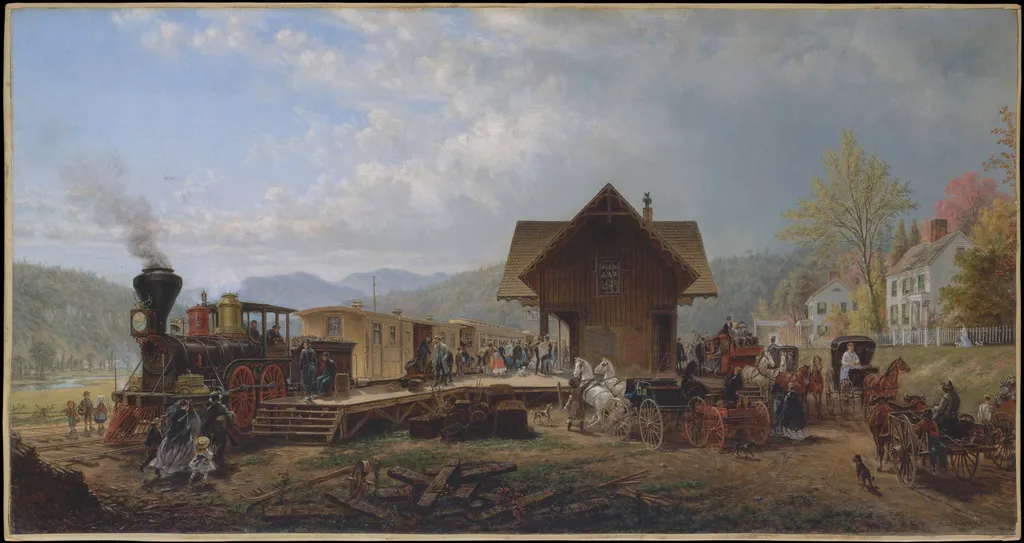
The 9:45 Accommodation is an oil painting by the Realist artist Edward Lamson Henry. It dates from 1867 and is held in the collection of the Metropolitan Museum of Art.
About this work
Subject & Meaning
The 1867 oil on canvas version, held by the Metropolitan Museum of Art, extends an earlier 1864 work that resides in the Morse Museum of American Art.
The 9:45 Accommodation portrays a crowded railway platform where a locomotive and a horse‑drawn carriage share the space, capturing the moment of boarding a train scheduled for 9:45 a.m. The composition blends a steam engine, a carriage, and passengers, symbolizing the convergence of traditional and emerging modes of transport in post‑Civil War America. By focusing on the bustling station, Henry underscores the cultural significance of rail travel as a driver of modernity and economic growth.
The 1867 oil on canvas version, held by the Metropolitan Museum of Art, extends an earlier 1864 work that resides in the Morse Museum of American Art.
Technique & Style
The 1867 iteration of The 9:45 Accommodation is executed in oil paint on a canvas support, measuring 40.6 by 77.8 centimeters. This version differs materially from Henry's original 1864 composition, which was painted in oil on a wood panel. As a work of genre painting, the piece depicts a bustling railway scene featuring a train, carriage, and horse.
The artist constructed the setting by synthesizing elements from multiple stations rather than replicating a single specific location, utilizing a widely produced station model that obscures precise identification. The composition captures the activity of passengers boarding, reflecting Henry's documented fascination with nineteenth-century transportation infrastructure.
History & Provenance
Edward Lamson Henry created two distinct versions of The 9:45 Accommodation. The initial iteration, executed in 1864 on a wood panel, is held by the Morse Museum of American Art. A second, widely reproduced version was painted in 1867 as an oil on canvas.
This 1867 work was commissioned by John Taylor Johnston, an American businessman and president of the New Jersey Central Railroad, who also served as the first president of the Metropolitan Museum of Art. Consequently, the 1867 painting entered the collection of the Metropolitan Museum of Art, where it remains on display. While the specific train station depicted in the 1867 canvas is difficult to identify due to the use of a widely produced model, the creation history reflects Henry's deep interest in 19th-century transportation infrastructure.
The 1867 oil-on-canvas version of The 9:45 Accommodation is held in the collection of the Metropolitan Museum of Art in New York. This work was originally commissioned by John Taylor Johnston, the first president of the museum and president of the New Jersey Central Railroad. While the museum houses the 1867 canvas, a distinct 1864 version painted on wood panel resides in the Morse Museum of American Art in Winter Park, Florida.
The Metropolitan Museum of Art displays the 1867 painting, which depicts a bustling railway station scene. Specific inventory or accession numbers for these holdings are not provided in the available sources. The work is noted for its depiction of trains and carriages, reflecting the artist's interest in 19th-century transportation infrastructure.
Context
Edward Lamson Henry, a 19th‑century American genre painter, specialized in scenes of everyday life and transportation; his fascination with railroads is evident in The 9:45 Accommodation, an 1867 oil on canvas now housed in the Metropolitan Museum of Art. The work depicts a bustling station where a train is boarded, a motif he rendered in multiple versions, the earlier 1864 wood‑panel version residing in the Morse Museum of American Art. Contemporary accounts, such as those noted by museum curators, highlight the painting’s popularity and its role in documenting the era’s infrastructural change, positioning Henry’s oeuvre within the broader narrative of American realism and the cultural impact of the railroad.
Legacy
The work's legacy is anchored in its widespread reproduction and enduring cultural resonance. Hugh F. McKean, the founding director of the Morse Museum of American Art, characterized the 1864 version as a piece that "has won the hearts of many Americans," highlighting its immediate and lasting appeal to the public. The 1867 canvas, created for John Taylor Johnston, the first president of the Metropolitan Museum of Art, further cemented the painting's reputation as a significant genre work.
Its prominence is sustained by its presence in two major American institutions: the Morse Museum and the Metropolitan Museum of Art. As a depiction of 19th-century transportation infrastructure, the painting remains a notable example of Henry's focus on trains, with its imagery of a bustling station continuing to be recognized as a key representation of American industrial life during that era.
Overview
Edward Lamson Henry's 19th-century painting, The 9:45 Accommodation, captures a moment of travel and transition in America. Executed in oil, the work illustrates passengers preparing to board a steam train. Henry produced several notable iterations of this scene, reflecting a popular subject that resonated with audiences during a period of significant technological change.
Artist & collection

Artist
Edward Lamson Henry (January 12, 1841 – May 9, 1919), commonly known as E.L. Henry, was an American genre painter, born in Charleston, South Carolina.

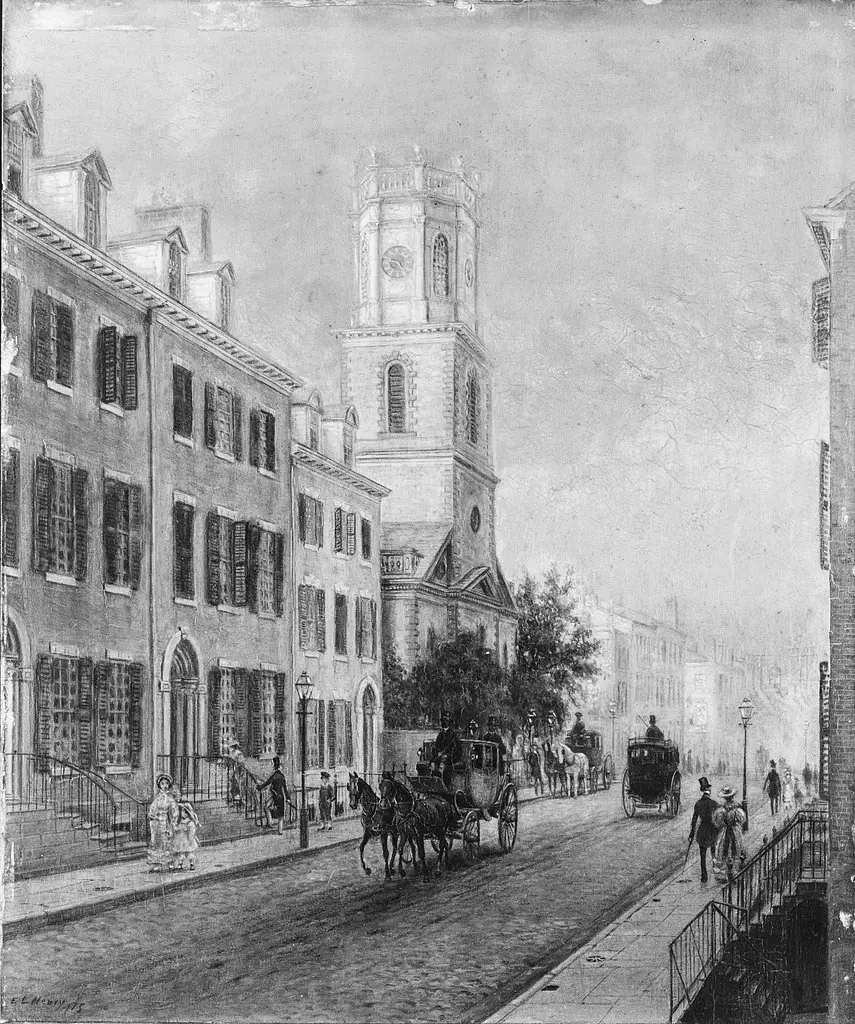
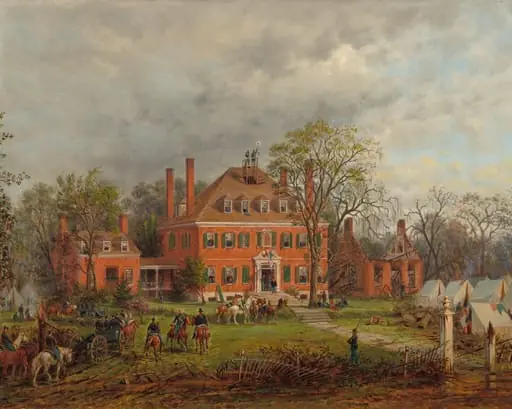
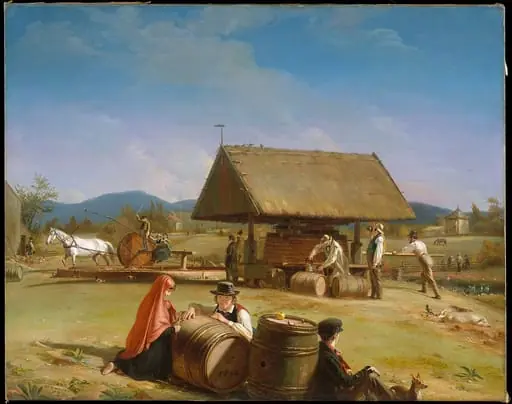
- Cider Making
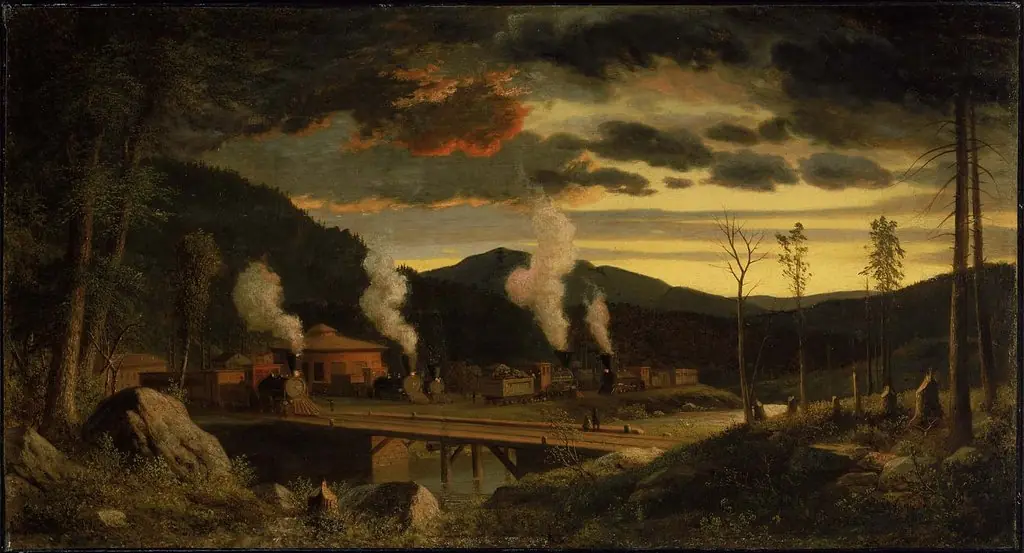 Opening of the Wilderness
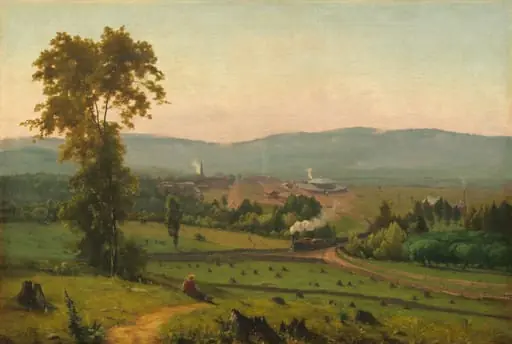 The Lackawanna Valley
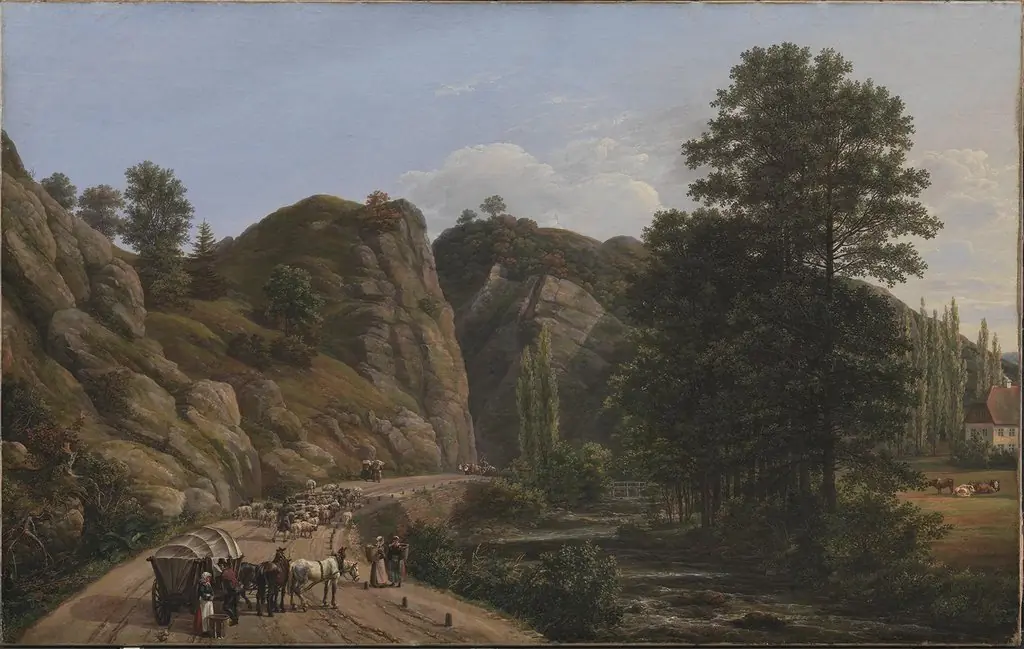 Plauenscher Grund at Dresden
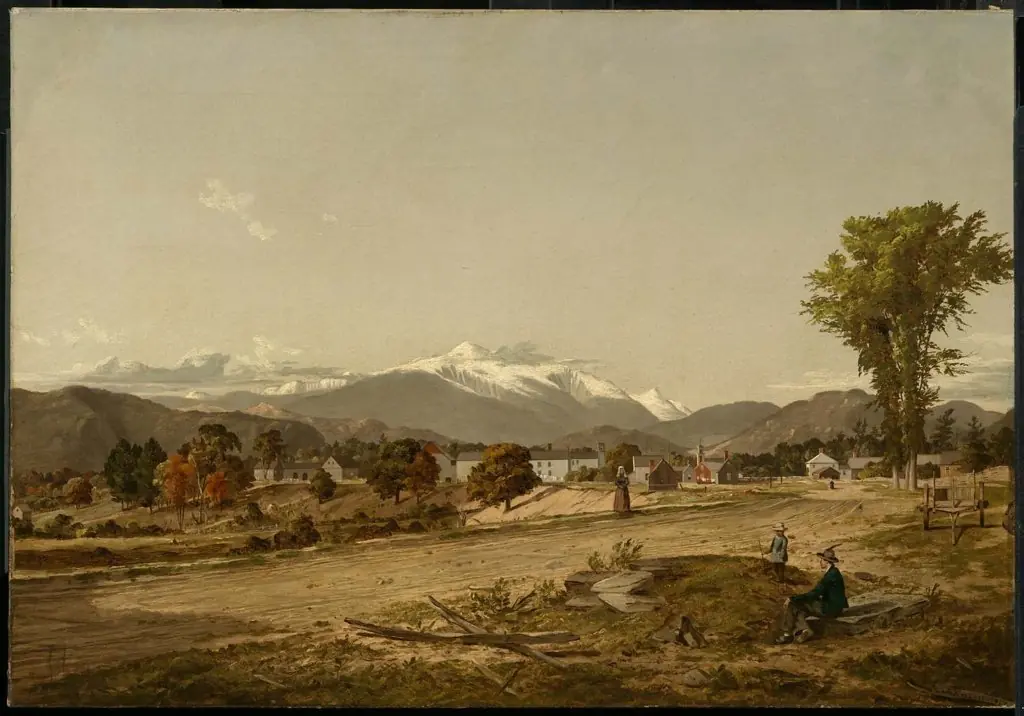 White Mountains from North Conway, New Hampshire
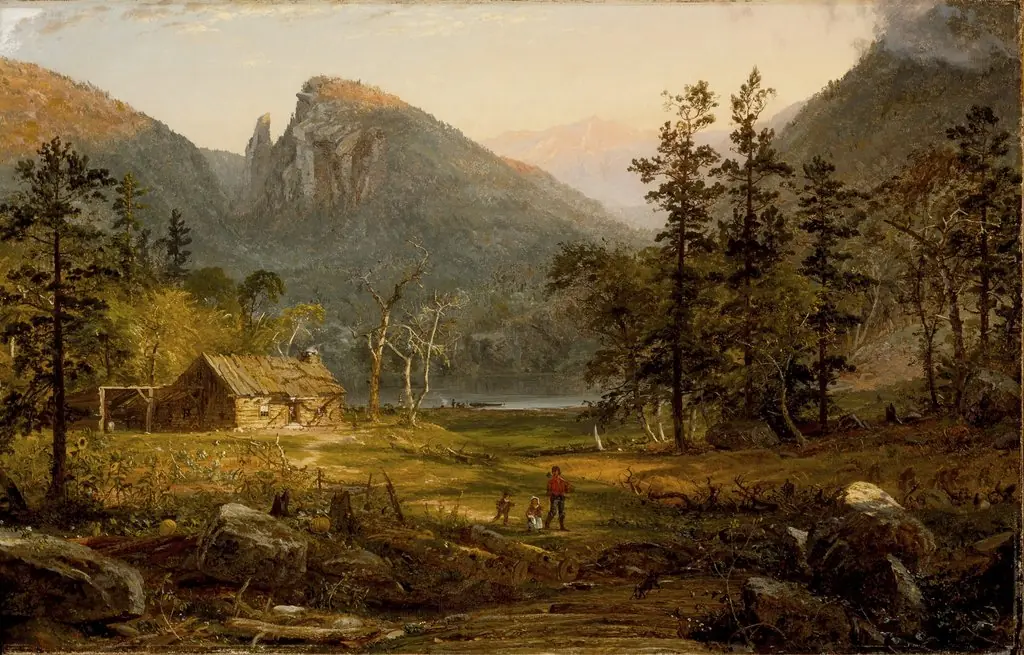 Pioneer's Home, Eagle Cliff, White Mountains
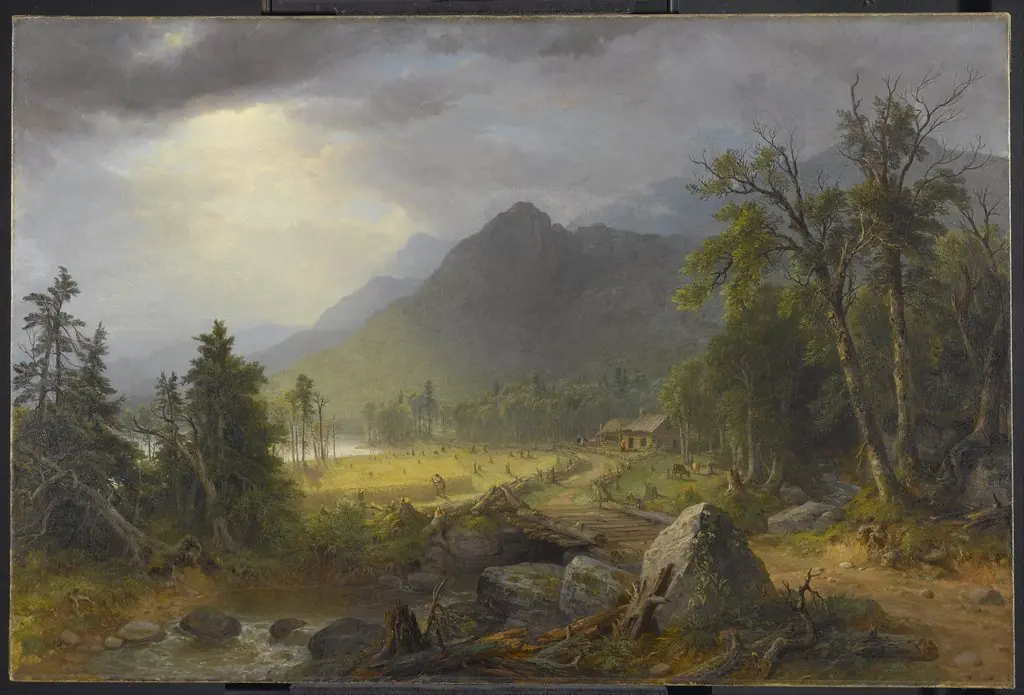 The First Harvest in the Wilderness
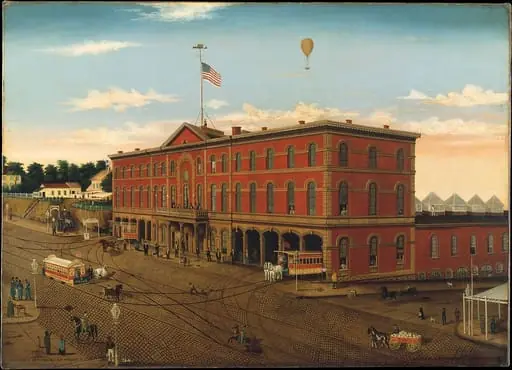 The Third Avenue Railroad Depot
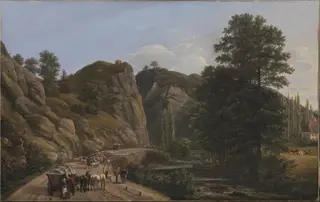 Plauenscher Grund at Dresden
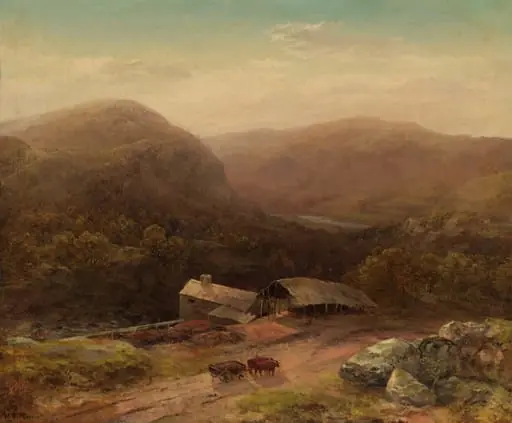 In the Housatonic Valley
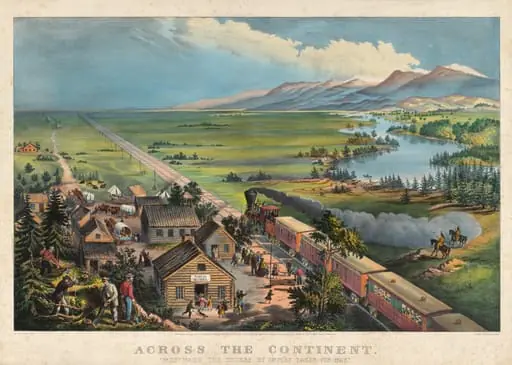 Across the Continent: "Westward the Course of Empire Takes Its Way"
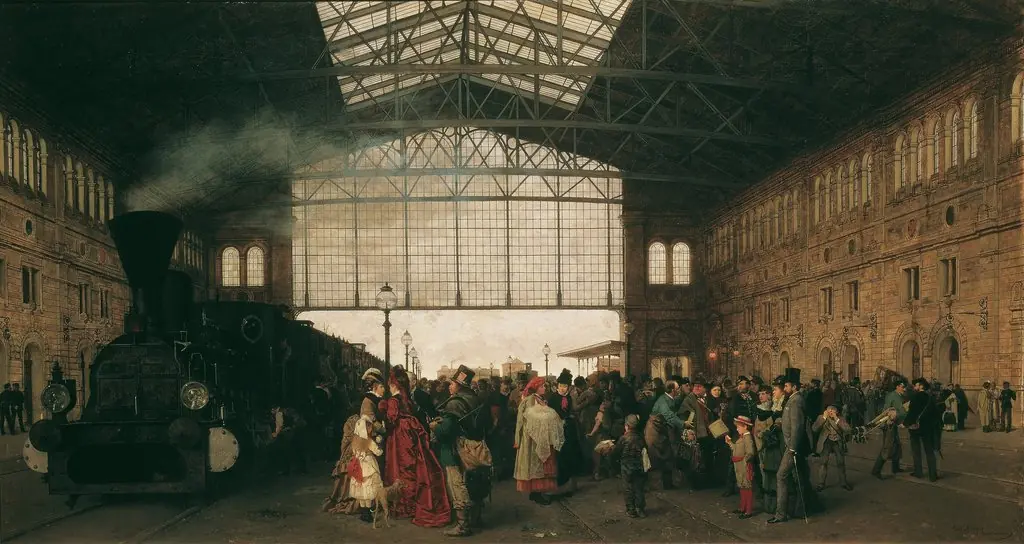 Arrival of a train at Vienna northwest-station