Artwork
Cedars of Lebanon
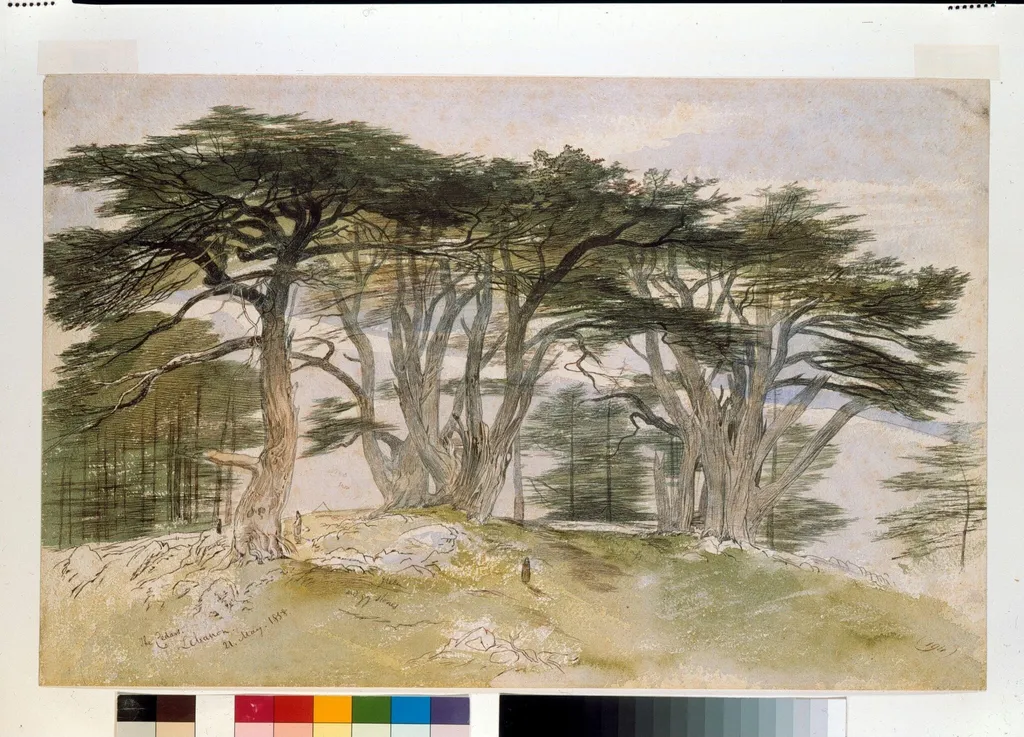
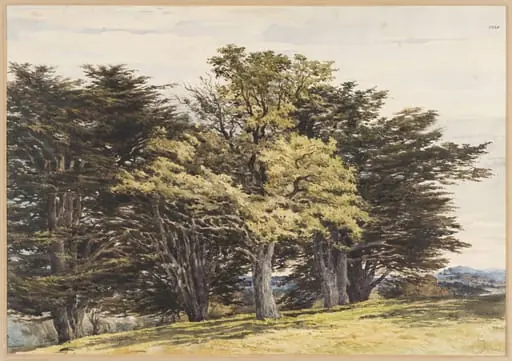
Cedars of Lebanon is a watercolor work on paper by the Impressionist artist Edward Lear. It dates from 1858 and is held in the collection of the Victoria and Albert Museum.
About this work
Overview
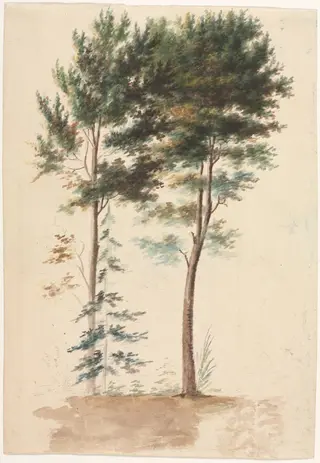
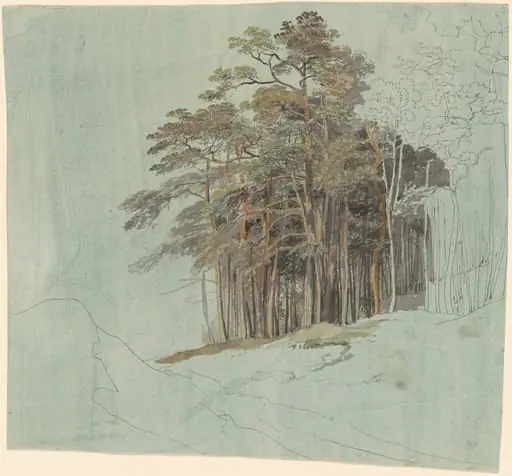
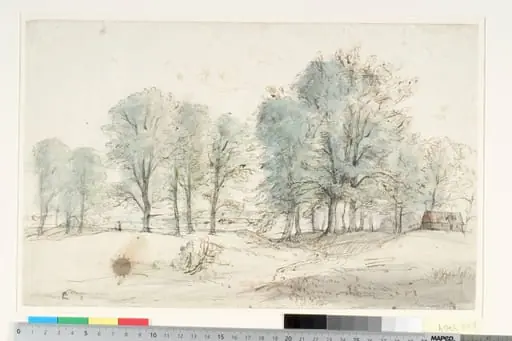
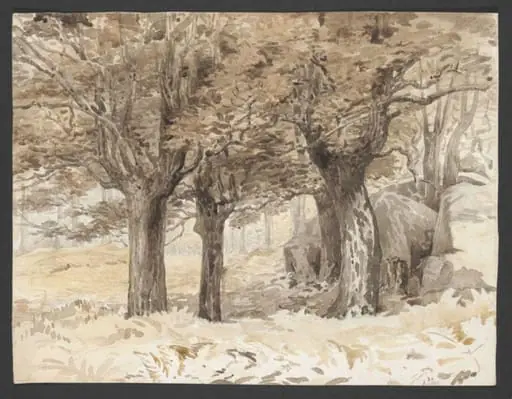
Edward Lear’s 1858 watercolour presents a cluster of cedar trees perched atop a modest hill. The composition is signed and dated on the paper, indicating the artist’s intent to document a specific landscape scene. The work captures a quiet, natural setting through a restrained palette of greens, browns, and muted sky tones.
Subject & Meaning
The focal point consists of several tall, twisted cedars whose dark, gnarled trunks rise together, their sparse foliage allowing glimpses of sky. The rocky ground, interspersed with patches of grass and low shrubs, suggests a rugged terrain, emphasizing the resilience of the trees within a harsh environment.
Technique & Style
Lear employs loose, fluid brushwork characteristic of rapid watercolour execution, yet retains sufficient detail to convey texture. The dark outlines of the trunks contrast with the soft washes of foliage and sky, creating a subtle interplay of light and shadow that highlights the way illumination filters through the thin branches.
History & Provenance
Created in 1858, the piece bears Lear’s handwritten title and date directly on the sheet, a common practice for his landscape studies. The work remains part of the artist’s documented output from his travels in the Middle East, reflecting his interest in documenting exotic flora during that period.
Own this work as a print
Artist & collection
Artist
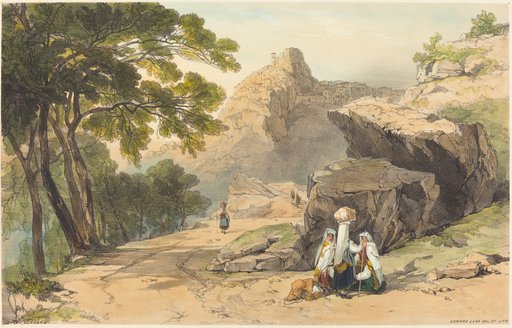
Edward Lear (12 May 1812 – 29 January 1888) was an English artist, illustrator, musician, author and poet, who is known mostly for his literary nonsense in poetry and prose and especially his limericks, a form he popularised but which term…