Artwork
Dying Stag
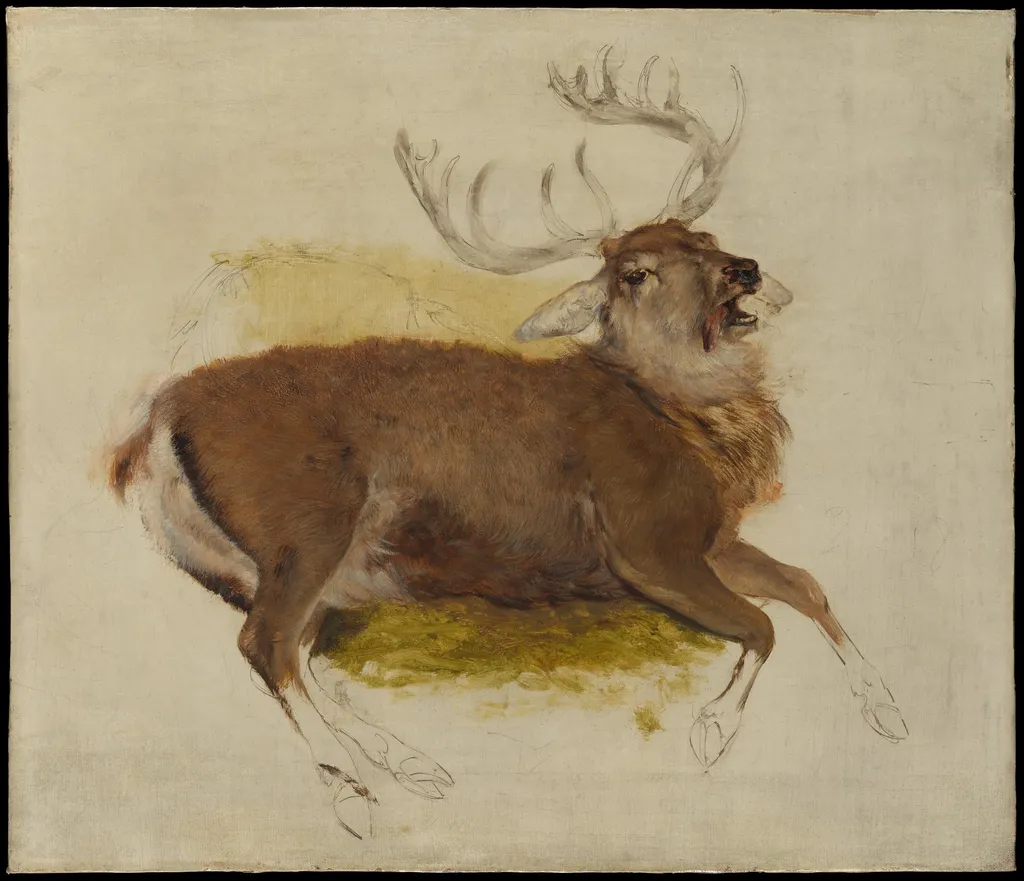
Dying Stag is an oil painting by Edwin Landseer. It dates from 1830 and is held in the collection of the Metropolitan Museum of Art.
About this work
Subject & Meaning
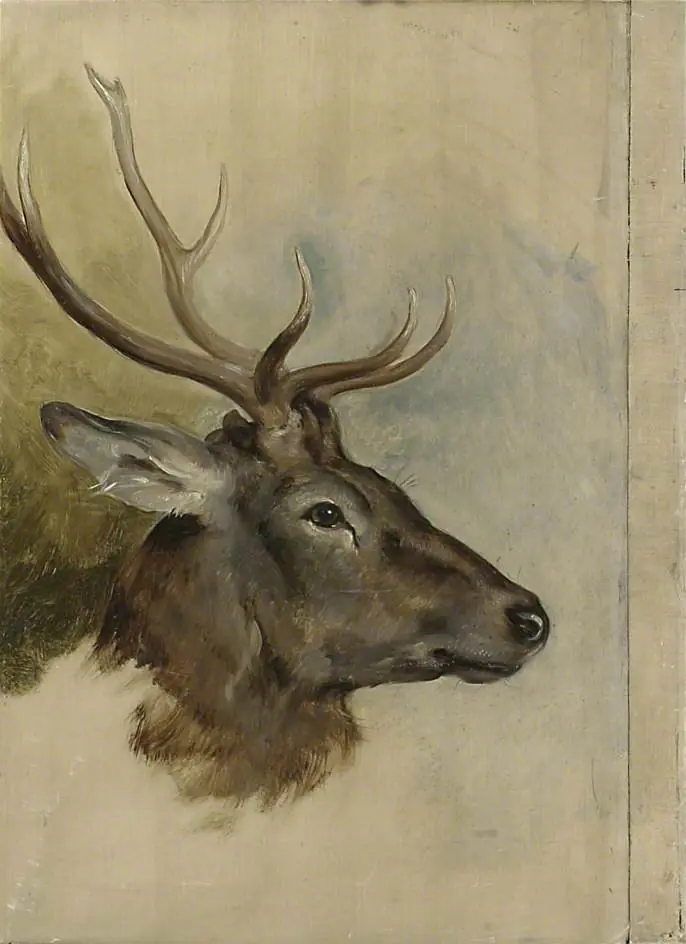
The painting depicts a stag in its final moments, lying on the ground with antlers lowered and eyes closed, evoking a sense of exhaustion or fatal injury.
The painting depicts a stag in its final moments, lying on the ground with antlers lowered and eyes closed, evoking a sense of exhaustion or fatal injury.
In Landseer’s composition, the animal’s prone posture and the subdued natural setting emphasize themes of mortality and the fragility of life. The stag’s dignified decline has been read as a meditation on the cycle of nature and the inevitability of death, aligning with Romantic-era ideals that valorized wild animals as symbols of noble endurance.
The work’s iconography centers on the dying animal as a focal point of solemn reflection, a motif Landseer revisited in other stag-related paintings.
Technique & Style
Edwin Landseer created Dying Stag in 1830 using oil paint applied to a canvas support. The work is classified as a painting that depicts a deer, executed in the artist's characteristic medium of the period. While specific details regarding the painting's current physical condition or handling history are not provided in the available records, the formal classification confirms its status as an oil-on-canvas work from the early 19th century.
History & Provenance
Dying Stag is an 1830 oil on canvas painting by Sir Edwin Henry Landseer. The work entered the collection of the Metropolitan Museum of Art and remains there.
The painting was created as part of Landseer's exploration of wildlife subjects in the 1830s. It depicts a stag in its final moments, reflecting the artist's interest in natural history and mortality. The work was accessioned by the museum in the early twentieth century and has been part of its permanent collection ever since.
Dying Stag, an 1830 oil painting by Edwin Landseer, is held by the Metropolitan Museum of Art, which houses the work in its collection. The painting, executed in oil on canvas and depicting a deer, has been part of the museum's holdings as recorded in its collection data.
No specific exhibition history or accession number is documented in the available sources.
Overview
Edwin Landseer’s 1830 oil work, titled Dying Stag, presents a solitary male deer collapsed on its side. The animal’s head is turned slightly toward the viewer, its mouth agape as if in a final gasp. The composition is set against an indistinct, pale backdrop that suggests a forested landscape, allowing the figure to dominate the visual field.
Own this work as a print
Artist & collection

Artist
Sir Edwin Henry Landseer was an English painter and sculptor, well known for his paintings of animals – particularly horses, dogs, and stags. His best-known work is the lion sculptures at the base of Nelson's Column in Trafalgar Square.