Artwork
The Old Blue-Tiled Mosque outside Delhi
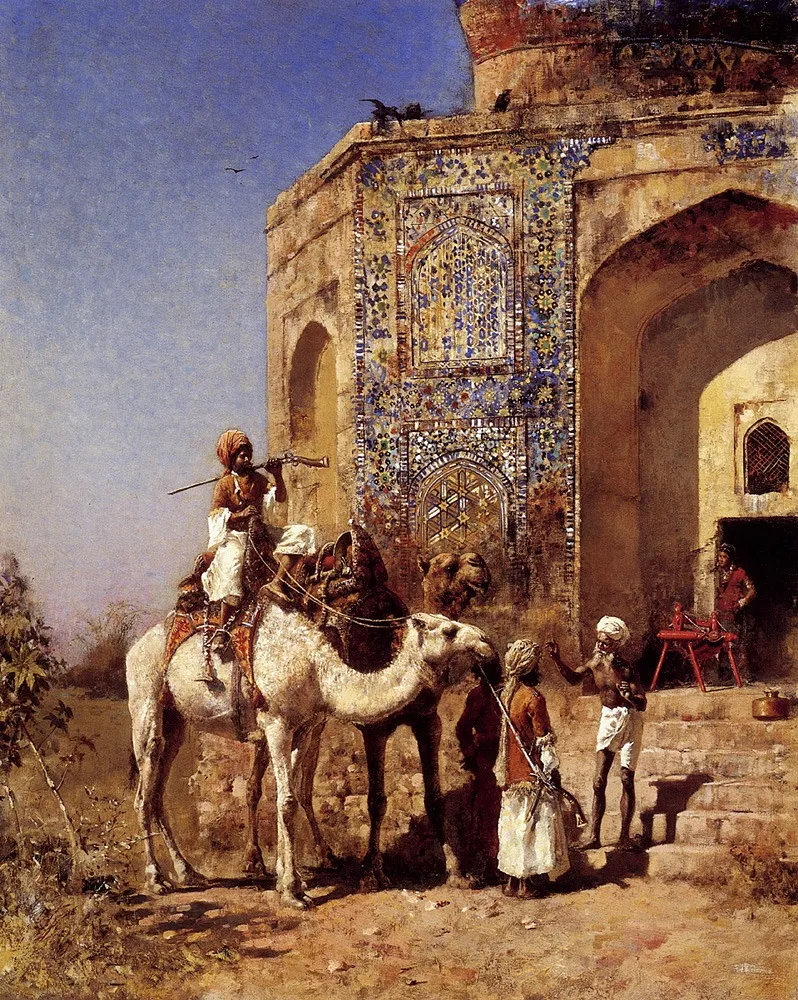
The Old Blue-Tiled Mosque outside Delhi is an oil painting by the Orientalist artist Edwin Lord Weeks. It dates from 1893 and is held in the collection of the Brooklyn Museum.
About this work
Overview
Edwin Lord Weeks painted The Old Blue‑Tiled Mosque outside Delhi in 1893, using oil on canvas to capture a scene on the outskirts of the Indian capital. The work is part of the Brooklyn Museum’s collection and presents a modest architectural ensemble framed by figures and animals.
Subject & Meaning
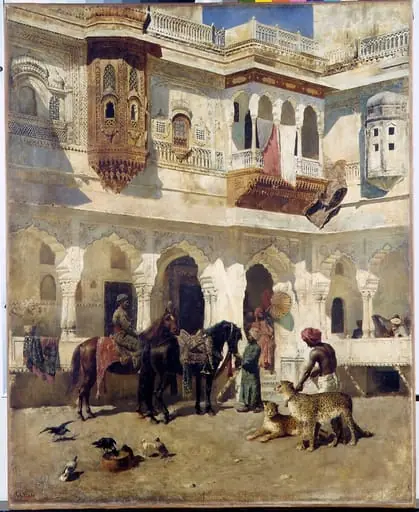
The composition centers on a mosque whose walls are encrusted with small, vividly colored blue tiles arranged in geometric patterns. In front of the structure a man on a white horse leads a tethered camel, while two onlookers, one in red, another in white, stand nearby, and a third figure is seated within an arched doorway, suggesting everyday activity at the site.
Technique & Style
Weeks renders the scene with a keen eye for surface texture, emphasizing the contrast between the luminous tiles and the muted, dust‑colored ground. Light falls sharply on the horse and camel, separating them from the warm, earthy tones of the building and enhancing the sense of depth.
History & Provenance
Created during Weeks’s travels in India, the painting reflects his interest in Oriental subjects that characterized much of his late‑19th‑century output. After its completion it entered the collection of the Brooklyn Museum, where it remains on display.
Context
The work belongs to a period when Western artists frequently documented exotic locales, often focusing on architectural details and local customs. Weeks’s attention to the intricate tile work aligns with contemporary fascination for decorative arts of the Mughal and post‑Mughal eras.
Artist & collection