Artwork
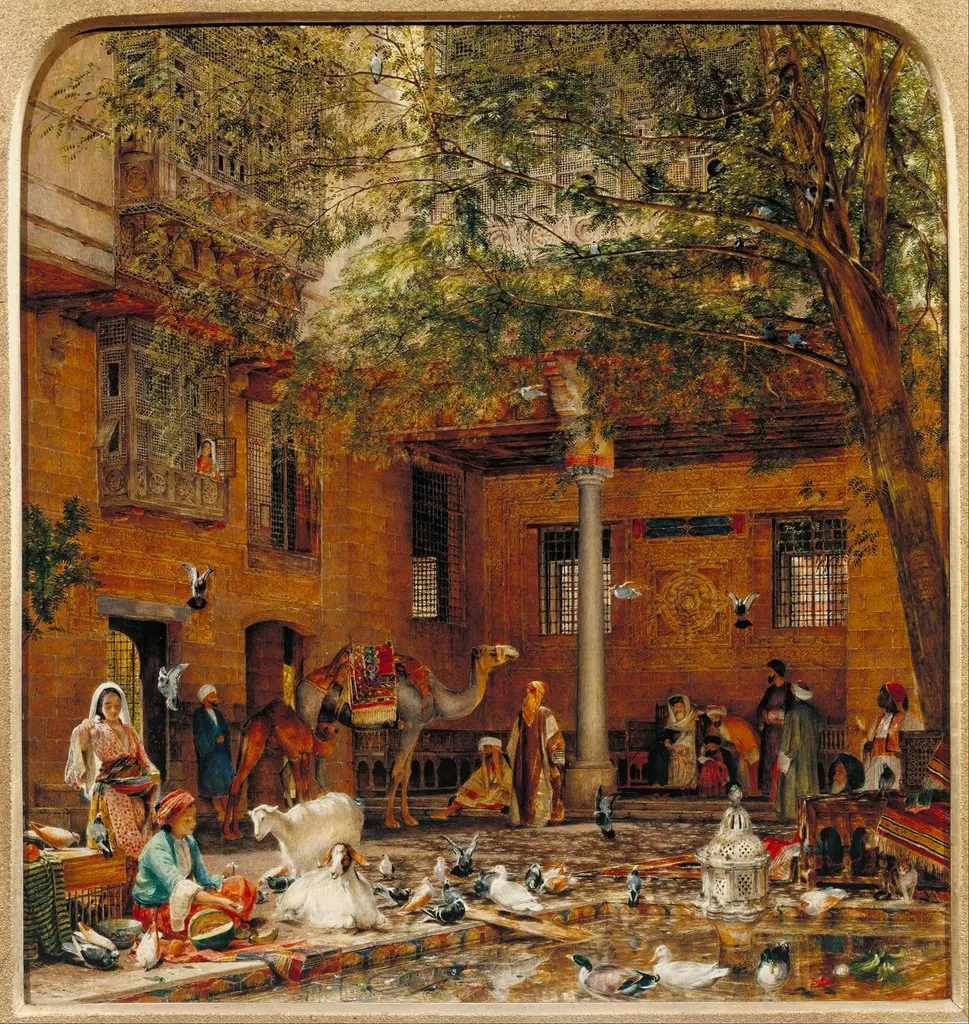
The Courtyard of a house in Cairo
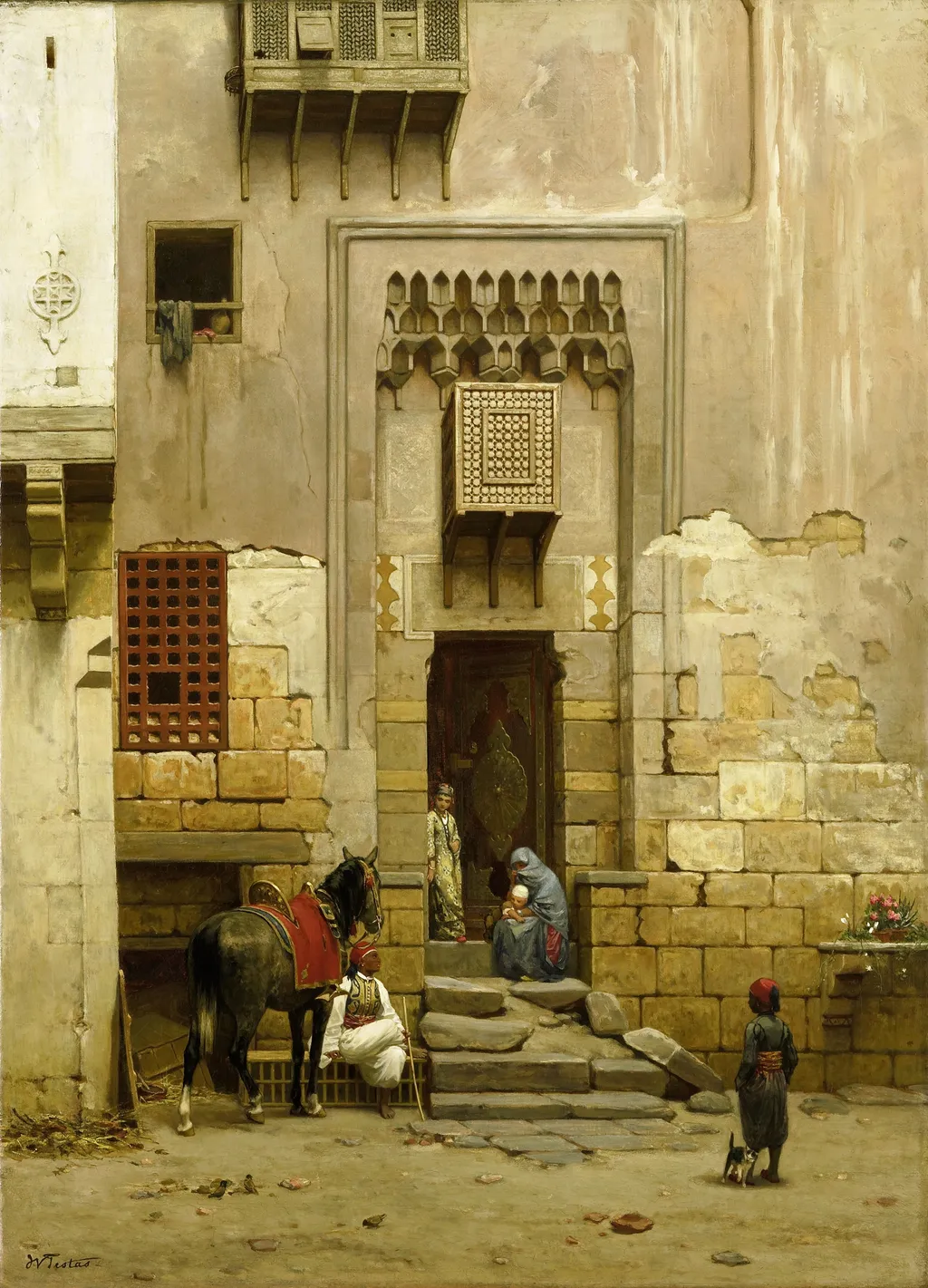
The Courtyard of a house in Cairo is an oil painting by the Orientalist artist Willem de Famars Testas. It dates from 1872 and is held in the collection of the Rijksmuseum.
About this work
Subject & Meaning
The Courtyard of a house in Cairo depicts a domestic interior opening onto an enclosed outdoor space, reflecting 19th‑century Egyptian domestic architecture and social life. The scene’s iconography, featuring tiled walls and a central courtyard, symbolizes communal gathering and the interplay between private and public spheres within Cairo’s urban fabric. As a cityscape painted in oil on canvas, the work captures everyday domestic activity with a focus on spatial arrangement and light, offering insight into the artist’s observation of Egyptian domestic environments.
Technique & Style
The work takes the form of a cityscape, a genre that allowed the artist to focus on architectural space and light rather than figural narrative.
The Courtyard of a house in Cairo is an oil painting executed on canvas, a combination of medium and support consistent with the standard practice of nineteenth-century European oil painters working en plein air or from studio studies. The work takes the form of a cityscape, a genre that allowed the artist to focus on architectural space and light rather than figural narrative. Its proportions, with a height of 84 cm and a width of 62 cm, place it in a vertical, upright format suited to depicting the enclosed space of an interior courtyard. The painting is held jointly by the Rijksmuseum and the Dordrechts Museum.
No further details regarding specific handling, brushwork, condition, or stylistic qualities are documented in the available sources.
History & Provenance
The Courtyard of a house in Cairo is an oil painting on canvas by Willem de Famars Testas. The work is dated 1872, with a secondary inception date of 1874 also recorded for the piece. It measures 84 cm in height by 62 cm in width. The painting is held jointly in the collections of the Rijksmuseum and the Dordrechts Museum.
No further details regarding the original commission, early ownership, or chain of custody are documented in the available sources.
The Courtyard of a house in Cairo is held in two institutional collections. According to the catalogue record, it belongs to the holdings of the Rijksmuseum and is also part of the collection of the Dordrechts Museum. No specific inventory or accession number is provided in the available sources, and no exhibition history is documented.
The painting, an oil on canvas measuring 84 cm in height by 62 cm in width, is attributed to Willem de Famars Testas and dated 1872 (with a separate inception date of 1874 noted in the institutional data).
Overview
The Courtyard of a House in Cairo is an 1872 oil painting by Willem de Famars Testas, depicting a serene cityscape scene in Cairo, characteristic of the artist's Orientalist focus on North African and Middle Eastern subjects.
Context
As an example of Orientalist painting, this work aligns with a 19th-century European artistic tradition of depicting daily life and landscapes of the Middle East and North Africa, often with a mix of observational detail and exoticized perspective.
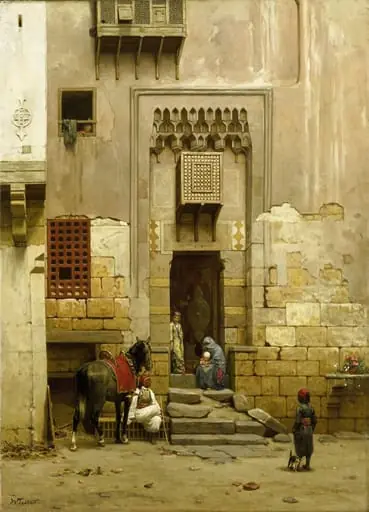
Own this work as a print
Artist & collection

Artist
Willem de Famars Testas (1834, Utrecht – 1896, Arnhem), was a Dutch painter, draughtsman, etcher and illustrator noted for his Orientalist paintings and drawings.