Artwork
Fire in a Village
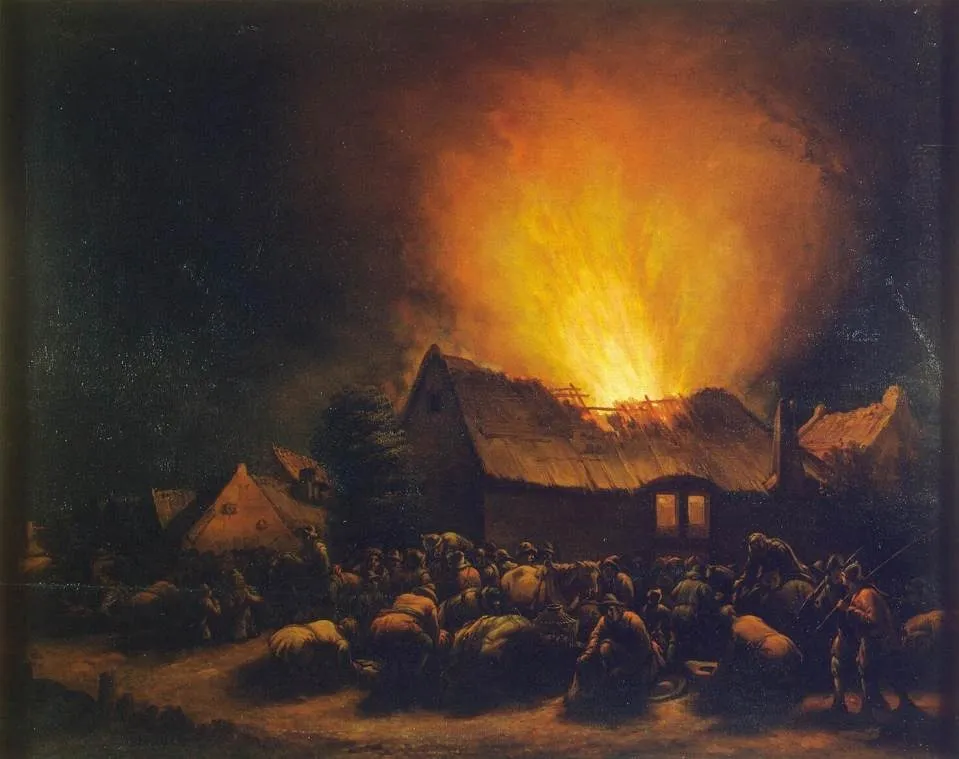
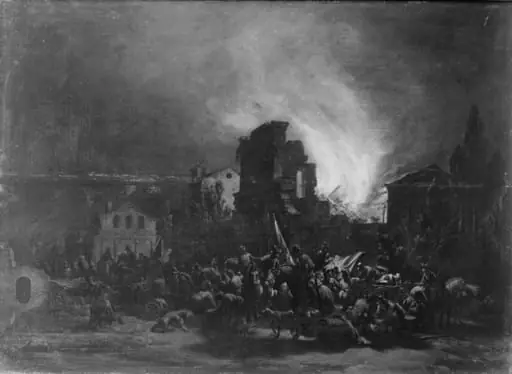
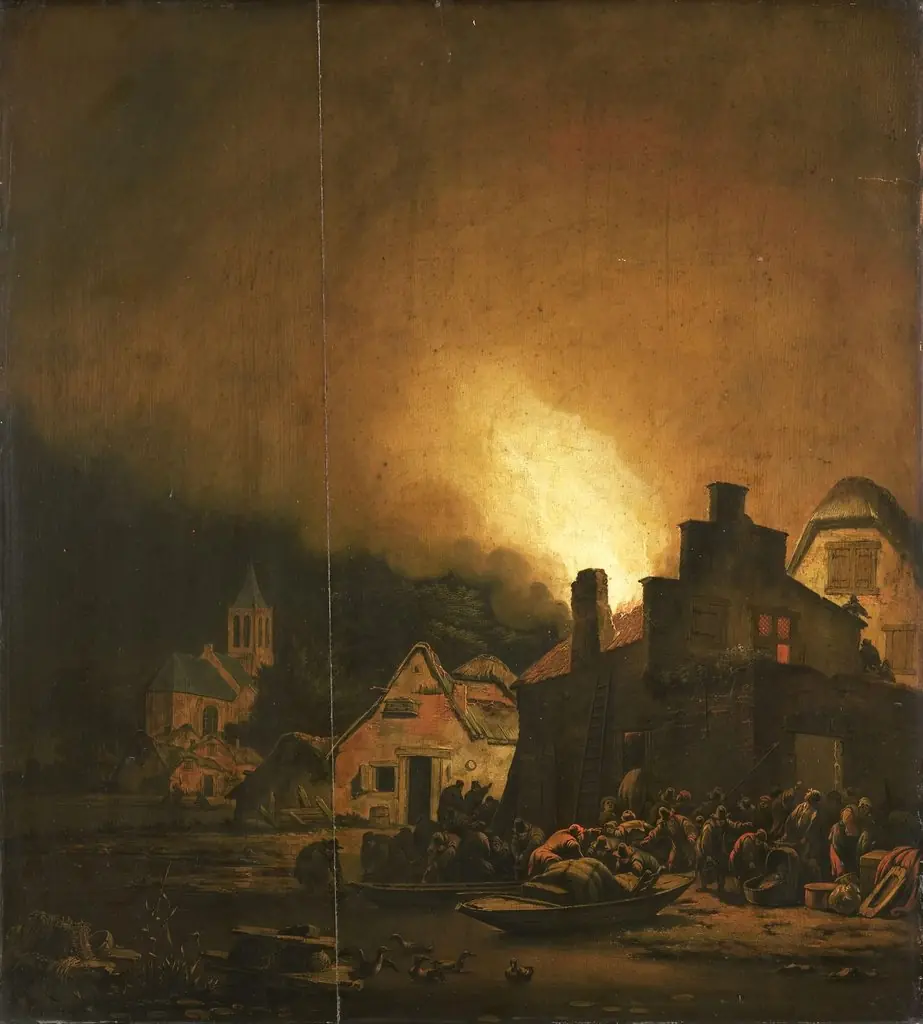
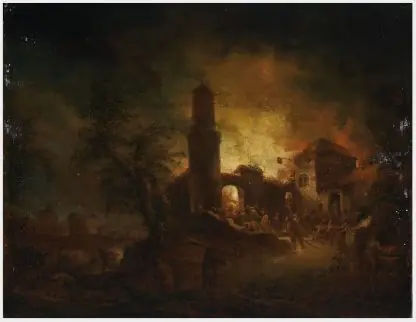
Fire in a Village is an oil painting by the Dutch Golden Age artist Egbert van der Poel. It dates from 1650 and is held in the collection of the Hermitage Museum.
About this work
Subject & Meaning
Egbert van der Poel's Fire in a Village, painted in 1650, belongs to the genre of landscape painting and centers on the depiction of a conflagration engulfing a village. The subject is rendered in oil on panel, measuring 26 by 35 cm, and the work is held by the Hermitage Museum, having entered the collection through the Pyotr Semyonov-Tyan-Shansky collection.
The painting belongs to a tradition of Dutch landscape art that took the burning village as a recurring theme, often combining topographical observation with dramatic nocturnal or twilight effects of firelight. By isolating the motif of a village fire, van der Poel transforms an ordinary rural setting into a scene of spectacle, where the destructive force of the blaze becomes the principal subject and source of visual drama.
Technique & Style
Stylistically, the piece is classified as a landscape painting that specifically depicts a conflagration engulfing a village.
Executed in 1650, Fire in a Village is an oil painting applied to a wooden panel. The work measures 26 cm in height and 35 cm in width. Stylistically, the piece is classified as a landscape painting that specifically depicts a conflagration engulfing a village.
The composition focuses on the dramatic representation of fire within a rural settlement, characteristic of the artist's output during this period in the Netherlands.
History & Provenance
The painting was created by Egbert van der Poel in 1650, as indicated by the work’s date and the artist’s name on record.
By the late nineteenth century, it had entered the collection of Pyotr Semyonov-Tyan-Shansky, a noted Russian geographer and statistician. It was subsequently transferred to the Hermitage Museum, where it remains in the institution’s holdings.
Egbert van der Poel's painting Fire in a Village is held in the collection of the Hermitage Museum in St. Petersburg. The work originates from the Pyotr Semyonov-Tyan-Shansky collection, which is now part of the museum's holdings. Created in 1650, the oil-on-panel landscape depicts a village conflagration and measures 26 by 35 centimeters.
The provided sources do not contain information regarding specific accession numbers, inventory codes, or a history of exhibitions for this artwork.
Overview
Egbert van der Poel’s oil on canvas, dated around 1650, portrays a nocturnal village engulfed in flames. The composition captures a chaotic night scene where structures burn, smoke billows, and figures gather amid the devastation. The work is part of the collection of the State Hermitage Museum, illustrating the artist’s engagement with disaster landscapes typical of mid‑seventeenth‑century Dutch painting.
Context
During the mid‑1600s, Dutch artists frequently depicted scenes of fire, often linked to the Thirty Years’ War and the Dutch Revolt. Van der Poel, known for such disaster subjects, contributed to a visual tradition that recorded the human cost of conflict and calamity, offering viewers a stark reminder of societal fragility.
Artist & collection


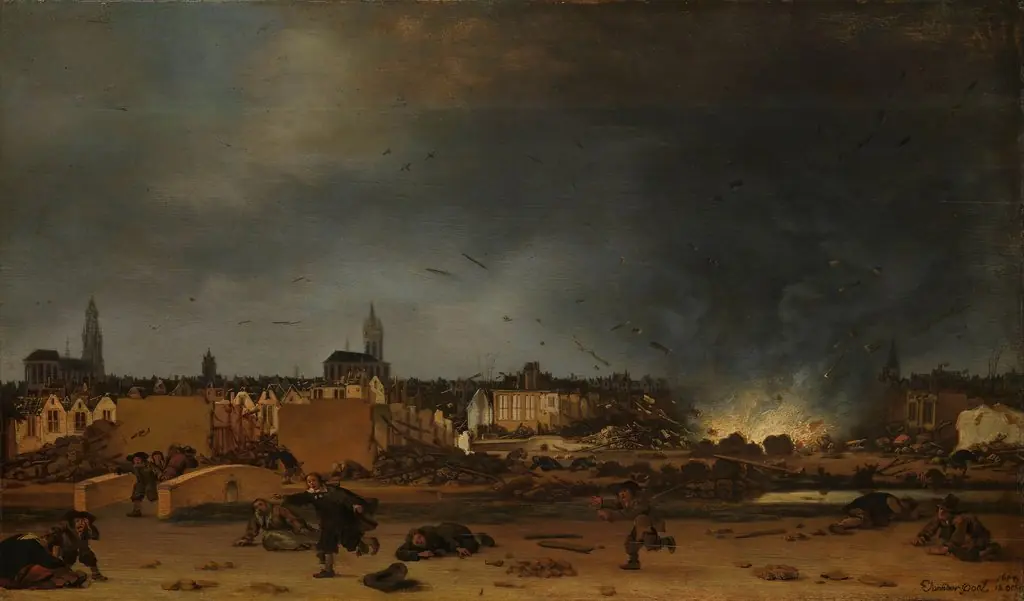 The explosion of the powder magazine in Delft, 12 October 1654
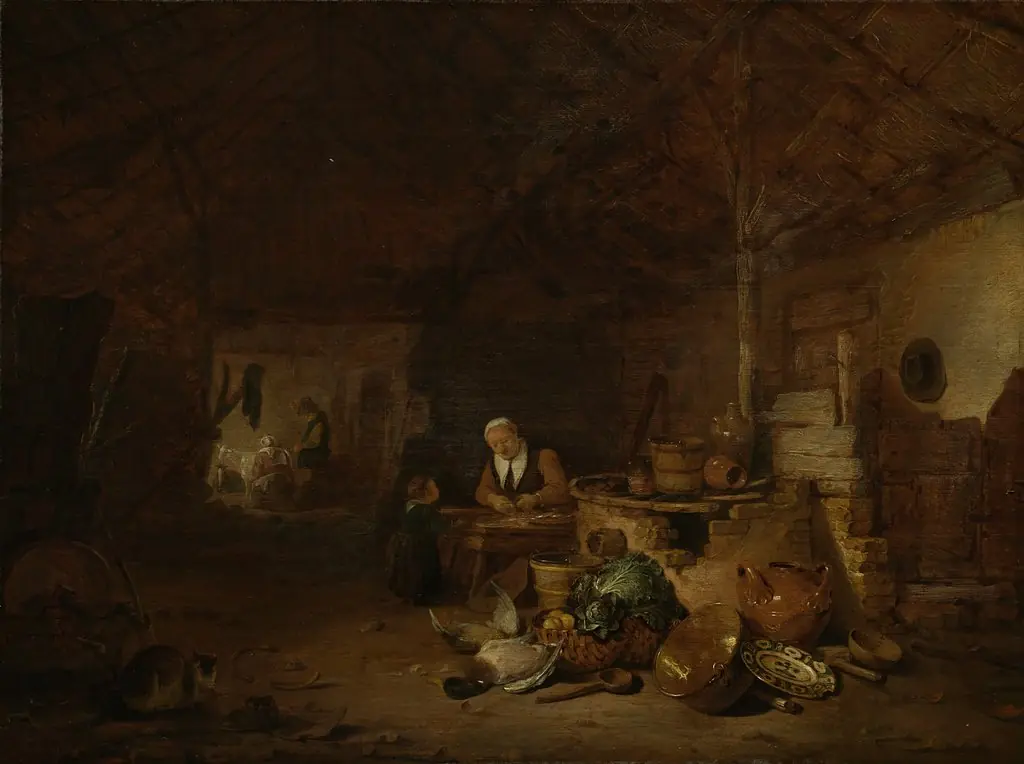 Interior of a barn
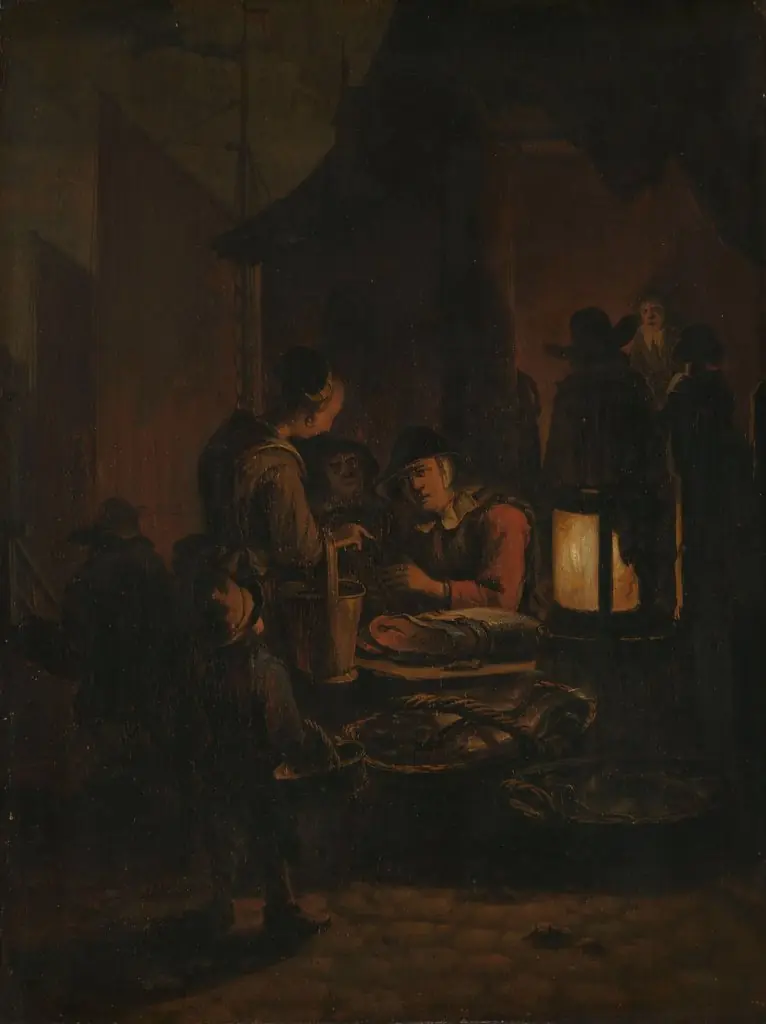 Fish market at night
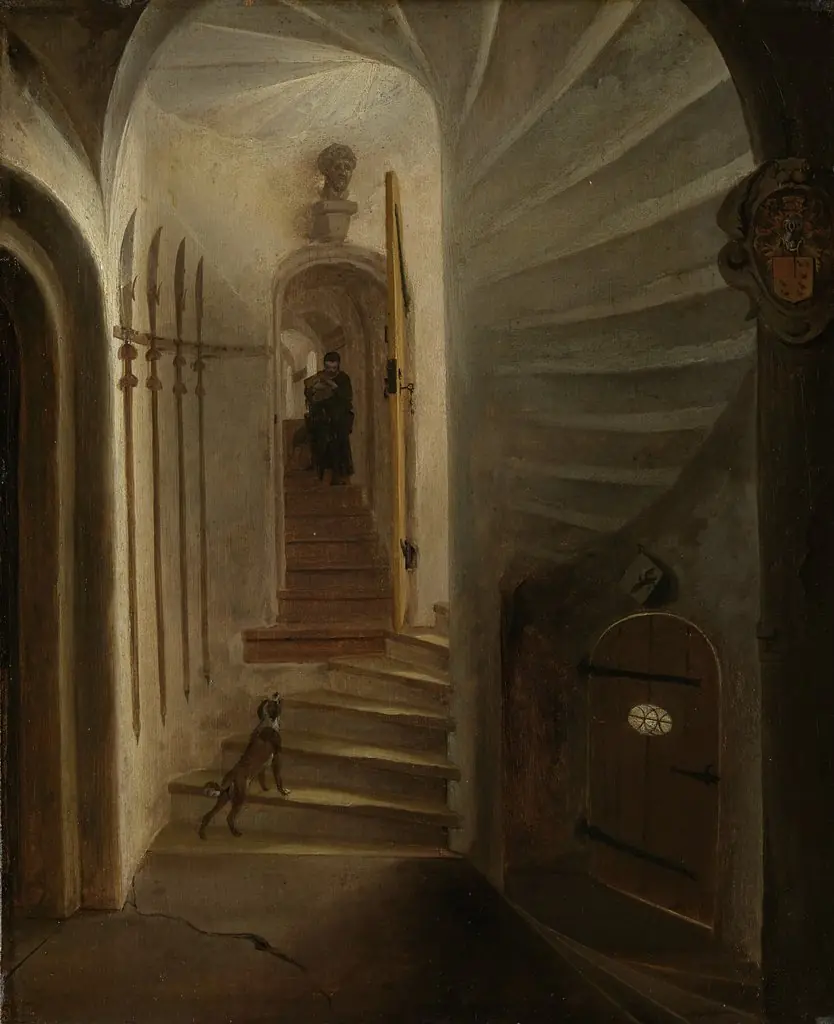 Portal of a stairway tower, with a man descending the stairs: presumably the moment before the assassination of William the Silent in the Ptinsenhof, Delft
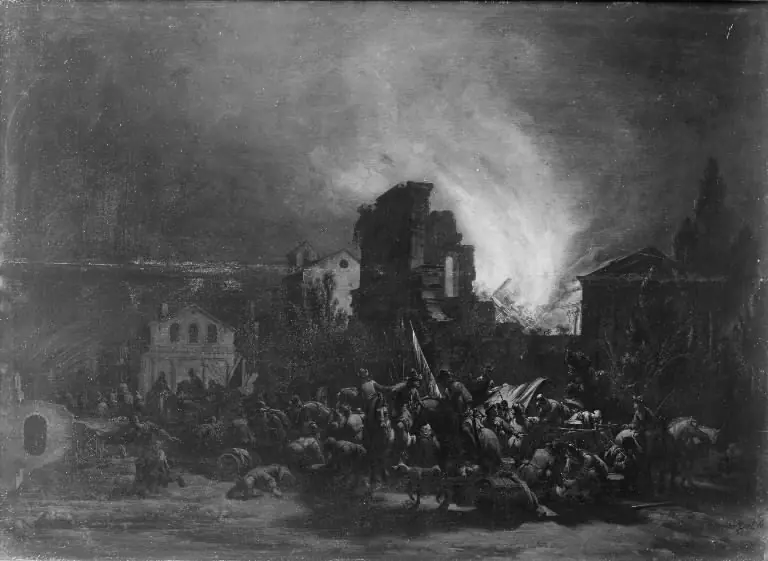 Nocturnal Fire and Looting in a Town
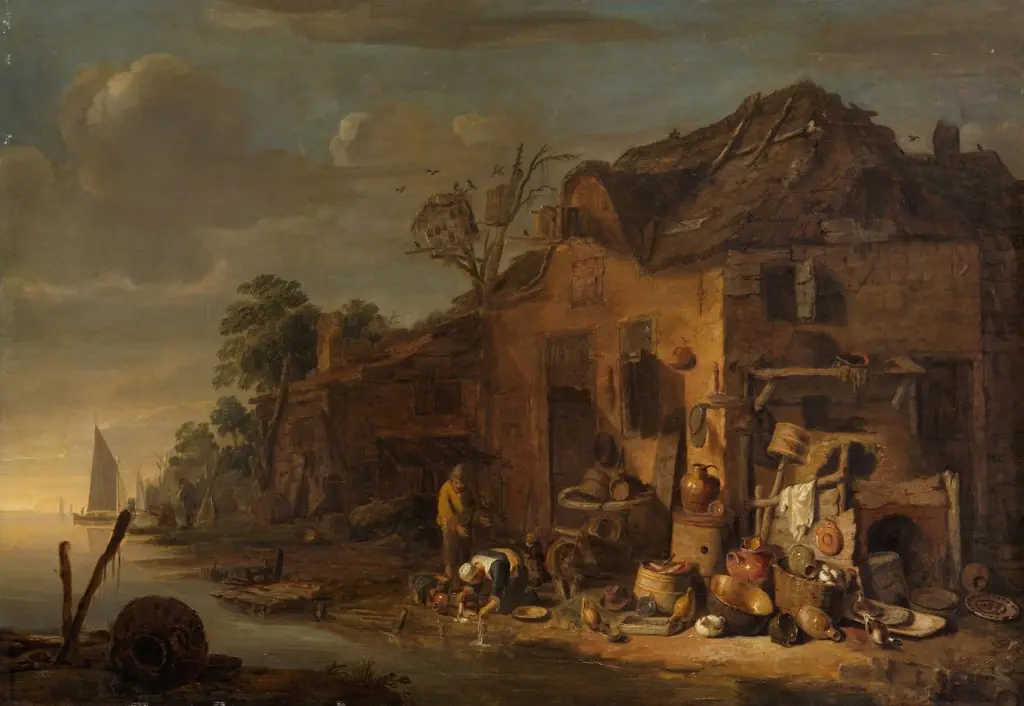 Landscape with farm at a river
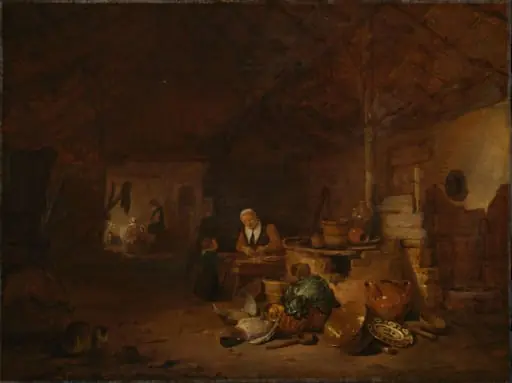 Interior of a barn
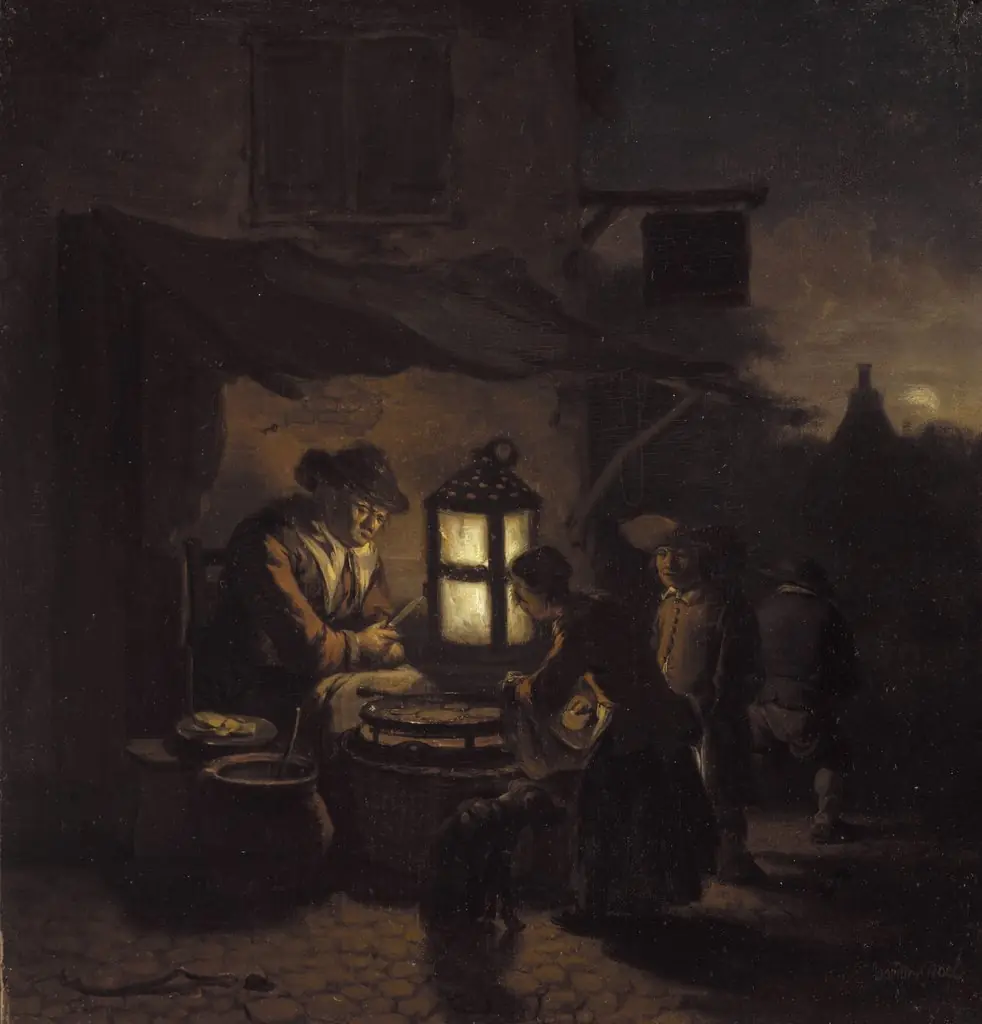 The Pancake Maker