Artwork
Wagtails and Narcissus
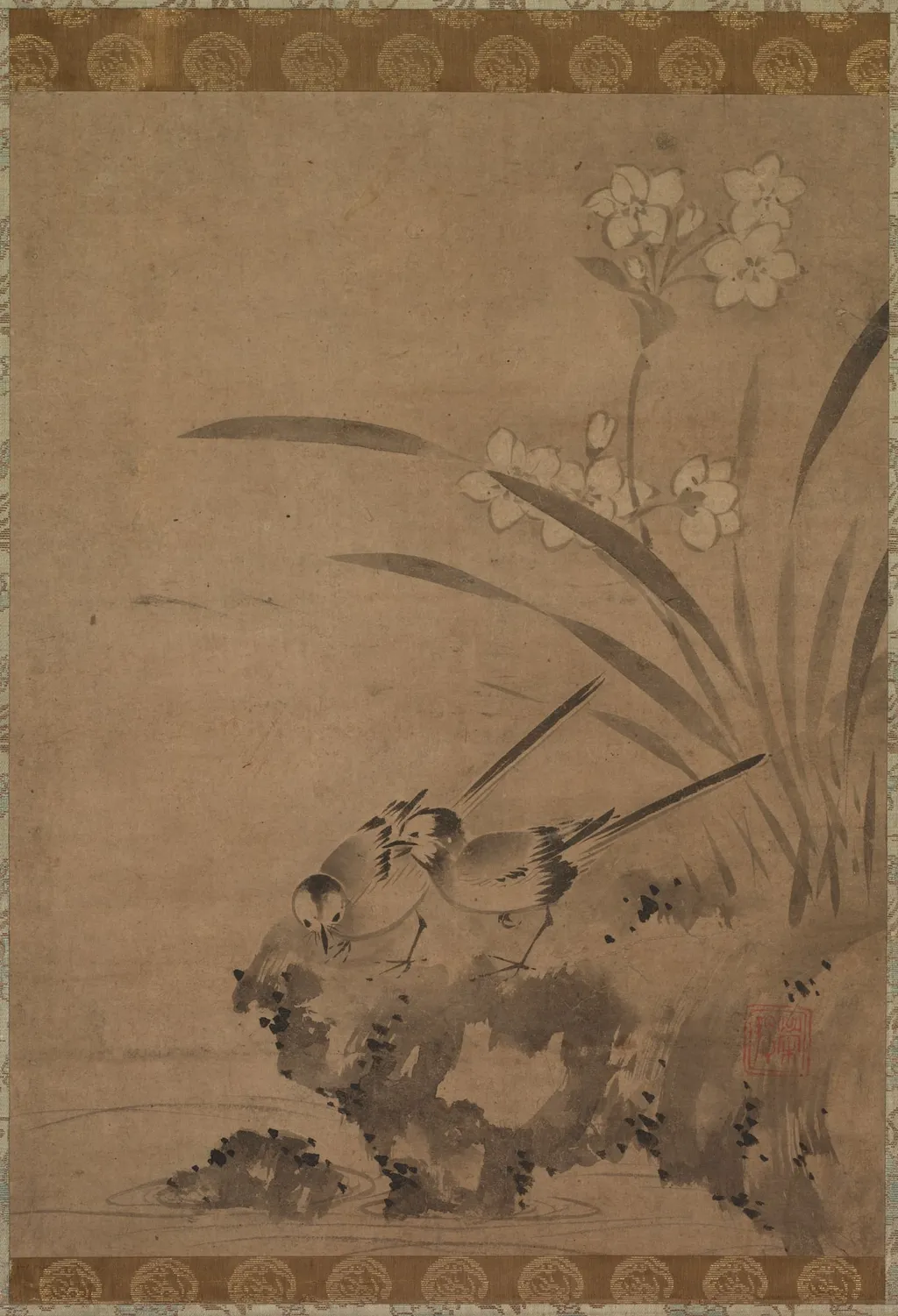
Wagtails and Narcissus is an unspecified painting by the Nanga artist Eison. It dates from 1504 and is held in the collection of the Cleveland Museum of Art.
- Accession no.
- 1985.90
- Credit line
- Andrew R. and Martha Holden Jennings Fund
About this work
Overview
Created around 1504, the work titled Wagtails and Narcissus is a modestly sized still‑life painting attributed to the Japanese artist Eason. It is part of the collection of the Cleveland Museum of Art, where it is displayed as an example of early sixteenth‑century Japanese painting.
Subject & Meaning
The composition centers on two slender wagtails, their elongated tails poised on a thin branch, while a flowering plant with white blossoms and narrow leaves rises behind them. The birds are rendered with a quiet vitality, suggesting a moment of natural observation rather than symbolic narrative.
Technique & Style
Eason employs a restrained palette of soft browns and deep blacks, creating a calm atmosphere that emphasizes form over colour. Fine brushwork defines the feathers and foliage, while the background is left largely empty, punctuated only by faint strokes that hint at a simple, undefined setting.
Context
The painting reflects aesthetic tendencies of the Muromachi period, when Japanese artists began integrating Chinese ink traditions with native sensibilities. Its emphasis on minimalism, subtle tonal variation, and focus on everyday subjects aligns with the period’s broader move toward understated elegance in visual art.
Own this work as a print
Artist & collection

Artist
Eison was a Japanese Buddhist monk active in the mid-Kamakura period. He founded the Shingon Risshu. Eison was born in Mikata village, Soejō District, Yamato Province, the son of the scholar-monk Keigen of…

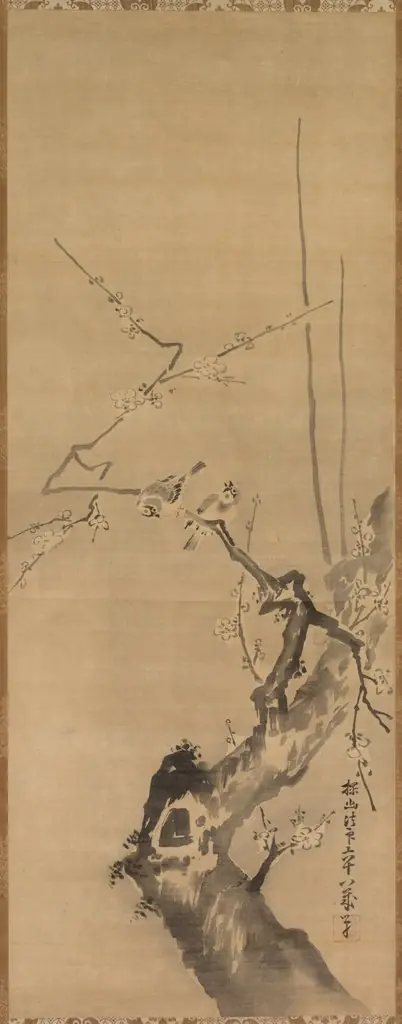 Sparrows on Blossoming Plum
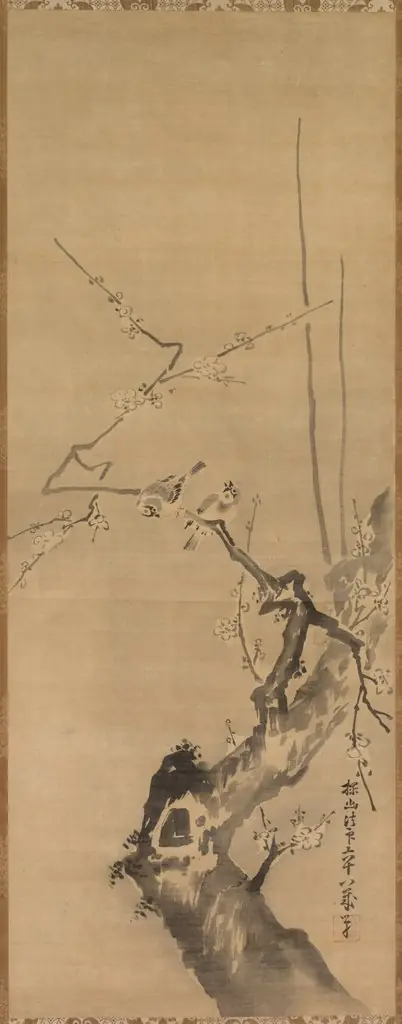 Sparrows on Blossoming Plum; A Sage with Tiger; Chinese Bird on Snow-Laden Branch
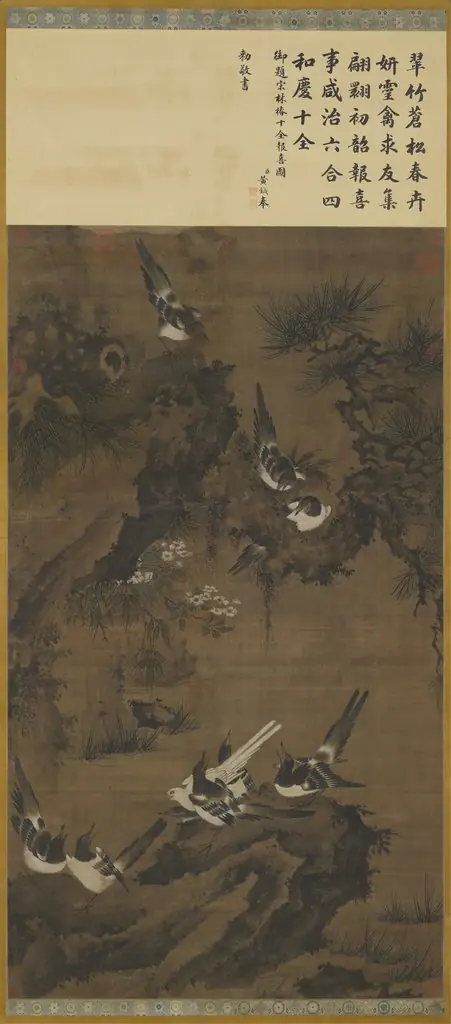 宋林椿十全報喜 軸
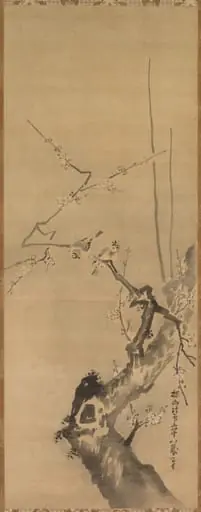 Sparrows on Blossoming Plum; A Sage with Tiger; Chinese Bird on Snow-Laden Branch
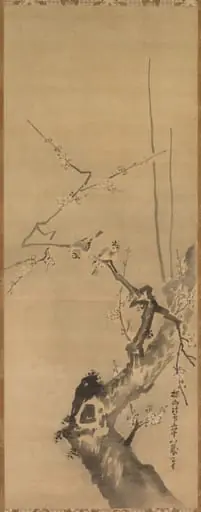 Sparrows on Blossoming Plum
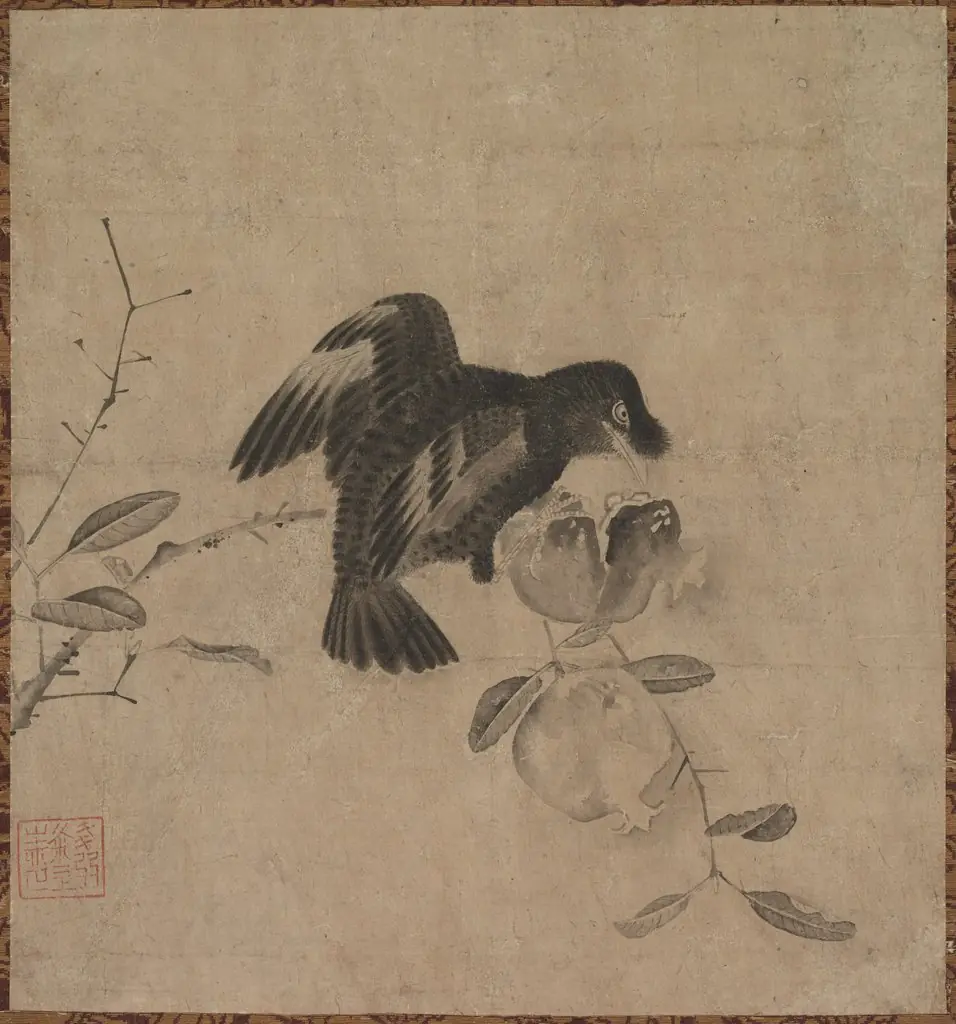 Crow on a Pomegranate
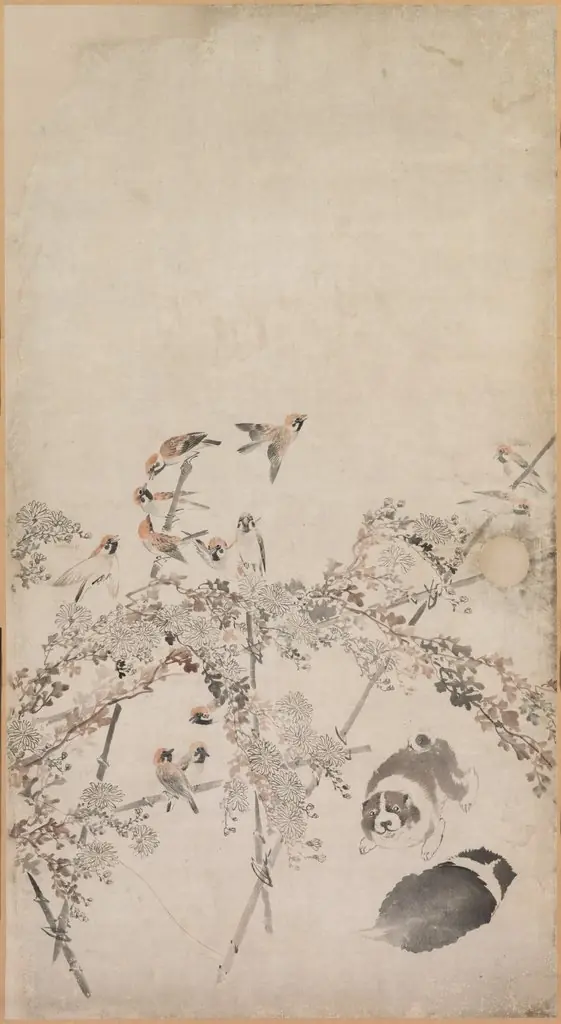 Puppies, Sparrows, and Chrysanthemums
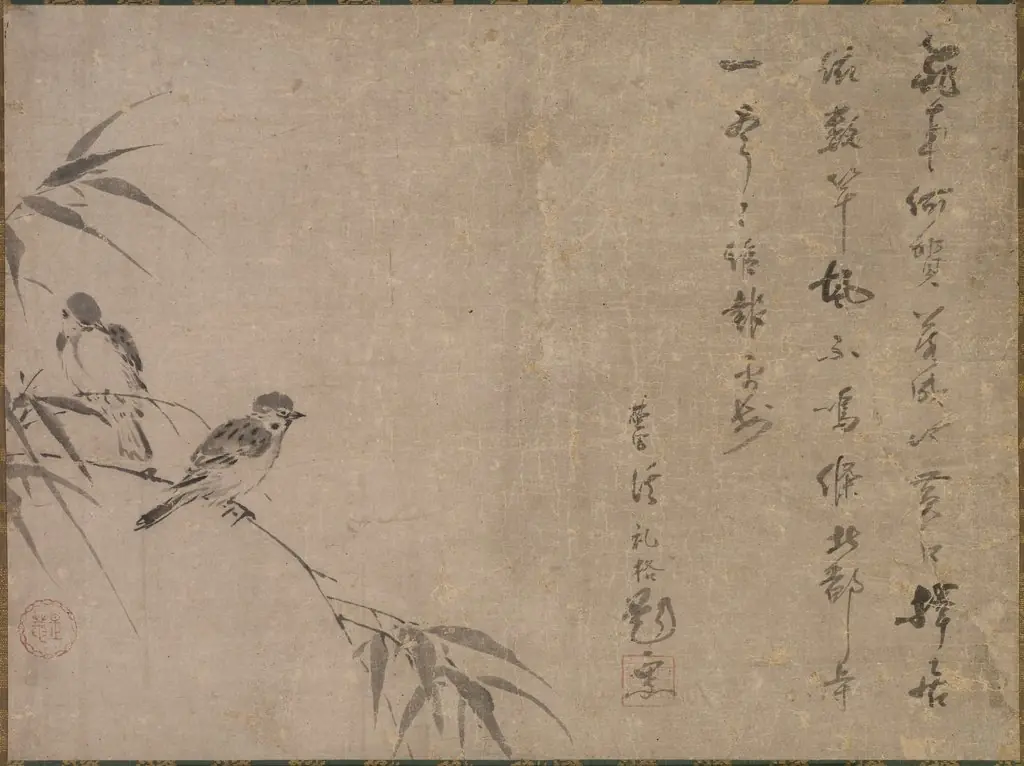 Sparrows and Bamboo
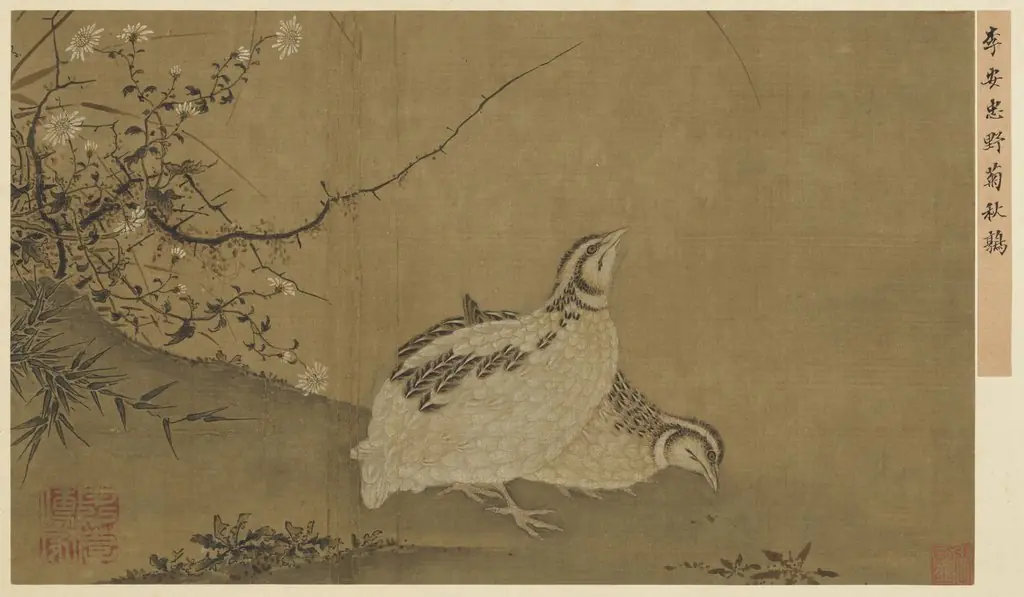 名繪集珍 冊 宋李安忠野菊秋鶉
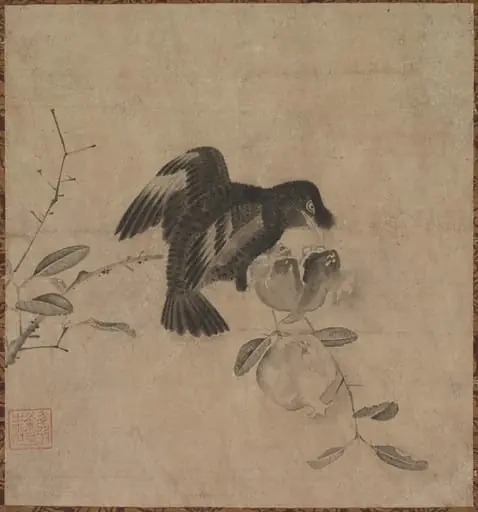 Crow on a Pomegranate
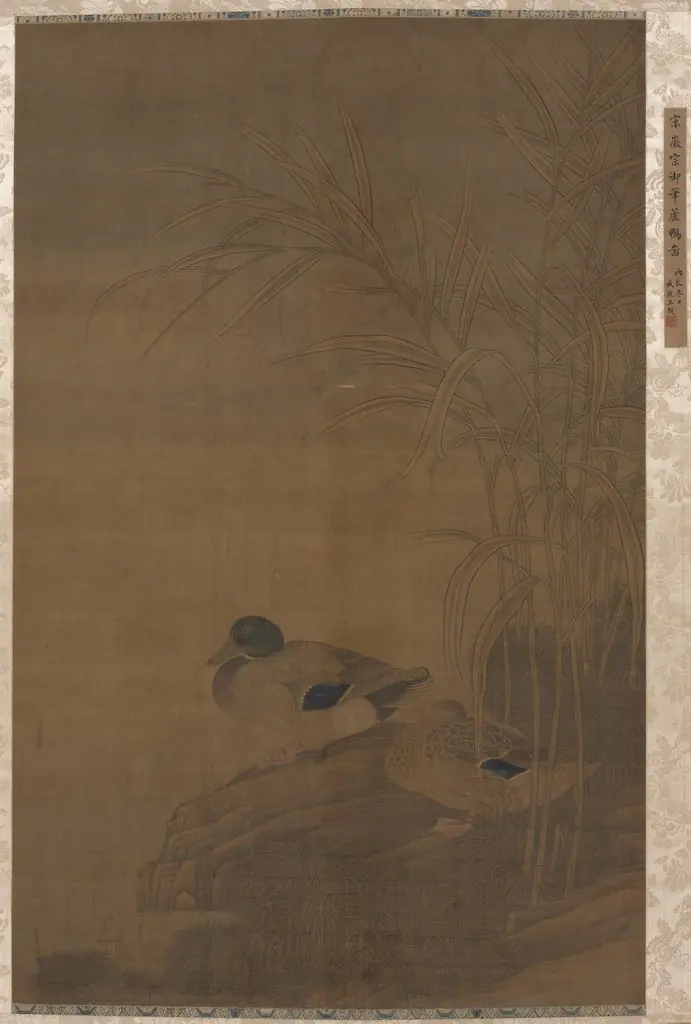 Ducks under Reeds
- Wild Geese