Artwork
Massacre of the Innocents in Bethlehem
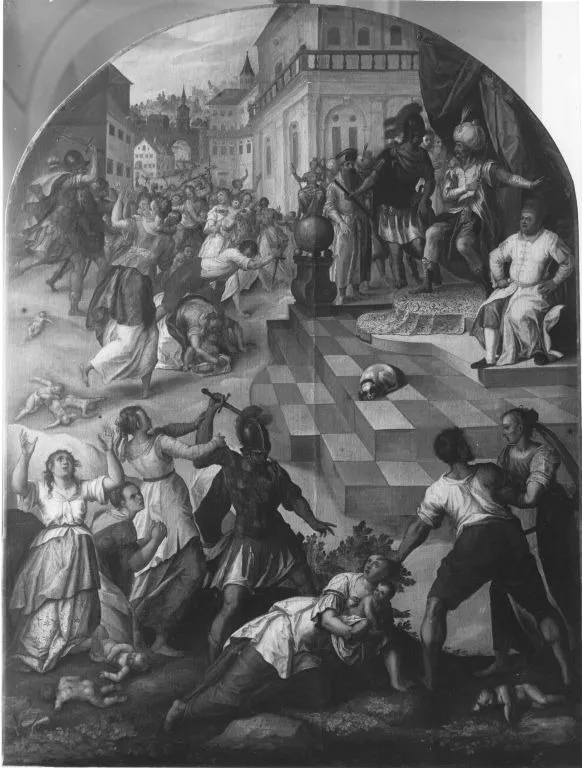
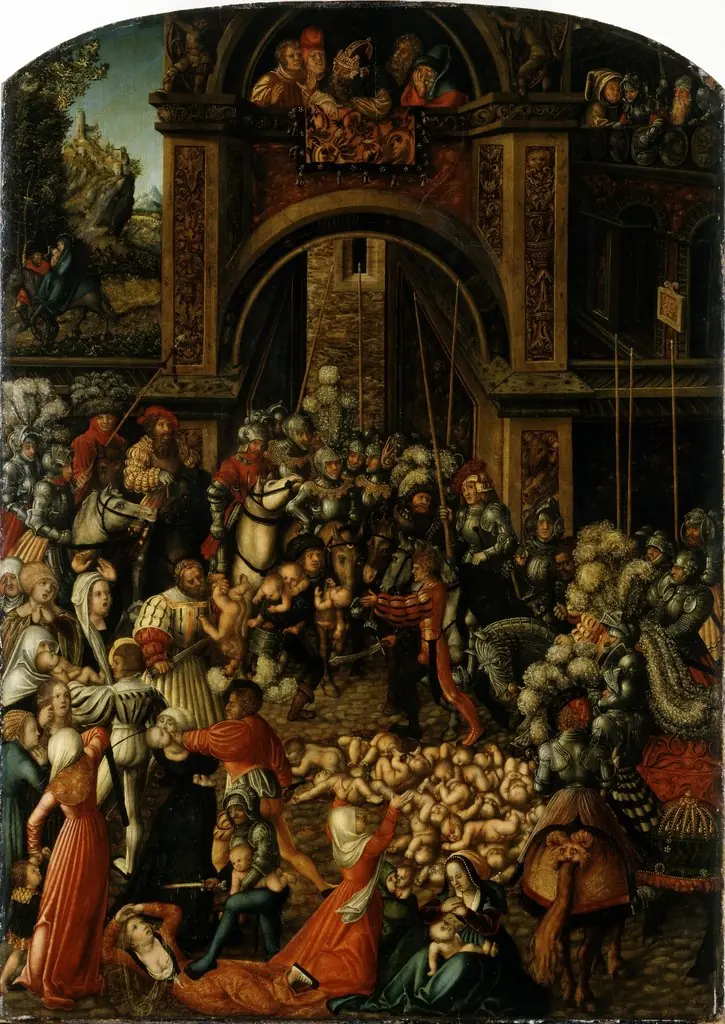
Massacre of the Innocents in Bethlehem is an oil painting by the Early Baroque Italian artist Elias Greuter. It dates from 1611 and is held in the collection of the Bavarian State Painting Collections.
About this work
Subject & Meaning
Classified as a religious work, it treats this narrative of infanticide and maternal grief as its main subject.
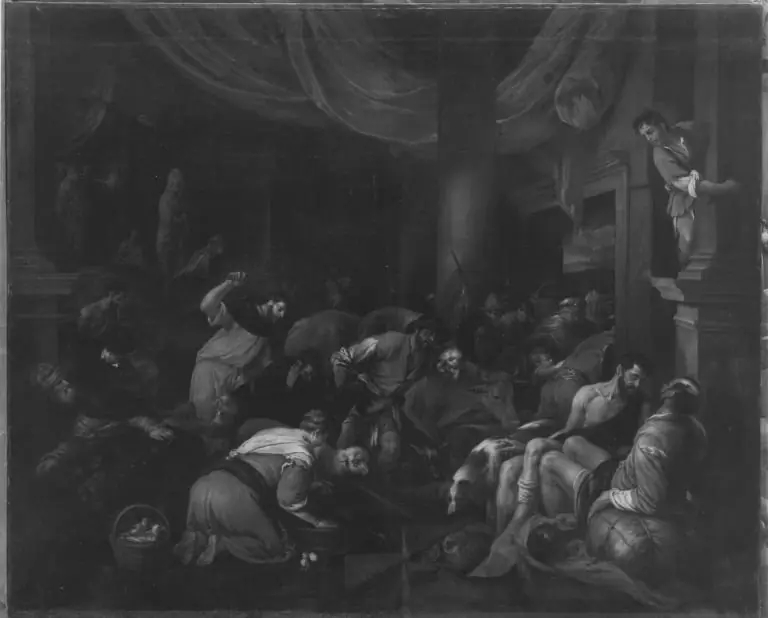
The painting depicts the Massacre of the Innocents, the biblical episode in which Herod ordered the killing of young children in Bethlehem in an attempt to eliminate the newborn Christ. Classified as a religious work, it treats this narrative of infanticide and maternal grief as its main subject.
The subject carries layered symbolism: the slaughtered children are venerated in Christian tradition as the Holy Innocents and regarded as the first martyrs, while the scene also functions as a typological prefiguration of later persecution and of Christ's own Passion. By setting the violence in Bethlehem, the work ties a localized atrocity to the foundational events of the Nativity, transforming a story of political cruelty into a meditation on sacrifice, innocence, and redemption.
Technique & Style
Oil paint on canvas, measuring 216 cm by 153 cm, depicts the biblical Massacre of the Innocents in Bethlehem. Executed in 1611 by Elias Greuter, the work belongs to the religious genre and is classified as a painting within the Baroque tradition. The composition emphasizes dramatic chiaroscuro and dynamic movement, characteristic of Counter-Reformation visual storytelling.
Currently housed in the Alte Pinakothek, the painting remains well-preserved with no significant condition issues noted in catalog records.
The formal qualities reflect a mature handling of spatial depth and emotional intensity, employing strong contrasts of light and shadow to focus attention on the central sacrificial violence. Greuter’s brushwork combines precise detail in facial expressions with looser, gestural strokes in the background, creating a tension between narrative clarity and expressive abstraction.
History & Provenance
The painting was created by Elias Greuter in 1611, executed in oil on canvas. It depicts the Massacre of the Innocents and is classified as a religious work. The canvas measures 153 cm in height by 216 cm in width.
The work is held within the Bavarian State Painting Collections and is housed at the Alte Pinakothek. No further details regarding its commission, earlier ownership, or chain of custody prior to its acquisition by the Bavarian State Painting Collections are documented in the available sources.
The painting is held by the Bavarian State Painting Collections and is housed at the Alte Pinakothek in Munich. No specific inventory or accession number is recorded in the available sources.
No exhibition history is documented for the work in the provided sources.
Overview
Elias Greuter’s oil on canvas, completed in 1611, portrays the biblical episode known as the Massacre of the Innocents. The work is part of the collection of the Alte Pinakothek in Munich and presents a densely populated, violent tableau set in Bethlehem.
Context
The work reflects Counter‑Reformation artistic trends that emphasized emotional intensity and moral didacticism. By dramatizing a biblical massacre, Greuter aligns with contemporary efforts to evoke piety through vivid, often harrowing, religious narratives.
Artist & collection