Artwork
北宋 徽宗 竹禽圖 卷|Finches and bamboo
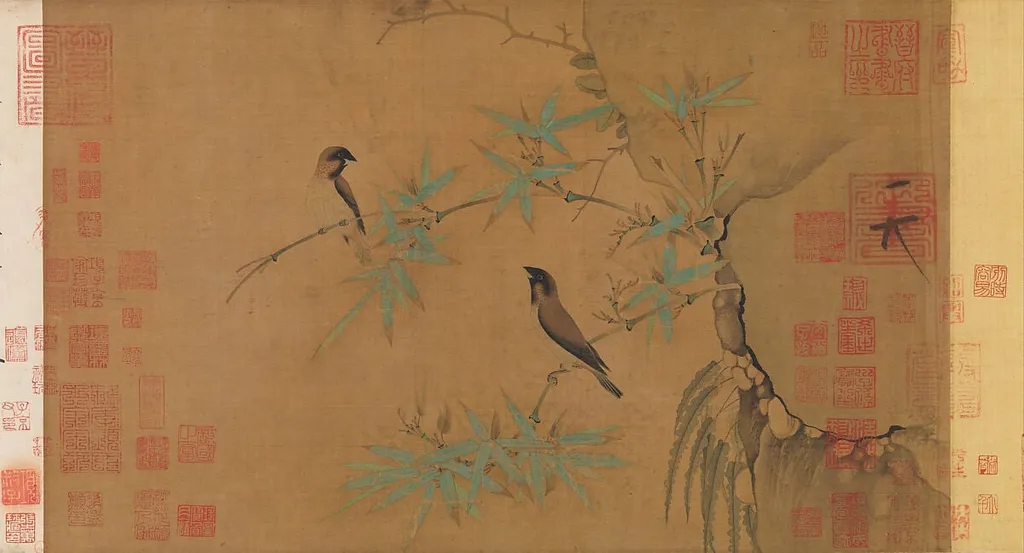
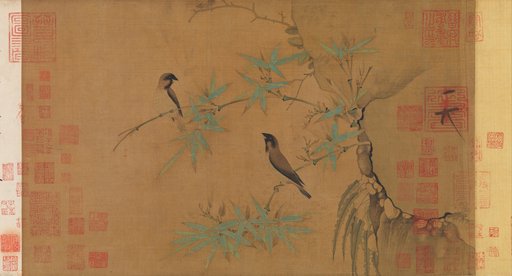
北宋 徽宗 竹禽圖 卷|Finches and bamboo is an ink painting by the Song dynasty painting artist Emperor Huizong. It dates from 1113 and is held in the collection of the Metropolitan Museum of Art.
About this work
Technique & Style
The composition depicts birds perched among bamboo stalks, integrating these natural subjects with calligraphic elements.
Created in 1113, Finches and Bamboo is executed as a handscroll using ink and color applied to a silk support. The work demonstrates the refined court painting style of Emperor Huizong, featuring precise ink outlines and delicate coloration characteristic of the Northern Song dynasty. The composition depicts birds perched among bamboo stalks, integrating these natural subjects with calligraphic elements.
The physical dimensions of the scroll measure 33.7 centimeters in height and 55.4 centimeters in width. The materials are ink and color on silk, consistent with the high-quality production standards of the imperial academy. The artwork is currently held within the Asian Art collection at the Metropolitan Museum of Art.
History & Provenance
The work titled 'Finches and Bamboo' was produced in 1113 in China as a handscroll in ink and color on silk, painted by the Northern Song emperor Huizong himself and reflecting the ruler's personal interest in avian and botanical subjects. The painting remained associated with the Song court before passing to later collections, eventually entering the Metropolitan Museum of Art, where it is catalogued as part of the Asian Art department's holdings. The work measures 33.7 × 55.4 cm and depicts birds among bamboo in ink and color on silk.
Context
The handscroll Finches and Bamboo, executed by Emperor Huizong in 1113, exemplifies the courtly bird-and-flower genre that defined Northern Song elite painting. Scholarship emphasizes its delicate line work, subtle color washes, and the seamless integration of calligraphic inscription, reflecting Huizong's personal interest in avian subjects and his patronage of refined decorative arts. As a work held in the Metropolitan Museum of Art, it serves as a benchmark for understanding the synthesis of painting and scholarly symbolism in the period, and its reception has highlighted the artist's role in elevating avian imagery to a vehicle for moral and aesthetic discourse.
Overview
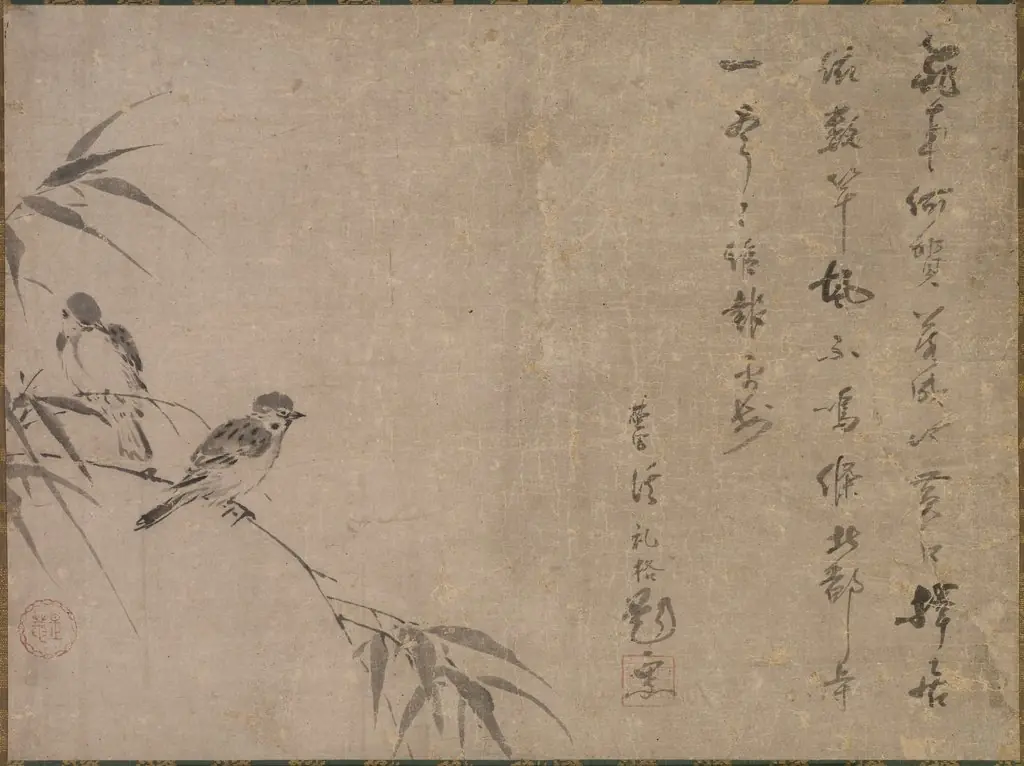
This handscroll, titled Finches and Bamboo, is attributed to Emperor Huizong of the Northern Song dynasty. Executed with ink and color on silk, the painting depicts two small finches perched delicately on bamboo branches. Above the imagery, the artist integrated calligraphy, providing explanations for each bird.
This work exemplifies Huizong's personal artistic pursuits, showcasing his refined aesthetic and his deep appreciation for the natural world.
Subject & Meaning
The scroll features a pair of small finches resting amidst slender bamboo branches. Each bird is rendered with subtle detail, conveying a sense of vitality. Above the painted scene, the emperor's own hand inscribed characters, identifying the specific species of finch.
This combination of visual art and descriptive text reflects a scholarly approach to nature observation, characteristic of imperial patronage and personal artistic interest during the Northern Song period.
Artist & collection
Artist
Emperor Huizong (1082-1135) was the eighth emperor of the Song dynasty of China, reigning from 1100 to 1126, and one of the most accomplished artist-rulers in Chinese history.

 Sparrows and Bamboo
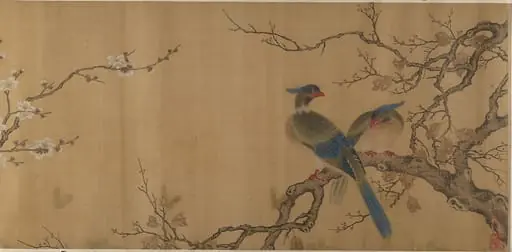 清 佚名 舊傳易元吉 八禽圖 卷|Birds on Branches
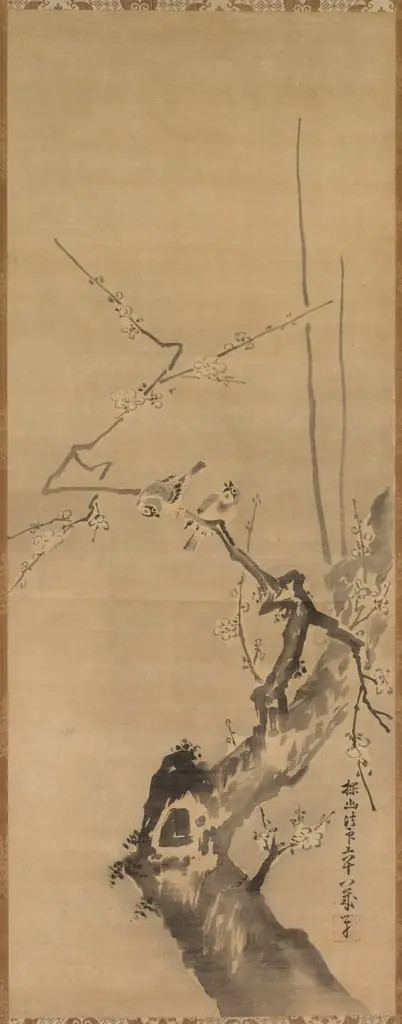 Sparrows on Blossoming Plum; A Sage with Tiger; Chinese Bird on Snow-Laden Branch
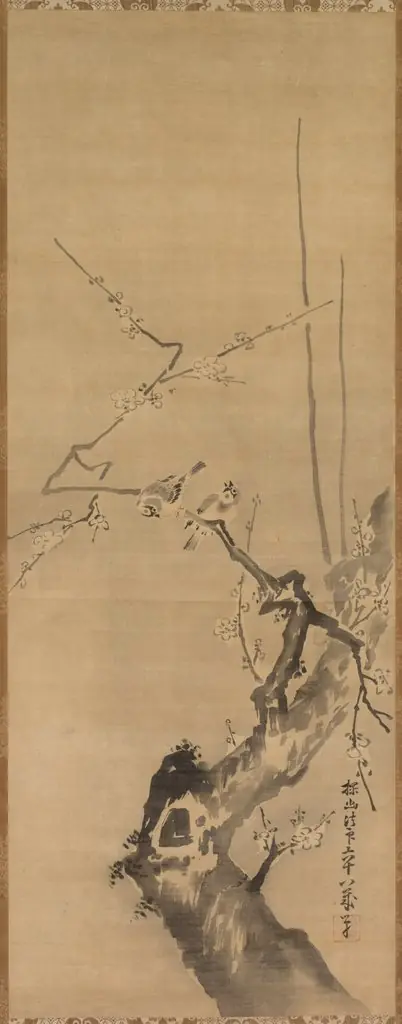 Sparrows on Blossoming Plum
 Sparrows on Blossoming Plum; A Sage with Tiger; Chinese Bird on Snow-Laden Branch
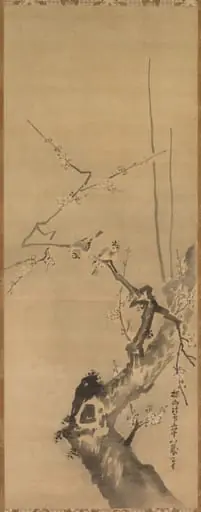 Sparrows on Blossoming Plum
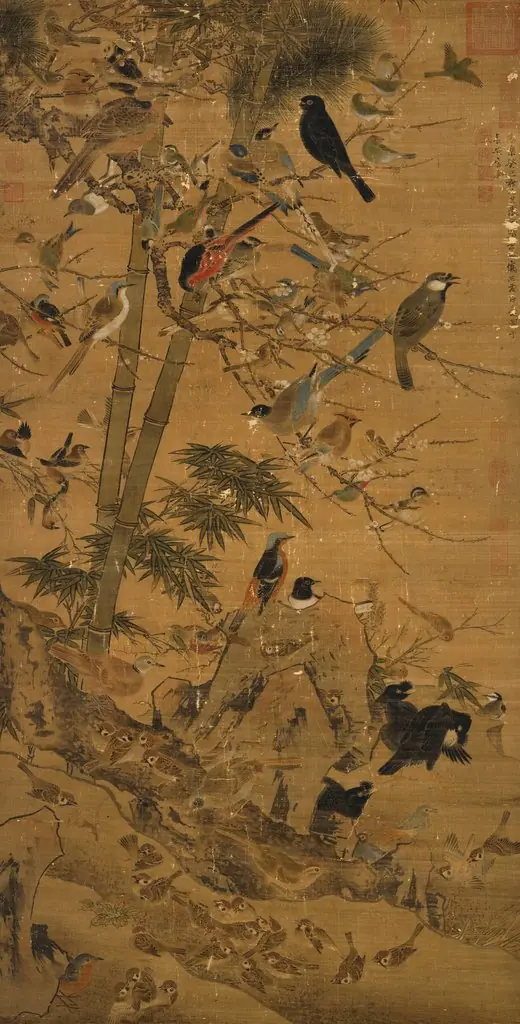 The "Three Friends" and a Hundred Birds
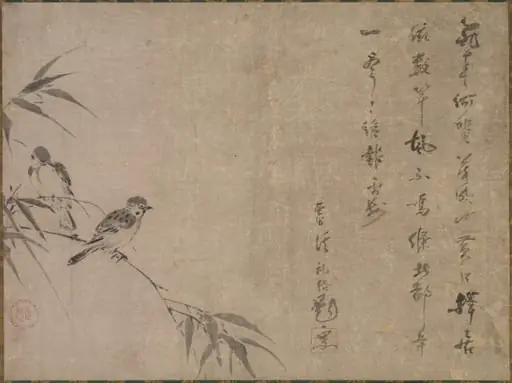 Sparrows and Bamboo