Artwork
Despair
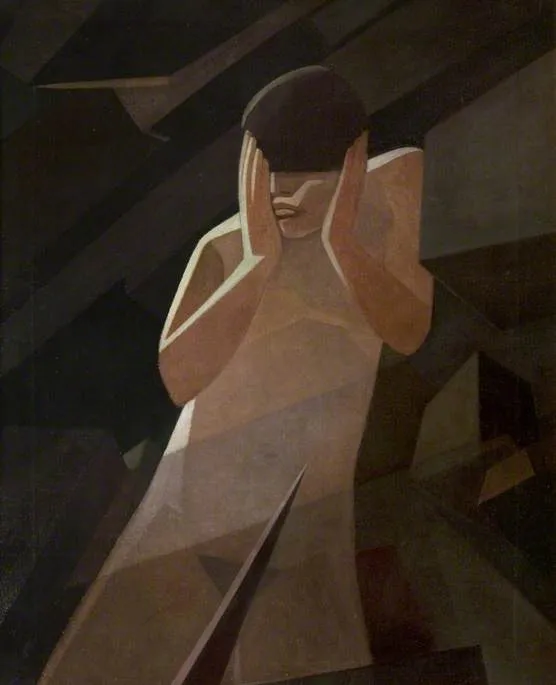
Despair is an oil painting by the Art Brut artist Eric Robertson. It dates from 1921 and is held in the collection of the Kelvingrove Art Gallery and Museum.
About this work
Overview
Its abstracted form and emotional weight distinguish it from literal representation, emphasizing psychological presence over physical detail.
Created in 1921, Despair is an oil painting by Eric Robertson that captures a solitary male figure in a posture of profound stillness. The work is rendered in a restrained palette of earth tones against a deep, enveloping background. Its abstracted form and emotional weight distinguish it from literal representation, emphasizing psychological presence over physical detail. The painting resides in the Kelvingrove Art Gallery and Museum in Glasgow.
Subject & Meaning
The figure, hunched with head buried in hands, suggests an internalized anguish rather than an external event. There is no narrative context, no setting, no objects, only the weight of the body and the silence of the pose. The absence of facial detail universalizes the emotion, inviting viewers to project their own sense of loss or exhaustion onto the figure. The subject is not a specific person but an archetype of human sorrow.
Technique & Style
Robertson employs thick, deliberate brushwork to model the figure’s form, avoiding smooth transitions in favor of textured, tactile surfaces. A muted range of browns and beiges dominates, with subtle shifts in tone suggesting volume without color variation. Strong chiaroscuro defines the figure’s contours, isolating it from the shadowed background and heightening the sense of isolation. The technique prioritizes emotional resonance over realism.
History & Provenance
Despair was completed in 1921, during a period of widespread social and psychological recalibration following the First World War. It entered the collection of the Kelvingrove Art Gallery and Museum in the mid-20th century, likely through a public acquisition or donation. No records indicate prior ownership or exhibition history before its institutional acquisition, suggesting it remained relatively private in its early years.
Context
Emerging in the aftermath of global conflict, the painting reflects a broader cultural turn toward introspection and emotional expression in early 20th-century art. While not aligned with any formal movement, its focus on inner states aligns with contemporary trends in Expressionism and post-war realism. Robertson’s work, though not widely known, resonates with artists exploring the psychological toll of modernity.
Legacy
Despair remains a quiet but persistent example of early 20th-century British figurative painting that prioritizes emotional gravity over spectacle. It has not been widely reproduced or studied, yet its restrained power continues to resonate in institutional settings. The work contributes to a lesser-known strand of interwar art that valued solitude and somber reflection as valid subjects for painting.
Artist & collection