Artwork
Woman on One Knee
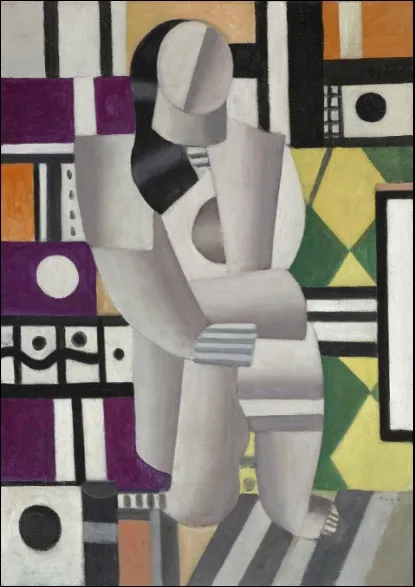
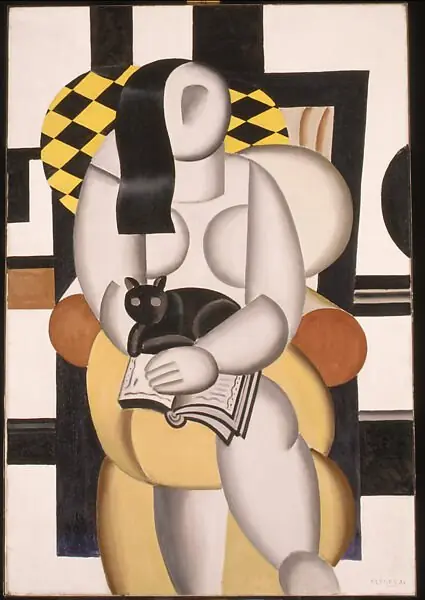
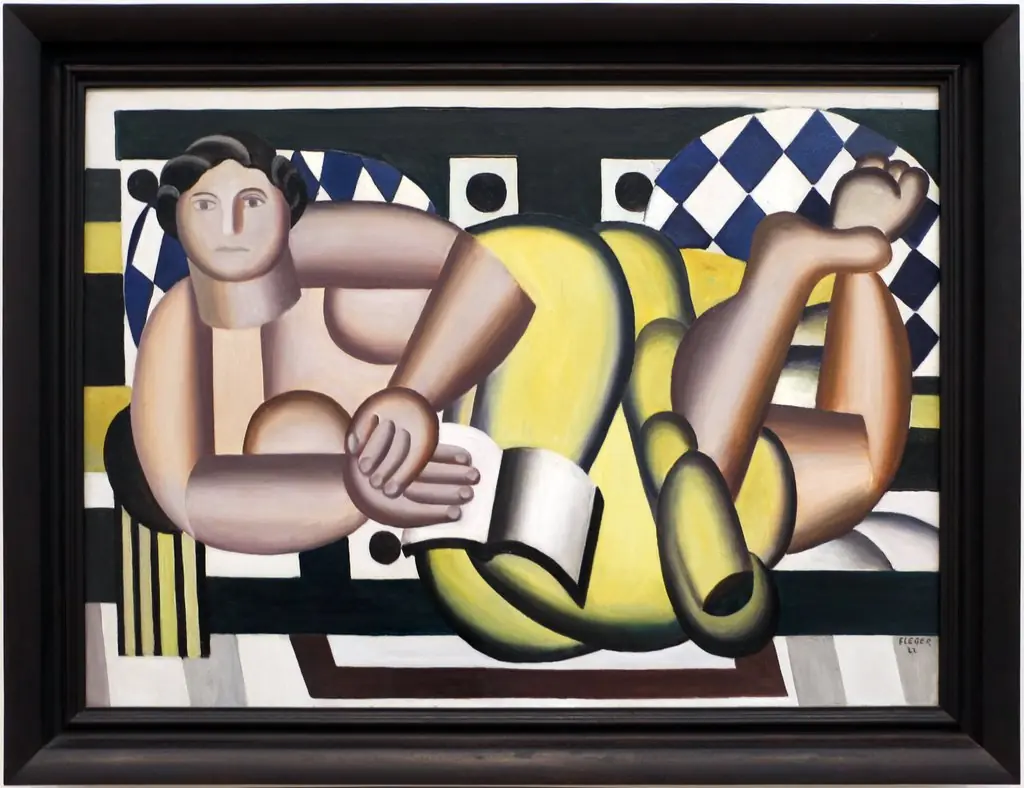
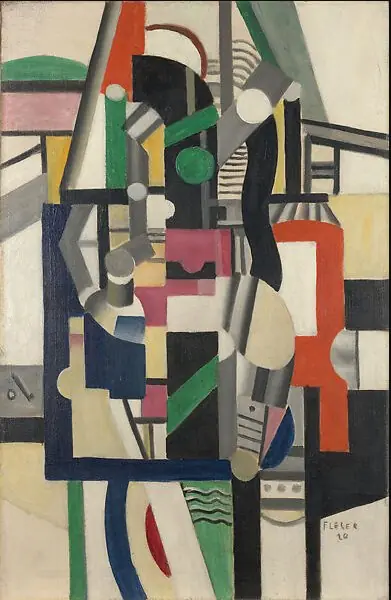
Woman on One Knee is an oil painting by the Cubism Synthetic artist Fernand Léger. It dates from 1921 and is held in the collection of the Denver Art Museum.
About this work
Overview
The work presents a seated female figure in a contemplative posture, rendered through abstracted geometry rather than naturalistic detail.
Woman on One Knee is a 1921 oil painting by Fernand Léger, part of the Denver Art Museum’s collection. The work presents a seated female figure in a contemplative posture, rendered through abstracted geometry rather than naturalistic detail. Léger’s approach reduces the human form to interlocking planes and clean contours, aligning with his broader interest in mechanized aesthetics and modernist simplification.
Subject & Meaning
The subject is a woman resting on one knee, arms encircling her legs in a self-contained pose. Her face is indistinct, emphasizing posture over identity. The stillness of her form suggests introspection rather than narrative.
Léger avoids emotional dramatization, instead using the figure as a structural element within a composed environment, reflecting a broader modernist shift toward form over psychological depth.
Technique & Style
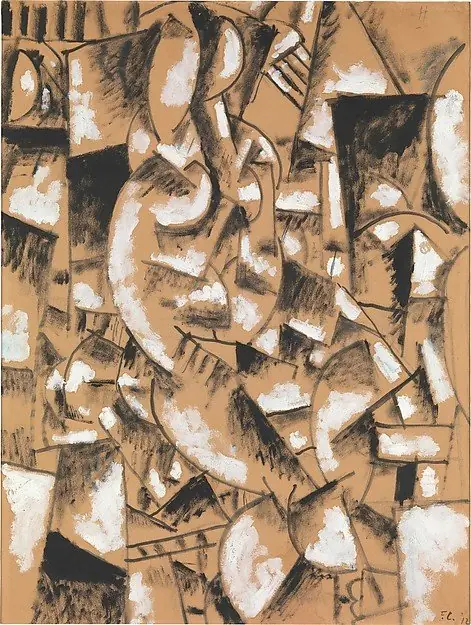
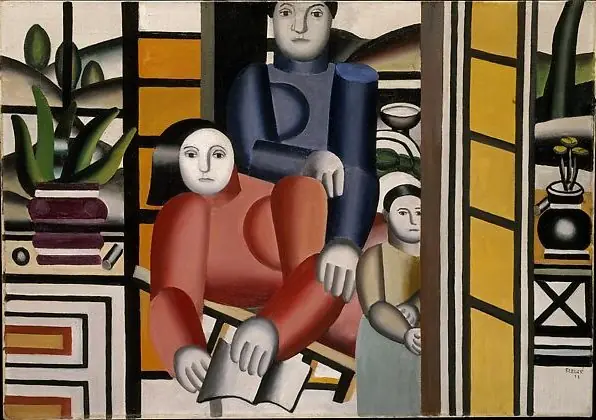
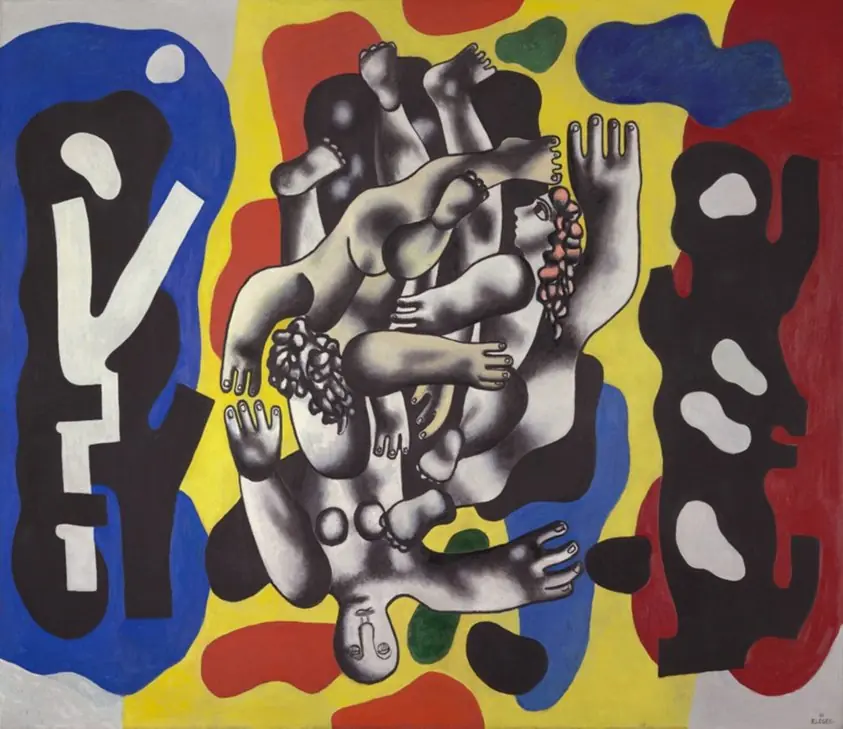
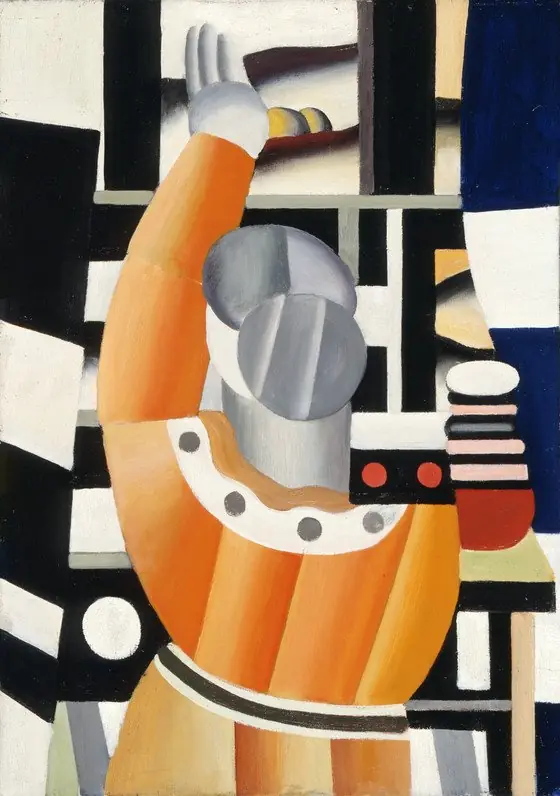
Léger employs flat, bold shapes and sharply defined edges to construct both figure and background. Color is used architecturally, purple, orange, yellow, green, and black form rhythmic planes that suggest spatial depth without perspective. The absence of modeling or chiaroscuro reinforces the painting’s emphasis on line and volume, characteristic of his post-Cubist synthesis of industrial and organic forms.
History & Provenance
Painted in 1921, the work emerged during Léger’s period of intense experimentation with mechanical forms and simplified figures. It entered the Denver Art Museum’s collection in the mid-20th century, following its exhibition in European and American modernist surveys. Its provenance reflects the growing institutional recognition of Léger’s contributions to early 20th-century abstraction.
Context
Created shortly after World War I, the painting reflects Léger’s response to a rapidly industrializing world. While many contemporaries turned to expressionism or surrealism, he pursued clarity and order, integrating machine-age aesthetics into the human figure. This work aligns with his belief that art should reflect modern life through structured, accessible forms, distinct from pre-war Cubist fragmentation.
Legacy
Woman on One Knee exemplifies Léger’s enduring influence on modernist design and later movements like Pop Art and Minimalism. Its reduction of the figure to essential shapes and its use of color as structural force prefigured trends in 20th-century visual culture. The painting remains a key reference for understanding how abstraction could convey presence without realism.
Artist & collection
Artist
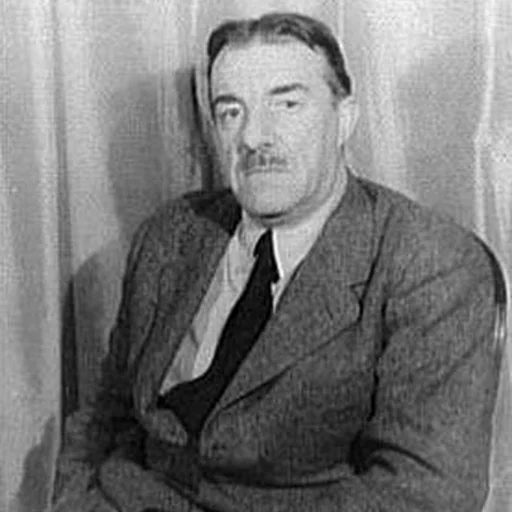
Joseph Fernand Henri Léger was a French painter, sculptor, and filmmaker. In his early works he created a personal form of cubism which he gradually modified into a more figurative, populist style. His boldly simplified…