Artwork
The First Communion
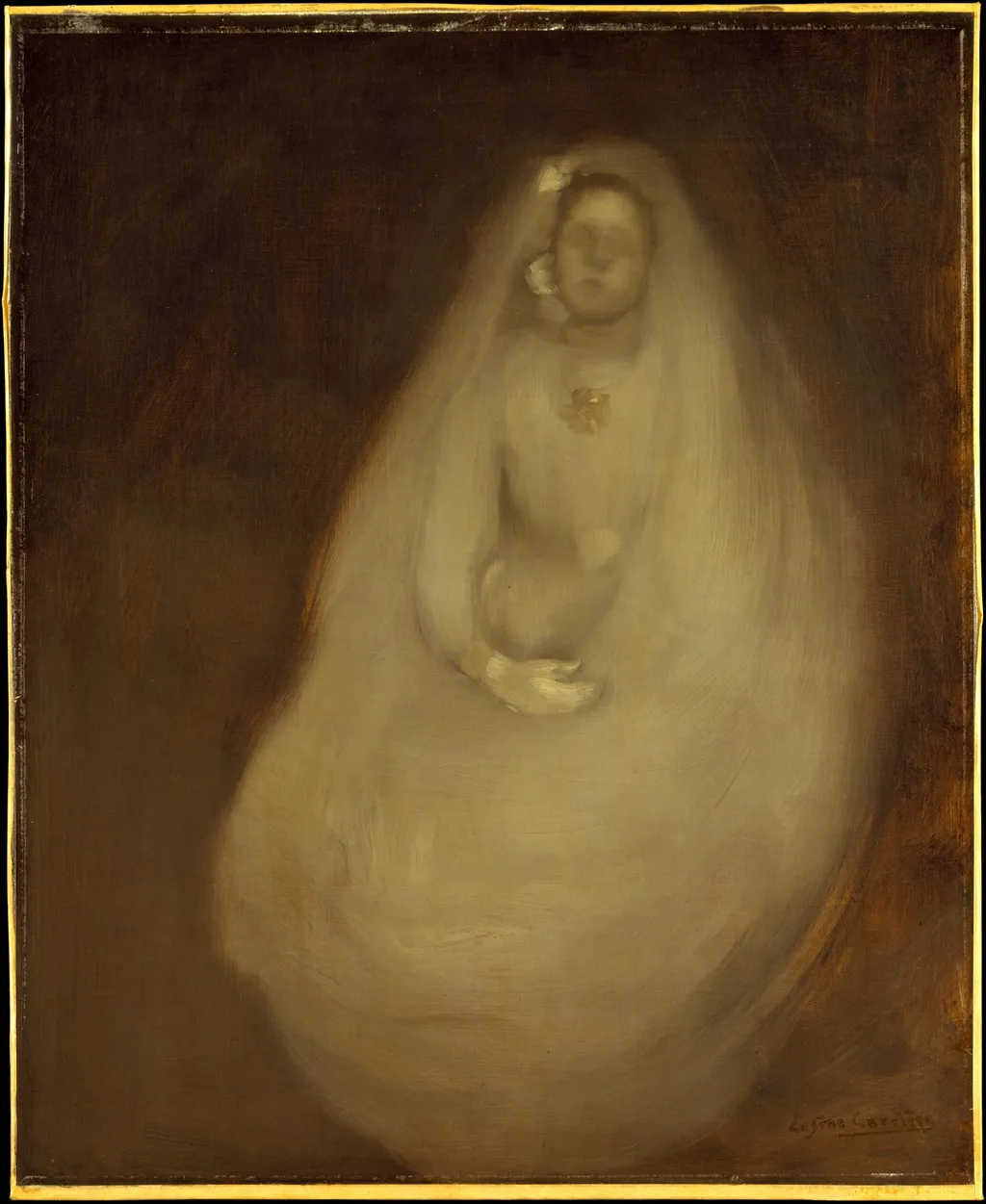
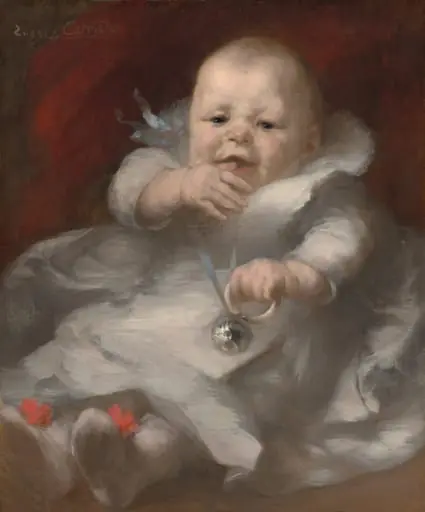
The First Communion is an oil painting by the Symbolist artist Eugène Carrière. It dates from 1898 and is held in the collection of the Metropolitan Museum of Art.
About this work
Subject & Meaning
Eugène Carrière's 1896 oil painting, The First Communion, presents a portrait centered on a woman, identified in the depiction as the subject of the work.
Eugène Carrière's 1896 oil painting, The First Communion, presents a portrait centered on a woman, identified in the depiction as the subject of the work. While the title suggests a specific religious rite of passage, the visual content described in available records focuses on the figure of the woman rather than an explicit narrative scene of the sacrament or detailed liturgical iconography. The work functions primarily as a portrait, utilizing the artist's characteristic medium to capture the sitter.
The title implies a thematic connection to the Catholic tradition of First Communion, yet the surviving descriptions emphasize the individual portrait aspect over a complex symbolic program or a depiction of the ceremony itself. Consequently, the meaning of the piece is anchored in its identity as a portrait of a woman from 1896, with the titular reference serving as the primary contextual link to the religious subject matter.
Technique & Style
The First Communion is executed in oil paint on canvas, a standard support for late nineteenth-century easel painting. The unframed canvas measures 65.4 cm in height by 53.3 cm in width, giving the work a modest, portrait-scaled format consistent with its classification as a portrait. Beyond these basic material parameters, the available documentation does not describe handling, surface condition, or specific formal and stylistic qualities such as brushwork or palette.
History & Provenance
Painted in 1896, Eugène Carrière’s The First Communion depicts a young girl in white communion dress against a muted, sfumato ground. The work entered the collection of The Metropolitan Museum of Art, New York, where it remains in its holdings. No record of a specific private commission survives; the artist likely executed the canvas as a market-oriented portrait within his characteristic Symbolist manner.
Dating is established by the artist’s inscription and subsequent exhibition history, aligning with Carrière’s mature period and the broader Symbolist vogue for spiritualized childhood imagery.
Eugène Carrière's 1896 oil painting, The First Communion, is held in the collection of the Metropolitan Museum of Art in New York. The work is cataloged as a portrait depicting a woman, executed on canvas with dimensions of 65.4 cm in height and 53.3 cm in width. While the artwork's creation is dated to January 1, 1896, the provided sources do not specify a unique accession or inventory number for the piece.
Furthermore, the available documentation contains no record of the painting's specific exhibition history or past loan agreements, limiting the historical record to its current institutional location and physical attributes.
Overview
Eugène Carrière's oil painting, The First Communion, completed in 1898, presents a contemplative portrait of a woman. This work exemplifies Carrière's characteristic approach to figural representation, emphasizing a soft, almost ethereal quality. It is currently housed within the collection of The Metropolitan Museum of Art, where it offers insight into late 19th-century French portraiture.
Own this work as a print
Artist & collection

Artist
Eugène Anatole Carrière was a French Symbolist artist of the fin-de-siècle period.

- Woman Leaning on a Table
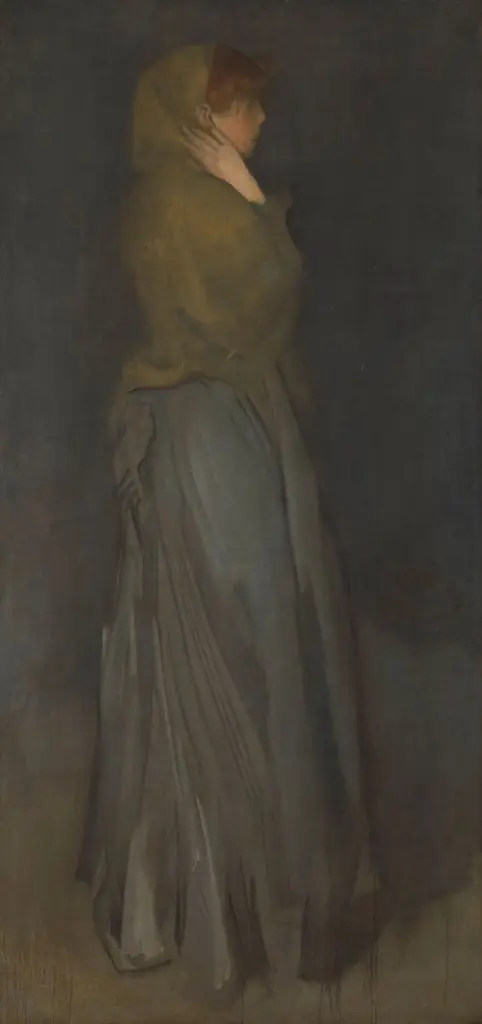 Arrangement in Yellow and Gray: Effie Deans
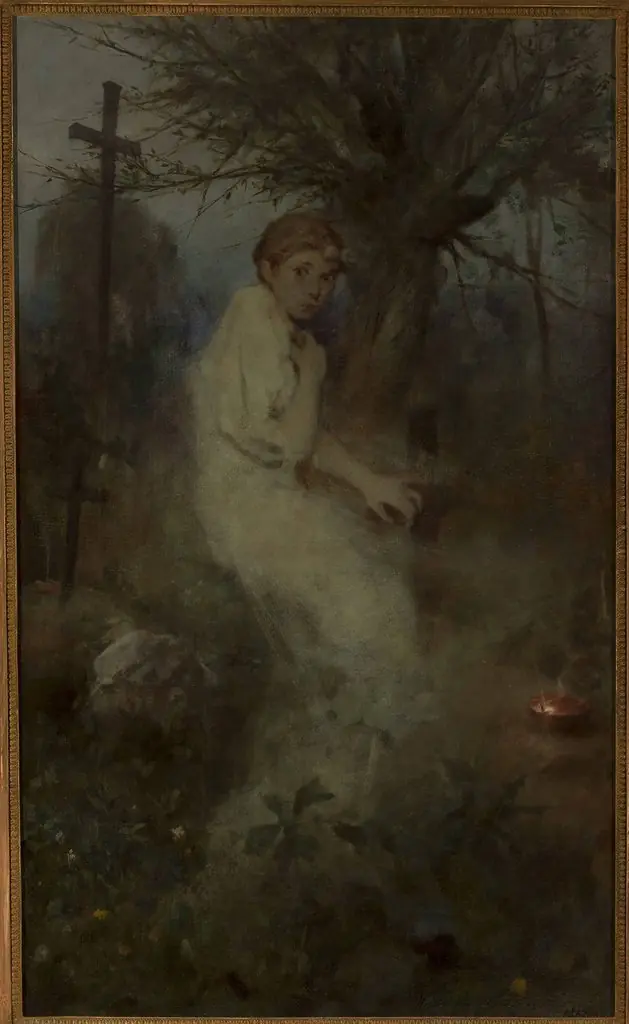 All Souls’ Day, part one of the triptych
 ‘Arrangement in Yellow and Gray’: Effie Deans
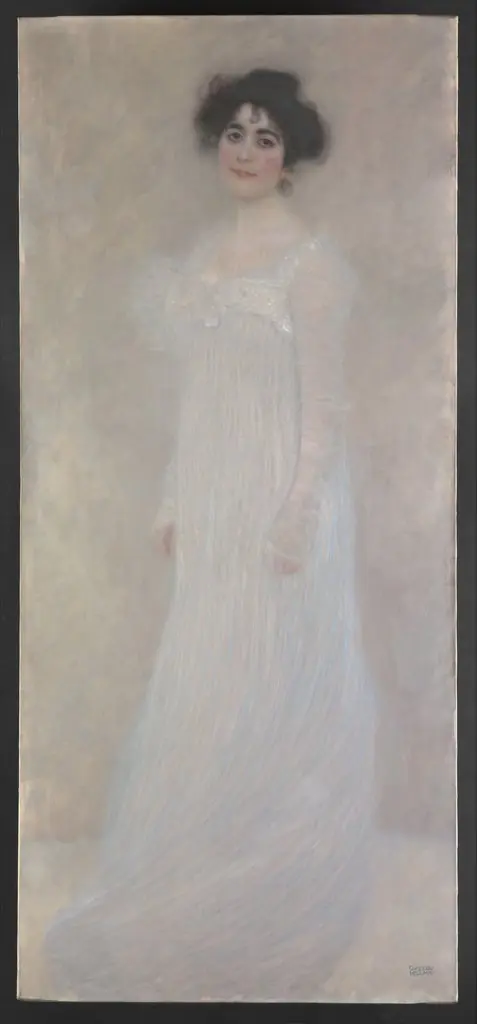 Serena Pulitzer Lederer (1867–1943)
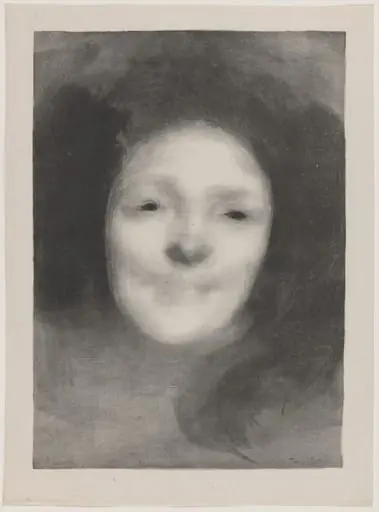 Étude de femme (Study of a Woman)
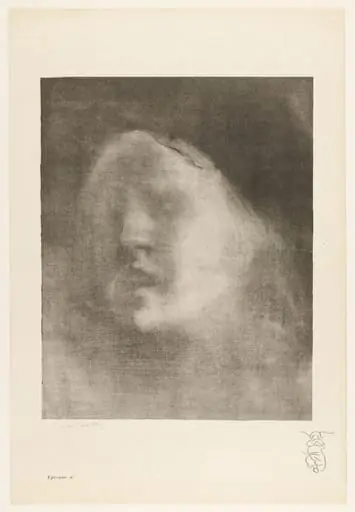 Untitled
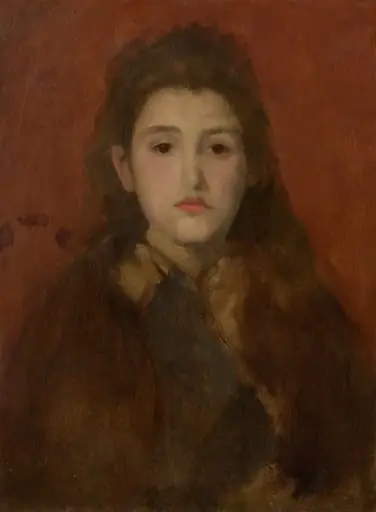 Alice Butt
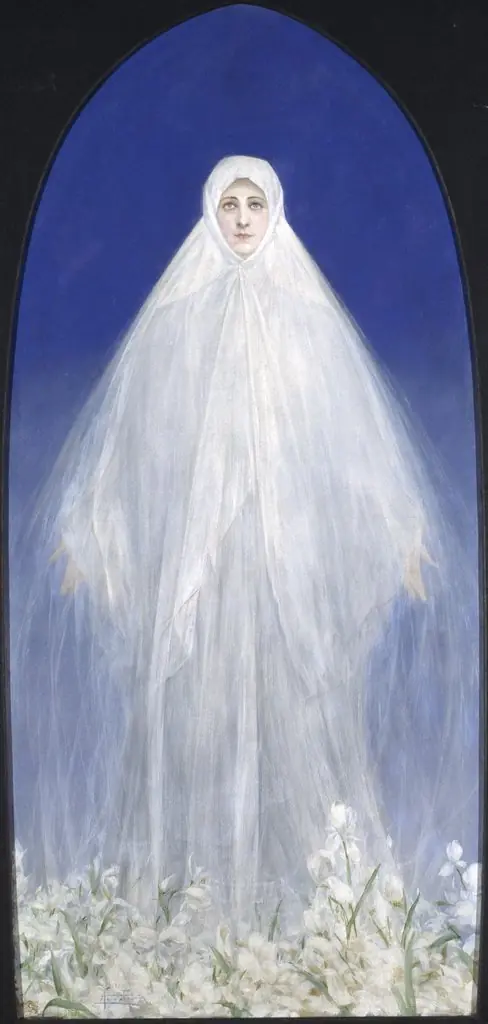 Purity
 Puis l'ange prit l'encensoir (And the angel took the censer)
 Meditation
 Portrait of a woman