Artwork
Herder met kudde
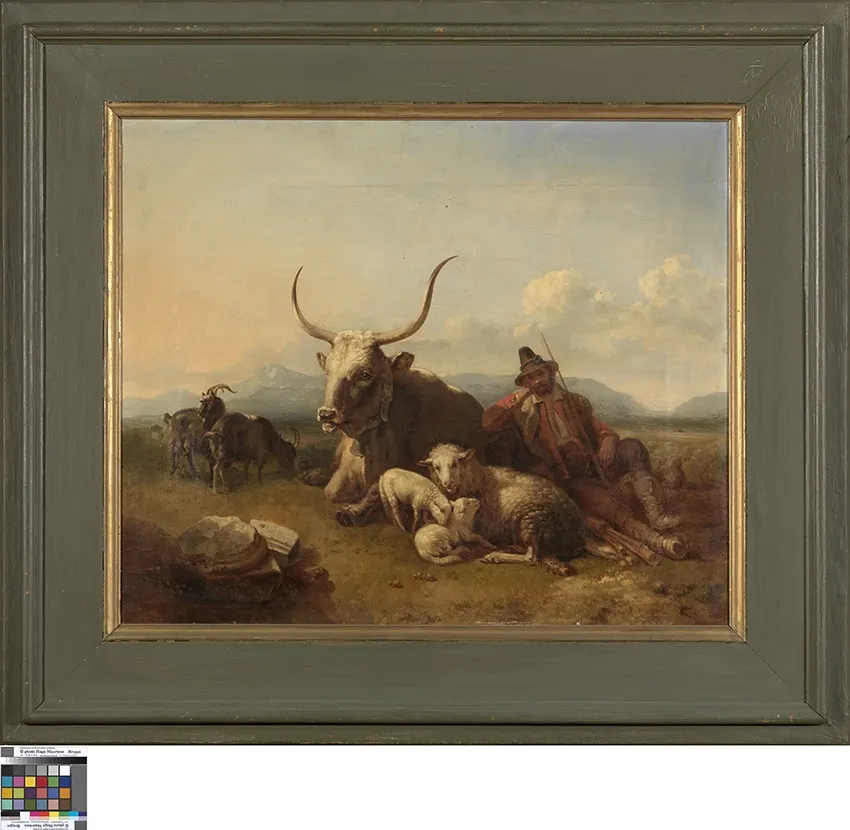
Herder met kudde is an oil painting by Eugène Verboeckhoven. It dates from 1801 and is held in the collection of the Groeningemuseum.
About this work
Subject & Meaning
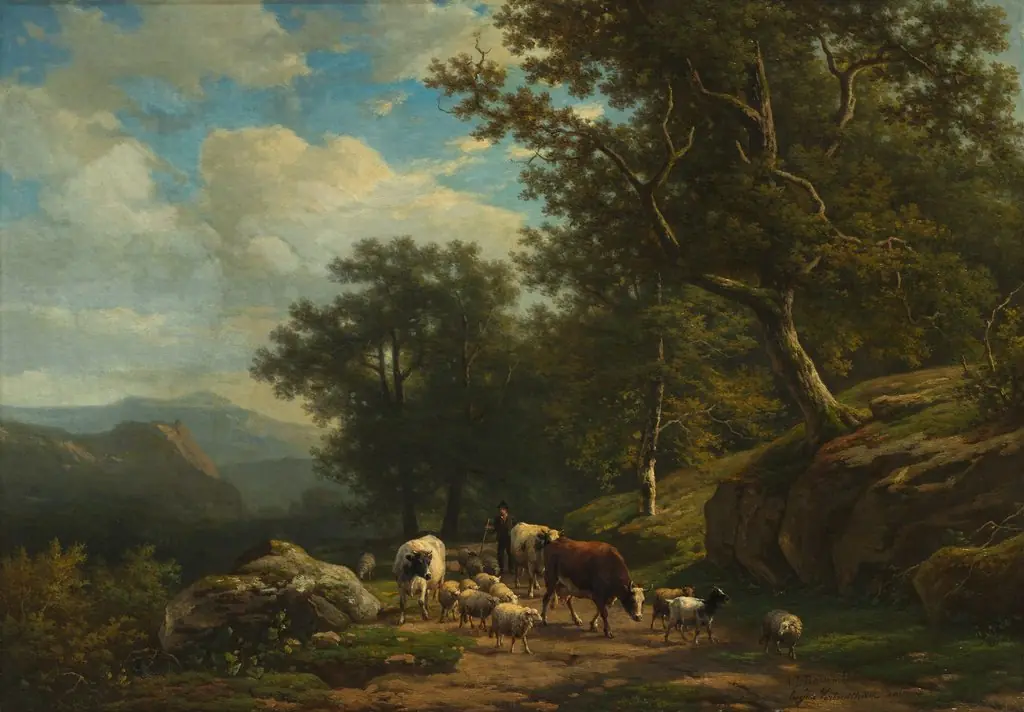
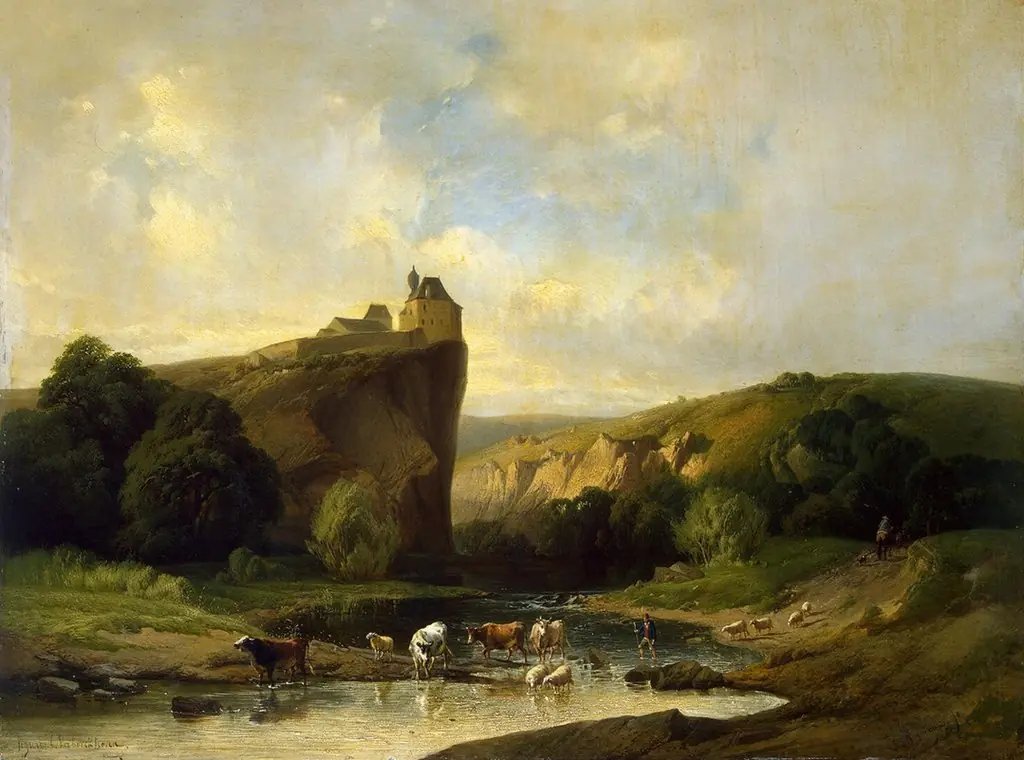
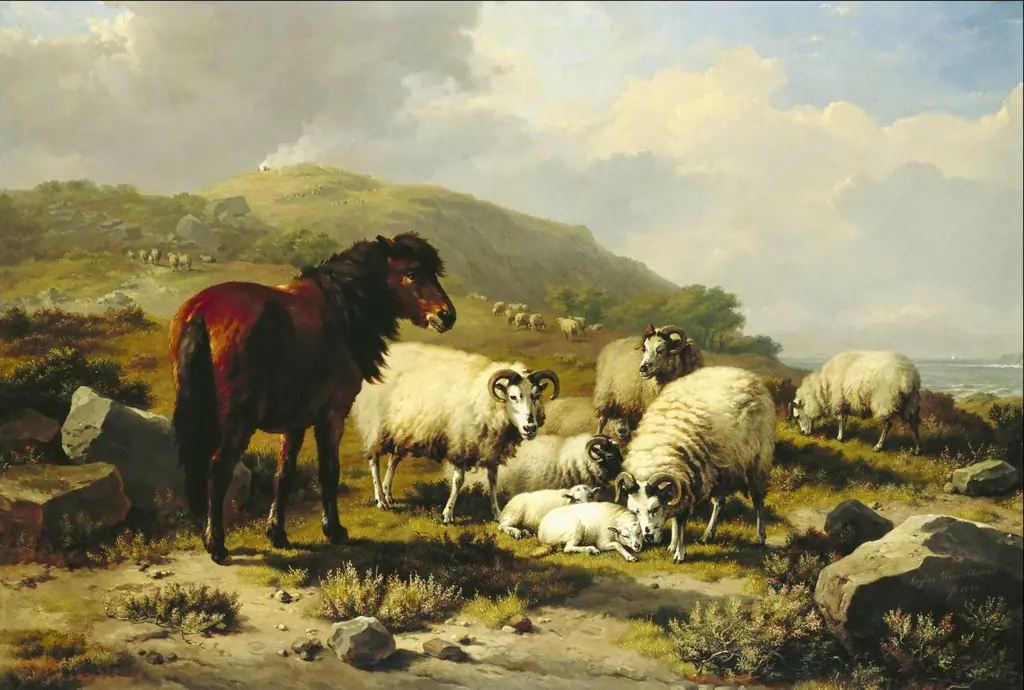
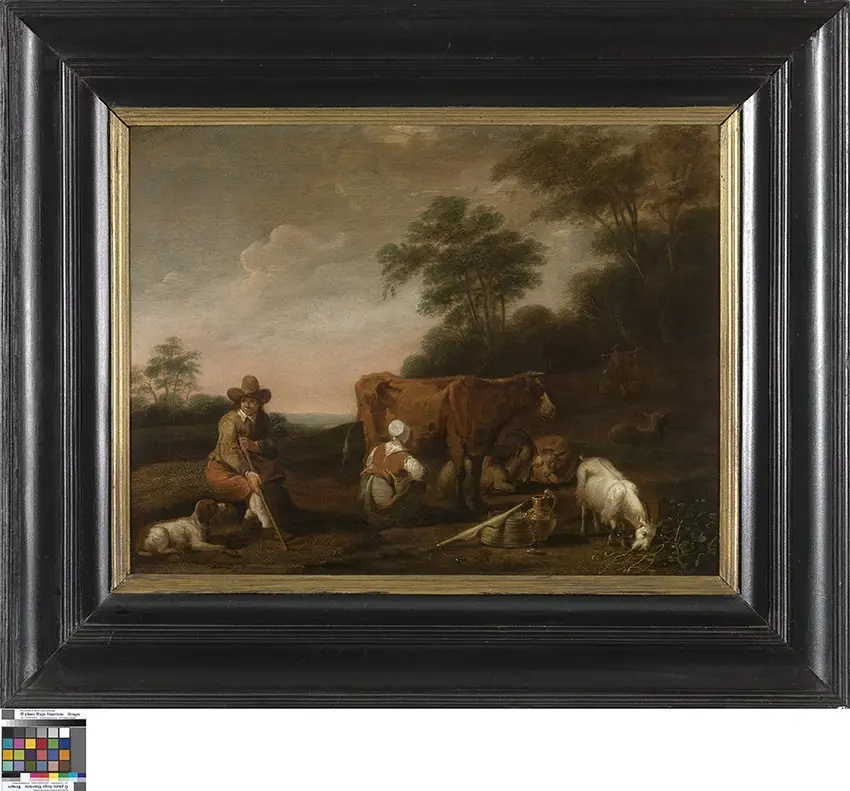
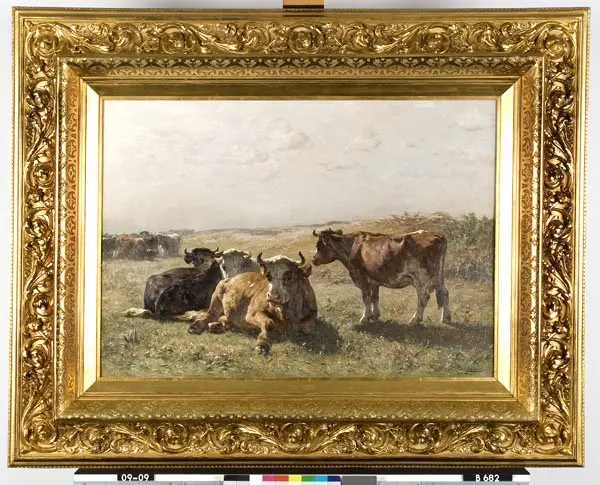
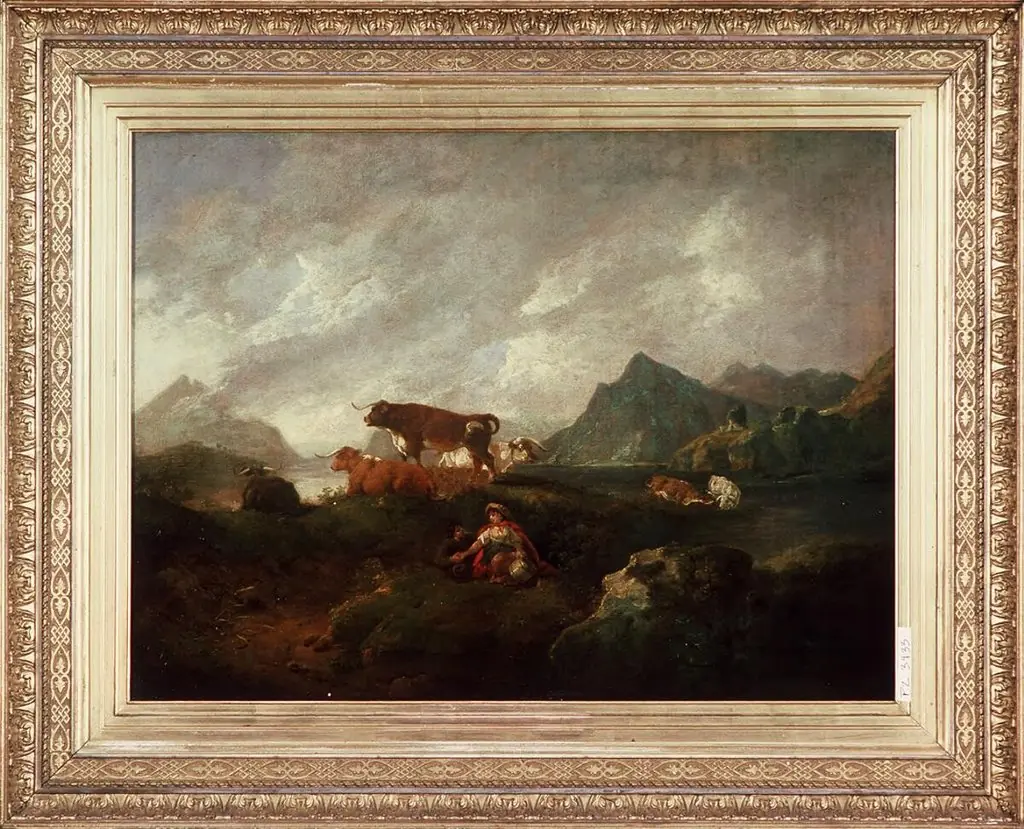
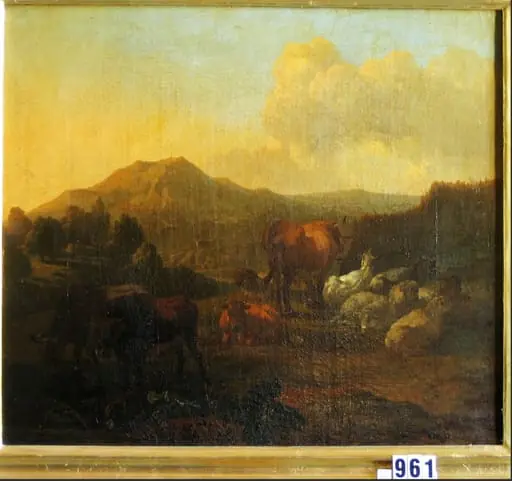
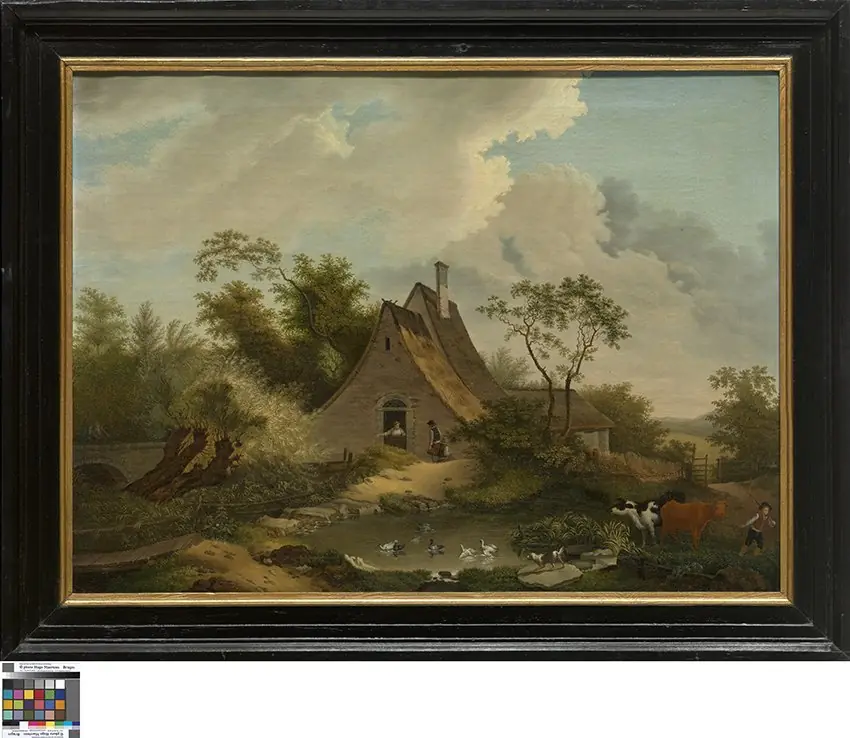
The painting depicts a herder tending a mixed flock of sheep, cattle, goats, and lambs against a mountainous backdrop under a cloudy sky.
The painting depicts a herder tending a mixed flock of sheep, cattle, goats, and lambs against a mountainous backdrop under a cloudy sky. Verboeckhoven’s composition emphasizes the pastoral harmony between the herder and the animals, using the flock’s diversity to suggest abundance and rural prosperity. The inclusion of mountain peaks and drifting clouds situates the scene in a rugged, elevated landscape, evoking both the challenges and rewards of alpine herding. The overall mood conveys serenity and the timeless rhythms of agricultural life in early nineteenth-century Europe.
Technique & Style
Herder met kudde is an oil painting created by Eugène Verboeckhoven in 1801. The work is executed on a support measuring 75.2 cm in height and 91.6 cm in width. Stylistically, the composition depicts a pastoral scene featuring a shepherd accompanied by a diverse herd of sheep, cattle, goats, and lambs.
The setting includes mountainous terrain and clouds, reflecting the artist's focus on animal subjects within a landscape context.
History & Provenance
Eugène Verboeckhoven painted Herder met kudde in 1801 as an oil on canvas work portraying a mountain landscape with a herder and his flock of sheep, cattle, goat, lamb, and herd. The painting entered the collection of the Groeningemuseum, where it remains on display. Its dimensions are 75.2 cm in height and 91.6 cm in width.
The painting Herder met kudde is part of the Groeningemuseum's collection in Bruges, where it is catalogued under the accession number 1887-001. It was first exhibited at the museum in 1887 as part of the foundational collection of Flemish masters and has been featured in subsequent retrospectives on Verboeckhoven's oeuvre, including the 1975 exhibition "Verboeckhoven: The Master of the Shepherds" held at the same institution.
Legacy
The painting Herder met kudde by Eugène Verboeckhoven exerted quiet influence on later pastoral scenes in Belgian academic art, particularly in compositions that emphasize meticulous animal detail and atmospheric mountain settings. Its reputation rests on Verboeckhoven’s mastery of animal anatomy and the Romantic era’s fascination with nature’s order, a legacy preserved through repeated exhibitions at the Groeningemuseum where it remains part of the permanent collection. The work’s legacy is anchored in its technical precision and its role as a reference point for 19th-century genre painters who studied its balanced arrangement of livestock and terrain.
Overview
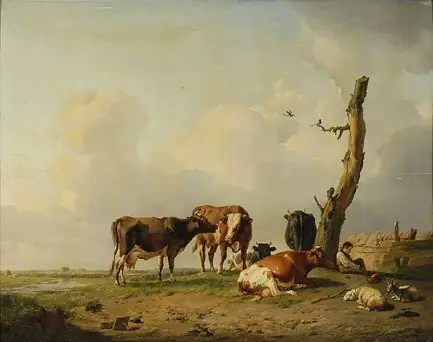
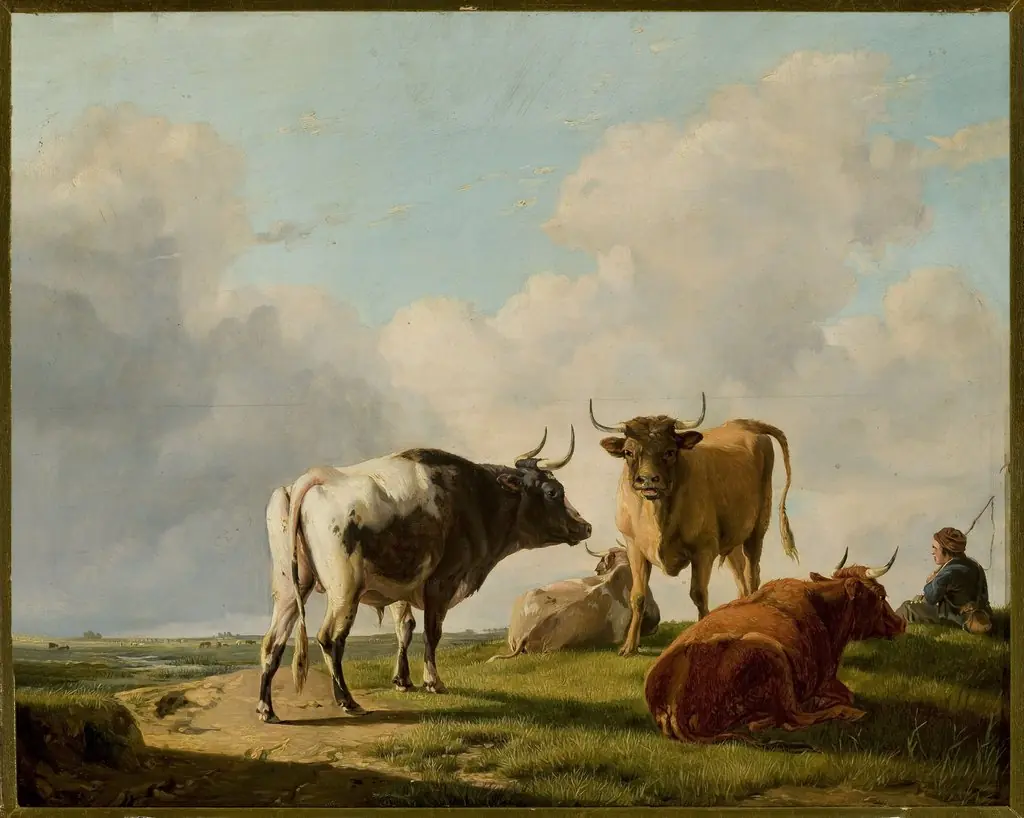
Eugène Joseph Verboeckhoven’s oil painting Herder met kudde was completed in 1801. The work presents a pastoral tableau in which a lone herder sits among a group of cattle, a goat and a lamb, all set against a muted, cloud‑filled sky. The composition balances figures and landscape, inviting the viewer to observe a quiet moment of rural life.
Artist & collection
Artist
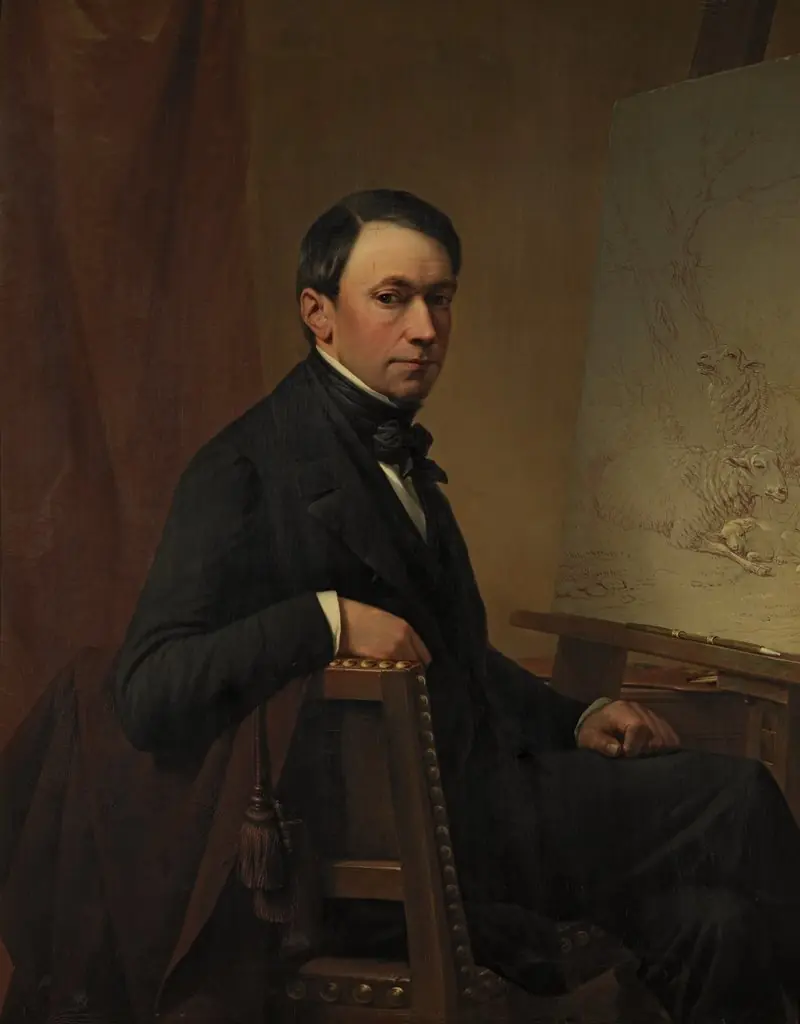
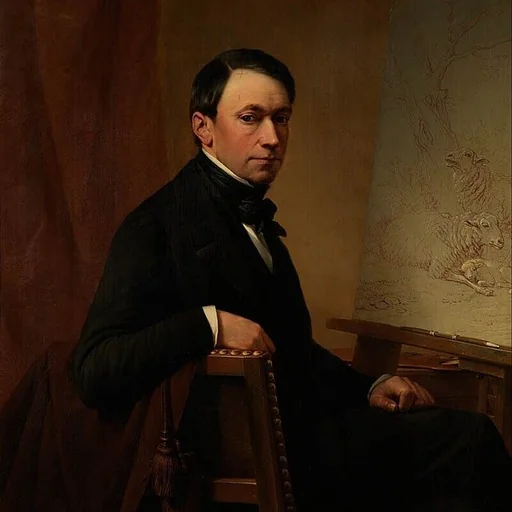
Eugène Joseph Verboeckhoven (9 June 1798 – 19 January 1881) was a Belgian painter, a sculptor, an etcher, an engraver, and a lithographer of animals, animated landscapes, and portraits.