Artwork
Musicerend gezelschap
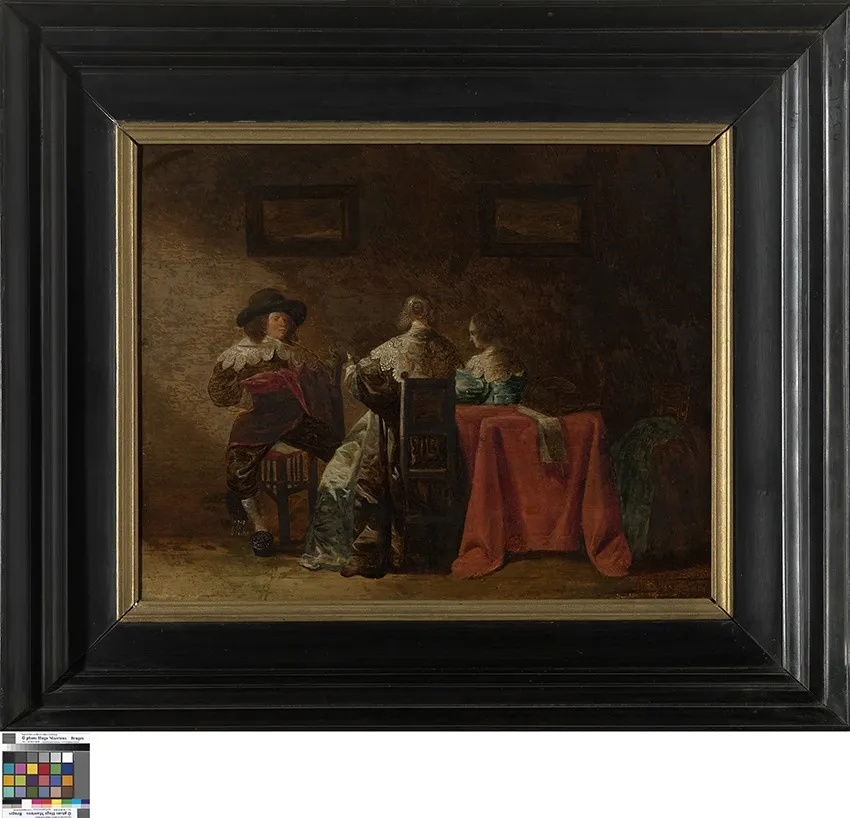
Musicerend gezelschap is an oil painting by the Flemish Baroque painting artist Pieter Jozef Verhaghen. It dates from 1646 and is held in the collection of the Groeningemuseum.
About this work
Overview
Musicerend gezelschap is an oil painting by the Flemish artist Pieter Jozef Verhaghen, dated to 1646.
Musicerend gezelschap is an oil painting by the Flemish artist Pieter Jozef Verhaghen, dated to 1646. The work measures 30.3 by 37.5 centimeters and is held in the Groeningemuseum in Bruges. It depicts a musical company in a dimly lit interior and serves as an example of Verhaghen's engagement with genre themes, distinct from the large-scale religious and mythological scenes that dominated his broader output.
Subject & Meaning
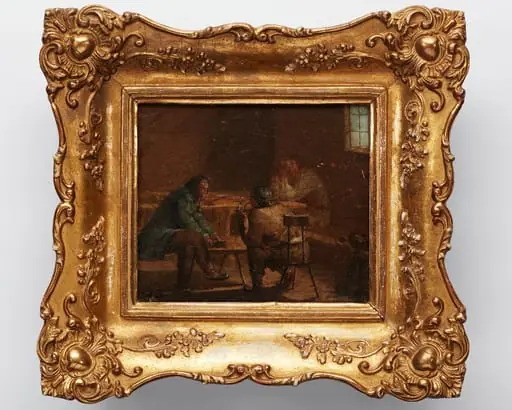
The painting portrays three figures engaged in a musical gathering within an interior space. A man seated on the left wears a wide-brimmed hat, a dark outfit with a white lace collar, and a pink sash, while holding a stringed instrument, likely a lute. Two women sit across from him at a table covered with a vivid red cloth. One woman, wearing an elaborate dress with a lace collar, faces away from the viewer and holds a small object, perhaps a glass. The other woman, dressed in green, turns slightly toward her companion. The room features plain walls with two framed pictures hanging in the background, and the presence of the instrument and glass anchors the scene in the contemporary theme of the musical company.
Technique & Style
Executed in oil paint, the composition relies on a strong chiaroscuro effect, with light entering from the left to illuminate the figures and cast deep shadows across the background. The palette is dominated by browns and dark tones, against which the red tablecloth provides a striking color accent. The brushwork varies across the surface, appearing smooth in the rendering of the figures and more textured in the darker areas. This handling of light and shadow aligns with the broader Baroque stylistic tradition that defined Verhaghen's career.
History & Provenance
The painting is cataloged with an inception date of 1646 and is currently part of the collection of the Groeningemuseum. Specific details regarding its early commission, ownership chain, or exhibition history for this particular work are not documented in the available records. It stands apart from the artist's larger religious commissions, such as those for the Park Abbey or the Leuven University chapel, which enjoyed well-documented patronage from religious institutions and prominent figures like Prince Charles Alexander of Lorraine.
Context
Pieter Jozef Verhaghen, born in Aarschot in 1728 and active primarily in Leuven until his death in 1811, is regarded as the last representative of the Flemish School. He worked entirely in a Rubensian style, carrying the Baroque tradition of Peter Paul Rubens into the late eighteenth and early nineteenth centuries. Trained initially by the traveling painter Jan-Baptist van den Kerckhoven and later in the Antwerp studio of Balthasar Beschey, Verhaghen achieved significant international recognition. Empress Maria Theresa of Austria appointed him her court painter and funded his study trip to Italy from 1771 to 1773, though his work retained its Flemish Baroque character rather than adopting Italian influences. Modern scholarship has reevaluated eighteenth-century Flemish painting, acknowledging that while Verhaghen's work possesses the outward characteristics of the Baroque, it sometimes lacked the expressiveness of his Rubensian models.
Legacy
Verhaghen's reputation experienced a long period of obscurity before modern reassessment. Early curators and historians, including Edward van Even and Victor Demunter, championed his work by organizing retrospective exhibitions and publishing monographs, but a major revival came only in 2011. Exhibitions in Aarschot, M Museum Leuven, and the Museum Parkabdij, accompanied by a new standard catalog, brought renewed attention to his career. This scholarship provided a nuanced view of both the artist and the family man, securing his recognized place in art history as the definitive inheritor of the Rubens tradition at the close of the Flemish School.
Artist & collection
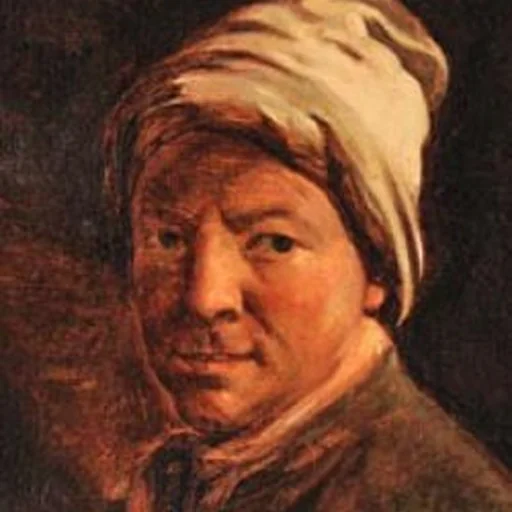
Artist
Pieter-Jozef Verhaghen (19 March 1728 in Aarschot – 3 April 1811 in Leuven) was a Flemish painter of large-scale religious and mythological scenes.