Artwork
Landschap met herder en vee bij een boom
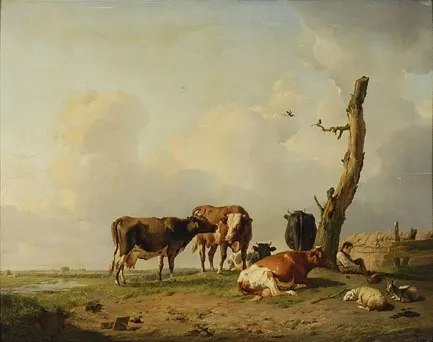
Landschap met herder en vee bij een boom is an oil painting by Eugène Verboeckhoven. It dates from 1824 and is held in the collection of the Rijksmuseum.
About this work
Subject & Meaning
The composition includes a expansive sky and drifting clouds, emphasizing a tranquil rural setting typical of early‑19th‑century Dutch landscape painting.
Landschap met herder en vee bij een boom shows a solitary shepherd watching a small herd of cattle beneath a leafy tree set within an open landscape. The composition includes a expansive sky and drifting clouds, emphasizing a tranquil rural setting typical of early‑19th‑century Dutch landscape painting. By placing the human figure in harmony with domestic animals and natural elements, the work conveys an idealized vision of pastoral life, reflecting the era’s interest in realistic yet poetic depictions of the countryside.
Technique & Style
Executed in 1824, this landscape is an oil painting created on a wooden panel. The work measures 59 cm in height and 75 cm in width. Visually, the composition depicts a pastoral scene featuring a shepherd tending to cattle near a prominent tree, set against a sky filled with clouds.
The handling of the oil medium allows for the detailed rendering of the animals and foliage characteristic of the genre.
History & Provenance
Landschap met herder en vee bij een boom is an oil painting on panel created in 1824 by Eugène Verboeckhoven. The work measures 59 cm in height and 75 cm in width and depicts a shepherd with cattle beneath a tree against a sky with clouds. It belongs to the landscape genre and was produced using oil paint.
The painting entered the collection of the Rijksmuseum and is also part of the Cultural Heritage Agency of the Netherlands Art Collection, currently stored in the Rijksmuseum depot RCE. Its creation history is documented as dating to 1824, with the artist’s activity recorded in contemporary inventories.
The painting is held in the collection of the Rijksmuseum and is part of the Cultural Heritage Agency of the Netherlands Art Collection. It is currently located in the Rijksmuseum depot managed by the Cultural Heritage Agency (RCE). The provided sources do not list specific inventory numbers or detail any past exhibitions for this work.
Overview
Eugène Joseph Verboeckhoven, a Belgian artist, created Landschap met herder en vee bij een boom in 1824. This oil painting is a characteristic example of his work within the landscape genre, featuring a pastoral scene with grazing cattle and a resting shepherd. The artwork is held in the collection of the Rijksmuseum, representing Verboeckhoven's consistent engagement with animal and nature subjects.
Context
Eugène Joseph Verboeckhoven was widely recognized for his specialized focus on animals and landscapes throughout his career. Beyond painting, his artistic practice extended to sculpture and various printmaking methods, including etching, engraving, and lithography. Across these diverse media, he consistently explored animated scenes of nature, establishing himself as a prominent figure in 19th-century animalier art.
Artist & collection
Artist
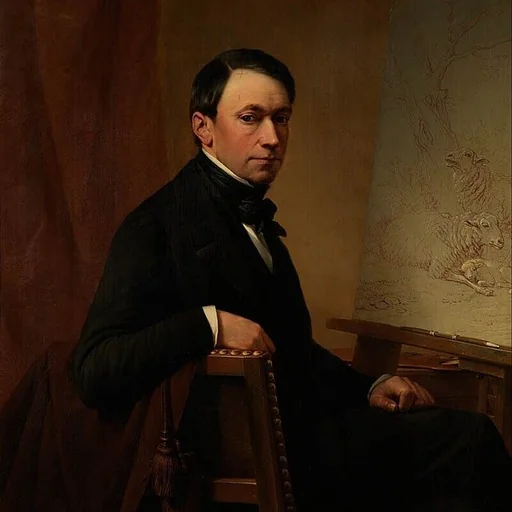
Eugène Joseph Verboeckhoven (9 June 1798 – 19 January 1881) was a Belgian painter, a sculptor, an etcher, an engraver, and a lithographer of animals, animated landscapes, and portraits.

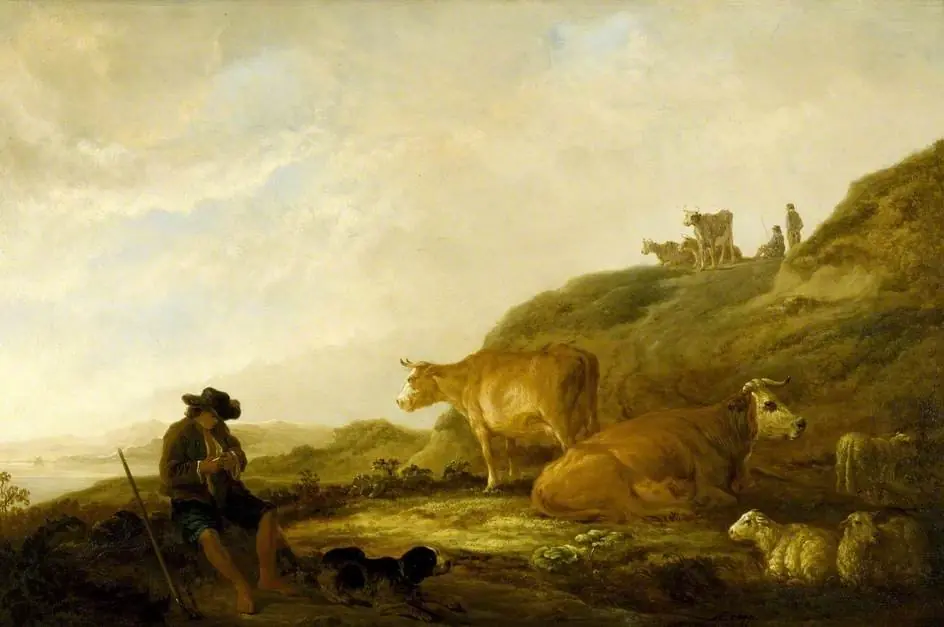
- Seated Shepherd with Cows and Sheep in a Meadow
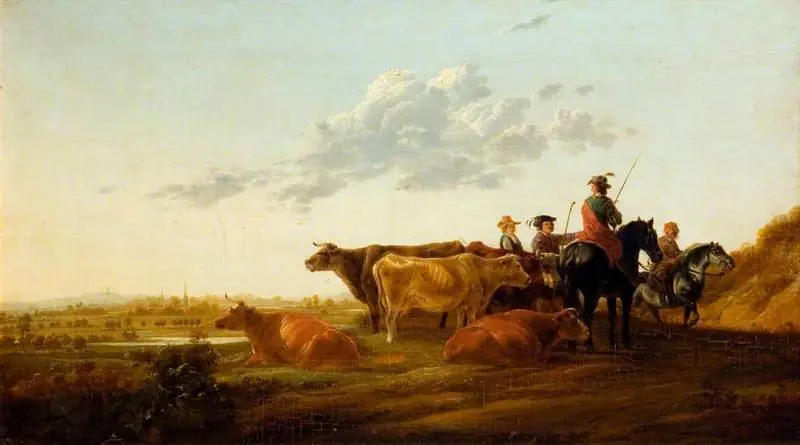 Landscape with Horsemen and Cattle
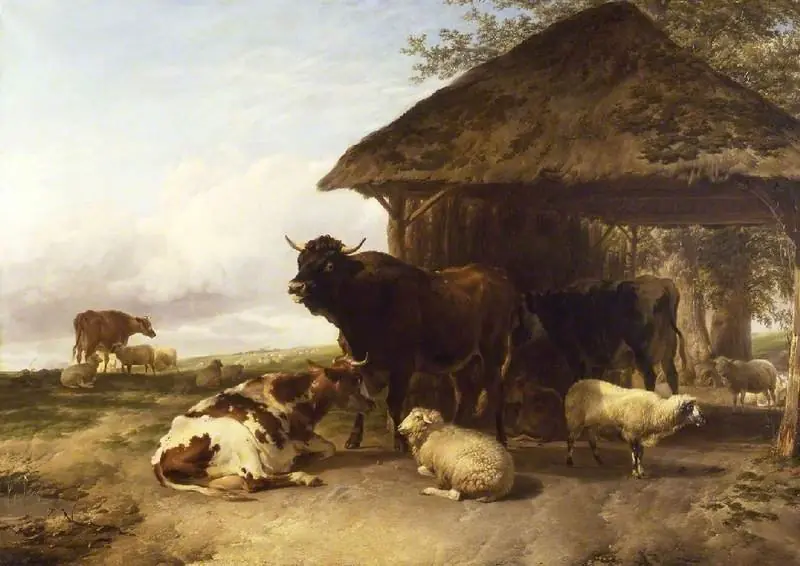 Cattle reposing (1846)
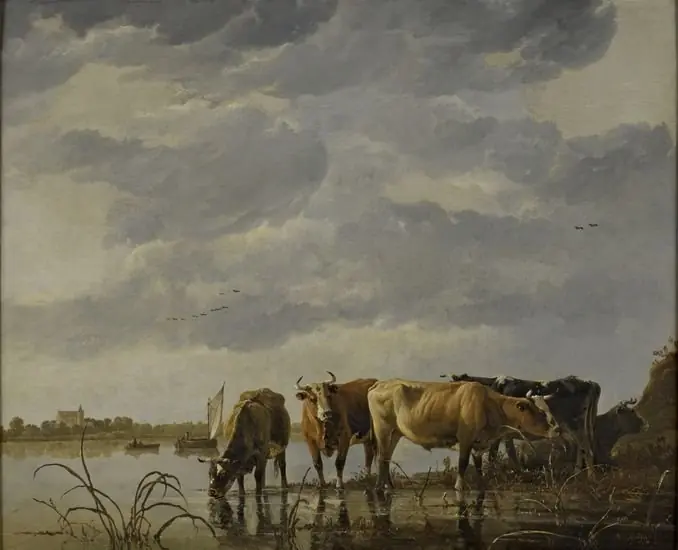 Cattle Watering by an Estuary
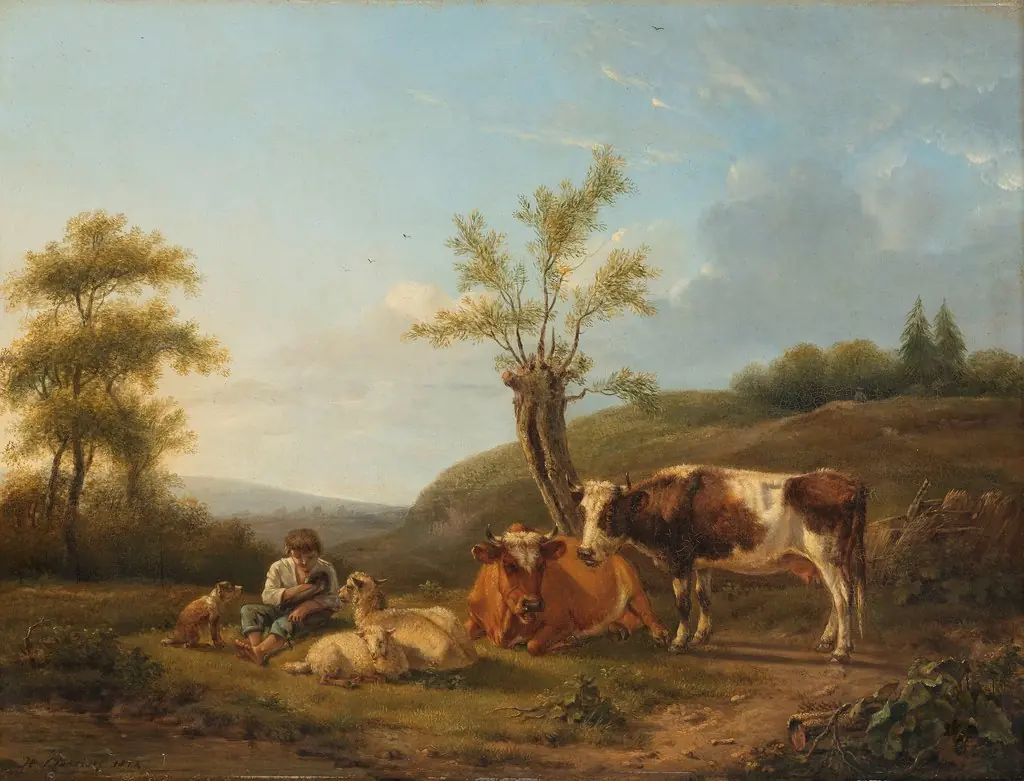 Landscape with Cattle near Darthuizen
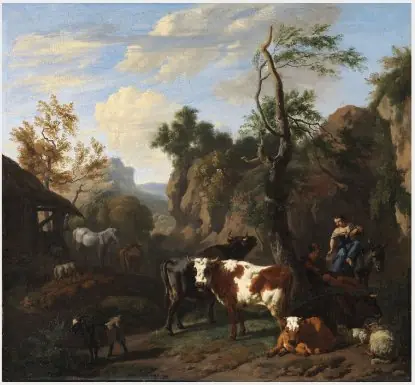 Cattle in a Rocky Landscape
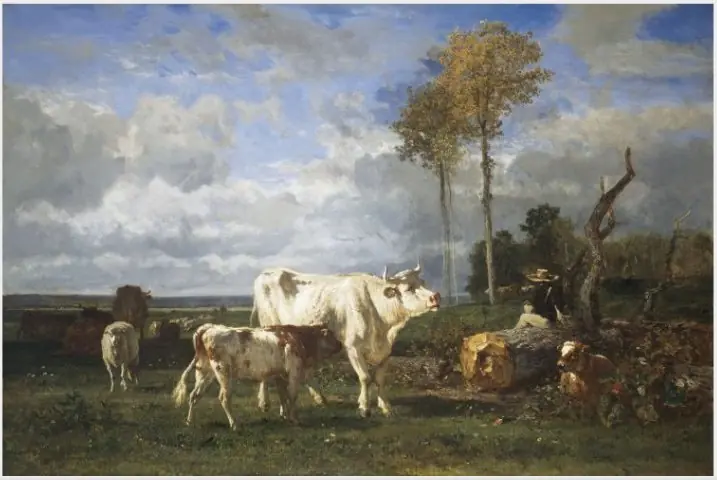 Valley of the Tocques
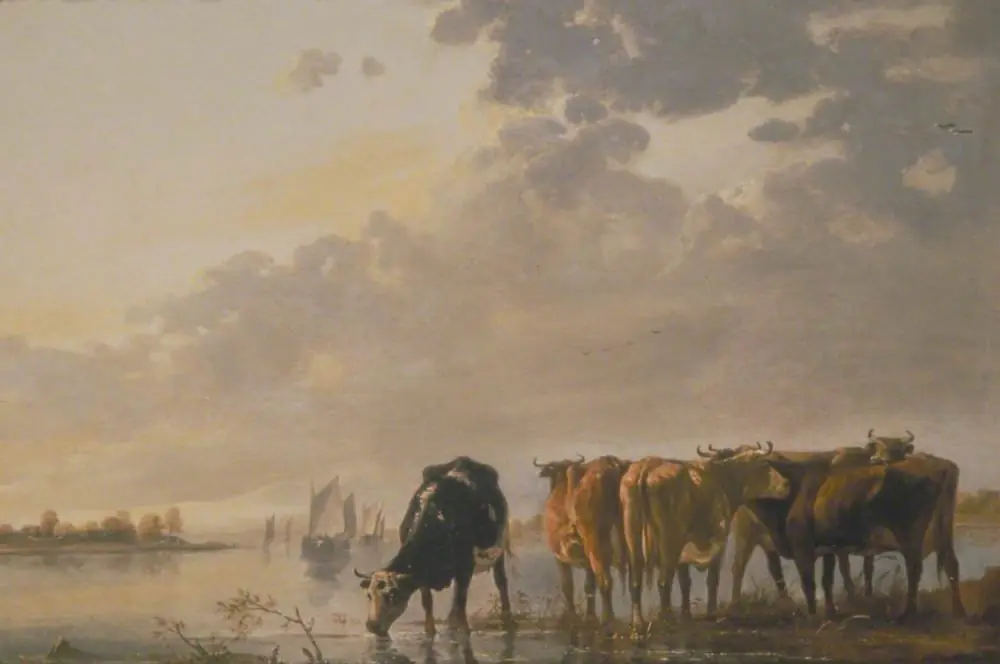 Cattle by a River
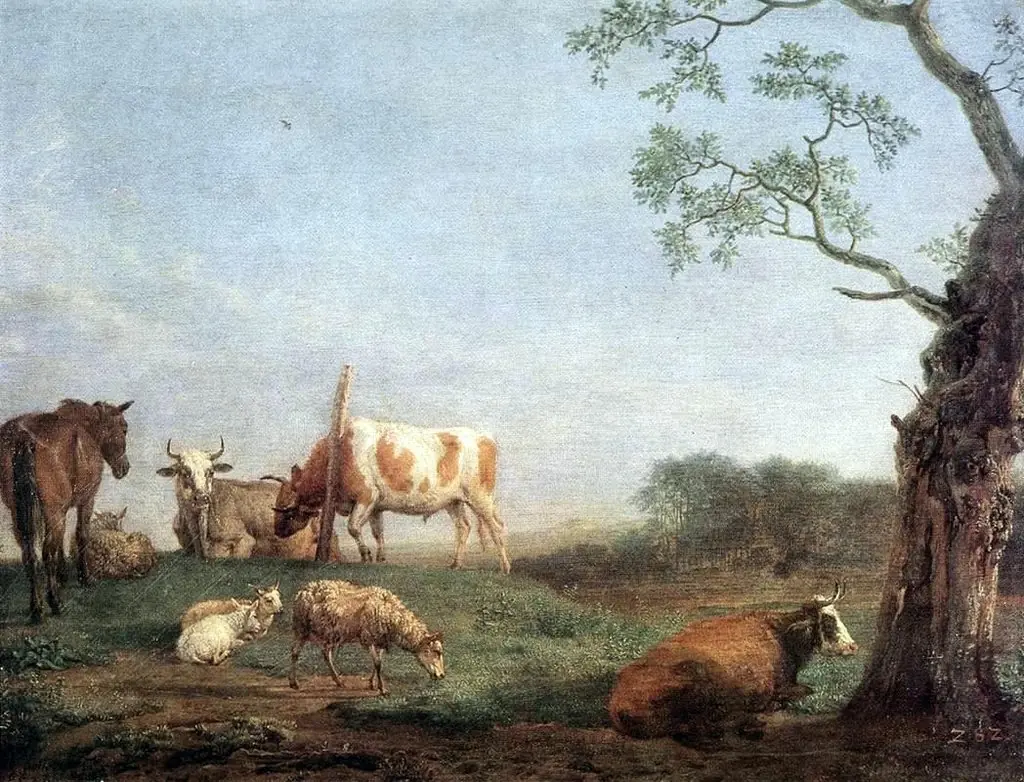 Resting Herd
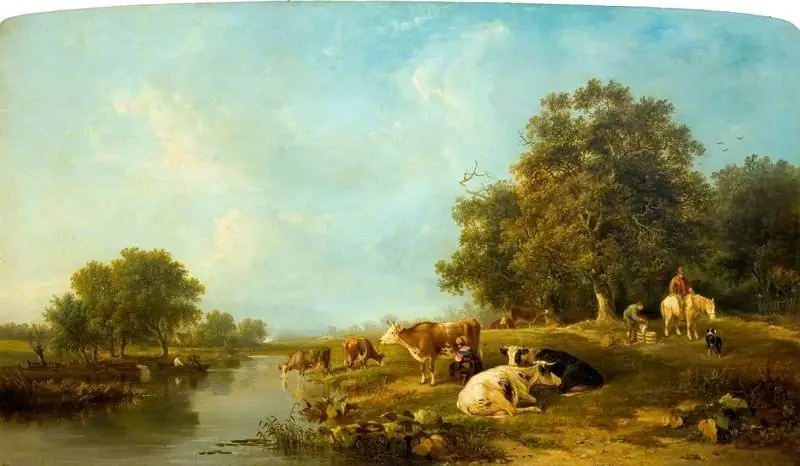 Landscape with Cattle: Milking Time
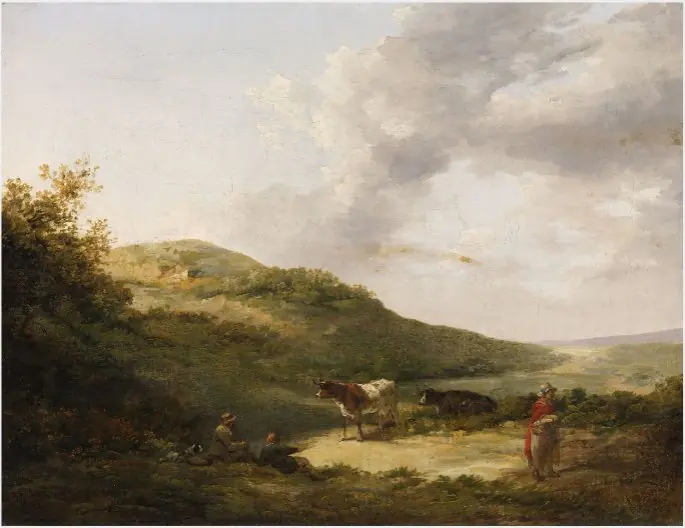 A Landscape with Figures and Cattle
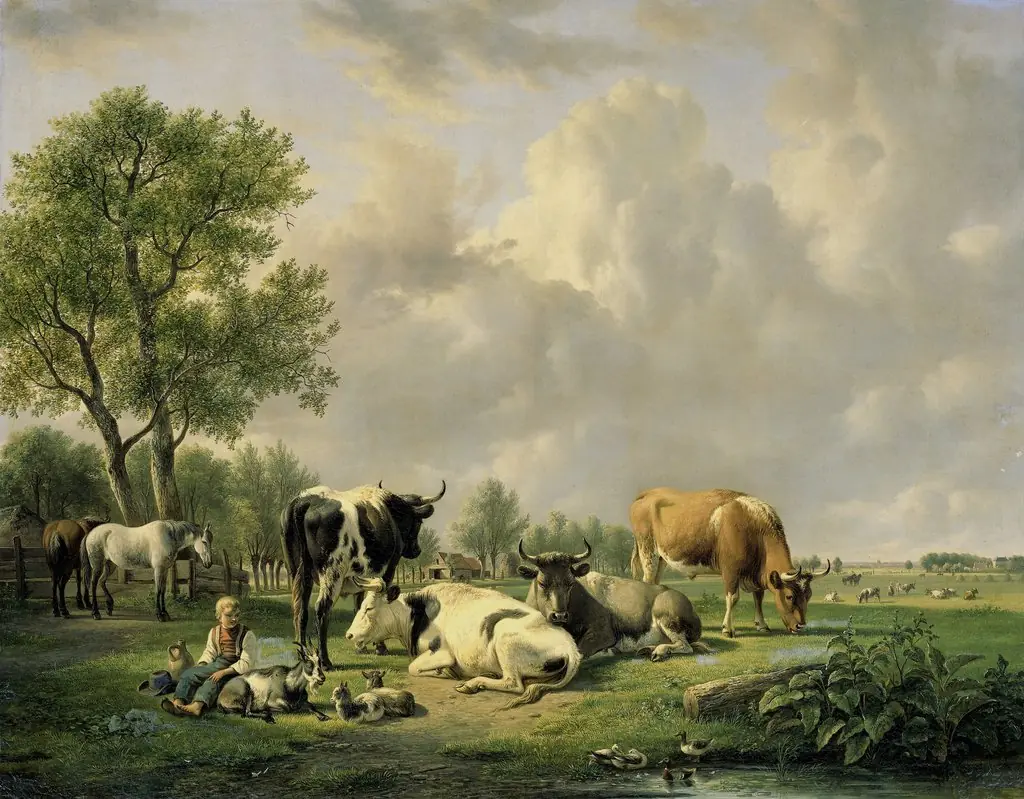 Meadow with Animals