Artwork
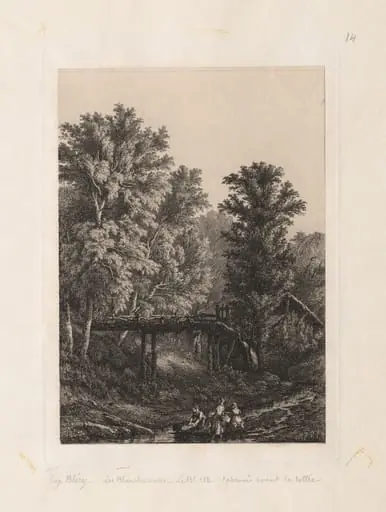
The Mill and Waterfall of Grésy near Aix-les-Bains
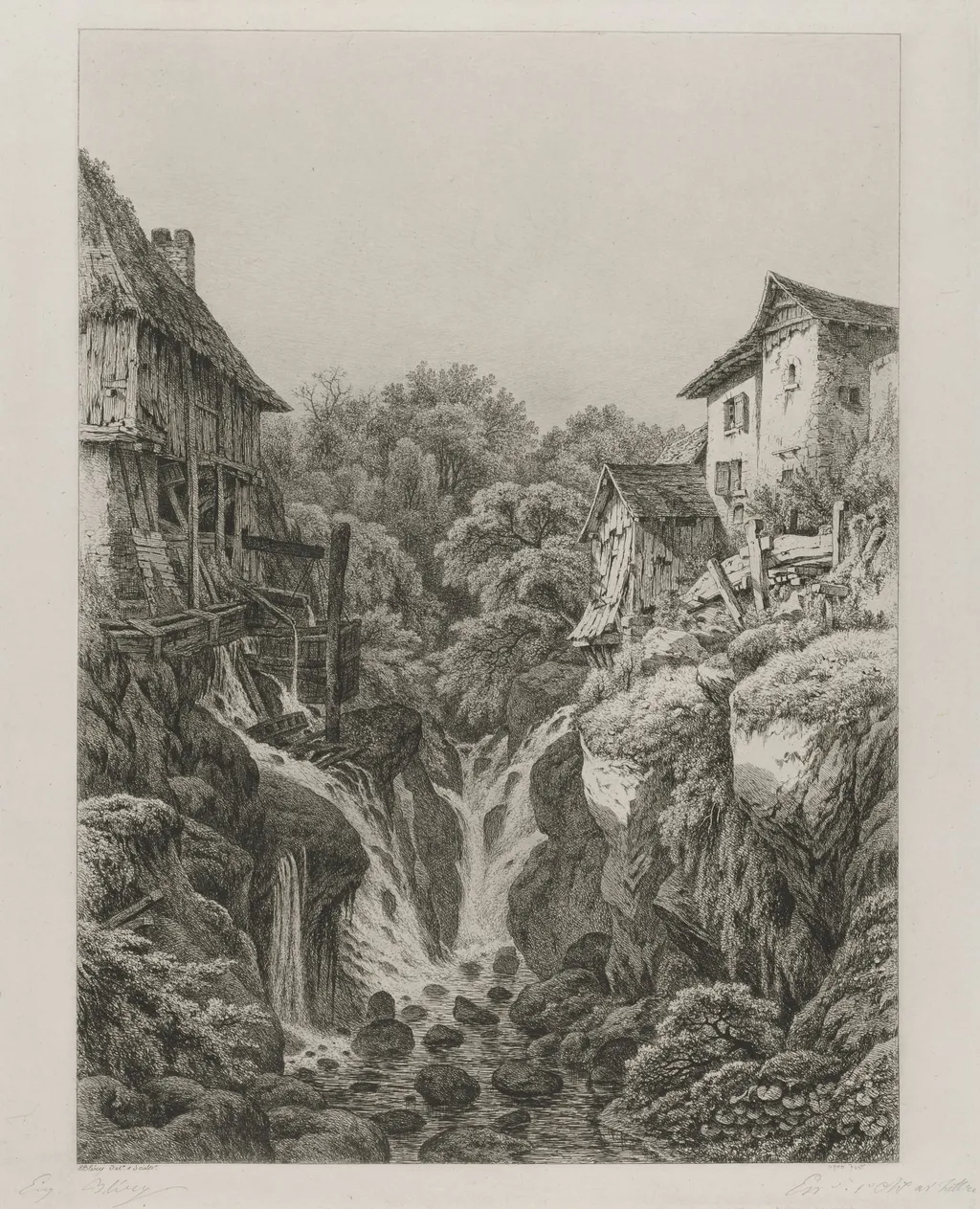
The Mill and Waterfall of Grésy near Aix-les-Bains is a print by the Impressionist artist Eugene Bléry. It dates from 1856 and is held in the collection of the Cleveland Museum of Art.
- Accession no.
- 2009.491
- Credit line
- Gift of John Bonebrake
About this work
Overview
The Mill and Waterfall of Grésy near Aix-les-Bains is an etching by Bléry, showcasing his meticulous rendering of a natural scene.
Subject & Meaning
The print depicts a serene landscape featuring a rocky stream, a small mill, and trees with intricately detailed foliage, evoking a sense of the natural world's tranquility.
Technique & Style
Bléry's work is characterized by delicate lines and a high level of detail, reflecting his practice of working directly from nature and his study of 17th-century Dutch landscapes.
Context
The etching's Romantic undertones are reminiscent of contemporary German landscapes, while its composition and style demonstrate Bléry's debt to Dutch masters such as Meindert Hobbema and Jacob van Ruisdael.
Own this work as a print
Artist & collection

Artist
Eugène Stanislas Alexandre Bléry (3 March 1805–7 June 1887), was a French engraver.

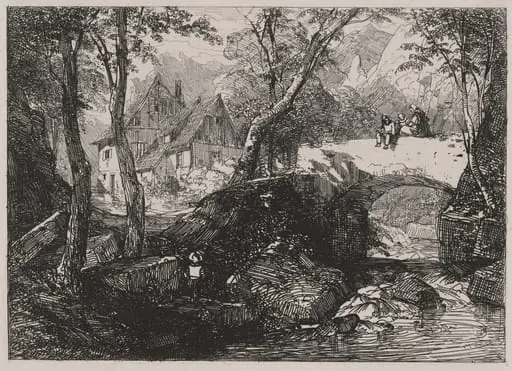 Stone Bridge over A Mountain Brook
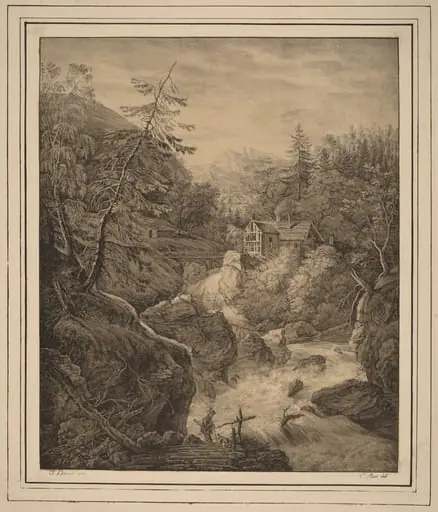 Waterfall
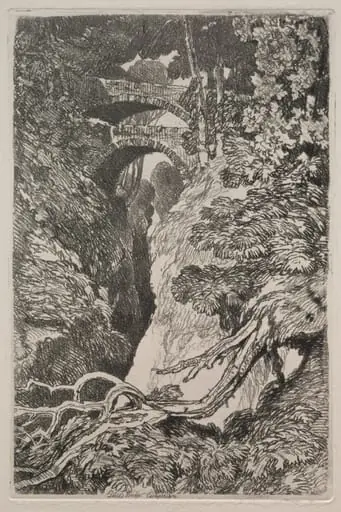 Liber Studiorum: Devil's Bridge, Cardiganshire
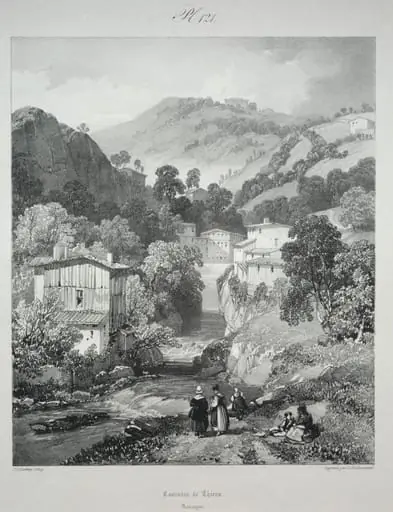 Voyages pittoresques et romantiques dans l'ancienne France. Auvergne: Cascades de Thiers
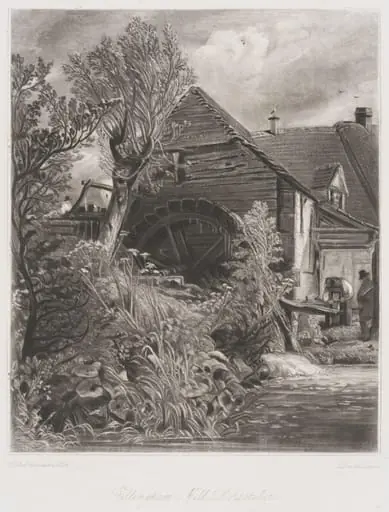 Gillingham Mill, Dorsetshire
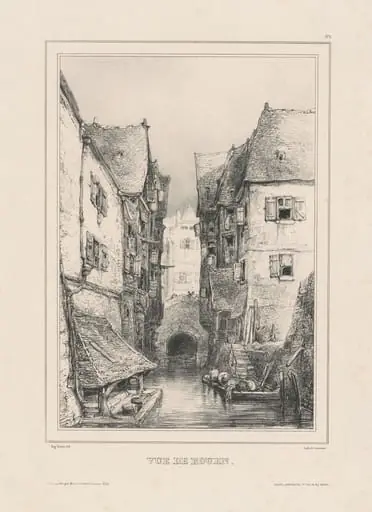 Vue de Rouen
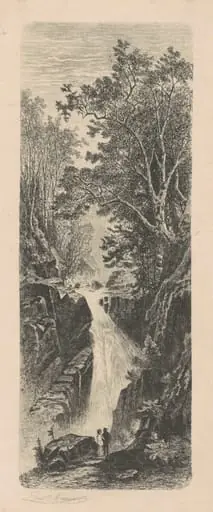 Waterfall, Cumberland Mountains
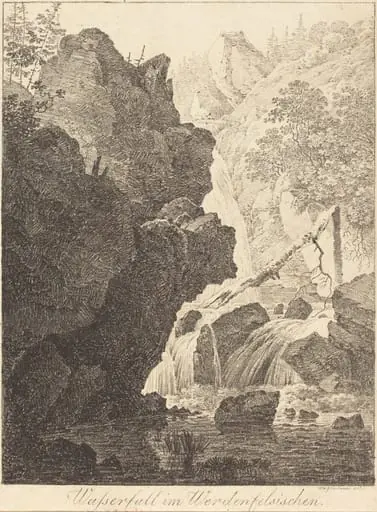 The Waterfall (Wasserfall im Werdenfelsischen)
 Mountain of the Holy Cross, Colorado
 Mountain View with Waterfall and Water Birds
 Eight Bohemian Landscapes: Landscape with Log Bridge over Cataract
 A Waterfall between Rocky Cliffs