Artwork
Juliette Récamier (1777-1849)
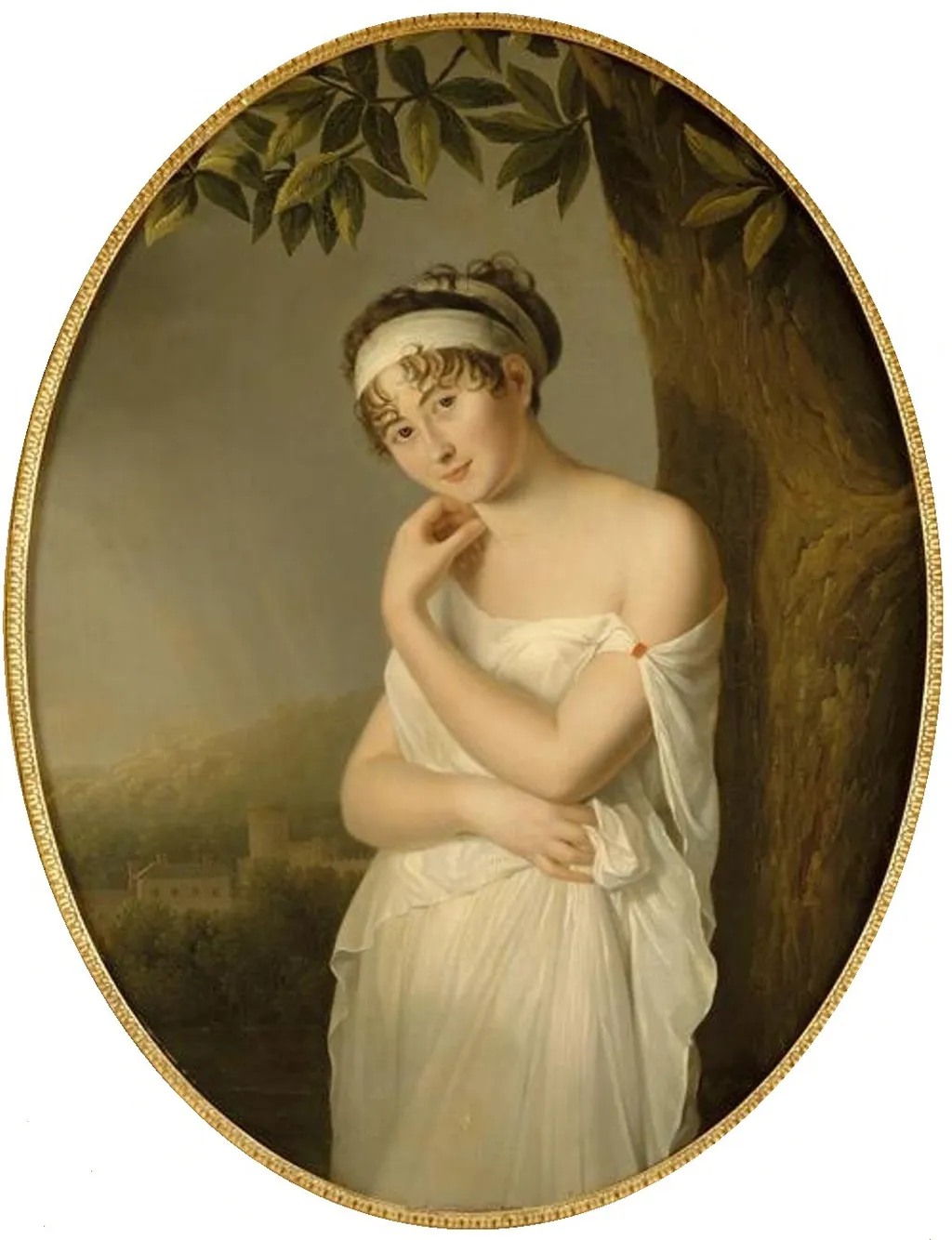
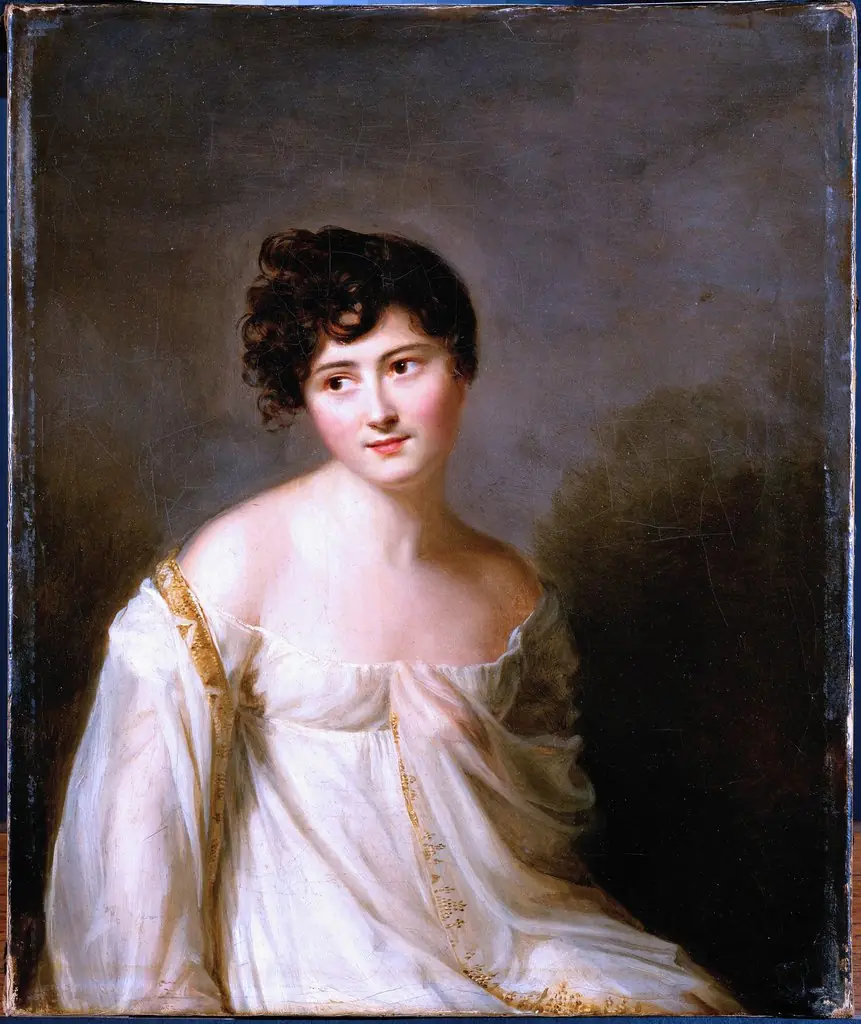
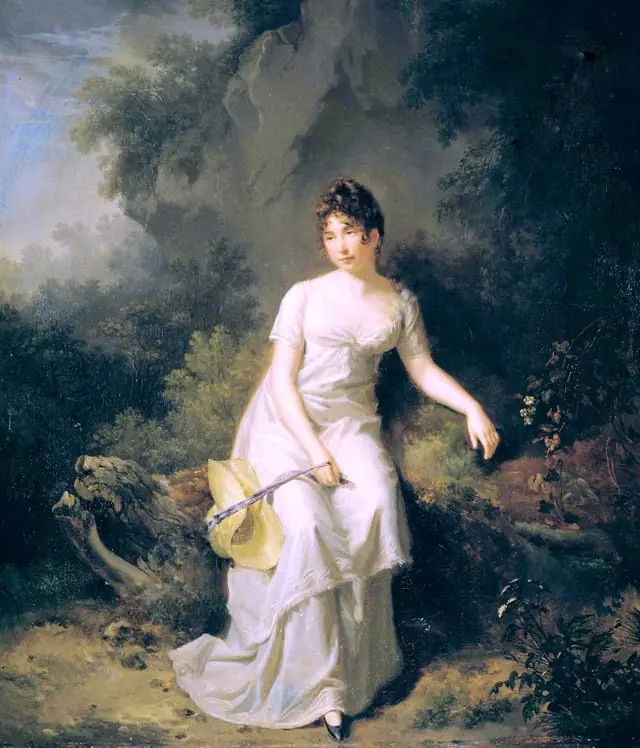
Juliette Récamier (1777-1849) is an oil painting by Eulalie Morin. It dates from 1800 and is held in the collection of the Palace of Versailles.
About this work
Subject & Meaning
Beyond the depiction of the woman and her clothing, the work incorporates a landscape setting that includes a tree, a hill, and a house.
The painting by Eulalie Morin, dated 1800, functions as a portrait whose main subject is Juliette Récamier. Beyond the depiction of the woman and her clothing, the work incorporates a landscape setting that includes a tree, a hill, and a house. The scene is further characterized by the presence of rain, integrating atmospheric elements into the composition alongside the sitter.
This combination of the female subject with specific natural and architectural features defines the visual content of the piece held at the Palace of Versailles.
Technique & Style
The portrait is executed in oil paint on canvas, depicting Juliette Récamier seated beside a tree and a modest house under a gentle rain, her figure rendered in refined 19th-century French portraiture. The composition emphasizes delicate drapery and soft lighting, characteristic of the neoclassical style prevalent in French art of the period. The work is housed in the Musée national des châteaux de Versailles et de Trianon, where it was displayed in the exhibition Peintres femmes, 1780-1830. Naissance d'un combat.
History & Provenance
The portrait of Juliette Récamier was commissioned by the subject herself and painted in 1800 by Eulalie Morin in Nantes, France. Morin, a recognized female artist, created the work while associated with the School of France. The painting entered the collection of the Palace of Versailles, where it remains on display as part of the museum's holdings.
It was later included in the exhibition 'Peintres femmes, 1780-1830. Naissance d'un combat', highlighting its significance in the context of 18th- and 19th-century female artists.
The portrait is held in the collection of the Palace of Versailles, specifically within the National Museum of the Châteaux of Versailles and Trianon. It is registered under the inventory number MV 5344.
The work was included in the exhibition "Peintres femmes, 1780-1830. Naissance d'un combat," which highlighted female painters active between 1780 and 1830.
Context
The portrait of Juliette Récamier by Eulalie Morin was painted in 1800 and depicts the famed French socialite within a neoclassical setting that blends personal intimacy with republican symbolism. The work was first shown at the exhibition Peintres femmes, 1780-1830. Naissance d'un combat and is now part of the collection at the Palace of Versailles, where it remains on view in the Musée national des châteaux de Versailles et de Trianon.
Scholarship on Morin emphasizes her role as a pioneering female artist in the late 18th‑century French portrait tradition, situating her production within the broader discourse on women’s artistic participation during the Revolution and the Directory.
Legacy
The portrait of Juliette Récamier has maintained enduring scholarly and curatorial attention as a key example of neoclassical portraiture by women artists, particularly noted for its compositional influence on later depictions of aristocratic subjects. Its presence in the collections of the Palace of Versailles and its inclusion in major exhibitions such as Peintres femmes, 1780-1830 underscore its recognized significance within French art history. The work continues to be referenced in studies of 19th-century salon culture and the evolving role of women in artistic production, reflecting its lasting impact on both museum practice and art historical discourse.
Overview
Eulalie Morin’s 1800 oil portrait presents Juliette Récamier, a prominent French socialite of the early nineteenth century. The work is part of the collection at the Palace of Versailles and measures the conventions of portraiture of its era, balancing a calm domestic setting with a hint of landscape beyond.
Artist & collection

- Juliette Récamier
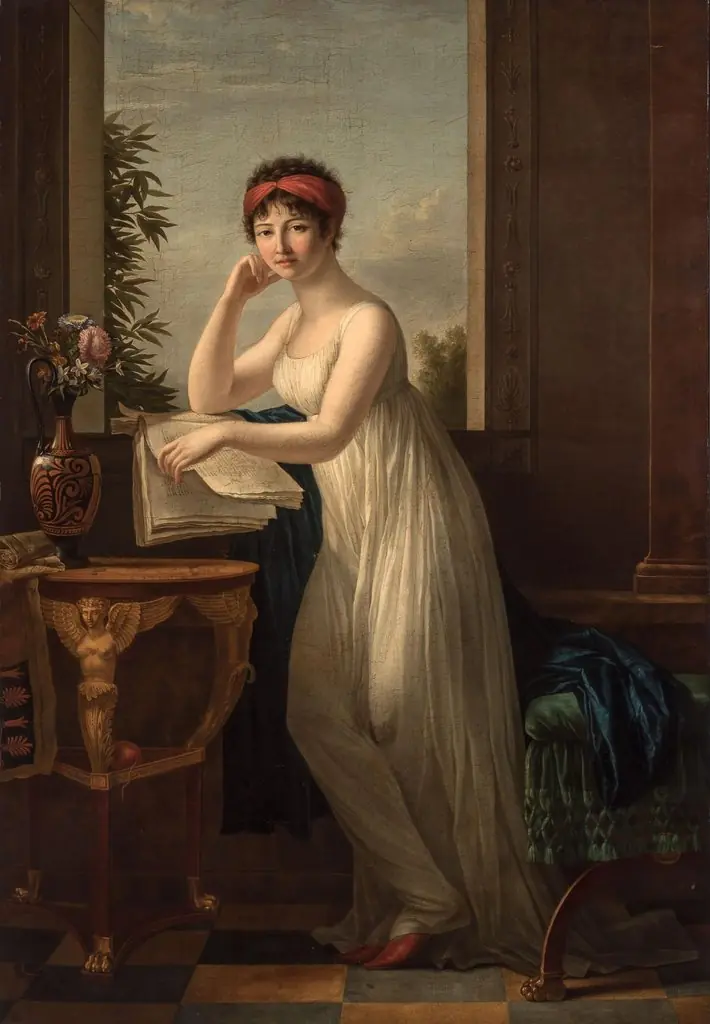 A Young Woman Leaning on the Edge of a Window
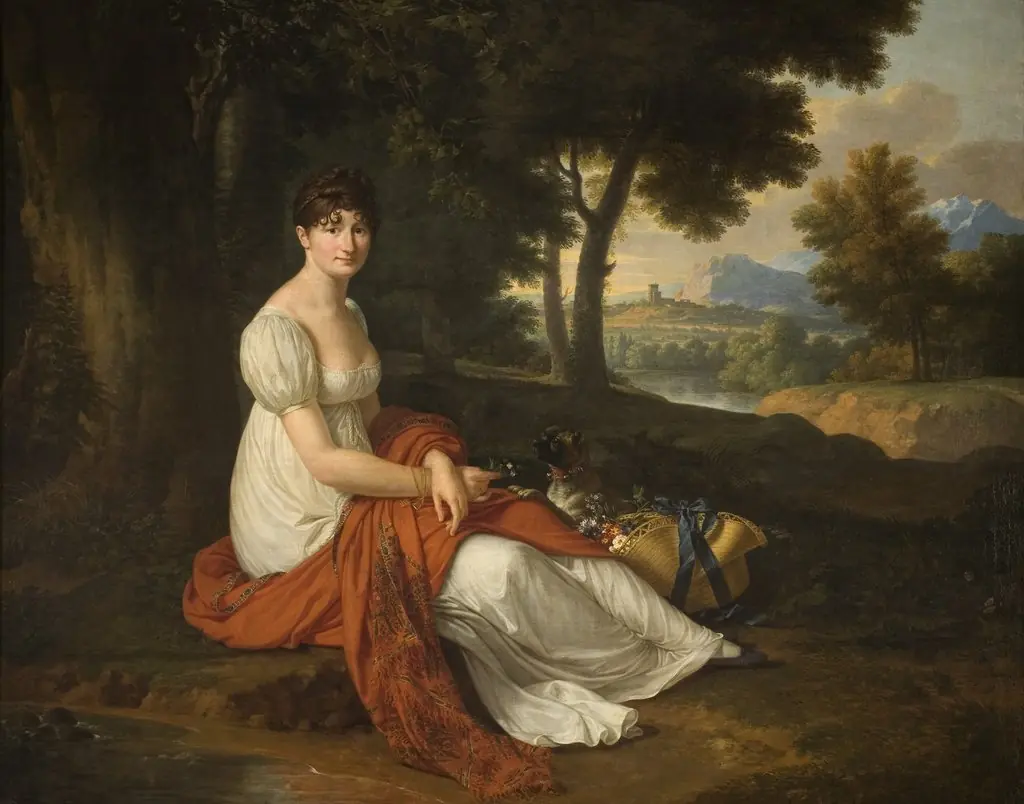 Portrait of Elżbieta Skotnicka née Laskiewicz (1781–1849), Wife of Michał Skotnicki
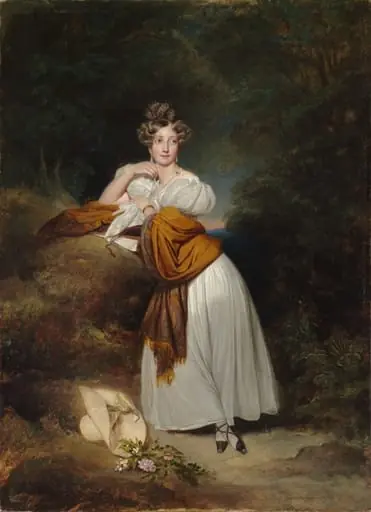 Sophie Guillemette, Grand Duchess of Baden (1801-1865)
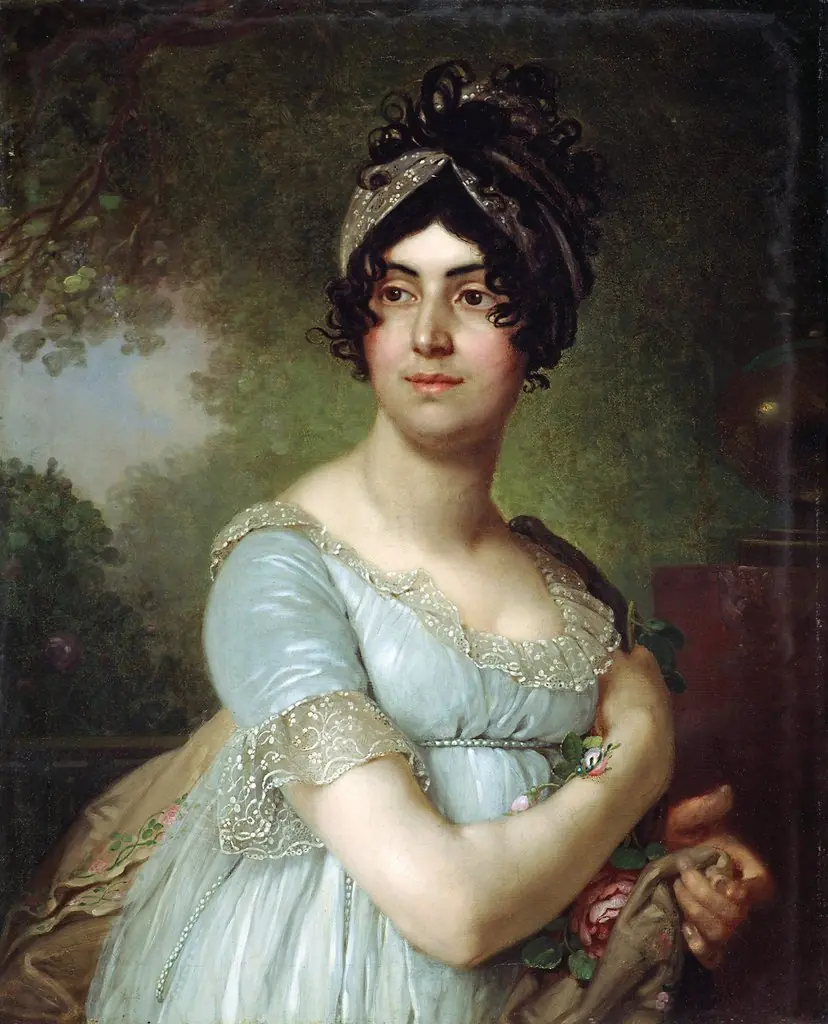 Портрет Д.С. Яковлевой
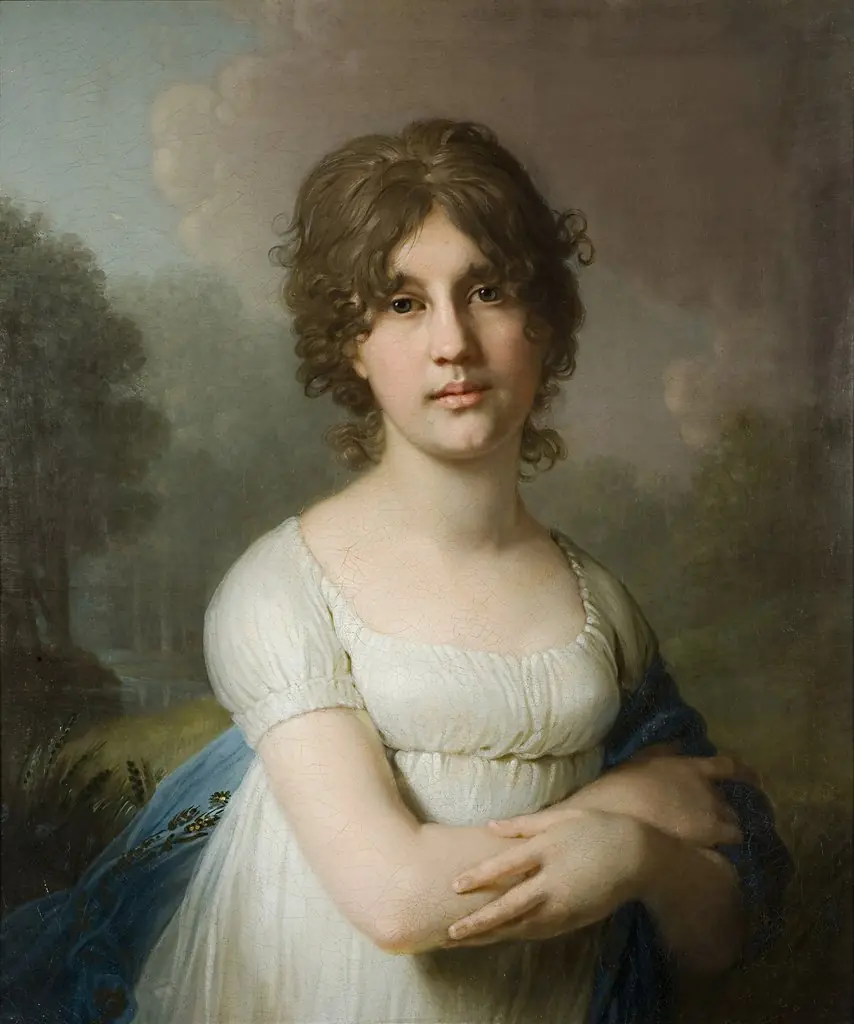
 Ekaterina Golovkina (Naryshkina)
 La Princesse Catherine Gavrilowna Gagarine
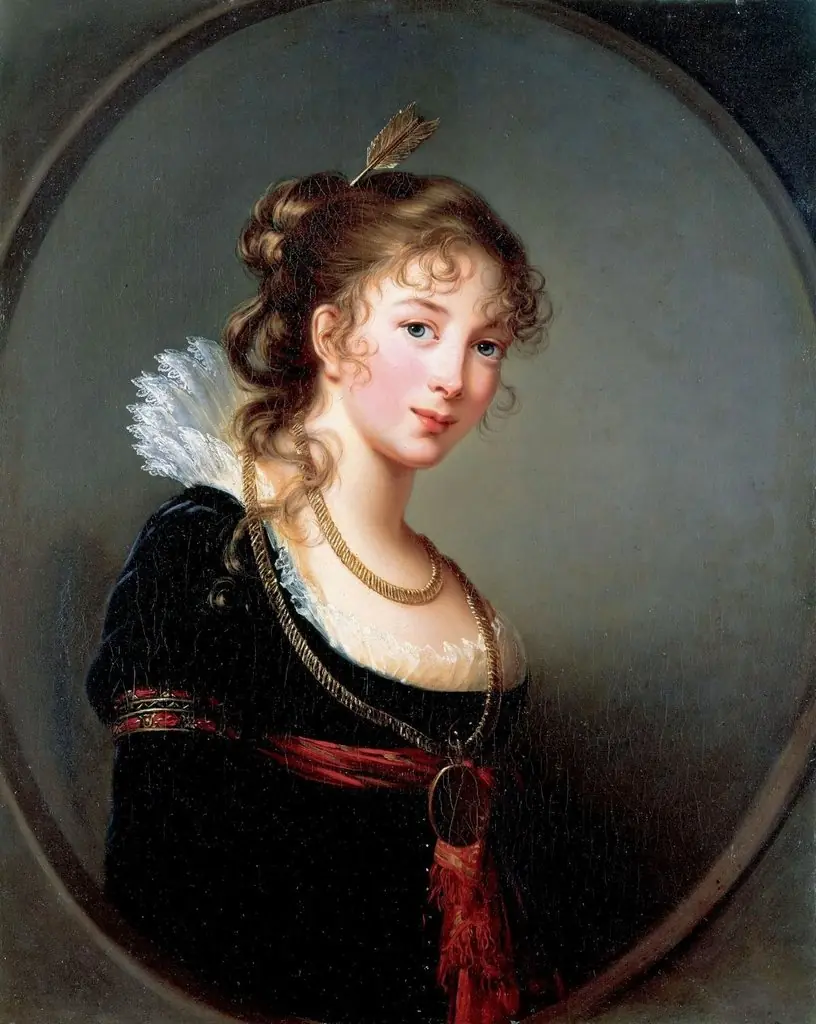 Porträt der Luise von Preußen (1770-1836), Ehefrau von Anton Radziwiłł (1775-1833)
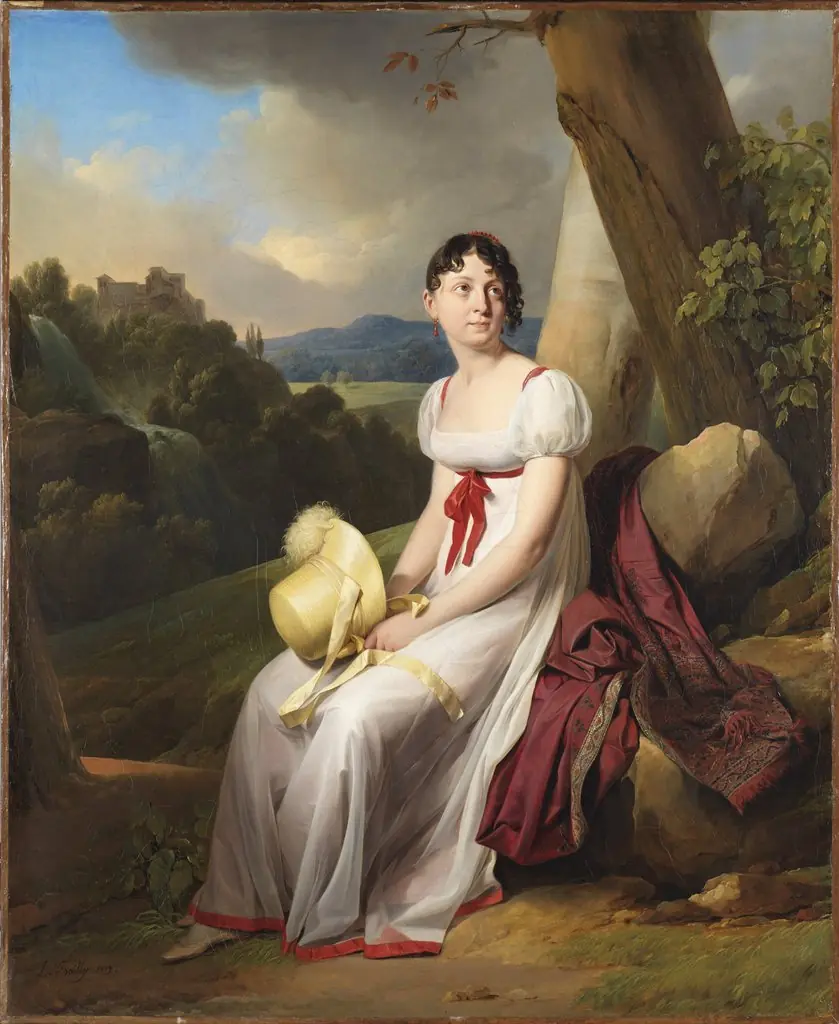 Madame Saint-Ange Chevrier
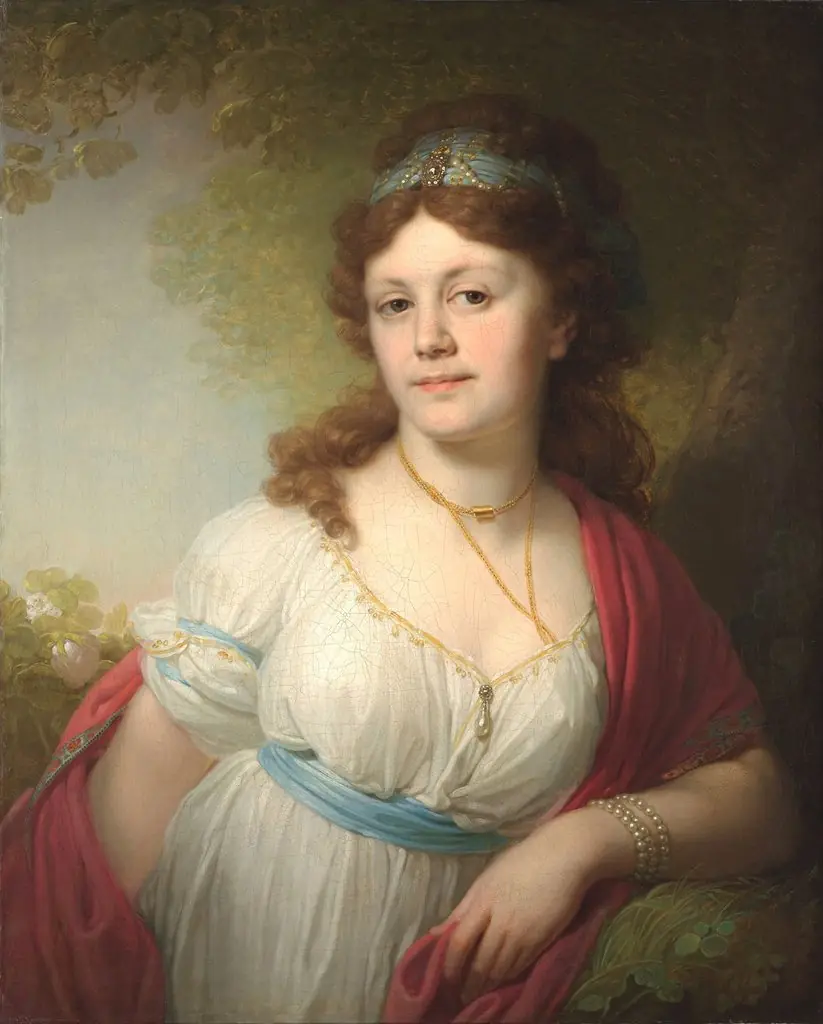 Porträt der Elizaveta Grigorevna Temkina (b.1775)
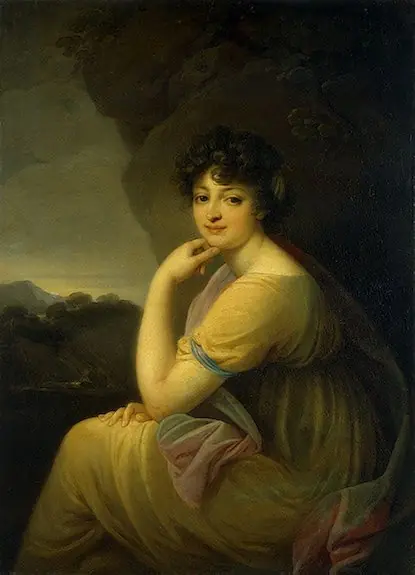 Portrait of Yekaterina Bakunina
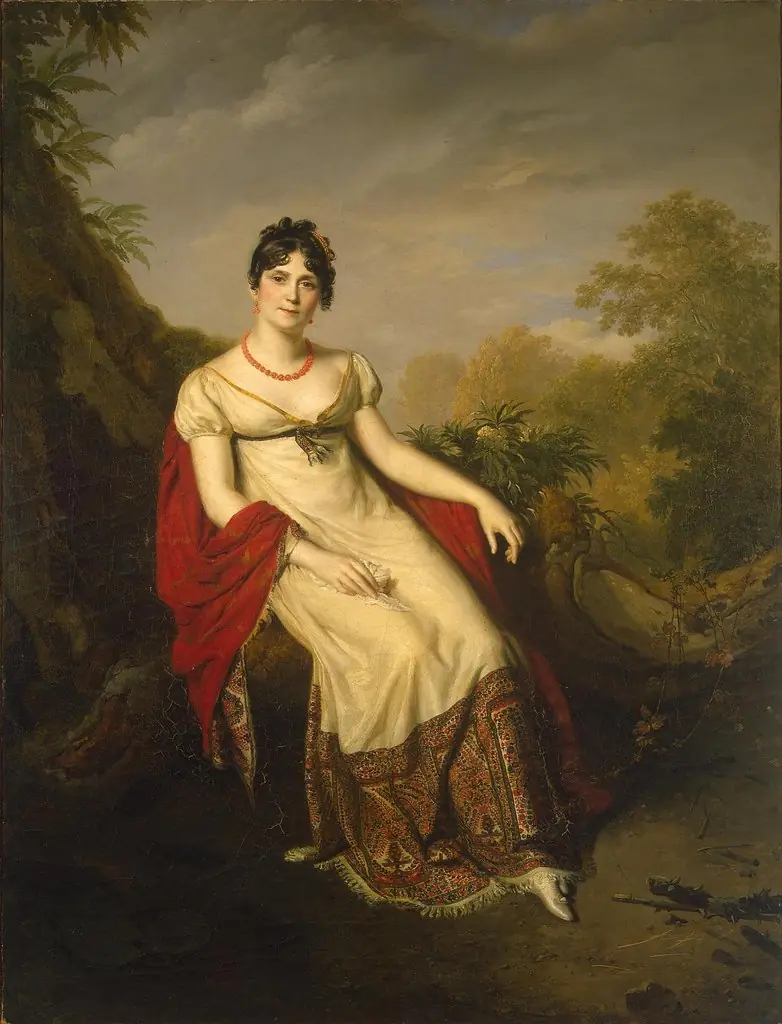 Portrait of Josephine de Beauharnais